Cosmetic Dentistry
September 18, 2025
Porcelain Veneers: Cost, Procedure, Lifespan and Who They Suit
 Dr. Rifat Alsaman

Porcelain Veneers are thin ceramic shells bonded to the front of your teeth. They can change colour, shape, size and small gaps. Each shell is often about half a millimetre thick. Placement usually removes a similar layer of enamel, so treatment is permanent. With good care, veneers last 10 to 15 years on average. Prices are quoted per tooth and vary widely by country.
Key Takeaways
Porcelain veneers are thin ceramic shells bonded to the front of teeth to improve colour, shape, size, and small gaps.
Veneers are usually permanent. Conventional treatment typically removes about 0.5 mm of enamel, which does not grow back.
Porcelain veneer costs vary by country. Estimated prices per tooth range from 930–2,440 in the US, $900–$1,500 in the UK, and $200–$500 in Turkey. These are estimates, not personalised quotes.
Veneers typically last 10–15 years with proper care. Longevity depends on oral hygiene, quality, bite forces, and habits such as teeth grinding.
Material selection matters. E.max, feldspathic porcelain, and zirconia differ in translucency, strength, and suitability for individual cases.
Not everyone is a suitable candidate. Active tooth decay and gum disease should be treated first. Significant crowding or bite problems may require orthodontic treatment instead.
Porcelain veneers resist stains, but natural teeth and edges may discolour over time. Veneers themselves cannot be whitened.
Ready to transform your smile?
Talk to our team and get a personal FREE treatment plan.
What Are Porcelain Veneers?
They are custom-made ceramic covers for the visible front surface of a tooth. A dental lab shapes each one from a 3D scan or impression. The dentist then bonds it to the tooth with resin cement. Veneers are mainly cosmetic. They improve appearance but do not strengthen a weak tooth. A crown is different. It covers the whole tooth and suits teeth with heavy damage or large fillings. A veneer covers only the front and sometimes the biting edge. Porcelain reflects light much like enamel, which gives a natural translucency. Its glazed surface is nonporous, so it resists stains better than natural teeth. Veneers form one part of wider dental aesthetics, alongside whitening, orthodontics.
What Problems Can Porcelain Veneers Fix?
They mainly fix visible, surface-level concerns on the front teeth. Common uses include:
Stains that whitening does not lift
Chipped or worn edges
Small gaps between teeth, called diastema
Teeth that look too small or short
Mildly misshapen or uneven teeth
Minor crowding, when orthodontics is not preferred
Veneers do not treat cavities, gum disease, infection or serious structural damage. Those problems need treatment first. Severe crowding or bite problems usually respond better to orthodontics.
Porcelain Veneers Before and After
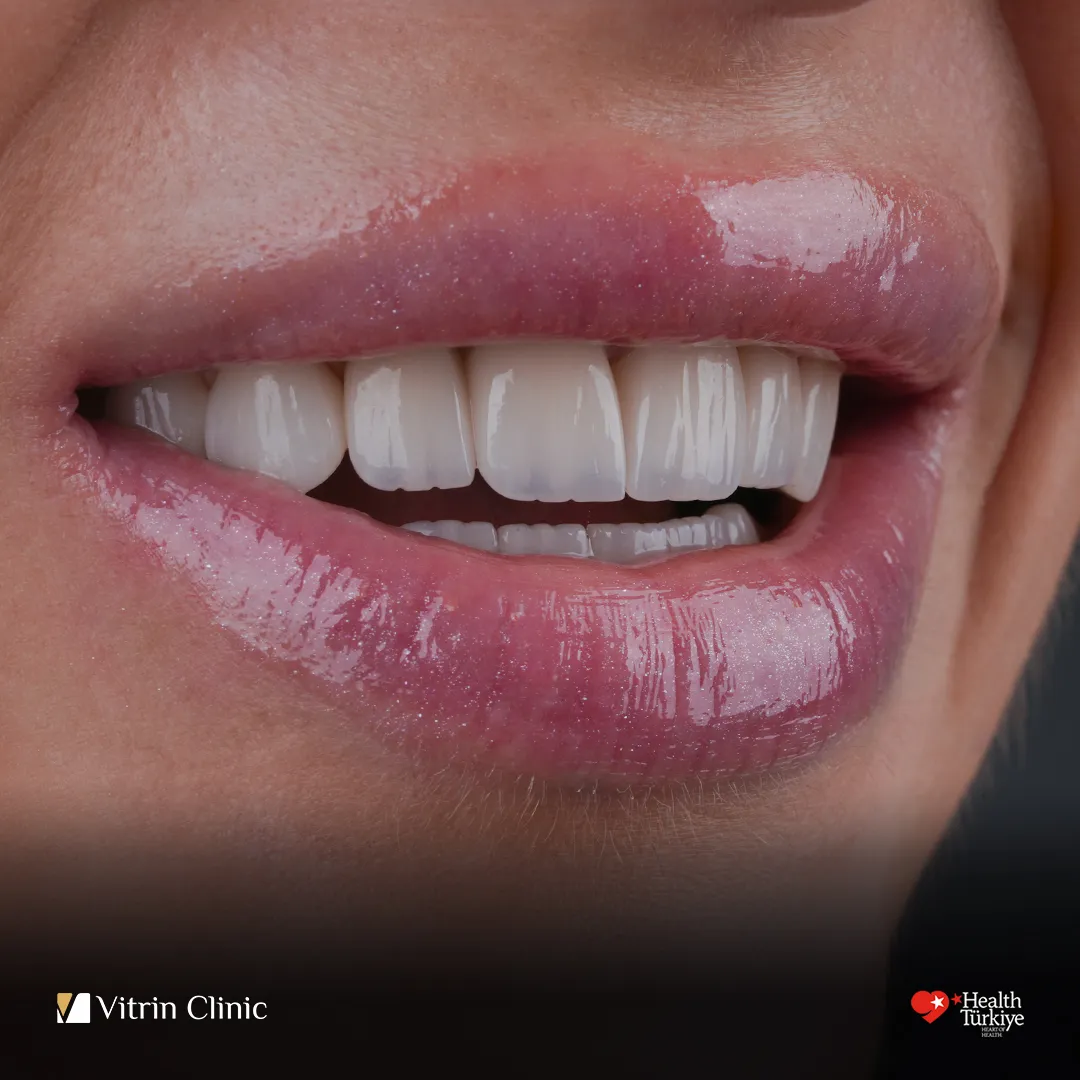
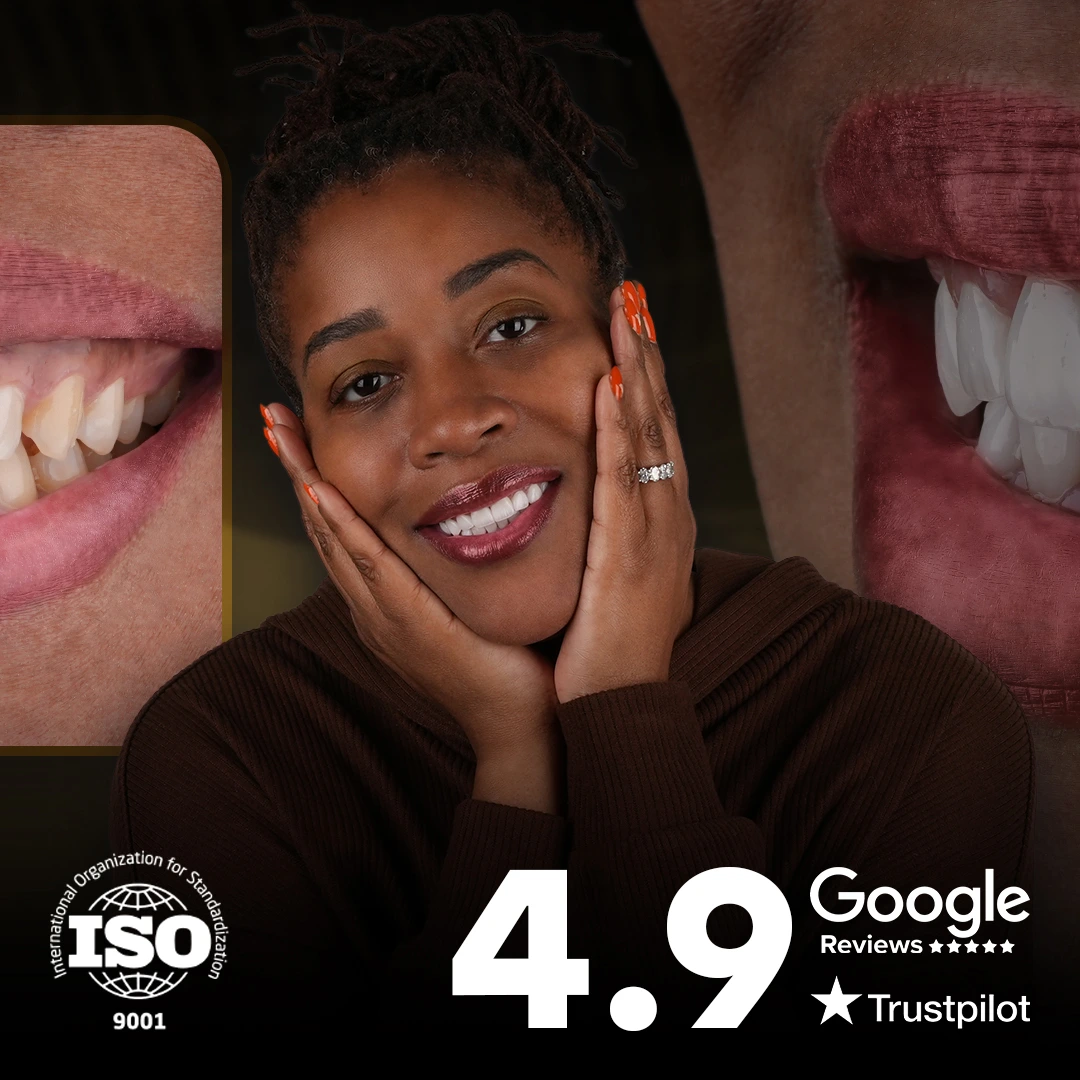
Before and after photos show what a dentist has achieved on real patients. They are most useful when lighting, angles and lip position match in both images. Look for the treating dentist's own cases, not stock images. Check that close-ups show the gumline and the edges of each veneer. Ask how many veneers each case involves. Ask how long ago the treatment was done. A case photographed years later shows how the work has aged. Results vary with tooth shape, gum health and bite. Photos show what is possible, not a guaranteed outcome.

How Much Do Porcelain Veneers Cost?
One veneer typically costs 930–2,440 in the US, $900–$1,500 in the UK and $200–$500 in Turkey. These are published estimates, not quotes. Your final price depends on your teeth, the material and any treatment needed first.
United Kingdom
From $200
Veneer price per tooth
Porcelain / E.max$900–$1,500
Composite$200–$500
Lumineers / no-prep~$935–$1,600
Turkey
From $100
Veneer price per tooth
Porcelain / E.max$200–$500
Composite$100–$300
Lumineers / no-prep~$335–$535
United States
From $100
Veneer price per tooth
Porcelain / E.max Average $1,425 $930–$2,440
Composite $100–$500
Lumineers / no-prep Reference average $1,800 $800–$2,000
Consultation, X-rays, scans, temporaries and follow-up may be billed separately. Ask each clinic exactly what its quote includes.
Porcelain Veneer Cost Per Tooth
Per-tooth pricing reflects the clinical work behind each veneer, not just the material. In the US, ADA-based data puts the national average near $1,425 per tooth. UK private fees commonly run $900–$1,500. Turkish clinics often charge $200–$500, partly because overheads are lower. The price usually covers tooth preparation, lab fabrication . It may exclude consultation, X-rays, digital smile design and temporary veneers. Lab quality matters. A skilled ceramist spends time layering colour and translucency into each veneer. A cheaper price can mean a different material, a lower-tier lab or fewer inclusions. Compare itemised quotes line by line.
Cost of a Full Set of Porcelain Veneers (4 / 8 / 10 / 20 teeth)
A full set costs the per-tooth fee multiplied by the number of teeth, minus any package discount. This table multiplies the per-tooth ranges above.
United Kingdom
From $3,600
Veneer sets by number of teeth
4 teeth $3,600–$6,000
8 teeth $7,200–$12,000
10 teeth $9,000–$15,000
20 teeth $18,000–$30,000
Turkey
From $800
Veneer sets by number of teeth
4 teeth $800–$2,000
8 teeth $1,600–$4,000
10 teeth $2,000–$5,000
20 teeth $4,000–$10,000
United States
From $3,720
Veneer sets by number of teeth
4 teeth $3,720–$9,760
8 teeth $7,440–$19,520
10 teeth $9,300–$24,400
20 teeth $18,600–$48,800
What Affects the Price?
Several factors move the final figure up or down:
Number of teeth: more veneers raise the total, though packages may lower the unit price.
Material: E.max and layered feldspathic porcelain often cost more than basic ceramics.
Laboratory: hand-layered work by an experienced ceramist costs more than standard milling.
Tooth preparation: dark teeth, old fillings or complex shaping add chair time.
Preparatory treatment: fillings, gum treatment or root canal treatment may be needed first.
Extras: whitening, gum contouring, temporaries and a night guard.
Experience: dentists with extensive cosmetic experience often charge more.
🔗 Learn about full-mouth veneers costs
Cost Per Year: Porcelain vs Composite Over Time
Dividing the price by expected lifespan gives a fairer comparison. Porcelain commonly lasts 10 to 15 years. Composite typically lasts 5 to 7 years. Using mid-range prices, the yearly cost looks like this:
United Kingdom
~$96 / year
Porcelain veneer cost per year
Porcelain$1,200 ÷ 12.5 years~$96 / yr
Composite$350 ÷ 6 years~$58 / yr
Turkey
~$28 / year
Porcelain veneer cost per year
Porcelain$350 ÷ 12.5 years~$28 / yr
Composite$200 ÷ 6 years~$33 / yr
United States
~$114 / year
Porcelain veneer cost per year
Porcelain$1,425 ÷ 12.5 years~$114 / yr
Composite$300 ÷ 6 years~$50 / yr
These are rough illustrations, not predictions. Porcelain is not always cheaper per year. Its main value lies in stain and wear resistance. Composite costs less upfront and is easier to repair. It may need polishing and touch-ups over time, which add cost.
Getting Veneers Abroad: What to Factor In
Lower treatment prices abroad can be offset by other costs and risks. Budget for flights, accommodation and time off work. Conventional veneers need at least two visits, with lab time in between. Clinics with in-house labs may finish within about a week. Confirm the timeline in writing before booking flights.
Before you travel, check these points:
The dentist's registration and qualifications
The ceramic brand and the lab used
Warranty terms and what they cover
Who handles repairs after you return home
An itemised treatment plan and estimate
Never rush preparatory treatment to fit a short trip.
🔗 cost of veneers in Turkey · 🔗 getting veneers in Turkey
Types of Porcelain Veneers
The main types differ in strength, translucency and how much enamel they need removed.
Type | Main strength | Often suited to |
Feldspathic porcelain | Highest translucency, hand-layered | Highly aesthetic, low-stress cases |
E.max (lithium disilicate) | Strength with natural translucency | Most front-tooth cases |
Zirconia | Very high strength, more opaque | Very dark teeth or heavy biting |
Lumineers / no-prep | Little or no enamel removal | Small teeth or gaps |
Composite (for comparison) | Lower cost, repairable | Minor or short-term changes |
A 2016 meta-analysis found 94% pooled survival for glass-ceramic veneers. Feldspathic porcelain veneers showed 87% survival at a median of nine years. Your dentist will match the material to your tooth colour, bite and goals.
E.max Porcelain Veneers
E.max is a brand of lithium disilicate glass-ceramic. It is pressed or milled from a solid block, which gives consistent strength. It is stronger than traditional feldspathic porcelain. Its translucency suits natural-looking front teeth. It can be made thin, which may limit how much enamel is removed. It also bonds well to enamel after etching. Many dentists use it as their default material for front-tooth veneers. It may cost more than basic ceramics, depending on the lab and technique.
Zirconia Veneers
Zirconia is a very strong ceramic, best known for crowns and bridges. Its strength helps patients with heavy bite forces. Traditional zirconia is more opaque than glass-ceramics. That opacity can mask very dark teeth well. It may look less lifelike where natural translucency matters. Zirconia also bonds less predictably than glass-ceramic, so cementation technique matters. Newer translucent zirconia narrows the aesthetic gap. Many dentists reserve it for specific cases rather than routine veneers. If you already have zirconia crowns, your dentist can help match the shade.
Lumineers and No-Prep Veneers
No-prep veneers are ultra-thin shells, about 0.2 to 0.5 mm thick. Lumineers is one well-known brand. They need little or no enamel removal and often no anaesthetic. They suit small teeth, gaps or teeth that sit slightly back. They do not suit crowded or protruding teeth, because they add bulk. They are often marketed as fully reversible, but this is misleading. Most still need some enamel reshaping. Removing a bonded veneer can also alter the enamel surface. Some cases may be reversible, but many are not. Ask your dentist exactly how much enamel will change.
Are Pop-On Veneers the Same as Porcelain Veneers?
No. Pop-on veneers are removable resin covers that clip over your teeth. They are not bonded and need no enamel removal. You can take them out at any time. They can make eating difficult and may affect your speech. Little research exists on their long-term effects. They hide teeth temporarily rather than restoring them. Porcelain Veneers are bonded, permanent, custom-made and placed by a dentist. Pop-on products cost far less but serve a different purpose.
Which Are the Best Porcelain Veneers?
The best veneer is the one matched to your teeth, bite and goals. No single material wins in every case.
E.max: suits most front-tooth cases.
Feldspathic porcelain: suits highly aesthetic, low-stress cases.
Zirconia: suits very dark teeth or heavy biting.
No-prep: suits a narrow group with small teeth or gaps.
A 2021 systematic review of 6,500 veneers found non-feldspathic ceramics failed less often. Technique matters as much as material.
Porcelain vs Composite Veneers
Porcelain lasts longer and resists stains better, while composite costs less and is easier to repair.
Factor | Porcelain | Composite |
US price per tooth | 930–2,440 | 100–500 |
Average lifespan | 10–15 years | 5–7 years |
Staining | Highly stain-resistant | Stains more easily |
Visits | Usually 2–3 | Often 1 |
Repairs | Usually replaced if broken | Often repaired chairside |
Enamel removed | About 0.5 mm | Often less |
Ready to transform your smile?
Talk to our team and get a personal FREE treatment plan.
Who Is a Good Candidate for Porcelain Veneers?
Good candidates have healthy teeth and gums and want to change how their front teeth look. A suitable candidate usually has:
Healthy gums, free of active gum disease
No untreated tooth decay
A stable bite
Realistic expectations about colour and shape
Some conditions need treatment or extra planning first. Gum disease and cavities should be treated before veneers. Veneers over unhealthy teeth may worsen existing problems. Teeth grinding or clenching raises fracture risk, so a night guard may be needed. A deep overbite may make veneers a poor choice.
Can Veneers Fix Crooked Teeth?
Veneers can disguise mildly crooked teeth, but they do not move them. The dentist reshapes the visible surface so teeth look straighter. This works for minor rotations or small overlaps. Hiding larger misalignment needs more enamel removal, which weakens the tooth. Orthodontics, such as clear aligners or braces, actually moves teeth into better positions. Some patients straighten first, then add veneers for colour and shape. This often removes less enamel overall. Ask your dentist to compare both routes for your case.
Whiten Before You Get Veneers
Whiten first if you want your natural teeth to look brighter. Ceramic does not respond to whitening products. The lab matches your veneer shade to your surrounding teeth. If you whiten later, natural teeth may become lighter than your veneers. The result is a visible mismatch. Dentists often wait a short period after whitening before matching the shade.
.jpg)
.jpg)
.jpg)
.jpg)
The Porcelain Veneer Procedure, Step by Step
Conventional veneers usually take two to three visits. The main steps are:
Consultation and smile design: the dentist examines teeth and gums and plans the new smile.
Mock-up: a temporary preview lets you test the shape first.
Preparation: about 0.5 mm of enamel is removed under local anaesthetic.
Scan: a 3D scan or impression records the prepared teeth.
Temporaries: provisional veneers protect the teeth during lab work.
Stage | Typical timing |
Consultation and planning | Visit 1 |
Preparation, scan and temporaries | Visit 1 or 2 |
Lab fabrication | A few days to a few weeks |
bite check | Final visit |
There is no downtime. You can usually eat once the anaesthetic wears off.
Does Getting Porcelain Veneers Hurt?
Most people feel little pain, because preparation is done under local anaesthetic. You may feel pressure or vibration during shaping. Afterwards, teeth may feel sensitive to heat and cold for a few days. Gums can feel sore where the dentist worked near the gumline. It may take a few days to adjust to the new shape. Tell your dentist if your bite feels high or uneven. Pain that persists or worsens needs a dental check.
How Many Veneers Do You Need? (4 / 6 / 8 / 10 / 20)
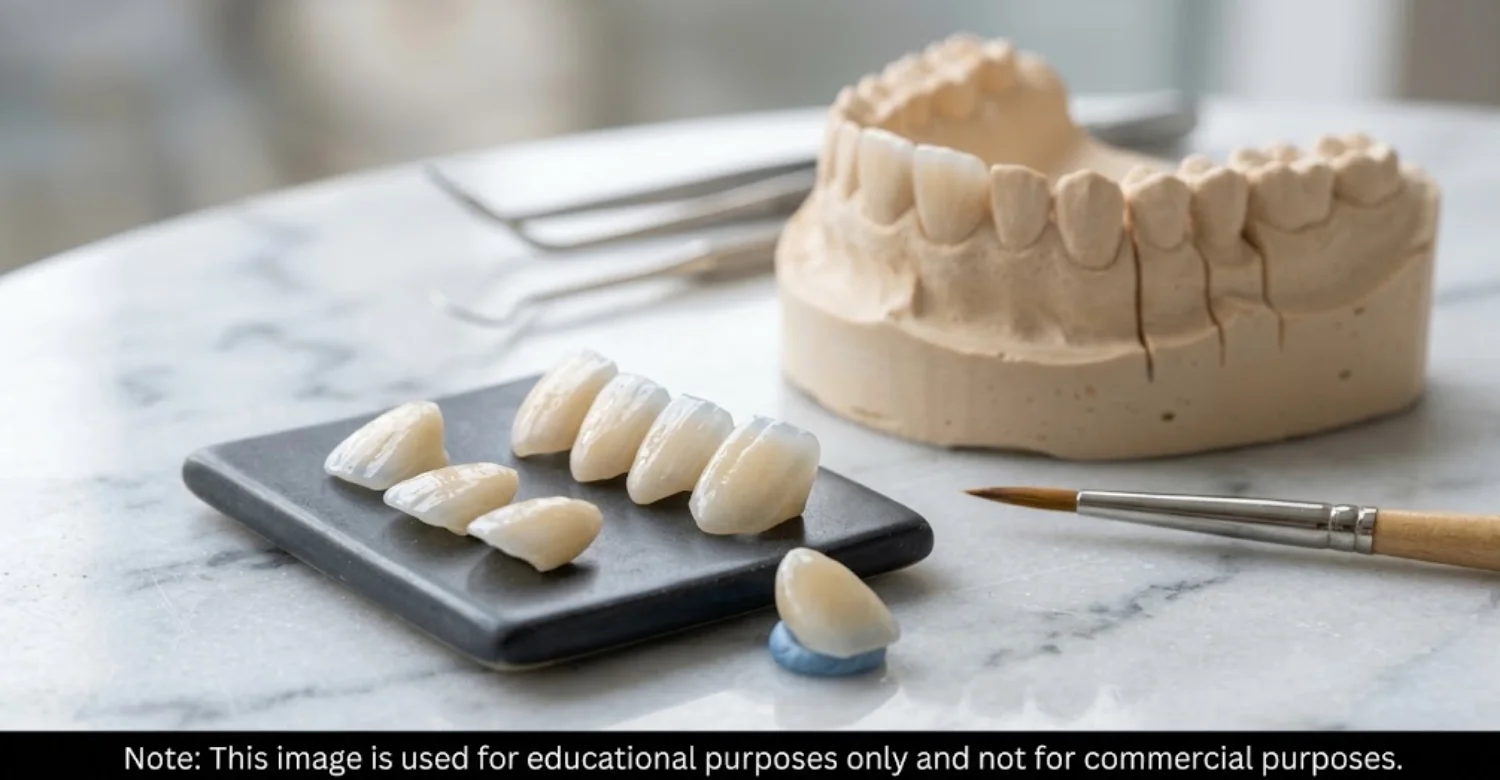
The number of veneers you need depends on how many teeth show when you smile, the width of your smile, your tooth alignment, and the changes you want to achieve. The commonly discussed 4-8-10 rule is only a rough aesthetic guide, not a fixed dental standard. Your dentist should assess your natural smile before recommending how many veneers are appropriate.
4 veneers: May improve the appearance of the four upper front teeth when the smile shows mainly the central incisors and the surrounding teeth already look satisfactory.
6 veneers: Often cover the six upper front teeth, from canine to canine, creating a more uniform appearance across the visible front teeth.
8 veneers: May be suitable when eight upper teeth are visible during smiling and a broader, more consistent smile-line change is desired.
10 veneers: May cover ten upper teeth when the premolars are also visible and need to match the redesigned front teeth.
20 veneers: Usually means ten upper and ten lower veneers. This extensive option may be considered when both arches need aesthetic changes, but it is not necessary for everyone and may involve significant treatment.
How Do You Know Which Number Is Right for You?
Your dentist evaluates your full smile, tooth proportions, gum line, bite, existing restorations, and the condition of your enamel. Smile photographs and a digital preview or mock-up may help you understand how different numbers of veneers could look.
More veneers do not automatically mean a better result. If only four or six teeth need aesthetic improvement, treating additional healthy teeth may be unnecessary. Veneers may also require irreversible enamel removal, depending on the case, so the treatment plan should preserve as much healthy tooth structure as possible.
Pros and Cons of Porcelain Veneers
Porcelain veneers offer long-lasting cosmetic benefits, but they also involve potential risks and maintenance requirements. The table below compares their main advantages and disadvantages.
Advantages of Porcelain Veneers | Disadvantages of Porcelain Veneers |
Natural appearance: Reflect light in a way that can resemble natural enamel. | Irreversible treatment: Enamel removal, when required, cannot be reversed. |
Stain resistance: Porcelain resists staining from coffee, tea, and other common sources. | Sensitivity: Temporary sensitivity to hot and cold may occur after placement. |
Multiple cosmetic improvements: Can address discoloration, small gaps, uneven edges, and minor shape concerns. | Risk of damage: Veneers can chip, crack, or become loose. |
Long-term durability: A 2021 review reported an estimated 10-year survival rate of approximately 95.5%; results vary by case and study. | Cannot be whitened: Whitening products do not change the colour of existing porcelain veneers. |
Conservative alternative to crowns: Often require less tooth reduction than full-coverage crowns. | Higher initial cost: Porcelain veneers generally cost more upfront than composite veneers. |
Usually no significant downtime: Most patients can return to normal daily activities shortly after treatment. | Limited insurance coverage: Cosmetic veneers are often excluded from dental insurance, depending on the policy. |
Potential aesthetic benefits: May help patients feel more comfortable with the appearance of their smile. | The underlying tooth remains vulnerable: The natural tooth can still develop decay, especially around veneer margins. |

Signs Your Veneers Need Replacing
See your dentist if you notice any of these signs:
A chip, crack or rough edge
A veneer that feels loose or moves
Dark lines or staining along the edges
Decay or sensitivity around a veneer
Gum recession exposing the veneer edge
A bite that suddenly feels different
A colour mismatch with neighbouring teeth
How to Care for Porcelain Veneers
Care for veneers as you would for natural teeth, with a few extra precautions.
Brush twice daily with a soft brush and nonabrasive fluoride toothpaste.
Clean between your teeth daily, because decay can form around veneers.
Avoid biting ice, nails, pens or packaging.
Wear a night guard if you grind, and a mouthguard for contact sports.
Limit coffee, tea and red wine, or rinse with water afterwards.
Attend regular check-ups and professional cleanings.
Ready to transform your smile?
Talk to our team and get a personal FREE treatment plan.
Porcelain Veneers vs Other Options
Veneers suit cosmetic changes on healthy teeth, while other options suit damage, missing teeth or minor flaws.
Option | Best for | What changes | Main trade-off |
Veneers | Colour, shape, small gaps | Thin layer of front enamel | Not reversible |
Crowns | Weak, broken or root-treated teeth | Whole tooth reshaped | More tooth removed |
Implants | Missing teeth | Post placed in the jawbone | Surgery and longer timeline |
learn more about comparison:
.jpg)
.jpg)
What Should You Ask Before Choosing Hollywood Smile Treatment?
Before choosing Hollywood Smile Treatment, ask your dentist these seven questions to understand the materials, treatment process, long-term maintenance, and potential risks.
1. Which Dental Laboratory Makes Your Veneers, and What Ceramic Do You Use?
Ask about the laboratory responsible for fabricating your veneers and the material selected for your case, such as feldspathic porcelain or lithium disilicate (E.max). Material choice affects translucency, strength, aesthetics, and how the veneers are fabricated. Your dentist should explain why the selected option suits your teeth and bite.
2. Will I See a Mock-Up Before Any Enamel Is Removed?
A diagnostic wax-up, digital preview, or temporary mock-up can help you review the proposed tooth shape, length, and overall smile design. Ask whether you can assess the appearance before irreversible tooth preparation begins. A preview helps guide expectations but cannot guarantee an identical final result.
3. How Much Enamel Will You Remove From Each Tooth?
The amount of enamel removal depends on tooth position, the desired changes, the material, and your existing tooth shape. Some cases may qualify for minimal-preparation or no-prep veneers, while others require more reduction. Ask your dentist to explain the planned preparation for each tooth and whether a more conservative alternative is possible.
4. Can I See Before-and-After Photos of Your Own Cases?
Request genuine before-and-after photographs of cases treated by the dentist who will perform your procedure. Where possible, look for patients with concerns similar to yours, such as discoloration, gaps, uneven edges, or worn teeth. Ask whether the photographs represent completed treatment and whether you can see results after an appropriate follow-up period.
5. What Warranty Do You Offer, and What Does It Cover?
Ask for the warranty terms in writing. Check its duration, whether it covers manufacturing defects or specific types of damage, and whether accidental fractures, bite-related damage, or normal wear are excluded. Also clarify whether repairs, replacement veneers, laboratory fees, or travel costs are covered. A warranty does not eliminate the possibility of complications.
6. Who Handles Repairs if a Veneer Chips or Comes Loose?
Find out who you should contact if a veneer chips, cracks, or detaches, particularly if you are travelling abroad for treatment. Ask whether the clinic provides follow-up appointments, what emergency advice is available, and whether repair or replacement costs are included. Minor chips may sometimes be repaired, while more extensive damage may require a new veneer.
7. Do I Need Any Treatment Before Veneers?
Your dentist should assess your teeth, gums, bite, and existing restorations before proceeding. Cavities, active gum disease, or other oral health problems may need treatment first. If you have significant crowding or bite issues, orthodontic treatment may be more appropriate than using veneers to mask the alignment problem. X-rays should be taken when clinically indicated.
Porcelain Veneers at Vitrin Clinic
At Vitrin Clinic, treatment starts by finding the cause of the concern you want changed. Discolouration may come from enamel defects, old fillings or a tooth with nerve damage. Each cause needs a different plan. The dentist examines your teeth, gums and bites in person. Digital dental X-rays are taken when clinically needed. They can reveal decay, old restorations or root problems hidden from view. Any active problem is treated before cosmetic work begins. Digital smile design and a mock-up help you preview proposed changes. Depending on the findings, the plan may involve veneers or another approach. Related options include Hollywood Smile treatment, Dental Crowns and Dental Bridges. Composite options can also be discussed where suitable. Outcomes depend on each patient's teeth, gums and bite. No result can be promised before a full assessment.
Treatment Estimates and Follow-Up for International Patients
International patients can share dental photos and recent X-rays for an initial estimate. At Vitrin Clinic, the final treatment plan and cost are confirmed after an in-person examination. Ask for a clear breakdown of the expected costs and any additional procedures you may need.






Conclusion
Porcelain veneers can transform the appearance of your smile by improving tooth colour, shape, size, and minor gaps. With proper care, they typically last 10–15 years, making them a long-term cosmetic option. However, conventional veneers require permanent enamel removal, so choosing the right treatment starts with understanding your dental health, bite, and aesthetic goals.
The best results come from careful planning, appropriate material selection, and an experienced dental team. At Vitrin Clinic, your dentist evaluates your teeth, gums, and bite to determine whether porcelain veneers or an alternative treatment better suits your needs. Book your FREE Treatment Plan from Vitrin Clinic to discuss a personalised approach to your smile.
Ready to transform your smile?
Talk to our team and get a personal FREE treatment plan.
Medical disclaimer
This article is general information, not a diagnosis or treatment plan. Suitability for veneers depends on an in-person dental examination. Seek urgent medical care for rapidly spreading facial swelling or difficulty breathing or swallowing.
Reference
FAQs
Published estimates put one veneer at 930–2,440 in the US, with an average near $1,425. UK private fees commonly run $900–$1,500. Turkish clinics often quote $200–$500. Prices depend on the material, lab, dentist and any treatment needed first. Always ask for an itemised quote.
Dr. Rifat Alsaman has more than 5 years of clinical experience in dentistry and currently serves as the Head of the Medical Team at Vitrin Clinic. He is dedicated to providing exceptional patient care, overseeing treatment planning, and ensuring the highest clinical standards across the team. His expertise, attention to detail, and commitment to continuous professional development have helped countless patients achieve healthier, more confident smiles.


