
Premolar teeth sit between the canine teeth and the molars in the permanent dentition. Most adults have eight of them in total. These teeth play an important role in chewing. They help crush and grind food before it reaches the molars for final breakdown. Understanding their location and function matters. Problems affecting these teeth can influence bite alignment, chewing efficiency, and overall oral health. This guide walks through the anatomy, function, and common problems of these teeth. It also covers treatment options and how they are cared for at Vitrin Clinic.
What Are Premolar Teeth?
Premolars are transitional teeth. They sit between the sharp canines at the front of the mouth and the larger molars at the back. Found only in the permanent dentition, premolars combine features of both canines and molars. This gives them a flatter chewing surface than canines, while keeping them smaller than molars. They play a key supporting role in the overall chewing process.
Where Are Premolar Teeth Located?
Premolars sit in each quadrant of the mouth. They sit directly behind the canine teeth and in front of the first molar. This placement allows them to bridge the tearing function of canines with the grinding function of molars. As a result, they are essential for efficient, comfortable chewing across the dental arch.
How Many Premolar Teeth Do Adults Have?
Most adults have eight premolar teeth in total: four in the upper jaw and four in the lower jaw. These are distributed evenly, with two premolars on each side of the mouth, top and bottom. Premolars only appear in the permanent set of teeth and replace the primary molars lost during childhood.
Premolar Teeth Numbers
Each quadrant of the mouth contains two premolars, referred to as the first and second premolar. In common dental numbering systems, the first premolar sits closer to the canine. The second premolar sits closer to the first molar. Dentists use these numbers to identify and record findings accurately during exams.
What Are First Premolar Teeth?
First premolars are located immediately behind the canine in each quadrant. They typically have a slightly pointed cusp on the cheek side, which reflects their transitional role between canines and molars. Structurally, first premolars often have a more angular crown shape. They can have one or two roots, depending on their position.
What Are Second Premolar Teeth?
Second premolars sit just behind the first premolars, closer to the molars. Compared to first premolars, second premolars usually have a rounder, more molar-like crown shape. In most cases, they also have a single root. This anatomy helps them contribute more to grinding rather than tearing during chewing.
What Is the Function of Premolar Teeth?
Premolar teeth function primarily to assist in breaking down food during chewing. They act as a bridge between the tearing action of the canines and the grinding action of the molars. This helps food become smaller and more manageable before it reaches the back teeth for further processing.
How Do Premolar Teeth Help With Chewing?
Premolars use their broad chewing surfaces and multiple cusps to crush and break down food into smaller pieces. This partial breakdown makes chewing more efficient and reduces the workload placed on the molars. As a result, the whole chewing process runs more smoothly and comfortably.
Do Premolar Teeth Have More Than One Function?
Beyond chewing, premolars help maintain the structure and length of the dental arch. They support the cheeks and lips and contribute to a stable bite. They also work alongside neighboring teeth to keep the jaw properly aligned, which supports both function and facial appearance.
Can Premolar Teeth Affect Your Bite?
Yes, premolars can significantly affect the bite. If a premolar is missing, damaged, crowded, or positioned incorrectly, neighboring teeth may shift over time. This can alter how the upper and lower jaws meet, leading to uneven pressure distribution and discomfort during chewing.
Clinical Note
Maintaining healthy premolars supports balanced chewing across both sides of the mouth and helps preserve proper tooth alignment. When a premolar is compromised, the surrounding bite dynamics are often affected. This is why early evaluation and treatment are generally recommended.
What Is the Difference Between Molar and Premolar Teeth?
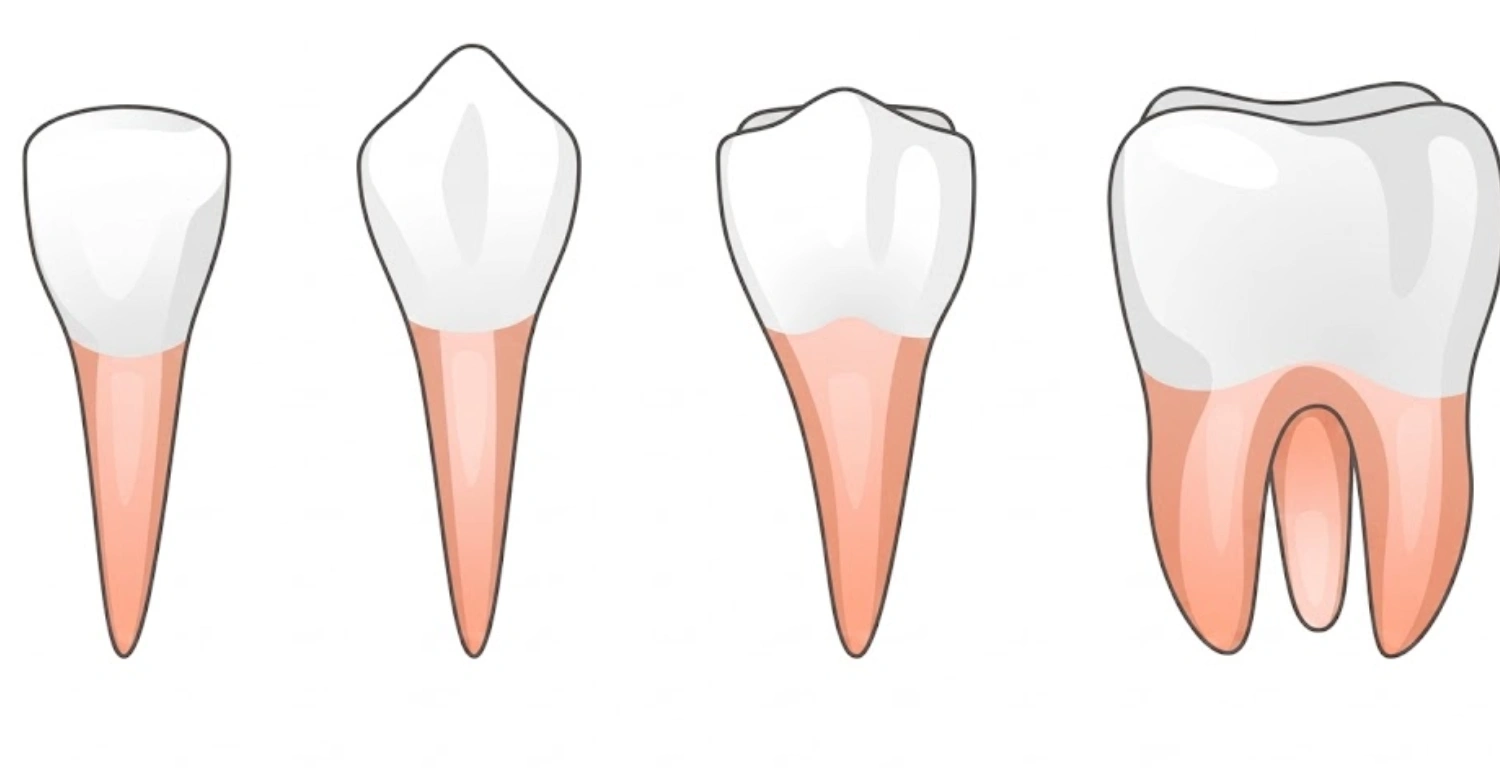
Understanding the difference between molar and premolar teeth helps clarify why each plays a distinct role in the mouth. While both are involved in chewing, they differ in size, structure, and specific function within the overall dental arch.
Difference Between Molar and Premolar Teeth
Premolars are smaller than molars and typically have one or two cusps. Molars, in contrast, are larger and usually have four or five cusps. Molars are located farther back and have a broader chewing surface, along with more roots for added stability. Premolars, on the other hand, generally have fewer roots and a narrower surface built for a lighter grinding role.
Molar and Premolar Teeth: How Are They Similar?
Despite their differences, molar and premolar teeth share an important similarity: both contribute significantly to breaking down food during chewing. They work together in sequence, with premolars performing initial crushing and molars completing the grinding needed before swallowing.
Premolar Molar Teeth: Why Are Both Important?
Premolar molar teeth function as a coordinated system rather than in isolation. Premolars begin transitioning food from the tearing motion of the front teeth toward the heavier grinding required at the back. Molars then finish this process, making both groups essential for complete, efficient chewing.
How Many Premolar Teeth Do Adults Have?
Adults typically have eight premolars as part of their permanent dentition, split evenly between the upper and lower jaws. This number remains consistent for most people, barring extraction, congenital absence, or orthodontic removal for treatment purposes.
How Many Premolar Teeth Are in the Upper Jaw?
Adults normally have four premolars in the upper jaw, with two on each side positioned behind the upper canines. These upper premolars assist in chewing and also contribute to supporting the shape of the cheeks and midface region.
How Many Premolar Teeth Are in the Lower Jaw?
Adults normally have four premolars in the lower jaw as well. Again, there are two on each side, directly behind the lower canines. Lower premolars work opposite their upper counterparts to create an even, functional bite across the dental arch.
What Happens if a Person Is Missing a Premolar Tooth?
When a premolar tooth is missing, neighboring teeth can gradually shift into the empty space. This may alter the bite and reduce chewing efficiency on that side of the mouth. Over time, this shifting can also affect jaw alignment and place added strain on remaining teeth.
Tips for the Patients
Patients who are missing a premolar or have a severely damaged one should see a dentist for evaluation. This should cover both the bite and the surrounding teeth. Early evaluation allows appropriate treatment planning before shifting or further complications develop.
What Do Premolar Teeth Look Like?
Premolars generally have a moderately sized crown with one or two pointed cusps. They sit between the pointed canines and the broader molars. Their appearance reflects their transitional role, combining features suited for both light tearing and initial grinding of food.
Premolar Teeth Diagram
A typical premolar diagram illustrates several key parts:
Crown – the visible chewing surface
Cusps – raised points used for crushing
Enamel – the hard outer layer
Dentin – the layer beneath the enamel
Pulp – contains nerves and blood vessels
Root – anchors the tooth in the bone
Gumline – where the tooth meets the gum tissue
What Does a First Premolar Look Like?
A first premolar generally has a more angular crown with a prominent cusp on the cheek side. This gives it a somewhat pointed appearance compared to the second premolar. It may have one or two roots, depending on its position in the upper or lower jaw.
What Does a Second Premolar Look Like?
A second premolar tends to have a rounder, flatter crown compared to the first premolar, resembling a small molar. It typically has a single root and a chewing surface better suited for grinding rather than tearing food.
What Are the Different Types of Premolar Teeth?
There are two main types of premolars in each quadrant: the first premolar and the second premolar. Each type has distinct anatomical features suited to its specific position and role in the chewing process.
First Premolar Teeth
First premolars are positioned closer to the canines. They play a role in the initial breakdown of food, particularly foods that need a slightly tearing motion before crushing. Their anatomy reflects this transitional chewing function.
Second Premolar Teeth
Second premolars sit behind the first premolars, closer to the molars. They contribute more heavily to grinding food into smaller particles. Their broader, flatter surface supports this role within the overall chewing sequence.
Clinical Note
Premolar anatomy can vary between individuals in terms of cusp shape, root number, and overall size. Because of this variation, each premolar tooth is generally evaluated individually when planning restorative or cosmetic dental treatment.
Can Premolar Teeth Develop Dental Problems?
Yes, premolars can develop a range of dental problems, much like any other tooth in the mouth. Because of their location and grooved chewing surfaces, premolars can be susceptible to decay, sensitivity, cracks, and gum-related issues. This is especially true if they are not properly cared for.
Premolar Tooth Decay
Premolars can develop cavities due to plaque buildup in the grooves of their chewing surfaces or between neighboring teeth. Early treatment of decay helps preserve as much natural tooth structure as possible. It can also prevent the need for more extensive procedures later.
Premolar Tooth Sensitivity
Sensitivity in premolars is commonly caused by enamel wear, untreated decay, gum recession, or exposed dentin. The protective enamel layer can thin, or the root surface can become exposed. When this happens, temperature changes and certain foods can trigger noticeable discomfort.
Cracked or Damaged Premolar Teeth
Premolars can crack or become damaged due to biting on hard objects, teeth grinding, or trauma. Depending on the severity, a damaged premolar may require restorative treatment such as a filling or crown. In some cases, root canal therapy is needed to preserve the tooth.
Premolar Teeth and Gum Disease
Plaque accumulation around premolars can lead to gum inflammation, which, if left untreated, may progress toward more advanced periodontal disease. Premolars sit in an area that can be harder to clean thoroughly. Because of this, consistent oral hygiene is particularly important for these teeth.
Tips for the Patients
To protect premolars from decay and gum disease, patients should brush twice daily with fluoride toothpaste and clean between their teeth daily. They should also limit frequent sugar exposure and attend regular dental examinations for early detection of any issues.
Can Premolar Teeth Be Removed?
In some cases, premolars may need to be removed. However, extraction is generally considered only when the tooth cannot be reasonably preserved through other treatment. The decision depends on the specific condition of the tooth and the patient's broader dental needs.
Why Would a Premolar Tooth Need Extraction?
A premolar tooth may need extraction for several reasons, including:
Severe tooth decay that has compromised the tooth structure
Irreparable fractures
Advanced infection that cannot be resolved with root canal treatment
Planned orthodontic treatment to relieve severe crowding in the dental arch
What Happens After Premolar Teeth Extraction?
After premolar extraction, the surrounding gum and bone tissue gradually heal over several weeks. Without replacement, neighboring teeth may shift over time. Because of this, a dentist may discuss replacement options or orthodontic treatment, depending on the patient's overall bite and goals.
Clinical Note
Extraction is not automatically necessary for every damaged premolar tooth. Preserving natural tooth structure is generally considered whenever the tooth can be predictably restored. Keeping the original tooth typically supports better long-term bite stability.
How Can You Keep Your Premolar Teeth Healthy?
Keeping premolars healthy relies on consistent daily habits combined with regular professional care. Premolars sit in a position that can be prone to plaque buildup. Because of this, a proactive approach to oral hygiene helps prevent many common problems before they develop.
Daily Care for Premolar Teeth
Daily care for premolars includes several simple habits:
Brushing twice a day
Using fluoride toothpaste
Cleaning between teeth daily
Attending regular dental checkups
Managing sugar intake
Addressing sensitivity or pain early, rather than waiting for it to worsen
Why Are Regular Dental Checkups Important?
Regular dental checkups allow a dentist to identify cavities, cracks, gum problems, and bite-related issues before they become more complicated. Early detection generally makes treatment simpler, less invasive, and more likely to preserve the natural tooth.
How Are Premolar Teeth Treated at Vitrin Clinic?
At Vitrin Clinic, premolar-related treatment is planned around the condition of the tooth and the surrounding tissues. The patient's bite and overall treatment goals are considered as well. Each case is assessed individually so that the recommended approach fits the specific situation of the tooth in question.
What We Notice Clinically
According to Dr. Rifat Alsaman, Head of the Medical Team at Vitrin Clinic and a cosmetic dentist, evaluating a premolar tooth goes beyond the visible crown alone. The condition of the roots, surrounding gums, bite relationship, and neighboring teeth are all considered. These factors can influence which treatment approach works best.
Premolar Teeth Treatment Options at Vitrin Clinic
Vitrin Clinic offers a range of treatment options for premolars, depending on the patient's condition, including:
Dental fillings
Dental crowns
Root canal treatment
Tooth extraction when necessary
Dental implants for suitable missing teeth
Orthodontic treatment
Cosmetic restoration when indicated
How Does Vitrin Clinic Plan Premolar Treatment?
Vitrin Clinic plans premolar treatment through a thorough examination, dental imaging when necessary, and an assessment of the patient's bite. This individualized approach allows the treatment plan to address the visible tooth. It also considers the surrounding structures that support it.
Clinical Note
The team at Vitrin Clinic emphasizes preserving healthy tooth structure whenever possible. At the same time, treatment aims to restore function, comfort, and an appropriate appearance. This balanced approach guides how premolars are managed throughout the treatment process.
Resource
In conclusion, premolar teeth play an important role in chewing and maintaining proper dental function. The research published in the cited PMC article highlights the clinical importance of understanding premolar anatomy and morphology. This understanding supports accurate diagnosis and treatment planning. Knowing the characteristics of these teeth helps dental professionals provide safer, more predictable care while preserving healthy oral function.
https://pmc.ncbi.nlm.nih.gov/articles/PMC8930800/
https://pmc.ncbi.nlm.nih.gov/articles/PMC10240846/
https://pmc.ncbi.nlm.nih.gov/articles/PMC12375288/
FAQs

Dr. Rifat Alsaman has more than 5 years of clinical experience in dentistry and currently serves as the Head of the Medical Team at Vitrin Clinic. He is dedicated to providing exceptional patient care, overseeing treatment planning, and ensuring the highest clinical standards across the team. His expertise, attention to detail, and commitment to continuous professional development have helped countless patients achieve healthier, more confident smiles.

.webp&w=3840&q=75)


