

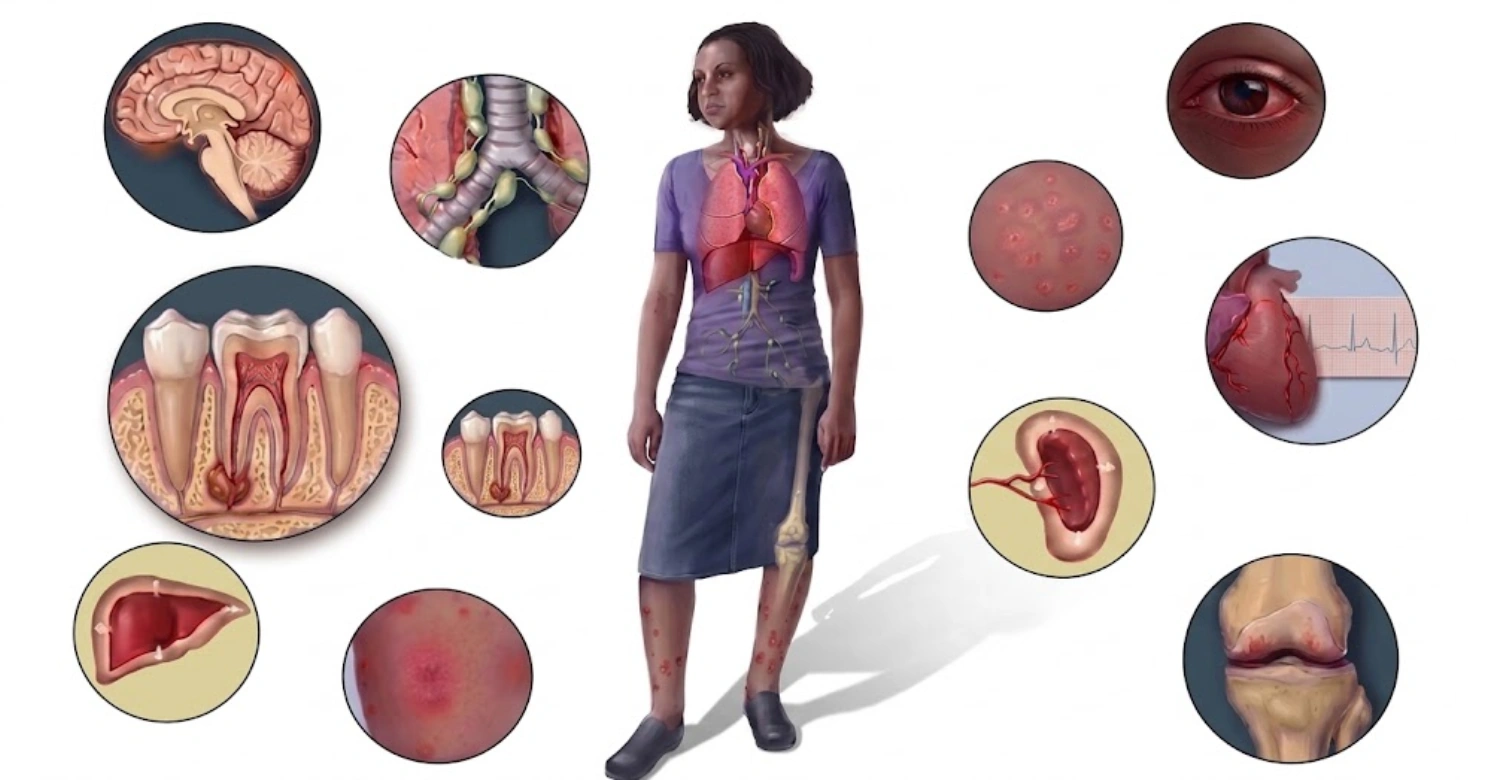
Sarcoidosis is a systemic inflammatory condition. It produces small clusters of immune cells, called granulomas, in various organs of the body. The lungs and lymph nodes are most commonly affected. Sarcoidosis can occasionally involve the mouth, gums, and jaw bones. For this reason, sarcoidosis and dental extraction is a topic that deserves careful attention. Patients living with this condition may wonder whether a tooth can be safely removed. They may also wonder what precautions are needed, and how the disease itself might influence healing. Oral manifestations are uncommon. When they occur, they can affect medication use, wound healing, and the overall approach a dental team takes toward any surgical procedure. Understanding the relationship between sarcoidosis, oral health, and dental treatment helps patients and clinicians plan extractions with confidence.
In most cases, sarcoidosis and dental extraction proceed together without complication. The main considerations are corticosteroid-related healing risk and physician consultation beforehand. The mouth can occasionally be the first place sarcoidosis shows itself. Any socket, swelling, or loose tooth that behaves unexpectedly deserves closer evaluation rather than routine assumption.
Can You Have a Tooth Extraction With Sarcoidosis?
For most patients, sarcoidosis and dental extraction can be discussed as a routine part of dental planning. This is true once the dentist has a clear picture of the patient's current health. The overall approach tends to focus less on the diagnosis itself. It focuses more on how active the disease currently is, which organs are involved, and which medications the patient takes day to day.
Is Sarcoidosis a Contraindication to Tooth Extraction?
Sarcoidosis on its own is not considered a contraindication to dental extraction. Most patients with the condition tolerate routine oral surgery without unusual difficulty. What matters more is the current activity of the disease. Which organs are involved also matters, as does whether medications such as corticosteroids are being used. When it comes to sarcoidosis and tooth extraction, the decision should rest on an individualized assessment. It should not rest on a blanket rule.
What Should Your Dentist Know Before Tooth Extraction?
Before any extraction, the dental team should know about the sarcoidosis diagnosis and disease history. They should also know current medications, any oral symptoms present, previous dental complications, and overall medical condition. Sharing this information helps the dentist anticipate healing or medication-related issues before treatment begins. This is why open communication is central to safe sarcoidosis and dental extraction planning. Consultation with the patient's physician is generally advised beforehand when invasive surgery or anesthesia is planned. This mainly helps gauge how much any involved organ systems, most often the lungs, may be affected.
Sarcoidosis and Tooth Extraction: What Are the Main Considerations?
Treatment planning for sarcoidosis and dental extraction should be individualized rather than standardized. The disease can range from mild and inactive to more extensive systemic involvement. The dentist should evaluate the affected tooth, the surrounding gum tissue, and nearby bone. This evaluation happens before recommending a course of action, and it accounts for how the patient's overall condition may influence recovery. No two patients present in quite the same way. This is exactly why a single fixed protocol rarely serves every case well.
Clinical Note
The presence of sarcoidosis does not automatically mean extraction must be avoided. In most cases, a tooth that genuinely needs removal — due to decay, infection, or structural damage — can still be extracted safely. This is true once the patient's medical background has been reviewed, confirming that sarcoidosis and dental extraction can proceed together under proper planning. The key is simply making sure that review happens before, not after, the procedure is scheduled.
How Does Sarcoidosis Affect Your Mouth and Teeth?
Understanding sarcoidosis oral manifestations helps explain why some dental evaluations require extra attention. It also explains why questions about sarcoidosis and dental extraction often begin with a look at the mouth as a whole. Granulomatous inflammation can involve the lips, tongue, gums, salivary glands, or jaw bones, though this is uncommon. It can sometimes produce swelling, nodules, or ulceration. These findings can resemble other dental conditions. A thorough evaluation is important whenever unusual oral symptoms appear. Oral involvement can be the earliest sign of sarcoidosis in roughly two-thirds of the patients who develop it. Even so, overall oral involvement is genuinely rare, appearing in only about 1–2% of sarcoidosis cases as a whole.
Sarcoidosis Oral Manifestations
Reported oral findings include firm swellings of the gums or cheeks, painless nodules, and dry mouth from salivary gland involvement. Less commonly, lesions within the jaw bone itself can occur. These manifestations are relatively rare. Recognizing them supports timely evaluation and appropriate referral when necessary. A dentist who is aware of this possibility is better positioned to notice a finding that does not fit the usual pattern of everyday dental disease.
Sarcoidosis and Teeth Problems
Sarcoidosis and teeth problems are usually indirect. They arise from gum inflammation, dry mouth, or medication effects rather than the teeth themselves being invaded by disease. It is important to distinguish oral sarcoidosis involvement from everyday dental conditions such as cavities or worn fillings. These remain the most common cause of tooth-related symptoms, even in patients considering sarcoidosis and dental extraction.
Sarcoidosis and Gum Problems
Maintaining healthy gums is especially valuable for anyone managing a chronic inflammatory condition. Routine brushing, flossing, and professional cleanings help reduce the burden of common gum disease. This makes it easier for a dentist to distinguish ordinary gingival inflammation from any sarcoidosis-related change. It also helps plan sarcoidosis and dental extraction with fewer surprises if it is ever needed. Good daily habits at home genuinely make this kind of distinction easier for the dental team to draw.
Sarcoidosis and Loose Teeth
Sarcoidosis and loose teeth can occur when granulomatous inflammation affects the supporting bone. Far more often, though, tooth looseness is explained by everyday periodontal disease. Determining the true cause — whether periodontal disease, bone involvement, infection, or another dental condition — requires careful clinical evaluation. Radiographic evaluation is sometimes needed too. Jumping to a conclusion without that evaluation risks missing the actual source of the problem.
Tips for the Patients
Patients can support their own oral health by maintaining regular brushing and flossing. Keeping up with routine dental examinations matters too, even when nothing feels wrong. Any unexplained oral swelling, sores, or loose teeth are worth reporting promptly. Do not wait to see if they resolve on their own. It also helps to remind the dental team about a sarcoidosis diagnosis at each visit. Ongoing awareness supports more consistent monitoring over time.
Can Sarcoidosis Affect the Jaw Bone?
The jaw bone directly supports the teeth, so any bone-level change is relevant to discussions of sarcoidosis and dental extraction. Such involvement is rare, though. When the jaw is affected, the change is usually subtle at first. It may only come to light through imaging taken for another reason entirely. This is part of why patients and dentists alike should stay alert to unusual patterns.
Sarcoidosis Jaw Bone Involvement
Although rare, sarcoidosis jaw bone involvement has been documented in the dental literature. It typically presents as an area of bone change on imaging or unexplained looseness of otherwise healthy teeth. In some reported cases, sarcoidosis has appeared in the jaw as rapid tooth loosening, notable bone loss, mandibular swelling, or a socket that simply will not heal. A tooth that looks like it needs extraction for periodontal disease can occasionally turn out to be an early sign of this systemic condition instead.
One documented case involved a palatal swelling initially diagnosed as a routine dental lesion tied to a decayed molar. The tooth was extracted, yet the swelling persisted afterward. Biopsy eventually revealed granulomatous inflammation consistent with sarcoidosis. Intraosseous disease of this kind can appear on imaging as an ill-defined area around otherwise healthy teeth, and it may even resemble aggressive periodontitis. Any suspected jaw abnormality should be evaluated by both the dental and medical teams. This confirms the underlying cause before treatment decisions related to sarcoidosis and dental extraction are made.
How Can Jaw Bone Involvement Affect Dental Treatment?
When bone involvement is suspected, extraction planning may involve additional imaging. This helps assess the extent of the affected area, the position of tooth roots, and nearby anatomical structures. It helps the dental team choose the safest surgical approach. It also helps them anticipate how the site might heal afterward, rather than discovering complications once the procedure is already underway.
Can Sarcoidosis Cause Jaw Pain or Swelling?
Jaw pain or swelling can occur in sarcoidosis. Far more often, though, such symptoms stem from common dental causes like infection, abscess, or periodontal disease. Persistent or unexplained swelling should always be evaluated. It should not be automatically attributed to sarcoidosis without proper assessment. Ruling out the ordinary explanations first usually gets a patient to the right answer faster.
Clinical Note
Jaw symptoms have many possible causes, including ordinary dental infection and periodontal disease. Sarcoidosis should be considered among the possibilities when standard dental causes have been ruled out. It should also be considered when healing does not progress as expected. Chasing the more common explanations first is usually the fastest way to arrive at an accurate diagnosis without unnecessary delay.
What Are the Risks of Dental Extraction With Sarcoidosis?
Like any surgical procedure, sarcoidosis and dental extraction carries some general risks. Serious complications are uncommon when the case has been properly assessed beforehand. Understanding these risks in advance allows a dental team to prepare. This reduces the odds of something being missed once the appointment itself begins.
Sarcoidosis Dental Complications
Most patients undergo extraction without notable sarcoidosis dental complications. Individual medical history plays an important role. Factors such as active disease elsewhere in the body, corticosteroid or immunosuppressive therapy, and any prior healing difficulties should be reviewed before surgery. This helps the dental team plan sarcoidosis and dental extraction accordingly. Long-term corticosteroid or steroid-sparing therapy can affect immunity and wound healing. Extended steroid use may also prompt the dental team to consider antibiotic coverage around the procedure as an added precaution.
Can Sarcoidosis Affect Healing After Tooth Extraction?
Healing after extraction can be influenced by overall health status, medications in use, oral hygiene, and the condition of the extraction site itself. Most patients heal normally. A socket that appears to be healing unusually slowly warrants a follow-up visit rather than being left unchecked. In rare case reports, diffuse gum involvement or intraosseous jaw disease has even been linked to the failure of an extraction socket or dental implant to heal properly. This in turn prompted a wider systemic evaluation.
Does Sarcoidosis Increase the Risk of Infection After Extraction?
Preventing infection after extraction relies on good oral hygiene and adherence to postoperative instructions, regardless of a sarcoidosis diagnosis. Patients on long-term corticosteroid therapy may be monitored a little more closely. Prolonged steroid use can influence the body's usual immune and healing response. Catching any early sign of trouble sooner rather than later tends to make treatment simpler.
Tips for the Patients
Following all postoperative instructions closely gives the extraction site the best chance of healing without incident. Avoiding smoking during recovery further supports normal tissue repair. The extraction area should be kept clean according to the dentist's specific instructions, rather than a generic routine. If symptoms worsen at any point, or if healing appears abnormal compared with what was expected, contacting the dental team promptly is always the right move.
Sarcoidosis and Dental Extraction: What Procedures Are Possible?
Beyond extraction, patients often ask what other dental care is possible. Sarcoidosis and dental extraction is only one part of a much broader picture of oral care. Most routine and even more advanced dental services remain fully accessible. The disease on its own rarely limits what a patient can safely have done at any stage of treatment.
Sarcoidosis and Dental Treatment
Patients with sarcoidosis can generally undergo the full range of dental treatment options. These include routine dental examinations, professional dental cleaning, fillings, crowns, root canal treatment, tooth extraction, and dental implants when appropriate. None of these procedures are automatically off the table simply because of a sarcoidosis diagnosis. Most patients move through them the same way any other patient would, with the usual attention paid to medical history and current medications.
Sarcoidosis and Oral Surgery
Sarcoidosis and oral surgery may require additional planning. This depends on disease activity, medication history, and the specific procedure being performed. Reviewing the patient's complete medical history beforehand allows the surgical team to anticipate any special considerations relevant to extraction. It also reduces the likelihood of unexpected complications arising partway through treatment or during recovery afterward.
When Might Tooth Extraction Be Necessary?
Common clinically indicated reasons for extraction include severe tooth decay, advanced infection, and a tooth that is no longer restorable. Severe periodontal disease and fractured teeth are common reasons too, along with a number of other situations a dentist may judge case by case. None of these reasons are unique to sarcoidosis patients. They remain the same clinical triggers that would prompt extraction in anyone.
Clinical Note
The decision to extract a tooth should always be based on the condition of the tooth itself, together with the patient's overall clinical circumstances. It should not rest on a sarcoidosis diagnosis alone. Treating the diagnosis as one factor among several, rather than the deciding one, tends to lead to a more accurate and appropriate treatment decision in the end.
What Should You Tell Your Dentist Before Sarcoidosis Dental Extraction?
Open communication is one of the most valuable tools available before sarcoidosis and dental extraction. The more complete the picture a dentist has of a patient's medical background, the more precisely treatment can be tailored to reduce risk and support smooth healing. Even small details volunteered by the patient can shape how the visit is planned.
Tell Your Dentist About Your Sarcoidosis History
Share your diagnosis and disease history, any previous flare-ups or complications, and your current symptoms. This background helps the dental team understand how active your condition is and whether any special precautions are appropriate. It can also shape the pace at which treatment is scheduled and reviewed going forward, especially around larger procedures.
Discuss Your Medications
The dental team should know about all medications used to manage sarcoidosis. Certain drugs — particularly corticosteroids — can influence healing, infection risk, and how a dental treatment plan is structured. Even medications that seem unrelated to dentistry can occasionally matter. It is best to list everything rather than guess at what is relevant.
Share Your Previous Dental and Surgical History
Relevant history includes any previous extractions and how they went, past healing problems, and any previous reactions to medications or anesthesia. Prior oral surgery of any kind matters too. Even details that seem minor at the time can help the dental team anticipate how a new procedure is likely to go. It is worth mentioning anything that stands out, even years later.
Tips for the Patients
Bringing an updated medication list to every appointment saves time and reduces the chance of anything being overlooked. Patients should also mention any recent changes in their health, even ones that seem unrelated to their teeth, since sarcoidosis can affect several body systems at once. Prescribed medication should never be stopped or adjusted without medical advice, even in preparation for a dental procedure.
Oral Sarcoidosis Dental Treatment: How Is It Managed?
Diagnosis and treatment of oral involvement are approached separately from routine extraction planning. The two can overlap when a lesion is found near a tooth being considered for removal. In those overlapping situations, the dental and medical sides of the case usually need to be reviewed together. They should not be treated as two unrelated issues, so nothing important gets overlooked.
Diagnosing Oral Sarcoidosis
Clinical examination is the starting point for identifying possible oral sarcoidosis. Additional testing or specialist referral is considered when findings are unusual, persistent, or do not respond to standard dental treatment. Because treatment decisions depend on an accurate diagnosis, biopsy may be recommended for lesions that do not resolve as expected. Oral sarcoidosis lesions are often non-specific in appearance. They can be mistaken for periodontal disease, a foreign-body reaction, or another type of granulomatous infection. This is exactly why diagnosis is frequently delayed, and why a socket or gum area that behaves unexpectedly should prompt biopsy and referral rather than repeated conventional treatment alone.
Treating Oral Symptoms
Treatment depends entirely on the specific oral manifestation identified. Distinguishing a true sarcoidosis-related finding from a common dental problem, such as an abscess or ordinary gum inflammation, is an essential step. The two can look deceptively similar on first inspection. Only careful examination tells them apart.
Oral Hygiene and Preventive Dental Care
Preventive habits that support long-term oral health include regular dental examinations and consistent plaque control at home. Ongoing gum care and early treatment of dental disease before it has a chance to progress matter too. These habits matter for everyone. They carry a little extra weight for patients managing a chronic systemic condition, since they make it easier to notice when something genuinely looks different.
Clinical Note
Consistent preventive dentistry can reduce the likelihood of needing more invasive dental procedures later. This is especially valuable for patients managing a chronic condition like sarcoidosis. Small, regular efforts at home and in the dental chair tend to add up to noticeably fewer complicated visits over the years. This is worth keeping in mind long term.
How to Prepare for Sarcoidosis and Tooth Extraction
A little preparation goes a long way toward making the process smooth and predictable for both the patient and the dental team. Taking a few simple steps before the appointment can prevent last-minute questions. It also helps the visit stay on schedule from start to finish, which ultimately makes the whole process easier for everyone involved.
Before Your Dental Appointment
Review your medical history, prepare an updated medication list, and let the dental team know about any current oral symptoms. This helps them plan the visit appropriately. Doing this ahead of time, rather than at the chair, leaves more room for questions. It also reduces the chance of anything being forgotten on the day of the appointment itself.
Before Dental Extraction
Complete the recommended dental assessment, discuss the anesthesia and procedure that will be used, and ask about what to expect during postoperative recovery. Raise any concerns at this stage, rather than after the extraction. This gives the dental team the chance to address them properly beforehand, so nothing important is left until the last minute.
After Tooth Extraction
Follow the dentist's instructions, protect the extraction site, and monitor healing closely. Report any unusual or worsening symptoms without delay. Sticking closely to this routine in the first few days after the procedure makes the biggest difference in how smoothly recovery goes overall. It is worth treating as seriously as the extraction itself.
Tips for the Patients
Avoiding self-medication is especially important around the time of a dental procedure, since over-the-counter remedies can sometimes interact with medications used to manage sarcoidosis. Prescribed medication should never be changed without appropriate medical advice, even if a patient feels the dose no longer seems necessary. Keeping any recommended follow-up appointments also matters, since these visits are often how a slow-healing site is caught early.
How Vitrin Clinic Approaches Sarcoidosis and Dental Extraction
Vitrin Clinic treats every case of sarcoidosis and tooth extraction as its own individual situation, rather than following one fixed routine for all patients. The approach centers on gathering a full medical picture first, then building a treatment plan around it. This means the tooth, the gums, the jaw, and the patient's broader health are all considered together before any extraction is recommended or scheduled.
Personalized Dental Assessment at Vitrin Clinic
At Vitrin Clinic, every recommendation regarding sarcoidosis and dental extraction begins with a personalized dental assessment. Rather than applying a one-size-fits-all approach, the clinical team evaluates each patient's specific dental condition before recommending extraction. This ensures the treatment plan reflects the individual's actual needs, rather than a generic protocol borrowed from another case entirely.
Medical History and Treatment Planning
Sharing a complete sarcoidosis history and current medication information allows Vitrin Clinic to incorporate relevant medical details directly into dental planning. This supports a safer and more coordinated approach to treatment. This coordination is easiest to achieve when the information is shared upfront, before any procedure is scheduled, rather than partway through the visit.
Dental Imaging and Extraction Planning
Appropriate dental imaging plays a role in extraction planning. It allows assessment of tooth roots, surrounding bone, and adjacent structures when clinically necessary before any procedure is carried out. Having this information in hand ahead of time reduces the chance of an unexpected finding during the extraction itself. This keeps the visit predictable for everyone.
Post-Extraction Care at Vitrin Clinic
After treatment, patients receive clear postoperative instructions. There is an emphasis on monitoring healing and maintaining open communication with the dental team if any unexpected symptoms occur. This ongoing communication is treated as part of the care plan itself, not as an optional afterthought once the appointment ends and the patient goes home.
What We Notice Clinically
In practice, most patients with sarcoidosis heal well after routine dental extraction. According to Dr. Rifat Alsaman, Head of the Medical Team at Vitrin Clinic, the cases that warrant closer attention typically involve prolonged corticosteroid use, unusual jaw findings, or a socket that is not healing on the expected timeline. These are exactly the situations where extra follow-up tends to make the biggest difference.
Clinical Opinion From the Vitrin Clinic Team
The clinical team at Vitrin Clinic emphasizes reviewing a patient's complete medical history before any dental extraction. Each case involving sarcoidosis and dental extraction should be evaluated individually. Careful assessment of the tooth, gums, jaw, medications, and overall health guides every recommendation. The team places strong value on clear patient communication and truly personalized treatment planning, from the first consultation through recovery.
Clinical Note
Sarcoidosis can present differently from one patient to another, so no two extraction plans look exactly alike. Any dental symptom should be properly investigated, rather than automatically assumed to be caused by sarcoidosis. Assuming too quickly can sometimes delay the real explanation from coming to light entirely.
Tips for the Patients
Patients are encouraged to tell Vitrin Clinic about their complete medical history from the very first visit, rather than only mentioning it if asked directly. Bringing a current medication list along helps the clinical team build an accurate picture quickly. Patients are also welcome to ask questions about the extraction and recovery process at any stage. Following the personalized postoperative instructions afterward remains the simplest way to support smooth healing.
Resource
In conclusion, sarcoidosis and dental extraction require careful assessment, particularly when the jawbone is involved. A recent systematic review found that jawbone sarcoidosis may cause significant bone loss and tooth mobility, sometimes requiring surgical intervention alongside steroid therapy. These findings highlight the importance of accurate diagnosis, imaging, and multidisciplinary planning before extraction. This helps minimize complications and ensure appropriate management.

.webp&w=3840&q=75)


