General Dentistry
October 14, 2026
What Are the Options, Benefits, and Risks of Sedation for Dental Anxiety?
 Dr. Rifat Alsaman
Sedation for dental anxiety can help some patients manage fear and complete necessary dental care. The right approach depends on anxiety severity, treatment needs, medical history, and the available monitoring. Sedation is not the same as pain control, and some patients benefit from non-drug techniques alone.
What Is Sedation for Dental Anxiety?
Dental sedation uses clinical techniques or medicines to reduce fear during dental treatment. Sedation can range from mild relaxation to a deeper state requiring closer monitoring. Most conscious-sedation patients remain responsive, although they may feel sleepy or remember little. General anesthesia is different because it makes the patient unconscious. A dentist should explain the intended level, possible benefits, risks, and alternatives before consent.
.jpg)
.jpg)
.jpg)
.jpg)
How Does Sedation for Dental Anxiety Work?
Dental sedation reduces distress by changing alertness and anxiety during a procedure. The method may involve breathing a sedative gas, taking a prescribed oral medicine, or receiving medicine through a vein. General anesthesia requires a separate plan and a suitably trained anesthesia team. Local anesthesia may still be needed because sedation does not reliably prevent pain. The team selects the approach according to the procedure, medical history, anxiety level, and safety requirements.
Ready to transform your smile?
Talk to our team and get a personal FREE treatment plan.
Why Do Patients Need Dental Sedation for Anxiety?
Patients may consider dental sedation when fear prevents them from receiving routine or necessary treatment. The cause may involve previous painful experiences, fear of needles, a strong gag reflex, or difficulty tolerating long appointments. A supportive conversation should identify the main trigger before a technique is selected. Sedation may help, but it does not automatically resolve the underlying fear.
Fear of Dental Pain or Injections
Fear of pain or injections can make even a short appointment feel overwhelming. Sedation may reduce distress, while local anesthesia is used when needed to control procedural pain. Patients should tell the dentist which sensations or steps worry them most. Agreeing on a pause signal can help restore a sense of control.
Dental Phobia and Previous Negative Experiences
Dental phobia can lead people to postpone care despite pain or visible dental problems. Previous difficult treatment, loss of control, embarrassment, or distressing sounds may contribute. Dental sedation may make planned treatment more manageable for selected patients. A trauma-informed approach should include clear explanations, consent, predictable steps, and permission to pause whenever clinically possible.
Gag Reflex and Difficulty Sitting Through Treatment
A strong gag reflex or difficulty remaining still can complicate dental treatment. The dentist should first consider the trigger, the treatment position, and communication strategies. Sedation may help selected patients tolerate procedures, but it is not a guaranteed solution. The team must still maintain safe access to the mouth and airway.
Anxiety During Lengthy Dental Procedures
Long or complex procedures may increase fatigue and distress. Dental sedation can be considered when treatment duration makes ordinary coping strategies insufficient. The clinician should explain whether treatment can be divided into shorter visits. Longer appointments also require careful planning for monitoring, breaks, and recovery.
What Are the Different Dental Sedation Options?
Dental sedation can involve inhalation, oral, or intravenous sedation, while general anesthesia is a separate option. These methods differ in how they are given, how deeply they affect alertness, and how recovery is managed. Availability and eligibility vary by clinic, clinician training, patient health, and local rules. The dentist should explain the planned level of sedation and the required safety arrangements before treatment.
Inhalation Sedation
Inhalation sedation involves breathing a calming gas mixture through a small nosepiece. The patient is usually awake and can respond to instructions. Its effects generally wear off relatively quickly after the gas is stopped, but the clinic must provide individual discharge advice. It may suit some anxious patients or those who need a lighter level of support. It is not appropriate for everyone, and the dentist should screen for relevant medical concerns.
Oral Sedation
Oral sedation uses a prescribed medicine taken before treatment. Its onset and effects can be less predictable than inhalation sedation. Patients may become drowsy, and some may remember little of the appointment. The medicine must be prescribed and managed by an appropriately qualified clinician. Patients should never take extra doses or use someone else’s medicine to prepare for a dental visit.
Intravenous (IV) Sedation
Intravenous sedation delivers a sedative medicine through a vein. The level can be adjusted during treatment by a trained professional. Patients often remain responsive, but may feel deeply relaxed and recall little afterward. It requires appropriate monitoring, trained staff, recovery arrangements, and usually an escort home. The clinic should explain fasting rules and restrictions before the appointment.
General Anesthesia for Dental Treatment
General anesthesia makes a patient unconscious and requires more extensive airway and recovery planning. It may suit selected complex procedures, severe anxiety, or certain disabilities. Some children need it when other approaches cannot safely meet their needs. The decision requires an individualized assessment and appropriately trained anesthesia professionals. General anesthesia carries different risks from conscious sedation and should not be treated as simply a stronger version of relaxation.
Who Can Benefit From Sedation for Dental Anxiety?
Sedation for Dental Anxiety may benefit people whose anxiety makes necessary treatment difficult despite communication and other supportive techniques. Candidates may include patients with severe dental fear, a pronounced gag reflex, difficulty sitting still, or lengthy treatment needs. Suitability depends on medical history, airway health, current medicines, procedure complexity, and the proposed sedation depth. Sedation is not automatically recommended for every anxious patient. A consultation should compare likely benefits with personal risks and available alternatives.
What Are the Benefits and Limitations of Dental Sedation?
Dental sedation may benefit people whose anxiety makes necessary treatment difficult despite communication and other supportive techniques. Candidates may include patients with severe dental fear, a pronounced gag reflex, difficulty sitting still, or lengthy treatment needs. Suitability depends on medical history, airway health, current medicines, procedure complexity, and the proposed sedation depth. Sedation is not automatically recommended for every anxious patient. A consultation should compare likely benefits with personal risks and available alternatives.
Benefits of Anxiety Sedation Dentistry
For selected patients, dental sedation may reduce distress and make dental care more tolerable. Some patients feel less aware of sights, sounds, or the passage of time. Sedation may also help clinicians complete planned care when anxiety or movement creates a barrier. The effect varies, and no approach guarantees comfort or memory loss. Patients should discuss their goals and concerns before agreeing to treatment.
Limitations and Considerations Before Treatment
Sedation does not cure dental phobia, numb every painful sensation, or remove the need for future care. Some methods require fasting, an escort, extra appointments, or time away from work. A patient may still feel anxious or remember parts of the procedure. Medical conditions and other medicines may make some options unsuitable. Patients should never choose a method based only on convenience or price.
Is Sedation for Dental Anxiety Safe?
Dental sedation can be provided safely when the patient is assessed appropriately. Trained staff must follow monitoring standards. However, no sedation method is risk-free. Clinicians should review medical history, airway concerns, current medicines, allergies, and previous sedation experiences. They must match the depth of sedation to the procedure and have equipment and skills to respond to complications.
What Are the Possible Side Effects and Risks?
Possible effects include sleepiness, dizziness, nausea, headache, and temporary coordination or memory changes. Some patients may experience agitation or a stronger-than-expected response. More serious complications can involve breathing, oxygen levels, blood pressure, or heart function. Risk varies with sedation depth, health conditions, and clinical setting. The risks of dental sedation depend on sedation depth and individual health. The dental team should explain the method-specific risks and what symptoms need urgent help after discharge.
Who May Need Extra Medical Assessment Before Sedation?
Extra assessment may be needed for significant heart or lung conditions, sleep-related breathing problems, or obesity. Liver or kidney disease and complex medical histories also matter. Pregnancy, breastfeeding, frailty, and previous adverse sedation reactions also need discussion. Patients should disclose all prescribed medicines, non-prescription products, supplements, allergies, and alcohol or substance use. The clinician may need advice from another healthcare professional before confirming a plan. Pre-treatment clinical assessment should identify conditions that may alter risk.
What Factors Affect Dental Sedation Safety?
Safety depends on patient selection, the intended sedation depth, staff training, monitoring, and recovery facilities. The patient must follow preparation and fasting instructions when required. Staff need a clear plan for airway support and emergency response. Children require age-appropriate assessment and equipment. Planning for dental sedation also requires a safe discharge and emergency plan. The team should monitor the patient until established discharge criteria are met, not simply until the procedure ends.
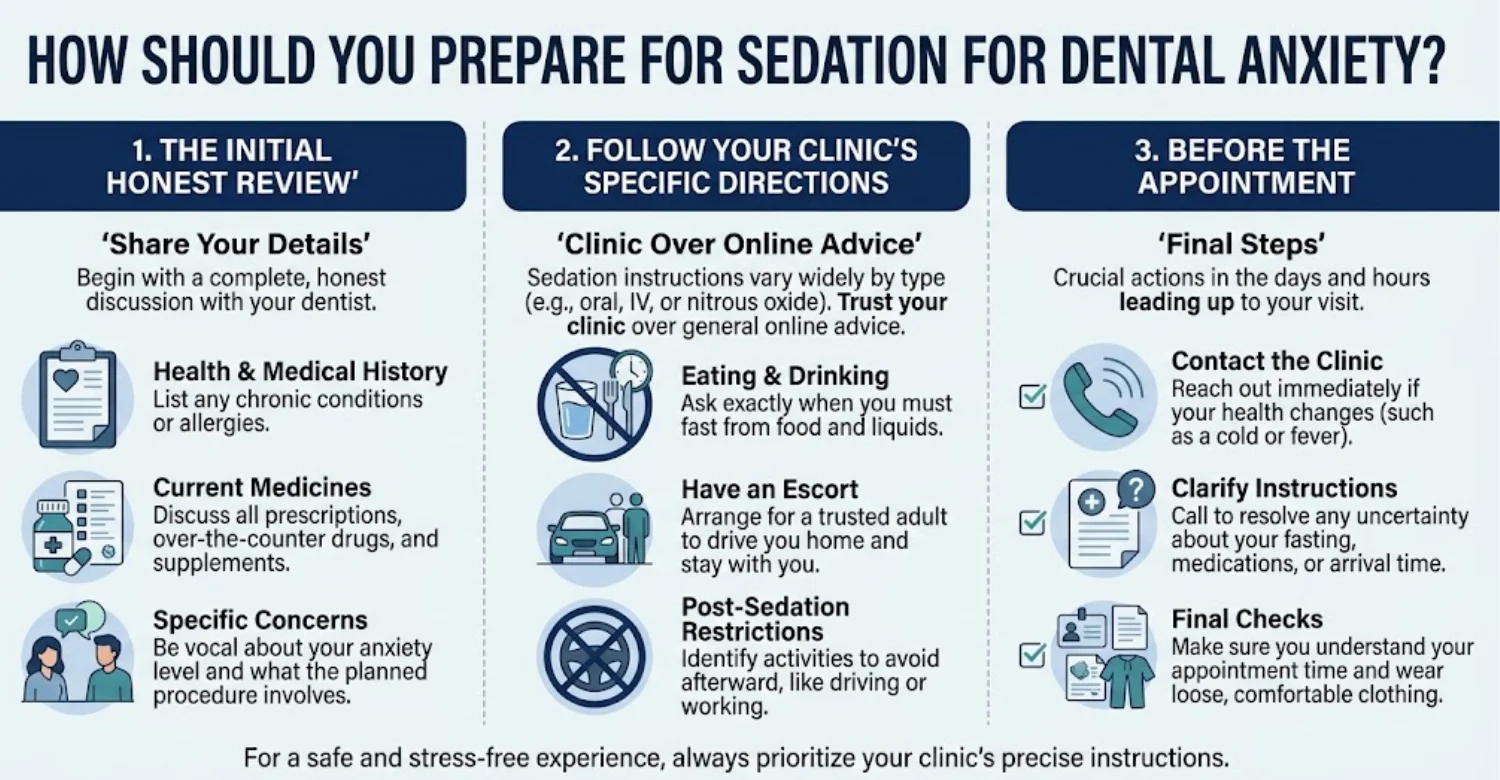
Medical History and Pre-Treatment Assessment
Tell the clinician about medical conditions, allergies, previous anesthesia or sedation problems, and all medicines or supplements. Mention pregnancy, breastfeeding, sleep apnea, breathing problems, and recent illness. The team may check vital signs and assess the airway. Bring an up-to-date medicine list and ask questions about risks, alternatives, and consent before the procedure begins. Before Sedation for Dental Anxiety, report any recent illness or change in medication.
Eating, Drinking, and Following Pre-Sedation Instructions
Fasting rules vary by sedation method and the planned procedure. Some inhalation techniques may allow a light meal, while deeper sedation usually requires specific food and drink restrictions. Never assume that rules from a previous appointment apply again. Follow the written instructions exactly, and call the clinic if you accidentally eat or drink outside the permitted period. These details matter because Sedation for Dental Anxiety safety depends on the specific method.
Arranging Transportation and Aftercare
An escort is commonly required after oral or intravenous sedation and general anesthesia. Do not drive yourself if the clinic says driving is restricted. Arrange help with children, work, and important decisions until the team confirms recovery. Ask how long supervision is needed and whom to contact after hours. For Sedation for Dental Anxiety, transport plans should be settled before arriving. Follow the clinic’s discharge instructions even if you feel fully awake.
What Happens During and After Sedation for Dental Anxiety?
The team confirms consent, preparation, and the treatment plan before administering sedation. Monitoring continues during treatment and through recovery, with methods chosen for the patient's risk and sedation depth. The dentist may still use local anesthesia to control pain. After treatment, staff assess alertness, breathing, mobility, and other discharge criteria. Recovery instructions depend on the technique and individual response.
Monitoring During the Dental Procedure
Monitoring may include repeated checks of breathing, oxygen level, heart rate, blood pressure, and responsiveness. More intensive sedation requires more extensive monitoring and rescue capability. Trained staff should observe the patient throughout the procedure. Tell the team immediately if you feel pain, nausea, panic, or breathing difficulty. Do not hesitate to ask for a pause when it is safe to do so. During Sedation for Dental Anxiety, monitoring should match the intended level of sedation.
Recovery Time and Post-Treatment Restrictions
Recovery varies by method, dose, procedure, and individual health. Sleepiness, poor coordination, or reduced concentration can continue after the appointment. Follow the clinic’s restrictions on driving, operating equipment, alcohol, work, and important decisions. A responsible adult may need to accompany you home and stay with you. After Sedation for Dental Anxiety, do not judge fitness for driving by how alert you feel. Seek urgent help for severe breathing difficulty, collapse, or inability to wake normally.
When Can You Return to Normal Activities?
Return to normal activities only when the treating team says it is safe. Inhalation sedation may wear off faster than oral or intravenous methods, but individual instructions still apply. After deeper sedation or general anesthesia, driving and other risky activities may be restricted. Follow the period specified by the clinician. Arrange work, childcare, and travel around the expected recovery window. The team should explain when activities are safe after Sedation for Dental Anxiety.
Ready to transform your smile?
Talk to our team and get a personal FREE treatment plan.
How Do Dental Sedation Options Compare With Other Anxiety-Management Techniques?
Sedation for Dental Anxiety is one part of anxiety management, not the only option. Clear communication, a stop signal, shorter appointments, distraction, and breathing strategies may help some patients. Local anesthesia addresses procedural pain, while sedation targets anxiety or alertness. The most suitable plan may combine approaches after an individualized assessment. Patients should ask about benefits, limits, safety requirements, cost, and recovery before choosing.
Sedation Versus Local Anesthesia
Local anesthesia numbs the treatment area to reduce pain. Sedation reduces anxiety or awareness and does not reliably replace local anesthesia. A patient can receive both when clinically appropriate. If you fear injections, tell the dentist before the appointment. Sedation for Dental Anxiety and local anesthesia have different purposes. The team can discuss ways to reduce distress and explain each step before proceeding.
Sedation Versus Behavioral and Relaxation Techniques
Behavioral methods include clear explanations, paced breathing, distraction, agreed pauses, and gradual exposure to dental care. These techniques have no sedative drug effects and may be enough for mild or moderate anxiety. Patients with severe phobia may need additional support. Combining practical coping strategies with a suitable sedation plan may make appointments feel more manageable, but results differ by person. Some patients use Sedation for Dental Anxiety alongside behavioral support.
How Dentists Choose the Appropriate Approach
The dentist considers anxiety severity, treatment length, urgency, medical history, airway risk, and the patient’s preferences. They also consider staff qualifications, monitoring resources, and available recovery support. A less intensive approach may be preferred when it can meet the patient’s needs safely. The decision should follow an assessment rather than a universal ranking of options. Selection of Sedation for Dental Anxiety should reflect clinical findings, not pressure or assumptions.
Can Children Receive Sedation for Dental Anxiety?
Children may receive sedation when a trained dental team determines that it is appropriate. The plan should consider age, weight, developmental needs, medical history, treatment urgency, and previous behavior. A parent or guardian must receive a clear explanation and provide consent when legally required. Pediatric sedation requires appropriate monitoring, airway skills, equipment, and recovery procedures. For children, Sedation for Dental Anxiety needs age-appropriate safeguards and parent involvement.
.webp)
Note : All images used are for editorial and illustrative purposes only and may not originate from the original news provider or associated company.
When Should You Talk to a Dentist About Dental Anxiety?
Talk to a dentist when fear causes missed appointments, panic, sleeplessness, or delayed treatment. Explain what triggers your anxiety and what might help you feel in control. Discuss Sedation for Dental Anxiety early if anxiety regularly prevents routine checkups. Ask about non-drug techniques, sedation choices, the clinician’s training, monitoring, and recovery arrangements. Dental pain, facial swelling, fever, or signs of infection also need timely dental assessment. Breathing or swallowing difficulty, or rapidly spreading swelling, requires emergency medical attention.
Vitrin Clinic Perspective: Personalized Dental Anxiety Assessment and Treatment Planning
At Vitrin Clinic, discussion should begin by identifying the patient's concerns and dental needs. Sedation for Dental Anxiety may be considered only after an individualized assessment of health, treatment complexity, and available safety arrangements. The team should explain suitable options, limitations, estimated costs, and follow-up needs before treatment. No sedation method or outcome should be promised before clinical review.
Evaluating Anxiety Levels and Dental Treatment Needs
The initial discussion should identify the fear trigger, previous treatment experiences, and any care the patient has postponed. A dental examination helps establish treatment needs and urgency. Digital dental X-rays may be used when clinically appropriate to assess problems that cannot be fully evaluated by inspection alone. The resulting plan should address the cause of the dental problem and the patient's anxiety separately.
Choosing an Appropriate Approach for International Patients
International patients should share recent dental records, relevant medical information, medicine lists, and available images before traveling. The clinic should explain whether additional examination or imaging is needed in person. Treatment estimates should separate consultation, diagnostics, dental procedures, and sedation charges where possible. Patients should confirm travel timing, escort arrangements, accommodation, and the possibility of follow-up before booking treatment.
Patient Monitoring, Recovery, and Follow-Up Planning
The planned approach should include qualified personnel, appropriate monitoring, discharge criteria, and clear aftercare instructions. Patients traveling internationally should understand restrictions on flying or traveling after sedation, based on the clinician’s advice. Follow-up arrangements should identify whom to contact if symptoms develop. Vitrin Clinic should provide an individualized estimate and explain what is included, without guaranteeing clinical outcomes.
What Does Dental Care Cost in the US, UK, and Turkey?
These are treatment estimates, not sedation fees. US and Turkish private prices vary; NHS England fees apply per treatment course. Sources:
Treatment | US estimate | UK estimate | Turkey published example |
Exam and X-rays | US$120–480 | England NHS $27.90, Band 1 | $3,690 consultation plus panoramic X-ray |
Filling | US$180–680 | England NHS $76.60, Band 2 | $ 3,375–5,300 |
Root canal | US$800–2,400 | England NHS $76.60, Band 2 | $ 4,610–10,350 |
Extraction | US$180–1,500 | England NHS $76.60, Band 2 | $ 2,475–11,715 |
Abscess treatment | Case-dependent | Usually part of indicated treatment course | No separate price published |
Final fees depend on tooth location, complexity, infection, imaging, and specialist care. Request an itemized quote; sedation may cost extra.







Key Takeaway: Choosing the Right Approach to Dental Anxiety
Sedation for Dental Anxiety may help some people receive necessary dental care, but suitability must be assessed individually. Inhalation, oral, and intravenous sedation differ in onset, depth, monitoring, and recovery. General anesthesia is distinct and requires additional planning. Ask about alternatives, staff training, safety procedures, cost, escort needs, and aftercare. Do not take sedating medicine without clinical direction.
Medical Disclaimer
This article provides general educational information and does not replace an assessment by a qualified dental or medical professional. Sedation choices depend on individual health and local clinical standards. Follow your treating team’s instructions and seek urgent help for severe or unexpected symptoms. For post-treatment pain, paracetamol may suit some patients. It does not reduce dental anxiety. It may relieve dental pain temporarily, but it cannot remove tooth decay, drain an abscess, or treat the underlying cause. Follow the product label and professional advice. Seek individualized guidance with liver or kidney problems, heavy alcohol use, pregnancy, breastfeeding, or other medicines. Check combination-product labels to avoid duplicate dosing. A suspected overdose needs immediate professional advice, even without symptoms.
Reference
FAQs
Dr. Rifat Alsaman has more than 5 years of clinical experience in dentistry and currently serves as the Head of the Medical Team at Vitrin Clinic. He is dedicated to providing exceptional patient care, overseeing treatment planning, and ensuring the highest clinical standards across the team. His expertise, attention to detail, and commitment to continuous professional development have helped countless patients achieve healthier, more confident smiles.


.webp&w=3840&q=75)


