General Dentistry
October 13, 2026
Sodium Fluoride Dental Gel: What is it and How Does It Help Prevent Cavities?
 Dr. Rifat Alsaman
Sodium fluoride dental gel is a topical fluoride product that may help strengthen tooth enamel and reduce the risk of tooth decay. It plays a useful role in preventive dentistry. It is especially relevant for people with a higher risk of cavities. Some lower-strength fluoride gels are sold over the counter. Prescription-strength products, however, need professional guidance before use. In this guide, you will learn how the gel works, who may benefit, and how to use it correctly. We also cover possible side effects, comparisons with other treatments, and clinical recommendations.
How Does Sodium Fluoride Dental Gel Work on Your Teeth?
Sodium fluoride dental gel works by delivering a concentrated dose of fluoride to the tooth surface. Fluoride supports remineralization, the process that restores calcium and phosphate to weakened enamel. It also makes enamel more resistant to acid produced by plaque bacteria after sugar intake. This matters because early enamel demineralization can sometimes be reversed. An established cavity is different. Once tooth structure has broken down, it usually needs a filling or another restorative treatment rather than fluoride alone.
What Happens When Fluoride Reaches Your Tooth Enamel?
Enamel is made mostly of a mineral called hydroxyapatite. When fluoride is present, it helps form fluorapatite-like minerals within the enamel surface. These minerals dissolve less easily in acid. Fluoride also attracts calcium and phosphate from saliva, helping rebuild weakened areas. In addition, high-fluoride products can leave small calcium fluoride deposits on the teeth. These act as a reservoir, releasing fluoride when acid levels rise. Together, these effects slow mineral loss and encourage repair of early enamel damage.
Why Might You Need More Fluoride Than Regular Toothpaste Provides?
For most people, brushing twice daily with standard fluoride toothpaste is enough. However, some people face a higher risk of decay. This includes people with frequent new cavities, exposed root surfaces, or dry mouth. Orthodontic appliances and difficulty cleaning the teeth can also raise risk. In these situations, a dentist may recommend a sodium fluoride dental gel with a higher fluoride concentration. The aim is to give extra protection where everyday toothpaste may not be sufficient on its own.
What Dental Problems Can Sodium Fluoride Dental Gel Help Prevent?
Dentists often recommend sodium fluoride dental gel to reduce the risk of new decay in vulnerable teeth. Common concerns include recurrent cavities, decay around existing fillings, and decay on exposed root surfaces. It may also help enamel weakened by frequent acid exposure. Some people notice less sensitivity on exposed roots. However, fluoride does not treat every cause of sensitivity. It also cannot repair a deep cavity. Its main role is prevention and support for early repair, not restoration.
Can It Help If You Keep Getting Cavities?
Yes, it may help as part of a dentist-directed plan. Repeated cavities usually point to ongoing risk factors, such as frequent sugar intake, plaque build-up, or reduced saliva. High-concentration fluoride can strengthen tooth surfaces against these repeated acid attacks. Clinical studies support its use in people at high risk of decay. Still, the gel works best when the underlying causes are also addressed. Your dentist may combine it with dietary advice, cleaning guidance, and closer follow-up visits.
Can It Help With Exposed Roots or Tooth Sensitivity?
Exposed root surfaces are covered by dentin and cementum rather than enamel. These tissues begin to dissolve at a less acidic pH than enamel, so decay can develop more easily. Research shows that high-fluoride toothpaste can reduce and even arrest root decay in older adults. Fluoride may also ease some sensitivity by helping block tiny dentin tubules. However, sensitivity can also come from cracks, decay, gum disease, or worn fillings. These causes need a proper dental examination.
Can Fluoride Gel Repair Early Tooth Decay?
Fluoride gel can support the repair of early, non-cavitated lesions. These often appear as chalky white spots on the enamel. At this stage, the surface is still intact, and lost minerals can be partly restored. Regular fluoride exposure helps this process. However, once decay forms an actual hole, the damaged structure cannot grow back. Gel alone cannot reverse an established cavity. In that case, your dentist may need to remove the decay and restore the tooth.

Note: All images used are for editorial and illustrative purposes only and may not originate from the original news provider or associated company.
What Is 1.1% Neutral Sodium Fluoride Prescription Dental Gel?
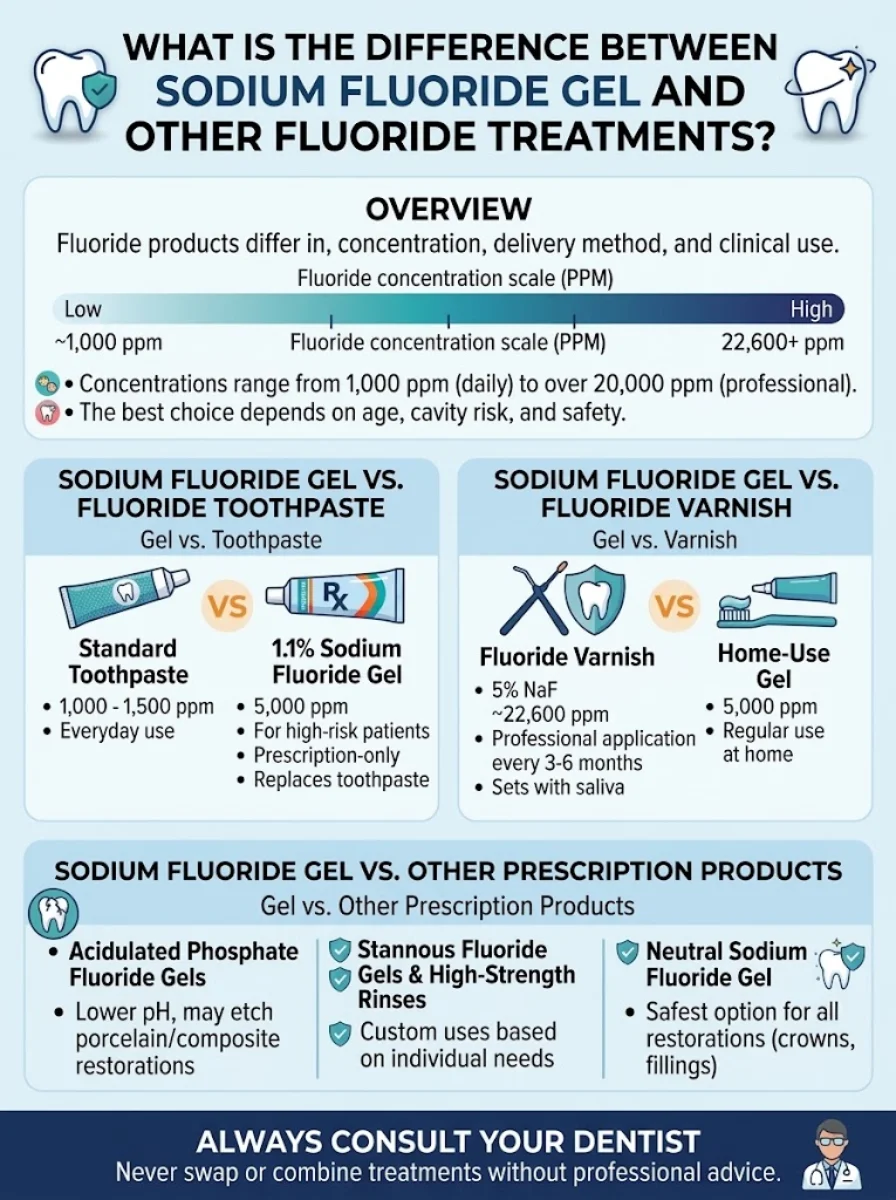
1.1 neutral sodium fluoride prescription dental gel is a high-strength fluoride product used for decay prevention. A 1.1% sodium fluoride formulation usually contains about 5,000 ppm fluoride, depending on the formulation and product labeling. By comparison, most adult toothpastes contain around 1,000 to 1,500 ppm. The word "neutral" refers to the gel's pH, which is close to 7. It does not mean the product suits everyone. The label and prescribing instructions always determine correct use.
Is Sodium Fluoride 1.1 Dental Gel the Same as Regular Fluoride Gel?
No, they are not the same. Sodium fluoride 1.1 dental gel contains much more fluoride than most consumer gels and toothpastes. Lower-strength products are designed for everyday use with fewer restrictions. Prescription products are intended for selected patients with higher risk. Formulations also differ in pH, flavor, abrasives, and delivery method. Some are toothpaste-like gels, while others are designed for use in trays. Because of these differences, never assume two fluoride products are interchangeable.
Who Might Be Prescribed Sodium Fluoride Dental Gel 1.1?
A dentist may prescribe sodium fluoride dental gel 1.1 after a careful risk assessment. Candidates often include people with a history of recurrent decay. People with reduced saliva flow, exposed root surfaces, or many existing restorations may also benefit. Orthodontic patients and people receiving head and neck radiotherapy are sometimes included too. The decision depends on clinical findings, age, and the ability to use the product safely. A prescription is not routinely needed for everyone.
Tips for Patients
These simple habits can help you use sodium fluoride dental gel safely and effectively:
Keep the original packaging so you can check the exact fluoride concentration and directions.
Use the prescribed amount and avoid swallowing the gel.
Do not combine multiple high-fluoride products unless your dentist advises you to.
Tell your dentist if you experience dry mouth, frequent cavities, or new tooth sensitivity.
What Causes You to Need Prescription Fluoride Gel?
The need for prescription fluoride usually comes from an increased risk of decay, not from one single cause. Some risk factors are common, such as frequent cavities or decay around fillings. Others are more complex, such as dry mouth from medication or medical conditions. Gum recession and dental appliances can also play a role. Each factor affects how acid, plaque, and saliva interact with your teeth. A professional assessment helps decide whether sodium fluoride dental gel is appropriate for you.
Frequent Cavities or New Decay Around Existing Fillings
Decay develops when plaque bacteria convert sugars into acid. Each acid attack draws minerals out of the tooth. When attacks happen often, the tooth has little time to recover. The edges of fillings and crowns can also trap plaque, making new decay more likely there. This is called secondary or recurrent decay. If you keep developing new cavities, your dentist may see this as a sign of high risk. Additional fluoride may then be recommended.
Dry Mouth Caused by Medication or Medical Conditions
Saliva protects teeth in several ways. It washes away food, neutralizes acid, and supplies calcium and phosphate for repair. When saliva flow drops, these defenses weaken. Many medications can reduce saliva, including some antidepressants, antihistamines, and blood pressure drugs. Conditions such as Sjögren's syndrome and diabetes can also cause dry mouth, as can radiotherapy to the head and neck. People with persistent dry mouth often develop decay faster. A dentist may recommend sodium fluoride dental gel as extra protection.
Gum Recession and Exposed Root Surfaces
Gum recession exposes the root surfaces of teeth. Unlike the crowns, roots are not protected by enamel. They are covered by cementum and dentin, which contain less mineral. These tissues start to dissolve at a less acidic pH than enamel. As a result, root decay can begin and spread more quickly. Recession is common with age, gum disease, and aggressive brushing. High-fluoride products have good evidence for reducing root decay in people with exposed roots.
Dental Appliances, Limited Oral Hygiene Access, or Special Clinical Risks
Braces, retainers, and partial dentures create extra surfaces where plaque can collect. Cleaning around them takes more time and care. Some people also find brushing difficult because of limited hand movement, disability, or cognitive changes. Others rely on caregivers for daily oral care. In these situations, decay risk can rise even with good intentions. Your dentist may adjust the preventive plan to suit your circumstances. This may include high-fluoride products, simpler cleaning tools, or more frequent reviews.
What Symptoms or Warning Signs Might Mean You Need a Dental Assessment?
The need for additional fluoride is usually identified through a dental risk assessment, not symptoms alone. Early decay often causes no pain at all. Still, some changes at home are worth noticing. These include new white or brown spots, sensitivity near the gumline, or food repeatedly catching in one tooth. Noticing these signs does not automatically mean you need prescription gel. It means a dentist should examine your teeth and identify the actual cause.
Why Do You Keep Noticing New White Spots or Cavities?
Chalky white spots can be an early sign of enamel demineralization. They often appear near the gumline or around braces brackets. If new spots or cavities keep appearing, your decay risk may be elevated. However, white spots are not always decay. Dental fluorosis and developmental enamel defects can look similar. Only an examination can tell these conditions apart. Early lesions may respond to fluoride, while other conditions may need different management or simply monitoring.
Why Do Your Teeth Feel Sensitive Near the Gumline?
Sensitivity near the gumline often happens when gums recede and expose root dentin. Dentin contains tiny tubules that carry stimuli, such as cold, toward the nerve. Other causes include enamel erosion from acidic foods, root decay, cracked teeth, and toothbrush abrasion. Recent whitening or dental work can also cause temporary sensitivity. Because the causes vary, the right treatment varies too. Persistent sensitivity deserves an examination rather than simply trying a new product at home.
What If You Have Pain, Swelling, or a Visible Hole in a Tooth?
Pain, swelling, or a visible hole usually indicates a problem beyond prevention. These signs may point to advanced decay, a cracked tooth, or an infection. Fluoride gel cannot rebuild a cavitated tooth. It also cannot treat inflammation or infection of the nerve. Delaying care can allow decay to spread and make treatment more complex. Book a dental appointment promptly. Your dentist may recommend a filling, root canal treatment, or another procedure depending on the findings.
.jpg)
How to Use Sodium Fluoride 1.1 Dental Gel Safely at Home
Knowing how to use sodium fluoride 1.1 dental gel correctly is essential for both safety and results. The right method depends on the specific formulation and delivery method. It also depends on the product label and your prescriber's instructions. Many products are brushed on like toothpaste, while others are applied using a tray. No single technique applies to every product. Always read the leaflet before first use, and ask your dentist or pharmacist if anything is unclear.
How Much Gel Should You Use?
Use the exact amount your dentist prescribes or the label specifies. Do not guess or increase the amount in the hope of faster results. Using more gel does not add meaningful protection, but it does increase how much you may swallow. Product instructions differ, so the amount for one gel may not suit another. If your dentist gave you specific directions, follow them carefully. Keep the gel out of reach of children, as high-fluoride products require careful storage.
Should You Brush With It or Apply It in a Dental Tray?
This depends on your product. Many 1.1% sodium fluoride gels are designed to be brushed onto the teeth, often in place of regular toothpaste. Others are meant to be placed in a custom or stock tray worn over the teeth for a set time. Using a tray product as a toothpaste, or the reverse, may change how much fluoride you receive. Always follow the instructions for your exact product and confirm the method with your dentist.
Should You Rinse, Eat, or Drink Immediately After Application?
Post-application instructions vary between products. Many labels advise spitting out the excess gel rather than swallowing it. Some also recommend avoiding rinsing, eating, or drinking for about 30 minutes afterward. This gives the fluoride more contact time with the teeth. Some prescribed routines suggest using the gel at bedtime for the same reason. However, these directions are not universal. Follow the label and your clinician's guidance for the specific gel you were given.
What Should You Do If You Accidentally Swallow Some Gel?
Swallowing a small trace during normal use is unlikely to harm an adult. Stop using the product for now and check the label for the fluoride concentration. Estimate how much was swallowed, and by whom. Children are at greater risk because of their lower body weight. If ingestion may be significant, contact a poison-control service or a medical professional promptly. Seek emergency care immediately for repeated vomiting, severe stomach pain, weakness, breathing difficulty, or seizures.
What Are the Benefits and Possible Side Effects of Sodium Fluoride Dental Gel?
The main benefit of sodium fluoride dental gel is a lower risk of future decay in people who need extra protection. However, it does not guarantee that cavities will never form. Results depend on your baseline risk, correct and consistent use, oral hygiene, and diet. Regular dental monitoring also matters. Side effects are uncommon when the product is used as directed. Most problems arise from swallowing the gel or using more than prescribed.
What Improvements Can You Realistically Expect?
The main goal is to reduce the chance of new decay. You may also see early white spot lesions stabilize or harden over time. Some people notice less root sensitivity. However, the gel will not whiten teeth or change their shape. It cannot rebuild tooth structure that has already been lost. Benefits develop gradually with regular use over months. Your dentist will judge success mainly by seeing fewer new cavities at future checkups.
Can Sodium Fluoride Gel Cause Side Effects?
Side effects are uncommon but possible. Some people experience mild irritation of the gums or mouth tissues. Rare allergic or sensitivity reactions have also been reported. Swallowing gel can cause nausea, vomiting, or stomach upset. Excessive fluoride ingestion can be harmful, and large amounts can become toxic. In young children, repeated overexposure while teeth are forming may cause dental fluorosis. Stop using the product and contact your dentist if you notice any unusual reaction.
Who Should Check With a Dentist Before Using It?
Children should never use a high-fluoride gel unless a dentist specifically recommends it. The same applies to anyone who may have difficulty spitting, including some older adults and people with swallowing problems. People with relevant medical conditions, such as kidney disease, should also seek advice first. If you are pregnant, breastfeeding, or already using other fluoride products, mention this to your dentist. Anyone unsure whether a formulation suits them should check before starting.
What We Notice Clinically
Dr. Rifat Alsaman, Head of the Medical Team and cosmetic dentist at Vitrin Clinic, stresses that a product name says little on its own. What matters is the patient's cavity risk. Before recommending extra fluoride, he assesses previous decay, gum recession, and oral hygiene. Dietary habits and signs of dry mouth are also reviewed. A patient with several risk factors may need a stronger preventive plan. A low-risk patient may not need prescription fluoride at all.
Why Fluoride Gel Cannot Replace Restorative Dental Treatment
Dr. Rifat Alsaman, Head of the Medical Team and cosmetic dentist at Vitrin Clinic, draws a clear line between prevention and treatment. Fluoride gel can protect healthy tooth surfaces and support early enamel repair. It cannot fill a hole once tooth structure has broken down. In that situation, the decay must be removed and the tooth restored. A filling, crown, or other procedure may be needed. Fluoride can then help protect the restored tooth afterward.
How Fluoride Prevention Fits Into a Wider Dental Plan
Dr. Rifat Alsaman, Head of the Medical Team and cosmetic dentist at Vitrin Clinic, views fluoride as one part of a wider plan. Brushing twice daily removes plaque from accessible surfaces. Interdental cleaning reaches areas a toothbrush misses. Reducing frequent sugar intake limits acid attacks. Follow-up examinations allow early problems to be found while they are still small. When these habits work together, sodium fluoride dental gel can offer meaningful added protection.
When Should You Stop Self-Treatment and See a Dentist?
Fluoride gel is a preventive tool, not a treatment for every dental problem. You should stop relying on home care alone if symptoms persist or worsen. A toothache that lasts more than a day or two needs assessment. So does a visible cavity or sensitivity that is getting worse. Suspected decay around a filling or crown also needs checking. Prompt care often means simpler, less invasive treatment and a better long-term outcome for the tooth.
Which Dental Symptoms Need Prompt Attention?
Book a dental appointment soon if you notice any of the following:
Persistent tooth pain, especially pain that wakes you at night
A visible hole, dark spot, or broken area in a tooth
Swollen or tender gums near a tooth
Pus or a bad taste coming from the gum
Sensitivity or discomfort that keeps getting worse
These signs can indicate decay, infection, or other problems that fluoride cannot fix. Early treatment helps protect the tooth and prevents complications.
When Is It an Emergency?
Some dental symptoms need emergency medical care rather than a routine appointment. Seek urgent help if you develop swelling of the face or neck. Difficulty swallowing or breathing is also a serious warning sign. Rapidly spreading swelling, high fever, or feeling very unwell may indicate a spreading infection. These infections can become life-threatening without treatment. Go to an emergency department or call emergency services immediately. Do not wait for a regular dental appointment in these situations.
How Can You Prevent Cavities Alongside Fluoride Gel Use?
Sodium fluoride dental gel works best as part of a broader preventive plan. Fluoride strengthens teeth, but it cannot fully offset frequent sugar intake or poor plaque control. Prevention focuses on three goals. The first is to reduce plaque on and between the teeth. The second is to limit how often acid attacks occur. The third is to detect problems early through regular checkups. Each step below supports these goals.
Brush Twice Daily With an Appropriate Fluoride Toothpaste
Brush for about two minutes, twice a day, including last thing at night. Use a soft-bristled brush and clean gently along the gumline. Spit out excess toothpaste afterward rather than rinsing heavily with water. This helps fluoride stay on your teeth longer. Children need age-appropriate guidance. Those under three typically use a smear, while those aged three to six use a pea-sized amount. If you use prescription gel, follow your dentist's advice on toothpaste use.
Reduce Frequent Sugary Snacks and Drinks
Every time you consume sugar, plaque bacteria produce acid for a period afterward. Frequent snacking and sipping sugary drinks keep teeth under repeated acid attack. This gives enamel little time to recover. How often you consume sugar matters as much as the total amount. Try to keep sugary foods to mealtimes. Choose water or plain milk between meals. Be cautious with acidic drinks too, as they can erode enamel directly.
Clean Between Your Teeth and Attend Regular Dental Reviews
A toothbrush cannot fully clean the spaces between teeth. Use floss or interdental brushes once a day to remove plaque from these areas. Your dentist or hygienist can show you which tools suit your teeth. Regular dental reviews are also important. Their timing should match your personal risk level, so higher-risk patients may need more frequent visits. Checkups, and X-rays when indicated, help detect early decay before it becomes painful or extensive.
Address Dry Mouth and Other Personal Risk Factors
If your mouth often feels dry, mention it to your dentist or doctor. A medication review may help identify a possible cause. However, never stop a prescribed medication without medical advice. Sipping water, chewing sugar-free gum, and using saliva substitutes may offer relief. Other personal factors also matter, such as smoking, acid reflux, and certain medical conditions. Discussing these openly allows your care team to tailor your preventive plan more effectively.
Clinical Note
This article is for educational purposes only. It does not replace an individualized dental assessment or the instructions supplied with a prescription product. Fluoride concentration, frequency, application technique, and swallowing precautions vary between formulations. Do not self-prescribe high-concentration fluoride products. Do not use them in ways that conflict with professional instructions. If you suspect an overdose or significant ingestion, contact a poison-control service or medical professional promptly. Seek emergency care for severe symptoms.
How Vitrin Clinic Approaches Preventive Dental Care
Vitrin Clinic in Istanbul, Türkiye, takes an individualized approach to preventive dental care. Each plan starts with a clinical examination to identify decay risk, exposed roots, existing cavities, and other oral health concerns. Appropriate imaging may be used when clinically indicated, though it is not required for every fluoride recommendation. Dr. Rifat Alsaman, Head of the Medical Team and cosmetic dentist at Vitrin Clinic, oversees individualized treatment planning. If you have concerns about your teeth, you are welcome to request a consultation or free treatment assessment.
Is Sodium Fluoride Dental Gel Right for You?
Sodium fluoride dental gel may help prevent tooth decay in people who need additional fluoride. However, not everyone requires prescription-strength treatment. Correct product selection, safe application, and consistent oral hygiene all matter. Professional monitoring is essential too. Remember that an established cavity, persistent pain, or swelling needs clinical assessment. Fluoride gel alone cannot solve these problems. Your next step is simple: speak with a dental professional about your cavity risk and whether a prescription fluoride product fits your preventive plan.
Ready to transform your smile?
Talk to our team and get a FREE treatment plan.
References:
FAQs
Dr. Rifat Alsaman has more than 5 years of clinical experience in dentistry and currently serves as the Head of the Medical Team at Vitrin Clinic. He is dedicated to providing exceptional patient care, overseeing treatment planning, and ensuring the highest clinical standards across the team. His expertise, attention to detail, and commitment to continuous professional development have helped countless patients achieve healthier, more confident smiles.


.webp&w=3840&q=75)


