General Dentistry
September 17, 2026
Swollen Tongue : What Causes It and When Should You Seek Care?
 Dr. Rifat Alsaman
The tongue can swell for many reasons, from minor irritation to conditions needing urgent care. Swelling may follow an injury, burn, infection, allergic reaction, medication exposure, nutritional gap, or oral irritation. Some people notice visible enlargement. Others feel fullness or pressure without a clear change in appearance.
What Is a Swollen Tongue?
A swollen tongue means the tongue appears larger or feels unusually full. It can result from allergies, irritation, injuries, infections, or certain medical conditions. Sudden swelling with breathing or swallowing problems requires urgent medical care.
What does a swollen tongue mean?
A swollen tongue looks or feels unusually full, thick, tight, or tender. Symptoms may come from inflammation, fluid buildup, irritation, injury, infection, or allergy. Glossitis is one recognized cause of tongue inflammation and swelling. It can bring redness, soreness, and surface changes too. Appearance varies with the cause.
How do you know if your tongue is actually swollen?
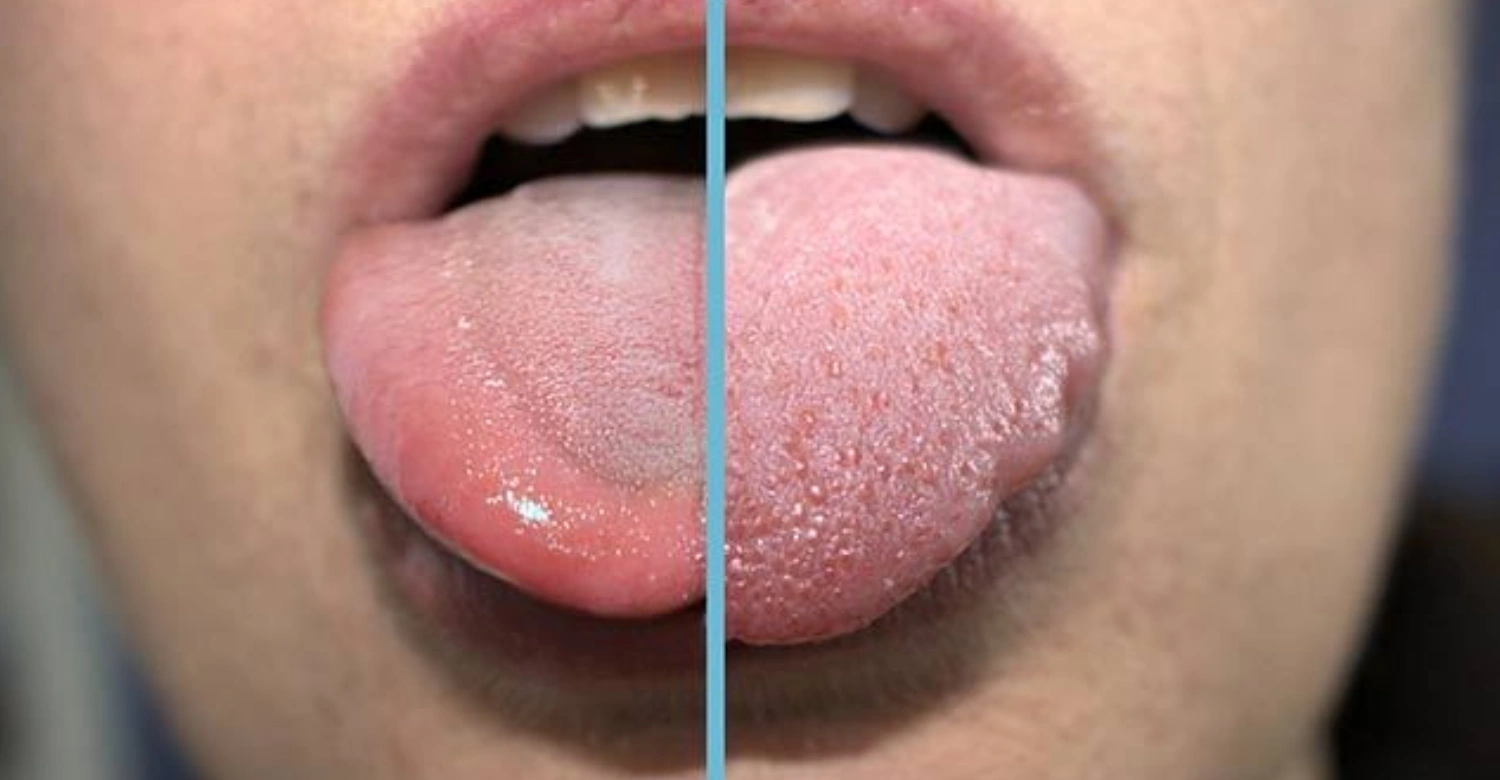
The tongue may look larger, feel thicker, or press differently against your teeth. A swollen tongue can also change speech, chewing, swallowing, or normal tongue movement. Comparing today's appearance with the usual look can help, especially if swelling appeared suddenly. Watch for new enlargement, redness, smooth patches, tenderness, tooth indentations, or one-sided changes.
What does a normal tongue look and feel like compared with a swollen tongue?
A healthy tongue stays flexible, moist, and mobile enough for comfortable speaking, chewing, and swallowing. Its surface naturally has small bumps called papillae, giving it a familiar texture. A tongue that has swollen may feel thicker, tighter, tender, or oddly sensitive by comparison.
Can your tongue feel swollen when it is not visibly enlarged?
Yes, the tongue can feel enlarged even without much visible change. This sensation may come from dryness, irritation, inflammation, burning, minor trauma, or nearby tissue changes. Glossitis can cause soreness, redness, and a sense of swelling that varies widely between people.
What Causes a Swollen Tongue?
Many conditions can make the tongue swell, so timing and other symptoms matter greatly. Common causes include allergic reactions, angioedema, injuries, burns, infections, nutritional gaps, dry mouth, irritation, medications, and certain systemic conditions. Allergic swelling can develop quickly and may involve the lips, face, or throat.
Allergic reactions and angioedema
Sudden swelling of the tongue, lips, mouth, or throat can signal an allergic reaction. Angioedema affects deeper tissue layers and commonly involves the lips and tongue together. This type of swelling often appears quickly after exposure to food, medication, or an insect sting.
Can a drug allergy cause a swollen tongue?
Yes, a drug allergy can trigger sudden enlargement when the immune system reacts strongly to a medication. This may appear alongside lip or throat swelling, hives, itching, breathing difficulty, or dizziness. Penicillin-type antibiotics are commonly linked to allergic reactions of this kind. Still, not every medication-related symptom reflects a true allergy.
Can hay fever or other allergies cause tongue swelling?
Hay fever mainly causes nasal and eye symptoms, but related food reactions can sometimes affect the mouth. Oral allergy syndrome, also called pollen-food syndrome, can cause itching, tingling, or mild swelling in the lips, mouth, or throat. This pattern commonly follows eating raw fruits, vegetables, or nuts in sensitized people.
Can amoxicillin cause a swollen tongue?
Amoxicillin can trigger allergic reactions in some people, and tongue swelling can warn of a serious response. It may appear with facial swelling, hives, throat tightness, breathing difficulty, or dizziness. Penicillin-class antibiotics are well recognized causes of medication allergy. Still, not every symptom during antibiotic treatment proves the drug caused it.
Mouth injuries, biting, burns, and irritation
Physical irritation commonly explains localized tongue swelling in everyday situations. Biting the tongue, burning it with hot food, or rubbing it against a sharp tooth can trigger inflammation. This type of swelling often affects only the injured area itself. Spicy foods, tobacco, and alcohol can also worsen inflammation in sensitive tissue.
What happens if you bite the side of your tongue and it becomes swollen?
Biting the side of the tongue can injure soft tissue and trigger localized inflammation quickly. The affected area may feel tender and visibly enlarged afterward. Small cuts can develop too, making eating and speaking uncomfortable for several days. Severity depends on how deep the injury goes and whether friction continues.
Can hot, spicy, acidic, or irritating foods cause tongue swelling?
Yes, irritating foods can worsen tongue inflammation and discomfort in sensitive tissue. Very hot foods or drinks can burn the tongue, while spicy or acidic items aggravate irritated areas further. Symptoms often feel sore, sensitive, or burning rather than dramatically enlarged.
Can a swollen blister cause the tongue to become sore and enlarged?
A blister, ulcer, or irritated lesion can make one part of the tongue feel sore and enlarged. Inflammation around the lesion increases tissue sensitivity in that specific spot. Minor trauma, burns, biting, and irritating foods commonly contribute to painful tongue lesions like these.
Infections and illnesses
Infections can bring inflammation, soreness, redness, and swelling to the tongue in various ways. Viral, bacterial, and fungal infections can all be involved, depending on the organism and tissue affected. Some infections mainly affect the tongue, while others involve the throat, gums, or tonsils instead.
Can you get a swollen tongue when you are sick?
Yes, illness can sometimes bring tongue inflammation or a swollen tongue along with other symptoms. This may accompany infections, dehydration, dry mouth, or general irritation during sickness. However, being sick does not automatically mean the tongue should become visibly enlarged. Accompanying symptoms matter most for figuring out the likely explanation.
Can flu or a cold cause tongue swelling?
A cold or flu rarely causes major tongue enlargement on its own directly. However, related dehydration, dry mouth, mouth breathing, or irritation can create a swelling-like sensation. Tongue inflammation has both infectious and noninfectious causes worth considering. People with respiratory illness may also notice throat discomfort, reduced fluid intake, or congestion.
Can other infections cause a sore or swollen tongue?
Yes, viral, bacterial, and fungal infections can all contribute to tongue soreness or swelling. Redness, tenderness, altered texture, mouth lesions, or fever may accompany the swelling itself. Exact presentation depends heavily on the infection and which tissues are involved. Oral fungal infections may change the tongue's surface texture noticeably over time.
Oral and dental causes
Dental and oral conditions can contribute to tongue irritation or localized swelling in several ways. Repeated contact with a sharp tooth, broken filling, denture edge, or orthodontic appliance often triggers discomfort. Oral inflammation can also result from ulcers, gum problems, infections, or other nearby tissue issues.
Can irritation from teeth, dental appliances, or oral conditions cause swelling?
Yes, repeated mechanical irritation can contribute to localized tongue inflammation and ongoing discomfort. A sharp tooth, fractured filling, denture edge, crown, or orthodontic part can rub the tongue constantly. Constant friction can cause tenderness, redness, small ulcers, or localized enlargement over time.
When can tongue swelling be related to a dental problem?
Tongue swelling may relate to a dental problem when trauma, infection, or repeated irritation is present. Swelling near a damaged tooth often results from repeated contact with its sharp edge. Dental infections can also inflame surrounding tissue and occasionally extend beyond the original tooth.
Nutritional deficiencies and systemic conditions
Nutritional deficiencies and systemic illnesses can affect the tongue because tissue needs steady nutrients for repair. Inflammation linked to low vitamin B12, iron, or folate can bring noticeable swelling. Glossitis may produce a smooth, red, tender, or enlarged tongue in these cases.
Can vitamin B12, iron, or folate deficiency affect the tongue?
Yes, deficiencies in vitamin B12, iron, and folate can affect how the tongue looks and feels. Inflammation called glossitis may develop, bringing redness, soreness, smoothness, or tenderness together. Iron deficiency can also affect oral tissue, though tongue findings alone cannot confirm it.
Can autoimmune diseases cause a swollen tongue?
Some autoimmune and inflammatory conditions can affect oral tissue and cause tongue discomfort or swelling. This often occurs as part of broader oral changes rather than an isolated symptom alone. The exact presentation depends heavily on the specific autoimmune disorder involved.
What other medical conditions can cause tongue enlargement?
Several medical conditions can contribute to tongue enlargement, though causes differ considerably between patients. Inflammatory disorders, allergic reactions, hormonal issues, nutritional gaps, and rare systemic diseases can all play a role. The degree of enlargement ranges from subtle thickening to changes affecting speech or swallowing.
Medication-related and other causes
Medications can affect the tongue directly or indirectly through allergy, dryness, altered taste, or irritation. Sudden swelling after medication exposure deserves attention, especially with lip, face, or throat involvement. Medication allergies can cause serious swelling and breathing problems in some cases.
Can medications cause tongue swelling?
Yes, some medications can cause swelling through allergic or non-allergic mechanisms in the body. Swelling appearing soon after medication exposure can be a warning sign worth noting. This is especially true with lip swelling, hives, throat tightness, or breathing problems present too.
Can stress make your tongue feel swollen?
Stress can heighten awareness of mouth sensations and encourage habits that irritate the tongue further. Repeated pressing, clenching, or biting may create a sense of fullness or swelling. Still, stress should never automatically be blamed for visible or persistent swelling. Physical causes must be considered first whenever symptoms are new or significant.
Can dry mouth cause a sensation of tongue swelling?
Dry mouth can create unusual sensations, including thickness, burning, roughness, stickiness, or a feeling of fullness. This can happen even when the tongue shows little visible enlargement on examination. Saliva normally lubricates oral tissue and supports comfortable speaking, chewing, and swallowing.
What Are the Symptoms of a Swollen Tongue?
Symptoms vary significantly depending on the underlying cause behind the swelling. Visible enlargement, fullness, tenderness, redness, burning, or altered texture may all appear together or separately. Some people struggle with chewing, speaking, or swallowing comfortably during flare-ups. Others notice only a small tender area instead of widespread change.
Common signs and symptoms
Common symptoms include enlargement, tenderness, redness, burning, altered texture, and general movement discomfort. Pressure against the teeth or palate may also occur alongside these changes. Speaking can feel less comfortable when the tongue seems larger or more sensitive than usual. Chewing may hurt when inflamed tissue repeatedly contacts food or teeth directly.
Tongue enlargement or a feeling of fullness
Enlargement can be visibly obvious or quite subtle depending on the cause. The tongue may feel unusually thick, crowded, heavy, or pressed against nearby teeth. Some notice difficulty moving the tongue normally, while others mainly feel fullness instead. True enlargement can result from inflammation, fluid buildup, allergy, injury, or systemic conditions.
Tongue soreness, burning, or tenderness
Soreness, burning, and tenderness often accompany many different tongue conditions. Pain may follow biting, burning, irritating foods, or a developing ulcer nearby. Inflammation can also cause sensitivity without any obvious injury present at all. Nutritional deficiencies, dry mouth, infections, and certain medications can all contribute to discomfort.
Redness or changes in tongue color
Color changes can occur with inflammation, irritation, infection, nutritional gaps, or other oral conditions. The tongue may appear redder than usual once tissue becomes inflamed noticeably. Some conditions also make the tongue smoother or change its surface texture. Color changes alone provide no diagnosis, since normal appearance varies between individuals.
Difficulty eating, chewing, or speaking
Difficulty eating, chewing, or speaking can occur when inflammation affects movement or creates pain. The tongue may feel crowded against the teeth, limiting comfortable movement noticeably. Painful areas make chewing difficult, since food repeatedly contacts irritated tissue directly. Speech may change when enlargement becomes significant or movement grows painful.
A swollen and painful tongue
Painful swelling usually points toward inflammation, irritation, injury, infection, or another active process. This combination may develop after biting, burning, eating irritating foods, or an oral lesion forming. Infections and inflammatory conditions can also bring both enlargement and tenderness together. Severity and duration matter most when deciding whether evaluation is necessary.
What does a bright red swollen tongue indicate?
A bright red tongue can indicate inflammation, irritation, nutritional deficiency, infection, or another underlying condition. This appearance may relate to glossitis, causing inflammation, soreness, smoothness, and texture changes. Deficiencies in iron, vitamin B12, or folate can sometimes contribute to inflammatory changes too.
Why are the sides of my tongue sore and swollen?
Soreness along the sides can result from repeated friction, accidental biting, ulcers, burns, or sharp dental surfaces. This pattern is often localized rather than affecting the entire tongue equally. Teeth with sharp edges, fractured restorations, or unusual bite patterns can repeatedly irritate the same spot.
Why is the tip of my tongue swollen?
The tip experiences frequent contact with food, teeth, and appliances throughout the day. Swelling here can therefore result from minor trauma, burns, biting, or localized irritation easily. Small ulcers or inflamed taste buds can also make the area feel enlarged and painful.
What can cause swelling on only one side of the tongue?
One-sided swelling can result from localized trauma, repeated dental irritation, an ulcer, infection, or inflammation. This pattern is often easier to link with a specific tooth or injury than widespread swelling. A person may accidentally bite one side repeatedly during normal chewing.
Half of the tongue appears swollen
When half the tongue looks swollen, the pattern often suggests a localized rather than generalized process. This may follow accidental biting, localized irritation, infection, or contact with a sharp dental surface. Surrounding tissue should also be examined, since swelling may originate nearby rather than within the tongue itself.
Back or base of the tongue feels swollen
The back of the tongue contains normal structures that can look different from the front. This sensation can be hard to assess visually without a proper clinical exam. Inflammation, infection, throat conditions, reflux-related irritation, or other pharyngeal problems can contribute to discomfort here.
Back-left or back-right tongue swelling
Swelling toward the back-left or back-right side may reflect localized inflammation, irritation, infection, or nearby tissue changes. This location can be difficult to assess accurately without a professional exam. Normal anatomical structures are sometimes mistaken for abnormal lumps or swelling by patients.
Can a swollen tongue occur with a sore throat or throat swelling?
Yes, tongue symptoms can occur alongside throat discomfort or swelling, though this combination deserves careful attention. This may result from infection, allergic reaction, inflammation, or another condition affecting nearby tissue. Sudden tongue and throat swelling together can be especially concerning, since airway obstruction may develop.
When Is a Swollen Tongue an Emergency?
Some situations require immediate medical attention because inflammation can threaten the airway quickly. This becomes particularly concerning when enlargement develops suddenly or progresses rapidly over minutes. Breathing difficulty, throat tightness, inability to swallow saliva, voice changes, dizziness, or facial swelling can indicate an emergency.
Can a swollen tongue make it hard to breathe?
Yes, significant enlargement can interfere with airflow, especially when swelling extends toward the throat. Breathing difficulty in this context should always be treated as a medical emergency. Angioedema can cause swelling of the tongue, lips, and throat, potentially narrowing the airway.
Can a swollen tongue be life-threatening?
Severe enlargement can become life-threatening when it obstructs the airway or accompanies a severe allergic reaction. This risk rises when swelling develops rapidly alongside throat involvement, breathing difficulty, or fainting. Severe angioedema can affect airway structures and progress quickly without warning.
When should you call 911 or your local emergency service?
Call emergency services immediately when swelling occurs with breathing difficulty, throat tightness, or inability to swallow saliva. Severe voice changes, fainting, or rapidly worsening symptoms also warrant an urgent call. Swelling following a known allergen exposure that keeps progressing deserves the same urgent response.
Sudden or rapidly increasing tongue swelling
Sudden or rapidly increasing swelling requires urgent attention, since some causes can affect the airway quickly. This pattern often appears after eating, taking medication, or another recent exposure. Rapid progression is more concerning than mild swelling that stays stable after a known minor injury.
Difficulty breathing or noisy breathing
Difficulty breathing or noisy breathing alongside swelling is a clear emergency warning sign. Reduced airflow space becomes especially likely when swelling extends toward the throat. Noisy breathing may indicate air passing through a narrowed airway passage. Other warning signs include throat tightness, difficulty speaking, or a sudden voice change.
Difficulty swallowing or inability to swallow saliva
Difficulty swallowing can indicate swelling affecting the tongue, throat, or nearby structures significantly. Inability to swallow saliva is particularly concerning, since it may show major airway involvement. Angioedema can produce swelling in the mouth and throat that becomes serious quickly. Drooling, choking sensations, throat tightness, or breathing problems raise the urgency further.
Swelling of the lips, throat, or face
Swelling involving the tongue together with the lips, throat, or face suggests a broader allergic reaction. This combination deserves particular attention, especially when symptoms develop suddenly. Angioedema commonly affects tissue layers containing the lips and tongue together. Breathing difficulty, throat tightness, swallowing problems, or fainting make the situation an emergency immediately.
A sudden change in voice or difficulty speaking
A sudden voice change can indicate swelling affecting the tongue, throat, or speech-related structures. Enlargement may alter pronunciation when it interferes with normal tongue movement. A sudden muffled, hoarse, or unusual voice can also accompany deeper throat swelling. Angioedema can involve the tongue and throat and may progress toward airway compromise.
Dizziness, fainting, or signs of a severe allergic reaction
Dizziness or fainting alongside swelling can indicate a serious systemic reaction developing. Hives, facial swelling, breathing difficulty, vomiting, or loss of consciousness can occur during anaphylaxis. Severe allergic reactions require immediate emergency treatment without delay of any kind. Fainting may indicate that circulation is being affected, especially with breathing symptoms present.
What should you do while waiting for emergency medical help?
Contact emergency services immediately when swelling accompanies breathing or swallowing problems of any kind. Home remedies should never be used when airway symptoms are present. Follow any personalized emergency plan for known allergies or previous anaphylaxis carefully. Use a prescribed epinephrine auto-injector according to the person's medical instructions if applicable.
What Are the Risk Factors for Tongue Swelling?
Several factors increase the likelihood of developing tongue swelling or related symptoms overall. Previous allergies, angioedema, medication reactions, recent oral injuries, and nutritional or immune issues can all raise risk. Recent dental procedures can temporarily irritate tissue, especially with repeated contact against an altered tooth.
History of allergies or angioedema
A previous history of allergies or angioedema raises concern when new swelling develops unexpectedly. This may represent another exposure-related episode, particularly with sudden onset present. Angioedema can cause swelling involving the tongue, lips, face, and throat together. People with known severe allergies should understand their personalized emergency plan thoroughly.
Recent medication changes
Starting a new medication, changing a dose, or resuming an old one after a gap matters. Swelling appearing after such a change may reflect an allergic or medication-related effect. Medication allergies can involve swelling, hives, breathing difficulty, or other systemic symptoms.
Recent dental treatment or oral injury
Recent dental treatment can temporarily change how the tongue contacts teeth and surrounding tissue. Swelling may develop after accidental trauma, injections, prolonged mouth opening, or appliance placement. Localized irritation can also occur when a restoration has a sharp or rough edge. Tell your dentist when symptoms began relative to the procedure performed.
Nutritional deficiencies and underlying medical conditions
Nutritional deficiencies and systemic conditions can influence tongue appearance and sensation significantly. Inflammatory changes linked to low iron, vitamin B12, or folate may appear alongside swelling. Other medical conditions contribute through inflammation, immune changes, hormonal shifts, or altered oral moisture.
Exposure to foods or substances that previously caused reactions
Previous reactions to foods, medications, insect stings, or other substances are important risk factors to note. New swelling after exposure to a known trigger may represent another allergic reaction. Angioedema can cause swelling of the tongue and lips and may affect the throat too.
How Is a Swollen Tongue Diagnosed?
Diagnosis begins with a detailed history and thorough examination of the tongue and mouth. Clinicians need information about timing, severity, location, associated symptoms, medications, allergies, and recent exposures. The tongue and surrounding structures are then examined for enlargement, redness, lesions, or trauma.
What will a dentist or doctor check?
A dentist or doctor typically assesses appearance, location, severity, and duration of tongue symptoms first. Redness, enlargement, ulcers, trauma, tenderness, or surface changes may all be examined closely. The clinician also checks whether the tongue moves normally during speaking or chewing.
Medical and dental history
Medical and dental history provides essential context when evaluating tongue symptoms carefully. Previous allergies, medical conditions, medications, dental procedures, injuries, or recurring oral problems all matter here. Clinicians ask when symptoms began and whether they developed suddenly or gradually over time.
Medication and allergy history
Medication and allergy history becomes especially important when swelling develops suddenly without clear cause. This may represent a medication reaction, particularly after a new medicine or dose change. Clinicians ask about prescription medicines, antibiotics, pain relievers, supplements, and over-the-counter products used recently.
Examination of the tongue and surrounding tissues
Physical examination helps determine whether the tongue is genuinely enlarged or simply feels swollen. Redness, tenderness, surface changes, ulcers, or trauma may all be visible during the exam. The clinician assesses both sides of the tongue, including areas patients cannot easily see.
Checking the mouth, teeth, gums, throat, and lymph nodes
Examining the entire oral area helps identify causes that are not located directly within the tongue. Swelling may occur alongside dental infection, gum inflammation, throat infection, or tooth-related irritation. The clinician inspects teeth for fractures, sharp edges, decay, restorations, and other possible trauma sources.
What tests might be needed?
Not everyone with tongue swelling needs laboratory testing right away. Swelling following a clear minor injury may only require clinical examination and observation over time. Additional tests become more relevant when symptoms persist, recur, or suggest an underlying medical condition.
Blood tests for suspected nutritional or systemic causes
Blood tests can help identify nutritional deficiencies or systemic conditions contributing to tongue inflammation. Redness, soreness, smoothness, or other changes may prompt checking iron, vitamin B12, or folate levels. Specific tests depend on the patient's symptoms and medical history overall.
Allergy assessment when appropriate
Allergy assessment may apply when swelling occurs suddenly after a suspected exposure. Hives, itching, facial swelling, throat symptoms, or breathing problems can raise concern for allergy. Allergy specialists review timing, suspected triggers, previous reactions, medications, and other relevant history together. Testing is selected according to the suspected allergy and clinical presentation observed.
Additional testing for persistent or unexplained swelling
Persistent or unexplained swelling may need additional testing when routine examination finds no clear cause. Continued swelling despite removing obvious irritants should never be repeatedly self-treated without evaluation. Depending on findings, clinicians may consider blood tests, imaging, specialist referral, or other investigations.
How do clinicians distinguish true tongue swelling from a sensation of swelling?
Clinicians compare the reported sensation with physical appearance and examination findings carefully. The tongue may be visibly enlarged, or patients may feel fullness without measurable enlargement present. Dryness, inflammation, and sensory changes can all produce these convincing sensations. The clinician assesses tongue size, movement, surface appearance, tenderness, and surrounding structures together.
When does one-sided or persistent tongue swelling require further evaluation?
One-sided or persistent swelling deserves evaluation when it fails to improve or repeatedly returns without explanation. Trauma or dental irritation may explain localized symptoms, but other causes deserve consideration too. Particular attention is warranted with a nonhealing ulcer, firm lump, bleeding, numbness, or progressive enlargement.
What Is the Treatment for a Swollen Tongue?
Treatment depends entirely on the underlying cause, severity, and associated symptoms present. Minor injury may only need supportive care while tissue heals naturally over time. Allergic swelling requires a different approach and can become an emergency quickly. Infections may need treatment targeting the specific organism, while deficiencies need correcting the underlying gap.
How is swollen tongue treatment determined?
Treatment is determined by identifying the likely cause and assessing symptom severity carefully. Management differs greatly depending on whether the cause is allergy, injury, infection, or dental irritation. Clinicians consider onset timing, progression speed, and which areas are affected together.
Treatment for allergy-related tongue swelling
Allergy-related swelling requires prompt assessment, since reactions range from mild to life-threatening quickly. Breathing difficulty, throat tightness, dizziness, or widespread symptoms all require emergency treatment immediately. Severe allergic reactions may require epinephrine and other interventions under professional guidance. The appropriate treatment depends on the severity and cause of the reaction present.
Treatment for an injured or irritated tongue
Treatment for an injured tongue usually focuses on reducing further trauma and supporting healing. Swelling after biting, burning, or repeated contact with a sharp tooth may improve once the irritant is removed. Cool, soft foods often feel more comfortable than hot, spicy, or acidic options.
Treatment when infection is suspected
Treatment for oral infection depends on the type and location of the infection found. Fever, worsening pain, pus, spreading redness, or swollen glands should prompt professional assessment quickly. Not every infection requires antibiotics, since some are viral or fungal rather than bacterial.
Treatment for nutritional deficiencies or underlying medical conditions
When inflammation is linked to a nutritional deficiency, treatment focuses on correcting it and finding the cause. Swelling associated with low iron, vitamin B12, or folate may improve after proper treatment. The correct supplementation strategy depends on lab findings, diet, absorption, and other medical factors together.
What happens if a medication is suspected to be causing tongue swelling?
The clinician reviews the exact drug, dose, timing, and previous exposure carefully. Swelling after medication exposure can represent an allergic reaction and may need urgent assessment. Medication allergies can involve swelling, hives, breathing difficulty, or other systemic symptoms too. If airway symptoms are present, emergency treatment always takes priority immediately.
Why you should not stop a prescribed medication without medical advice
Stopping a prescribed medication suddenly can create risks depending on the drug and condition treated. Swelling after medication exposure should be evaluated promptly rather than managed through unsupervised changes. Some medicines cause withdrawal effects or worsening of the original condition when stopped abruptly.
What treatment is used when tongue swelling affects breathing?
When swelling affects breathing, emergency medical treatment is required immediately without exception. This can become life-threatening, particularly when caused by anaphylaxis or significant angioedema. Emergency professionals assess breathing, circulation, and airway safety before providing appropriate treatment. Severe allergic reactions may require epinephrine as part of emergency management protocols.
How Can You Relieve a Swollen Tongue at Home?
Home care can help with mild irritation when no emergency symptoms are present. Protecting the tongue from further friction often makes minor trauma more comfortable. Drinking adequate fluids helps when dehydration contributes to oral discomfort noticeably. Cool, soft foods may be easier to tolerate than hot, spicy, or acidic options.
What can you do to soothe a swollen tongue?
Mild symptoms may improve by reducing irritation and keeping the mouth adequately hydrated. Cool foods and drinks often feel more comfortable than very hot options. Soft foods reduce friction during chewing, particularly when the tongue feels tender. Avoiding spicy, acidic, salty, or heavily seasoned foods may also reduce irritation temporarily.
Stay hydrated
Adequate hydration supports oral comfort, particularly when dryness contributes to irritation. Discomfort often increases in a dry mouth because reduced moisture raises friction against teeth. Drinking water regularly helps maintain oral moisture throughout the day consistently. Hydration matters especially during illness, hot weather, exercise, or reduced fluid intake periods.
Choose soft, cool, non-irritating foods
Soft and cool foods reduce mechanical and thermal irritation when the tongue feels tender. Pain often increases with repeated exposure to hard, rough, hot, or spicy foods. Softer options require less chewing and reduce contact with sensitive areas directly. Cool foods and drinks can also provide temporary comfort after minor burns.
Avoid spicy, acidic, very hot, or irritating foods
Avoiding irritating foods reduces discomfort while inflamed tissue recovers naturally over time. Chili, citrus, vinegar, hot beverages, and heavily seasoned foods can increase burning sensations. These substances often worsen tenderness when tissue is already irritated from injury. Temporary avoidance proves especially useful after accidental biting, burns, or minor ulcers.
Avoid smoking and other oral irritants
Smoking exposes oral tissue to numerous irritating substances that can worsen existing inflammation. Sensitivity often persists when tissue is repeatedly exposed to smoke or other irritants. Alcohol can also irritate oral tissue and worsen dryness in some people. Avoiding these exposures while the tongue heals reduces additional irritation significantly.
Protect the tongue from further injury
Protecting the tongue matters after biting, burns, or repeated mechanical contact with a sharp surface. Continued irritation can occur if the tongue rubs against a damaged tooth or appliance. Eating slowly and choosing softer foods reduces accidental biting while tenderness persists. Avoid deliberately touching or scraping the affected area during recovery.
Are there safe home remedies for a swollen tongue?
Supportive measures like hydration, cool foods, and avoiding irritants are generally reasonable for mild symptoms. Minor trauma often becomes more comfortable as the injured tissue heals naturally. Gentle oral hygiene helps maintain cleanliness without aggressively brushing the affected area.
How can you bring down a swollen tongue safely?
The safest approach depends entirely on the underlying cause behind the swelling. Minor trauma may improve when the area is protected, hydrated, and kept away from irritants. Cool foods or drinks may offer temporary comfort during recovery. Significant swelling from an allergic reaction, though, requires medical treatment rather than home methods alone.
Which home treatments should you avoid?
Avoid treatments that can burn, irritate, or injure oral tissue further during recovery. Never repeatedly scrape, cut, press, or expose the area to concentrated chemicals. Undiluted essential oils, alcohol, and harsh disinfectants can worsen inflammation significantly. Avoid taking prescription medications that were not prescribed specifically for you personally.
When should home care stop and professional evaluation begin?
Home care should stop being the main approach when symptoms persist, worsen, or recur repeatedly. Persistent pain without an obvious explanation should be examined by a dentist or doctor. Professional evaluation matters especially with persistent redness, a nonhealing ulcer, a lump, or fever.
How Long Does a Swollen Tongue Last?
Duration depends heavily on the underlying cause, severity, and whether the trigger continues. Swelling from minor trauma or irritation may improve steadily as tissue heals naturally. Allergic reactions can develop rapidly and may require urgent treatment rather than simple observation. Inflammatory conditions may persist until the underlying cause receives proper treatment.
How long does swollen tongue usually last?
There is no single recovery time, since duration depends heavily on the cause. A minor bite or mild irritation may gradually improve as injured tissue heals over days. More significant inflammation can last longer, particularly if the irritation source continues. Allergic swelling may develop quickly and needs urgent assessment when significant.
Why does the duration depend on the cause?
Different causes affect the tongue through very different biological mechanisms entirely. Minor trauma may improve as damaged tissue simply repairs itself over days. Allergic swelling, in contrast, can involve rapid fluid movement within deeper tissue and progress quickly.
When is persistent tongue swelling concerning?
Persistent swelling becomes more concerning without an obvious explanation or after removing potential irritants. Enlargement, pain, or discoloration that continues should receive professional evaluation without further delay. Additional warning signs include a nonhealing ulcer, firm lump, bleeding, numbness, or progressive enlargement.
What should you do if the swelling keeps coming back?
Recurring swelling should be documented and professionally evaluated to identify possible triggers behind it. Repeated episodes may relate to recurring exposure, medication reactions, oral irritation, or another condition. Record when each episode begins, what foods or medications were taken, and whether illness occurred beforehand.
What We Notice Clinically
Clinicians often examine the overall pattern rather than focusing only on visible swelling. This symptom can represent a localized injury, allergic reaction, infection, nutritional issue, or another problem entirely. Timing, location, progression, and associated symptoms all provide important diagnostic information together.
Common patterns clinicians see with swollen tongues
Clinicians encounter several recurring patterns when patients report tongue swelling regularly. Generalized swelling often follows allergic reactions, while localized swelling usually follows trauma or dental irritation. Broader glossitis-related inflammation can affect a wider surface area than localized injury.
Why the sensation of swelling does not always mean the tongue is enlarged
People can experience significant fullness without any obvious physical enlargement present at all. This sensation may result from dryness, inflammation, burning, or increased sensitivity to normal structures. The tongue may feel thicker simply from rubbing against dry tissue or irritated teeth.
Note : All images used are for editorial and illustrative purposes only and may not originate from the original news provider or associated company.
Why location matters when evaluating tongue swelling
Symptom location offers important clues about the underlying cause behind swelling. Tip swelling may follow burns, biting, or direct food-related irritation commonly. Side symptoms may correspond with repeated contact against a sharp tooth or restoration. Posterior discomfort proves harder to assess, since the area is naturally difficult to see directly.
Why sudden swelling is different from gradual or recurring swelling
Sudden swelling can develop over a short period and may indicate allergy, angioedema, or acute injury. Gradual enlargement, in contrast, may reflect persistent irritation, inflammation, infection, or another chronic process. Recurring episodes point toward repeated exposure or an underlying condition that periodically triggers symptoms.
Common misconceptions about swollen tongue causes
Many people assume that tongue swelling always indicates allergy, though numerous other conditions can cause it. Trauma, irritation, infection, nutritional deficiency, medication effects, and systemic conditions can all be responsible instead. Another misconception assumes every painful tongue problem originates from the teeth directly.
Not every swollen tongue is caused by an allergy
Allergic reactions are an important cause of sudden tongue swelling but far from the only explanation. Biting, burns, mechanical irritation, infection, nutritional deficiency, dry mouth, and medication effects can also cause it. Timing and accompanying symptoms help distinguish between these many possible causes carefully.
Not every sore tongue requires dental treatment
A sore or swollen tongue does not automatically mean dental treatment is required at all. Allergy, infection, nutritional deficiency, medication effects, and other medical conditions can also cause this symptom. Dental causes become more likely when symptoms correspond with sharp teeth, restorations, or appliances specifically.
Persistent or unexplained swelling should not be ignored
Persistent or unexplained swelling deserves professional assessment, since the underlying cause may need specific treatment. Continued symptoms despite avoiding obvious irritants should never be considered automatically minor. Clinicians may investigate dental trauma, infection, deficiency, medication reactions, or systemic causes together.
Clinical Note
Dr. Rifat Alsaman, Head of the Medical Team at Vitrin Clinic and cosmetic dentist, offers this clinical perspective. Examining the tongue alongside the teeth, gums, oral tissues, medications, and history matters before attributing swelling to a dental cause.
When Should You See a Dentist or Doctor for a Swollen Tongue?
Choosing between dental and medical evaluation depends on the symptoms and suspected cause together. Repeated contact with a sharp tooth, restoration, denture, or appliance may suit dental assessment first. A doctor becomes more appropriate when symptoms involve allergies, medications, systemic illness, or nutritional deficiency instead.
When is a dental appointment appropriate?
A dental appointment suits situations where discomfort appears connected to teeth, gums, or oral appliances. Repeated contact with a sharp tooth, fractured restoration, denture edge, or orthodontic component often causes this. Dentists can inspect these structures and determine whether mechanical irritation is occurring.
When should you see a doctor instead of a dentist?
Medical evaluation suits situations involving allergy, medication, nutritional deficiency, or systemic illness specifically. Hives, facial swelling, throat tightness, dizziness, or breathing difficulty all require urgent medical attention. Medication-related reactions also need medical assessment, since future treatment may depend on identifying the drug.
When does persistent or recurring swelling need evaluation?
Persistent or recurring swelling needs evaluation when it fails to resolve or repeatedly returns unexplained. Enlargement, pain, redness, or discomfort that remains can indicate an underlying condition requiring treatment. Recurring episodes may suggest repeated exposure to a food, medication, or oral irritant.
What symptoms should you mention during an appointment?
Describe the complete symptom pattern rather than mentioning only the visible swelling itself. Explain when the problem started and whether it developed suddenly or gradually over time. Mention whether swelling is localized or affects the entire tongue equally. Describe pain, burning, redness, ulcers, altered taste, numbness, fever, or facial swelling present.
When the swelling started
Exact onset provides valuable diagnostic information for clinicians during evaluation. Swelling appearing shortly after food or medication exposure may suggest allergy or medication reaction. Swelling following an accidental bite, burn, or dental procedure instead suggests localized trauma directly. Gradual changes may point toward inflammation, infection, nutritional deficiency, or another ongoing process.
Whether it developed suddenly or gradually
Onset speed remains an important clinical detail worth noting carefully. Sudden development may require urgent consideration of allergy, angioedema, or acute injury. Gradual enlargement may instead reflect persistent irritation, inflammation, infection, or systemic conditions. Explain whether the tongue changed within minutes, hours, or days specifically.
Recent foods, medications, illness, or dental procedures
Recent exposures provide important clues about the underlying cause of symptoms. List new medications and supplements, including approximate timing and dosage information. Mention any food eaten shortly before symptoms developed, especially with a previous reaction history. Document recent dental treatment, since injections, restorations, or accidental trauma can influence oral tissue.
Whether breathing, swallowing, speaking, or eating has changed
Changes in normal oral functions show how significantly symptoms affect daily activities. Interference with speaking, chewing, or swallowing may require closer clinical assessment. Difficulty breathing or inability to swallow saliva is particularly urgent, since airway structures may be involved. Describe whether speech sounds different or food becomes difficult to manage.
Tips for Patients
Preparing useful information beforehand makes evaluation more efficient and productive overall. Record when symptoms began and whether they appeared suddenly or gradually over time. Note recent foods, medications, illnesses, dental procedures, injuries, and product changes too. Photographs taken during an episode provide helpful information if swelling improves before the appointment.
What should you record before your appointment?
Record when the swelling first appeared and whether it developed suddenly or gradually. Note where the discomfort occurs and whether it affects the whole tongue or one area. Record associated symptoms such as pain, burning, redness, fever, or facial swelling. List recent foods, medications, supplements, illnesses, dental procedures, and injuries too.
How can you avoid making tongue irritation worse?
Avoiding additional irritation supports recovery when the tongue is already sore or inflamed. Discomfort often worsens with very hot foods, spicy ingredients, acidic drinks, alcohol, or tobacco. Avoid repeatedly biting or rubbing the affected area against sharp teeth or appliances. Gentle oral hygiene remains important, though aggressive brushing can increase discomfort noticeably.
What questions should you ask your dentist or doctor?
Ask what causes are most consistent with your specific symptoms and history. Ask whether the tongue is visibly enlarged or simply feels swollen instead. Ask whether teeth, gums, restorations, dentures, or appliances could be contributing to irritation.
What information about medications and allergies should you bring?
Bring an up-to-date list of prescription medicines, over-the-counter products, and supplements you take. Include recently started, stopped, or changed medications, since timing can be clinically relevant. Describe previous allergic reactions, including the suspected trigger and symptoms experienced. Record how long after exposure symptoms appeared if swelling followed medication or food.
Why photos can help document changing tongue swelling
Photographs provide useful documentation when symptoms change before a clinical appointment occurs. Swelling may become less noticeable or resolve completely by the time an exam happens. Consistent photographs can show changes in size, color, surface, or location over time. Take clear images in adequate lighting without editing or filtering them afterward.
At Vitrin Clinic
At Vitrin Clinic, oral and dental evaluation helps identify whether discomfort may relate to an identifiable factor. This symptom can sometimes accompany mechanical irritation, sharp teeth, damaged restorations, or oral lesions. During assessment, clinicians examine the tongue together with teeth, gums, and surrounding structures.
How can a dental evaluation help identify oral causes of tongue discomfort or swelling?
A dental evaluation identifies physical factors that repeatedly irritate the tongue over time. These include sharp tooth edges, fractured restorations, dentures, and orthodontic components contacting the tongue. The examination also identifies oral lesions, gum conditions, and dental infections contributing to discomfort.
What can be assessed during an oral examination?
An oral examination assesses the tongue's appearance, movement, surface, color, and tenderness carefully. Clinicians also examine teeth for sharp edges, fractures, decay, and restorations causing irritation. Gums, cheeks, palate, and other tissues provide additional diagnostic information during the exam.
How digital dental diagnostics can support a personalized assessment when a dental cause is suspected
Digital diagnostics provide additional information when the exam suggests teeth may contribute to irritation. Depending on the situation, digital X-rays, CBCT imaging, or intraoral scanning can help evaluate relevant structures. These technologies are not designed to diagnose every medical cause of tongue swelling.
When may a patient need referral or medical evaluation beyond dental care?
Referral becomes appropriate when the oral exam does not explain symptoms or suggests a broader cause. Rapid progression, breathing difficulty, throat swelling, or fainting always requires emergency medical attention immediately. Less urgent but persistent symptoms may need evaluation by a physician, allergist, or specialist instead.
Internal-link opportunities for related Vitrin Clinic dental treatments and oral-health articles
This article can connect readers with relevant Vitrin Clinic resources when the topic overlaps with a dental condition. Internal links may include pages covering dental implants, crowns, veneers, gum treatments, orthodontics, and oral exams. Oral-health articles can also provide supporting information about mouth injuries, dental infections, or dry mouth.
How Vitrin Clinic Supports Your Treatment Journey
Vitrin Clinic approaches dental care through clinical assessment, individualized planning, and appropriate follow-up together. This symptom can have causes outside dentistry, so the first priority is confirming whether a dental factor exists. The journey begins with reviewing symptoms and relevant history before deciding on examination or diagnostics.
Initial consultation and review of your symptoms
The initial consultation discusses symptoms, timing, triggers, and relevant dental history together. Describe whether symptoms developed suddenly, gradually, or repeatedly over time in detail. Discuss recent dental treatment, oral injuries, medications, allergies, illnesses, and habit changes too. The clinical team determines whether symptoms appear related to an identifiable oral factor.
Personalized clinical assessment and treatment planning
A personalized assessment considers symptoms alongside oral findings, dental history, and relevant medical information together. Management differs greatly depending on whether the cause is mechanical, infectious, inflammatory, or allergic. When a dental cause is identified, the plan focuses on correcting the source of irritation directly.
Digital diagnostics when clinically appropriate
Digital diagnostics support treatment planning when additional information about teeth or structures is genuinely needed. Vitrin Clinic may use digital X-rays, CBCT imaging, or 3D intraoral scanning depending on the situation. These technologies help clinicians visualize areas a routine visual exam might miss entirely.
Coordinating dental care when an oral or dental condition is identified
When an oral cause is identified, treatment focuses on removing the irritation source and treating the condition. This may involve managing a damaged tooth, correcting a restoration, or adjusting an appliance. This symptom should never be treated in isolation when a specific dental factor keeps causing trauma.
Follow-up and guidance throughout the treatment journey
Follow-up helps determine whether symptoms improve after treating an identified dental or oral problem. Symptoms that do not improve as expected may require reassessment and a different diagnostic approach. Discuss changes in pain, swelling, eating, speaking, or other oral functions during follow-up visits.
Conclusion
A swollen tongue can develop for many reasons, ranging from temporary irritation to conditions needing urgent medical attention. The cause cannot always be identified from appearance alone, since timing, location, and history all matter. Mild irritation after biting or burning may improve with supportive care over a few days.
A swollen tongue can have many different causes
A swollen tongue can result from trauma, burns, mechanical irritation, allergies, angioedema, infections, or systemic disease. The same symptom can therefore occur through very different mechanisms in different people. Localized swelling after biting may behave quite differently from sudden generalized swelling after medication exposure.
Sudden swelling with breathing or swallowing problems requires emergency attention
Sudden swelling can become a medical emergency when it affects the airway directly. Breathing difficulty, throat tightness, inability to swallow saliva, or rapidly increasing swelling need immediate assessment. These symptoms can occur during severe allergic reactions or angioedema and should never be managed alone.
Mild irritation or injury may improve with appropriate supportive care
Minor irritation can occur after accidental biting, hot food, or repeated contact with an irritating tooth. This may improve as injured tissue heals, particularly when further irritation is avoided. Patients can support recovery by staying hydrated and choosing softer, cooler foods consistently.
Persistent, recurrent, painful, or unexplained swelling should be professionally evaluated
Persistent or recurrent symptoms should never automatically be considered harmless without evaluation first. This may reflect an underlying dental, allergic, infectious, nutritional, medication-related, or systemic cause. Professional evaluation helps determine which possibilities are relevant based on history and examination together.
The underlying cause determines the appropriate treatment
There is no single treatment that fits every case, since the cause always determines management. Allergy-related swelling may need urgent medical care, while minor trauma often improves with supportive measures. Infection requires treatment targeting the specific organism, while deficiency requires correcting the identified nutrient gap.
Reference
FAQs
Dr. Rifat Alsaman has more than 5 years of clinical experience in dentistry and currently serves as the Head of the Medical Team at Vitrin Clinic. He is dedicated to providing exceptional patient care, overseeing treatment planning, and ensuring the highest clinical standards across the team. His expertise, attention to detail, and commitment to continuous professional development have helped countless patients achieve healthier, more confident smiles.


.webp&w=3840&q=75)

