Dental Implant
October 11, 2026
What Are Tissue Level Dental Implants? Benefits, Procedure, Cost, and Longevity
 Dr. Rifat Alsaman
Tissue-level implants support replacement teeth with a transmucosal collar that passes through the gum tissue. Their design differs from bone-level systems, which usually place the implant platform near the crestal bone. Neither design is automatically superior for every patient who needs a missing tooth replaced. This guide explains how the design works, who may benefit, and what treatment usually involves. It also covers healing, side effects, costs, and expected longevity in clear, practical terms. Vitrin Clinic can assess individual needs and explain suitable implant options during a clinical consultation.
What Are Tissue Level Dental Implants?
Tissue Level Dental Implants are fixtures with an integrated neck that extends through the gum tissue. The implant body anchors within the jawbone, while the transmucosal portion connects it to the mouth. This design can simplify some restorative steps because the connection sits above the bone crest. However, suitability depends on gum thickness, bone anatomy, implant location, and the intended restoration. A 2025 systematic review included five randomized studies involving 241 participants and 501 implants. It found comparable short-term survival, with no statistically significant difference in peri-implantitis risk. Patients should view these findings as useful context rather than a promise for their own case.
How Do Tissue Level Dental Implants Work?
These implants replace missing tooth roots by integrating with the surrounding jawbone. The implant body supports the restoration, while its transmucosal collar passes through the gum tissue. This arrangement places the main restorative connection above the bone crest. Loading time depends on stability, bone quality, surgical complexity, and restoration requirements. Patients must maintain excellent oral hygiene throughout healing and for years afterward. Vitrin Clinic can evaluate whether this design suits the patient's anatomy and restorative goals.
What Makes a Tissue Level Implant Different From a Conventional Dental Implant?
The main difference concerns the implant neck and the position of its restorative connection. Bone-level systems usually place the platform near the crestal bone. Bone-level designs may offer advantages when precise soft-tissue shaping is important. Neither option automatically produces better results for every patient. A 2025 systematic review found comparable short-term survival outcomes between both designs. The evidence remains limited, so treatment selection should reflect individual clinical needs.
What Are the Main Tissue Level Dental Implant Components?
A typical system contains an implant body, a transmucosal collar, and a connection for the final restoration. Each component serves a distinct purpose within the overall system. Exact designs vary between manufacturers and between implant product lines. Dentists select compatible components according to the patient's anatomy and restorative requirements. Understanding these parts helps patients discuss treatment options and maintenance with their dental team.
Implant body and threaded surface
The implant body sits within the jawbone and supports the replacement tooth. Its threaded surface helps achieve initial mechanical stability during placement. Implant diameter, length, and thread design vary across different systems. Careful planning helps reduce avoidable complications during and after surgery. The implant body must also remain compatible with the selected restorative components.
Transmucosal collar and polished neck
The transmucosal collar extends through the gum tissue and links the implant body with the restoration. Many designs feature a relatively smooth or polished neck in this region. This area helps establish the transition between the implant and the surrounding soft tissue. Dentists therefore consider tissue anatomy carefully when selecting an implant system. Patients still need regular hygiene and professional monitoring around this area.
Implant-abutment connection and prosthetic restoration
The implant-abutment connection links the implant fixture to the crown or bridge. The restoration replaces the visible portion of the missing tooth. Dentists also assess bite forces, crown contours, and access for daily cleaning. Some restorations use screw retention, while others are secured with dental cement. The preferred approach depends on implant design and the clinical situation.
What Is the Difference?
Tissue Level Dental Implants
Bone Level Implants
The principal distinction is where the implant platform sits relative to the bone crest. Bone-level systems place the platform near the crestal bone, often allowing more customized restorative contours. These differences can influence surgical placement, soft-tissue management, and prosthetic procedures. However, outcomes also depend on anatomy, components, hygiene, and clinical technique. A 2025 meta-analysis included five randomized studies with 501 implants and 241 participants. It found no statistically significant differences in short-term implant failure or peri-implantitis. Patients should therefore treat design comparisons as one factor among many in their decision.
How Does Implant Placement Differ Between Tissue Level and Bone Level Designs?
Tissue-level implants are generally positioned so their transmucosal collars extend above the bone crest. Bone-level implants are usually placed with their platforms close to the crestal bone. Tissue-level systems may support a one-stage approach, although treatment protocols vary. The choice depends on bone anatomy, tissue conditions, and the planned restoration. Dentists must follow the selected manufacturer's placement guidance closely. Appropriate positioning remains essential for both designs and for long-term maintenance.
Which Implant Design Offers Better Soft Tissue Management?
Neither design guarantees superior soft-tissue management in every patient. Bone-level systems may offer more flexibility for shaping tissue around visible restorations. Front teeth often require particularly careful aesthetic planning. Back teeth may prioritize function, strength, and ease of cleaning. Dentists should select the design according to the clinical situation. Assuming one system always performs better can lead to poorly matched treatment.
Are Tissue Level Implants Associated With Less Marginal Bone Loss?
Some studies report differences in marginal bone changes between implant designs, but findings are inconsistent. A 2025 systematic review analyzed 17 studies qualitatively and found statistically significant differences in 15. However, those differences were generally not considered clinically relevant. A separate 2025 meta-analysis found no significant difference in marginal bone change at 12 months. The same result appeared at 24 and 36 months of follow-up. Patient anatomy, implant components, surgical technique, and maintenance remain important influences.
Which Implant Type Is Better for Front Teeth and Visible Smile Areas?
Bone-level implants are often considered when precise control of gum contours is important. However, tissue-level systems may still suit selected front-tooth cases. The collar's position can affect appearance if visible tissue levels are unfavorable. Digital planning may help coordinate implant position with restoration design. Patients should discuss aesthetic expectations and possible limitations before surgery begins.
When Might a Bone Level Implant Be the More Suitable Choice?
Bone-level implants may be preferable when the restoration requires customized emergence contours. They may also help when visible gum tissue needs especially careful management. Their platform position can provide restorative flexibility in selected cases. This may be particularly relevant in aesthetic zones or complex prosthetic rehabilitation. A thorough examination helps determine which system best matches the patient's needs.
What Are the Benefits of Tissue Level Dental Implants?
These implants offer design features that may simplify certain restorative procedures. Their transmucosal collar can provide direct access to the implant connection above the bone crest. Tissue Level Dental Implants can be useful when collar height and anatomy suit the planned restoration. However, they do not remove the risk of gum inflammation, bone loss, or implant failure. A 2025 meta-analysis found no significant difference in peri-implantitis risk compared with bone-level designs. Proper placement, daily cleaning, and regular professional maintenance remain essential for long-term function.
How Can a Tissue Level Implant Support Soft Tissue Health?
The collar creates a defined transition between the implant body and the surrounding gum. This may simplify tissue management when the collar position suits the patient's anatomy. However, gum health depends on more than implant design alone. Poorly positioned or difficult-to-clean restorations can contribute to inflammation. Regular hygiene and professional monitoring remain necessary after treatment is complete.
Can the Transmucosal Design Simplify Implant Restoration?
The transmucosal collar places the restorative connection above the bone crest. This arrangement can improve access during certain restorative procedures. It may therefore simplify component handling in suitable cases. Complex aesthetic restorations may need different restorative flexibility. Component compatibility and accurate fit remain essential for function and maintenance.
How Does Implant Design Influence Plaque Control and Cleaning?
Implant shape and restoration contours influence how easily patients can clean around the replacement tooth. Tissue-level designs may provide accessible collar surfaces, depending on their position and surrounding tissues. However, accessible components do not guarantee effective plaque removal. Professional maintenance helps detect plaque accumulation and early inflammation. Good hygiene remains essential regardless of which implant design is chosen.
Can Tissue Level Implants Reduce the Need for Repeated Abutment Manipulation?
Some tissue-level systems allow restoration without repeatedly removing and replacing a separate abutment. This may simplify selected restorative workflows for both dentist and patient. However, the number of manipulations depends on the implant system and treatment protocol. Evidence does not show that fewer manipulations alone guarantee better long-term outcomes. Implant positioning and tissue health remain important factors throughout.
What Are the Limitations of Tissue Level Dental Implants?
These implants may be less suitable when the collar cannot sit discreetly within the soft tissue. Tissue Level Dental Implants can present aesthetic challenges if the collar becomes visible. Limited restorative flexibility may influence selection in certain complex cases. Their design does not prevent peri-implant disease or guarantee reduced bone loss. A 2025 meta-analysis found comparable short-term outcomes between tissue-level and bone-level designs. A balanced conversation helps patients choose an implant system with realistic expectations.
Who Is a Good Candidate for Tissue Level Dental Implants?
Suitable candidates generally have adequate jawbone support and healthy or well-treated gums. Tissue Level Dental Implants may suit selected patients missing one or more teeth. Suitability depends on tooth location, soft-tissue thickness, bone anatomy, and bite forces. Medical conditions and lifestyle factors can also influence healing. Vitrin Clinic can review medical history and clinical findings to discuss suitable options. A personalized examination is necessary before confirming eligibility for any implant system.
Can Patients With Healthy Gums Receive Tissue Level Implants?
Healthy gums can support implant treatment when sufficient bone and restorative space are available. A tissue-level design may suit the case if the collar can pass through the gum comfortably. It should not compromise appearance or make cleaning harder. Patients must also commit to regular maintenance after treatment. Healthy gums improve treatment readiness but do not guarantee implant success.
Are Tissue Level Implants Suitable for Patients With Previous Gum Disease?
A history of gum disease does not automatically prevent implant treatment. Dentists evaluate gum stability, plaque control, bone support, and smoking status. Some patients may need periodontal treatment before implant placement. Long-term supportive care is particularly important for this group of patients. Implant selection should follow an individualized assessment of each person's risk.
How Do Bone Density and Available Jawbone Affect Implant Selection?
Bone volume and quality influence implant stability and placement. Inadequate bone may require grafting or a different treatment plan. Bone quality also influences loading decisions and healing expectations. Imaging helps estimate available bone, although clinical judgment remains essential. The final design must suit both the anatomy and the planned restoration.
Can Patients With Thin Gum Tissue Receive Tissue Level Implants?
Thin gum tissue does not automatically rule out implant treatment. Dentists evaluate tissue thickness, bone levels, smile line, and the planned crown. Soft-tissue augmentation may be considered in certain circumstances. The need for extra treatment depends on individual findings. Patients should discuss aesthetic expectations and possible limitations before proceeding.
Which Medical Conditions and Lifestyle Factors May Affect Treatment Suitability?
General health and daily habits can influence healing and long-term implant maintenance. Smoking, poorly controlled diabetes, and active periodontal disease may require additional planning. Certain medications can also change how surgery and healing are managed. Patients should disclose all medical conditions and medicines during consultation. Medical advice should be coordinated with the patient's physician when necessary.
Smoking and nicotine use
Smoking can impair healing and increase the risk of complications after oral surgery. Nicotine exposure may reduce blood flow and slow tissue recovery. Vaping and other nicotine products should also be disclosed honestly. Avoiding tobacco supports healing, although it cannot remove every implant-related risk.
Poorly controlled diabetes
Poorly controlled diabetes can affect wound healing and increase infection concerns. Treatment timing should consider current glucose control and overall health. Patients should disclose diabetes medications and any recent medical advice. A personalized plan helps address these risks before surgery takes place.
Previous periodontal disease and inadequate oral hygiene
Previous periodontal disease increases the need for careful implant maintenance. Tissue-level designs do not remove the risk of inflammation around implants. Patients need effective daily cleaning and regular professional reviews. Long-term maintenance helps identify inflammation and bone changes early.
Medications and medical conditions requiring additional assessment
Certain medications and medical conditions can influence surgical planning or healing. Blood thinners, antiresorptive drugs, and immune-suppressing treatments may need specific assessment. Previous head or neck radiotherapy also requires careful evaluation. Patients should never stop prescribed medication without medical advice. Treatment decisions depend on each person's individual risk profile.
Tissue Level Implant Placement Technique: How Is the Procedure Performed?
Placement begins with diagnosis, treatment planning, and preparation of the surgical site. Tissue Level Dental Implants are inserted with the collar positioned according to the manufacturer's protocol. Local anesthesia is commonly used during straightforward placement. Initial stability and bone conditions influence whether an early restoration is possible. Healing and loading schedules vary from one patient to another. Vitrin Clinic can explain the proposed procedure and expected stages after clinical assessment.
What Happens During the Initial Implant Consultation?
The consultation establishes the patient's dental concerns, medical history, and treatment goals. Imaging may be recommended to assess bone volume and anatomical limitations. The clinician also discusses treatment stages, potential risks, maintenance, and costs. Patients should disclose medical conditions, medications, smoking, and previous periodontal treatment. The consultation helps determine whether implant placement is appropriate at this time.
How Are Implant Position, Bone Volume, and Gum Tissue Assessed?
Dentists combine clinical examination with appropriate imaging to assess the proposed implant site. Periapical or panoramic radiographs may provide useful initial information. Dentists also assess gum thickness, neighboring roots, bite relationships, and restoration space. These findings guide implant selection and final positioning. Additional procedures may be considered if the anatomy cannot safely support the plan.
How Is the Tissue Level Implant Positioned in the Jawbone?
The dentist prepares the implant site using a planned surgical drilling sequence. The clinician aims for good initial stability while protecting surrounding anatomical structures. Surgical details vary with bone quality, implant dimensions, and the chosen technique. The dentist then checks the site and selects the appropriate healing approach. Patients receive written postoperative instructions before leaving the clinic.
How Does the Transmucosal Collar Sit Above the Bone?
The transmucosal collar forms the transition between the implant body and the mouth. It is designed to extend through the gum tissue rather than sit at bone level. The collar should allow good soft-tissue adaptation and easy-to-clean contours. Incorrect positioning may complicate cleaning or affect the restoration's appearance. The final restoration must fit the selected design precisely.
Is Bone Grafting or a Sinus Lift Sometimes Necessary?
Bone grafting may be considered when available bone cannot adequately support the planned implant. Tissue Level Dental Implants do not remove the need for grafting when bone is insufficient. Not every patient requires additional surgery before or during placement. Grafting can extend treatment time and increase the overall cost. Dentists should explain alternatives, expected healing, and relevant risks before proceeding.
When Can the Final Crown or Bridge Be Attached?
The final restoration is attached when the implant and tissues are ready for loading. Some patients receive a temporary restoration before the definitive crown. Others require several months of healing before any loading occurs. Early loading is not appropriate for every case or every mouth. The treatment plan should prioritize predictable healing and reliable function.
Immediate loading versus delayed loading
Immediate loading means attaching a restoration shortly after implant placement. Adequate primary stability and controlled bite forces are important considerations. Delayed loading allows additional healing before the restoration is placed. Patients should not assume immediate loading is always faster or safer. The dentist must explain the reasoning behind the proposed schedule.
Temporary restoration versus definitive restoration
A temporary restoration can protect appearance and function while the implant heals. The definitive restoration is designed for longer-term function and durability. Its timing depends on healing, tissue stability, and restorative requirements. Patients should follow instructions about chewing and cleaning closely. A temporary crown does not guarantee the final crown can follow immediately.
How Are Tissue Level Dental Implants Diagnosed and Planned?
Treatment planning begins by identifying the missing tooth's location and assessing nearby structures. Tissue Level Dental Implants require evaluation of bone, gum tissue, bite relationships, and restorative space. Conventional radiographs may be enough for some straightforward cases. CBCT can add three-dimensional information when the clinical question requires it. The plan should explain alternatives, risks, costs, and follow-up clearly. Vitrin Clinic can discuss these considerations during an individualized consultation.
What Dental Examinations Are Needed Before Implant Placement?
The dentist examines the gums, remaining teeth, bite, and proposed implant site. Dental radiographs may help evaluate bone support and root anatomy. Additional tests depend on the patient's needs and examination findings. Active oral disease may need treatment before implant placement begins. The final plan should reflect overall oral health and restorative goals.
How Do Dental X-Rays and CBCT Scans Help With Implant Planning?
Dental X-rays provide information about teeth, roots, and surrounding bone. CBCT may be needed when three-dimensional anatomy cannot be assessed with conventional images. It can help identify bone dimensions and nearby anatomical structures. However, CBCT exposes patients to radiation and should be clinically justified. Imaging results must always be interpreted alongside clinical findings.
When Is 3D Digital Scanning Useful for Implant Restorations?
Intraoral scanners capture digital images of teeth, gums, and restoration-related surfaces. These scans can be helpful when planning crowns or bridges on implants. They support restoration design and clear communication with the dental laboratory. Digital workflows may improve efficiency in suitable cases. Dentists choose scanning methods according to the clinical information they need.
How Do Dentists Evaluate Gum Thickness, Bone Height, and Implant Position?
Dentists combine examination findings with imaging to evaluate the proposed implant site. Bone height and width affect implant dimensions and placement. The clinician also considers neighboring teeth, bite forces, and the planned restoration. These factors guide the selection of implant type and surgical technique. No single measurement determines suitability on its own.
Which Findings May Change the Proposed Implant Treatment Plan?
Limited bone, active gum disease, or unfavorable root anatomy may change the plan. Dentists may recommend treating infection or improving periodontal health first. Bone grafting, other implant designs, or nonimplant restorations may also be discussed. Treatment timing can change when additional healing is required. Patients should receive a clear explanation of any revised recommendation and its costs.
What Is the Tissue Level Dental Implant Healing Process?
Healing involves recovery of the surgical tissues and integration between implant and bone. Tissue Level Dental Implants may follow different schedules depending on bone quality and stability. Osseointegration then develops gradually over the following weeks and months. The dentist decides when loading is appropriate based on clinical findings. Bone grafting or additional procedures may extend the recovery period. Persistent pain, increasing swelling, or implant mobility requires professional assessment.
What Happens During the First 24–72 Hours After Implant Surgery?
Mild swelling, tenderness, and limited bleeding can occur during early recovery. Soft foods are usually more comfortable during these first days. Avoid smoking, strenuous activity, and disturbing the surgical site with fingers or tongue. Symptoms should gradually improve rather than intensify over time. Contact the dental team if pain worsens or bleeding persists.
How Does Osseointegration Develop During the Following Weeks and Months?
Osseointegration occurs when bone forms direct contact with the implant surface. Tissue-level implants depend on this biological process for stable, lasting support. Healing involves coordinated bone remodeling around the implant body. Excessive loading during early healing may compromise vulnerable cases. Patients should follow all restrictions until the clinician confirms good progress.
How Long Does Tissue Level Implant Healing Usually Take?
Initial soft-tissue recovery often occurs over the first one or two weeks. Bone integration may then take approximately two to six months before definitive loading. Implant stability and bone quality strongly influence the schedule. The dentist determines when restoration is appropriate for each patient. Patients should never accelerate loading without professional approval.
What Factors Can Delay Healing or Increase the Risk of Implant Failure?
Smoking, poorly controlled diabetes, active infection, and poor oral hygiene can complicate healing. Excessive early loading may affect stability in vulnerable cases. Some medications and medical conditions require additional assessment before surgery. Patients should disclose all relevant health information during planning. No preventive measure can eliminate every possible risk.
When Can Patients Return to Normal Eating, Brushing, and Daily Activities?
Recovery depends on the complexity of surgery and the dentist's instructions. Gentle oral hygiene should follow the clinician's specific guidance. Strenuous activity may need temporary restriction, particularly during the first days. Chewing directly on a healing implant should be avoided when instructed. The dentist can advise when normal eating and other activities are appropriate.
Healing after straightforward implant placement
Recovery may be relatively smooth when placement requires no additional surgery. Patients may experience temporary swelling, tenderness, and minor bruising. Follow the dentist's specific instructions about medication and activity. Contact the clinic if symptoms worsen instead of gradually improving.
Healing when bone grafting or additional surgery is required
Bone grafting and other additional procedures can extend the healing period. Swelling and discomfort may be more noticeable after complex surgery. Additional healing may be needed before implant placement or loading. Patients should allow enough recovery time before making firm travel plans.
What Side Effects Can Occur After Tissue Level Implant Surgery?
Temporary swelling, tenderness, bruising, and minor bleeding can occur after implant surgery. Tissue Level Dental Implants also carry risks of infection, gum inflammation, and poor bone integration. Persistent bleeding, discharge, fever, or increasing swelling may signal a complication. Implant mobility requires prompt professional evaluation. Patients should follow postoperative instructions carefully. They should also contact their dentist when symptoms fall outside the expected recovery pattern.
Are Swelling, Tenderness, and Minor Bleeding Normal After Implant Placement?
Mild swelling, tenderness, and limited bleeding can occur during the initial recovery period. Symptoms should generally improve over several days. Gentle cleaning and following instructions can support a smooth recovery. Patients should not assume every postoperative symptom is normal. The dental team can assess whether the healing pattern is appropriate.
How Long Should Postoperative Discomfort Last?
Discomfort is often most noticeable during the first few days after surgery. Tenderness should gradually ease as healing progresses. Fever, spreading swelling, or discharge also warrants prompt attention. Patients should use medication only as directed by their clinician or product label.
Can Gum Recession or Soft Tissue Irritation Develop Around the Implant?
Gum recession and soft-tissue irritation can occur around dental implants. Recession does not automatically mean the implant has failed. Dentists examine tissue health, bone levels, and cleaning access. Management depends on the cause and severity of the change. Patients should seek assessment if the collar becomes newly visible or irritation persists.
What Are the Warning Signs of Infection or Implant Complications?
Warning signs include worsening pain, increasing swelling, persistent bleeding, pus, or a new unpleasant taste. Fever or spreading facial swelling may indicate a more serious infection. Do not attempt to tighten components or treat infection yourself. Difficulty breathing or swallowing requires emergency medical care immediately.
Increasing pain or swelling rather than gradual improvement
Pain and swelling should generally begin improving after the initial recovery period. Contact the dental team promptly for advice. Severe swelling or symptoms affecting the whole body require urgent assessment. Do not rely on pain medication alone when symptoms are getting worse.
Persistent bleeding, pus, or an unpleasant taste with other symptoms
Persistent bleeding, pus, or an unpleasant taste may indicate a complication. Avoid squeezing the tissues or applying unapproved substances around the implant. Contact a dentist for evaluation as soon as possible. Fever or spreading swelling increases the urgency.
Fever, spreading facial swelling, or difficulty opening the mouth
Fever, spreading facial swelling, or difficulty opening the mouth can indicate a significant infection. These signs require urgent professional assessment. Do not delay urgent assessment while waiting for a routine appointment. Follow the treating clinician's instructions about medication and further treatment.
Implant mobility or a loose prosthetic component
An implant that moves requires prompt dental assessment. Avoid chewing on the affected side until you are examined. Do not attempt to tighten any component yourself. Treatment depends on the cause and degree of instability.
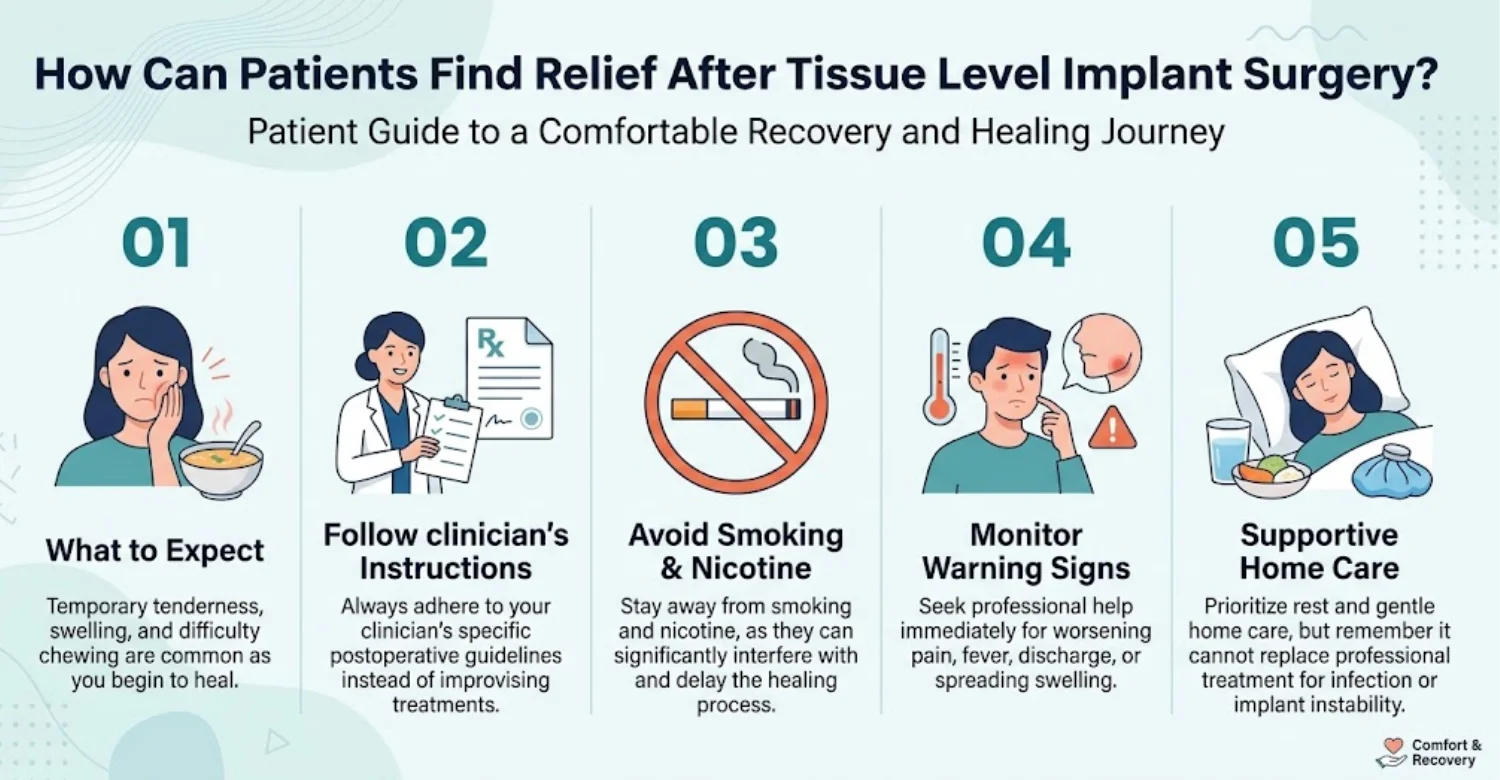
Which Dentist-Approved Pain Relief Options May Help?
Dentists may recommend nonprescription pain relief after reviewing health and medication history. Paracetamol or an anti-inflammatory medicine may suit some individuals. However, allergies, kidney disease, stomach ulcers, and blood thinners can affect safety. Do not combine medicines without checking their ingredients carefully. Severe or worsening pain needs dental evaluation rather than repeated self-medication.
Can Cold Compresses Help Reduce Postoperative Swelling?
A cold compress applied externally may help reduce discomfort and swelling during early recovery. Short, intermittent applications are usually recommended by clinicians. Do not apply ice directly to the skin or the surgical site. Contact the clinic if swelling worsens or comes with fever or increasing pain.
Which Foods Are Most Comfortable During Early Healing?
Soft foods reduce pressure on the surgical area during early recovery. Avoid very hot foods, hard snacks, and chewing directly on the implant when instructed. Maintain good fluid intake and balanced nutrition throughout recovery. Gradually return to normal foods according to comfort and clinical advice.
Why Should Patients Avoid Smoking and Nicotine During Recovery?
Smoking can impair blood flow and interfere with oral wound healing. Patients should discuss cessation support before surgery and follow postoperative guidance. Avoid vaping and other nicotine products unless your clinician advises otherwise. Reducing exposure supports healing but does not guarantee implant success.
Which Home Remedies and Activities Should Patients Avoid After Implant Surgery?
Avoid placing alcohol, concentrated essential oils, or unapproved substances on the surgical site. Do not smoke, rinse aggressively, or exercise strenuously against postoperative instructions. Do not use leftover antibiotics or exceed recommended medication doses. Ask the dental team before using mouth rinses or home remedies.
When Does Postoperative Pain Require Urgent Dental Assessment?
Pain that worsens, persists unexpectedly, or occurs with discharge requires prompt assessment. Seek urgent care when these signs occur. Difficulty breathing or swallowing requires emergency medical attention. Do not postpone urgent care because an overseas provider is unavailable.
What We Notice Clinically
Implant selection should reflect anatomy, restoration requirements, and the patient's ability to clean well. Tissue Level Dental Implants offer a distinctive collar design, but the label cannot predict success. A 2025 meta-analysis of five randomized studies compared tissue-level and bone-level systems. It found no significant short-term differences in peri-implantitis or implant failure. The researchers emphasized the need for more long-term evidence. These findings support balanced counseling rather than claims of universal superiority. Regular maintenance remains important regardless of implant type.
Why Implant Position and Soft Tissue Conditions Matter More Than the Label Alone
A well-selected implant must still be positioned correctly within the available bone and tissue. Tissue-level designs may suit some anatomical situations but not others. Dentists should plan the final restoration before surgery begins. Implant design should support the treatment objectives rather than determine them alone.
Common Patient Misconceptions About Tissue Level Implants
Patients sometimes assume a particular implant design prevents gum inflammation or bone loss. Tissue Level Dental Implants do not eliminate these risks. Research has not shown universal superiority over bone-level designs. Understanding limitations helps set realistic expectations from the start.
Why Bleeding Gums Around an Implant Should Not Be Ignored
Bleeding around an implant can indicate inflammation of the surrounding soft tissue. Persistent bleeding, swelling, or discharge requires assessment for peri-implant disease. Do not assume bleeding is harmless simply because the implant feels stable. Early evaluation can identify the cause and guide treatment.
Why a Well-Healed Implant Still Requires Long-Term Monitoring
Successful initial healing does not guarantee that complications will never occur. Plaque accumulation, changing bite forces, and new medical conditions can affect outcomes. Regular examinations help identify problems before they progress. Patients should follow individualized maintenance schedules and report changes promptly.
Clinical Note : Dr. Rifat Alsaman
Dr. Rifat Alsaman, Head of the Medical Team at Vitrin Clinic and cosmetic dentist, can review this note before publication. Tissue Level Dental Implants should be selected according to bone anatomy and soft-tissue conditions. The collar design may simplify certain procedures, but it does not replace accurate planning. Clinical recommendations should reflect the patient's examination and the available evidence. This proposed note is an educational copy, not a verified quotation from Dr. Alsaman.
Are Tissue Level Dental Implants Suitable for Molar Replacement?
Molars experience substantial chewing forces and often have limited access for cleaning. Tissue Level Dental Implants may suit molars when bone, collar position, and restorative needs align. Implant diameter and restoration design must provide appropriate support. A tissue-level design is not automatically preferable for every molar. Patients should discuss alternative designs when anatomy or restorative space presents challenges.
What Makes Molar Implant Placement Different From Front Tooth Replacement?
Molar replacement prioritizes chewing function, while front-tooth replacement emphasizes visible gum contours. Back teeth can have limited access and complex surrounding anatomy. The final restoration must permit effective daily cleaning. Implant selection should reflect the specific demands of the missing tooth.
How Do Chewing Forces Affect Tissue Level Implants in the Back of the Mouth?
Molars experience repeated, heavy forces during chewing. Excessive forces or unfavorable contacts may contribute to mechanical complications. Patients who grind their teeth may need a protective night guard. Regular checks help identify wear, loosening, or changes in function.
How Does Available Bone Width Affect Molar Implant Selection?
Bone width influences the implant diameter and position that can be safely accommodated. The implant body needs sufficient bone surrounding it on all sides. A narrower design is not automatically suitable for every molar. The selected implant must meet both functional and restorative requirements.
Can Tissue Level Implants Support Single Crowns and Dental Bridges?
These implants can support single crowns and, in appropriate cases, bridge restorations. Not every implant system suits every bridge configuration. Restoration design and component compatibility are essential for success. Patients should understand cleaning requirements and maintenance needs before treatment.
When Might Another Implant Design Be More Appropriate for a Molar?
Another design may be preferable when collar height, bone anatomy, or restorative space creates limits. Tissue Level Dental Implants are not automatically the best option for every back tooth. Dentists consider bone dimensions, soft-tissue conditions, loading needs, and hygiene access. The decision should follow a complete clinical and restorative assessment.
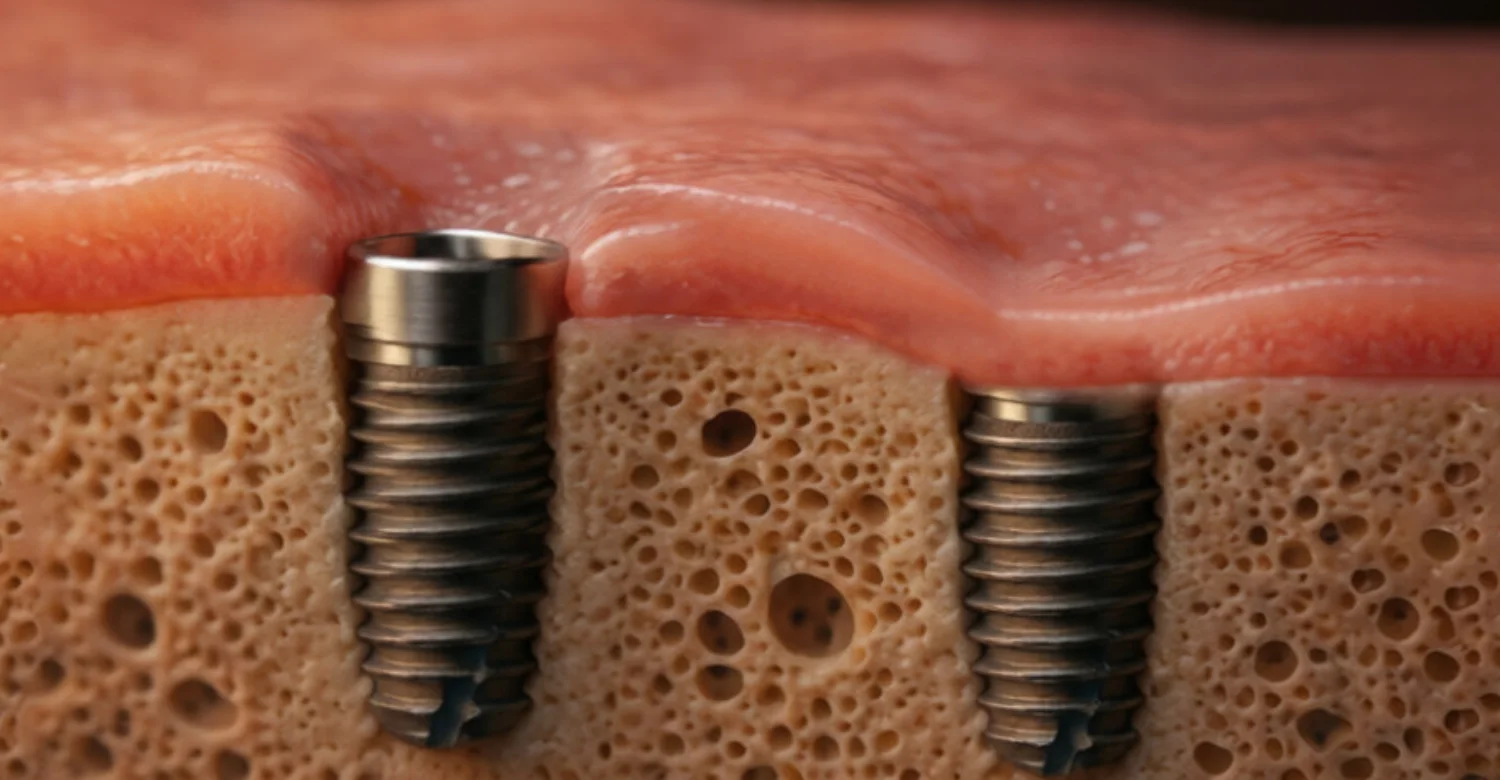
Note : All images used are for editorial and illustrative purposes only and may not originate from the original news provider or associated company.
What Is the Tissue Level Implant Prosthetic Connection?
The prosthetic connection links the implant fixture to its crown or bridge. Tissue Level Dental Implants usually place this connection above the bone crest. This arrangement can simplify access during some restorative procedures. However, connection geometry and component options vary between manufacturers. Patients should ask which components are included in their plan. They should also ask how the restoration will be maintained over time.
How Does the Implant-Abutment Connection Support the Final Restoration?
The connection transfers functional forces between the restoration and the implant fixture. Component compatibility and correct assembly are important for stability. Dentists evaluate the bite and restorative requirements before choosing components. Regular reviews help identify loosening or wear early.
How Does the Transmucosal Collar Influence Crown Design?
The collar creates a transition between the implant body, gum tissue, and restoration. Poorly designed contours may complicate cleaning or affect gum appearance. The available restorative space also influences the crown's final shape. The final design must be compatible with the selected implant system.
Can Prosthetic Fit and Occlusion Affect Implant Longevity?
Restoration fit and bite relationships influence the forces transmitted to an implant. Excessive or uneven contacts may contribute to mechanical complications. Poor fit can also make daily hygiene more difficult. Patients should report a loose crown, clicking, or a sudden change in their bite.
What Is the Difference Between a Screw-Retained and Cement-Retained Crown?
A screw-retained crown attaches to the implant or abutment with a small screw. Screw retention can simplify removal for maintenance or repair. Cement retention may help in selected aesthetic situations. Excess cement can irritate surrounding tissues if it is not removed properly. Dentists choose the method according to access, appearance, and clinical requirements.
How Can Restoration Design Affect Cleaning and Gum Health?
Restoration contours determine how easily patients can clean the surrounding tissues. Overly bulky contours can encourage plaque to collect. Dentists should balance aesthetics with hygiene and function. Professional maintenance helps identify problems with the restoration and nearby tissues.
How Do Tissue Level Implants Affect Gum Health?
Gum health depends on plaque control, tissue anatomy, implant positioning, and restoration design. Tissue Level Dental Implants may offer accessible collar surfaces, but they do not prevent peri-implant disease. A 2025 systematic review of five randomized studies compared tissue-level and bone-level designs. It found no statistically significant difference in peri-implantitis risk. The confidence interval was wide, reflecting substantial uncertainty. Bleeding, swelling, or discharge around an implant warrants assessment. Early diagnosis can help prevent inflammation from progressing.
Can Tissue Level Implants Reduce the Risk of Peri-Implant Disease?
The design may make some restorative components easier to reach, but it does not eliminate disease risk. Research comparing designs has not shown a significant reduction in peri-implantitis. Dentists should explain the evidence honestly. They should avoid promising that any design prevents inflammation.
What Is the Difference Between Peri-Implant Mucositis and Peri-Implantitis?
Peri-implant mucositis is inflammation of the soft tissue around an implant without progressive bone loss. Peri-implantitis involves inflammation together with progressive loss of supporting bone. Any implant, including tissue-level designs, can develop either condition. Common warning signs include bleeding, redness, swelling, and sometimes discharge. Early treatment of mucositis may help prevent progression in some patients.
How Do Plaque Accumulation and Gum Inflammation Affect Implant Stability?
Plaque can trigger inflammation in the soft tissues surrounding an implant. Advanced bone loss may eventually compromise implant stability. Dentists assess bleeding, pocket depths, restoration contours, and radiographic findings. Professional treatment and improved home care depend on disease severity.
Can Gum Recession Expose the Implant Collar?
Gum recession can expose more of the implant collar or restorative components. Exposure does not automatically mean the implant has failed. Dentists evaluate appearance, tissue health, bone support, and cleaning access. Treatment depends on the cause and the patient's needs.
What Does Current Research Say About Tissue Level Implant Outcomes?
Current evidence suggests broadly comparable short-term outcomes between tissue-level and bone-level implants. Tissue Level Dental Implants have been studied for survival, bone changes, and peri-implant disease. A 2025 meta-analysis included five randomized studies with 501 implants and 241 participants. It found no significant differences in failure or peri-implantitis over one to five years. Patients should discuss the evidence alongside their anatomy and treatment goals.
Evidence from systematic reviews and meta-analyses
Systematic reviews combine results from several studies to evaluate clinical outcomes. A 2025 meta-analysis compared tissue-level and bone-level designs across five randomized studies. The analysis included 501 implants placed in 241 participants. Researchers found no significant differences in implant failure or peri-implantitis. These findings provide useful context for patients and clinicians. Study size and follow-up duration limit certainty.
Limitations of current comparative evidence
Comparative studies vary in implant systems, surgical protocols, patients, and follow-up duration. The 2025 meta-analysis included only five randomized studies. It also reported wide confidence intervals around its estimates. Longer studies with consistent methods are needed. Recommendations should reflect both the evidence and individual assessment.
Why implant design cannot replace good oral hygiene and professional maintenance
Even a well-designed implant can develop inflammation when plaque accumulates. Daily cleaning and regular professional monitoring remain essential. Patients should follow personalized brushing and interdental-cleaning instructions. Design is only one part of long-term implant care.
Tissue Level Dental Implant Maintenance and Care
Long-term maintenance protects the tissues around an implant and preserves restoration function. Tissue Level Dental Implants need daily plaque removal and regular professional examinations. Professional maintenance intervals depend on periodontal history, hygiene, and individual risk factors. Smoking and untreated gum disease can increase complications. Patients should report new discomfort, bleeding, swelling, or restoration changes between visits. Consistent care at home and in the clinic gives an implant the best chance of lasting.
How Should Patients Brush and Clean Around Tissue Level Implants?
Brush twice daily with a soft-bristled toothbrush and fluoride toothpaste. Use gentle movements along the gumline without aggressive pressure. Your dentist can recommend tools suited to the restoration's shape. Regular cleaning reduces plaque accumulation but cannot replace professional examinations.
Are Interdental Brushes or Water Flossers Useful for Implant Hygiene?
Interdental brushes can clean spaces that a toothbrush cannot reach. Water flossers can remove loose debris and support daily hygiene. Neither tool replaces brushing or professional maintenance. Ask your dentist to demonstrate a safe cleaning method for your restoration.
How Often Should Patients Attend Implant Maintenance Appointments?
Maintenance intervals should reflect the patient's periodontal history and clinical risk. Many patients need professional reviews every three to six months. During visits, clinicians assess hygiene, bleeding, and restoration stability. Patients with previous periodontitis may need closer monitoring. Follow the individualized schedule recommended by your dental team.
Which Professional Cleaning Methods Are Suitable for Dental Implants?
Professional cleaning methods should suit the implant surface and restoration materials. Clinicians select implant-compatible instruments for each situation. Specialized plastic, titanium, or other instruments may be appropriate. Treatment depends on plaque buildup, inflammation, and how accessible the restoration is.
What Habits Can Increase the Risk of Implant Complications?
Smoking, inadequate oral hygiene, and missed maintenance appointments can increase complication risks. Teeth grinding can place additional forces on restorations. Addressing these modifiable risks supports better long-term results. However, even careful patients cannot eliminate every possible complication.
When Should Patients Contact Their Dentist Between Routine Visits?
Contact the dentist if bleeding, swelling, persistent pain, or discharge develops. Do not wait for the next routine visit if symptoms worsen. Severe facial swelling, fever, or difficulty opening the mouth may need urgent care. Breathing or swallowing difficulty requires emergency treatment.
How Much Do Tissue Level Dental Implants Cost in the US, UK, and Turkey?
Costs vary according to the implant system, restoration, diagnostic tests, and surgical complexity. A single tissue level dental implant with a crown may cost approximately 3,000–6,000 in the United States, $2,000–$3,500 in the United Kingdom, and 450–1,400 in Turkey. These are indicative planning estimates, not verified universal tariffs. Actual prices depend on the provider, clinical requirements, and services included in the treatment package.
Average Tissue Level Dental Implant Costs by Country
Country | Estimated Cost for One Implant with Crown | Currency |
United States | 3,000–6,000 | USD |
United Kingdom | $2,000–$3,500 | GBP |
Turkey | 450–1,400 | USD |
Note: These figures are estimates, not guaranteed prices or verified national averages. Confirm whether the implant fixture, abutment, crown, surgery, diagnostic imaging, and follow-up care are included.
What Is the Average Cost of a Single Tissue Level Dental Implant in the United States?
A single tissue level dental implant with a crown may cost approximately 3,000–6,000 in the United States. Some quotes exclude imaging, extraction, bone grafting, or temporary teeth. Patients should confirm exactly which services are included before comparing providers.
Cost Detail | Estimated Price |
Single tissue level implant with crown | 3,000–6,000 |
Additional imaging | Depends on the examinations required |
Bone grafting or extraction | Depends on clinical complexity |
Temporary restoration | May be included or charged separately |
An individualized estimate is more reliable than an advertised starting price.
What Is the Average Cost of a Tissue Level Dental Implant in the United Kingdom?
A single tissue level dental implant with its crown may cost approximately $2,000–$3,500 in the United Kingdom. Additional fees may apply for imaging, grafting, or complex restorations. Private practices differ considerably in their pricing structures.
Cost Detail | Estimated Price |
Single tissue level implant with crown | $2,000–$3,500 |
Consultation and diagnostic imaging | Depends on the clinic |
Bone grafting or additional surgery | Depends on clinical requirements |
Crown or abutment | May be included or charged separately |
The final cost depends on clinical findings, the selected materials, and the services covered by the quote.
How Much Do Tissue Level Dental Implants Cost in Turkey?
A single tissue level dental implant with a crown may cost approximately 450–1,400 in Turkey. Implant brands, laboratory fees, and clinic services all influence pricing. International patients should confirm what the quote includes before travelling.
Cost Detail | Estimated Price |
Single tissue level implant with crown | 450–1,400 |
Diagnostic imaging | Depends on the treatment package |
Bone grafting or additional procedures | May incur separate fees |
Transport and accommodation | Usually budgeted separately |
Follow-up appointments | Depends on the clinic's arrangements |
Request a written treatment plan with itemized fees, including the implant fixture, abutment, crown, surgery, and aftercare.
What Is the Difference Between Implant-Only Pricing and a Complete Implant Tooth?
Implant-only pricing may cover the implant fixture and surgical placement but exclude the visible replacement tooth. A completed restoration generally requires compatible restorative components, including an abutment and crown. Some providers also include temporary restorations in their packages.
Pricing Type | What It May Include | What May Cost Extra |
Implant-only price | Implant fixture and possibly surgical placement | Abutment, crown, imaging, and follow-up |
Implant and crown package | Implant fixture, abutment, crown, and some surgical services | Grafting, extraction, or additional diagnostics |
Comprehensive treatment package | Several treatment components and selected follow-up services | Excluded procedures, travel, accommodation, or extra visits |
A complete, itemized estimate helps patients avoid unexpected expenses.
Which Factors Affect Tissue Level Dental Implant Costs?
The total cost depends on the implant brand, restoration material, diagnostic needs, and surgical complexity. The number of appointments and follow-up arrangements may also affect the overall budget.
Cost Factor | Potential Effect on the Total Price |
Implant brand and system | Different systems have different component prices |
Abutment and crown | Depends on materials and restoration design |
Laboratory fees | Vary with the laboratory and fabrication process |
Consultation and imaging | Depend on the examinations required |
Surgical complexity | Additional procedures may increase fees |
Bone grafting or extraction | Adds costs when clinically necessary |
Follow-up and maintenance | Depends on the number and type of appointments |
Travel and accommodation | Adds to the total expense for dental tourism |
A dentist must assess the case before providing a reliable estimate.
Implant brand, components, and laboratory fees
Different implant systems vary in component design, manufacturing, and pricing. Each system requires compatible abutments and restorative components. Premium materials or customized restorations may increase the total cost of treatment. Component availability can also influence future maintenance and repairs.
CBCT imaging, consultation, and surgical fees
Consultation and imaging costs depend on the examinations required. CBCT provides three-dimensional information when clinically indicated, but it is not necessary for every patient. Surgical fees vary with the procedure and the provider. The clinician should explain why each recommended examination is necessary and whether its cost is included.
Abutment, crown, bone grafting, and additional procedures
The abutment and crown may be charged separately from implant placement. Extraction, temporary restorations, or gum disease treatment can increase costs further. Additional procedures are not necessary for every patient. The final treatment plan should follow the clinical findings.
Travel, accommodation, and follow-up expenses for dental tourism
Dental tourism budgets should include transport, accommodation, and time away from work. Unexpected complications can require local assessment or further travel. Confirm the provider's aftercare arrangements before booking flights. A low treatment price does not always mean a lower total cost.
How Do Tissue Level Dental Implant Costs Compare Across Countries?
Prices differ across countries because of labor costs, materials, clinic overhead, and included services. The estimated ranges below provide a starting point for comparing treatment in the three countries.
Comparison Factor | United States | United Kingdom | Turkey |
Estimated implant with crown | 3,000–6,000 | $2,000–$3,500 | 450–1,400 |
Currency | USD | GBP | USD |
Additional procedures | May increase the treatment total | May increase the treatment total | May increase the treatment total |
Travel and accommodation | Depends on the patient's location | Depends on the patient's location | Important to budget for international patients |
Follow-up | Confirm what is included | Confirm what is included | Confirm arrangements before travelling |
These estimates are not directly comparable unless each provider includes equivalent treatment components. Confirm the implant brand, crown material, diagnostic services, surgical fees, and aftercare. Travel expenses and follow-up should be considered separately.
How Can Patients Compare Implant Quotes Fairly?
Compare complete treatment plans rather than headline prices. Ask about additional fees for grafting, extraction, temporary restorations, and unexpected complications. International patients should calculate travel and accommodation costs separately.
Question | Why It Matters |
Is the implant brand specified? | Helps identify the implant system being offered |
Is the crown included? | Distinguishes implant-only prices from completed restorations |
Are scans and surgery included? | Helps identify extra clinical fees |
Are possible additional procedures itemized? | Reduces uncertainty about the overall budget |
What does the warranty cover? | Clarifies the limits of any repair or replacement coverage |
How is follow-up arranged? | Helps plan care during healing and after returning home |
Written estimates make differences between providers much easier to identify.
Does a Lower Initial Price Mean Lower Long-Term Value?
A lower price does not automatically mean lower quality or worse long-term value. An inexpensive package may exclude important services, while a higher quote may include them from the beginning. Maintenance, restoration replacement, and future clinical care can also affect lifetime costs.
Evaluation Factor | What to Consider |
Treatment suitability | Whether the implant and restoration fit the patient's clinical needs |
Price transparency | Whether all included and excluded services are listed |
Component quality | Whether the implant system and restoration materials are identified |
Aftercare | Whether follow-up and complication management are clearly explained |
Long-term maintenance | Whether future servicing or replacement may incur extra fees |
Value depends on clinical suitability, transparent pricing, appropriate treatment planning, and dependable long-term care—not price alone.
What Questions Should Patients Ask Before Paying for Implant Treatment?
Before paying for tissue level dental implant treatment, patients should confirm the complete scope of care and the possible additional costs.
Question to Ask | What to Confirm |
Which implant brand and model will be used? | Manufacturer, system, and component availability |
Is the quoted price for a complete implant tooth? | Fixture, abutment, crown, and surgery |
Are diagnostic tests included? | Consultation, X-rays, and any clinically required CBCT scan |
Could additional procedures be necessary? | Possible grafting, extraction, or gum treatment |
What aftercare is provided? | Follow-up appointments and complication management |
What are the payment terms? | Deposit, balance, cancellation terms, and extra fees |
Is a warranty provided? | Coverage, exclusions, and the conditions that apply |
Obtain a written treatment plan and itemized quote before making a payment. This allows you to compare costs more fairly and understand the financial commitments involved.
How Long Do Tissue Level Dental Implants Last?
Implant longevity depends on bone integration, oral hygiene, restoration quality, and ongoing maintenance. Tissue Level Dental Implants can remain functional for many years when selected and maintained well. However, no implant has a guaranteed lifespan. A 2020 systematic review included 2,933 implants across 20 studies. Most included studies reported survival and success rates above 90%. Regular examinations help identify biological and mechanical complications early.
What Is the Expected Lifespan of a Tissue Level Dental Implant?
A successfully integrated implant may function for many years, sometimes decades. Research reports high survival rates, but study outcomes vary. Patients should maintain regular professional reviews and effective daily cleaning. The crown may require replacement before the implant fixture does.
What Is the Difference Between Implant Survival and Implant Success?
Implant survival generally means the fixture remains in place and functional. Implant success usually requires extra criteria, such as healthy tissue and good function. Definitions vary between research studies. Dentists assess both stability and the condition of surrounding tissues. Patients should ask how their clinician evaluates long-term outcomes.
Which Factors Influence Long-Term Implant Longevity?
Oral hygiene, periodontal health, smoking, general health, and bite forces influence implant outcomes. Teeth grinding can contribute to mechanical complications. Regular maintenance helps identify changes early. Individual risk assessment supports a more realistic prognosis.
Can the Implant Crown Need Replacement Before the Implant?
Yes, the crown can wear, fracture, loosen, or need replacement while the implant stays stable. A healthy fixture can often support a new restoration. Repair or replacement may involve additional costs. Dentists should assess the fixture before deciding whether a new crown is appropriate.
How Do Regular Maintenance Visits Influence Long-Term Outcomes?
Maintenance visits help identify inflammation, bone changes, and mechanical problems. Radiographs may be taken when clinically indicated. Patients should follow an individualized maintenance schedule. Early assessment can help manage complications before they progress.
.jpg)
.jpg)
.webp)
.webp)
.webp)
.jpg)
Tips for Patients Considering Tissue Level Dental Implants
Patients should understand the proposed design, treatment stages, costs, and maintenance before proceeding. Tissue-level implants may suit particular anatomical situations, but they are not ideal for everyone. International patients should arrange follow-up care before traveling. Vitrin Clinic can explain treatment stages and diagnostic requirements during an individualized consultation. A clear plan helps patients decide without relying on advertising claims alone.
What Should Patients Prepare Before an Implant Consultation?
Prepare a list of medical conditions, medications, allergies, and previous dental procedures. Bring previous radiographs or treatment records when available. Tell the dentist if you smoke or have had gum disease. This information helps guide the examination and planning process.
Which Questions Should Patients Ask About Implant Design and Brand?
Ask why the proposed implant design suits your anatomy and restoration needs. Confirm whether the final crown is included in the quote. Discuss alternative designs and their limitations. Clear answers help patients understand the proposed treatment fully.
How Can Patients Reduce the Risk of Postoperative Complications?
Follow the dentist's instructions about cleaning, diet, medication, and activity. Avoid smoking and nicotine during recovery. Do not manipulate the implant or restoration yourself. Good aftercare reduces avoidable risks but cannot guarantee complication-free healing.
What Records Should Patients Obtain Before Dental Treatment Abroad?
Request a written treatment plan, diagnostic images, implant specifications, and itemized costs. Obtain postoperative instructions and reliable contact information. Confirm how follow-up will be arranged after returning home. These records support continuity of care wherever you live.
How Should Patients Plan Follow-Up Care After Returning Home?
Arrange a local dentist who can review the implant and restoration after travel. Obtain the overseas clinic's records and follow-up recommendations. Plan maintenance appointments before any problems occur. Local follow-up matters most when returning to the original provider is difficult.
At Vitrin Clinic: Planning Tissue Level Dental Implant Treatment
Treatment planning begins with an examination of the missing tooth site, bone, gums, and restoration needs. Vitrin Clinic can discuss diagnostic findings and possible treatment options during consultation. Digital imaging may support planning when clinically appropriate. International patients also need realistic guidance about appointments and follow-up. A personalized plan should reflect clinical needs rather than promise a particular result.
How Is Each Patient's Bone, Gum Tissue, and Missing Tooth Assessed?
The dentist examines the missing tooth site and the surrounding oral tissues. Imaging may be recommended to clarify the anatomy. Medical history and previous dental treatment also influence planning. These findings help determine whether this design is appropriate.
How Can Digital Imaging Support Individualized Implant Planning?
Digital radiographs and CBCT may help evaluate bone dimensions and anatomical structures. Intraoral scanning may support crown design and restoration fit. Vitrin Clinic should select imaging according to each patient's needs. The clinician should explain what each test can and cannot show.
How Are Implant Type and Final Restoration Selected According to Clinical Needs?
The implant type and the restoration should be selected together. Dentists consider tissue thickness, bite forces, cleaning access, and appearance. The clinician should explain the reasons for the recommendation. Patients should understand the available alternatives before giving consent.
How Can International Patients Discuss Treatment Scope and Cost Before Traveling?
Request an initial review of available dental records and a written estimate. Vitrin Clinic can explain anticipated appointments and the scope of the proposed package. Budget for travel and accommodation separately. Final recommendations may change after an in-person examination.
What Should a Personalized Treatment Plan Explain About Risks, Alternatives, and Follow-Up?
A treatment plan should explain the diagnosis, proposed procedure, alternatives, risks, and estimated costs. The plan should identify expected treatment stages and the restoration type. It should also explain maintenance needs and possible complications. Clear documentation supports informed decisions and realistic expectations.
How Vitrin Clinic Supports Your Treatment Journey
A coordinated treatment journey helps patients understand each stage of implant care. Vitrin Clinic can explain diagnostic findings and discuss options with international patients. Patients should receive written estimates and realistic timelines. Aftercare instructions should clarify whom to contact if complications develop. Recommendations must remain individualized, with no guarantee of a specific outcome.
What Happens During the Initial Consultation and Treatment Review?
The initial consultation reviews the patient's concerns, medical history, and previous dental treatment. Patients can discuss treatment goals, concerns, and budget openly. The consultation should clarify whether additional assessments are necessary. A definitive recommendation follows appropriate clinical evaluation.
How Are Diagnostic Findings Used to Coordinate the Treatment Stages?
Clinical findings guide implant selection, surgical planning, and restoration design. If grafting is needed, treatment may involve additional stages. Vitrin Clinic can explain the proposed sequence and its clinical rationale. Patients should understand that timelines may change according to healing.
How Are Appointments and Treatment Timelines Planned for International Patients?
Appointment planning should reflect the expected procedures and healing requirements. Vitrin Clinic can discuss scheduling options after reviewing the proposed treatment. Travel arrangements should never prevent necessary follow-up. Confirm the schedule and include services before booking.
What Follow-Up Instructions Should Patients Receive Before Returning Home?
Patients should receive written instructions about hygiene, medication, diet, and warning signs. Implants require continued monitoring after international treatment. A local dentist may provide ongoing maintenance. Clear records help support continuity of care after travel.
How Can Patients Coordinate Ongoing Maintenance With Their Local Dentist?
Share your treatment records and implant specifications with your local dentist. Your dentist can set an individualized maintenance schedule. Report any pain, bleeding, swelling, or changes in your bite. Remote advice cannot replace an examination when symptoms need assessment.
Ready to transform your smile?
Talk to our team and get a personal FREE treatment plan.
Key Takeaways
Choosing an implant system means balancing anatomy, restoration design, maintenance, and patient preferences. Tissue Level Dental Implants have a transmucosal collar that can simplify selected restorative procedures. However, current evidence does not show universal superiority over bone-level systems. A 2025 meta-analysis found comparable short-term survival and peri-implantitis outcomes. Good hygiene and regular professional maintenance remain essential.
What Patients Should Know Before Choosing Tissue Level Dental Implants
This design features a collar that extends through the gum tissue. It may suit patients whose anatomy and restorative needs support this approach. It is not automatically better than a bone-level system. A clinical examination should guide the final decision.
Why Implant Design, Gum Health, and Maintenance Must Be Considered Together
Implant design influences placement and restorative options, but it does not determine outcomes alone. Gum thickness, bone support, restoration contours, and medical history also matter. Regular professional reviews help monitor the implant over time. These factors should be considered together when planning treatment.
When to Seek Professional Assessment for Pain, Swelling, Bleeding, or Implant Mobility
Persistent pain, bleeding, swelling, or discharge requires professional assessment. Fever or spreading facial swelling requires urgent care. Difficulty breathing or swallowing requires emergency medical attention. Do not adjust the restoration or treat suspected infection yourself.
At Vitrin Clinic
Vitrin Clinic can help patients explore suitabledentalimplant options through individualized clinical assessment. Recommendations should reflect bone anatomy, gum health, restoration requirements, and patient preferences. Patients can request information about examinations, treatment stages, estimated costs, and aftercare. Final treatment recommendations require an appropriate clinical examination.
Reference
FAQs
Dr. Rifat Alsaman has more than 5 years of clinical experience in dentistry and currently serves as the Head of the Medical Team at Vitrin Clinic. He is dedicated to providing exceptional patient care, overseeing treatment planning, and ensuring the highest clinical standards across the team. His expertise, attention to detail, and commitment to continuous professional development have helped countless patients achieve healthier, more confident smiles.
.webp&w=3840&q=75)


