General Dentistry
October 11, 2026
What Is the Best Toothache Medicine for Relieving Tooth Pain?
 Dr. Rifat Alsaman
The best toothache medicine depends on what is causing the pain and on your general health. For most adults, ibuprofen or acetaminophen, alone or combined, gives effective short-term relief. However, these medicines only ease symptoms. They cannot repair cavities, cracks, or infections, so a dental examination is essential for lasting relief.
What Is Toothache Medicine and How Does It Help Relieve Dental Pain?
Toothache medicine means medications that reduce dental pain and inflammation while you wait for proper dental treatment. It works by blocking pain signals or reducing swelling around irritated tissues. Used correctly, it makes eating and sleeping more comfortable, but it should always be paired with a professional assessment.
What Is Toothache Medicine?
Medicine for toothache includes over-the-counter pain relievers containing the active ingredients ibuprofen, naproxen, or acetaminophen, and numbing gels containing benzocaine. Dentists may prescribe stronger options, or antibiotics when an infection is confirmed. Each works differently, so the right choice depends on your health and the source of the pain.
How Does Medicine for Toothache Help Relieve Pain?
Anti-inflammatory ingredients such as ibuprofen and naproxen reduce the chemicals that cause swelling and pain around an inflamed tooth or gum. Acetaminophen reduces pain signals in the brain but does little for inflammation. Because most dental pain involves inflammation, an anti-inflammatory toothache medicine is often the most effective choice for suitable adults.
What Are the Common Reasons People Need Toothache Medication?
People most often need toothache medication for cavities, cracked teeth, gum inflammation, wisdom tooth pain, sensitivity, and dental infections. Pain after dental procedures, such as extractions or root canal treatment, is another common reason. In each case, toothache medicine provides temporary comfort while the dentist treats the underlying problem.
What Are the Main Causes of Toothache That May Require Treatment?
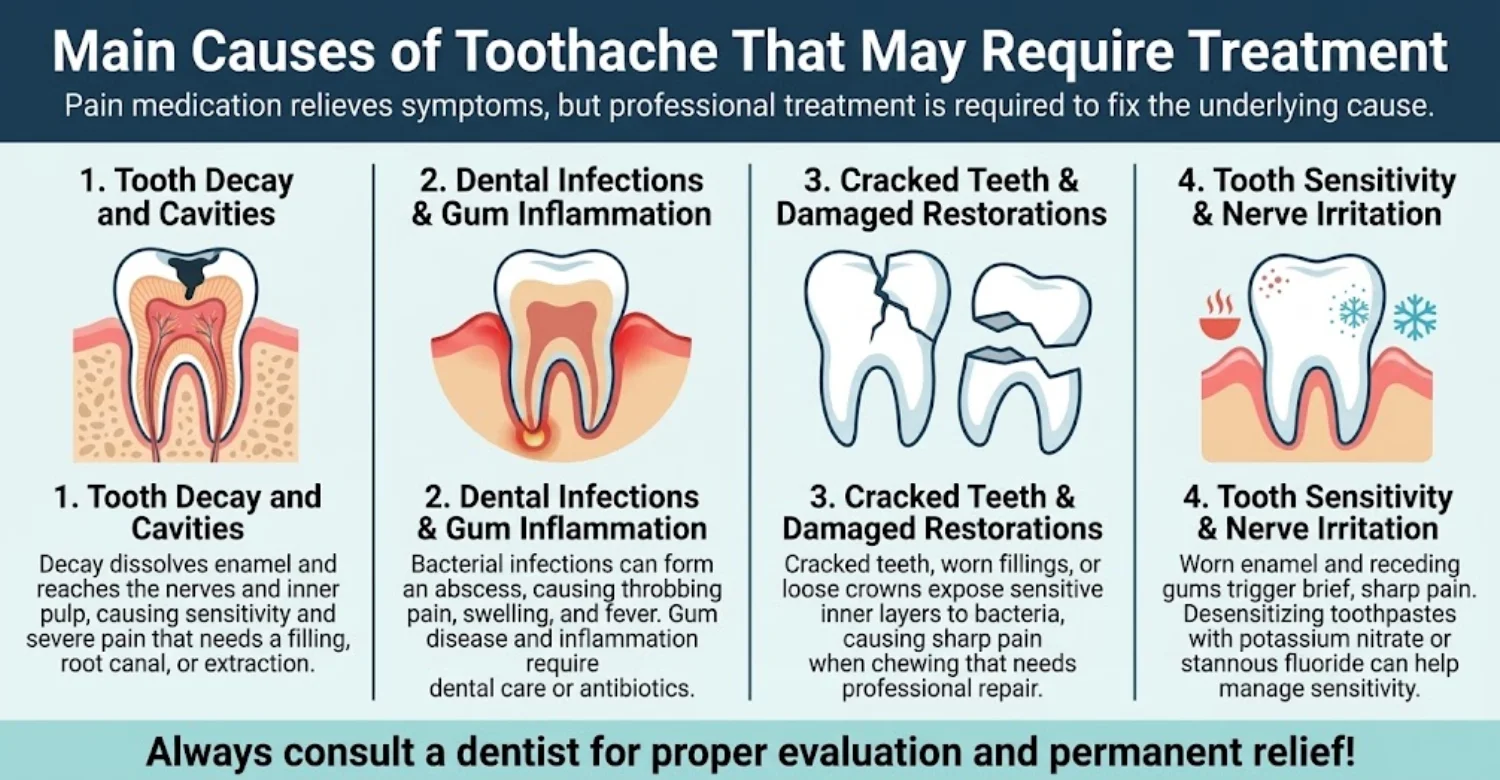
Toothache usually comes from a problem in the tooth, the nerve, or the surrounding gums and bone. Finding the cause matters, because toothache medicine relieves symptoms but does not stop decay, heal infections, or repair damage. Knowing these causes helps you recognize when you need professional treatment.
Tooth Decay and Cavities
Tooth decay begins when bacteria produce acids that dissolve enamel and form cavities. As the decay reaches the inner layers and the nerve, the tooth becomes sensitive to sweets, temperature, and pressure. Deep cavities can inflame the nerve and cause severe pain that needs a filling, root canal treatment, or extraction.
Dental Infections and Gum Inflammation
A bacterial infection inside a tooth can form an abscess, causing throbbing pain, swelling, and sometimes fever. Gum inflammation and gum disease can also make teeth ache and bleed. Toothache medicine may reduce the discomfort, but infections need dental treatment, and sometimes prescription antibiotics, to stop them spreading.
Cracked Teeth and Damaged Dental Restorations
Cracked teeth often cause sharp pain when chewing or when releasing a bite. Broken, worn, or loose fillings and crowns can expose sensitive inner layers of the tooth and let bacteria in. These problems cannot heal on their own and need professional repair to stop the pain and prevent further damage.
Tooth Sensitivity and Nerve Irritation
Worn enamel, receding gums, or teeth whitening can expose the tooth's inner layer, causing brief, sharp pain with cold, hot, or sweet foods. Toothpastes containing potassium nitrate or stannous fluoride may help over time. Toothache medicine is rarely needed for simple sensitivity, but lingering pain may mean nerve irritation that needs evaluation.
What Factors Should You Consider When Choosing Tooth Pain Medicine?
Choosing tooth pain medicine safely means considering the type and severity of the pain, your age, your medical history, your current medications, and any allergies. The wrong toothache medicine can cause side effects or dangerous interactions. If you are unsure, a pharmacist, doctor, or dentist can help you choose a safe option.
The Cause and Severity of the Toothache
Mild sensitivity may need no medication at all, while inflammatory pain from an irritated nerve or gum often responds well to ibuprofen or naproxen. Severe, throbbing pain may mean an infection that toothache medicine alone cannot control. Matching the medicine to the situation gives better relief and avoids unnecessary use.
Age, Medical History, and Existing Health Conditions
Children need forms and doses suitable for their age, and aspirin should not be given to children or teenagers because of the risk of Reye's syndrome. If you have stomach ulcers, kidney disease, heart disease, liver disease, or asthma, or if you are pregnant, consult a healthcare provider before taking pain relievers.
Allergies and Potential Medication Side Effects
Some people are allergic to ibuprofen, naproxen, or aspirin and may develop rashes, swelling, or breathing problems. Anti-inflammatory ingredients can irritate the stomach, and too much acetaminophen can damage the liver. Benzocaine has been linked to a rare blood disorder. Always read the warnings before choosing any toothache medicine.
When to Seek Professional Dental Care Instead of Relying on Medicine
See a dentist instead of relying on toothache medicine if the pain lasts more than one or two days, keeps coming back, or wakes you at night. Swelling, fever, a bad taste, or pain after an injury also need prompt evaluation. Medicine should support dental treatment, never replace it.
What Is the Best Medicine for Toothache in Different Situations?
The best medicine for toothache depends on the situation. Mild pain may respond to a single over-the-counter pain reliever, while moderate pain may need a combination recommended by a professional. In every case, toothache medicine is a temporary measure until the dental cause is diagnosed and treated.
Choosing Medicine for Mild Tooth Pain
For mild tooth pain, a single over-the-counter pain reliever containing ibuprofen or acetaminophen, taken as directed on the package, is often enough. Avoiding very hot, cold, or sweet foods and keeping the area clean also help. If mild pain lasts more than a couple of days, book a dental visit.
Managing Moderate or Persistent Dental Pain
For moderate or persistent dental pain, research supports combining ibuprofen with acetaminophen, which can work better than either one alone for many adults. Follow a dentist's or pharmacist's guidance for this combination. If the pain persists, toothache medicine is only masking a problem that needs a professional diagnosis.
Understanding the Limitations of Over-the-Counter Dental Pain Medicine
Over-the-counter dental pain medicine reduces discomfort for several hours, but it does not remove decay, drain an infection, or repair a crack. The pain often returns once the effect wears off. Relying on toothache medicine for weeks can let problems get worse, leading to more complex treatment such as root canal therapy or extraction.
Why the Right Treatment Depends on the Underlying Dental Problem
Different dental problems need different treatments. Cavities need fillings, infected nerves need root canal treatment, gum disease needs cleaning, and abscesses may need drainage. No single toothache medicine can solve all of these. Lasting relief comes only when the dentist identifies and treats the real source of the pain.
Note : All images used are for editorial and illustrative purposes only and may not originate from the original news provider or associated company.
What Medicine Helps Toothache When the Pain Gets Worse?
When pain gets worse, people often ask what medicine helps toothache the most. Worsening pain usually means the problem is progressing, often toward nerve damage or infection. Taking more toothache medicine is not the answer. Worsening pain is a clear signal to get a dental evaluation promptly.
Why Tooth Pain May Become More Severe Over Time
Untreated decay spreads deeper into the tooth until it reaches the pulp, where the nerves and blood vessels become inflamed. Pressure builds inside the tooth and the pain intensifies. If bacteria infect the pulp, an abscess can form at the tip of the root, causing severe, throbbing pain and swelling.
Signs That Toothache May Indicate a Dental Infection
Signs of a dental infection include throbbing pain, swelling of the gum or face, a pimple on the gum, a bad taste, fever, and tenderness when biting. Pain that toothache medicine barely controls may also suggest infection. These symptoms need prompt dental care to stop the infection from spreading.
When Dental Pain Requires Urgent Professional Evaluation
You need an urgent evaluation for severe pain that medication does not relieve, facial swelling, fever, an injury to a tooth, or pain that lasts several days. Emergency care is essential if swelling spreads to the neck or eye, or if swallowing or breathing becomes difficult, because the infection can become life-threatening.
What to Do if Tooth Pain Interferes With Sleeping or Eating
If pain is affecting your sleep or eating, take toothache medicine as directed, eat soft foods, and avoid chewing on the painful side. Keeping your head raised at night may reduce the throbbing. Pain that disturbs sleep often means nerve inflammation or infection, so book a dental appointment promptly.
Ready to transform your smile?
Talk to our team and get a personal FREE treatment plan.
Can Toothache Medication Treat the Underlying Cause of Tooth Pain?
Toothache medication relieves pain, but it does not treat the cause. Toothache medicine works on the symptoms, while the decay, cracks, or infection remain. Even prescribed antibiotics only control an infection temporarily and do not remove its source. Lasting relief requires dental treatment that removes the problem.
The Difference Between Pain Relief and Dental Treatment
Pain relief reduces how much discomfort you feel, while dental treatment removes the reason for the pain. A filling removes decay, root canal treatment removes the infected pulp, and extraction removes a tooth that cannot be saved. Medication keeps you comfortable until these treatments are done.
Why Cavities and Damaged Teeth May Need Professional Care
Cavities do not heal on their own. Once enamel and the layer beneath it are lost, only a dentist can remove the decay and restore the tooth. Damaged teeth may need fillings, crowns, or other restorations. Taking toothache medicine while delaying care lets cavities grow deeper and more painful.
Why Dental Infections Should Not Be Ignored
Dental infections can spread to the jaw, face, neck, and, rarely, the bloodstream. The pain may even disappear for a while when the nerve dies, but the infection remains. Prompt treatment, such as drainage, root canal therapy, or extraction, sometimes with prescribed antibiotics, is essential to prevent serious complications.
When Persistent Pain Requires Further Examination
Pain that persists despite toothache medicine, keeps returning, or has no obvious cause needs further examination. The dentist may use X-rays, bite tests, and sensitivity tests to find the problem. Sometimes the pain comes from the sinuses, the jaw joints, or teeth grinding, which need different management.
What Are the Risks of Using Medicine for Dental Pain Without Professional Advice?
Using medicine for dental pain without advice can lead to side effects, overdose, drug interactions, and a delayed diagnosis. Many people take more than the recommended amount when the pain is severe. Understanding the risks of toothache medicine helps you use it safely and recognize when professional care is the better choice.
Possible Side Effects and Medication Safety Concerns
Ibuprofen, naproxen, and aspirin may cause stomach irritation, bleeding, strain on the kidneys, and raised blood pressure, especially with long-term use. Acetaminophen is generally gentle on the stomach but can harm the liver at high doses or when combined with alcohol. Benzocaine may cause rare but serious blood reactions.
Risks of Taking More Than the Recommended Amount
Taking more than the recommended dose does not noticeably improve dental pain relief, but it greatly increases the risk of side effects. An acetaminophen overdose can cause severe liver damage. A common mistake is taking several products that contain the same active ingredient. Always read labels and never exceed the maximum daily dose of any toothache medicine.
Why Repeatedly Masking Tooth Pain Can Delay Treatment
Masking pain again and again lets the underlying problem progress unnoticed. A cavity that needed a simple filling may later need root canal treatment or extraction. Using toothache medicine for weeks without an examination often leads to more complex and costly treatment and a greater risk of infection.
What to Avoid When Managing Toothache at Home
Do not place aspirin or other tablets directly on the tooth or gums, because they can burn the tissue. Avoid applying heat to a swollen face, picking at the tooth with sharp objects, or combining products that contain the same active ingredient. Never use leftover antibiotics.
How Can You Relieve Toothache Naturally While Waiting for Dental Care?
While you wait for dental care, simple home measures can ease discomfort alongside toothache medicine or instead of it. These include warm salt water rinses, cold compresses, soft foods, and gentle cleaning. They reduce irritation and swelling but cannot treat decay or infection, so you still need a dental appointment.
Rinsing the Mouth Gently With Warm Salt Water
Dissolve about half a teaspoon of salt in a glass of warm water, rinse gently for thirty seconds, and spit it out. Salt water helps clean the area, loosen trapped food, and soothe inflamed gums. Repeat several times a day, but avoid vigorous swishing if a tooth was recently pulled.
Applying a Cold Compress to the Outside of the Cheek
Hold a cold compress wrapped in a cloth against the outside of your cheek for about fifteen minutes, then take a break before repeating. Cold reduces swelling and numbs the pain, and it can be used alongside toothache medicine. Never put ice directly on the skin or on the painful tooth.
Choosing Soft Foods and Avoiding Dental Irritants
Choose soft, lukewarm foods such as yogurt, soups, eggs, and mashed vegetables. Avoid very hot, cold, sweet, acidic, sticky, or hard foods that can trigger pain. Chewing on the other side reduces pressure on the painful tooth and prevents further irritation or damage.
Maintaining Gentle Oral Hygiene During Tooth Pain
Keep brushing twice a day with a soft-bristled toothbrush, cleaning gently around the painful tooth. Floss carefully to remove trapped food, which can make the gums sore. Good hygiene reduces bacteria and inflammation and keeps you more comfortable while you wait for professional dental care.
When Home Care Is Not Enough
Home care is not enough if the pain lasts more than one or two days, gets worse, or comes with swelling, fever, or a bad taste. When home measures and toothache medicine no longer control the pain, you need a dental examination to find and treat the cause before complications develop.
How Does Vitrin Clinic Approach Toothache Assessment and Dental Care?
Vitrin Clinic focuses on finding the source of tooth pain through a careful examination and diagnostic testing. Rather than relying on toothache medicine alone, the clinic provides individual treatment plans that address the cause, relieve pain effectively, and protect natural teeth for long-term oral health.
.jpg)
.jpg)
.webp)
.webp)
How Does Vitrin Clinic Help Identify the Cause of Tooth Pain?
Vitrin Clinic identifies the cause of tooth pain by reviewing the patient's symptoms and medical and dental history, then examining the teeth and gums. Diagnostic tests, such as X-rays, bite tests, and sensitivity tests, help locate the affected tooth and show whether the pain comes from decay, cracks, infection, or the gums.
Why Is a Professional Dental Examination Important Before Treatment?
A professional examination makes sure treatment targets the real problem rather than just the symptoms. Without a diagnosis, patients may take medication for weeks while decay or infection progresses. An examination also catches problems early, when treatment is usually simpler, quicker, more comfortable, and more likely to save the natural tooth.
How Does Vitrin Clinic Support Patients With Persistent Dental Pain?
For persistent dental pain, Vitrin Clinic investigates carefully, including less obvious causes such as hidden cracks, teeth grinding, or problems with old fillings and crowns. Patients receive clear explanations of their condition and treatment options, along with guidance on safely using medicine for dental pain until treatment is completed.
Dr. Rifat Alsaman's Perspective on Personalized Dental Care
Dr. Rifat Alsaman, Head of the Medical team at Vitrin Clinic and a cosmetics dentist, highlights the importance of an individualized assessment to determine the source of dental pain and establish an appropriate care plan. Each patient's symptoms, health history, and clinical findings shape the final recommendations.
Why Should Patients Avoid Relying Only on Toothache Medication?
Toothache medication only reduces discomfort for a while. It cannot remove decay, close cracks, or clear an infection. Relying on it alone lets problems get worse and may hide warning signs. The safest approach for long-term dental health is to use medication as a short-term bridge to professional treatment.
Clinical Note
Toothache medicine may temporarily reduce discomfort, but persistent, recurrent, or severe pain requires professional evaluation to identify and address its underlying cause.
Tips for the Patients
Follow medication instructions and avoid exceeding recommended doses.
Do not place pain medication directly against the tooth or gums.
Seek prompt dental assessment if pain persists or worsens.
Get emergency care if toothache is accompanied by facial or neck swelling, difficulty swallowing, or difficulty breathing.
Resource:
https://pubmed.ncbi.nlm.nih.gov/38325969/
https://pmc.ncbi.nlm.nih.gov/articles/PMC10910586/
https://pmc.ncbi.nlm.nih.gov/articles/PMC6542501/
FAQs
Dr. Rifat Alsaman has more than 5 years of clinical experience in dentistry and currently serves as the Head of the Medical Team at Vitrin Clinic. He is dedicated to providing exceptional patient care, overseeing treatment planning, and ensuring the highest clinical standards across the team. His expertise, attention to detail, and commitment to continuous professional development have helped countless patients achieve healthier, more confident smiles.


