General Dentistry
September 17, 2026
Tongue Problems: What Causes Them, and When Should You See a Dentist?
 Dr. Rifat Alsaman
Tongue problems can appear suddenly or build up slowly over time. Some patients notice pain. Others see swelling, discoloration, bumps, patches, or sores. A patient may also spot changes under the tongue itself. These changes range from harmless irritation to signs of a condition that needs professional assessment. Appearance alone does not always reveal the cause behind problems with the tongue. This is exactly why clinical evaluation matters so much. This article covers common tongue problems, problems under the tongue, warning signs, diagnosis, treatment, prevention, and when professional guidance becomes necessary for lasting oral health.
Tongue Problems: What Changes in the Tongue Should You Pay Attention To?
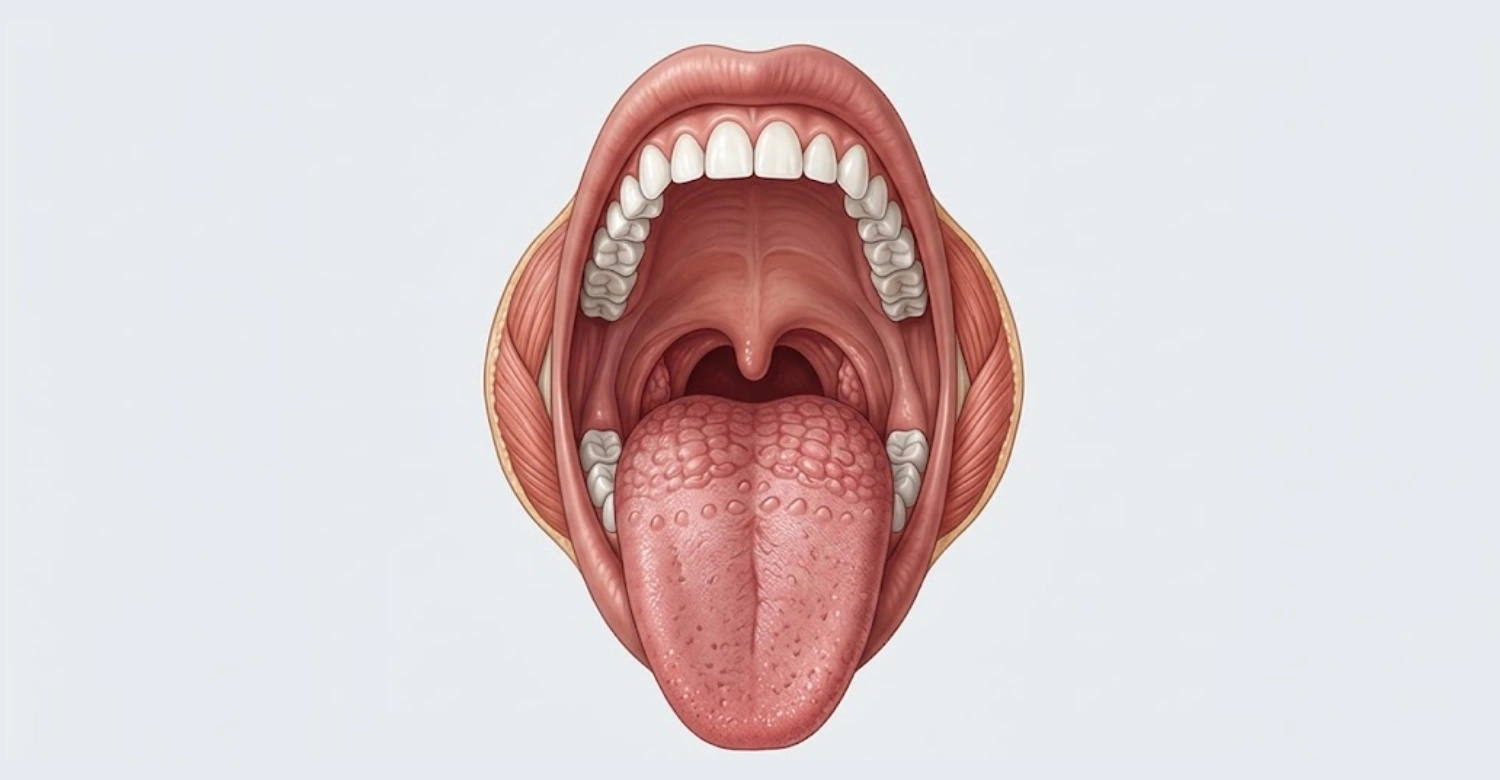
Tongue problems generally refer to any change affecting how the tongue looks, feels, moves, or functions. Dentists watch for pain, tenderness, swelling, red or white patches, unusual coating, or discoloration. Cracks, grooves, bumps, ulcers, burning, tingling, and texture changes also count. Difficulty moving the tongue or speaking comfortably are additional signs. A new or persistent change deserves real attention rather than guesswork. Self-diagnosis often overlooks details that only a clinical exam can properly evaluate and confirm.
What Does a Healthy Tongue Normally Look and Feel Like?
A healthy tongue shows natural variation in color, texture, and surface coating. Small bumps called papillae are completely normal and expected. Minor differences in shade or texture do not automatically indicate disease. Comparing your tongue with images of tongue problems online can be misleading and often causes unnecessary worry. Every mouth looks slightly different. What matters most is noticing a genuine change from your own usual baseline, not matching a photo you found on the internet.
When Is a Tongue Change More Concerning?
A tongue change becomes more concerning when it persists, worsens, or keeps returning. Bleeding, significant pain, or unexplained swelling are warning signs worth noting. Difficulty eating or speaking comfortably should never be ignored either. These symptoms suggest the issue goes beyond simple, temporary irritation. When any of these signs appear alongside problems in tongue tissue, a dental or medical evaluation becomes the sensible next step, rather than waiting to see if things improve alone.
Note: All images used are for editorial and illustrative purposes only and may not originate from the original news provider or associated company.
What Are the Most Common Problems in Tongue and What Can Cause Them?
Problems in tongue tissue can stem from many different sources. Local irritation, infection, nutritional gaps, oral habits, medications, and systemic conditions all play a role. Two patients can describe nearly identical symptoms yet have completely different underlying causes. This is precisely why problems of the tongue should never be self-diagnosed from appearance alone. A proper evaluation considers history, duration, and associated symptoms together, rather than relying on a single visual clue to explain everything happening.
Tongue Sores, Ulcers, and Painful Areas
Tongue ulcers and sore spots often start from accidental biting or sharp tooth edges. Ill-fitting dental appliances, burns, and general irritation can also trigger discomfort. Most minor sores heal within a week or two without lasting concern. However, ulcers that keep recurring or refuse to heal need proper assessment. Persistent sores are one of the more common tongue problems patients bring up, and they deserve attention rather than repeated home remedies that only mask symptoms temporarily.
White or Red Changes on the Tongue
White or red patches on the tongue can result from several different causes. Diet, hygiene habits, minor irritation, and underlying conditions can all contribute to these changes. It's tempting to assume every patch signals infection, but that assumption is often wrong. Professional examination remains the only reliable way to understand what's actually happening. These color changes are among the more visually noticeable problems with the tongue, which is exactly why patients tend to worry about them quickly.
Swollen, Enlarged, or Sensitive Tongue
A swollen or sensitive tongue can stem from local irritation or a broader systemic factor. Allergic reactions, infections, and certain medications sometimes contribute as well. Accompanying symptoms help a dentist judge whether further investigation is needed. Sudden swelling paired with breathing difficulty always warrants urgent care. Milder, gradual swelling tied to identifiable irritation is usually less serious. Either way, tracking the accompanying details helps separate ordinary tongue problems from something requiring closer, more specific medical attention.
Coated, Discolored, or Hairy-Looking Tongue
Oral hygiene, diet, smoking, and certain medications can all change how the tongue's surface looks. A temporary coating often clears up with better brushing and increased hydration. Persistent discoloration or a hairy-looking texture that doesn't improve deserves a closer look. Distinguishing a passing surface change from a lasting abnormality matters here. Many patients search for problems of the tongue online after noticing coating changes, but a short-term shift rarely signals anything serious on its own.
Cracked or Fissured Tongue
A fissured tongue has visible grooves or cracks across its surface. This is usually a harmless, often inherited variation rather than a disease. Fissures can sometimes collect food debris, which may cause mild irritation if left unaddressed. Gentle cleaning helps keep the grooves comfortable and fresh. Not every fissured tongue requires treatment. Most cases simply call for consistent, careful hygiene rather than active medical intervention, though a dentist can confirm this during a routine check.
What Problems Can Develop Under the Tongue?
Problems under tongue tissue deserve their own separate discussion. The floor of the mouth contains salivary glands, ducts, nerves, and blood vessels packed into a small space. A lump, swelling, pain, or unusual area under the tongue should be examined if it doesn't resolve quickly. Because this area involves several delicate structures, under tongue problems can sometimes indicate something needing more specialized attention than surface-level tongue tissue changes elsewhere in the mouth.
Common Under the Tongue Problems
Common under the tongue problems include irritated or traumatized tissue and blocked salivary ducts. Salivary stones, cysts, fluid-filled swellings, local infections, and soft-tissue lesions also appear regularly. Appearance alone cannot establish which of these is actually present. Each of these conditions can look fairly similar from the outside despite having very different causes and treatments. That overlap is exactly why clinical evaluation, rather than visual comparison alone, remains essential for an accurate diagnosis.
What Could Cause Problems Under My Tongue?
Patients often ask what could cause problems under my tongue after noticing sudden discomfort. The answer depends on location, duration, pain level, size, and whether the issue keeps recurring. Associated symptoms matter too, including swelling patterns and any changes in saliva flow. Some conditions may require referral to a specialist for further assessment. There isn't one single answer here, which is exactly why a thorough clinical history plays such an important role in reaching a diagnosis.
When Should Under-Tongue Swelling Be Checked?
Under-tongue swelling should be checked when it persists, grows larger, or comes with unexplained bleeding. Difficulty swallowing, restricted tongue movement, or ongoing pain are also reasons to seek prompt assessment. Waiting too long can allow a manageable issue to become more complicated. Prompt professional evaluation helps rule out anything more serious early on. This is generally the safest and most sensible approach whenever under tongue problems don't clear up within a reasonable, expected timeframe.
Tips for Patients
Keep the tongue clean without over-scraping, since aggressive scraping can irritate healthy tissue. Avoid common sources of irritation, like sharp foods or ill-fitting appliances. Maintain complete oral hygiene, including regular brushing, flossing, and hydration. Monitor changes instead of repeatedly self-treating with random remedies found online. These simple habits reduce the risk of many tongue problems developing in the first place, and they make it far easier to notice a genuine change early, before it becomes harder to manage.
How Does a Dentist Diagnose Problems With the Tongue?
Diagnosing problems with the tongue starts with a careful clinical examination. A dentist evaluates color, surface texture, lesion location, size, and borders during this process. Tenderness, mobility, duration, and progression all factor into the assessment as well. Associated findings elsewhere in the mouth are checked too. Medical and dental history often provide important clues that appearance alone simply cannot reveal. This combined approach helps distinguish harmless variations from findings that genuinely need further attention.
What Questions May Your Dentist Ask?
Your dentist may ask when the change first began and whether it has grown larger or more painful. Questions about whether symptoms come and go are common too. Expect questions about trauma, burns, current medications, and any changes noticed elsewhere in the mouth. Difficulty eating, speaking, or swallowing may come up as well. These questions help build a complete picture, since accurate answers make it much easier to reach the right diagnosis efficiently.
When Are Additional Tests Needed?
Many cases involving problems in tongue tissue can be assessed through clinical examination alone. However, some findings call for laboratory tests, imaging, microbiological testing, or a biopsy. The decision always depends on what the clinical presentation actually shows. Testing isn't automatic for every tongue concern brought to a dentist. It's reserved for situations where visual examination and patient history leave genuine uncertainty about the underlying cause that needs to be resolved.
How Are Problems of the Tongue Treated?
Treatment for problems of the tongue depends entirely on the underlying cause identified during examination. There is no single universal treatment that applies to every case equally. A minor irritation might resolve with simple adjustments at home. A persistent lesion might require specialist referral and further testing. Matching treatment to the actual diagnosis, rather than the appearance of the tongue problems alone, is what leads to the best and most lasting results.
Treatment for Irritation and Minor Trauma
Treating irritation and minor trauma usually starts with removing the source of the problem. This might mean smoothing a sharp tooth edge or adjusting a poorly fitting appliance. Supporting oral hygiene while the tissue heals speeds up recovery considerably. Appropriate symptomatic care may be recommended when professionally advised. Most cases in this category improve within a short period once the irritating factor is identified and properly addressed by a dental professional.
Treatment for Infections and Inflammatory Conditions
Treatment for infections and inflammatory conditions varies based on the confirmed or suspected cause behind the symptoms. What works for one type of infection may not suit another at all. Self-treatment with random medications can actually delay proper healing and mask important symptoms. A dentist determines the right approach after a full evaluation of the presenting findings. This targeted method helps avoid unnecessary treatment while still addressing the tongue problems effectively and safely.
Treatment for Persistent Lesions or Under-Tongue Conditions
Persistent lesions or under-tongue conditions sometimes require specialist assessment beyond routine dental care. Treatment can range anywhere from simple observation to a specific medical or surgical procedure. The right path always depends on what the diagnosis actually reveals after testing. Not every lesion needs biopsy or surgery performed immediately. Many under tongue problems are monitored first, with intervention considered only if the finding changes, grows, or fails to resolve naturally.
What Can You Expect Before and After Treatment for a Tongue Problem?
Expectations before and after treating a tongue problem depend heavily on the underlying diagnosis identified. Symptoms often improve once the actual cause has been properly addressed. Some conditions resolve quickly within days, while others require ongoing monitoring or specialist care over time. Pictures of tongues with problems found online should never be used as a before-and-after diagnostic comparison for your own case, since every situation and healing timeline genuinely differs.
What Improvement Should You Look For?
Look for reduced pain or sensitivity as one of the earliest signs of improvement. Reduced swelling or irritation typically follows soon after the cause is addressed. The tongue's surface may gradually normalize, depending on the original finding. Comfort while eating and speaking should also improve steadily over time. No recurrence after the underlying trigger is properly addressed is generally the clearest, most reassuring sign that a tongue problem has fully resolved.
Clinical Note: Why Persistent Tongue Changes Should Not Be Ignored
Dr. Rifat Alsaman, Head of the Medical Team at Vitrin Clinic and a cosmetic dentist, emphasizes focusing less on matching your tongue to online photographs. Instead, he encourages patients to notice changes from their own normal baseline appearance. His guidance stresses clinical examination whenever a tongue change persists, recurs frequently, becomes painful, or appears alongside other concerning symptoms. Professional assessment, he explains, helps separate common, temporary irritation from conditions that genuinely need further investigation and care.
What We Notice Clinically: Dr. Rifat Alsaman's Advice on Tongue Problems
Dr. Rifat Alsaman, Head of the Medical Team at Vitrin Clinic and a cosmetic dentist, notes that patients often grow concerned after searching for images of tongue problems online. His advice is simple: photographs can help someone notice a change, but they can't establish the actual cause. He emphasizes examining the tongue together with the teeth, gums, palate, and floor of the mouth. Patient history, symptoms, and clinical examination should always guide the next step forward.
When Should You See a Dentist About Problems With the Tongue?
Evaluation becomes especially important for persistent, worsening, recurrent, unexplained, or function-affecting tongue problems. Persistent ulcers, lumps, unusual patches, bleeding, and unexplained swelling are all reasons to seek professional evaluation without delay. Difficulty swallowing or speaking should never be dismissed as minor either. Patients are encouraged not to rely solely on online photographs for diagnosis. A brief clinical visit resolves far more uncertainty than any amount of comparing photos on a screen.
How Vitrin Clinic Approaches Oral and Dental Concerns
Vitrin Clinic approaches every oral concern through comprehensive examination and individualized treatment planning, not a one-size-fits-all routine. Not every tongue condition requires cosmetic dentistry, and the clinical team is careful to make that distinction clear. Dr. Rifat Alsaman, Head of the Medical Team at Vitrin Clinic and a cosmetic dentist, is part of this clinical team. Patient education, individualized assessment, and appropriate referral remain central whenever a condition falls outside routine dental care. Book Your FREE Consultation for an online assessment today.
References:
FAQs
Dr. Rifat Alsaman has more than 5 years of clinical experience in dentistry and currently serves as the Head of the Medical Team at Vitrin Clinic. He is dedicated to providing exceptional patient care, overseeing treatment planning, and ensuring the highest clinical standards across the team. His expertise, attention to detail, and commitment to continuous professional development have helped countless patients achieve healthier, more confident smiles.


.webp&w=3840&q=75)

