General Dentistry
September 16, 2026
Toothbrush Bacteria: How Really Clean Is Your Toothbrush?
 Dr. Rifat Alsaman
Toothbrush bacteria is a more common concern than most patients realize. A toothbrush is designed to remove plaque. Yet its own bristles can pick up bacteria after every use. Contamination can come from the oral environment, trapped moisture, bathroom humidity, and how the brush is stored. The presence of bacteria does not automatically mean a toothbrush is dangerous. Poor hygiene habits and prolonged use are what actually encourage bacterial growth on toothbrush surfaces over time. This dentist-guided article explains how to store, clean, replace, and care for a toothbrush safely, so bacteria stays manageable rather than something to fear.
Toothbrush Bacteria: Where Does the Contamination Come From?
Toothbrush bacteria builds up because a toothbrush constantly touches the mouth, an environment full of natural microorganisms. Every brushing session transfers some of these organisms onto the bristles. Moisture then becomes the real problem. A damp bristle head, left uncovered or closed away, creates conditions where microorganisms can persist and multiply between uses. Timing and drying matter as much as brushing technique itself. Understanding where the contamination actually comes from helps patients focus on realistic prevention instead of chasing a completely sterile brush.
Bacteria on Toothbrushes After Brushing
Bacteria on toothbrushes after brushing usually comes directly from saliva, plaque, the tongue, gums, and other oral surfaces contacted during cleaning. This transfer is normal and expected. Rinsing the toothbrush under running water afterward removes visible debris, leftover toothpaste, and loose food particles. Rinsing does not sterilize the bristles, though. Some bacteria will remain even after a thorough rinse. That is simply part of everyday oral hygiene rather than a sign that something has gone wrong with the brush.
Bacteria on Toothbrush From Toilet: Is This a Real Concern?
Bacteria on toothbrush from toilet is a widely repeated worry, but it deserves context rather than alarm. Flushing can send microorganisms into the surrounding air. Some may settle on nearby surfaces. Still, everyday toothbrush contamination is not necessarily caused by toilet flushing alone. Oral bacteria transferred during brushing plays a far larger role. Storing the brush away from the toilet and keeping the lid closed when flushing are sensible precautions. They are not the single answer to reducing overall contamination.
What Factors Increase Bacterial Growth on a Toothbrush?
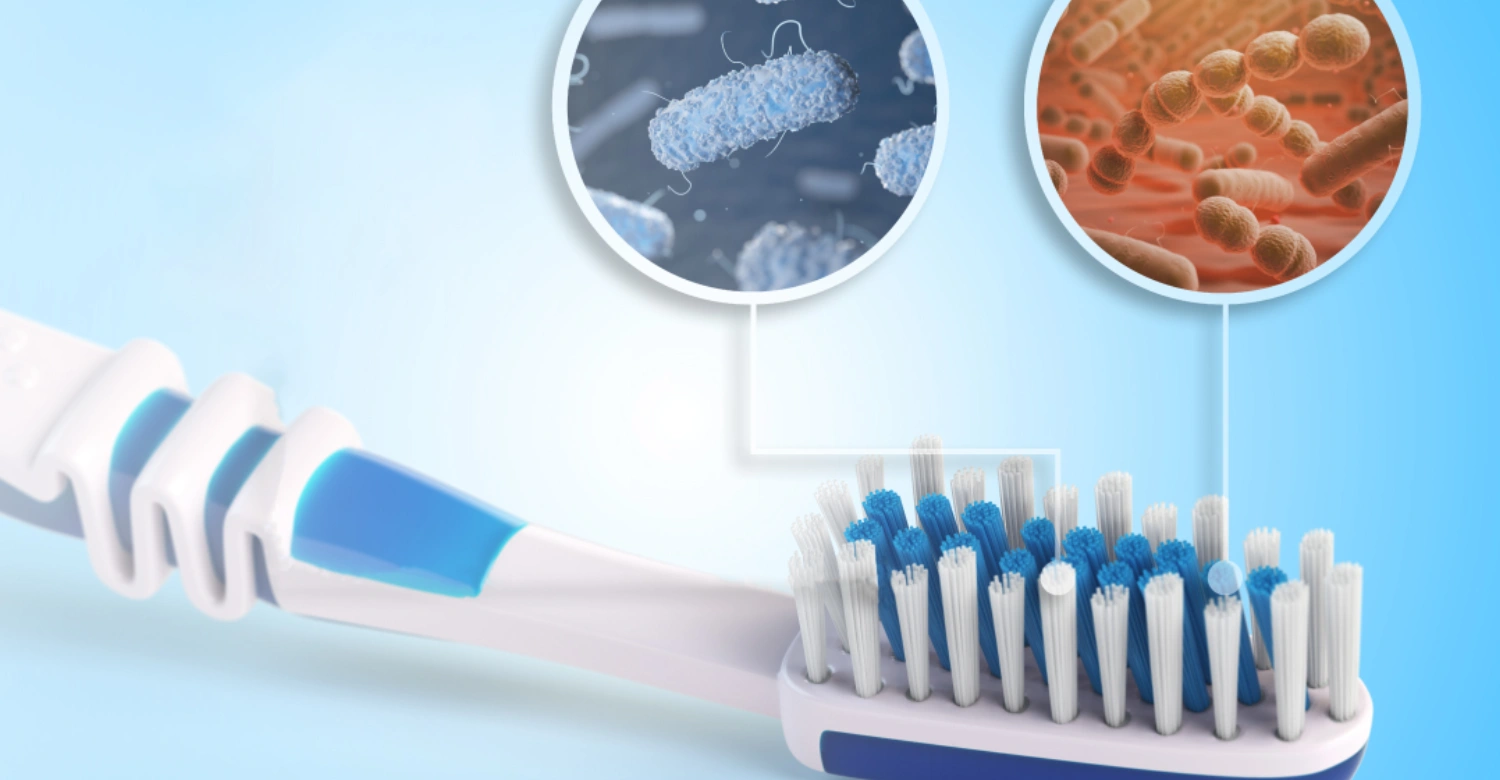
Several everyday habits increase bacterial growth on toothbrush bristles. Leaving the brush wet after use is the biggest factor, since moisture supports microbial survival. Storing it inside a closed container while still damp traps that moisture further. Sharing toothbrushes, keeping multiple brushes touching in a cup, infrequent replacement, poor bathroom ventilation, and leftover food debris or toothpaste residue between bristles all add to the problem. Addressing these habits together limits toothbrush bacteria more than focusing on any single change alone.
Note: All images used are for editorial and illustrative purposes only and may not originate from the original news provider or associated company.
Do Toothbrushes Have Bacteria Even When They Look Clean?
Do toothbrushes have bacteria even when bristles appear spotless? Yes. Visible cleanliness and microbiological cleanliness are different things entirely. A toothbrush can look perfectly fine to the eye while still carrying microorganisms invisible without laboratory testing. The realistic goal of everyday hygiene is reducing unnecessary contamination, not achieving complete sterilization at home. Patients should not judge toothbrush bacteria by appearance alone. A clean-looking brush and a genuinely low-bacteria brush are not always the same thing.
Bacteria Toothbrush Users Should Know About
Bacteria toothbrush users encounter are largely the same microorganisms naturally present throughout the oral cavity. These organisms live on the tongue, cheeks, gums, and teeth as part of a normal oral microbiome. Not every microorganism found on a toothbrush represents a genuine health threat. Most are harmless under normal circumstances. They simply reflect the mouth's everyday biological environment. Understanding this distinction helps patients avoid unnecessary anxiety while still practicing sensible prevention through basic daily hygiene habits.
How Long Can Bacteria Live on a Toothbrush?
How long can bacteria live on a toothbrush depends heavily on the specific microorganism, moisture level, temperature, and surrounding environmental conditions. There is no single universal survival time that applies to every situation. A consistently moist toothbrush generally offers more favorable conditions for microbial persistence than a brush that is properly rinsed and air-dried after each use. Rather than fixating on an exact number of hours, patients should focus on drying habits, since dryness is the more controllable factor.
Tips for Patients
Rinse the bristles thoroughly after brushing.
Shake off excess water.
Store the brush upright where it can air-dry.
Keep toothbrushes from touching.
Do not share toothbrushes.
Avoid storing a wet toothbrush in a closed container.
Replace the brush when the bristles become worn.
How Should You Clean and Store a Toothbrush to Reduce Bacterial Growth?
Reducing bacterial growth on toothbrush bristles starts with practical, evidence-informed habits rather than expensive gadgets. Rinsing properly, drying fully, and storing thoughtfully each play a role. None of these steps requires special equipment, just consistency. Patients who build these small actions into their daily routine typically see less buildup and a fresher-feeling brush. The following sections break down exactly how to rinse, dry, and store a toothbrush to keep bacteria at manageable, everyday levels.
Rinse the Toothbrush Properly After Brushing
Rinsing the toothbrush thoroughly under running water after brushing helps remove toothpaste residue, saliva, and loose food debris caught between the bristles. This step should take only a few seconds. It should not be skipped, though. A quick rinse under a light stream is not as effective as running the bristles directly under a stronger flow of water. Proper rinsing is the simplest and most immediate way patients can reduce contamination before the brush is even stored away.
Let the Toothbrush Air-Dry
Vertical storage in an open, ventilated area allows a toothbrush to dry fully between uses. This limits the moisture that microorganisms need to persist. Immediately covering a wet toothbrush traps humidity right at the bristle base. Placing the brush in a holder that keeps it upright, away from walls or other brushes, speeds up drying considerably. This one habit alone meaningfully reduces toothbrush bacteria, more than any cleaning product used on a brush left constantly damp.
Should You Keep Your Toothbrush in a Closed Container?
A protective travel case is genuinely useful when a toothbrush is packed for a trip and needs to stay clean inside a bag. It should not, however, be used routinely at home to cover a brush right after use. Closed containers trap moisture around damp bristles, which encourages bacterial growth rather than limiting it. The safest approach is letting the brush air-dry completely first, and only closing it into a case once the bristles are fully dry.
Should Toothbrushes Be Stored Separately?
Toothbrushes should never touch one another when stored. Contact allows saliva and bacteria to transfer directly between brushes. Each household member should have an individual toothbrush kept in its own space within a shared holder. This is especially important in larger households where several brushes sit close together daily. Simple spacing prevents cross-contamination. It keeps toothbrush bacteria confined to each person's own brush rather than spreading unnecessarily between family members sharing a bathroom.
Does Boiling Water Kill Bacteria on a Toothbrush?
Does boiling water kill bacteria on toothbrush bristles? High temperatures can kill many microorganisms, but boiling a toothbrush is not recommended as a routine cleaning method. Boiling water can soften, deform, or melt plastic components and bristles. This makes the brush less effective and potentially uncomfortable against the gums. The practical downsides usually outweigh any benefit. Consistent rinsing, drying, and timely replacement remain safer and more reliable ways to manage bacteria at home.
Can Heat Sterilize a Toothbrush?
Disinfection and sterilization are not the same thing, and this distinction matters. Disinfection reduces microorganisms to a lower, safer level. Sterilization eliminates essentially all of them, which typically requires specialized equipment. Household toothbrush care should not be approached as though a sterile dental instrument is needed at home. Ordinary hygiene practices are sufficient for daily use. Expecting complete sterilization from a home routine sets an unrealistic standard for patients managing everyday toothbrush bacteria.
Does UV Light Kill Bacteria on a Toothbrush?
Does UV light kill bacteria on toothbrush bristles effectively? Ultraviolet light can have real antimicrobial effects under the right conditions. Its effectiveness depends on wavelength, exposure duration, intensity, and whether the light actually reaches every bristle surface evenly. A UV device used briefly or at an awkward angle may leave shadowed areas untreated. When used correctly and consistently, UV exposure can meaningfully lower bacteria levels. It works best alongside good rinsing and drying habits rather than replacing them.
Does UV Light Kill Bacteria on Toothbrushes Completely?
Does UV light kill bacteria on toothbrushes completely? Not reliably. UV toothbrush sanitizers should never be presented as guaranteeing full sterilization. Bristle design, device positioning, and exposure time all affect real-world results. Gaps in coverage are common with inexpensive devices. Proper rinsing, thorough drying, sensible storage, and regular replacement remain important even when a UV device is part of the routine. Reducing toothbrush bacteria works best as a combined habit, not a single-device solution.
When Should You Replace a Toothbrush?
Replacement should be based primarily on recommended intervals and the visible condition of the bristles rather than guesswork. Most dental guidance suggests replacing a toothbrush every few months. Heavy use can shorten that timeline, though. Waiting too long allows bristles to wear down and become less effective at removing plaque. It also increases opportunities for bacteria to accumulate. Checking the brush regularly, rather than relying purely on a calendar reminder, gives a more accurate picture of when replacement is needed.
Signs Your Toothbrush Needs Replacing
Frayed or flattened bristles are the clearest sign a toothbrush needs replacing. Visible buildup that does not rinse away, physically damaged bristles, or a persistent unpleasant odor are also strong indicators. Dental professionals sometimes recommend replacement after certain illnesses to avoid reintroducing microorganisms. A toothbrush used significantly longer than recommended should be replaced regardless of appearance. Watching for these signs helps patients stay ahead of unnecessary toothbrush bacteria rather than waiting until the bristles are obviously worn out.
Does a New Toothbrush Remove the Risk of Bacterial Contamination?
A brand-new toothbrush does not eliminate contamination risk. It becomes exposed to oral bacteria immediately during the very first use. Replacement resets bristle condition, not the presence of microorganisms altogether. The realistic objective is consistent hygiene, not attempting to maintain a permanently bacteria-free brush, which simply is not achievable through normal daily use. Patients get the most benefit by pairing regular replacement with good rinsing, drying, and storage habits that limit toothbrush bacteria over time.
Can Toothbrush Bacteria Affect Your Oral Health?
Toothbrush bacteria connects to the broader oral environment, though ordinary contamination alone does not directly cause dental disease. Gum health and tooth decay depend far more on daily plaque control, brushing technique, and fluoride exposure than on whether a toothbrush carries typical background microorganisms. Toothbrush hygiene supports overall oral care as one piece of a larger routine. Understanding this bigger picture helps patients place toothbrush bacteria concerns in proper perspective alongside brushing quality and regular dental checkups.
Toothbrush Hygiene and Gum Health
Plaque control remains far more important for preventing gingivitis and periodontal disease than attempting to sterilize a toothbrush completely. Bacterial plaque that stays on the teeth and along the gumline is what actually drives gum inflammation over time. Toothbrush hygiene plays a supporting role by keeping the tool itself reasonably clean between uses. Patients focused on gum health should prioritize thorough daily brushing technique first, treating bacteria management as a helpful addition rather than the main defense.
Toothbrush Hygiene and Tooth Decay
Effective brushing technique and consistent fluoride exposure remain central to preventing tooth decay, far more than toothbrush storage habits alone. A toothbrush kept reasonably clean supports this process. It does not replace it, though. Toothbrush hygiene functions as a supporting practice within a broader daily routine that includes brushing duration, technique, and fluoride use. Patients concerned about cavities should focus primarily on how they brush, treating toothbrush bacteria awareness as a secondary, complementary habit.
Clinical Note
Patients sometimes focus heavily on whether their toothbrush contains bacteria while overlooking more significant issues like plaque accumulation, bleeding gums, poor brushing technique, or infrequent dental examinations. A professional assessment can determine whether a patient's actual concern relates to toothbrush hygiene or to an underlying dental condition needing treatment. This distinction matters. Addressing toothbrush bacteria alone will not resolve gum disease or decay that requires proper clinical evaluation and, in some cases, active dental treatment.
What We Notice Clinically
Dr. Rifat Alsaman, Head of the Medical Team at Vitrin Clinic and a cosmetic dentist, emphasizes that patients should not become overly concerned about the simple presence of bacteria on a toothbrush. According to Dr. Rifat Alsaman, the more important clinical priorities are effective plaque removal, appropriate brushing technique, healthy gums, and consistent oral hygiene practiced daily. Toothbrush bacteria, in this context, is a minor detail compared with these fundamentals of everyday dental care.
What Dr. Rifat Alsaman Looks For Beyond Toothbrush Hygiene
Dr. Rifat Alsaman considers signs such as persistent gum bleeding, plaque accumulation, gum inflammation, bad breath, tooth sensitivity, and enamel or restorative concerns when assessing a patient's overall oral health. These indicators carry far more clinical weight than bacteria on a brush. Toothbrush hygiene supports oral care but cannot replace professional dental assessment when symptoms persist. Patients noticing any of these signs are encouraged to seek evaluation rather than assuming toothbrush habits are the cause.
Can Professional Dental Care Help If Your Gums or Teeth Are Already Affected?
Toothbrush hygiene is preventive and supportive, while existing dental problems typically require professional treatment beyond home care alone. Good brushing and storage habits help maintain a healthy baseline. They cannot reverse gum disease, decay, or structural issues once symptoms are already present, though. Recognizing this difference helps patients seek appropriate care at the right time. Managing toothbrush bacteria works best as prevention, not as a substitute for addressing problems that have already developed.
Periodontal Assessment for Bleeding or Inflamed Gums
Periodontal evaluation can identify gingivitis or more advanced periodontal disease through a thorough clinical examination of the gums and supporting structures. This assessment determines whether professional cleaning or further periodontal treatment is appropriate for a given patient. Bleeding or persistently inflamed gums should not be managed with toothbrush changes alone. A proper periodontal evaluation gives a clearer picture of gum health than any assumption based purely on toothbrush bacteria or brushing habits at home.
Professional Cleaning and Oral Hygiene Guidance
Professional cleaning removes hardened deposits, such as tartar, that cannot be effectively cleared with a toothbrush alone, regardless of brushing technique or frequency. Personalized guidance from a dental professional can also improve daily plaque control tailored to a patient's specific needs. This combination of professional cleaning and individualized advice addresses issues that toothbrush hygiene by itself cannot resolve. Reducing bacteria remains helpful, but it works alongside, not instead of, professional dental cleaning and guidance.
How Vitrin Clinic Approaches Preventive and Restorative Dental Care
Vitrin Clinic focuses on comprehensive dental examinations, personalized treatment planning, and preventive oral-health guidance tailored to each patient's needs. Care includes periodontal care, professional dental cleaning where clinically indicated, and digital diagnostic technologies when appropriate. Patient education is built around individual oral-health needs rather than generic advice, supported by follow-up and aftercare guidance. Dr. Rifat Alsaman, Head of the Medical Team at Vitrin Clinic and cosmetic dentist, leads this clinical approach alongside the wider team. Patients experiencing persistent oral-health concerns, rather than simply worrying about normal toothbrush bacteria, are encouraged to book a Free Treatment Plan or an Online Free Consultation & Assessment with Vitrin Clinic today.
References:
FAQs
Dr. Rifat Alsaman has more than 5 years of clinical experience in dentistry and currently serves as the Head of the Medical Team at Vitrin Clinic. He is dedicated to providing exceptional patient care, overseeing treatment planning, and ensuring the highest clinical standards across the team. His expertise, attention to detail, and commitment to continuous professional development have helped countless patients achieve healthier, more confident smiles.


.webp&w=3840&q=75)

