General Dentistry
October 6, 2026
Toothpaste Induced Contact Stomatitis: What Causes Mouth Irritation and How Is It Treated?
 Dr. Rifat Alsaman
Toothpaste induced contact stomatitis is an inflammation of the mouth lining triggered by something in your toothpaste. It happens when an ingredient either irritates the tissue directly or provokes an allergic response. Common culprits include foaming agents, flavorings, and preservatives. Treatment starts with stopping the suspected product and letting the tissue recover. A dentist then confirms the cause and rules out look-alike conditions. Most cases settle once the trigger is removed. This guide explains the causes, the warning signs, and the treatment steps in plain language.
What Is Toothpaste induced Contact Stomatitis?
Toothpaste induced contact stomatitis is inflammation of the oral mucosa caused by direct contact with a toothpaste ingredient. The mucosa is the soft lining of your mouth. Brushing twice a day gives an irritating or allergenic ingredient many chances to affect it. An irritant reaction damages the surface directly. An allergic reaction involves the immune system. Symptoms appear wherever the paste touches: cheeks, lips, gums, tongue, or palate. Dentists also call the condition toothpaste contact stomatitis. Both names describe the same problem.
Is Toothpaste Allergy the Same as Contact Stomatitis?
Not exactly. Contact stomatitis is the broad term for mouth inflammation caused by something touching the tissue. A toothpaste allergy in mouth tissue is one type of it. The other type is simple irritation, which does not involve the immune system. So not every toothpaste reaction is a true allergy. In fact, irritation is generally the more common of the two. The distinction matters for long-term management. That is why a dentist may need to investigate the specific trigger before advising you.
What Are the Symptoms of Toothpaste induced Contact Stomatitis?
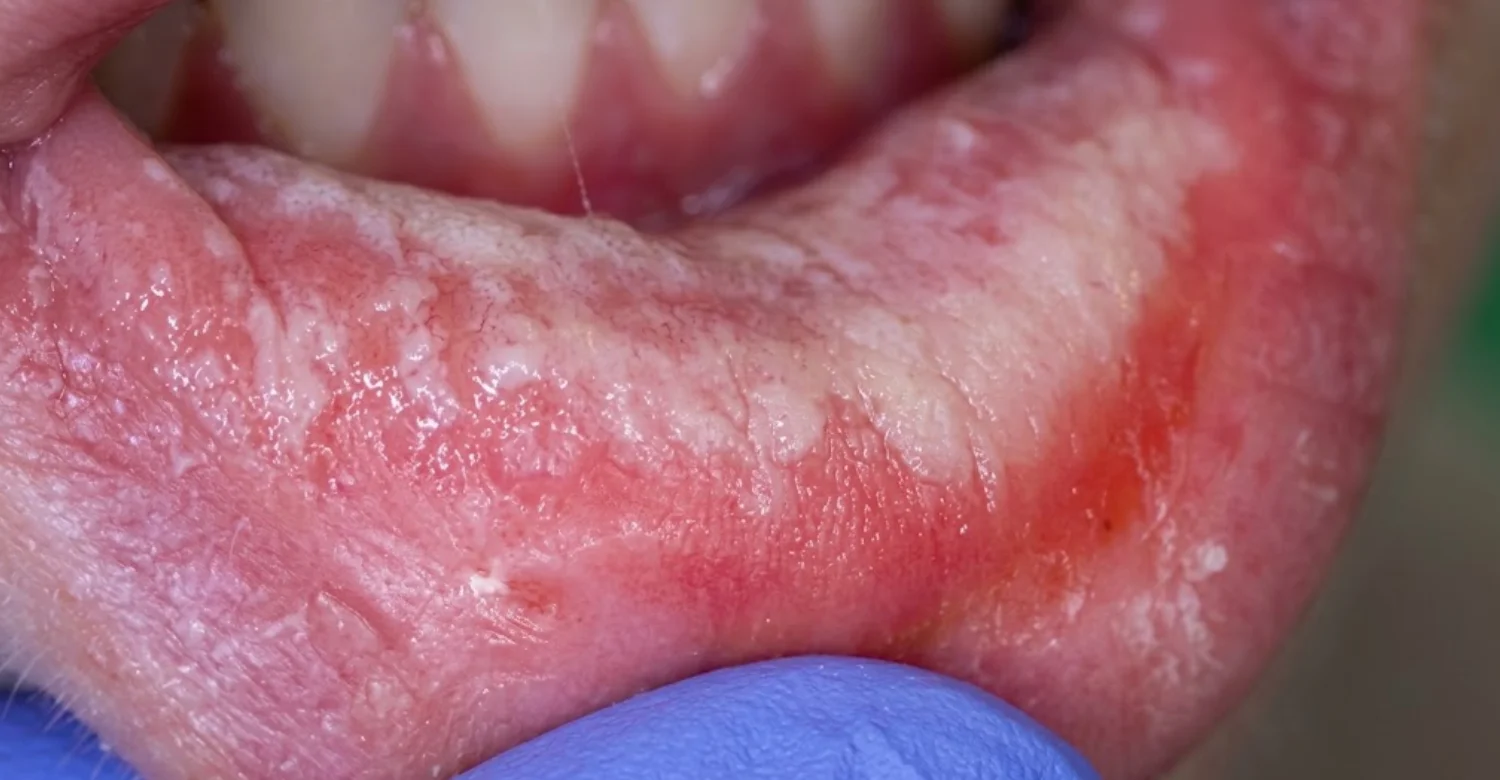
The symptoms of Toothpaste induced contact stomatitis range from mild discomfort to visible tissue changes. Typical toothpaste allergy symptoms include burning, redness, swelling, peeling, soreness, and occasional ulcers. Some people notice only one sign. Others develop several at once. The picture depends on the ingredient involved and on individual sensitivity. Irritant reactions often appear quickly after brushing. Allergic reactions may take a day or two to develop. The symptoms of toothpaste allergy also tend to return with every exposure. The sections below describe each sign.
Burning or Stinging in the Mouth
Burning is often the first complaint. It starts during or shortly after brushing and may last for hours. Some patients describe a scalded feeling on the cheeks or tongue. This differs from the brief, cool tingle of a strong mint flavor. Normal tingling fades within minutes and leaves no soreness behind. Persistent burning suggests the tissue itself is inflamed. If the sensation returns after every brushing session, note the pattern. It is a useful clue for your dentist during assessment.
Redness, Swelling, or Tenderness
Inflamed oral tissue looks redder than usual and may feel puffy or tender. The gums can appear swollen along their edges. The inner cheeks and lips may feel sore when touched by food. Mild, localized redness often has a simple cause. Widespread redness is different. When several areas are affected at once, a contact reaction becomes more likely. It can also point to another condition entirely. For that reason, diffuse inflammation is clinically significant and worth showing to a dentist.
Peeling or Sloughing of the Oral Mucosa
Some patients notice thin, whitish strands or films of tissue after brushing. These can be wiped away or rinsed out. This is superficial peeling, also called sloughing, of the surface layer. It is usually painless and commonly linked to detergents in toothpaste. The tissue underneath generally looks normal or slightly red. However, white patches can also suggest a fungal infection or another mucosal disorder. Because the appearance overlaps, peeling that persists should be examined rather than assumed harmless.
Mouth Sores and Ulcer-Like Lesions
Toothpaste causing mouth sores is a real possibility in sensitive individuals. Irritated tissue can break down into small, shallow, painful lesions. Some people with recurrent ulcers also report fewer episodes after changing their toothpaste. Still, recurring sores should not automatically be blamed on the paste. Stress, minor trauma, nutritional deficiencies, and systemic conditions can all produce them. A sore that lasts longer than two weeks needs professional attention. Your dentist can judge whether the pattern fits a product reaction.
Lip Irritation or Cracking
Toothpaste does not stay inside the mouth. Foam and residue collect on the lips and at the corners. In sensitive people, this contact leads to dryness, redness, scaling, or cracking. The skin around the mouth can become irritated too. Flavoring agents are frequent triggers for this kind of lip reaction. Symptoms often feel worse in the morning or shortly after brushing. Rinsing thoroughly and wiping the lips afterward may help. Persistent lip changes still deserve an examination by a dentist.
Changes Affecting the Tongue
The tongue has constant contact with toothpaste, so it often reacts. Patients report soreness, burning, redness, or unusual sensitivity to spicy and acidic foods. The edges and tip are commonly affected. Some notice a rough or raw feeling for hours after brushing. These changes can be part of toothpaste irritation of the mouth. They can also arise from dry mouth, nutritional deficiencies, or other tongue conditions. A dentist can inspect the surface and help determine the likely cause.
Note: All images used are for editorial and illustrative purposes only and may not originate from the original news provider or associated company.
What Causes Toothpaste induced Mouth Irritation?
Toothpaste is a complex mixture. It contains detergents, flavorings, abrasives, preservatives, colorings, and active agents such as fluoride. Any of these can cause problems for a small number of people. The trigger differs from person to person. One patient reacts to a foaming agent. Another reacts to a cinnamon flavoring. That is why a list of toothpaste ingredients causing mouth irritation is only a starting point. The real task is finding which ingredient affects you. The most discussed groups are outlined below.
Sodium Lauryl Sulfate (SLS)
Sodium lauryl sulfate is a detergent that makes toothpaste foam. It is also the ingredient most often linked to oral irritation. In some people, SLS dries the mucosa and loosens its protective surface layer. This may lead to peeling, soreness, or more frequent ulcers. Importantly, this is usually an irritant effect, not an allergy. Sensitivity to SLS does not mean your immune system is involved. Many patients simply feel more comfortable with an SLS-free formulation, and their symptoms ease.
Flavoring Agents
Flavorings are the most frequently reported allergens in toothpaste. They include mint oils, menthol, cinnamon compounds, and related aromatic substances. Cinnamon flavoring, in particular, is a well-documented cause of contact reactions in the mouth. Mint derivatives can also trigger problems in susceptible individuals. Some people only develop irritation, while others develop a true allergy. The same compounds appear in chewing gum, mouthwash, and sweets. A reaction to several flavored products therefore offers a valuable diagnostic hint.
Preservatives and Other Additives
Preservatives keep toothpaste stable and free from contamination. Fragrances, coloring agents, and certain foaming or whitening additives are also common. Occasionally, one of these components contributes to a reaction. Such cases are less frequent than reactions to flavorings or detergents. They are also harder to spot, because ingredient names can be unfamiliar. Whitening and tartar-control formulas sometimes feel harsher on sensitive tissue. If your symptoms began with a specialized paste, tell your dentist exactly which one you used.
Fluoride and Other Active Ingredients
Many patients suspect fluoride first. In reality, a true reaction to fluoride is considered very rare. Other components in the formula are far more likely to be responsible. Some active ingredients, such as certain desensitizing or antibacterial agents, can occasionally irritate tissue. Even so, assumptions are risky. Fluoride protects enamel and helps prevent decay. Avoiding it without good reason can harm your teeth. The goal is to identify the actual trigger, not to remove beneficial ingredients unnecessarily.
How Can You Tell If Your Toothpaste Is Causing the Reaction?
Timing is the most useful clue. Symptoms that appear or worsen after brushing point toward the paste. A reaction that began soon after switching brands is also suggestive. Improvement after stopping the product adds further evidence. Dentists value this pattern during assessment. However, self-diagnosis is not always reliable. Ulcers, infections, and inflammatory conditions can produce very similar symptoms. They may also improve or flare on their own. Treat your observations as helpful information, not as a final answer.
Questions Your Dentist May Ask
A careful history often reveals more than the examination alone. Expect your dentist to ask questions such as these:
When did the symptoms begin?
Did they start after changing toothpaste?
How soon after brushing do symptoms appear?
Are symptoms recurring?
Which toothpaste and other oral-care products are being used?
Are there similar reactions to mouthwash, chewing gum, or other flavored products?
Clear answers help narrow the possible causes. Bring the product packaging if you can.
Tips for Patients
Keep a simple record of when your symptoms appear and how long they last.
Note any recent changes to your toothpaste or other oral-care products.
Take clear photos of visible irritation, redness, peeling, or mouth sores when they occur.
Avoid changing several oral-care products at the same time, as this can make the trigger harder to identify.
Choose oral-care products carefully and check ingredient labels when advised by your dentist.
Use a soft-bristled toothbrush and brush gently over irritated areas.
Avoid deliberately reusing a suspected toothpaste to test whether symptoms return.
Keep your mouth as comfortable as possible while waiting for a dental appointment.
Seek professional assessment if symptoms persist, worsen, or repeatedly return.
Remember that these steps support diagnosis and comfort but do not replace a clinical examination.
How Is Toothpaste induced Contact Stomatitis Diagnosed?
Diagnosing Toothpaste induced contact stomatitis relies mainly on clinical history and examination. No single test confirms it in every patient. Your dentist first listens to the story of your symptoms. Next comes a careful inspection of the lips, cheeks, tongue, gums, palate, and floor of the mouth. The location and appearance of changes are compared with your brushing habits. Patterns matter more than any one symptom. A single ulcer proves little. Recurring irritation in areas that contact toothpaste is far more telling.
Reviewing Your Oral-Care Products
Your dentist will want to know everything that regularly touches your mouth. Bring the products or their ingredient lists, including:
Toothpaste
Mouthwash
Whitening products
Desensitizing products
Flavored dental products
Reviewing them together often reveals a shared ingredient. It may also show that symptoms began after one specific change. Sometimes the toothpaste is innocent and another product is responsible. This simple review is quick, inexpensive, and frequently the most informative part of the visit.
When Patch Testing May Be Considered
Patch testing is an allergy assessment performed by a dermatologist or allergy specialist. Small amounts of suspected substances are applied to the skin under patches. The skin is then checked over several days for a delayed reaction. Most patients never need it. It may be considered when an allergy is strongly suspected. It also helps when the diagnosis remains uncertain or symptoms persist despite product changes. A positive result identifies the specific allergen to avoid in future.
Conditions That May Look Similar
Several conditions can imitate a toothpaste reaction. Your dentist will consider:
Aphthous ulcers
Oral candidiasis
Lichen planus
Mechanical irritation
Other contact reactions
Burning mouth symptoms
Nutritional or systemic causes of oral lesions
Each has its own typical pattern, yet early signs often overlap. Reactions to dental materials, foods, or medications can also look alike. This is exactly why a diagnosis should not rest on one symptom. Ruling out these alternatives is part of proper care.
.webp)
What Is the Treatment for Toothpaste induced Contact Stomatitis?
Treatment for Toothpaste induced contact stomatitis is directed at the cause. It is not a single prescription. Effective toothpaste allergy treatment begins with identifying and removing the trigger. The next steps depend on what your dentist finds. An irritant reaction usually settles with a product change and gentle care. A confirmed allergy requires long-term avoidance of the specific ingredient. If another oral condition is responsible, that condition needs its own treatment. The four elements of management are explained below.
Removing the Suspected Trigger
Stopping the suspected toothpaste is usually the first step. Without continued exposure, irritated tissue has the chance to heal. Your dentist may suggest a replacement with a simpler formulation. Ideally, it avoids the likely trigger while keeping fluoride. Give the new product a fair trial before judging it. Do not permanently eliminate whole groups of ingredients on your own. Unnecessary restrictions make shopping harder and may reduce protection against decay. Long-term avoidance should follow professional guidance and a clear diagnosis.
Managing Oral Discomfort
While the tissue heals, comfort matters. Brush gently with a soft brush and keep your routine regular. Avoid additional irritants for a while. These include alcohol-based mouthwashes, very spicy or acidic foods, and tobacco. Lukewarm, soft foods are easier on sore areas. Drinking water regularly keeps the mouth moist. Your dental professional may recommend supportive measures, such as a bland rinse or a protective gel. Use only what has been advised. Adding many remedies at once can cause fresh irritation.
Prescription Treatment When Clinically Indicated
Most mild cases need no medication. When inflammation is marked or painful, your dentist may prescribe a topical treatment. This can include an anti-inflammatory preparation applied to the affected areas for a short period. The choice depends on the severity and the confirmed cause. Medication for a fungal infection, for example, is entirely different. For this reason, treatment should follow diagnosis. Self-medicating with leftover gels or creams can mask symptoms and delay the correct answer.
Treating Another Underlying Condition
Sometimes symptoms continue even after the toothpaste has been changed. This is an important signal. It suggests the paste was not the cause, or not the only cause. Your dentist will then reassess the tissue and review the history again. Further investigations or a referral may be appropriate. If an infection, inflammatory disorder, or mechanical problem is found, that becomes the focus. Treating the actual cause is what brings lasting relief. Changing products repeatedly will not.
Toothpaste induced Contact Stomatitis vs Other Oral Reactions
Toothpaste induced contact stomatitis shares many features with other oral problems. Burning, redness, and sores are not unique to any single condition. The table below offers a simplified comparison of typical concerns. It is meant to support understanding, not self-diagnosis. In practice, two conditions can exist together. A patient may have ulcers and a product sensitivity at once. Professional assessment sorts out which is which and prevents treatment aimed at the wrong target.
Condition | Typical Concern | Why Professional Assessment Helps |
Toothpaste contact stomatitis | Irritation or inflammation after toothpaste exposure | Identifies possible product-related trigger |
Aphthous ulcers | Recurrent mouth sores | Determines whether lesions fit a typical ulcer pattern |
Oral candidiasis | White or irritated areas | Helps identify possible fungal infection |
Mechanical irritation | Localized soreness or trauma | Identifies physical source of irritation |
Allergic contact reaction | Recurring reaction to an ingredient | May require allergen investigation |
How Long Does Toothpaste induced Contact Stomatitis Take to Improve?
Recovery from Toothpaste induced contact stomatitis varies between patients. It depends on how inflamed the tissue is and whether exposure has truly stopped. Mild irritant reactions often ease within several days of stopping the product. More pronounced or allergic reactions can take a couple of weeks. Continued contact with the trigger delays healing. Remember that the same ingredient may be present in your mouthwash or gum. If symptoms continue despite removing the suspected product, seek a professional evaluation.
What Should Improvement Look Like?
Healing is usually gradual rather than sudden. Encouraging signs include:
Reduced burning
Less redness and tenderness
Healing of irritated tissue
Fewer or no new lesions
Gradual return to comfortable brushing
Burning tends to settle first, while visible changes fade more slowly. A steady trend in the right direction is what counts. Setbacks after accidental re-exposure are possible. If progress stalls or symptoms return without an obvious reason, let your dentist know.
What We Notice Clinically
Dr. Rifat Alsaman, Head of the Medical Team at Vitrin Clinic and a cosmetic dentist, emphasizes that patients often focus on the toothpaste alone. They overlook the full pattern of symptoms. Dr. Rifat Alsaman looks at when symptoms appear, where they occur, and whether they recur. He also considers whether another oral condition could explain them. His approach places diagnosis before treatment, rather than switching products repeatedly. Irritation of the lips, cheeks, tongue, and gums can have different causes. Protecting these tissues while maintaining effective daily hygiene remains essential.
Clinical Note
Clinical note: A reaction that occurs after using toothpaste does not automatically mean the patient has a toothpaste allergy. Irritant contact reactions, allergic contact reactions, trauma, infections, and inflammatory oral conditions can all produce overlapping symptoms. Timing alone cannot separate them. Identifying the cause is more important than simply changing products repeatedly. Each unnecessary switch adds confusion and delays answers. Persistent oral lesions should always be examined by a qualified dental professional, particularly when they last beyond two weeks.
Can Toothpaste induced Contact Stomatitis Be Prevented?
Toothpaste induced contact stomatitis cannot always be predicted, but recurrences can often be prevented. Prevention means identifying and avoiding confirmed triggers. Pay attention to reactions that follow the introduction of any new product. Once a specific ingredient has been identified, read labels carefully. Remember that it may appear in other oral-care items. Keep appropriate fluoride exposure unless your dentist recommends otherwise. Finally, avoid restricting multiple ingredients without a clear reason. Broad avoidance offers little benefit and makes good oral care harder.
What Happens Before and After Changing the Problematic Toothpaste?
Patients with Toothpaste induced contact stomatitis often describe two distinct phases. Before the trigger is found, symptoms seem random and frustrating. After it is removed, the mouth gradually becomes calmer. Comparing these phases helps set realistic expectations. Change is rarely instant, and the timeline differs between individuals. It also depends on whether the toothpaste was truly responsible. The two stages below summarize what people commonly experience. Use them as a general guide, and discuss your own progress with your dentist.
Before Identifying the Trigger
This stage is marked by uncertainty. Typical experiences include:
Recurrent irritation after brushing
Burning or soreness
Possible peeling or mouth sores
Difficulty identifying why symptoms keep returning
Many patients try new mouthwashes, home remedies, or dietary changes during this time. Symptoms improve briefly and then come back. Brushing may become something to dread. Some people brush less, which allows plaque to build up. The uncertainty is often as troubling as the discomfort itself.
After the Trigger Is Removed
Once the responsible product is stopped, patients usually notice:
Reduced exposure to the suspected irritant or allergen
Gradual reduction in inflammation
Improved comfort during brushing
Healing of affected tissues when toothpaste was genuinely responsible
Results vary from person to person. Improvement is encouraging, but it does not confirm the diagnosis by itself. Some conditions fluctuate naturally and may settle by coincidence. If symptoms return later, a fresh assessment is the sensible next step.
When Should You See a Dentist?
Arrange a dental visit if any of these apply:
Symptoms persist despite changing the suspected toothpaste.
Mouth sores repeatedly return.
There is significant swelling or pain.
Eating, drinking, or brushing becomes uncomfortable.
The cause of the reaction is unclear.
Lesions appear unusual, widespread, or do not heal as expected.
Professional examination is particularly important for persistent oral lesions. Most are harmless, but a few need prompt investigation. Any lesion lasting beyond two weeks should be checked without delay.
Why Choose Vitrin Clinic for Professional Dental Assessment?
Vitrin Clinic in Istanbul, Turkey provides individualized dental assessment and treatment planning. When symptoms do not fit a simple toothpaste reaction, a comprehensive oral examination becomes essential. The team recommends only what each patient needs and avoids unnecessary treatments. Diagnostic evaluation is arranged when indicated. The clinic’s multidisciplinary environment helps when oral symptoms accompany other dental concerns. Dr. Rifat Alsaman, Head of the Medical Team at Vitrin Clinic and a cosmetic dentist, is part of its clinical leadership. The goal is realistic: identify the likely cause, protect oral health, and recommend appropriate care.
Ready to transform your smile?
Talk to our team and get a FREE treatment plan.
References:
FAQs
Dr. Rifat Alsaman has more than 5 years of clinical experience in dentistry and currently serves as the Head of the Medical Team at Vitrin Clinic. He is dedicated to providing exceptional patient care, overseeing treatment planning, and ensuring the highest clinical standards across the team. His expertise, attention to detail, and commitment to continuous professional development have helped countless patients achieve healthier, more confident smiles.


