General Dentistry
September 2, 2026
Types of Teeth: A Complete Guide to Their Functions, Shapes, and Roles
 Dr. Rifat Alsaman
Types of teeth exist in the human mouth for very different reasons. Each tooth has its own shape, size, and job. The mouth is not filled with identical teeth. It contains several groups. These groups work together during biting, tearing, and chewing. The four primary categories are incisors, canines, premolars, and molars. Each one plays a distinct role in daily function.
Understanding types of human teeth and their functions helps patients recognize normal anatomy. It also helps them notice early signs of dental problems. From a professional dental perspective, tooth shape, position, and function all matter. Changes in any of these areas can signal wear, damage, or disease. This article covers types of human teeth, their shapes, and their functions. It also covers common concerns, clinical observations, and preventive steps patients can take.
Types of Teeth: What Are the Different Types of Human Teeth?
Types of teeth in a typical adult mouth fall into four functional groups. Permanent dentition normally includes 32 teeth. This includes the four wisdom teeth at the back of each arch. Teeth and types of human teeth are often discussed together. Identifying a tooth usually starts with recognizing which group it belongs to.
The four groups are incisors, canines, premolars, and molars. Different types of teeth vary in location, shape, structure, and function. This is why a dentist never treats every tooth the same way. Types of human teeth differ so much in design that a chipped incisor and a cracked molar need very different treatment plans.
Incisors
The eight incisors sit at the front of the mouth. Four are on top and four are on the bottom. They have thin, flat edges built for slicing through food. Their main role is biting and cutting. This is why they make first contact when biting into an apple or a piece of bread.
Incisors are highly visible when smiling. Patients often notice changes to their appearance quickly. Common concerns include chips, fractures, and general wear. Aesthetic changes, such as discolouration or uneven edges, can also result from daily use or trauma.
Canines
The four canine teeth sit beside the incisors, one in each quadrant. They have a pointed shape and noticeably longer roots than nearby teeth. This anchors them firmly in the jaw. Their primary role is tearing and gripping food, especially tougher textures.
Canines also guide certain jaw movements during chewing. This helps distribute biting forces evenly. Occasionally, a canine becomes impacted or displaced during development. When this happens, an orthodontic assessment may be needed to guide the tooth into place.
Premolars
The eight premolars sit between the canines and molars. They act as a functional bridge. They have broader chewing surfaces with defined cusps, unlike the sharper edges of canines. This structure helps premolars transition food from tearing to grinding.
Premolars have pits and fissures across their chewing surfaces. This makes them prone to trapping plaque and food debris. Decay in these grooves is common. Thorough cleaning around premolars is especially important for long-term oral health.
Molars
Molars sit at the very back of the mouth. They are the largest teeth overall. They have wide chewing surfaces with multiple cusps. Their main job is crushing and grinding food into smaller pieces before swallowing. This completes the chewing process started by the front teeth.
There are three sets: first, second, and third molars. Each erupts at a different stage of life. Types of molar teeth differ slightly in position and timing of eruption. They also differ in how often they are affected by decay or other complications.
First Molars
First molars usually erupt early in childhood. They play a major role in efficient chewing throughout life. Because they arrive early and have deep grooves, they are frequently affected by decay if not cleaned thoroughly. Their position also makes them essential anchors for bite alignment. Protecting them early supports long-term oral health.
Second Molars
Second molars sit further back. They support posterior chewing alongside the first molars. Their position makes brushing and flossing more difficult, especially for patients with limited dexterity or crowded arches. Oral hygiene challenges around second molars often lead to missed plaque buildup. Patients should pay extra attention to this area.
Third Molars
Third molars are commonly known as wisdom teeth. They typically erupt in the late teens or early twenties. Many patients experience eruption problems, including impaction, inflammation, and insufficient space. However, removal is not automatically required in every patient. Some wisdom teeth erupt fully and function normally without ever causing complications.
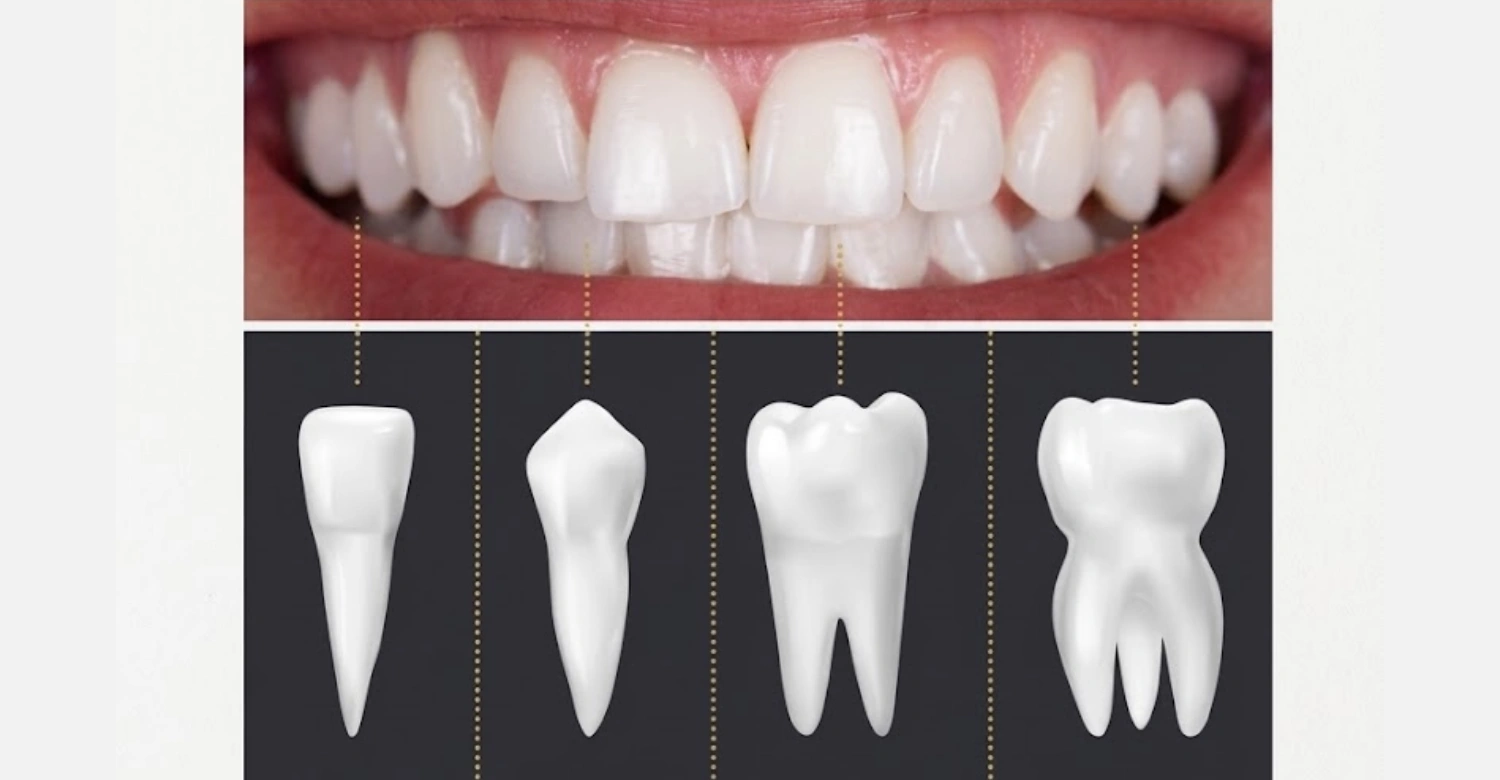
Types of Teeth and Their Functions
Types of teeth and their functions are closely linked. Tooth anatomy directly reflects the mechanical work each tooth performs. Teeth are not interchangeable. Their shapes evolved around specific tasks, from cutting to tearing to grinding. Types of human teeth and their functions can be summarized clearly in the table below.
Type of tooth | Main location | Main function |
Incisors | Front of the mouth | Cutting and biting |
Canines | Beside incisors | Tearing and gripping |
Premolars | Between canines and molars | Crushing and chewing |
Molars | Back of the mouth | Grinding and crushing |
Why Tooth Shape Matters
Types of human teeth shapes are not random. Each shape supports a specific mechanical function. Cusps, cutting edges, grooves, and overall tooth morphology all influence how well a tooth performs its role. A flat incisor edge cuts cleanly. A molar's multiple cusps allow it to crush food from several angles at once.
Dentists assess tooth shape closely when diagnosing wear, fractures, malocclusion, or developmental abnormalities. Subtle changes in shape can reveal underlying problems long before a patient notices pain. Shape assessment remains a routine part of every dental examination.
Types of Teeth Diagram: How to Identify Each Tooth
A professionally labelled types of human teeth diagram is a useful reference for patients. It helps them understand their own mouth better. Patients should be able to identify the upper and lower arches. They should also recognize the position of each tooth group within them.
A clear types of teeth diagram labels incisors, canines, premolars, and molars separately. This makes it easier to see how they differ in shape and location. It should also explain the distinction between primary teeth, which appear in childhood, and permanent teeth, which remain into adulthood.
Tips for Patients
Brush twice daily using fluoride toothpaste. Clean between teeth every day to remove plaque incisors and molars cannot reach alone. Pay particular attention to the back teeth and gumline, where debris tends to accumulate. Avoid frequently consuming sugary or acidic foods and drinks that weaken enamel over time.
Do not use teeth to open packages or bite hard objects, since this can chip or fracture even healthy teeth. Wear a properly fitted mouthguard for relevant sports. Seek professional assessment for persistent pain, sensitivity, swelling, or a broken tooth. Attend regular dental examinations based on your individual risk level. Do not assume a tooth is healthy simply because it does not hurt. Ask your dentist which types of teeth need attention and why.
How Are the Different Types of Teeth Affected by Dental Problems?
Different types of teeth can develop different problems. This depends on their position, shape, and function. A tooth at the back of the mouth faces different daily pressures than one at the front. This affects how and where damage typically appears.
Tooth Decay
Molars may be more vulnerable to plaque accumulation. Their grooved chewing surfaces trap food and bacteria more easily than smoother front teeth. Fluoride toothpaste strengthens enamel against acid attack. Cleaning between teeth removes plaque that toothbrushing alone often misses, particularly around molars and premolars.
Tooth Wear and Erosion
Excessive biting forces, acidic foods, and acidic drinks can all affect tooth surfaces over time. Dentists distinguish between erosion caused by acid, attrition caused by tooth-to-tooth contact, and abrasion caused by external friction such as aggressive brushing. Identifying the correct cause is essential before recommending any treatment.
Cracked or Chipped Teeth
Front teeth often experience trauma-related chips. These can come from falls, sports injuries, or biting hard objects unexpectedly. Posterior teeth can develop cracks under heavy chewing forces, especially in patients who grind their teeth at night. These cracks are not always visible. They may only be found during a professional examination.
Missing or Impacted Teeth
Missing teeth can affect chewing efficiency. They can also cause neighbouring teeth to shift out of alignment if left untreated. Impacted wisdom teeth and impacted canines are common examples. In these cases, a tooth fails to erupt properly. This can cause pain, swelling, or pressure on surrounding structures.
What We Notice Clinically
Dr. Rifat Alsaman, Head of the Medical Team at Vitrin Clinic and a cosmetic dentist, considers tooth shape, proportion, position, and function together. Assessment is never purely aesthetic. Dr. Rifat Alsaman evaluates the relationship between visible teeth and the patient's overall bite and smile before suggesting any changes.
Different types of teeth require different considerations when planning cosmetic or restorative treatment. A front tooth and a back tooth serve very different purposes. Dr. Rifat Alsaman pays particular attention to preserving healthy tooth structure wherever possible, favouring conservative options when they can achieve a stable result.
Clinical Observations Dentists Commonly Make
Tooth wear patterns may reveal excessive biting forces or bruxism. A patient is often unaware of this until it is pointed out. Changes in tooth shape can indicate erosion, abrasion, or attrition. Each points toward a different underlying cause.
Crowding can affect cleaning access, making certain teeth harder to maintain at home. Tooth position can influence both function and smile aesthetics. Discolouration should always be assessed according to its underlying cause, not treated only as a cosmetic issue.
Clinical Note
The appearance of a tooth does not determine its health by itself. Dentists assess tooth structure, gum condition, bite, radiographic findings, symptoms, and surrounding tissues before recommending treatment. Patients should not self-diagnose dental problems based solely on diagrams or photographs found online.
Pain is not always present when dental disease develops. This makes routine examinations especially important. Professional radiographs, when clinically indicated, reveal issues invisible to the naked eye. A conservative, evidence-based approach remains the safest path for long-term oral health.
When Do Different Types of Human Teeth Need Dental Treatment?
Treatment always depends on the condition and function of the affected tooth. It is not a fixed rule applied to every case. Not every damaged or imperfect tooth requires extensive treatment. Many issues can be managed conservatively.
Dental Fillings
Fillings may be appropriate when a cavity has affected part of a tooth. Enough healthy structure must remain to support the restoration. This approach preserves as much natural tooth structure as possible. It avoids more invasive treatment while restoring function and stopping further decay.
Dental Crowns
A crown may be considered when a tooth is structurally compromised. This can happen after a large filling, fracture, or root canal treatment. Crowns protect what remains of the natural tooth. They restore its shape, strength, and chewing function, allowing patients to use the tooth normally again.
Dental Bonding
Dental bonding can be useful for minor chips or small changes in tooth shape. It offers a relatively quick and conservative solution. However, bonding has realistic limitations regarding durability and longevity. Patients should understand it may require maintenance or replacement over time.
Veneers
Veneers play a role in selected cosmetic cases involving visible teeth, particularly the front teeth seen when smiling. Assessment of enamel, bite, tooth position, and gum health is essential before treatment. Veneers are not suitable for every patient or every type of dental concern.
Orthodontic Treatment
Orthodontics can reposition teeth and improve functional relationships between the upper and lower arches. This approach is often considered in cases involving crowding, spacing, or impacted teeth. Alignment issues affect both appearance and everyday function, such as chewing and cleaning.
Wisdom Tooth Treatment
Monitoring may be appropriate when wisdom teeth are positioned normally and cause no symptoms. Extraction may be recommended in cases involving pain, infection, impaction, or insufficient space. This is especially true when the tooth threatens neighbouring teeth or surrounding tissue.
Benefits of Understanding the Types of Teeth
Better Oral Hygiene
Understanding tooth position helps patients clean difficult-to-reach areas more effectively. This is especially true around molars and premolars, where plaque tends to accumulate. Knowing which types of human teeth are harder to access allows patients to adjust their technique. This reduces the risk of decay in commonly missed areas.
Earlier Recognition of Dental Problems
Patients may recognize changes in tooth shape, colour, sensitivity, or position sooner when they understand normal anatomy. This awareness often leads to earlier professional assessment. It can prevent minor issues from developing into more complex and costly dental problems over time.
Better Treatment Decisions
Understanding tooth function helps patients have more informed conversations with their dentist. Patients who understand why a particular tooth matters functionally are better equipped to weigh the benefits and limitations of different treatment approaches.
Protecting Natural Teeth
Prevention and minimally invasive treatment remain preferable whenever clinically appropriate. Natural tooth structure is difficult to fully replace. Understanding types of teeth encourages patients to prioritize preventive habits that protect their natural dentition for as long as possible.
What Should You Expect Before and After Dental Treatment?
Before Treatment
Before any treatment, patients typically undergo a full dental examination. This is paired with a review of their medical and dental history. It includes assessment of bite and tooth structure, along with X-rays or CBCT imaging when clinically indicated. The dentist also discusses treatment alternatives and explains expected outcomes clearly.
After Treatment
After treatment, patients can expect improved function once the underlying problem has been addressed. Restorative or cosmetic procedures may also improve tooth appearance. Follow-up appointments remain important for monitoring healing and results. Continued oral hygiene and maintenance at home protect the outcome long-term.
How Can Vitrin Clinic Help With Different Types of Teeth?
Vitrin Clinic approaches diagnosis and treatment planning according to each patient's individual needs. It does not use a one-size-fits-all method. Assessing tooth structure, bite, gums, and overall oral health is essential before any cosmetic or restorative treatment begins. Decisions are based on a complete clinical picture.
Modern dental technologies support diagnosis and treatment planning where clinically appropriate. This includes digital planning and imaging tools that improve communication between the dentist and patient. Cosmetic dentistry at Vitrin Clinic maintains a balance between aesthetics, function, and natural tooth preservation.
Dr. Rifat Alsaman, Head of the Medical Team at Vitrin Clinic and a cosmetic dentist, is closely involved in personalized treatment planning. Patients are encouraged to undergo a professional consultation before deciding on veneers, crowns, bonding, implants, orthodontics, or other procedures involving different types of teeth.
Your Next Step
If you are concerned about your tooth shape, function, missing teeth, decay, or smile aesthetics, arrange a professional assessment. An individual examination is necessary to determine the right treatment for your specific types of teeth. Vitrin Clinic offers a free treatment plan to help you get started with confidence.
References:
FAQs
Dr. Rifat Alsaman has more than 5 years of clinical experience in dentistry and currently serves as the Head of the Medical Team at Vitrin Clinic. He is dedicated to providing exceptional patient care, overseeing treatment planning, and ensuring the highest clinical standards across the team. His expertise, attention to detail, and commitment to continuous professional development have helped countless patients achieve healthier, more confident smiles.

.webp&w=3840&q=75)


