General Dentistry
October 5, 2026
Using Acidic Supplements Frequently and Tooth Erosion: Causes, Risks, and Prevention

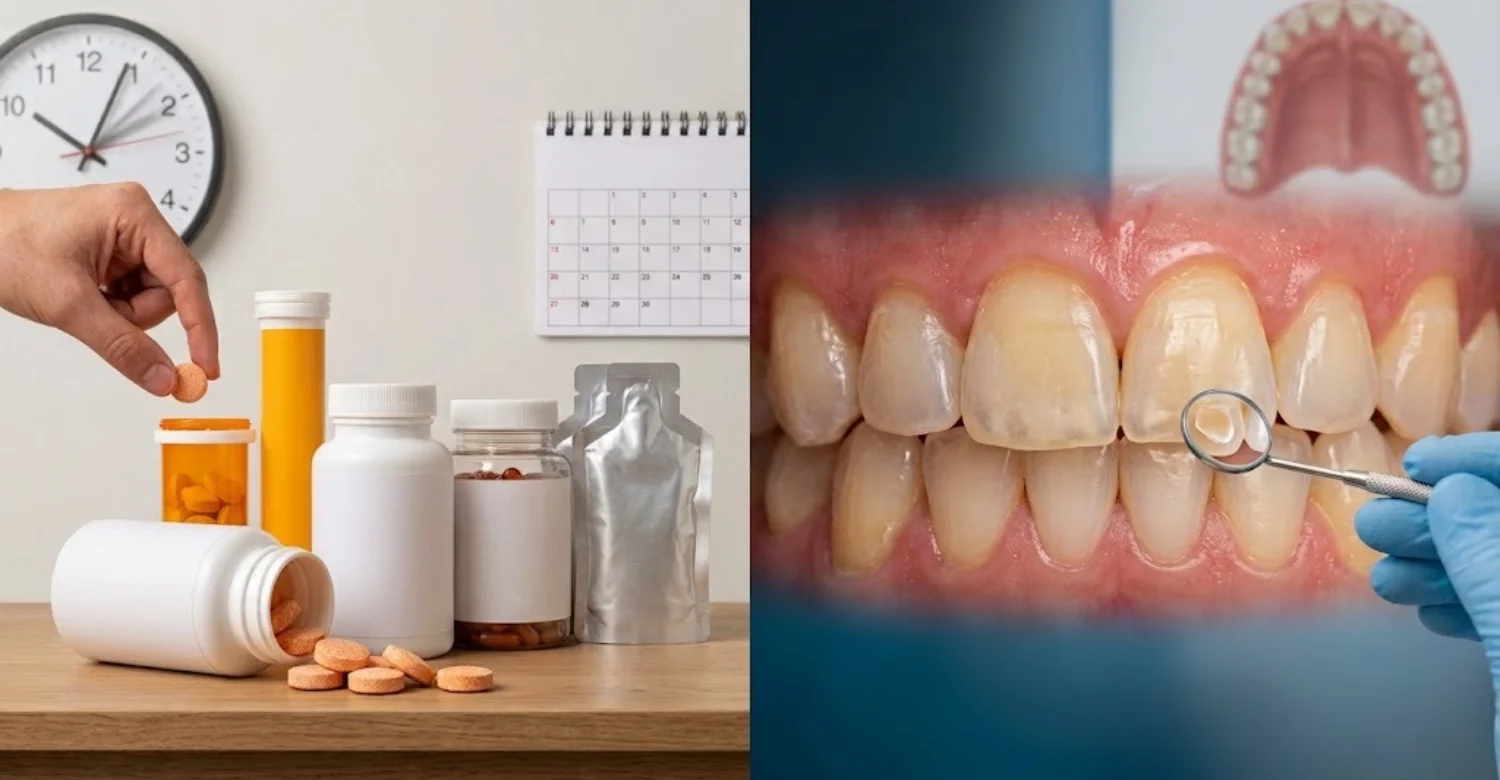
Acidic supplements and tooth erosion are closely linked, yet many people overlook this connection. Vitamin C tablets, chewables, and effervescent products can lower the pH in your mouth. Each dose softens enamel a little. Over months, this repeated contact may cause enamel erosion, sensitivity, and visible damage that is hard to reverse.
What Is Tooth Erosion and How Does It Affect the Enamel?
Tooth erosion is the gradual loss of enamel caused by acids, not bacteria. Understanding this process is the first step. Acid dissolves the minerals in enamel, leaving the surface thinner and weaker. Unlike cavities, erosion spreads across wide surfaces. It often goes unnoticed until sensitivity or discoloration appears.
What Is Acid Erosion of Teeth?
Acid erosion of teeth is the chemical wearing away of enamel by acids. These acids come from food, drinks, supplements, or the stomach. They dissolve the calcium and phosphate minerals in enamel. Repeated attacks soften the surface. Normal chewing or brushing can then wear the weakened layer away, causing permanent loss.
How Does Tooth Enamel Protect Your Teeth?
Enamel is the hardest tissue in the human body and forms the outer shield of each tooth. It protects the softer dentin and nerve from temperature changes, pressure, and bacteria. Enamel contains no living cells, so it cannot regenerate once lost. That is why protecting it from repeated acid exposure is essential.
What Happens When Enamel Is Exposed to Acid Frequently?
Enamel starts losing minerals once the mouth's pH drops below about 5.5. Saliva normally repairs minor damage between exposures. However, frequent doses leave no recovery time. The enamel stays softened, and cumulative loss slowly exposes the yellow dentin beneath.
Is There a Link Between Acidic Supplements and Tooth Erosion?
Yes, there is. Research on acidic supplements and tooth erosion shows that acidic tablets lower oral pH quickly. Chewable and effervescent forms carry the highest risk. When this happens several times a day, enamel never fully remineralizes. The risk grows with frequency, acidity, and contact time.
How Do Acidic Supplements Affect Tooth Enamel?
Acidic supplements release ascorbic or citric acid directly onto the tooth surface. These acids dissolve minerals from the outer enamel, creating a softened zone. Saliva needs time to neutralize the mouth. If exposure repeats before then, the softened enamel wears away. This leads to enamel erosion and increased tooth sensitivity.
Can Vitamin C Damage Teeth?
Many patients ask: can vitamin C damage teeth? Vitamin C itself is healthy. However, its acidic form, ascorbic acid, can soften enamel when it touches teeth directly. Vitamin C is a leading example of an acidic supplement. Chewable and dissolving products keep acid in the mouth longer.
How Does Vitamin C Cause Tooth Erosion?
The link between vitamin C and tooth erosion lies in ascorbic acid's low pH. Chewable products often have a pH between 2 and 3. When the tablet dissolves against the teeth, acid concentrates on the enamel. This pulls calcium and phosphate out of enamel crystals and starts erosion.
What Makes Frequent Supplement Use More Harmful to Teeth?
Frequency is the key factor in supplement-related erosion. Each dose triggers a new acid attack. Saliva often needs 30 to 60 minutes to restore a neutral pH. Taking several acidic supplements daily keeps enamel constantly softened. This speeds up cumulative mineral loss.
How Do Vitamin C Tablets and Chewable Vitamin C Affect Teeth?
Not all vitamin C products affect teeth equally. With acidic supplements, the form matters as much as the dose. Swallowed tablets pass through the mouth quickly. Chewable, effervescent, and lozenge forms release acid directly onto enamel. This increases contact time and the risk of erosion.
Vitamin C Tablets and Teeth
The relationship between vitamin C tablets and teeth depends on how the tablet is taken. Swallowing a coated tablet whole with water causes minimal enamel contact. Problems arise when tablets are sucked, left to dissolve, or crushed in the mouth. The concentrated acid then sits directly on the tooth surface.
Chewable Vitamin C and Teeth
Chewable vitamin C and teeth are a risky combination. Chewing grinds acidic particles into the grooves and between teeth. There, they linger for minutes. Studies have linked regular chewable vitamin C use to measurable enamel loss. It is a clear everyday example of supplement-related enamel damage.
Why Does the Form of a Vitamin C Supplement Matter?
The form determines how much acid touches the enamel and for how long. Effervescent drinks bathe all teeth in acid. Chewables pack it into grooves, and gummies stick to surfaces. Swallowed capsules or coated tablets bypass the teeth almost entirely. They are the more tooth-friendly choice for regular use.
How Long Does Acid Stay in Contact With the Teeth?
After an acidic exposure, oral pH can stay below the safe level for 20 minutes or longer. Residue trapped between teeth extends this window further. Swallowing supplements quickly helps shorten contact time. Rinsing with plain water and avoiding slow sipping also help. These are among the simplest protective habits.
Clinical Note
Frequent exposure to acidic supplements can cause repeated enamel softening and cumulative enamel loss. The risk depends on frequency, acidity, contact time, and oral hygiene habits. The Vitrin Clinic medical team stresses that reducing repeated acid exposure is central to managing acidic supplements and tooth erosion safely.
Note - All images used are for editorial and illustrative purposes only. They may not originate from the original news provider or associated company.
What Are the Main Causes of Tooth Erosion?
Tooth erosion causes fall into two groups. External acids come from diet and supplements, while internal acids come from the stomach. Acidic supplements are one external factor among several. Identifying every acid source matters. Erosion usually results from a combination of habits rather than one cause.
Acidic Foods and Drinks
Common dietary acids include citrus fruits, soft drinks, sports drinks, fruit juices, wine, and vinegar-based dressings. Flavored sparkling water is acidic too. Sipping these slowly throughout the day is especially harmful because it prolongs acid contact. Pairing acidic foods with meals and using a straw can limit enamel exposure.
Acidic Supplements and Tooth Erosion: The Role of Vitamin C Products
Vitamin C tablets, effervescent vitamins, chewable multivitamins, and gummies are all acidic. Some chewable aspirin products are acidic as well. Many users take these several times daily without realizing the dental impact. That is why supplements deserve attention alongside diet when enamel is wearing down.
Frequent Acid Exposure
Frequent acid exposure matters more than the total amount of acid consumed. Five small acidic exposures across the day cause more harm than one larger exposure at mealtime. Each attack restarts enamel softening. Between exposures, saliva never has enough time to neutralize the mouth and rebuild lost minerals.
Acid Reflux and Other Internal Sources of Acid
Stomach acid is far stronger than dietary acid. Gastroesophageal reflux disease, frequent vomiting, eating disorders, and morning sickness bring this acid into the mouth. It often affects the inner surfaces of teeth. When reflux combines with frequent acidic supplement use, enamel damage can progress much faster.
Poor Oral Hygiene and Enamel Weakening
Poor oral hygiene leaves plaque and acidic residue on teeth longer. Infrequent fluoride use also deprives enamel of protective minerals. Brushing too hard or with abrasive toothpaste can wear softened enamel. A dry mouth from medications or dehydration reduces saliva. This weakens the body's natural defense against acid erosion of teeth.
Ready to transform your smile?
Talk to our team and get a personal FREE treatment plan.
What Are the Signs of Vitamin C Tooth Erosion and Enamel Damage?
Vitamin C tooth erosion develops slowly, so early signs are easy to miss. Recognizing them helps you manage acidic supplements and tooth erosion before damage becomes severe. Warning signs include sensitivity, translucent edges, and smoother or rounded surfaces. Yellowing and teeth that chip or crack easily are also common.
Tooth Sensitivity
Sensitivity is often the first sign of enamel loss. As enamel thins, the dentin underneath becomes exposed. Its tiny tubules carry hot, cold, sweet, or acidic sensations to the nerve. Short, sharp pain when drinking cold water or eating ice cream may signal early tooth enamel damage.
Increased Transparency at the Tooth Edges
The biting edges of front teeth may look glassy, bluish, or see-through. This happens because the enamel becomes too thin to block light. There is also no dentin beneath the edge to add color. Translucent edges are a classic sign of ongoing enamel erosion and deserve a dental evaluation.
Changes in Tooth Shape or Surface
Eroded teeth often look smooth, shiny, and rounded, losing their natural texture. Shallow cup-shaped dents may appear on chewing surfaces. Fillings can seem to stand above the surrounding tooth. These changes often appear in patients who use acidic supplements often over several years.
Yellowing Caused by Enamel Thinning
Enamel is naturally bluish-white and semi-translucent, while dentin is yellow. As enamel thins from acid erosion, more yellow dentin shows through. This makes teeth appear darker. Unlike surface stains, this yellowing cannot be removed with whitening toothpaste. The color comes from the tooth structure itself.
Cracks, Chips, or Increased Fragility
Weakened enamel is more brittle and less able to absorb biting forces. Teeth may develop small chips along the edges, fine cracks, or rough surfaces. Advanced tooth enamel damage leaves teeth vulnerable to fractures, cavities, and further wear. It often requires restorative dental treatment to protect what remains.
Can Vitamin C Damage Teeth More When Taken Frequently?
Yes. Frequency multiplies the effect of every acidic dose. Someone chewing vitamin C several times daily faces far greater risk than someone swallowing one tablet each morning. This is a core lesson of supplement-related erosion. Repeated exposures prevent enamel recovery and turn temporary softening into permanent loss.
Why Frequency Matters More Than Occasional Exposure
Enamel can recover from occasional acid attacks. Saliva neutralizes the acid and redeposits minerals. Frequent exposure overwhelms this repair system. Each new dose arrives before remineralization finishes, so mineral loss outweighs repair. Over months, this shows up as thinning, sensitivity, and early signs of enamel erosion.
How Chewing Acidic Supplements Can Increase Acid Contact
Chewing breaks the supplement into fine particles. These pack into grooves, contact points, and along the gumline. The particles dissolve slowly, releasing acid for an extended period. This prolonged contact is one of the strongest links between acidic supplements and enamel loss, especially with daily chewable vitamin C.
Does Swallowing Vitamin C Reduce Its Effect on Teeth?
Yes. Swallowing a tablet or capsule whole with a full glass of water greatly reduces acid contact with enamel. The supplement dissolves in the stomach rather than the mouth. For people who need regular vitamin C, swallowed forms are a simple way to protect teeth.
Which Habits Can Increase the Risk of Tooth Erosion?
Risky habits include sucking or chewing acidic tablets and sipping effervescent drinks slowly. Taking supplements at bedtime, when saliva flow drops, is also risky. So is brushing right after acid exposure. Combining these habits with acidic drinks raises the risk further. Changing even one can noticeably reduce enamel erosion.
How to Reduce the Risk of Acidic Supplements and Tooth Erosion
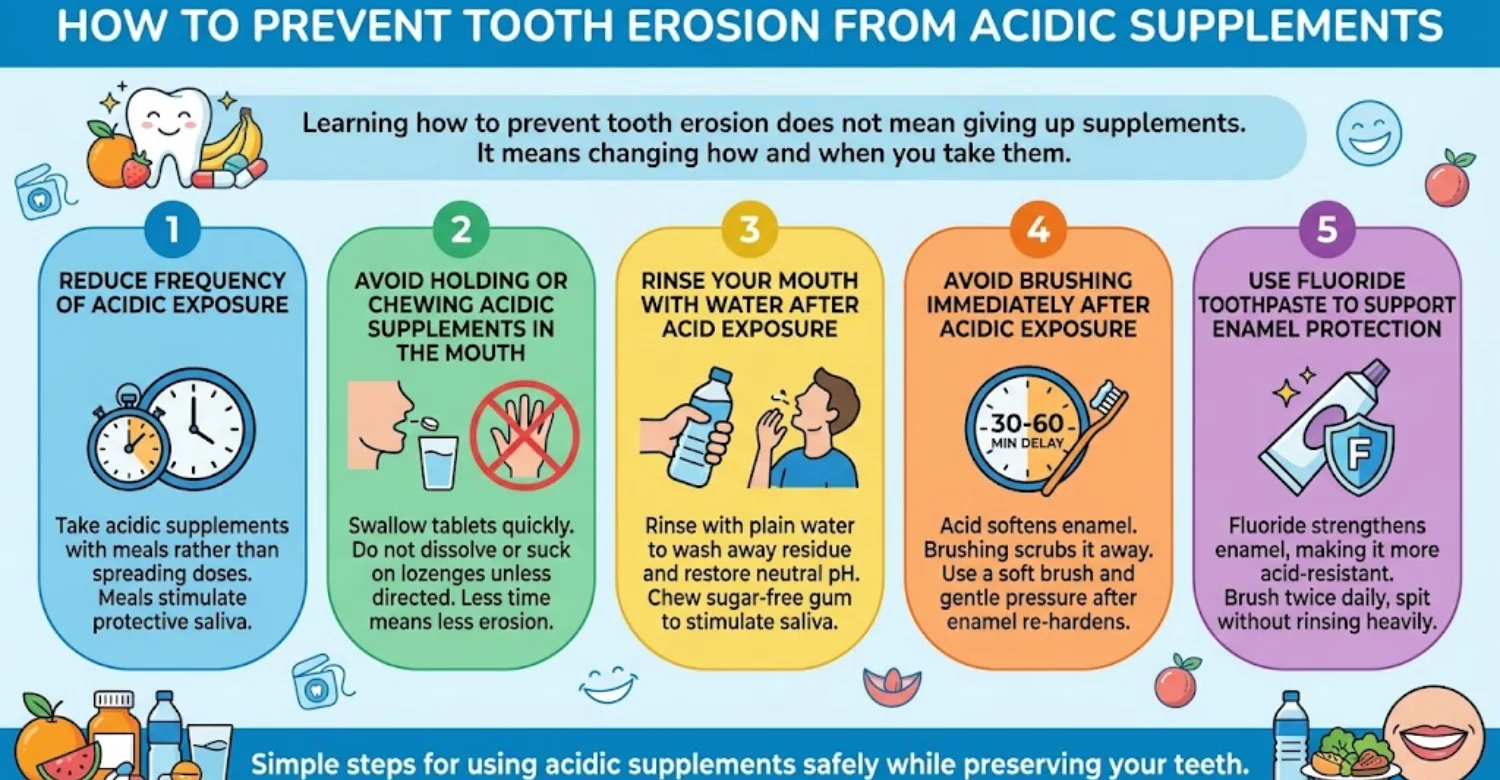
Learning how to prevent tooth erosion does not mean giving up supplements. It means changing how and when you take them. Simple steps include fewer acidic exposures and swallowing instead of chewing. Rinsing with water, delaying brushing, and using fluoride toothpaste daily also help.
Reduce the Frequency of Acidic Exposure
Where your recommended dosage allows, take acidic supplements with a meal. Avoid spreading separate doses across the day. Meals stimulate saliva, which helps neutralize acid. Fewer exposures give enamel time to recover. This makes frequency reduction the most effective step for managing acidic supplements and tooth erosion.
Avoid Holding or Chewing Acidic Supplements in the Mouth
Do not let tablets dissolve on your tongue or suck lozenges for long periods. Avoid chewing acidic tablets unless directed. Swallow tablets whole with water instead. If you prefer effervescent vitamins, drink them promptly with a meal rather than sipping slowly. Less time in the mouth means less acid erosion of teeth.
Rinse Your Mouth With Water After Acid Exposure
Rinsing with plain water after an acidic supplement washes away residue. It also helps restore a neutral pH faster. Drinking a little milk or chewing sugar-free gum stimulates saliva too. This simple habit shortens acid contact time. It also supports natural remineralization of softened enamel.
Avoid Brushing Immediately After Acidic Exposure
Brushing right after acid exposure can scrub away softened enamel. Wait at least 30 to 60 minutes so saliva can reharden the surface. This timing rule is often overlooked by supplement users, yet it makes a real difference. Use a soft-bristled toothbrush and gentle pressure.
Use Fluoride Toothpaste to Support Enamel Protection
Fluoride strengthens enamel by forming fluorapatite, a mineral more resistant to acid. Brush twice daily with fluoride toothpaste, then spit without rinsing heavily. This leaves a protective layer on the teeth. Your dentist may also recommend high-fluoride toothpaste, fluoride varnish, or mouthwash for extra protection against enamel erosion.
Tips for the Patients
These practical tips help reduce the risks linked to acidic supplements and tooth erosion:
Follow the recommended dosage of supplements.
Avoid unnecessary repeated exposure to acidic tablets.
Drink water after taking acidic supplements.
Do not brush immediately after significant acid exposure.
Discuss persistent sensitivity or visible enamel changes with a dental professional.
How Is Tooth Erosion Diagnosed?
Dentists diagnose tooth erosion through a careful examination and a review of lifestyle habits. Supplement-related erosion often progresses silently. So dentists look for subtle surface changes, measure wear severity, and check sensitivity. They also ask about diet, supplements, and reflux to find the true source.
Dental Examination
The dentist examines each tooth under good lighting, often after drying the surfaces. This reveals enamel texture, shine, and translucency. Photographs or intraoral scans may record the current condition. These records allow future comparisons. They help confirm whether erosion is active or has stabilized after preventive changes.
Evaluation of Enamel Wear
The dentist assesses where wear appears and what pattern it follows. Erosion typically affects smooth and chewing surfaces broadly. Grinding, by contrast, creates flat, sharp facets. Inner-surface wear may point to reflux. Front-surface wear often suggests dietary or supplement acids. The pattern helps identify the cause.
Checking for Tooth Sensitivity
Sensitivity testing uses gentle air, cold stimuli, or a probe to locate exposed dentin. The dentist notes which teeth react and how strongly. This shows how far tooth enamel damage has progressed. It also helps separate erosion-related sensitivity from cracks, gum recession, or tooth decay.
Reviewing Dietary and Supplement Habits
A detailed history is essential. The dentist asks about acidic drinks, snacking, vitamin C use, and chewable or effervescent supplements. Reflux symptoms and brushing habits are reviewed too. This reveals how acidic supplements and tooth erosion may be connected in your case. It guides a prevention plan that targets the real cause.
Identifying the Severity of Enamel Erosion
Dentists often grade erosion from early surface loss to advanced cases with widespread exposed dentin. Indexes such as the Basic Erosive Wear Examination help standardize scoring. Severity shows whether prevention alone is enough. Otherwise, fluoride treatment, bonding, or restorations may be needed to protect the teeth.
How Is Tooth Erosion Treated?
Treatment depends on severity. Early erosion responds well to fluoride and habit changes. Advanced cases may need restorations. Lost enamel cannot regrow. So treatment aims to stop progression, relieve sensitivity, and restore the strength and appearance of damaged teeth.
Fluoride-Based Enamel Protection
Professional fluoride varnish, prescription toothpaste, and fluoride gels help harden weakened enamel. They also make it more acid-resistant. These treatments can remineralize early softened areas. However, they cannot replace enamel that is already gone. Fluoride is the first line of defense for mild enamel erosion.
Managing Tooth Sensitivity
Desensitizing toothpastes with potassium nitrate or stannous fluoride calm nerve responses over several weeks. Dentists may apply desensitizing agents or sealants to block exposed dentin tubules. Avoiding very hot, cold, and acidic foods also helps. Managing sensitivity improves comfort while prevention stops the underlying erosion.
Restorative Treatment for Advanced Enamel Loss
When significant tooth structure is lost, composite bonding can cover exposed dentin and rebuild worn edges. Severely affected teeth may need onlays or crowns for strength and fracture protection. Restorations last longer when patients also correct the habits behind their erosion.
Cosmetic Options for Significant Tooth Damage
For visible front teeth, porcelain or composite veneers can restore shape, color, and length. Cosmetic treatment can also correct yellowing from enamel thinning, which whitening cannot fix. A cosmetic dentist plans these restorations carefully. The goal is natural-looking results that also protect the remaining tooth structure.
Why Treating the Cause Is Important
Restorations repair damage but do not stop the acid behind it. If supplement habits, reflux, or dietary patterns continue, erosion can return. It may affect the remaining teeth and the edges of new restorations. Addressing the root cause of acidic supplements and tooth erosion protects your investment and natural teeth.
When Should You See a Dentist About Acidic Supplements and Tooth Erosion?
See a dentist as soon as you notice sensitivity, color changes, or worn edges. You should also book a visit if you regularly take acidic supplements. Early evaluation allows simple preventive care before enamel loss requires restorations. Regular checkups every six months also catch subtle changes early.
Persistent Tooth Sensitivity
Sensitivity that lasts more than a week or two, or keeps worsening, should be checked. It may signal exposed dentin from enamel erosion. It can also indicate cracks, decay, or gum problems. A dentist can identify the cause and recommend the right protective treatment.
Visible Changes in Tooth Shape
Book an appointment if your teeth look shorter, rounder, or more transparent at the edges. Small dents on chewing surfaces are another warning sign. These changes mean enamel has already been lost. Early assessment helps stop further wear. It also allows conservative repairs before teeth weaken enough to chip.
Frequent Vitamin C or Acidic Supplement Use
Anyone taking chewable vitamin C, effervescent tablets, or other acidic supplements daily should tell their dentist. This applies even without symptoms, because erosion is often painless at first. A dentist can spot these early changes. They can also suggest safer supplement habits.
Signs of Advanced Tooth Enamel Damage
Seek prompt care if you notice chipping, cracking, strong sensitivity, or visible yellow dentin. Fillings that appear raised are another warning sign. These signs suggest advanced tooth enamel damage. Teeth become vulnerable to fractures and decay. Timely treatment protects remaining tooth structure and prevents more complex, costly procedures.
How Can Vitrin Clinic Help With Acidic Supplements and Tooth Erosion?
Vitrin Clinic offers a complete approach to erosion care, from diagnosis to restoration. The dental team evaluates each case within each patient's full lifestyle. It identifies the acid source and builds a personalized plan. This plan combines prevention, sensitivity relief, and restorative or cosmetic treatment when needed.
.jpg)
.jpg)
.jpg)
.jpg)
Evaluating the Extent of Tooth Erosion
At Vitrin Clinic, the dental team examines every tooth surface and records wear patterns with photographs. They also test for sensitivity. This creates a clear baseline of tooth enamel damage. Progress can then be tracked accurately, and treatment can match the true severity of each patient's erosion.
Identifying the Possible Cause of Enamel Wear
Vitrin Clinic reviews diet, supplement routines, reflux symptoms, and brushing habits to find what drives the wear. The cause may be chewable vitamin C, acidic drinks, internal acid, or a combination. Pinpointing it allows the team to recommend practical changes. These changes stop erosion from continuing and protect long-term results.
Personalized Treatment Planning at Vitrin Clinic
Every plan at Vitrin Clinic is tailored to the individual. It may include fluoride therapy, desensitizing treatment, supplement timing advice, and monitoring visits. When restoration is needed, the options are explained clearly. Patients can then choose treatment that fits their goals, comfort, and the condition of their teeth.
Restoring the Appearance and Function of Damaged Teeth
For advanced enamel loss, Vitrin Clinic provides bonding, veneers, and crowns to rebuild shape, strength, and color. Cosmetic restorations restore a natural smile while protecting weakened teeth. Combined with prevention, these treatments help patients chew comfortably. They also help patients smile confidently for years to come.
What We Notice Clinically
The Vitrin Clinic dental team includes Dr. Rifat Alsaman, Head of the Medical team at Vitrin Clinic and a cosmetic dentist. The team evaluates enamel wear, sensitivity, tooth structure, and supplement and dietary habits together. They often find that acidic supplements and tooth erosion are linked through daily routines patients consider harmless. Identifying the source of repeated acid exposure is essential to preventing further damage.
Tips for the Patients
Preparing for your visit helps the Vitrin Clinic team give accurate, personalized advice:
Bring information about regularly used supplements to your dental consultation.
Mention any sensitivity or changes in tooth appearance.
Follow the personalized prevention and treatment plan recommended by the Vitrin Clinic dental team.
Resource:
https://doc.rero.ch/record/331998/files/784_2015_Article_1511.pdf


