Should You Prioritise Cosmetic or Functional Dental Treatment?
Understanding cosmetic vs functional dentistry helps patients decide which dental concerns need attention first. Some procedures improve smile appearance, while others protect teeth, restore chewing, or treat disease.

Understanding cosmetic vs functional dentistry helps patients decide which dental concerns need attention first. Some procedures improve smile appearance, while others protect teeth, restore chewing, or treat disease. However, these objectives often overlap. A well-planned smile should also support comfortable chewing and a healthy bite. The right treatment depends on tooth condition, gum health, jaw function, and personal expectations. Some procedures address aesthetic and functional concerns simultaneously. Others should wait until decay, infection, or gum disease is controlled. This guide explores the differences between both approaches, suitable treatments, clinical priorities, and costs. It also compares dental treatment prices across several countries. Finally, it explains how Vitrin Clinic plans individual dental treatments in Istanbul.
Key Takeaways
Cosmetic dentistry improves smile appearance, while functional dentistry addresses oral health, damaged teeth, missing teeth, and chewing problems.
Many dental procedures serve both purposes, improving appearance while restoring or protecting dental function.
Active decay, infection, and gum disease generally require attention before elective cosmetic treatment.
Dentists consider tooth structure, gum health, bite alignment, jaw function, medical history, and aesthetic expectations when planning treatment.
Conservative options should be considered to preserve healthy tooth structure and avoid unnecessary irreversible procedures.
Crowns, implants, bridges, and orthodontic treatment can support both functional and aesthetic goals when clinically suitable.
Treatment costs depend on procedure type, materials, complexity, and additional requirements. Written, itemised quotations help patients compare options fairly.
Vitrin Clinic develops individual treatment plans that consider oral health, smile appearance, appointment schedules, and aftercare for international patients.
Ready to transform your smile?
Talk to our team and get a personal FREE treatment plan.
What Is the Difference Between Cosmetic and Functional Dentistry?
The main difference between cosmetic and functional dentistry involves the primary purpose of each procedure. Cosmetic dentistry focuses on improving visible dental features. Functional dentistry aims to preserve oral health and restore normal dental function. However, these categories frequently overlap. A crown can protect a weakened tooth while improving its appearance. Orthodontic treatment can improve alignment and correct selected bite problems. Therefore, dentists should consider appearance and function together. The correct treatment depends on clinical findings, not appearance alone.
What Does Cosmetic Dentistry Aim to Improve?
Cosmetic dentistry focuses on the visible characteristics of teeth and smiles. Its objectives include improving tooth colour, shape, proportions, and alignment. Treatments may address staining, discolouration, uneven edges, gaps, and selected irregularities. Professional whitening can improve suitable natural tooth stains. Restorative procedures may also change the appearance of damaged teeth. Orthodontic treatment can improve alignment and smile balance. However, cosmetic treatment should begin only after checking oral health. Healthy teeth and gums provide a better foundation for aesthetic improvements. The dentist must also consider bite relationships and existing restorations.
How Does Functional Dentistry Protect Oral Health?
Functional dentistry focuses on the structures responsible for oral health and normal function. These include teeth, gums, supporting bone, jaw joints, and chewing muscles. Treatment may address decay, infection, damaged teeth, missing teeth, and bite problems. Fillings restore teeth affected by cavities. Root canal treatment may preserve certain infected teeth. Implants and bridges replace missing teeth. Periodontal treatment helps control gum disease. These procedures aim to support comfortable chewing and stable dental structures. They also help reduce the risk of further oral complications.
How Are Oral Health and Smile Appearance Different?
Oral health describes how well teeth and supporting tissues function. Smile appearance relates to visible features, including colour, shape, alignment, and symmetry. These outcomes are connected, but they are not identical. A tooth may look attractive while containing untreated decay or inflammation. A healthy tooth may also have staining or an irregular shape. Good treatment planning considers both conditions. Appearance alone cannot confirm whether a tooth is healthy. Clinical examination helps identify problems that photographs cannot reveal.
Can Cosmetic and Functional Dentistry Address the Same Problem?
Yes. Many dental procedures improve appearance while restoring or protecting oral function. A crown can protect a weakened tooth and improve its visible shape. Orthodontics can correct selected bite problems while aligning teeth. Dental implants replace missing teeth and restore chewing support. This overlap makes cosmetic vs functional dentistry less straightforward than two separate categories. The appropriate approach depends on the underlying problem and desired outcome. Dentists should consider oral health, bite stability, and aesthetic expectations together.
.jpg)
.jpg)
.jpg)
How Do Cosmetic and Functional Dentistry Compare?
Comparing cosmetic and functional dentistry involves examining their objectives, procedures, priorities, and expected outcomes. Neither approach automatically replaces the other. Their suitability depends on each patient's dental condition. Some patients mainly need aesthetic improvements. Others require treatment for disease or structural damage. Many need a combination of both approaches.
How Do Their Main Treatment Objectives Differ?
Cosmetic dentistry | Functional dentistry |
Improves tooth colour and appearance | Treats decay and infection |
Refines smile proportions | Restores damaged teeth |
Addresses visible irregularities | Replaces missing teeth |
Improves selected alignment concerns | Supports chewing and bite function |
Enhances overall smile appearance | Protects oral health and dental structures |
Which Procedures Belong to Each Treatment Category?
Cosmetic procedures may include professional whitening and selected aesthetic restorations. Orthodontic treatment can also improve the appearance of misaligned teeth. Functional procedures include fillings, root canal treatment, periodontal therapy, and extractions. Tooth replacement may involve implants or dental bridges. Crowns can serve both restorative and aesthetic purposes. Treatment selection depends on tooth condition, gum health, bone support, and bite relationships. A procedure should never be selected solely because it creates an attractive appearance.
How Do Dentists Balance Appearance and Oral Function?
Dentists usually address active disease and structural problems before elective aesthetic changes. They examine decay, infection, gum inflammation, damaged restorations, and bite problems. They then consider the patient's aesthetic preferences. This sequence helps avoid placing restorations over unresolved dental conditions. However, treatment order varies according to clinical urgency. Some aesthetic procedures may proceed alongside restorative treatment when appropriate.
How Do Their Long-Term Results Differ?
Long-term results depend on diagnosis, treatment quality, oral hygiene, and maintenance. Cosmetic improvements may require polishing, replacement, or periodic maintenance. Restorative treatments also need monitoring because teeth and restorations can develop new problems. Implants require ongoing monitoring of surrounding gums and bone. Crowns and other restorations cannot eliminate future decay or inflammation. Neither approach guarantees permanent results. Regular dental reviews help identify complications before they become more serious.
When Should Aesthetic and Functional Goals Be Planned Together?
Both objectives should be considered when damaged, worn, discoloured, or missing teeth affect appearance and function. A patient may need crowns to protect weakened teeth while improving smile proportions. Another patient may need orthodontic treatment before restorative procedures. Combining both approaches can create a more coordinated treatment plan. However, dentists must first establish whether the teeth and supporting tissues are suitable.
Which Dental Treatments Improve Appearance, Function, or Both?
Understanding cosmetic vs functional dentistry becomes easier when treatments are grouped by their primary purpose. Some procedures mainly improve appearance. Others restore damaged structures or treat disease. Several treatments can address both objectives. Their suitability depends on individual clinical findings.
Which Treatments Mainly Improve Smile Appearance?
Cosmetic treatments address visible concerns in otherwise suitable teeth. Their purpose is to improve colour, shape, proportions, or alignment. However, the dentist must first check for decay, gum disease, and structural damage. Existing restorations may also affect treatment choices. Treatment suitability depends on tooth condition and realistic patient expectations.
Can Professional Teeth Whitening Improve Natural Tooth Colour?
Professional teeth whitening can reduce suitable stains on natural teeth. It uses dentist-supervised whitening products to lighten natural enamel. It may improve discoloration caused by aging, food, drinks, or smoking. However, whitening does not change crowns, fillings, implants, or other restorations. Results vary according to stain type and severity. Patients with untreated decay, gum inflammation, or significant sensitivity may need treatment first.
Advantages
Improves natural tooth colour without changing tooth shape.
Usually requires less tooth alteration than restorative procedures.
Can complement other suitable aesthetic treatments.
Disadvantages and possible side effects
Temporary sensitivity or gum irritation may occur.
Existing restorations will not change colour.
Results are not permanent and require maintenance.
How Can Dental Veneers Change Tooth Shape and Colour?
Dental veneers are thin restorations bonded to the front surfaces of suitable teeth. They can change tooth colour, shape, length, and proportions. Porcelain veneers may address selected concerns, including persistent discolouration and minor irregularities. Some cases require removing natural enamel. This preparation is generally irreversible. Veneers are not suitable for every tooth or bite. Severe grinding, untreated decay, and active gum disease require careful consideration.
Advantages
Can improve several visible tooth features simultaneously.
Porcelain can provide a natural-looking appearance.
Individual restorations can follow planned smile proportions.
Disadvantages and possible side effects
Enamel removal may be permanent.
Temporary sensitivity can occur.
Restorations can chip, loosen, or require replacement.
Excessive preparation can compromise remaining tooth structure.
Which Treatments Mainly Restore Dental Function?
Functional procedures address disease, damage, and missing dental structures. Their main objective is preserving teeth and restoring oral health. Cosmetic improvements may occur as an additional benefit. The treatment depends on the severity and location of each problem.
How Do Dental Fillings Repair Teeth Affected by Decay?
Dental fillings restore teeth affected by cavities or limited structural damage. The dentist removes infected or softened tissue before restoring the remaining cavity. The filling helps recover the tooth's shape and chewing surface. Material selection depends on cavity size, tooth location, and clinical requirements. Extensive cavities may need a different restoration.
Advantages
Preserves natural tooth structure when suitable.
Restores the tooth's chewing surface.
Treats damage caused by dental decay.
Disadvantages and possible side effects
Temporary sensitivity may follow treatment.
Fillings can wear, fracture, or develop leakage.
Extensive damage may require additional restoration.
When Is Root Canal Treatment Recommended?
Root canal treatment may be necessary when the dental pulp becomes irreversibly inflamed or infected. The pulp contains nerves and blood vessels inside the tooth. Treatment removes affected tissue, cleans the root canals, and seals them. A suitable restoration protects the remaining tooth. A crown may be recommended when substantial tooth structure is missing. The decision depends on examination and diagnostic findings.
Advantages
Can preserve a natural tooth that might otherwise need extraction.
Removes infected or inflamed pulp tissue.
Allows subsequent restoration of chewing function.
Disadvantages and possible side effects
Temporary tenderness may occur after treatment.
Additional restoration may increase the overall cost.
Persistent infection or treatment failure is possible.
Some teeth may eventually require extraction.
How Does Periodontal Treatment Protect Supporting Tissues?
Periodontal treatment controls inflammation affecting the tissues around teeth. Early gum disease may improve with professional cleaning and better oral hygiene. Advanced periodontal disease may require deeper cleaning or specialist care. Treatment aims to reduce inflammation and prevent further supporting-tissue damage. Existing bone loss may not fully reverse. Regular maintenance remains important.
Advantages
Helps control gum inflammation.
Supports the tissues surrounding natural teeth.
Reduces the risk of further periodontal damage.
Disadvantages and possible side effects
Temporary bleeding or sensitivity can occur.
Advanced cases may need repeated treatment.
Previously lost supporting bone may not return.
Long-term maintenance remains essential.
How Do Dental Implants and Bridges Replace Missing Teeth?
Dental implants and bridges replace missing teeth using different methods. An implant is placed in the jawbone and supports a replacement tooth. A bridge uses neighbouring teeth or implants for support. Both options can restore chewing and improve appearance. Implant suitability depends on bone availability, gum health, and medical history. Bridges may require preparation of supporting teeth. Neither option suits every patient.
Advantages
Restores missing tooth spaces.
Can improve chewing and speech.
Supports dental appearance and tooth alignment.
Implants can avoid preparing adjacent natural teeth.
Disadvantages and possible side effects
Implant surgery involves healing and possible complications.
Bone grafting may be necessary in selected cases.
Bridges place additional demands on supporting teeth.
Both options require maintenance and professional monitoring.
What Makes All-on-6 Dental Implants Different?
All-on-6 replaces an entire dental arch using six strategically positioned implants. These implants support a fixed full-arch prosthesis. The technique may suit patients missing most or all teeth in one jaw. Six implants provide additional support points compared with four-implant configurations. However, more implants do not automatically produce better results. Bone quality, anatomy, bite forces, and prosthetic design determine suitability.
What Does the All-on-6 Treatment Process Involve?
The treatment generally involves several coordinated stages:
Clinical examination and appropriate three-dimensional imaging.
Removal of teeth that cannot be preserved, when necessary.
Implant placement according to the surgical plan.
Temporary prosthetic restoration when immediate loading is suitable.
Healing and integration between implants and surrounding bone.
Final prosthetic restoration after the required healing period.
Immediate fixed teeth are not appropriate for every patient. Bone grafting or other preparatory procedures may be necessary. The final prosthesis may use different materials. Patients should confirm implant brands, restoration materials, included procedures, and follow-up arrangements.
Which Patients May Be Suitable for All-on-6?
Potential candidates include patients with extensive tooth loss or severely damaged teeth. They need suitable bone conditions or a realistic plan addressing bone deficiencies. Healthy or adequately controlled gum conditions are also important. Smoking, uncontrolled medical conditions, and heavy grinding may affect treatment planning. A clinical examination determines whether All-on-6, All-on-4, another implant approach, or conventional dentures are more appropriate.
Which Dental Treatments Can Improve Both Function and Appearance?
Some restorations improve chewing while rebuilding the visible shape of damaged teeth. These procedures are especially relevant when comparing cosmetic vs functional dentistry. Their suitability depends on remaining tooth structure, gum health, and bite forces.
How Can Zirconia Crowns Protect and Restore Damaged Teeth?
Zirconia crowns cover and protect appropriately prepared teeth. They can restore teeth weakened by extensive decay, fractures, or previous treatment. Their shape and colour can also improve smile appearance. Zirconia is a strong ceramic material used in several restorative applications. Crown suitability depends on remaining tooth structure, bite forces, and available space.
Advantages
Protects suitable weakened teeth.
Restores chewing surfaces and tooth shape.
Offers different aesthetic and material options.
Disadvantages and possible side effects
Tooth preparation permanently removes some natural structure.
Temporary sensitivity may occur.
Poor bite design can contribute to discomfort.
Crowns may fracture, loosen, or require replacement.
How Do E-max Crowns Combine Aesthetics and Function?
E-max crowns are restorations made from lithium disilicate ceramic. They offer translucency that can resemble natural enamel. They may suit selected front teeth and some posterior restorations. Their suitability depends on tooth position, remaining structure, bite forces, and restoration design. They are not automatically appropriate for every heavily loaded tooth.
Advantages
Provides natural-looking translucency.
Can restore tooth shape and chewing function.
Offers an aesthetic ceramic restoration.
Disadvantages and possible side effects
Tooth preparation may be irreversible.
Ceramic can fracture under excessive loading.
Material selection must consider bite forces.
Sensitivity may occur following preparation.
Can Orthodontic Treatment Improve Bite Alignment and Smile Appearance?
Orthodontic treatment moves teeth into planned positions using controlled forces. It can correct selected alignment and bite problems. Treatment may improve chewing relationships and smile appearance. Options include fixed braces and clear aligners. The appropriate method depends on tooth movement requirements and jaw relationships. Severe skeletal discrepancies may need additional treatment.
Advantages
Improves selected alignment problems.
Can support better bite relationships.
May make cleaning easier in crowded areas.
Disadvantages and possible side effects
Treatment can take several months or longer.
Temporary discomfort is common after adjustments.
Root resorption and gum changes are possible.
Retainers are usually necessary to maintain results.
When Is Full-Mouth Rehabilitation Necessary?
Full-mouth rehabilitation may be necessary when several teeth have extensive damage or loss. It combines restorative procedures according to individual clinical needs. Treatment may involve crowns, implants, bridges, periodontal care, and bite adjustments. The objective is rebuilding dental function while addressing aesthetic concerns. The sequence depends on disease control, tooth prognosis, jaw relationships, and healing requirements. It should not be recommended simply to change a healthy smile.
Advantages
Addresses multiple dental problems through coordinated planning.
Can restore chewing across several areas.
Allows functional and aesthetic goals to be considered together.
Disadvantages and possible side effects
Treatment can be extensive and expensive.
Multiple appointments may be necessary.
Temporary restorations and healing periods may be required.
Long-term maintenance and future repairs remain possible.
When Should Functional Dental Treatment Come Before Cosmetic Treatment?
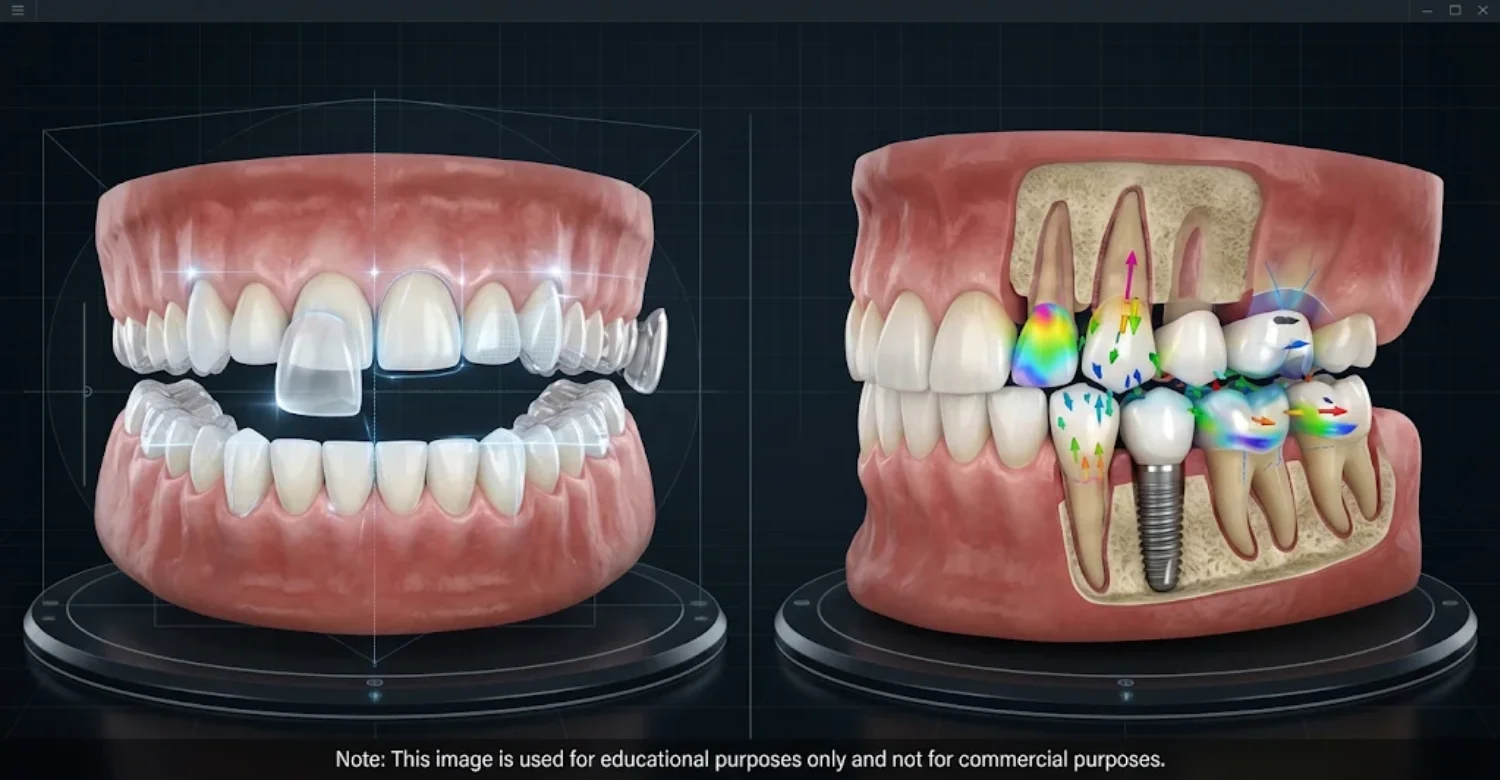
Functional treatment generally takes priority when active disease threatens teeth or supporting tissues. This is an important principle in cosmetic vs functional dentistry. Aesthetic procedures should not conceal unresolved infection, decay, or periodontal disease. The dentist must first establish whether the mouth is healthy enough for elective treatment.
Should Tooth Decay and Infection Be Treated Before Cosmetic Procedures?
Yes. Active decay and infection should usually be addressed before elective cosmetic procedures. Untreated cavities can progress and weaken natural tooth structure. Dental infections may affect the pulp and surrounding tissues. A dentist determines whether fillings, root canal treatment, extraction, or another intervention is appropriate. Cosmetic treatment can follow once the underlying condition is controlled.
Why Should Gum Disease Be Controlled Before Smile Improvements?
Active gum disease can compromise the tissues supporting teeth and restorations. Inflammation may cause bleeding, recession, and changes in gum contours. These changes can affect restoration appearance and stability. Periodontal treatment should therefore precede elective restorations when necessary. Regular maintenance helps protect the results over time.
How Can Missing Teeth Affect Chewing and Bite Alignment?
Missing teeth can change how biting forces are distributed. Neighbouring teeth may tilt or move into empty spaces. Opposing teeth may also over-erupt. These changes can complicate chewing and future restorative treatment. However, not every missing tooth requires immediate replacement. The dentist considers its location, function, neighbouring teeth, and overall oral condition.
When Do Bite Problems and Uneven Tooth Wear Need Treatment?
Bite problems may need treatment when they cause functional difficulties or progressive damage. Signs can include uneven tooth wear, fractured restorations, and difficulty chewing. Jaw discomfort also deserves appropriate examination. However, tooth wear does not automatically indicate a serious bite disorder. Diagnosis requires evaluating teeth, jaw movements, muscles, and relevant symptoms.
Why Is Treating Visible Dental Damage Alone Sometimes Insufficient?
Visible damage may indicate a deeper dental problem. A fractured tooth could have underlying decay or pulp involvement. Gum recession may reflect periodontal disease or mechanical irritation. A worn restoration may indicate excessive loading. Repairing only the visible area can leave the underlying cause unresolved. Treatment should address both the damaged structure and contributing factors.
Can You Improve Your Smile Without Compromising Dental Function?
Yes. Careful treatment planning can improve appearance while respecting natural tooth structure and bite function. Successful cosmetic vs functional dentistry requires clinical findings to guide aesthetic decisions. Conservative options should be considered whenever they can achieve the intended result.
How Can Dentists Preserve Natural Tooth Structure During Cosmetic Treatment?
Dentists preserve natural tooth structure by selecting conservative treatments whenever appropriate. Whitening may address discolouration without removing enamel. Orthodontics may correct certain alignment concerns without restorative preparation. Crowns are generally reserved for teeth requiring greater structural coverage. The dentist should explain the expected preparation before treatment begins.
Why Should Bite Alignment Be Checked Before Changing Tooth Shape?
Changing tooth shape can affect how upper and lower teeth meet. Poorly planned restorations may create premature contacts or excessive loading. These problems can contribute to discomfort, fractures, and restoration failure. Bite evaluation helps determine suitable restoration dimensions and positioning. Grinding habits should also be considered.
How Do Dental Materials Influence Function and Appearance?
Dental materials differ in strength, translucency, thickness, and wear characteristics. Zirconia offers strength in many restorative applications. Lithium disilicate provides aesthetic translucency for suitable cases. Material choice depends on restoration position, available space, bite forces, and aesthetic expectations. No material is universally best. The dentist must match each material to clinical requirements.
How Can Unnecessary Tooth Preparation Be Avoided?
Unnecessary preparation can be avoided through accurate diagnosis and conservative treatment selection. Dentists should identify the least invasive option that meets the clinical objective. Healthy enamel should be preserved whenever possible. Patients should understand whether a proposed procedure permanently changes natural teeth. A second opinion may help when extensive treatment is recommended.
How Can Smile Design Support Long-Term Oral Health?
Smile design considers tooth proportions, facial features, gum display, and dental relationships. Digital previews can help patients discuss possible aesthetic changes. However, a visual simulation cannot guarantee the final result. The proposed design must respect bite function and biological limitations. Healthy gums and maintainable restorations should remain priorities.
Ready to transform your smile?
Talk to our team and get a personal FREE treatment plan.
How Do Dentists Decide Whether You Need Cosmetic or Functional Treatment?
Choosing suitable treatment requires a clinical examination and an understanding of patient expectations. Dentists use these findings to distinguish aesthetic concerns from conditions requiring treatment. Cosmetic vs functional dentistry is therefore an individual clinical decision, not a fixed choice. The examination also helps identify whether additional diagnostic information is necessary.
How Does Your Dental History Influence Treatment Recommendations?
Dental history helps identify previous problems and potential treatment risks. Dentists may ask about fillings, crowns, root canals, extractions, and orthodontic treatment. They also consider sensitivity, pain, bleeding, and previous complications. Medical history and current medication can affect treatment planning. Previous restoration failures may also influence material selection.
What Do Dentists Examine During a Clinical Dental Examination?
A clinical examination evaluates teeth, gums, oral tissues, and relevant jaw structures. Dentists look for cavities, fractures, worn surfaces, and defective restorations. They examine gum inflammation, recession, and supporting tissues. They may also evaluate jaw movement and chewing muscles. These findings help identify problems requiring further investigation.
How Is Bite Alignment and Chewing Function Evaluated?
Bite evaluation examines how upper and lower teeth contact during closure and movement. Dentists look for uneven contacts, tooth wear, and signs of excessive loading. They may assess chewing difficulties and jaw movement. Additional records may be necessary for complex restorative or orthodontic cases. One visual observation cannot establish every bite-related diagnosis.
When Are Digital X-rays or CBCT Scans Necessary?
Digital dental X-rays help identify problems that cannot be fully assessed visually. They may show decay between teeth, root changes, bone levels, and infections. CBCT provides three-dimensional information when conventional images are insufficient. It may help with selected implants or complex surgical cases. Neither imaging method is necessary for every patient. Radiation exposure should always be justified by clinical need.
How Can Digital Scanning and Smile Previews Support Treatment Planning?
Digital intraoral scanning captures detailed images of tooth surfaces and dental relationships. These records can support crown, bridge, and orthodontic planning. Digital smile previews help patients discuss proposed aesthetic changes. They can also support communication between clinicians and laboratories. However, scans and previews do not replace clinical examination or appropriate imaging.
How Is an Individual Treatment Plan Developed?
An individual treatment plan combines clinical findings, diagnostic images, patient priorities, and suitable treatment options. The dentist identifies urgent problems and evaluates the prognosis of affected teeth. They then discuss procedures, alternatives, limitations, and expected maintenance. A written plan should explain treatment sequence and estimated costs. Complex cases may require specialist input.
.jpg)
.jpg)
.jpg)
Should You Choose Cosmetic Dentistry, Functional Dentistry, or Both?
The appropriate choice depends on oral health and treatment objectives. Cosmetic vs functional dentistry is not necessarily an either-or decision. Many patients benefit from a staged approach addressing health before appearance. Others may have suitable conditions for combined treatment.
When Is Cosmetic Dentistry an Appropriate Choice?
Cosmetic dentistry may be appropriate when teeth and gums are sufficiently healthy. Common concerns include staining, uneven shapes, and selected alignment problems. The dentist should confirm that treatment will not create unnecessary damage. Patients should understand preparation requirements, limitations, and maintenance. Aesthetic goals should remain realistic and clinically suitable.
When Do Dental Problems Require Functional Treatment?
Functional treatment is necessary when disease or damage affects oral health. Examples include untreated decay, pulp infection, periodontal disease, fractures, and missing teeth. Persistent pain, swelling, or chewing difficulties require clinical attention. Treatment should address the underlying problem rather than simply improve appearance. Delaying active infection may increase complications.
When Is a Combination of Both Approaches More Suitable?
A combined approach may suit patients with damaged or missing teeth and aesthetic concerns. Restorative treatment can rebuild weakened teeth while improving their appearance. Orthodontics may prepare the bite for later restorations. The sequence depends on disease control, healing, and required procedures. Combining treatments does not mean every tooth needs cosmetic modification.
How Should Patient Preferences Influence Clinical Decisions?
Patient preferences help determine aesthetic goals and acceptable treatment options. Dentists should explain clinical limitations and realistic alternatives. Patients should have time to consider permanent procedures. Financial considerations, travel arrangements, and maintenance commitments also matter. Treatment should remain clinically justified and based on informed consent.
What Happens When Cosmetic and Functional Treatments Are Combined?
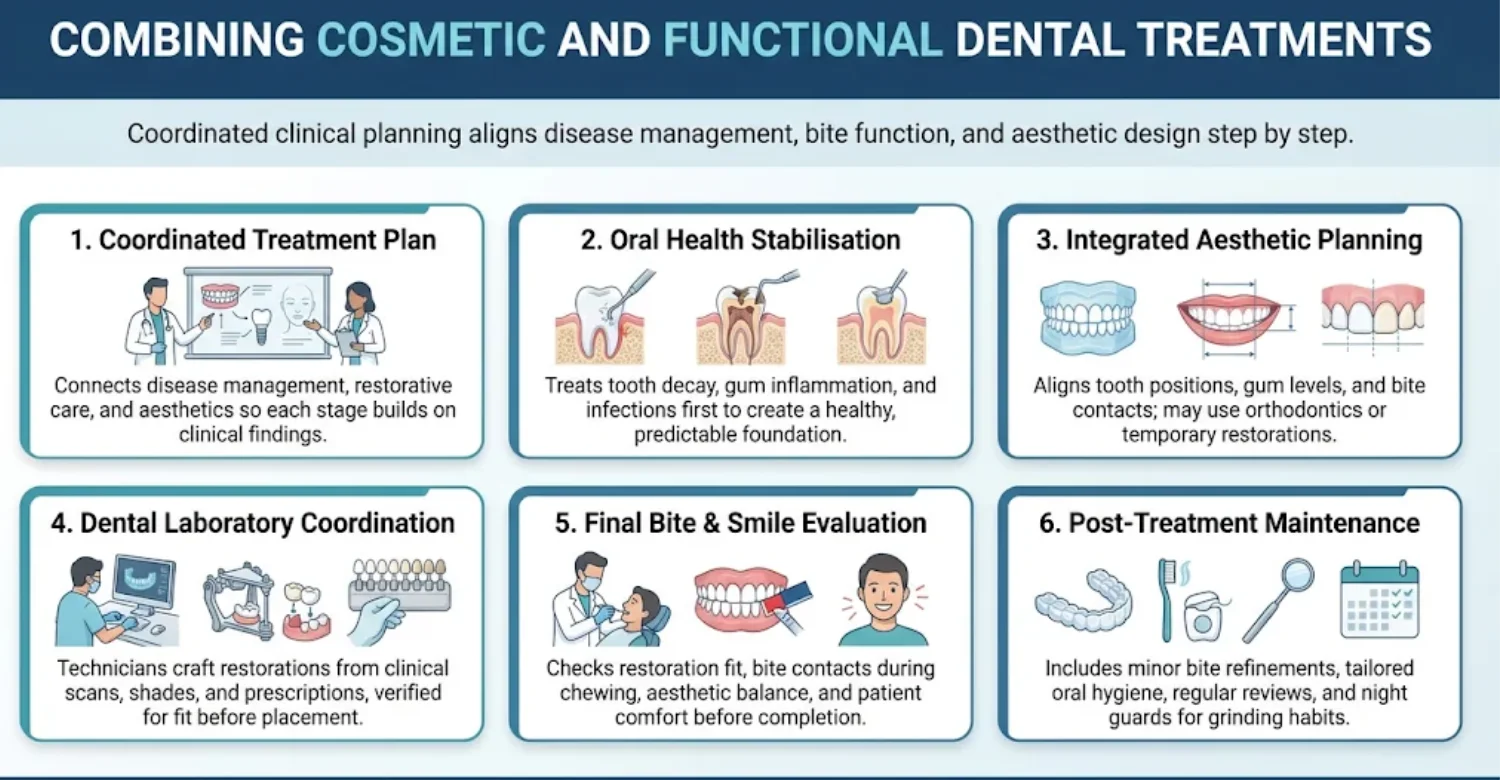
Combined treatment requires coordination between disease management, restorative procedures, and aesthetic planning. The aim is creating restorations that suit the patient's oral condition and functional needs. Each stage should follow the findings from the previous stage.
Why Should Oral Health Be Stabilised Before Smile Improvements?
Oral health stabilisation reduces the risk of placing restorations over unresolved disease. It may involve treating decay, controlling gum inflammation, and addressing infections. The dentist also evaluates teeth that may not be suitable for restoration. Once the mouth is stable, aesthetic planning can proceed more predictably.
How Are Restorative and Aesthetic Procedures Planned Together?
The dentist establishes required tooth positions, shapes, and restorative dimensions. They consider gum levels, bite contacts, and available tooth structure. Treatment may involve orthodontics before crowns or implants. Temporary restorations can help evaluate appearance and function in selected cases. Final decisions should reflect clinical findings.
How Are Dental Laboratory Procedures Coordinated With Clinical Treatment?
Dental laboratories manufacture restorations using clinical prescriptions and patient records. Dentists share relevant scans, impressions, shade information, and design requirements. Laboratory technicians produce restorations according to agreed specifications. The dentist checks fit, contacts, shape, and appearance. Adjustments may be needed before final placement.
How Do Dentists Evaluate the Final Bite and Smile Appearance?
Dentists assess restoration fit, bite contacts, tooth shape, and aesthetic balance. They check how teeth meet during normal closure and movement. Patients may be asked about comfort and chewing. Necessary adjustments should be completed before treatment is considered finished. Follow-up appointments help monitor adaptation and restoration conditions.
What Adjustments and Maintenance May Be Needed After Treatment?
Some patients need minor bite adjustments or restoration refinements. Temporary sensitivity may occur after certain procedures. Patients should follow individual cleaning instructions and attend recommended reviews. Implant restorations require careful cleaning around supporting structures. Night guards may be recommended for selected patients with grinding habits. Maintenance needs vary by treatment.
How Much Does Cosmetic vs Functional Dentistry Cost?
Dental costs depend on treatment type, materials, complexity, and location. Cosmetic procedures may involve whitening or extensive restorations. Functional treatment may involve fillings, root canals, gum treatment, or tooth replacement. The following prices are indicative private-treatment ranges, not guaranteed quotations. Actual fees depend on clinical findings and local market conditions.
What Factors Influence the Cost of Cosmetic Dental Treatment?
Tooth preparation, restoration material, laboratory work, and treatment numbers influence cosmetic costs. Complex smile designs may require additional appointments and temporary restorations. Whitening generally costs less than extensive restorative treatment. The final estimate also depends on whether existing dental problems need treatment first.
What Determines the Cost of Functional Dental Treatment?
Decay depth, tooth location, infection severity, and specialist care affect functional costs. Additional imaging, surgery, and follow-up may increase the total. Implant treatment also depends on bone availability and restoration requirements. Gum treatment costs vary according to disease severity and required sessions.
Why Can Combined Treatment Plans Cost More?
Combined plans may involve several procedures, temporary restorations, laboratory stages, and additional appointments. Some patients need periodontal treatment before restorative work begins. Others require extractions or preparatory surgery. An itemised estimate should separate each procedure and associated expense.
How Do Dental Treatment Costs Compare Between the USA, UK, and Turkey?
The following table compares indicative private-treatment ranges across four destinations. The figures represent broad market estimates and vary by location and clinical complexity.
UK
From $40
UK private dental benchmark
Dental examination: $40–$150
Dental filling: $100–$300
Root canal treatment: $400–$1,200
Dental crown: $480–$1,150
Single dental implant with crown: $1,900–$3,500
Dental extraction: $100–$400
Turkey
From 50
General, restorative & implant rates
Dental examination: Varies by clinic
Dental filling: 50–150
✓ Root canal treatment: 100–350
Dental crown: 150–500
Single dental implant with crown: 900–1,600
Dental extraction: 50–200
USA
From 75
US private dental benchmark
Dental examination: 75–200
Dental filling: 150–400
Root canal treatment: 700–1,800
Dental crown: 800–2,500
Single dental implant with crown: 3,000–6,000
Dental extraction: 150–500
How Much Could You Save on Full-Arch Dental Implants at Vitrin Clinic?
Vitrin Clinic's indicative pricing may offer a lower starting point than many overseas markets. However, the final cost depends on bone condition, implant numbers, and restoration requirements. A two-jaw All-on-4 treatment plan may start from approximately $4,000, subject to clinical confirmation.
Single Dental Implant
Vitrin Clinic Price: 700–1,500
Vitrin Clinic price
Single dental implant: 700–1,500
Individual missing tooth replacement
FDA-approved & CE-marked brands
All-on-4, One Jaw
Vitrin Clinic Price: From $2,000
Vitrin Clinic price
All-on-4, one jaw: From $2,000
4 strategically angled implants per arch
Complete fixed full-arch restoration
All-on-4, Two Jaws
Vitrin Clinic Price: From $4,000
Vitrin Clinic price
All-on-4, two jaws: From $4,000
Upper & lower full-mouth rehabilitation
Includes consultation & 3D CBCT scan
All-on-6, One Jaw
Vitrin Clinic Price: 4,000–9,000
Vitrin Clinic price
All-on-6, one jaw: 4,000–9,000
6 implants per arch for extra bite support
Enhanced full-arch load distribution
How Can You Calculate Your Potential Savings?
Start by collecting comparable treatment plans from each country. Check that each quotation includes the same procedures, implant numbers, and restoration materials. Then compare the complete totals rather than headline prices.
For example, one US quotation may include implant surgery and the final crown. Another quotation may list these components separately. Comparing incomplete estimates can create misleading savings figures.
Patients should also include flights, accommodation, local transport, and possible return visits. Any additional treatment identified during clinical examination should be considered. This approach provides a more realistic picture of the overall cost.
What Additional Costs Should You Consider When Travelling to Turkey?
Dental tourism involves expenses beyond the clinical treatment itself. Patients should plan for travel, accommodation, meals, and local transport. Complex treatment may require more than one visit. Unexpected clinical findings can also change the original treatment plan.
Additional expense | What should you confirm? |
Flights | Return travel and possible additional visits |
Accommodation | Required nights and hotel category |
Airport transfers | Whether transfers are included |
Local transport | Travel between accommodation and the clinic |
Medication | Whether prescribed medication is included |
Additional procedures | Possible costs for grafting or extractions |
Follow-up care | Arrangements after returning home |
Why Should You Request a Written, Itemised Treatment Plan?
A written treatment plan helps patients understand exactly what their quotation includes. It should list proposed procedures, materials, and associated fees. It should also identify exclusions and possible additional treatments.
Patients should confirm whether the quotation is preliminary or final. Clinical examination and diagnostic scans may reveal further treatment requirements. The clinic should explain how these findings could affect the price.
Before making a decision, check the following details:
The number and type of implants.
The materials used for temporary and final restorations.
Whether extractions or bone grafting are included.
Laboratory, medication, and surgical fees.
Follow-up arrangements and potential additional costs.
Clear documentation supports informed decisions and reduces the risk of unexpected expenses. It also makes international price comparisons more meaningful.
Ready to transform your smile?
Talk to our team and get a personal FREE treatment plan.
What Should You Compare Before Choosing a Dental Package at Vitrin Clinic?
Choosing a dental package at Vitrin Clinic involves more than comparing advertised prices. Patients should review the clinical plan, dentist qualifications, materials, and treatment stages. They should also confirm which procedures and restorations the package includes. Temporary teeth, final restorations, and follow-up arrangements can affect the overall value. Ask what happens if additional treatment becomes necessary. A written quotation helps clarify inclusions, exclusions, and potential extra costs. Comparing these details supports more informed decisions before travelling to Istanbul.
What Can an All-on-6 Dental Implant Package at Vitrin Clinic Include?
An All-on-6 package at Vitrin Clinic should clearly identify its surgical and restorative components. Depending on individual clinical requirements, the proposed package may include:
Package component | What should be confirmed |
Initial consultation | Clinical examination and treatment discussion |
Diagnostic imaging | Required X-rays or CBCT |
Six dental implants | Brand, model, and specifications |
Temporary teeth | Material and eligibility for immediate loading |
Final bridge | Zirconia or another specified material |
Surgical procedures | Extractions and additional procedures |
Aftercare | Follow-up reviews and complication arrangements |
Travel support | Hotel, transfers, and included nights |
How Can You Choose a Suitable Dental Package at Vitrin Clinic?
Start by checking whether the proposed treatment matches your clinical condition. Ask why Vitrin Clinic recommends a particular implant system or restoration material. Confirm the number of implants and the planned prosthetic design. Review temporary teeth, final restorations, and follow-up arrangements. A suitable package should explain its limitations and possible additional costs. The treatment plan should reflect clinical findings rather than a standard package alone.
.jpg)
.jpg)
.jpg)
Can Vitrin Clinic Combine Cosmetic and Functional Dental Treatments During One Trip to Turkey?
Combining cosmetic and functional procedures during one trip may be possible. However, clinical conditions determine which treatments can safely fit into one visit. Vitrin Clinic plans appointments around treatment priorities and healing requirements. This is particularly important when patients need several procedures. Travel convenience should never take priority over clinical suitability.
Can Vitrin Clinic Complete Several Dental Procedures During One Visit?
Vitrin Clinic may coordinate several procedures during one visit when clinically appropriate. Examinations, fillings, selected extractions, and some restorative appointments may be combined. However, implant surgery and complex rehabilitation require individual scheduling. Orthodontic treatment also involves ongoing monitoring. Dentists must consider healing, infection control, and restoration requirements. Combining appointments should never compromise treatment quality.
How Does Vitrin Clinic Determine the Right Treatment Schedule?
Vitrin Clinic considers disease severity, tooth prognosis, gum health, and bone condition. Patients with active infections may need treatment before restorative procedures. Implant patients may require additional healing time. Complex cases may involve separate treatment stages. Our clinical team explains the expected schedule before travel. However, clinical findings may require adjustments during treatment.
Which Dental Treatments at Vitrin Clinic May Require Multiple Appointments?
Root canal treatment may require several appointments, depending on infection and tooth condition. Crowns and bridges require preparation, laboratory production, and fitting. Invisalign treatment involves ongoing reviews and adjustments. Implant treatment usually includes surgical placement, healing, and final restoration. Some patients may therefore need two separate visits. The number of appointments depends on the individual treatment plan.
When Does Vitrin Clinic Recommend Temporary Restorations or Healing Periods?
Temporary restorations can protect prepared teeth while permanent restorations are manufactured. Selected implant patients may receive temporary teeth when initial stability allows. Healing periods allow tissues to recover and implants to integrate with bone. Immediate loading is not suitable for every patient. Vitrin Clinic's clinical team determines appropriate timing according to individual findings. Patients should not shorten necessary healing periods to accommodate travel plans.
What Should International Patients Confirm with Vitrin Clinic Before Travelling?
Before travelling, patients should confirm their preliminary diagnosis and proposed procedures. They should also understand the estimated treatment duration and appointment schedule. Request a written, itemised quotation from Vitrin Clinic. Ask about temporary restorations, additional procedures, and aftercare arrangements. Confirm the number of visits and any included travel services. Bringing previous dental records and imaging can also support treatment planning.
How Can You Arrange a Remote Dental Consultation with Vitrin Clinic Before Visiting Turkey?
International patients can contact Vitrin Clinic to discuss their dental concerns remotely. They may share recent X-rays, photographs, medical history, and previous treatment records. Our clinical team can review the available information and discuss possible options. Preliminary costs and treatment stages may also be discussed. However, photographs cannot establish every diagnosis. Final treatment decisions require appropriate clinical examination and imaging when indicated.
Why Choose Vitrin Clinic for Cosmetic and Functional Dental Treatment in Turkey?
Choosing a clinic for extensive dental treatment involves more than comparing prices. Patients need appropriate clinical planning, coordinated appointments, clear communication, and suitable aftercare. Vitrin Clinic provides dental services in Istanbul for international patients. Our team reviews individual needs before recommending suitable procedures. Digital technology may support diagnosis and treatment planning when clinically indicated. Patients can discuss proposed treatment stages and estimated costs before travelling. The aim is to organise treatment around clinical priorities, not standardised procedures.
How Does Vitrin Clinic Review Your Dental Condition Before Recommending Treatment?
At Vitrin Clinic, treatment planning begins with your dental concerns and medical history. Our clinical team examines teeth, gums, oral tissues, and relevant jaw structures. Digital X-rays may identify problems that are not visible during examination. CBCT imaging may be recommended for selected implant or surgical cases. The dentist determines which investigations are clinically necessary. Recommendations follow the findings rather than appearance alone. This helps distinguish functional problems from primarily aesthetic concerns.
How Does Digital Scanning at Vitrin Clinic Support Restorative Treatment Planning?
Digital intraoral scanning records tooth surfaces and dental relationships. These records can support crown, bridge, and restorative planning. They also help communicate restoration requirements to dental laboratories. For implant cases, suitable digital records can support prosthetic planning. However, scanning cannot replace X-rays or CBCT when deeper anatomical information is required. Each diagnostic tool provides different information. The clinical team selects appropriate technologies according to treatment needs.
How Does Vitrin Clinic Balance Bite Function and Smile Appearance When Planning Restorations?
Restorations should reflect tooth condition, bite contacts, and aesthetic requirements. At Vitrin Clinic, our clinical team considers available space, gum levels, and neighbouring teeth. Material selection depends on restoration position and expected loading forces. Digital previews may support discussions about proposed smile changes. Final decisions remain subject to clinical suitability. This approach helps balance appearance, function, and long-term maintenance.
How Does Vitrin Clinic Coordinate Treatment Stages for International Patients?
Vitrin Clinic discusses proposed treatment stages and practical travel arrangements with international patients. Our coordinators help communicate appointment schedules and relevant logistical information. Patients receive details about planned procedures and estimated treatment duration. Schedules may change if clinical findings require additional care. Healing periods remain an essential part of treatment planning. Travel arrangements should always accommodate clinical requirements.
What Aftercare Support Does Vitrin Clinic Explain Before Dental Treatment?
Vitrin Clinic explains relevant aftercare instructions as part of treatment planning. Patients need guidance about cleaning, eating, and protecting their restorations. Implant patients require ongoing professional monitoring. Crown and bridge patients should maintain regular dental examinations. International patients should understand how to arrange reviews after returning home. Written treatment records can support continuity of care with their local dental professional.
What Does Dr. Rifat Alsaman Consider When Planning Dental Restorations at Vitrin Clinic?
Dr. Rifat Alsaman, Head of the Medical Team, considers more than the appearance of a restoration. Remaining tooth structure, periodontal condition, and bite forces all influence treatment decisions. Preserving healthy tissue is an important planning consideration. Restoration materials should also suit the tooth's position and functional demands. These principles help reduce unnecessary preparation and unsuitable treatment choices.
What Dental Problems Does Vitrin Clinic Consider Before Recommending Cosmetic Treatment?
Patients sometimes focus on visible concerns while overlooking underlying dental problems. A discoloured tooth may also contain an old restoration or internal damage. Worn teeth may be associated with grinding or bite-related factors. Missing teeth can affect neighbouring dental structures. Vitrin Clinic considers these findings before recommending suitable procedures. Identifying underlying causes helps establish more appropriate treatment priorities.
How Can Vitrin Clinic Help You Choose the Right Approach for Your Dental Health and Smile?
Choosing between cosmetic and functional dentistry requires understanding clinical needs and aesthetic priorities. Vitrin Clinic considers dental health, comfort, function, and appearance during treatment planning. The process begins by identifying problems that require attention. Treatment options should then reflect individual findings and long-term maintenance needs. Patients should understand the benefits and limitations of each procedure before making decisions.
Why Does Vitrin Clinic Prioritise Dental Health Before Aesthetic Treatment?
Dental health comes first because untreated problems can compromise restorative treatment. In cosmetic vs functional dentistry, disease control provides the foundation for elective improvements. Healthy supporting tissues and suitable tooth structure help dentists plan restorations. Aesthetic preferences remain important, but they should not override clinical requirements. Vitrin Clinic considers oral health before recommending cosmetic changes.
How Does a Clinical Examination at Vitrin Clinic Establish Your Treatment Priorities?
A clinical examination helps identify problems requiring treatment and concerns that are primarily aesthetic. Vitrin Clinic uses clinical findings to distinguish cosmetic vs functional dentistry needs. The dentist can explain suitable procedures, alternatives, and potential limitations. Diagnostic imaging may provide additional information when indicated. This process helps patients make informed decisions. It also reduces the risk of choosing procedures based solely on photographs.
When Does Vitrin Clinic Combine Cosmetic and Functional Dental Treatments?
Combining treatments may be appropriate when dental damage affects both appearance and function. Vitrin Clinic considers cosmetic vs functional dentistry requirements before recommending a combined plan. Restorative procedures can address structural problems. Suitable aesthetic treatments may then improve the appearance of treated teeth. The sequence depends on oral health, bite stability, and individual requirements. Not every patient needs both treatment categories.
What Should You Consider Before Choosing Vitrin Clinic for Dental Treatment in Turkey?
Before choosing Vitrin Clinic, review the proposed clinical plan, dentist qualifications, materials, and aftercare arrangements. A responsible treatment plan should explain why each procedure is recommended. Request a written quotation and confirm all package inclusions. Ask whether additional procedures could increase the final cost. Consider travel expenses, healing periods, and follow-up arrangements after returning home. These details help you evaluate the complete treatment journey before making a decision.
.jpg)
.jpg)
.jpg)
What Dental Treatment Options Can You Explore at Vitrin Clinic in Istanbul?
Vitrin Clinic provides several dental treatments for patients with different oral health needs. Available options include dental implants, crowns, bridges, Invisalign, root canal treatment, and professional teeth whitening. Treatment recommendations depend on clinical findings, tooth condition, and individual goals. Our team explains suitable options and their limitations before treatment begins. This helps patients understand how each procedure may address functional or aesthetic concerns.
Which Restorative Treatments Does Vitrin Clinic Provide for Damaged or Missing Teeth?
Vitrin Clinic provides restorative options for damaged, weakened, or missing teeth. Depending on clinical requirements, these may include zirconia crowns, E-max crowns, dental bridges, and implant-supported restorations. Each option serves different purposes. Crowns restore suitable damaged teeth, while bridges replace selected missing teeth. Dental implants can support individual crowns or full-arch restorations. The dentist considers remaining tooth structure, gum health, and bite forces before recommending treatment.
How Does Vitrin Clinic Approach Invisalign Treatment and Bite Alignment?
Vitrin Clinic offers Invisalign treatment for suitable orthodontic cases. Clear aligners apply controlled forces to move teeth gradually. Treatment planning considers crowding, spacing, bite relationships, and overall dental health. Patients receive an individual aligner plan based on their clinical needs. Consistent wear and scheduled reviews are important throughout treatment. More complex bite problems may require additional orthodontic considerations.
Ready to transform your smile?
Talk to our team and get a personal FREE treatment plan.
How Does Vitrin Clinic Support International Patients Throughout Their Dental Journey?
Travelling abroad for dental treatment requires careful coordination before, during, and after appointments. Vitrin Clinic supports international patients with treatment communication and practical arrangements in Istanbul. Our coordinators help explain appointment schedules and relevant travel information. Patients can discuss their proposed treatment stages before arrival. Clear communication helps patients prepare for the clinical and logistical aspects of treatment.
What Support Can International Patients Receive from Vitrin Clinic Before Arrival?
Before travelling, patients can share dental records and discuss their concerns with Vitrin Clinic. Our team can review available information and explain possible treatment options. Patients can also request preliminary treatment estimates and appointment details. Final recommendations depend on clinical examination and any necessary diagnostic imaging. This preparation helps patients understand the expected treatment process before arranging travel.
How Does Vitrin Clinic Help Patients Organise Their Stay in Istanbul?
Vitrin Clinic coordinators can help international patients understand practical arrangements related to their appointments. Depending on the agreed arrangements, support may include airport transfers, accommodation coordination, and appointment scheduling. Patients should confirm which services are included in their individual package. They should also check the expected length of stay. Treatment duration depends on clinical requirements and healing periods.
What Information Does Vitrin Clinic Provide Before Patients Return Home?
Before departure, patients should receive relevant treatment records and aftercare instructions. These may include details about completed procedures, restorations, and recommended follow-up appointments. Implant patients need clear maintenance guidance and ongoing professional reviews. Patients should also understand whom to contact if concerns develop after returning home. Keeping treatment documentation supports continuity of care with their local dental professional.
What Dental Treatments Can You Receive at Vitrin Clinic in Turkey?
Located in Istanbul, Vitrin Clinic provides a range of cosmetic, restorative, and specialist dental services. Each treatment is recommended according to the patient's oral health, clinical findings, and individual goals.
Hollywood Smile: A personalized full smile makeover using selected materials and digital smile design.
Dental Implants: Fixed tooth replacement designed to restore function and appearance.
Subperiosteal Implants: An option for selected patients with significant jawbone loss, potentially avoiding conventional bone grafting.
Invisalign: Clear aligner treatment without traditional metal brackets.
Dental Crowns: Restorations designed to protect damaged teeth, including same-day CEREC options when suitable.
Dental Bridges: Traditional and zirconia options for replacing missing teeth.
Periodontics: Treatments for gum disease, gum recession, and supporting bone problems.
Gingival Esthetics: Gum reshaping for selected concerns, including uneven gum contours.
Endodontics: Root canal treatment to address infection inside teeth.
Teeth Whitening: Professional options for improving the shade of natural teeth.
Same Visit Dentistry: Selected fillings, root canal treatments, and implant procedures may be organised during your stay when clinically suitable.
How Can You Balance Cosmetic vs Functional Dentistry?
Choosing between cosmetic and functional dentistry starts with understanding your actual dental needs. Functional problems, active disease, and damaged structures generally require attention before elective aesthetic procedures. However, many treatments can improve appearance and function together. A detailed clinical examination helps determine the safest treatment sequence. Patients should also consider costs, materials, maintenance, and long-term expectations. At Vitrin Clinic, we plan treatment according to individual clinical findings and priorities. Our team explains proposed procedures, appointment stages, and relevant limitations. This helps international patients make informed decisions before beginning dental treatment in Istanbul.
Reference

Medically reviewed by
Dr. Rifat AlsamanDr. Rifat Alsaman has more than 5 years of clinical experience in dentistry and currently serves as the Head of the Medical Team at Vitrin Clinic. He is dedicated to providing exceptional patient care, overseeing treatment planning, and ensuring the highest clinical standards across the team. His expertise, attention to detail, and commitment to continuous professional development have helped countless patients achieve healthier, more confident smiles.
More in Discovery & Decision
View all 18 min readHow Should You Prioritise Multiple Dental Problems When Planning Treatment?When several dental problems need attention, prioritising dental treatment helps protect oral health and prevent avoidable complications.
 27 min readHow Do You Know If You Are Ready for Extensive Dental Treatment?Extensive dental treatment requires careful planning before appointments begin.
 25 min readCan You Combine Dental Treatment with a Holiday in Turkey?Many international patients do it, and with good planning it can be safe, comfortable, and enjoyable. A dental holiday means travelling abroad for dental care and enjoying the destination around your appointments.
 20 min readHow Much Time Should You Take Before Agreeing to Dental Treatment?There is no single waiting period that suits every patient. The right time to decide on dental treatment can be a few hours, a few days, or several weeks. It depends on how urgent your condition is, how complex the procedure is, and how ready you feel.
Still have a question?
Our patient coordinators answer every day of the week: before, during and long after your treatment.