Dental Implant
October 6, 2026
Fixed Prosthesis vs 3D Printed Overdenture: Which Is Better for Full-Arch Implants?
 Dr. Rifat Alsaman
Choosing a full-arch restoration involves more than picking fixed or removable teeth. Bone anatomy, implant positions, hygiene, aesthetics, and expectations all matter. Fixed Prosthesis vs 3D Printed Overdenture describes two different prosthetic concepts. The first stays attached to implants during daily use. The second can be removed by the patient. Printing is a manufacturing method, not a retention type. Both implant-supported approaches show meaningful benefits in current evidence. Individual clinical assessment remains essential before selecting either option.
Important Note :
This article is for informational purposes only.
Vitrin Clinic does not currently offer 3D printed treatments. However, alternative treatment options may be recommended based on each patient’s individual clinical needs and treatment goals.
you can check out our treatments
What Is a Fixed Prosthesis and What Is a 3D Printed Overdenture?
Fixed Prosthesis vs 3D Printed Overdenture compares designs that differ mainly in retention and removability. A fixed restoration stays connected to implants during routine use. An overdenture is removable and uses implants for support or retention. Three-dimensional printing describes how the prosthesis is made. It does not automatically create a removable or lower-quality restoration.
What is an implant-supported full arch fixed prosthesis?
It replaces an entire arch of teeth with one connected restoration. Implants support it through abutments or direct prosthetic connections. The patient cannot remove it without professional help. Materials include acrylic, composite, metal-ceramic, or zirconia. A 2023 meta-analysis found higher satisfaction with fixed treatment for comfort, chewing, and stability. Implant number and distribution shape the framework design. A fixed bridge can feel very close to natural teeth.
What is a removable implant-supported overdenture?
It is a denture designed to connect with dental implants. The patient removes it for cleaning and routine maintenance. Attachments may include Locators, balls, magnets, or bars. A removable base can also replace lost gum and bone volume. Implant overdentures substantially improve function compared with conventional dentures. Implant numbers range from two to four or more. Patient-reported benefits are strong after implant rehabilitation of either type.
What makes a 3D printed overdenture different from a conventional denture?
A 3D printed overdenture is designed digitally and built layer by layer from resin. Conventional dentures rely on physical impressions and manual laboratory processing. Digital workflows can reduce laboratory steps and preserve design records. However, printed resins differ in strength, toughness, and hardness. Material selection and printer settings therefore remain clinically important.
Does 3D printing determine whether a prosthesis is fixed or removable?
No. Printing determines how a component is manufactured, not how it attaches. A removable denture can be printed, and so can certain fixed components. In any Fixed Prosthesis vs 3D Printed Overdenture discussion, attachment design decides removability. Vitrin Clinic assesses the planned restoration according to anatomy and implant position.
Why retention type and manufacturing method should not be confused
Retention describes how the prosthesis stays in place during use. Manufacturing describes how the physical prosthesis is created. An overdenture may use printed resin while remaining implant-retained. A fixed restoration may use milled zirconia or printed provisional parts. Mixing these concepts leads to misleading treatment comparisons.
Fixed full arch prosthesis vs 3D printed denture: the basic distinction
The basic distinction involves attachment, not appearance. A fixed full arch stays attached throughout normal daily activities. A printed denture can be removable while still gaining strong implant retention. Fixed designs usually feel more stable. Removable designs usually offer easier cleaning access.
Learn about the effects of water fluoridation and oral health
What Are the Main Differences?
Fixed Prosthesis
vs 3D Printed Overdenture
The key differences concern removability, stability, hygiene access, and maintenance. Fixed restorations stay stable because they connect mechanically to implants. Overdentures can be removed and cleaned outside the mouth. Reviews show fixed treatment scores higher for stability and chewing. Removable treatment often scores better for cleaning.
Fixed vs removable design and daily use
Fixed restorations stay in place throughout ordinary daily activities. Patients clean around and beneath them without removing anything. Removable overdentures come out for cleaning and inspection. Each design creates a different daily routine. The choice should reflect manual dexterity and hygiene ability.
Chewing function and bite stability
Chewing depends on implant support, prosthetic design, occlusion, and muscle adaptation. Fixed restorations strongly resist movement during chewing. Well-supported overdentures can also provide substantial stability. In Fixed Prosthesis vs 3D Printed Overdenture research, stability most clearly favors fixed designs. Both rehabilitation types still produce strong positive outcomes.
Speech, comfort, and adaptation
Speech can change temporarily after either restoration. The tongue needs time to adapt to new tooth positions. Removable dentures can also change airflow around the palate. Comfort depends on contours, bite height, and tissue tolerance. Some patients value removability, while others prefer fixed teeth. Fixed Prosthesis vs 3D Printed Overdenture comfort differences usually narrow after several weeks. Vitrin Clinic considers speech during digital planning.
Oral hygiene and cleaning access
Cleaning access is one of the clearest differences between both designs. An overdenture can be removed for direct cleaning and attachment inspection. Fixed restorations need special tools around implant-supported contours. Interdental brushes, floss threaders, and water flossers may help. Professional maintenance remains important for both treatments. Patients with limited cleaning ability may benefit from removable access. Removable designs still demand disciplined daily hygiene.
Aesthetics, tooth position, and facial support
Aesthetic planning covers tooth proportions, lip support, smile line, and facial contours. Fixed restorations allow precise tooth positioning within limited space. Overdentures can replace teeth and lose soft-tissue volume. This may help patients with significant ridge resorption. Digital previews help, but cannot replace clinical examination.
Maintenance, repairs, and replacement
Every implant restoration requires maintenance. Fixed prostheses may develop screw loosening, chipping, fracture, or wear. Overdentures may develop attachment wear, retention loss, or pressure areas. A Fixed Prosthesis vs 3D Printed Overdenture choice changes which complications are likely. A maintenance plan should be agreed before treatment.
Prosthesis stability and implant attachment
Fixed restorations gain stability through rigid implant connections. Overdentures rely on attachments that permit controlled removal. Locators, bars, and ball attachments each behave differently. Accurate implant placement influences the performance of every design. No attachment system is universally superior.
Initial cost versus long-term maintenance
Headline prices rarely describe the full economic picture. Fixed restorations usually cost more because of laboratory and material needs. Overdentures may cost less initially but need attachment servicing. Grafting, extractions, and implant number also affect totals. Patients should compare complete treatment scopes, not starting prices. A Fixed Prosthesis vs 3D Printed Overdenture budget should include future servicing. Vitrin Clinic plans around the complete clinical sequence.
Which option is easier to remove, clean, and inspect?
A removable overdenture is clearly easier to remove and inspect. Cleaning around attachments becomes more direct outside the mouth. A fixed restoration needs specialized hygiene techniques in place. This matters for patients with limited dexterity or distant follow-up. Removable does not mean maintenance-free, however.
Fixed prosthesis or overdenture: which is better for different patient priorities?
Patients prioritizing maximum stability may favor fixed treatment. Those prioritizing easy removal may favor an overdenture. Patients needing extra lip support may benefit from a removable flange. Cost-sensitive patients may consider removable options when clinically appropriate. Within Fixed Prosthesis vs 3D Printed Overdenture planning, clinical feasibility comes before appearance.
How Does a Digital Workflow Change Full-Arch Rehabilitation?
Digital dentistry improves communication between clinicians, laboratories, and patients. Intraoral scans record oral structures without traditional impression materials. CBCT imaging shows available bone in three dimensions. Digital records can also support future remakes. Technology supports treatment planning but does not replace professional judgment.
How CAD/CAM planning is used for implant-supported restorations
CAD/CAM allows virtual planning of prosthetic contours and tooth positions. Implant locations transfer into digital restorative models. Designers can check restorative space before fabrication. CAD/CAM supports both fixed and removable restorations. It improves consistency but does not decide the clinical choice.
Where intraoral scanning and CBCT fit into treatment planning
Intraoral scanning captures surface anatomy and bite relationships. CBCT provides three-dimensional imaging of bone and anatomical structures. Combined datasets help evaluate implant trajectories and prosthetic space. CBCT should be used only when clinically justified. Gum inflammation and function still require direct clinical examination.
How a 3D printed denture is designed and manufactured
The workflow begins with digital records of the patient's oral anatomy. Teeth are positioned in dedicated design software. The base is shaped around supporting tissues and attachments. A compatible resin is printed, washed, post-cured, and polished. Quality control follows manufacturer and laboratory protocols. Tooth bonding may follow, depending on the chosen workflow. Research supports promising outcomes as materials keep evolving.
How digital records can support prosthesis replacement or modification
Digital records preserve tooth positions, contours, and denture dimensions. This may simplify future remake procedures. However, bone and soft tissues change over time. Old files should never replace a fresh examination. They provide a useful reference point for new work.
Can a fixed implant prosthesis also use 3D printing or CAD/CAM?
Yes. Fixed restorations can use several digital manufacturing methods. CAD/CAM can produce frameworks, provisionals, surgical guides, and definitive prostheses. Some materials are milled, while others are printed. Printing therefore does not imply removability. Patients should request a written description of their final prosthesis.
Digital manufacturing versus prosthetic design
Manufacturing asks how a component is made. Prosthetic design asks how it functions in the mouth. Support, retention, stability, and occlusion belong to design. Printing, milling, and conventional processing belong to manufacturing. Good care requires getting both right.
What are common 3D printed denture materials?
Most printed dentures use specialized denture-base resins. Teeth may be printed or prefabricated and bonded. Not every resin is approved for every indication. Curing protocols strongly affect final performance. Material choice should follow clinical purpose, not marketing terms.
Denture resin and printable polymer considerations
Denture polymers must balance strength, elasticity, fit, and biocompatibility. Resins behave differently after printing and post-curing. Layer orientation may affect mechanical behavior. Surface finishing influences plaque buildup and staining. Laboratory quality assurance remains critical.
Material strength, wear, staining, and repair considerations
Fracture toughness affects resistance to sudden loading. Flexural strength relates to bending resistance. Some studies report stronger performance for milled denture bases. Printed materials continue to improve through resin modification. The laboratory should confirm whether the material supports predictable repair.
Find out what is normal regarding pain after root canal treatment
Who May Benefit From a Fixed Implant Prosthesis?
A fixed restoration may suit patients seeking strong stability and non-removable teeth. Implant distribution must support predictable prosthetic loading. Adequate restorative space and careful occlusion are important. Patients must also commit to demanding hygiene. Vitrin Clinic evaluates each case individually before proposing full-arch rehabilitation.
When a fixed full arch restoration may be considered
It may be considered when sufficient implant support can be achieved. Implants must sit within a suitable restorative envelope. Prosthetic space should accommodate the framework and teeth. Soft-tissue contours must allow reasonable hygiene access. Suitability still depends on individual examination.
Implant and bone factors that influence candidacy
Bone volume affects implant placement and distribution. CBCT helps evaluate bone dimensions and anatomical limits. Implant angulation influences the final prosthetic design. Four and six implants create different planning possibilities. No single implant count suits every patient. Bone augmentation may be considered when clinically necessary. The implant system must also suit the selected prosthesis.
Occlusion, bite forces, and parafunctional habits
Occlusion governs load distribution across implants and components. Strong bite forces raise mechanical demands. Bruxism increases risks of chipping, fracture, and screw problems. Night guards may be recommended for selected patients. Long-term monitoring catches wear before major damage develops.
Oral hygiene ability and access to professional maintenance
Fixed treatment requires consistent cleaning around prosthetic contours. Patients must reach areas between the prosthesis and gums. Regular hygiene appointments support long-term success. Patients who cannot clean these areas face greater biological risks. A Fixed Prosthesis vs 3D Printed Overdenture decision should weigh this honestly.
Patient preferences for a non-removable prosthesis
Many patients strongly prefer teeth that never come out. This preference matters when clinical conditions permit it. Others feel more comfortable removing a prosthesis at night. Neither preference is inherently superior. The clinician must first confirm the requested design is feasible.
When a fixed restoration may not be the most practical option
Fixed treatment may be impractical when hygiene access is limited. Severely restricted prosthetic space can also create problems. Extensive tissue loss may need a prosthesis replacing missing volume. Patients with limited access to dental care should consider future servicing. Here, Fixed Prosthesis vs 3D Printed Overdenture often favors the removable design.
Learn how oral cyclosporine affects your gums and oral health
Who May Benefit From a 3D Printed Implant Overdenture?
A removable overdenture may suit patients wanting better stability with easy removal. Digital printing offers an efficient, reproducible manufacturing workflow. The design incorporates implant attachments and customized tooth arrangement. Patients can remove it for cleaning and inspection. Material selection and clinical validation remain essential.
When a removable implant-retained overdenture may be considered
It may be considered when removable access offers a clinical advantage. It helps patients wanting retention without a fixed bridge. It also suits cases needing greater facial tissue replacement. Implant support reduces movement compared with conventional dentures. Periodic relining may become necessary as tissues change.
How implant number and attachment design affect stability
More implant support can improve stability in selected designs. More implants do not automatically produce a better restoration. One review found two implants outperform one for patient-reported outcomes. Upper and lower arches also behave differently. Implant count should follow an integrated prosthetic plan.
Locator, ball-retained, and bar-retained overdenture concepts
Locators use resilient inserts that engage implant abutments. Ball attachments use a ball-and-socket retention mechanism. Bars connect implants through a rigid framework. Each system has different cleaning and maintenance needs. Selection depends on implant position, space, hygiene, and goals. Bars offer strong retention but need careful cleaning beneath them. Research has not shown one universal attachment design to be best.
When removable access can make hygiene easier
Removing an overdenture exposes implant attachments and surrounding tissues directly. Patients can brush the prosthesis outside the mouth. Attachment wear is also easier to spot. Plaque can still collect around components. Removability changes hygiene technique rather than eliminating it.
How manual dexterity and maintenance needs influence treatment choice
Dexterity determines whether a patient can remove and clean an overdenture independently. Limited hand control or vision can complicate attachment care. Fixed restorations avoid removal but create harder cleaning areas. Caregiver support can change this balance. The best restoration is one the patient can maintain consistently.
When an overdenture may provide a practical alternative to a fixed restoration
An overdenture provides implant retention without a fully fixed prosthesis. It can restore lip support where tissue replacement is needed. Maintenance may be easier for many patients. Overdentures deliver strong improvements in patient-reported outcomes. In such cases, Fixed Prosthesis vs 3D Printed Overdenture planning may reasonably favor removable treatment.
What We Notice Clinically
Similar tooth loss can produce very different treatment requirements. Anatomy rarely matches between two patients. Implant positions alter available restorative space. Hygiene ability and budget also shape what is realistic. The goal is matching design to anatomy and long-term needs.
Why two patients with similar tooth loss may need different prosthetic designs
Visible tooth loss does not reveal the full clinical picture. One patient may have good bones and excellent hygiene. Another may have severe resorption and limited cleaning ability. Bite forces and facial support needs also differ. Vitrin Clinic uses individualized assessment rather than standardized packages. The same Fixed Prosthesis vs 3D Printed Overdenture question can produce two different answers. Digital planning helps visualize these differences before fabrication.
Common misconceptions about 3D printed overdentures
One misconception is that printed automatically means better. Another is that printed means cheap or temporary. Neither statement is universally correct. Quality depends on design, material, processing, and professional oversight. Patients should judge the full protocol, not the printer.
Why “fixed” does not automatically mean “better” for every patient
Fixed treatment offers excellent stability and function. It also brings more demanding cleaning requirements. Some patients cannot clean under a full-arch bridge effectively. Others need more facial tissue replacement than a fixed bridge provides. Quality depends on suitability, not permanence.
Why “3D printed” does not automatically mean lower quality
Additive manufacturing is now an established digital dentistry technology. Modern resins provide clinically useful denture properties. Digital fabrication can reduce working time and appointments. A poorly planned printed denture performs poorly. A well-designed one performs very effectively within its indication.
The clinical distinction between implant support, implant retention, and prosthesis retention
Implant support describes how implants carry functional loads. Implant retention describes how implants resist prosthesis displacement. Prosthesis retention also involves geometry and attachment design. Overdentures share load with the underlying gums. Understanding these terms makes treatment discussions more accurate.
Why hygiene access can influence the long-term treatment decision
A restoration that cannot be cleaned properly may cause future problems. Fixed prostheses need special techniques around tissue contours. Removable prostheses can be cleaned outside the mouth. Peri-implant tissues depend on consistent plaque control. Hygiene access belongs in the plan before treatment begins.
Clinical Note
Clinical planning balances stability, aesthetics, hygiene, maintenance, and anatomy. No single restoration meets every priority equally. Digital workflows improve visualization and laboratory communication. They cannot replace examination and professional judgment. Final recommendations depend on clinical evaluation.
Dr. Rifat Alsaman’s clinical perspective on choosing fixed versus removable full-arch rehabilitation
Dr. Rifat Alsaman's approach centers on matching restoration design with patient needs. Stability matters, but it is not the only objective. Hygiene access, bone anatomy, and restorative space deserve equal attention. Fixed teeth should not be chosen for appearance alone. Removable teeth should not be dismissed simply because they come out.
Understand the benefits and uses of phosphorus oral supplements
How Are Fixed Prostheses and 3D Printed Overdentures Diagnosed and Planned?
Fixed Prosthesis vs 3D Printed Overdenture treatment starts with diagnosis, not prosthesis selection. The dentist evaluates anatomy, oral health, implant sites, and bite relationships. CBCT may provide three-dimensional bone information when justified. Digital scans capture surface anatomy and occlusion. Clinical examination remains the foundation of planning.
What does the initial full-arch implant assessment involve?
The assessment begins with medical and dental history. The dentist examines teeth, gums, mucosa, and implant areas. Occlusion and jaw relationships are also assessed. Imaging, scans, and photographs may be added when useful. Recommendations follow clinical findings rather than a standard package.
Medical and dental history relevant to treatment planning
Medical history can affect surgery and healing. Dental history reveals previous implants, grafts, and prosthetic failures. Medications and smoking may influence planning. Patients should bring implant cards and previous radiographs. Accurate records help clinicians avoid unnecessary duplication.
Evaluation of remaining teeth, gums, oral tissues, and implant sites
The dentist examines remaining teeth before considering extraction. Gum health and tissue quality are evaluated carefully. Implant sites are assessed for bone and soft-tissue conditions. Chewing muscles and jaw joints may affect comfort and function. Problems are addressed before prosthetic fabrication.
How CBCT helps assess available bone and implant positioning
CBCT creates three-dimensional images of the jaws. It helps estimate bone height, width, and anatomical boundaries. Findings influence implant number, position, and distribution. Scans should be ordered only when clinically justified. CBCT complements, but never replaces, intraoral examination.
Digital impressions, intraoral scanning, and occlusal analysis
Intraoral scanning captures digital surface data from teeth and tissues. It records bite relationships for laboratory design software. Occlusal analysis evaluates vertical dimension and function. Scanning accuracy depends on the clinical situation and protocol. The clinician must validate all digital data.
Assessing space, lip support, smile line, and prosthetic design
Tooth size must fit within the available restorative envelope. Lip support depends on tooth position and prosthetic contours. The smile line determines visible tooth and gum display. Severe ridge resorption increases the need for tissue replacement. The design must balance aesthetics, hygiene, and function.
How the dentist determines whether fixed or removable rehabilitation is appropriate
The dentist combines anatomy with functional and personal factors. Implant distribution, prosthetic space, and occlusion are assessed. Hygiene ability and dexterity also matter. Facial support needs may favor removable designs. Each Fixed Prosthesis vs 3D Printed Overdenture recommendation is individualized after examination.
When additional procedures may be needed before prosthetic treatment
Additional procedures may be needed for infection or poor bone volume. Periodontal therapy may precede implant placement. Unsalvageable teeth may require extraction. Grafting or sinus procedures may be considered in selected sites. Patients should ask which procedures the quote includes.
Extractions, bone augmentation, periodontal treatment, or other preparatory care
Preparatory care creates suitable conditions for implants and prostheses. Extractions remove teeth that cannot be maintained predictably. Periodontal treatment controls active disease. Bone grafting increases available bone where indicated. These steps can change treatment timing and cost.
What Are the Benefits and Limitations of a Fixed Full-Arch Prosthesis?
A fixed full arch offers strong stability and a non-removable daily experience. Comparative studies report higher satisfaction in several functional areas. Fixed designs also carry technical and cleaning challenges. Complications vary by design, material, and implant number. Long-term maintenance is part of the treatment.
Potential benefits of a fixed implant prosthesis
Fixed restorations strongly resist movement while chewing and speaking. Tooth position can be controlled precisely. Many patients lose the feeling of wearing a denture. Studies report higher satisfaction for stability and chewing. Results still depend on implant placement and execution. Speaking and eating in public often feel more confident. Professional follow-up keeps these benefits lasting.
Potential limitations of a fixed implant prosthesis
Fixed treatment requires greater technical precision and maintenance. Cleaning beneath the bridge can be challenging. Repairs may require professional removal. Fractures and material wear remain possible. Fixed does not mean maintenance-free.
Cleaning challenges around a fixed full arch
The bridge contour creates narrow cleaning zones around implants. Ordinary brushing cannot reach every surface. Interdental brushes and water flossers improve access. Technique should be demonstrated by the dental team. Professional hygiene visits catch inflammation early.
Possible mechanical complications
Mechanical complications involve prosthetic components rather than bone. Screw loosening can affect stability. Veneering materials may chip, and frameworks may fracture. Gradual wear can change the bite. Patients should report sudden bite changes promptly.
Screw loosening, prosthetic fracture, chipping, or wear
Screw loosening can cause movement and unusual sensations. Repeated loading may fracture prosthetic parts. Chipping can affect teeth or veneering layers. Risk depends on material, design, and bite forces. Patients should never tighten components themselves.
Biological complications around implants
Biological complications affect tissues surrounding implants. Plaque buildup can trigger peri-implant inflammation. Smoking and poor hygiene raise this risk. Bleeding, swelling, or redness should be reported. Vitrin Clinic coordinates follow-up for international patients when needed.
Peri-implant inflammation and the importance of professional monitoring
Peri-implant tissues need routine professional assessment. Clinicians check tissue appearance and probing findings. Radiographs may be used when indicated. Early inflammation can often be managed conservatively. Monitoring matters for both fixed and removable designs.
Read about the effects and benefits of oral zinc supplements
What Are the Benefits and Limitations of a 3D Printed Overdenture?
Fixed Prosthesis vs 3D Printed Overdenture should be judged on both function and manufacturing quality. A printed overdenture offers removable access and digital workflow advantages. It also preserves a digital record for future reference. Printed materials still vary in strength, wear, and color stability. Results depend on design, processing, and clinical control.
3D printed overdenture benefits and limitations
Key benefits include digital design, removable access, and streamlined fabrication. The stored file supports future replacement. Limitations include attachment wear and material-specific maintenance. Printed bases may behave differently from milled ones. Evidence does not show printing is universally superior.
Potential benefits of removable implant overdentures
Overdentures combine implant-assisted stability with daily removal. The prosthesis is cleaned outside the mouth. The base can restore lost soft-tissue contours and lip support. Attachments improve retention over conventional dentures. Some maintenance procedures are also simpler.
Potential limitations of removable implant overdentures
The prosthesis can move slightly during function. Attachment wear gradually reduces retention. Pressure areas may develop as fit changes. Food can collect around attachments. Denture teeth may wear, and relining may become necessary.
Attachment wear and the need for maintenance
Attachments face repeated insertion and removal forces. Plastic inserts lose retention over time. Metal components also need inspection. Worn inserts can usually be replaced without remaking the denture. Patients should ask about maintenance intervals before treatment.
Prosthesis movement, pressure areas, and food accumulation
An overdenture can move as tissues compress during chewing. Poor fit increases movement and pressure. Pressure areas can cause sore spots on the gums. Trapped food may signal a fit problem. Recurring irritation should never be ignored.
Repairability and replacement considerations
Overdentures can often be repaired without replacing every part. Attachment inserts are replaced when retention drops. Broken teeth or bases may be repaired with compatible materials. Fixed repairs are possible but access is more complex. A treatment plan should explain which parts are serviceable.
How digital files may support future remake or modification
Digital dentures create reusable design records. Files store tooth positions and base geometry. A remake can start from that stored design. Tissues change, so new scans are usually needed. Digital preservation still shortens some laboratory steps.
Which Is Better?
Fixed Prosthesis
Overdenture
Fixed Prosthesis vs 3D Printed Overdenture has no universal winner. Fixed restorations often score better for stability and chewing. Overdentures often score better for cleaning convenience. Anatomy, budget, space, and maintenance also shape the answer. The right option balances all these factors.
Which option is better for chewing and stability?
Fixed restorations generally resist movement best. Comparative evidence favors fixed treatment for chewing satisfaction. Overdentures still deliver excellent functional improvement. Implant numbers and attachments strongly influence their stability. The ideal choice depends on anatomy and functional demands.
Which option is easier to clean?
An overdenture is easier to clean because it comes out. This gives direct access to attachments and denture surfaces. Fixed restorations require cleaning inside the mouth with special aids. Within Fixed Prosthesis vs 3D Printed Overdenture comparisons, cleaning clearly favors removable designs. Both still need professional maintenance.
Which option may be easier to repair or replace?
Removable overdentures offer convenient access for many repairs. Attachment inserts are often replaced independently. Fixed prostheses may need professional removal first. Repairability depends on material, design, and laboratory support. Patients should ask about repair protocols beforehand.
Which option may suit patients with greater maintenance needs?
Patients with high maintenance needs may benefit from easier access. This often favors removable designs when feasible. Fixed treatment works well with excellent hygiene and regular reviews. Travel distance to follow-up appointments also matters. The decision should reflect realistic daily routines.
Which option may be more suitable when budget is a major consideration?
Removable overdentures usually have lower initial costs. Fixed restorations involve more extensive laboratory fabrication. Material selection changes prices substantially. Long-term maintenance belongs in any economic comparison. A cheaper start does not always stay cheaper. Implant number and attachment system shape removable pricing. Compare exactly what each quotation includes.
Which option may be preferred for aesthetics and a non-removable design?
Patients wanting non-removable teeth often favor fixed rehabilitation. Fixed designs keep tooth positions stable during speech. Overdentures may restore more soft tissue after major resorption. For aesthetics, Fixed Prosthesis vs 3D Printed Overdenture depends on facial anatomy. Digital previews help communicate tooth shape.
Why there is no universally “best” full arch prosthesis
The best prosthesis suits the patient's clinical circumstances. Fixed treatment can maximize stability. Removable treatment can maximize cleaning access and tissue replacement. Implant number and materials change available options. A 2026 review emphasizes individualized selection based on anatomy and priorities.
Fixed vs removable implant-supported dentures: the decision factors dentists actually consider
Dentists weigh bone volume, implant position, restorative space, and occlusion. They also consider hygiene, aesthetics, dexterity, and preferences. Facial tissue loss can favor removable solutions. Strong stability goals can favor fixed treatment. Every Fixed Prosthesis vs 3D Printed Overdenture decision balances feasibility with priorities.
Learn how ergocalciferol oral supplements support tooth strength
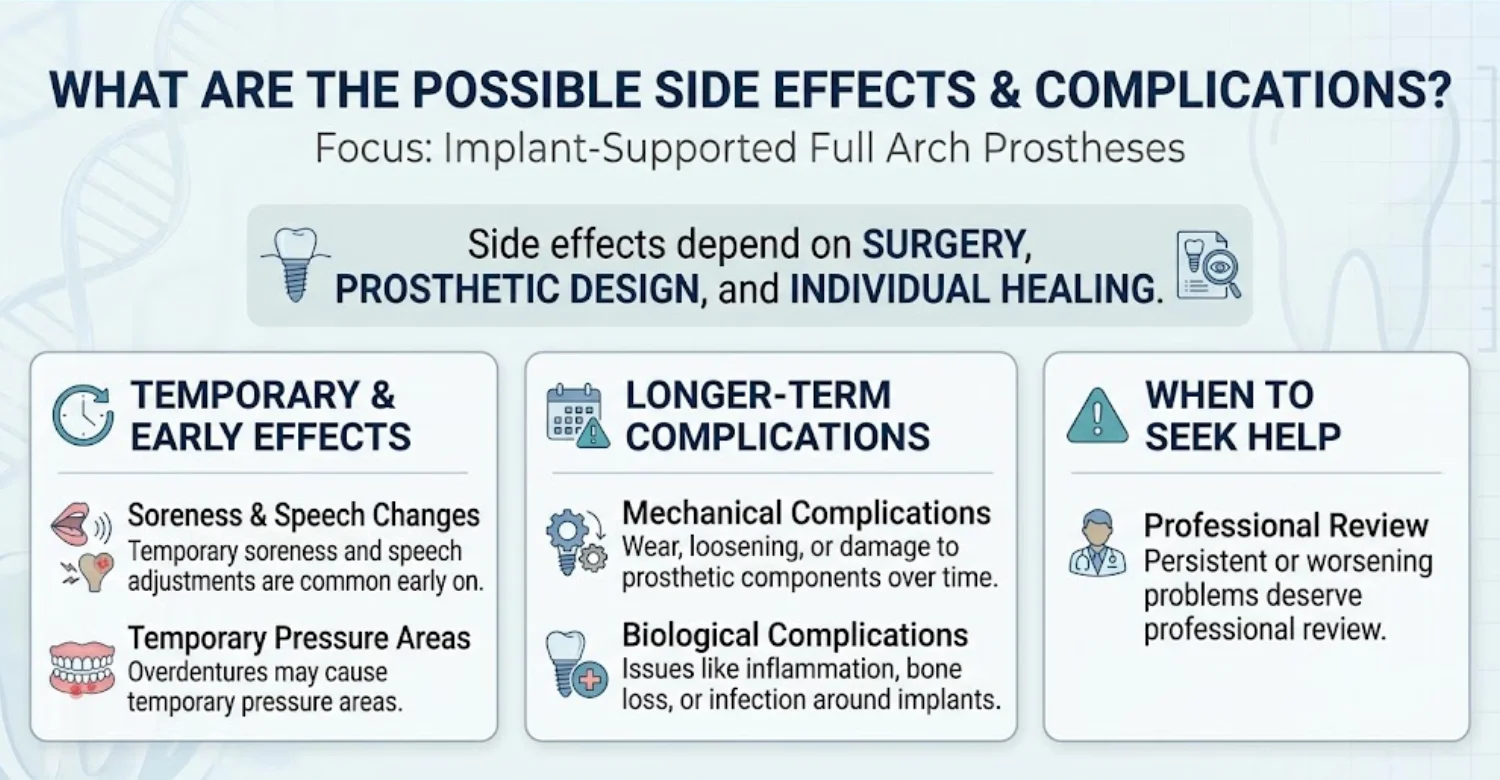
Common short-term effects after implant or prosthetic treatment
Mild soreness can follow implant placement or prosthetic adjustment. Gum tenderness may occur around treated areas. Chewing and speech often feel different initially. Most effects improve gradually with adaptation. Severe or worsening symptoms need prompt assessment.
Soreness, pressure areas, altered speech, or increased salivation during adaptation
A new prosthesis changes pressure across oral tissues. Removable dentures may create early sore points. Speech changes as the tongue adjusts to new tooth positions. Salivation may increase briefly because the mouth senses a new object. Persistent symptoms may indicate fit problems.
Possible irritation beneath or around a removable overdenture
Irritation occurs when pressure concentrates in one area. Poor fit increases tissue trauma. Food trapped beneath the denture can worsen soreness. Repeated sores are not normal. Adjustment or relining often improves comfort.
Mechanical complications affecting attachments or fixed prostheses
Mechanical issues include worn attachments, loose screws, and fractured teeth. These can affect chewing or retention. A sudden bite change may signal component problems. Regular reviews identify issues early. Patients should never attempt repairs themselves.
Peri-implant tissue complications and hygiene-related problems
Plaque can inflame tissues surrounding implants. Bleeding or swelling may indicate inflammation. Poor prosthetic hygiene makes plaque control harder. Persistent inflammation requires professional assessment. Implants cannot decay, but their tissues can still become diseased.
What symptoms are expected during adaptation and what symptoms are not?
Mild tenderness and speech changes are expected early. Persistent severe pain is not a routine adaptation symptom. Repeated sores should not simply be tolerated. Sudden movement, bleeding, or broken parts need assessment. Contact the clinic whenever symptoms seem unusual.
How Can Patients Get Relief From Common Adjustment Discomfort?
Most discomfort is resolved through professional assessment and adjustment. Dentists can find pressure points and modify contours. Soft foods reduce mechanical stress during early adaptation. Patients should never grind or cut the prosthesis themselves. Vitrin Clinic coordinates follow-up when adjustments are needed.
How dentists can adjust pressure points or an uncomfortable prosthesis
Dentists inspect tissues for localized pressure areas. Pressure-indicating materials reveal high-contact regions. Acrylic or occlusion can then be adjusted conservatively. Overdenture attachment seating is also checked. Repeated problems may indicate a larger design issue.
Practical measures for temporary soreness and irritation
Follow the postoperative instructions from your clinician. Keep hygiene gentle but consistent. Choose softer foods for the first days. Avoid applying unapproved products beneath the prosthesis. Do not mask poor fit with excessive adhesive.
Eating and chewing tips during the adaptation period
Start with soft foods needing little chewing force. Cut food into smaller pieces. Chew evenly on both sides where possible. Increase food texture gradually as comfort improves. Note any area that becomes sore repeatedly.
Why patients should not modify the prosthesis at home
Home modification can damage the prosthesis or change the bite. Removing material may create new pressure areas. Cutting components can weaken the structure. Attachment changes may affect the implant connection. Uncomfortable areas should always be assessed professionally.
When discomfort needs professional reassessment
Discomfort that persists or worsens needs reassessment. Repeated sores suggest unresolved pressure. Sudden pain or a changed bite may indicate movement. Bleeding around implants also requires evaluation. Loose or broken parts should never remain untreated.
Warning Signs: When Should You Contact Your Dentist?
Warning signs involve pain, inflammation, movement, or prosthetic damage. Persistent symptoms are not normal adaptation. Sudden changes may indicate mechanical or biological complications. Early assessment can prevent progression. Prompt contact matters most after surgery or prosthesis delivery.
Persistent or worsening pain after treatment
Pain that increases instead of improving deserves assessment. Infection, overload, or tissue irritation may be responsible. Patients should not self-diagnose the cause. The clinician can examine the implants and prosthesis. International patients should know who to contact after returning home.
Prosthesis movement, looseness, or a sudden change in bite
Sudden movement often indicates a mechanical problem. Overdentures may lose retention from attachment wear. A fixed bridge should never become mobile. Stop forcing the prosthesis into position. Early assessment prevents further damage.
Bleeding, swelling, or persistent inflammation around implants
Persistent bleeding around implants needs evaluation. Swelling may indicate inflammation or infection. Lasting redness should also be checked. Examination may include probing or imaging. Report symptoms even when the prosthesis feels stable.
Repeated denture sores or pressure injuries
Recurring sores usually indicate an unresolved fit issue. The bite may also contribute to tissue trauma. Adhesive alone should not be used to manage them. Adjustment or relining may solve the problem. Replacement may be needed when fit is lost.
Prosthesis fracture, broken attachments, or loose components
Broken teeth affect function and appearance. Fractures may leave sharp edges. Broken attachments reduce retention, and loose parts change the bite. Avoid hard foods until assessed. Many components can be replaced without a full remake.
Signs that require prompt professional evaluation
Severe pain or rapid swelling needs prompt evaluation. Sudden bleeding around implants also deserves attention. Fever or systemic symptoms require medical assessment. Do not delay because treatment happened abroad. Vitrin Clinic can help coordinate international follow-up.
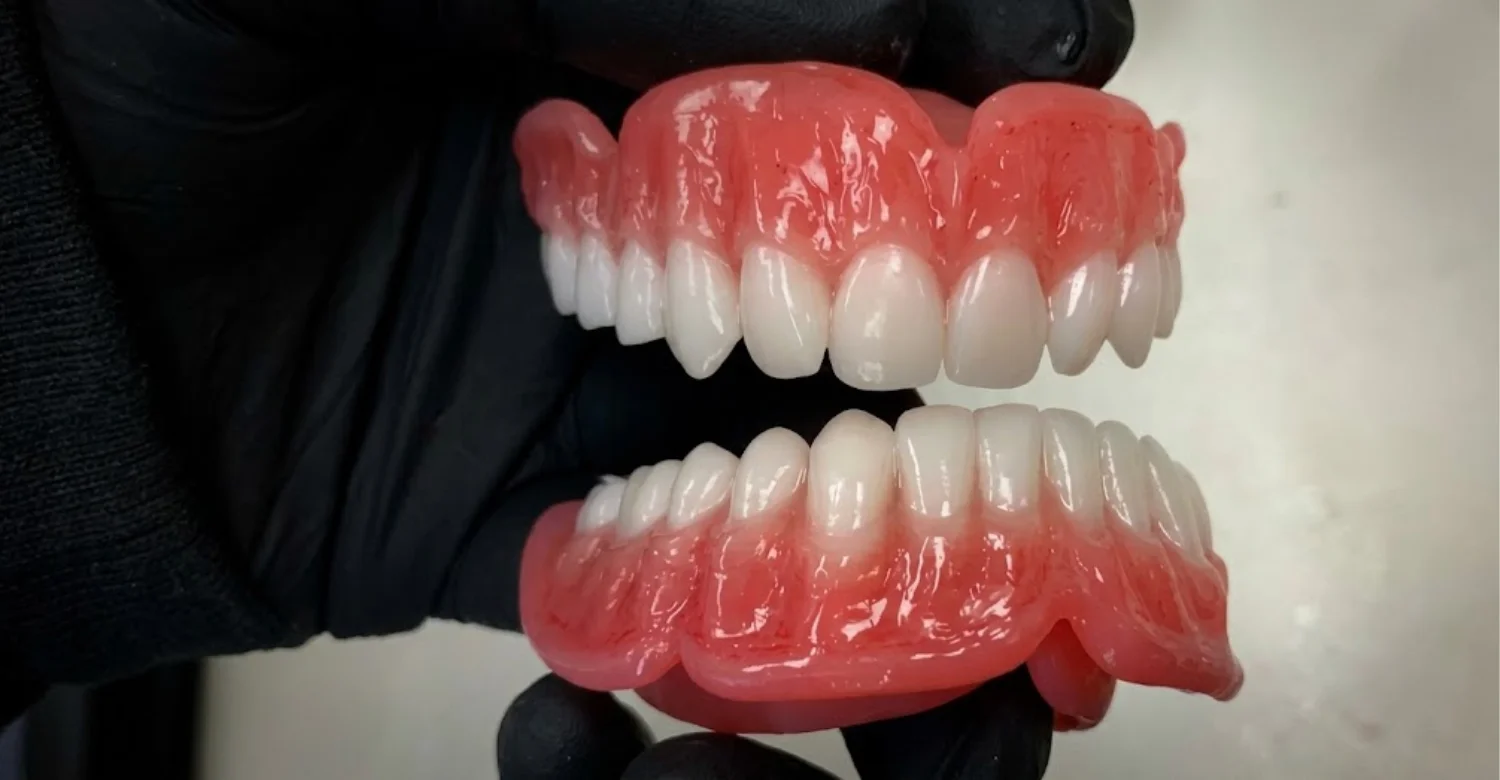
Note : All images used are for editorial and illustrative purposes only and may not originate from the original news provider or associated company.
How Can Complications Be Prevented and Long-Term Results Maintained?
Long-term success depends on daily hygiene and professional monitoring. Fixed restorations need cleaning around implant-supported contours. Overdentures need cleaning of both dentures and attachments. Bite forces should be monitored over time. Complications cannot be eliminated, but they can be managed.
Daily cleaning for fixed implant prostheses
Brush accessible surfaces using the technique your dental team recommends. Clean beneath the bridge where instructed. Interdental brushes reach areas around implants. Water flossers help many patients. Aggressive brushing does not improve cleaning.
Daily cleaning for removable implant overdentures
Remove the overdenture as instructed. Brush it gently outside the mouth with suitable products. Clean implant attachments and surrounding gums carefully. Avoid hot water, which can distort some dentures. Inspect attachments regularly for wear. Follow manufacturer instructions for any soaking solution. Clean the denture every day, even when it looks clean.
Interdental brushes, water flossers, and other hygiene aids
Different prostheses require different hygiene tools. Interdental brushes clean around implant-supported contours. Water flossers flush debris from difficult spaces. Threader floss suits selected fixed designs. Consistency matters more than collecting many tools.
Professional implant maintenance and recall appointments
Recalls allow assessment of implants and prosthetic components. Professional cleaning reaches areas missed at home. Radiographs are taken when clinically indicated. Recall intervals depend on individual risk. Follow-up should continue even without symptoms. Patients with maintenance difficulties may need closer monitoring. Prevention and early intervention protect long-term implant health.
How attachment replacement can affect overdenture maintenance
Worn inserts lose retention over time. Replacing them can restore secure retention. Abutments and denture fit should be checked simultaneously. Insert replacement alone may not fix an underlying fit problem. In Fixed Prosthesis vs 3D Printed Overdenture maintenance, this is a predictable removable cost.
Protecting prostheses from excessive bite forces
Never use your prosthesis to open packages. Very hard foods increase mechanical loading. Bruxism raises fracture and wear risks. A night guard may suit selected patients. Report bites change early.
Why regular follow-up remains important even when the prosthesis feels comfortable
Implant problems may develop without pain. Early tissue inflammation is often subtle. Prosthetic wear progresses gradually. Regular examinations catch changes before major complications. Keep scheduled appointments after returning home.
Average Implant-Supported Full Arch Prosthesis Cost in
US
UK
Turkey
Prices vary with implant brand, materials, laboratory work, imaging, surgery, and clinic. The ranges below are planning references, not fixed quotations. A Fixed Prosthesis vs 3D Printed Overdenture cost gap exists in every market. Exact quotations always require clinical assessment.
Average US cost for a fixed full-arch implant prosthesis
US fixed full-arch prices vary significantly between clinics. Published 2026 guides report roughly 15,000–30,000 per arch. Complex surgery or premium materials may cost more. Some quotes bundle implants and teeth, while others separate fees. Request an itemized treatment plan.
Treatment | Typical 2026 Planning Cost | Unit |
Fixed full-arch implant prosthesis | 15,000–30,000 | Per arch |
Typical 2026 planning range: about 15,000–30,000 per arch, with case complexity and prosthetic material affecting the final quote
Treat this range as a planning band, not a promise. Complex cases can exceed it. Zirconia and premium restorations add laboratory costs. Confirm whether temporary and definitive prostheses are included. Low headline prices may exclude major stages.
Average US cost for an implant-supported overdenture
US overdentures usually cost less than fixed full-arch rehabilitation. One 2026 guide reports about 8,000–15,000 per arch. Implant number and attachment system strongly influence price. Additional procedures increase the total. Compare implants, attachments, materials, and maintenance coverage.
Treatment | Typical 2026 Planning Cost | Unit |
Implant-supported overdenture | 6,000–18,000 | Per arch |
Typical 2026 planning range: about 6,000–18,000 per arch
This range covers simpler and more complex cases. Implant numbers and attachments drive the final price. Prosthetic material also changes the total. Some quotes include imaging and surgery, others do not. Written plans allow the most useful comparison.
Average UK cost for a fixed full-arch implant prosthesis
UK private prices commonly fall around $10,000–$25,000 per arch. London fees often exceed regional averages. Material selection influences cost significantly. Patients should compare prices and understand private charges. Confirm that temporaries and final teeth are included.
Treatment | Typical 2026 Planning Cost | Unit |
Fixed full-arch implant prosthesis | $10,000–$25,000 | Per arch |
Published median in some datasets | Around $12,500 | Per arch |
Typical 2026 private-market planning range: about $10,000–$25,000 per arch, with published medians around $12,500 in some market datasets
This range offers a useful planning framework. UK clinics vary substantially in pricing. A published median is not a personal price prediction. Individual anatomy may require extra procedures. Request an itemized private quote.
Average UK cost for an implant-supported overdenture
UK implant-retained dentures usually cost less than fixed bridges. One guide lists about $4,000–$8,000 per arch. Implant number and attachments are key variables. Some packages include fabrication and follow-up. Extra imaging or surgery increases costs. Fixed Prosthesis vs 3D Printed Overdenture pricing gaps in the UK mirror other markets.
Treatment | Typical 2026 Planning Cost | Unit |
Implant-supported overdenture | $4,000–$12,000 | Per arch |
Typical 2026 planning range: about $4,000–$12,000 per arch, depending on implant number and attachment design
This is a broad planning estimate. More implants raise surgical costs. Premium attachments add laboratory expenses. Ask about future insert replacement fees. A lower starting fee may not mean lower lifetime spending.
Average Turkey cost for a fixed full-arch implant prosthesis
Turkey remains a major destination for full-arch implants. One 2026 guide reports 3,250–8,450 per jaw for All-on-4. Other Istanbul sources start around $3,400. These figures show substantial market variation. Compare what each package actually includes.
Treatment | Typical 2026 Planning Cost | Unit |
All-on-4 full-arch treatment | 3,100–5,600 | Per arch |
Higher-complexity / premium cases | Up to $8,450 | Per arch |
Typical 2026 Istanbul planning range: about 3,100–5,600 for All-on-4, with computer-guided or premium-material cases reaching higher ranges
This range orients patients for selected Istanbul packages. Implant brand affects the price. Prosthetic material changes the final amount. Guided surgery and premium laboratories increase costs. Final quotes follow clinical assessment.
Average Turkey cost for an implant-supported overdenture
Turkey overdenture pricing depends on implant number and attachments. Removable restorations usually cost less than fixed bridges. Packages differ in included components. Confirm attachments and laboratory work are covered. Travel services should not be confused with clinical value.
Treatment | Typical 2026 Planning Cost | Unit |
Implant-supported overdenture | $2,000–$6,000 | Per arch |
Typical 2026 planning range: about $2,000–$6,000 per arch depending on implant number and attachment system
This range serves as a broad estimate. Actual prices depend on scope and materials. Compare implant count and attachment system. Confirm the denture material used. Ask how future maintenance is arranged.
Average Full-Arch Implant Costs: US vs UK vs Turkey
Country | Fixed Full-Arch Prosthesis | Implant-Supported Overdenture |
United States | 15,000–30,000 / arch | 6,000–18,000 / arch |
United Kingdom | $10,000–$25,000 / arch | $4,000–$12,000 / arch |
Turkey | 3,100–5,600 / arch | $2,000–$6,000 / arch |
These figures are planning ranges from the provided reference data, not fixed quotations or guaranteed market averages. Currency and treatment inclusions should be compared carefully.
What is usually included in an implant-supported full-arch quote?
A full quote may cover implants, abutments, imaging, temporaries, and final teeth. Some packages add extractions or accommodation. Others charge these separately. Request a written breakdown before travel. Ask how follow-up works after returning home.
Potential Component | May Be Included |
Implants | ✓ |
Abutments or attachments | ✓ |
Temporary prosthesis | Varies |
Definitive prosthesis | ✓ |
Imaging | Varies |
Extractions | Varies |
Follow-up | Varies |
Accommodation / transport | Package-dependent |
What can increase the final cost?
Bone grafting and extractions add surgical fees. Sedation increases costs in selected cases. Premium implants and zirconia raise prices. Computer-guided planning may add fees. Ask which costs are conditional before comparing packages.
Cost Factor | Potential Impact |
Bone grafting | Additional surgical and material costs |
Extractions | Additional surgical fees |
Sedation | Additional professional/facility fees |
Implant brand | Can change treatment cost |
Prosthetic material | Premium options may cost more |
Laboratory work | More complex designs may increase fees |
Additional treatment stages | Can increase the overall cost |
Fixed prosthesis vs 3D printed overdenture: cost comparison without assuming the cheapest option is the best
Cost comparison should cover the entire treatment pathway. Fixed Prosthesis vs 3D Printed Overdenture pricing reflects different surgical and prosthetic requirements. Removable treatment often costs less initially. Attachment replacement adds future expenses, while fixed repairs cost differently. Compare lifetime value rather than headline price.
Factor | Fixed Prosthesis | 3D Printed Overdenture |
Initial cost | Generally higher | Generally lower |
Removability | Fixed | Removable |
Maintenance | Prosthetic repairs may be needed | Attachments/inserts may need replacement |
Material options | Zirconia, metal-ceramic, hybrid | 3D-printed and other denture materials |
Long-term cost | Depends on repairs and maintenance | Depends on replacements and maintenance |
Why treatment scope and long-term maintenance should be compared alongside the headline price
A price means little without knowing its contents. Two clinics may quote similar-looking treatment differently. One may include final teeth, another only temporary. Maintenance coverage also differs. Separate clinical costs from travel services.
Tips for Patients
Treat full-arch treatment as a long-term clinical decision. Online photos cannot reveal bone anatomy or bite. Package prices rarely show every clinical detail. Fixed Prosthesis vs 3D Printed Overdenture should be compared through function, hygiene, maintenance, and cost. Understand each treatment stage before scheduling care.
Questions to ask before choosing fixed or removable implant rehabilitation
Ask how many implants are planned and why. Ask whether the prosthesis is removable. Ask which attachments and materials will be used. Ask how repairs and follow-up work after returning home. These answers reveal major differences between packages.
Ask which implant system and prosthetic materials are being used
Implant brands differ in components and availability. Prosthetic materials differ in mechanical properties. Request exact product names when possible. A premium brand alone does not guarantee success. Clinical planning remains the main determinant.
Ask whether the quoted price includes the temporary and definitive prostheses
Some quotes cover only the surgical stage. Others include both temporary and final teeth. This difference creates large price gaps. Ask when the final prosthesis will be delivered. Clear pricing prevents unexpected charges.
Ask how repairs, attachment replacement, and maintenance are handled
Discuss maintenance before treatment starts. Ask whether insert replacement costs extra. Ask how fractured teeth are repaired. Ask whether laboratory files are stored digitally. In Fixed Prosthesis vs 3D Printed Overdenture choices, these answers shape long-term convenience.
Ask whether CBCT and digital planning are included
CBCT provides three-dimensional information when clinically needed. Ask whether it appears in the quotation. Digital scanning supports prosthetic planning. Neither replaces clinical examination. Every digital step should have a clear purpose.
Bring previous dental records and implant information when available
Previous records save time during complex rehabilitation. Bring implant cards and earlier CBCT scans. Existing laboratory files help with replacements. Mention any past implant failures or complications. Complete information supports safer planning.
Avoid choosing a prosthesis based only on online photos or package price
Photos show appearance but hide biological conditions. They cannot reveal implant positions or bone quality. Package prices may omit essential stages. Testimonials cannot predict individual outcomes. Choose based on examination, imaging, and a clear maintenance plan.
Full-Arch Implant Treatment Planning at Vitrin Clinic
At Vitrin Clinic, full-arch planning starts with individualized assessment. Fixed Prosthesis vs 3D Printed Overdenture options are weighed through anatomy, function, hygiene, and goals. CBCT and 3D scanning are used when clinically appropriate. International patients receive coordinated appointment planning. Recommendations depend on examination and diagnostic findings.
How full-arch implant patients are clinically assessed before prosthetic selection
The assessment reviews oral structures before choosing a restoration. Teeth and gums are evaluated first. Implant sites are assessed through examination and imaging. Bite, smile line, and facial support are considered. The design is selected after integrating these findings.
How digital X-rays, CBCT, and 3D scanning can support individualized treatment planning when clinically appropriate
Digital X-rays show teeth and supporting structures. CBCT adds three-dimensional bone information. Intraoral scans capture digital surface anatomy. Together they support surgical and prosthetic planning. Not every patient needs every technology.
How the condition of the teeth, gums, oral tissues, chewing muscles, and joints can influence full-arch planning
Full-arch rehabilitation involves more than missing teeth. Gum health affects implant preparation and hygiene planning. Oral tissues influence comfort and support. Muscles and jaw joints affect loading and bite. Any Fixed Prosthesis vs 3D Printed Overdenture plan must account for them.
How implant-supported fixed and removable restoration options are evaluated according to the individual case
The team weighs implant position, bone, space, and occlusion. Hygiene ability and maintenance expectations also count. Facial support needs may favor removable designs. Stability goals may favor fixed bridges. Materials are chosen after the design is settled.
Clinical Note
The objective is matching prosthetic design to clinical needs. Fixed and removable restorations both provide meaningful rehabilitation. Digital manufacturing supports efficiency and communication. It does not determine the clinical indication. Maintenance should be discussed before delivery.
Dr. Rifat Alsaman’s perspective on matching the prosthetic design to clinical needs rather than choosing by appearance alone
Dr. Rifat Alsaman emphasizes individualized planning over appearance-led choices. Aesthetics matter but cannot override anatomy and function. Implant positions must support the proposed restoration. Hygiene access must remain practical. Patients should understand expected maintenance from the start.
Internal-link opportunity: Dental Implants and full-arch treatment information on the Vitrin Clinic treatments section
Link this section to the Vitrin Clinic treatments page. Suggested anchors include “Dental Implants” and “full-arch implant treatment.” A second link can target All-on-4 or All-on-6. Avoid repeating identical anchor text. Links should strengthen relevance and navigation.
How Vitrin Clinic Supports Your Treatment Journey
Vitrin Clinic supports international patients through coordinated treatment planning. Support covers consultation, diagnostics, appointments, transport, accommodation, and follow-up. Digital records connect clinical and laboratory teams. Each Fixed Prosthesis vs 3D Printed Overdenture plan follows individual findings. Decisions still depend on examination.
Initial consultation and individualized treatment assessment
The consultation gathers information needed for planning. The team reviews oral findings, expectations, and previous treatment. Imaging and scans may be requested when appropriate. Fixed and removable options are discussed openly. Recommendations follow clinical findings.
Coordinating digital diagnostics and treatment planning for international patients
International treatment requires careful coordination before arrival. Existing records can be reviewed in advance. Digital scans support preliminary planning. On-site examination remains necessary before final decisions. Coordinated scheduling reduces unnecessary gaps. A Fixed Prosthesis vs 3D Printed Overdenture recommendation is confirmed only after examination. Preliminary reviews cannot replace in-person assessment.
Using digital records to support communication between clinical and laboratory teams
Digital records communicate tooth positions and prosthetic contours. Laboratory teams review the same design information. This improves consistency between clinical and laboratory stages. Changes are documented digitally. Clinical validation is still required before fabrication.
Treatment coordination before, during, and after full-arch rehabilitation
Full-arch treatment may involve several clinical stages. These include diagnostics, surgery, temporaries, healing, and final teeth. Timing depends on individual requirements. Travel plans may need to match treatment stages. Patients receive clear guidance after returning home.
International patient support, appointments, transport, accommodation, and follow-up coordination
International treatment involves more than the procedure itself. Patients may need help with appointments and transport. Accommodation planning simplifies multi-stage treatment. Follow-up arrangements are set before travel. Clinical and travel services should be understood separately.
Internal-link opportunities to relevant Vitrin Clinic full-mouth, implant, All-on-4/6/8, and prosthetic treatment content
Internal links can build a logical treatment cluster. Link Dental Implants from implant explanations. Link All-on-4 and All-on-6 from full-arch sections. Link full-mouth rehabilitation from comprehensive discussions. Use descriptive anchors that match each destination.
.webp)
.webp)
.webp)
.jpg)
.jpg)
.jpg)
.jpg)
Evidence-Based Guidance and Clinical Sources
Evidence should come from systematic reviews, meta-analyses, and professional organizations. Fixed restorations often score higher for stability and chewing. Overdentures provide strong outcomes and easier cleaning. Fixed Prosthesis vs 3D Printed Overdenture evidence should be read in clinical context. Study design always affects interpretation.
Peer-reviewed evidence on implant-supported fixed prostheses and overdentures
A review of ten comparative trials favored fixed prostheses in several patient outcomes. Ease of cleaning favored overdentures in that analysis. Another review included 28 studies and 1,457 patients. Both treatments produced large improvements in patient-reported outcomes. These findings support individualized selection.
Evidence on full-arch implant rehabilitation and prosthetic complications
A 2025 meta-analysis included 16 studies and 5,568 implants. Implant survival was 94.5% for overdentures and 98.5% for fixed restorations. Baseline conditions varied between included studies. These figures do not predict individual outcomes. Complication patterns differ by design and material.
Evidence on digital dentistry, CAD/CAM, and 3D printed denture workflows
Digital denture evidence continues expanding. A 2026 review reported clinical data on 3D-printed complete dentures. Earlier meta-analysis found CAD/CAM dentures improved retention and reduced working time. Another review found no clear difference between printed and milled dentures. Interpretation should remain cautious. Fixed Prosthesis vs 3D Printed Overdenture decisions should reflect this evolving evidence.
Appropriate authoritative sources to reference
Authoritative sources strengthen trustworthiness and EEAT. ADA patient guidance supports denture-care advice. PubMed provides peer-reviewed scientific literature. EFP supports peri-implant maintenance information. Check sources during every future article update.
ADA, AAE, EFP, NIH/PubMed, NIDCR, CDC, WHO, and relevant peer-reviewed prosthodontic literature
ADA supports patient-focused oral-health guidance. PubMed indexes peer-reviewed research. NIDCR provides research-based patient information. CDC and WHO add public-health context. Match each claim with the most appropriate authority.
Ready to transform your smile?
Talk to our team and get a personal FREE treatment plan.
Key Takeaways
Fixed Prosthesis vs 3D Printed Overdenture is not a simple technology contest. One describes a fixed design. The other combines removable retention with digital manufacturing. Both implant-supported approaches show strong outcomes. The decision should follow anatomy, function, hygiene, and patient priorities.
Fixed prosthesis vs 3D printed overdenture: the main clinical decision
The main decision is whether fixed or removable rehabilitation fits the patient better. Manufacturing should be considered separately. Printing does not change an overdenture's removable nature. Fixed Prosthesis vs 3D Printed Overdenture choices depend on clinical feasibility. Vitrin Clinic evaluates these factors through individualized planning.
The most important factors affecting suitability, comfort, hygiene, and maintenance
Key factors include implant location and bone anatomy. Restorative space and occlusion also matter. Hygiene ability and dexterity strongly shape the choice. Facial support may favor tissue-replacing prosthetics. Cost and future repairs complete the picture.
Why 3D printing is a manufacturing approach rather than a guarantee of clinical superiority
Printing describes the manufacturing process only. Clinical results depend on the complete workflow. Material, design, curing, finishing, and quality control all matter. Printed and milled denture research remains mixed. Judge technology through clinical outcomes.
Why persistent pain, swelling, bleeding, looseness, or prosthesis damage should be professionally assessed
Persistent symptoms may signal mechanical or biological problems. Early assessment helps identify the cause. Never self-adjust implant components. Repeated pressure injuries also require review. Prompt communication matters after implant treatment.
Why an individualized clinical and digital assessment is essential before choosing a full-arch restoration
Digital planning improves visualization and communication. Clinical examination provides information scans cannot capture. CBCT adds bone data when indicated. Together, they support a safe Fixed Prosthesis vs 3D Printed Overdenture decision. Recommendations must remain patient-specific.
At Vitrin Clinic
Dental implant treatment at Vitrin Clinic approaches full-arch rehabilitation through individualized assessment and coordinated planning. Fixed Prosthesis vs 3D Printed Overdenture options are weighed against implant position, tissues, occlusion, and hygiene. Digital X-rays, CBCT, and 3D scanning support planning when appropriate. Digital records assist communication with laboratory teams. International patients receive coordinated appointments, transport, accommodation, and follow-up support. Recommendations depend on clinical examination and diagnostic findings. Visit the Vitrin Clinic treatments section for dental implant and full-arch information.
Reference
FAQs
Dr. Rifat Alsaman has more than 5 years of clinical experience in dentistry and currently serves as the Head of the Medical Team at Vitrin Clinic. He is dedicated to providing exceptional patient care, overseeing treatment planning, and ensuring the highest clinical standards across the team. His expertise, attention to detail, and commitment to continuous professional development have helped countless patients achieve healthier, more confident smiles.


