General Dentistry
October 6, 2026
What Are Ergocalciferol Oral Supplements and How Do They Work?
 Dr. Rifat Alsaman
Vitamin D supports calcium absorption, phosphorus balance, bone mineralization, and normal muscle function. Vitamin D2 is the form known as ergocalciferol. It differs chemically from vitamin D3, although both forms need activation inside the body. Ergocalciferol Oral Supplements can correct low vitamin D levels when diet and sunlight are not enough. Dosing should still match the patient’s laboratory results, medical history, and treatment purpose. The liver first converts vitamin D into 25-hydroxyvitamin D. The kidneys then produce the active hormone called calcitriol. Blood tests usually measure 25-hydroxyvitamin D because it reflects vitamin D stores more reliably. Vitrin Clinic recommends discussing relevant supplements during medical and dental history reviews.
What Are Ergocalciferol Oral Supplements?
These products contain vitamin D2, a fat-soluble form of vitamin D. Ergocalciferol Oral Supplements may come as capsules, tablets, liquids, or other oral formulations. Prescription products can contain much higher doses than routine dietary supplements. Higher strengths need clinical instructions because vitamin D accumulates in the body. Ergocalciferol is biologically inactive when swallowed. It requires metabolic conversion before producing its main hormonal effects. The liver converts it into 25-hydroxyvitamin D. The kidneys then produce 1,25-dihydroxyvitamin D. Product strength is shown in international units or micrograms. One microgram of vitamin D2 equals 40 IU. A 50,000 IU capsule therefore contains 1.25 milligrams.
Ergocalciferol Explained: What Is Vitamin D2?
Vitamin D2 is one of the two main nutritional forms of vitamin D. It is produced from ergosterol, which occurs naturally in fungi and yeast. After swallowing, vitamin D2 is absorbed through the digestive system. It then travels through the bloodstream bound to carrier proteins. The liver converts it into 25-hydroxyvitamin D2. The kidneys and other tissues complete further activation. Its activity depends on absorption, dose, baseline status, and patient characteristics. D3 is often preferred for routine replacement because it usually raises total 25-hydroxyvitamin D more.
What Does Ergocalciferol Do in the Body?
Vitamin D helps the intestine absorb calcium and phosphorus from food. Vitamin D also contributes to normal muscle function and nerve signaling. After activation, it binds vitamin D receptors in many tissues. Children with severe deficiency can develop rickets. Adults can develop osteomalacia, which involves defective bone mineralization. Muscle weakness may accompany clinically important deficiency. Ergocalciferol Oral Supplements address these deficiency effects rather than every chronic disease. Current evidence does not support high-dose vitamin D as a universal preventive treatment. Vitrin Clinic therefore favors evidence-based supplement discussions over wellness claims.
Ergocalciferol Supplements vs Other Forms of Vitamin D
Vitamin D products may contain D2, D3, or activated metabolites. D2 and D3 are nutritional forms that require metabolic activation. Calcifediol is already 25-hydroxylated and can raise blood levels faster. Routine supplementation often uses D3 because it generally produces higher total 25-hydroxyvitamin D. D2 products remain an established medical option for selected patients. Absorption, body size, kidney function, liver function, adherence, and interacting medicines all matter. A clinically appropriate formulation matters more than marketing language.
Vitamin D2 and 25-Hydroxyvitamin D
Vitamin D status is commonly assessed using total 25-hydroxyvitamin D. This measurement includes metabolites from both vitamin D2 and D3. It is different from measuring active calcitriol. The National Academies link levels below 12 ng/mL with deficiency risk. Levels from 12 to below 20 ng/mL may indicate inadequacy. Levels of 20 ng/mL or higher are adequate for most people. The Endocrine Society does not recommend routine testing in healthy people without an indication. Clinicians should interpret values together with symptoms and circumstances.
Vitamin D2 vs Vitamin D3
Vitamin D2 and D3 share similar basic nutritional functions. Comparative research generally finds D3 more effective at raising total 25-hydroxyvitamin D. A 2024 meta-analysis included 20 comparative studies. Daily D2 produced roughly 40% smaller increases than D3 in analyzed trials. Another meta-analysis of 24 studies included 1,277 participants. It also found higher overall efficacy for D3 in improving vitamin D status. These findings do not make Ergocalciferol Oral Supplements clinically useless. D2 can still correct deficiency and remains a recognized treatment option. The best form depends on indication, formulation, patient factors, and availability.
Discover potential causes if you wonder why is my tooth sharp all of a sudden?
What Are the Benefits of Ergocalciferol Vitamin D2 Supplements?
The main benefit is correcting inadequate vitamin D status. This supports normal calcium and phosphate physiology. Treatment matters most when deficiency results from low intake, poor absorption, or medical conditions. A deficient patient responds differently from someone whose level is already adequate. Ergocalciferol Oral Supplements should not be promoted as a cure-all. Large trials show no consistent prevention of heart disease or diabetes in sufficient populations. The 2024 Endocrine Society guideline advises against routine empiric supplementation above dietary requirements for healthy adults under 50.
Supporting Calcium Absorption and Bone Health
Vitamin D improves intestinal calcium absorption and supports normal phosphate handling. These functions are essential for maintaining mineralized bone tissue. Severe deficiency can cause osteomalacia in adults and rickets in children. Vitamin D cannot fully compensate for inadequate calcium intake over time. Adult vitamin D requirements are around 600 IU daily through age 70. Requirements rise to 800 IU daily after age 70. These figures describe recommended intake, not therapeutic deficiency dosing.
Correcting or Preventing Vitamin D Deficiency
Correction begins by understanding why the level is low. Some people need dietary changes and routine supplementation. Others need prescription-strength Ergocalciferol Oral Supplements because their deficiency is substantial. Older guidelines described 50,000 IU weekly for eight weeks as one common adult regimen. Patients with obesity, malabsorption, or interacting medicines may need different strategies. One trial in thyroid and parathyroid patients found an average rise of 13.4 ng/mL after eight weeks. Success reached 82% in the eight-week group. Current practice therefore uses individualized assessment rather than automatic dosing.
Supporting Normal Muscle and Nerve Function
Vitamin D participates in normal neuromuscular physiology. Severe deficiency can contribute to muscle weakness and reduced physical function. Supplementation does not consistently improve strength in people with adequate levels. One study of older adults found no significant strength improvement after supplementation. Muscle weakness may have many causes, including medicines and other nutritional deficiencies. Persistent symptoms deserve broader medical evaluation. Vitrin Clinic can document supplement use during dental history-taking when patients report ongoing concerns.
What Benefits Should Patients Realistically Expect?
The clearest benefit is restoring vitamin D status when deficiency truly exists. Symptom improvement depends on whether deficiency caused those symptoms. Bone pain and weakness from severe deficiency may improve after adequate correction. Patients should not expect dramatic effects on weight, immunity, mood, or longevity. Ergocalciferol Oral Supplements become more relevant when an established medical indication exists. The practical goal is appropriate vitamin D status, not the highest laboratory number.
Who May Need Ergocalciferol Supplements for Vitamin D Deficiency?
People with documented deficiency may benefit when a clear clinical indication exists. Risk factors help explain why vitamin D becomes low. These include limited sun, low dietary intake, poor absorption, and certain medical conditions. People with obesity or malabsorption may need different doses than others. However, risk does not automatically mean deficiency is present. The 2026 Türkiye consensus recommends targeted testing in high-risk adults rather than universal screening. It also names D3 as the preferred agent for most adults.
Common Reasons Vitamin D Levels Become Low
Several pathways can reduce vitamin D availability in the body. Limited ultraviolet exposure reduces skin production of vitamin D3. Low intake also contributes where fortified foods are uncommon. Digestive disorders may reduce absorption of fat-soluble vitamins. Liver or kidney problems can interfere with vitamin D metabolism. Certain medicines can alter vitamin D handling. A patient with several risk factors faces greater risk of persistent deficiency. This is one reason vitamin D dosing does not follow a single standard rule.
Limited Sun Exposure
Sunlight helps the skin produce vitamin D3. People who spend little time outdoors make less vitamin D. Indoor work, long hospital stays, and limited mobility can all contribute. Sunscreen lowers ultraviolet exposure but remains important for skin cancer prevention. Latitude, season, clothing, skin pigmentation, and time of day also matter. Outdoor time alone cannot reliably predict vitamin D status. Food and supplements can help when sunlight is limited.
Low Dietary Intake
Few foods naturally contain vitamin D. Fatty fish provide useful amounts, while fortified dairy and plant drinks also help. Restrictive diets may supply less vitamin D. Diet should be reviewed before starting long-term supplementation. Food rarely corrects substantial deficiency quickly. However, dietary improvements can support maintenance after treatment. National guidance favors meeting needs through food whenever practical.
Problems With Fat Absorption
Vitamin D is fat-soluble, so fat digestion affects its absorption. Pancreatic or bile disorders can interfere with fat-soluble vitamins. Celiac disease and inflammatory bowel disease may also reduce uptake. Persistent deficiency despite adequate dosing may warrant evaluation for malabsorption. Older Endocrine Society guidance listed malabsorption as a reason for higher treatment doses. Such dosing should always be medically supervised.
Kidney or Liver Conditions
The liver produces 25-hydroxyvitamin D, and the kidneys produce calcitriol. Significant organ dysfunction can therefore alter vitamin D physiology. Chronic kidney disease may also involve mineral and bone abnormalities. Its management can include calcium, phosphate, and parathyroid hormone measurements. These patients should not raise doses based on one laboratory result. A specialist may choose a different vitamin D preparation. Monitoring becomes more important when high doses are used.
Certain Medicines
Some medicines influence vitamin D absorption or metabolism. Orlistat can reduce vitamin D absorption from food and supplements. Corticosteroids may reduce calcium absorption and impair vitamin D metabolism. Some antiseizure medicines accelerate vitamin D breakdown. Thiazide diuretics can raise hypercalcemia risk when combined with vitamin D. Patients should not stop prescribed medicines because of these interactions. Instead, supplement plans should account for the full medication list.
Who May Be at Higher Risk of Vitamin D Deficiency?
Risk rises with limited sunlight or restricted diets. Older adults may produce less vitamin D through the skin. People with obesity may have altered vitamin D distribution. Chronic liver and kidney conditions can impair vitamin D metabolism. Infants, children, and pregnant individuals have extra nutritional considerations. Risk factors are clues rather than diagnoses. Targeted testing for higher-risk groups avoids unnecessary testing in low-risk populations. When deficiency is confirmed, Ergocalciferol Oral Supplements may form part of the treatment plan.
When Supplementation May Require Medical Supervision
Medical supervision matters most with high-dose products. Some prescription capsules contain 50,000 IU per dose. DailyMed labeling states that dosing must be individualized for specific high-dose indications. Patients with hyperparathyroidism, kidney disease, or malabsorption need extra care. Pregnancy and breastfeeding also warrant review when high doses are considered. Patients using Ergocalciferol Oral Supplements should follow the prescribed regimen precisely. Never combine several vitamin D products without checking their total content.
Learn about the symptoms and risks of a tooth abscess headache
What Symptoms Can Vitamin D Deficiency Cause?
Significant deficiency may produce clear skeletal and muscular effects. However, many people with low levels have few symptoms. Symptoms alone are therefore unreliable for diagnosing deficiency. Severe deficiency can cause osteomalacia in adults and rickets in children. Fatigue and general discomfort are not specific to vitamin D deficiency. Laboratory evaluation should be used when clinically appropriate. Routine screening is not recommended for many healthy people without established indications.
Common Signs and Symptoms
Symptoms vary with severity and duration. Mild deficiency may cause no noticeable symptoms at all. More significant deficiency can cause muscle weakness and diffuse bone discomfort. Some patients struggle to climb stairs or rise from a chair. Children with severe deficiency may show delayed growth or skeletal deformities. Similar symptoms occur with anemia, thyroid disorders, and inflammatory conditions. Laboratory testing helps distinguish vitamin D deficiency from these other causes. Starting Ergocalciferol Oral Supplements without confirmation may delay another diagnosis.
Can Vitamin D Deficiency Cause Bone or Muscle Problems?
Yes, clinically significant deficiency can affect bones and muscles. Vitamin D supports the calcium and phosphate absorption that bone mineralization requires. Severe deficiency can cause osteomalacia, with bone pain and proximal muscle weakness. Children with severe deficiency can develop rickets. These conditions differ from osteoporosis, which mainly involves reduced bone mass. Correction may help when deficiency drives defective mineralization. However, supplementation does not reverse every cause of musculoskeletal pain. High doses are not a universal muscle-strengthening therapy for sufficient adults.
When Low Vitamin D May Cause Few or No Symptoms
Many people with low vitamin D feel completely well. A low result is often found while investigating another problem. Some patients notice only vague tiredness despite significant deficiency. A normal symptom review does not prove vitamin D sufficiency. Fatigue alone does not prove deficiency either. Testing decisions should rest on clinical reasoning and established indications. Current guidance discourages routine testing in many healthy adults without specific risk factors.
How Is Vitamin D Deficiency Diagnosed?
Diagnosis combines clinical context with a blood measurement. The key laboratory test is serum 25-hydroxyvitamin D. This marker reflects vitamin D stores better than active calcitriol. NASEM links levels below 12 ng/mL with deficiency risk. Levels of at least 20 ng/mL are adequate for most people. These thresholds are not universal disease cutoffs. Before prescribing treatment, clinicians consider the full clinical picture. The Endocrine Society no longer endorses threshold-based screening for healthy adults.
The 25-Hydroxyvitamin D Blood Test
This test measures the main circulating storage form of vitamin D. Laboratories may report total levels or separate D2 and D3 metabolites. It differs from 1,25-dihydroxyvitamin D testing, which suits selected situations. Results need interpretation based on units, methods, and clinical context. A single value should not trigger automatic high-dose treatment. Clinicians may also check calcium, kidney function, and parathyroid hormone.
What Vitamin D Test Results Can Tell You
A result shows whether circulating vitamin D is low, adequate, or high. NASEM uses 12 ng/mL as a key deficiency-risk threshold. Levels from 12 to below 20 ng/mL are generally considered inadequate. Levels of 20 ng/mL or higher are adequate for most people. Concentrations above 50 ng/mL may carry potential adverse effects. These values are population interpretations, not personal treatment targets. The Endocrine Society has not set universal sufficiency thresholds for disease prevention. Results should therefore never be interpreted in isolation.
When Additional Blood Tests May Be Needed
Additional tests depend on the patient’s symptoms and medical history. Over-testing raises costs without improving decision-making. However, more testing helps when symptoms persist or results remain abnormal. Patients on high-dose Ergocalciferol Oral Supplements for specific disorders may need closer biochemical monitoring. Treatment plans should match the clinical question being asked.
Calcium and Phosphate
Calcium and phosphate are closely linked to vitamin D physiology. Vitamin D increases their absorption from the intestine. Serum calcium may also rise during vitamin D toxicity. Measuring both helps separate simple deficiency from more complex conditions. Hypoparathyroidism creates especially complex relationships between these minerals and vitamin D. DailyMed labeling advises calcium and phosphorus monitoring for certain high-dose indications.
Kidney Function
The kidneys convert 25-hydroxyvitamin D into active calcitriol. Kidney disease can therefore disrupt vitamin D metabolism. Creatinine and estimated glomerular filtration rate help assess kidney function. The vitamin D preparation may differ according to disease severity. Patients should not raise doses independently after a low result. Vitrin Clinic records relevant history, while the prescribing clinician manages vitamin D therapy.
Parathyroid Hormone When Clinically Appropriate
Parathyroid hormone helps regulate calcium and phosphate balance. It may rise when vitamin D is low or calcium absorption falls. Its interpretation depends on calcium, kidney function, magnesium, and other factors. A high result does not automatically prove vitamin D deficiency. Clinicians may use PTH to investigate secondary hyperparathyroidism. It is not routinely needed for healthy people taking standard supplements.
Find out what is normal regarding pain after root canal treatment
What Is the Right Vitamin D2 Oral Supplement Dosage?
No single dose suits every patient. The regimen depends on indication, baseline level, age, body size, absorption, comorbidities, and medicines. Older Endocrine Society guidance described 50,000 IU of D2 or D3 weekly for eight weeks. Current prevention guidance is more cautious about empiric supplementation in healthy adults. The 2026 Türkiye consensus commonly uses 800 to 2,000 IU daily for many adults. High-dose Ergocalciferol Oral Supplements should never be treated as ordinary daily vitamins.
How Vitamin D2 Dosage Is Determined
Dose selection starts with the treatment purpose. A prevention dose differs from a deficiency-repletion dose. Clinicians consider the starting level and planned treatment duration. Obesity and malabsorption can reduce treatment response. Certain medicines can increase vitamin D requirements. Kidney and liver conditions may alter metabolism. The prescribing label should outrank generalized internet dosing charts. A 50,000 IU capsule is common, but it is not a daily dose.
Vitamin D2 Dosage for Vitamin D Deficiency
An older Endocrine Society guideline recommended 50,000 IU of D2 or D3 weekly for eight weeks. It described 6,000 IU daily as an alternative repletion strategy. Maintenance treatment followed successful correction. This is a historical clinical reference, not a personal prescription. The 2026 Türkiye consensus prefers D3 for most adults. Prescriptions for Ergocalciferol Oral Supplements should reflect blood results and medical conditions. Never convert a weekly 50,000 IU prescription into a daily dose.
Maintenance Dosing After Deficiency Treatment
Maintenance dosing keeps levels from falling again. It is usually lower than the initial repletion regimen. Older guidance suggested about 1,500 to 2,000 IU daily after repletion. The 2026 Türkiye consensus describes 800 to 2,000 IU daily as a common adult range. These are planning examples rather than universal prescriptions. Patients with persistent risk factors may need longer-term supplementation. Avoid adding multivitamins containing vitamin D unless the combined dose is reviewed.
Why High-Dose Ergocalciferol Should Not Be Self-Prescribed
Vitamin D accumulates in the body because it is fat-soluble. Excess intake can cause hypercalcemia and hypercalciuria. Symptoms may include nausea, vomiting, weakness, poor appetite, thirst, and frequent urination. Severe toxicity can cause kidney injury and abnormal heart rhythms. DailyMed warns that therapeutic and toxic ranges can be narrow for some indications. High-strength Ergocalciferol Oral Supplements are concentrated prescription products. People taking calcium, thiazides, or other interacting medicines need extra caution.
What to Do If You Miss a Dose
The right response depends on the schedule and timing of the next dose. Daily users should avoid taking repeated extra doses. Weekly users should not automatically double the next dose. A pharmacist can give product-specific missed-dose instructions. A medication calendar reduces missed or duplicated doses. Check multivitamins for hidden vitamin D as well. Never turn a weekly schedule into daily dosing to catch up.
Learn how oral cyclosporine affects your gums and oral health
How to Take Ergocalciferol Oral Supplements
The best routine depends on the formulation and prescribed schedule. Vitamin D is fat-soluble, so food can influence absorption. One cohort saw a 56.7% average rise in 25-hydroxyvitamin D after patients took supplements with their largest meal. Other studies found smaller or inconsistent meal effects. These studies mainly evaluated vitamin D3 rather than D2. Food timing is therefore a practical strategy rather than an absolute rule. Above all, take Ergocalciferol Oral Supplements consistently and follow the prescription label.
Should Ergocalciferol Be Taken With Food?
Taking vitamin D with food may improve absorption. A meal containing some dietary fat is a practical approach. Oil-based products may behave differently from dry tablets or capsules. Follow product-specific instructions when they are available. Consistency may matter more than finding one perfect meal. Linking the dose to a regular meal also reduces missed doses. Extremely high-fat meals are unnecessary for taking vitamin D.
What Is the Best Time to Take Ergocalciferol?
No universal morning or evening schedule is required. Adherence matters more than the exact clock time. Some people prefer breakfast because it builds a stable daily routine. Others prefer their main meal because it usually contains more fat. Weekly prescriptions are easier to remember when tied to one specific weekday. A consistent schedule reduces accidental duplication. A pharmacist can help organize timing around other medicines.
How Meal Timing Can Affect Absorption
Meal composition can change vitamin D absorption, although study results differ. In one study, taking vitamin D with the largest meal raised levels by about 56.7%. Another randomized study found 32% higher peak vitamin D3 levels with a fat-containing meal. They do not prove that every D2 product requires a fatty meal. Formulation, dose, and patient characteristics also influence bioavailability. Regular dosing with a normal meal is the safest practical approach.
Can Ergocalciferol Be Taken With Calcium or Other Supplements?
Vitamin D and calcium can be combined when clinically appropriate. Because vitamin D boosts calcium absorption, combined therapy affects serum calcium. However, extra calcium is not automatically required for everyone. NIH data note higher kidney-stone risk in a large postmenopausal calcium and vitamin D trial. Total intake should simply match the patient’s needs. Anyone taking Ergocalciferol Oral Supplements should disclose multivitamins, calcium, and magnesium products. The full daily total matters more than the brand name.
What Should You Discuss With a Doctor or Pharmacist Before Taking It?
Discuss your current medicines, supplements, and relevant medical conditions. Mention kidney disease, liver disease, malabsorption, hyperparathyroidism, or past kidney stones. Ask whether the product is for routine supplementation or deficiency treatment. Confirm the strength and frequency before taking the first dose. Check whether another multivitamin already contains vitamin D. Discuss calcium intake when high-dose therapy is prescribed. Vitrin Clinic may review supplement information during dental assessment to understand the broader treatment context.
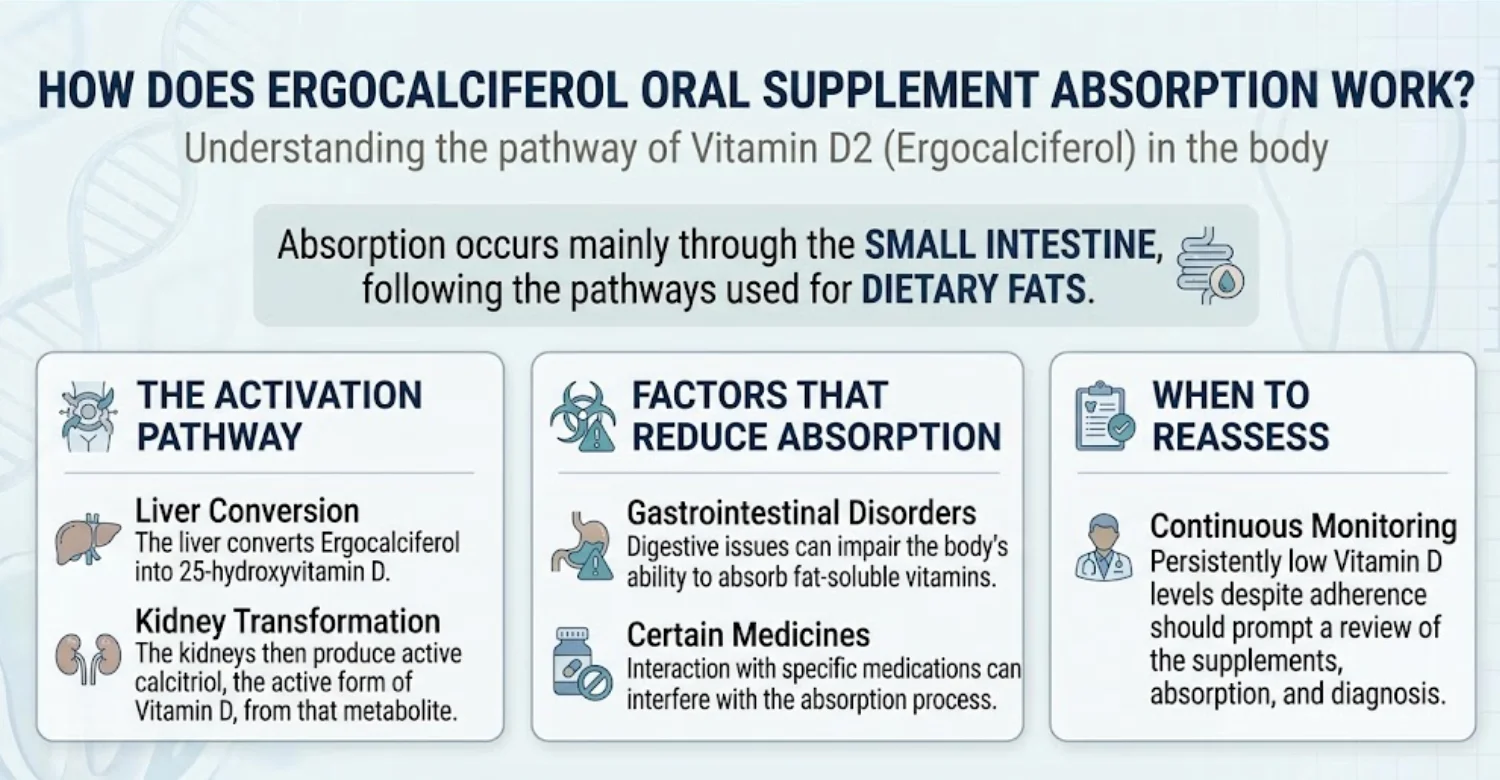
Why Vitamin D Is Fat-Soluble
Fat-soluble vitamins dissolve in dietary lipids rather than water. Vitamin D therefore relies on fat digestion for its absorption. This property also lets the body store excess vitamin D. That explains why very high intake can eventually become toxic. Consistent dosing remains more important than eating very fatty meals.
Factors That Can Reduce Vitamin D Absorption
Poor absorption can follow gastrointestinal disease, pancreatic insufficiency, bile problems, or bariatric surgery. Some weight-loss medicines also reduce absorption. Persistently low results despite reliable dosing should prompt investigation. Solutions may include a higher dose, another formulation, or treating the underlying condition. Larger doses of Ergocalciferol Oral Supplements require medical evaluation first. The 2026 Türkiye consensus notes that malabsorption and obesity may need individualized higher doses.
Malabsorption Disorders
Malabsorption disorders reduce uptake of fat-soluble vitamins. Celiac disease, inflammatory bowel disease, pancreatic disorders, and cholestasis can all contribute. Some respond to ordinary doses, while others need modified treatment. Persistent deficiency despite good adherence is an important clue. Treatment should address the cause rather than escalate vitamin D indefinitely. Severe cases may need specialist advice on dose, formulation, and monitoring.
Weight-Loss Surgery
Bariatric surgery can alter digestion and absorption. Bypassing parts of the small intestine may reduce fat-soluble vitamin uptake. Dosing depends on surgery type, laboratory findings, and diet. Self-treating with very high doses is unsafe because toxicity remains possible. Care teams often monitor vitamin D alongside calcium, iron, vitamin B12, and folate.
Certain Medicines
Orlistat reduces fat absorption and therefore reduces vitamin D absorption. Corticosteroids interfere with calcium absorption and vitamin D metabolism. Some antiseizure medicines speed up vitamin D breakdown. Thiazides reduce urinary calcium loss, raising hypercalcemia risk alongside vitamin D. Clinicians may adjust dosing or monitoring rather than stopping medicines. A complete medication list is essential when deficiency persists.
What Happens When Absorption Is Poor?
When absorption is poor, blood levels may fail to rise as expected. The patient may report taking every dose correctly. Clinicians first verify the dose and adherence. They then review gastrointestinal symptoms and interacting medicines. A higher dose or different formulation may be considered in selected patients. Persistent nonresponse to Ergocalciferol Oral Supplements can reveal an underlying medical problem.
When Treatment Monitoring May Be Needed
Monitoring matters most with high doses or complex medical conditions. Follow-up may include 25-hydroxyvitamin D and calcium. Phosphate, PTH, and kidney function can be added when relevant. The timing of repeat testing varies by treatment plan. The 2026 Türkiye consensus suggests reassessment around eight to twelve weeks. Earlier monitoring may suit specific high-risk disorders.
Understand the benefits and uses of phosphorus oral supplements
What Are Ergocalciferol Vitamin D2 Side Effects?
Most people tolerate appropriate vitamin D supplementation well. Problems usually arise when excessive amounts are taken repeatedly. Excess vitamin D raises intestinal calcium absorption. This can cause hypercalcemia and hypercalciuria. Severe toxicity can cause kidney failure, tissue calcification, or heart rhythm problems. Patients should distinguish prescribed Ergocalciferol Oral Supplements from excessive self-dosing.
Common or Mild Side Effects
Appropriately dosed vitamin D is generally well tolerated. Some patients report mild digestive symptoms that may not relate to vitamin D. Side effects become more likely when doses exceed the patient’s needs. A pharmacist can review the exact product when symptoms recur. Laboratory testing may help when toxicity is suspected. Documenting every vitamin D product helps identify accidental duplication.
Signs That Vitamin D Intake May Be Too High
Toxicity is usually linked to excessive supplemental intake. Patients may notice nausea, constipation, weakness, poor appetite, or unusual thirst. Serious toxicity may cause confusion, kidney stones, kidney injury, or abnormal heart rhythms. Risk rises when high-dose vitamin D is combined with substantial calcium intake.
Nausea or Vomiting
Nausea and vomiting can occur with significant vitamin D toxicity. These symptoms usually reflect rising calcium rather than stomach irritation. Persistent vomiting can worsen dehydration and kidney stress. A blood calcium test can confirm or exclude hypercalcemia. The history should include every vitamin D product taken in recent weeks.
Constipation or Poor Appetite
Constipation and appetite loss can occur when calcium becomes too high. They often appear alongside nausea, weakness, or dehydration. They become more concerning during high-dose vitamin D use. Avoid treating them by adding more supplements without advice. A medication review can check total vitamin D and calcium exposure.
Excessive Thirst or Urination
High calcium can increase thirst and urine production. This may lead to dehydration if it goes unrecognized. Diabetes, urinary disorders, and medicines can cause similar symptoms. With high-dose vitamin D use, hypercalcemia should be considered. Patients with these symptoms should not keep escalating supplementation.
Weakness or Muscle Symptoms
Muscle weakness can occur with both deficiency and toxicity. Deficiency impairs muscle function through inadequate vitamin D signaling. Toxicity causes weakness through hypercalcemia. New weakness during high-dose use therefore needs prompt evaluation. Clinicians can review dose, calcium, kidney function, and vitamin D levels.
Can Too Much Ergocalciferol Cause High Calcium Levels?
Yes, excessive vitamin D can cause hypercalcemia. Very high vitamin D pushes intestinal calcium absorption beyond normal limits. NIH data link toxicity with markedly elevated calcium and 25-hydroxyvitamin D. Severe cases can cause kidney failure, tissue calcification, arrhythmias, and death. Taking excessive amounts of Ergocalciferol Oral Supplements, not sunlight, is the usual cause.
When Side Effects Require Prompt Medical Attention
Seek urgent care for severe vomiting, confusion, profound weakness, dehydration, or marked thirst after high-dose use. Reduced urine output may signal kidney injury. New irregular heartbeat symptoms are particularly concerning. Patients with known hypercalcemia should not continue high doses without instructions. Bring all supplement bottles or label photos to the appointment. Testing may include calcium and kidney function. Severe toxicity needs medical treatment rather than home management.
Ergocalciferol Supplement
Safety
Effectiveness
Vitamin D2 is effective, but it is not always the most potent option. Comparative evidence generally favors D3 for raising total 25-hydroxyvitamin D. Still, Ergocalciferol Oral Supplements can correct deficiency in clinical practice. Safety depends more on total exposure and patient context than on the label. The goal is adequate vitamin D status without avoidable toxicity.
How Effective Is Vitamin D2 for Raising Vitamin D Levels?
Vitamin D2 can raise serum 25-hydroxyvitamin D and correct deficiency. Weekly 50,000 IU D2 can work well in selected patients. One prospective study reported an average rise of 13.4 ng/mL after eight weeks. The same study reported an 82% success rate. Meta-analyses suggest D3 usually produces larger increases in total levels. D2 is therefore effective but may be less potent in some regimens.
Why More Vitamin D Is Not Always Better
Vitamin D has a useful physiological range. Pushing levels far above that range does not guarantee better health. Excess supplementation drives excessive calcium absorption. This risks hypercalcemia, kidney stones, and organ injury. NASEM links levels above 50 ng/mL with potential adverse effects. The 2024 Endocrine Society guideline moved away from empiric high intake for healthy adults. The aim with Ergocalciferol Oral Supplements is correcting deficiency, not chasing high numbers.
Vitamin D Toxicity and Excess Supplementation
Vitamin D toxicity usually results from excessive supplement exposure. Toxicity can produce hypercalcemia, hypercalciuria, dehydration, and kidney injury. Severe cases may involve tissue calcification and heart rhythm disturbances. The adult tolerable upper intake level is 4,000 IU daily for the general population. That limit differs from a supervised therapeutic prescription. Clinicians may briefly prescribe higher amounts for documented deficiency. Such treatment always needs individualized instructions.
Important Drug and Supplement Interactions
Interactions can change vitamin D absorption or calcium balance. Orlistat, corticosteroids, and thiazides are the best-known examples. Some statins may also interact with high vitamin D intake, though significance varies. An updated medication and supplement list is the safest tool. Pharmacists can check how Ergocalciferol Oral Supplements combine with other products.
Calcium Supplements
Calcium and vitamin D are often combined because vitamin D aids calcium absorption. Excess combined intake may raise adverse effects in some groups. Calcium should reflect dietary intake and clinical need. Avoid stacking multiple calcium products without checking totals. Kidney disease or hypercalcemia requires extra caution.
Orlistat
Orlistat reduces fat absorption as part of its weight-loss action. This also reduces absorption of fat-soluble vitamins, including vitamin D. Supplement adjustments may be needed under clinical supervision. Taking extra vitamin D blindly is not the solution. Pharmacists can advise on timing and product selection.
Corticosteroids
Corticosteroids reduce intestinal calcium absorption and affect vitamin D metabolism. This does not mean every steroid user needs high-dose supplementation. The right dose depends on diet, blood results, treatment duration, and fracture risk. High-dose therapy still requires supervision because excess vitamin D remains harmful.
Thiazide Diuretics
Thiazide diuretics reduce urinary calcium excretion. Vitamin D increases intestinal calcium absorption. Together, they can raise hypercalcemia risk in susceptible patients. NIH highlights older adults and those with kidney impairment or hyperparathyroidism. Review this interaction before high-dose supplementation begins. Never stop blood-pressure medicine independently.
Other Medicines and Supplements
Some anticonvulsants increase vitamin D breakdown. Mineral oil can reduce absorption of fat-soluble vitamins. Taking multiple multivitamins can create accidental duplication. A pharmacist can review prescription medicines, over-the-counter products, and supplements together. This reconciliation is especially important before long-term high-dose therapy.
Which Is Better?
Ergocalciferol
Cholecalciferol Supplements
For many patients, D3 raises a total of 25-hydroxyvitamin D more effectively. However, Ergocalciferol Oral Supplements are not an inappropriate choice. D2 remains a legitimate option for deficiency and certain medical conditions. Product availability also shapes the clinician’s choice. In some settings, high-strength D2 capsules remain widely prescribed. Baseline status, dose frequency, obesity, absorption, and interactions all influence response. The 2026 Türkiye consensus still prefers D3 for most adults.
Key Differences Between Vitamin D2 and Vitamin D3
Vitamin D2 comes from ergosterol, while D3 comes from cholesterol-related precursors. D3 may come from animal sources or certain plant-derived precursors. Their metabolic behavior differs after supplementation. D3 often produces a greater rise in total 25-hydroxyvitamin D. D2 can still be clinically effective. Patients should compare complete regimens rather than vitamin names alone.
Absorption and Blood-Level Response
Both forms are absorbed through the intestine. One 2024 review found D3 produced about 10.39 nmol/L greater change with daily dosing. That meant roughly 40% less change in the D2 groups. Response also varied with baseline status and body mass index. Follow-up testing is therefore more informative than theoretical potency.
Which Form May Be Recommended for Different Patients?
Routine supplementation often favors D3 because of its stronger average effect. Clinicians may choose D2 when a specific prescription product suits the case. Others need a strength that is easier to source as D2. Malabsorption may call for a different strategy altogether. The 2026 Türkiye consensus recommends D3 as the preferred preparation for most adults.
Why the Choice Should Depend on the Clinical Situation
No universal rule says every patient must use the same vitamin D form. A deficient patient needs effective correction, not the most popular product. Interacting medicines may require additional monitoring. Pregnancy, kidney disease, and endocrine disorders change considerations too. Selection should rest on indication, evidence, safety, and access. Discuss unexpected results with the prescriber instead of switching products repeatedly.
Read about the effects and benefits of oral zinc supplements
What We Notice Clinically
Clinical discussions often reveal a mismatch between laboratory worries and supplement habits. Some patients take several overlapping products without realizing it. Others expect any low result to need immediate megadose treatment. A better approach starts with the actual result and the reason for testing. The 2024 Endocrine Society guideline discourages routine testing in many healthy adults. The 2026 Türkiye consensus supports targeted evaluation in high-risk groups. Vitrin Clinic records supplement use during dental history-taking to support communication with medical teams.
Common Patient Patterns When Starting Vitamin D Supplements
Some patients start supplementation after a low laboratory result. Others begin independently because they rarely spend time outdoors. A common pattern combines a multivitamin with separate Ergocalciferol Oral Supplements. Others stop once symptoms improve, without confirming biochemical recovery. Good counseling covers dose, schedule, duration, and follow-up. Written instructions prevent many avoidable errors.
Common Misconceptions About Vitamin D2 Dosage and Timing
Many assume a weekly 50,000 IU capsule equals a 50,000 IU daily dose. These schedules are completely different. Another misconception is that more vitamin D always means more benefit. Some believe the exact hour of dosing strongly affects effectiveness. In practice, consistent administration generally matters more. Patients should follow their specific prescription rather than inventing schedules.
Why a Low Vitamin D Result Does Not Automatically Mean More Supplementation Is Needed
A low result must first be interpreted in context. Test method, reference range, symptoms, risk factors, and indication all matter. Clinicians may also check calcium, kidney function, or PTH. Raising the dose without finding the cause may not fix persistent deficiency. Malabsorption and medication effects may need different strategies. Some healthy adults may not need routine testing at all.
Clinical Distinctions Between Routine Supplementation and Deficiency Treatment
Routine supplementation aims to meet everyday nutritional needs. Deficiency treatment aims to restore an inadequate blood level. Standard adult recommendations are about 600 IU daily through age 70. Adults over 70 have an 800 IU daily recommendation. Therapeutic Ergocalciferol Oral Supplements may temporarily use much higher, monitored doses. Confusing prevention with treatment can lead to unnecessary megadosing.
Clinical Note
Medication safety belongs in every coordinated healthcare conversation. Patients often see dentists while taking medicines prescribed by other clinicians. The dental team may not manage vitamin D, but it should understand relevant information. This includes current supplements, high-dose regimens, and major diagnoses. They also highlight concerns that need referral to the prescribing clinician. Dental care complements, rather than replaces, medical management of deficiency.
Dr. Rifat Alsaman Practical Perspective on Medication Safety and Coordinating Supplement Use With Dental Care
“Patients should bring an accurate medication and supplement list to dental appointments. High-dose supplements deserve the same attention as prescription medicines. A dental consultation should identify relevant medical history before treatment planning. We do not change vitamin D prescriptions without the responsible medical professional. Instead, we document the information and coordinate when needed. Patients should also mention calcium products and other supplements. Good coordination helps us understand the patient’s overall clinical context. At Vitrin Clinic, individualized assessment remains central to treatment planning.”

Note : All images used are for editorial and illustrative purposes only and may not originate from the original news provider or associated company.
Relief, Medical Tips, and Safe Self-Care
The main goal is safe correction of deficiency rather than symptom chasing. Simple routines and accurate medication records improve adherence. Taking each dose consistently with a meal may support absorption. Avoiding duplicate vitamin D products reduces accidental excess. Review calcium intake when high-dose therapy is prescribed. Symptom improvement can take time, especially when another condition is involved. Professional evaluation is needed when symptoms persist.
Can Correcting Vitamin D Deficiency Help Relieve Related Symptoms?
Correction can help when symptoms come from significant deficiency. Bone pain and weakness linked to osteomalacia may improve after treatment. Fatigue, however, is nonspecific and has many possible causes. Improvement after Ergocalciferol Oral Supplements should not be assumed in advance. If symptoms persist despite normal levels, another explanation needs investigation.
Medical Tips for Taking Ergocalciferol Safely
Use the exact dose and schedule written on the label. Do not convert weekly dosing into daily dosing. Keep all vitamin D products on one medication list. Check multivitamins for hidden vitamin D. Ask about calcium intake before combining supplements. Tell your pharmacist about orlistat, steroids, thiazides, or anticonvulsants. Keep high-dose capsules away from children and unsupervised use. Follow any requested blood-test schedule.
What Patients Should Avoid While Taking High-Dose Vitamin D
Avoid adding another high-dose vitamin D product without approval. Avoid doubling up after a forgotten dose. Avoid judging treatment success by symptoms alone. Avoid changing the regimen after one result without professional advice. Never share prescription-strength Ergocalciferol Oral Supplements with family members.
How to Keep Track of Doses and Other Vitamin D Products
A simple medication chart prevents duplicate dosing. Record the product name, strength, frequency, and start date. Mark each weekly dose immediately after taking it. Note multivitamins and calcium products separately. Recheck labels when switching brands because concentrations can differ. Bring the list to medical and dental appointments. Digital reminders help with weekly regimens.
When Relief of Symptoms Should Not Replace Medical Evaluation
Symptoms may improve while an underlying disease remains untreated. Bone pain may need evaluation for osteoporosis, osteomalacia, or endocrine disease. Persistent muscle weakness also deserves broader assessment. Vitamin D response is not proof of a diagnosis. Normal laboratory values do not guarantee symptom resolution. Severe, progressive, or unexplained symptoms always need professional evaluation.
How Long Does Ergocalciferol Take to Work?
Vitamin D does not correct blood levels instantly. Levels usually rise gradually after supplementation begins. The rate depends on baseline status, dose, absorption, body size, and adherence. High-dose treatment usually runs for a defined period rather than indefinitely. The 2026 Türkiye consensus recommends reassessment at about eight to twelve weeks. Clinical improvement may come sooner or later than laboratory change. Avoid judging Ergocalciferol Oral Supplements by early symptoms alone.
When Blood Vitamin D Levels May Be Rechecked
Repeat testing should be clinically justified rather than automatic. After deficiency treatment, reassessment usually follows several weeks of therapy. The 2026 Türkiye consensus recommends around eight to twelve weeks. Complex disorders or suspected toxicity may justify earlier testing. Repeated testing without reason adds cost without improving care.
Why Treatment Response Differs Between Patients
Response depends on baseline status, body mass index, adherence, and absorption. Malabsorption and certain medicines can blunt the expected rise. Genetic differences may affect metabolism, though they are not routinely tested. Severe deficiency may need more total exposure than mild deficiency. Formulation influences bioavailability as well. Treatment should therefore follow an observed response rather than assumed outcomes.
What Happens If Vitamin D Levels Do Not Improve?
Persistent deficiency should trigger reassessment, not automatic escalation. First confirm the medicine was taken correctly. Next review dose, timing, product strength, and duration. Then consider malabsorption, obesity, kidney disease, liver disease, or interacting medicines. Older Endocrine Society guidance advised evaluating malabsorption when levels fail to rise.
Learn how ergocalciferol oral supplements support tooth strength
How Much Do Ergocalciferol Oral Supplements Cost?
Prices vary by country, prescription status, strength, pack size, pharmacy, and insurance coverage. High-dose D2 products are often prescription medicines rather than standard retail vitamins. US cash prices can range from a few dollars to several dozen dollars per prescription, while UK availability may be limited for some D2 formulations. Turkey has more publicly available pricing for vitamin D3 than for D2. The figures below are planning references, not fixed quotations.
Average Cost of Ergocalciferol Supplements in the United States
Ergocalciferol Oral Supplements can have substantially different prices depending on the pharmacy, quantity, and available discounts. One US price source reported an average retail price of about $29.63 for twelve 50,000 IU capsules, with coupon pricing as low as $4.67 for the same quantity. Another listing showed a retail price of approximately $13.95.
Product Reference | Quantity | Approximate Cash Price |
Ergocalciferol 50,000 IU capsules | 12 capsules | $4.67 with coupon |
Ergocalciferol 50,000 IU capsules | 12 capsules | ~$13.95 retail listing |
Ergocalciferol 50,000 IU capsules | 12 capsules | ~$29.63 reported average retail price |
These figures illustrate price variation rather than a guaranteed patient payment. Consultation, laboratory testing, and follow-up costs are generally separate.
Average Cost of Ergocalciferol Supplements in the United Kingdom
UK pricing is more difficult to generalize because some vitamin D2 products have limited availability and may be supplied through special-order or formulary arrangements. One NHS formulary lists 50,000 IU D2 capsules at approximately $39 to $96 for a pack of 30 capsules.
Product Reference | Quantity | Approximate Listed Cost |
Vitamin D2 50,000 IU capsules | 30 capsules | $39 |
Vitamin D2 50,000 IU capsules | 30 capsules | $96 |
Availability | — | Limited in some formularies |
These figures may represent reimbursement or procurement references rather than a guaranteed retail price paid by patients. A pharmacy-specific quotation is recommended when budgeting for treatment.
Average Cost of Ergocalciferol Supplements in Turkey
Publicly available pricing for D2 in Turkey is limited, and Turkish medicine databases more commonly list vitamin D3 products. For example, one listing showed a 50,000 IU vitamin D3 oral solution at 110.92 $. This must not be interpreted as a price for Ergocalciferol Oral Supplements because the listed product contains D3 rather than D2.
Product Reference | Strength | Approximate Listed Price |
Vitamin D3 oral solution | 50,000 IU | 110.92 $ |
Vitamin D2 | 50,000 IU | Public pricing limited |
Vitamin D2 availability | — | Confirm with individual pharmacies |
Patients specifically seeking D2 should confirm both availability and the current pharmacy price before treatment. Vitamin D3 is more commonly referenced in Turkish clinical guidance for routine supplementation.
Average Cost Comparison by Country
Country | D2 Pricing Availability | Example Price Reference | Important Note |
United States | Widely available | ~4.67–29.63 / 12 capsules | Pharmacy and coupon prices vary |
United Kingdom | More limited | $39–$96 / 30 capsules | Some figures are formulary or procurement references |
Turkey | Limited public D2 data | D3 example: 110.92 $ | D3 price is not a D2 price |
What Affects the Final Price of Vitamin D2 Supplements?
Several factors can change the final cost of vitamin D2 treatment. Prescription and retail products may have different pricing structures. Higher-strength or specialized formulations can cost more, while generic products are often less expensive than branded alternatives. Laboratory tests and consultations are separate expenses and may significantly increase the overall treatment cost. Insurance or national reimbursement systems can also reduce out-of-pocket spending. Manufacturing costs, importation, pharmacy supply, and reimbursement policies may cause prices to change over time.
Prescription vs Over-the-Counter Products
Prescription D2 products often contain higher doses than standard retail supplements. Their cost can depend on prescription status, insurance, and local reimbursement rules. Retail supplements may have a lower package price but contain smaller amounts per dose. Comparing the vitamin D content per dose is more useful than comparing package prices alone.
Dose and Product Strength
Higher-strength products can reduce the number of doses required in some treatment regimens, but a higher concentration does not automatically provide better value. A 50,000 IU capsule contains considerably more vitamin D than a typical daily supplement. Total exposure should always be calculated according to the prescribed frequency, rather than by comparing the strength of individual products alone. High-dose formulations should not be used as unsupervised daily supplements.
Brand vs Generic Products
Generic products may contain the same active ingredient as branded alternatives, although inactive ingredients, packaging, and availability can differ. Patients with allergies or formulation preferences may require a specific product. Pharmacists can explain whether an equivalent generic option is available and appropriate.
Capsule, Tablet, Liquid, or Other Formulations
Formulation can affect both cost and convenience. Liquid preparations may make dose adjustment easier for some patients, while specialized low-volume formulations can be more expensive. Liquids may also have additional storage requirements. The most suitable format should balance clinical instructions, ease of use, availability, and overall cost.
Consultation, Testing, and Follow-Up Costs
The total cost of treatment can extend well beyond the supplement itself. Vitamin D blood testing adds laboratory expenses, while follow-up consultations may be required when deficiency has been documented. Depending on the clinical situation, healthcare professionals may also request calcium, phosphate, PTH, or kidney-function testing. These additional costs vary substantially between healthcare systems and countries.
Why Supplement Prices Should Be Treated as Planning Ranges, Not Fixed Quotes
Medication and supplement prices can change because of pharmacy discounts, insurance coverage, prescription status, regional availability, and supply conditions. UK figures may also reflect reimbursement or procurement arrangements rather than direct patient payment. Published prices should therefore be viewed as planning references, not guaranteed purchase prices. Patients should verify the current cost with a local pharmacy or healthcare provider before budgeting for treatment.
When Should You See a Doctor About Vitamin D Supplementation?
Seek evaluation when risk factors or symptoms suggest deficiency. Advice is especially important before high-dose supplementation. Kidney disease, malabsorption, hyperparathyroidism, and interacting medicines require extra caution. Seek help when results are very abnormal or stay low despite treatment. Suspected toxicity needs prompt evaluation. The goal is the right dose, duration, and monitoring plan.
When a Blood Test May Be Appropriate
Testing is most useful when a medical indication exists. High-risk or symptomatic patients may benefit from laboratory assessment. The Endocrine Society advises against routine testing in many healthy adults. The 2026 Türkiye consensus also supports targeted rather than universal testing. Test results should meaningfully change management.
When Persistent Symptoms Need Further Evaluation
Persistent symptoms after treatment may indicate another cause. Fatigue can stem from anemia, thyroid disease, sleep disorders, medicines, or chronic illness. Muscle pain may arise from orthopedic or neurological disorders. A normal vitamin D result does not exclude other conditions. Supplementation should never substitute for diagnosis.
Warning Signs of Excess Vitamin D or High Calcium
Warning signs include persistent nausea, vomiting, constipation, weakness, thirst, and frequent urination. Confusion and dehydration suggest more severe hypercalcemia. Reduced urine output may signal kidney injury. Severe cases can disturb heart rhythm. Anyone on high-dose Ergocalciferol Oral Supplements with these signs needs prompt assessment.
People Who Should Seek Professional Advice Before Supplementing
People with kidney disease or hyperparathyroidism should seek advice first. So should those with malabsorption, liver disease, or past kidney stones. Patients taking thiazides or orlistat should discuss possible interactions. Long-term corticosteroid users may need individualized management. Pregnancy and breastfeeding need extra consideration for high doses. Older adults may need adjusted plans because of other conditions and medicines.
.webp)
.webp)
.webp)
.webp)
.jpg)
.jpg)
Prevention: How Can You Maintain Healthy Vitamin D Levels?
Prevention combines nutrition, sensible sunlight, and individualized supplementation when needed. Many people meet requirements through food and standard supplements. Others remain at risk because of limited exposure or absorption problems. Prevention should never rely on megadose products. The 2024 Endocrine Society guideline emphasizes established dietary reference intakes for healthy adults. The 2026 Türkiye consensus recommends targeted management for risk groups.
Food Sources of Vitamin D
Fatty fish are among the richest natural dietary sources. Fortified milk and plant beverages provide meaningful amounts. Eggs, cereals, and other fortified foods also contribute. However, food alone may not correct significant deficiency quickly. Reading nutrition labels helps identify fortified products.
Safe Sun Exposure and Vitamin D
Sunlight triggers vitamin D3 production in the skin. Output varies with season, latitude, pigmentation, age, clothing, and sunscreen. No universal number of minutes guarantees adequate vitamin D. Excessive ultraviolet exposure raises skin cancer risk. Food and supplements provide safer alternatives when sunlight is limited.
When Routine Supplementation May Be Considered
Some adults may consider standard low-dose supplementation based on diet and risk. UK guidance commonly suggests 10 micrograms daily during higher-risk seasons. US reference intakes set 600 IU daily for most adults through age 70. These amounts reflect routine nutritional needs, not treatment doses. Routine prevention rarely requires high-strength Ergocalciferol Oral Supplements.
Why Prevention Strategies Should Be Individualized
Prevention depends on diet, sunlight, age, medical conditions, medicines, and lifestyle. A person with good dietary intake may need little supplementation. Someone with malabsorption may need more intensive support. Copying another person’s dose can therefore be inappropriate.
Personalized Dental Care for Patients Taking Vitamin D2 Supplements
Vitamin D supplementation rarely requires major changes to routine dental treatment. High-dose use alone is not a reason to delay most dental procedures. Concerns arise when supplementation accompanies kidney disease, hypercalcemia, or complex endocrine conditions. In those cases, the dental team may contact the responsible clinician. Vitrin Clinic records vitamin D products and other supplements during individualized dental assessment.
Individualized Review of Supplements and Medical History Before Dental Treatment
Dental assessment should include current medicines and supplements when medically relevant. Patients should mention high-dose vitamin D and calcium products. Other medicines may carry greater dental implications than vitamin D itself. A complete history can reveal kidney disease or endocrine disorders. The team then decides whether medical coordination is needed.
Coordinating Relevant Medical Information During Dental Assessment
Coordination matters most for patients with complex medical histories. The dental team should understand significant diagnoses and active therapies. The responsible clinician can give guidance when conditions affect dental care. Vitrin Clinic links medical history with appropriate dental planning.
When Digital Dental Diagnostics Are Clinically Appropriate
Digital X-rays, CBCT imaging, and 3D scanning are used when clinically indicated. These tools help assess dental structures and treatment requirements. Their use follows the diagnostic question rather than routine habit. Supplements generally do not determine whether imaging is needed. Vitrin Clinic uses digital diagnostics when they add meaningful clinical information.
Personalized Treatment Planning for Patients With Ongoing Medical or Supplement Needs
Dental treatment should reflect individual clinical findings. Planning considers oral health, medical history, current medicines, and treatment goals. Supplement use is documented without assuming it causes dental complaints. Complex conditions may require coordination between healthcare professionals. Vitrin Clinic adapts each plan to documented needs and history.
How Vitrin Clinic Supports Your Treatment Journey
Vitrin Clinic provides individualized dental evaluation and coordinated care for international patients. The journey can include assessment, diagnostic planning, scheduling, transfers, accommodation, and follow-up. Patients should share accurate medication and supplement details before treatment. This helps the team understand the broader clinical context. Treatment plans rest on documented dental findings rather than assumptions. Appointments and aftercare can be arranged around each patient’s travel schedule.
Consultation and Medical-History Review Before Treatment
The consultation begins with dental concerns and medical background. Current medicines and supplements are recorded as part of the history. Relevant conditions may influence treatment timing or coordination. Dental examination remains the foundation of treatment planning. Additional imaging is used when clinically appropriate. Full disclosure of high-dose supplements creates a clearer clinical picture.
Coordinated Care for International Patients
International patients often need more than a dental appointment. Scheduling, transfers, accommodation, and follow-up may all require coordination. Vitrin Clinic supports patients through each practical stage of their journey. Relevant medical information can be documented before arrival. The dental plan stays based on individual findings rather than fixed packages.
Personalized Treatment Planning Based on Individual Clinical Findings
Each patient has different dental needs. Planning considers teeth, gums, oral tissues, function, and imaging findings. Supplement use is documented as part of the medical history when relevant. Vitrin Clinic builds each plan around actual dental findings.
Follow-Up and Aftercare Coordination
Follow-up confirms that healing progresses well after dental procedures. International patients need clear instructions before returning home. Vitrin Clinic coordinates aftercare information so patients understand the next steps. Persistent symptoms are evaluated rather than automatically blamed on supplements. Referral is arranged when medical issues fall outside dental care.
Ready to transform your smile?
Talk to our team and get a personal FREE treatment plan.
Key Takeaways
The safest approach is evidence-based, individualized, and focused on clinically relevant deficiency. Vitamin D supports calcium absorption and bone health. Ergocalciferol Oral Supplements remain an established option, although D3 often raises levels more. High-dose therapy should never be self-prescribed. Healthy adults rarely need intake above recommended dietary amounts.
Ergocalciferol Is Vitamin D2 Used to Raise or Maintain Vitamin D Levels
Ergocalciferol is vitamin D2. It treats or prevents deficiency in appropriate circumstances. The liver and kidneys activate it in two steps. Effectiveness depends on dose, absorption, adherence, and patient factors.
Dosage, Timing, and Duration Depend on the Individual Clinical Situation
Dose depends on the treatment reason and the patient’s risk profile. Routine nutritional doses are much lower than repletion doses. High-dose products suit confirmed deficiency under supervision. Follow the exact schedule your clinician provides.
Taking Vitamin D With a Meal Containing Some Fat May Support Absorption
Vitamin D is fat-soluble, and food can affect its absorption. Studies show better absorption when supplements are taken with meals. Results vary by formulation and meal composition. A normal meal with some fat is a practical choice.
Excessive Supplementation Can Cause Harm and Should Be Avoided
Excess vitamin D can cause hypercalcemia, dehydration, and kidney injury. The adult upper intake level is 4,000 IU daily for routine intake. Supervised therapeutic regimens may exceed this temporarily. Never copy those regimens without professional guidance.
Persistent Symptoms, Abnormal Test Results, or Possible Toxicity Warrant Professional Evaluation
Persistent symptoms should not automatically be blamed on vitamin D status. Abnormal laboratory results need clinical interpretation. Possible toxicity requires prompt assessment, especially after high-dose use. Broader evaluation may reveal another cause.
References
FAQs
Dr. Rifat Alsaman has more than 5 years of clinical experience in dentistry and currently serves as the Head of the Medical Team at Vitrin Clinic. He is dedicated to providing exceptional patient care, overseeing treatment planning, and ensuring the highest clinical standards across the team. His expertise, attention to detail, and commitment to continuous professional development have helped countless patients achieve healthier, more confident smiles.


