Dental Implant
October 18, 2026
Immediate Dental Implants in Turkey: Same-Day Tooth Replacement Explained
 Dr. Rifat Alsaman

Immediate dental implants let you replace a failing tooth without spending months with a gap. Nobody wants to smile, eat, or speak around an empty space after an extraction. With this treatment, the implant is placed on the same day your tooth is removed. In many cases, a temporary tooth is attached that day too, so you leave without a gap. In Turkey, this approach is popular with international patients who want fewer trips and a faster result. This guide explains how it works, who qualifies, what recovery feels like, and what affects the cost. It has been medically reviewed by Dr. Rifat Alsaman, Head of the Medical Team at Vitrin Clinic.
.jpg)
.jpg)
.jpg)
.jpg)
.jpg)
.jpg)
Ready to transform your smile?
Talk to our team and get a FREE treatment plan.
What Are Immediate Dental Implants?
Immediate dental implant are implants placed into the tooth socket in the same visit as the extraction. An implant is a small titanium or zirconia post that acts as an artificial root. In the traditional approach, the socket heals for several weeks or months before the implant goes in. The immediate approach skips that first wait. Some people call it same-day implants or teeth in a day. A temporary tooth may be fitted at once, while the permanent crown follows after healing.
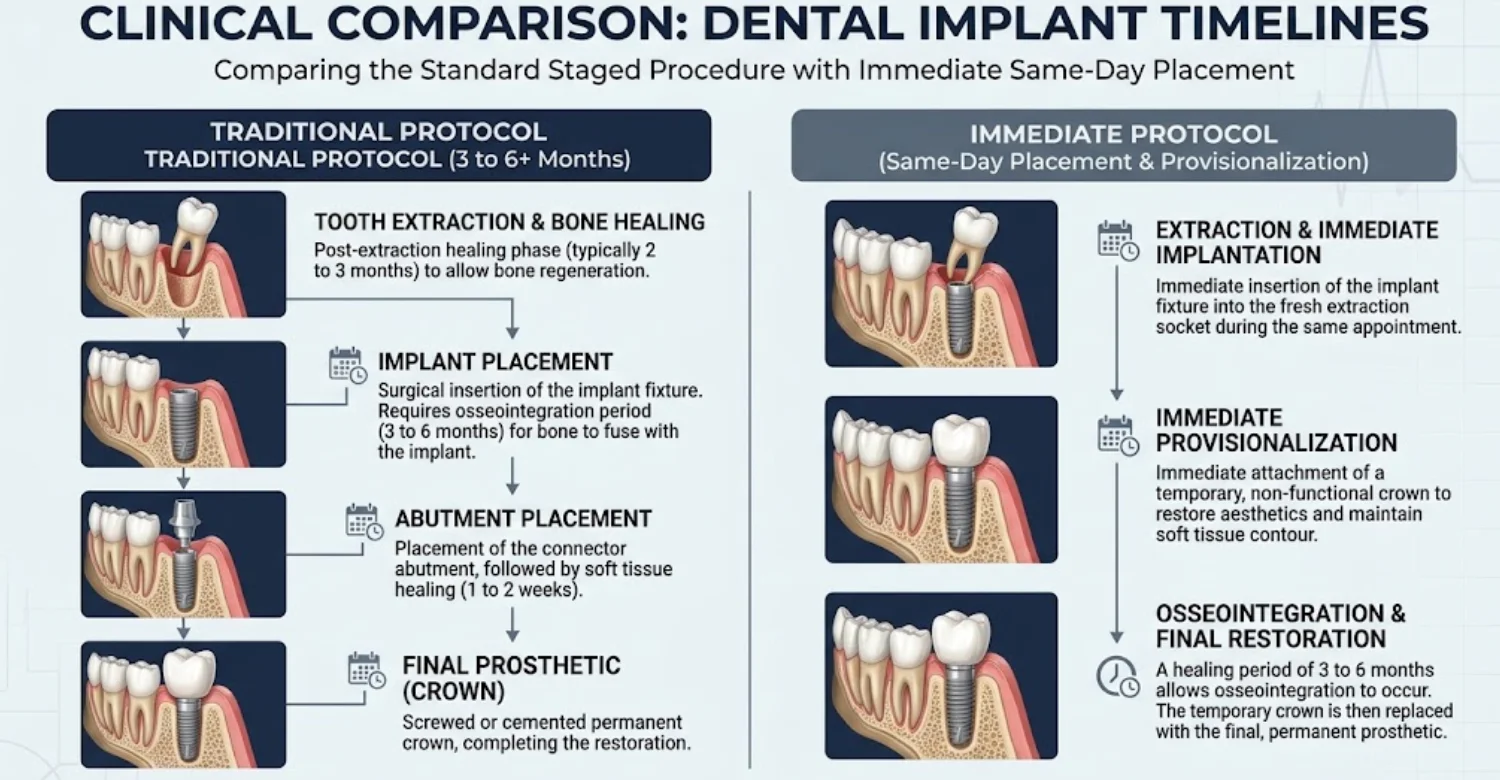
Immediate Placement Implants vs. Immediate Loading: What's the Difference?
Patients researching immediate dental implants often see three terms that sound alike but mean different things. Immediate placement of dental implants means the implant goes into the socket on extraction day. Immediate loading of dental implants means a tooth is attached and used for chewing straight away. Immediate temporization means a temporary tooth is attached but kept out of the bite. Many single-tooth cases use placement plus temporization. This protects the implant while it bonds with the bone.
Term | What happens | When the tooth is attached | Used for chewing? |
Immediate placement | Implant goes into the fresh extraction socket | Same day if stable, or later | Not necessarily |
Immediate loading | Tooth attached in full contact with the bite | Same day or within about one week | Yes |
Immediate temporization | Temporary tooth attached for appearance | Same day | No, kept out of the bite |
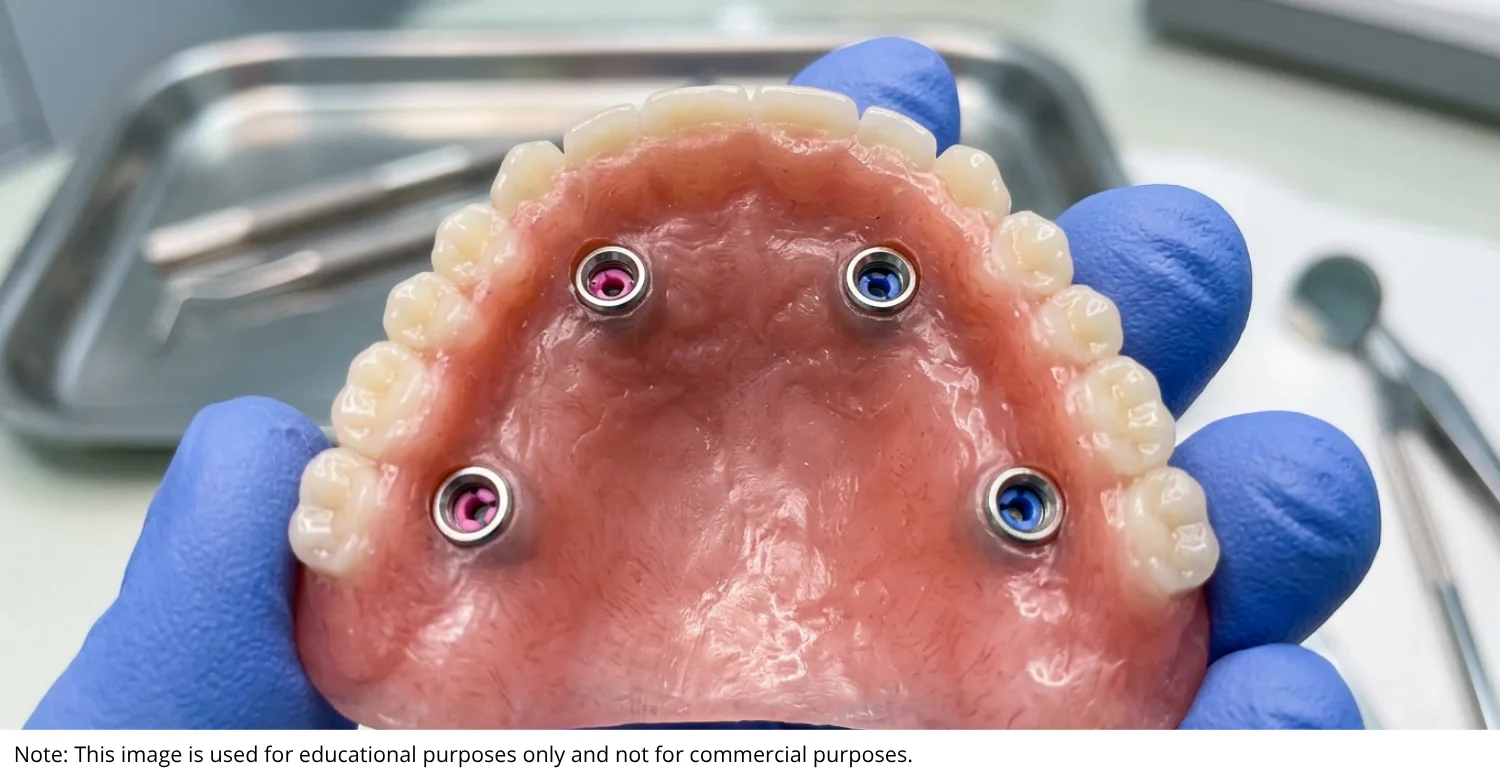
Note: All images used are for editorial and illustrative purposes only and may not originate from the original news provider or associated company.
Can You Get Immediate Dental Implants in One Day?
Often yes. Immediate dental implants allow the implant and a temporary tooth to be placed in one visit. The permanent crown is usually fitted after the implant has fused with the bone, which typically takes a few months. So "one day" describes the start of treatment, not the finish. It depends on your bone quality, gum health, and how firmly the implant holds when placed. A 3D CBCT scan before extraction shows whether same-day treatment is realistic for you.
Are 24-hour dental implants possible?
Yes, in suitable cases. Some clinics call immediate dental implants 24-hour implants because the implant and a temporary tooth are fitted within a day. The temporary tooth looks natural, but it is not the final restoration. It is usually shaped to avoid heavy biting forces while the bone heals. If the implant is not stable enough, your dentist places a healing cap instead and attaches the tooth later. That choice protects your long-term result and lowers the risk of failure.
How quickly can you get dental implants?
With immediate dental implants, the implant goes in on extraction day. The final crown usually follows within three to six months. With a delayed approach, the socket first heals for about two to four months. The implant is then placed and needs another few months to fuse with the bone. Total delayed treatment often takes six months or longer, especially with grafting. Remember that "same day" means a temporary tooth, not the final one.
Stage | Immediate approach | Delayed approach |
Extraction | Day 1 | Day 1 |
Implant placement | Day 1 | After about 2–4 months |
Temporary tooth | Often Day 1 | Removable option while healing |
Final crown | About 3–6 months | About 6 months or more |
Who Is a Good Candidate for Immediate Dental Implants?
The best candidates for immediate load dental implants have healthy bone around the failing tooth, intact socket walls, and no acute infection. Your dentist confirms this with a 3D CBCT scan and a clinical exam. Good candidates usually have:
Enough healthy bone around and beyond the socket
An intact socket wall, especially the front (buccal) wall
No acute infection at the site
Firm implant stability when placed (primary stability)
Healthy gums, ideally a thicker gum type for front teeth
No smoking or only light smoking, and well-controlled diabetes
No severe teeth grinding, or a night guard in use
When immediate implants are NOT recommended
Immediate dental implants are not the safest option for everyone. Your dentist may advise waiting if the front socket wall is badly damaged. Acute infection with pus or swelling is another reason to delay. So is bone that is too thin to hold the implant firmly. Heavy smoking, uncontrolled diabetes, and past radiotherapy to the jaw also raise risks. Some bone-affecting medicines need careful review too. In these cases, waiting is not a failure. It often leads to a more predictable result.
Immediate Dental Implant Placement After Tooth Extraction: The Procedure
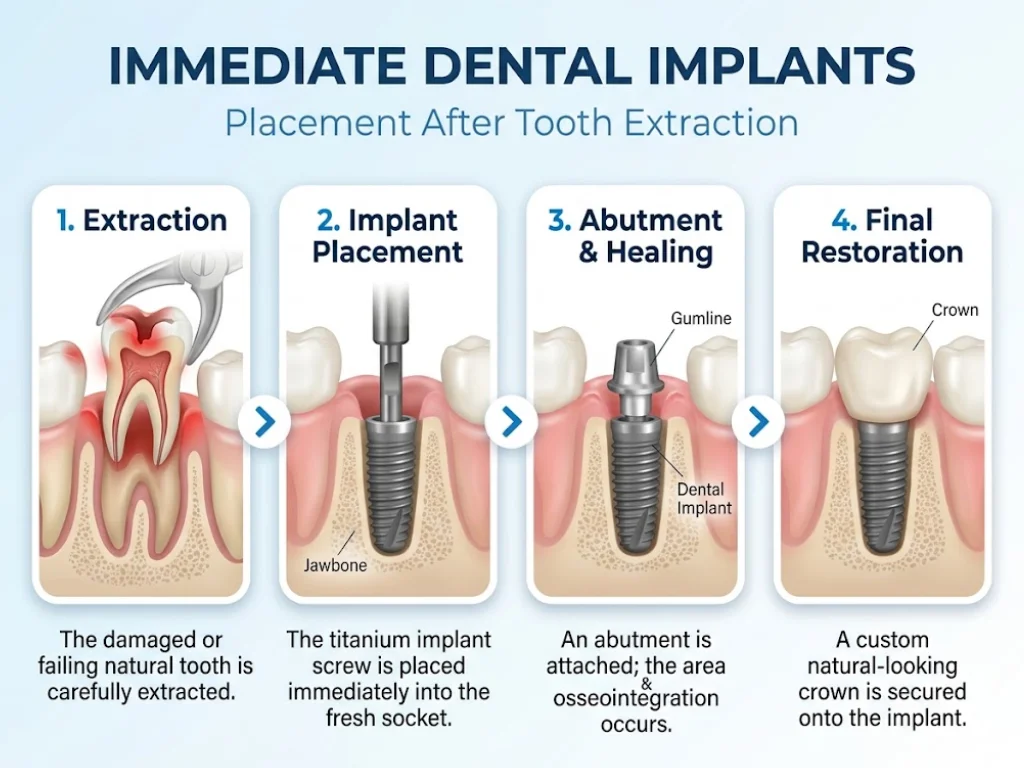
At Vitrin Clinic, immediate dental implant placement after tooth extraction follows a planned sequence that protects your bone and gums. The full immediate dental implant placement procedure usually looks like this:
Consultation and 3D CBCT scan: we measure your bone and plan the implant position.
Gentle extraction: the tooth is removed carefully to preserve surrounding bone.
Implant placement: the implant goes into the socket at the planned depth and angle.
Bone graft, if needed: graft material fills gaps around the implant.
Temporary crown: attached if stability allows.
Healing period: typically 3–6 months.
Permanent crown: fitted once healing is complete.
Immediate Implants and Bone Grafting
Immediate dental implants and bone graft procedures are often combined in the same visit. A tooth root leaves a socket that is usually wider than the implant. The space between the implant and the front bone wall is often filled with graft material. This supports the bone and the gum contour. Grafting cannot stop all natural bone changes after an extraction, but it can reduce shrinkage. Doing it at the same visit also avoids a separate surgery.
Immediate vs. Delayed Dental Implants: Which Is Better?
Neither is better for everyone. Immediate dental implants save time and surgery visits. Delayed implants may be safer when bone is thin or infection is present. When comparing immediate vs delayed dental implant placement, most research shows high survival for both in well-selected cases. Some reviews report a slightly higher failure risk with immediate placement, especially when case selection is poor. Your dentist weighs your bone, gums, and health history before recommending a route.
Factor | Immediate | Delayed |
Number of surgeries | Usually one surgical visit | Usually two or more |
Total treatment time | About 3–6 months | About 6 months or more |
Time without a tooth | Often none, with a temporary | Weeks to months, unless a removable temporary is worn |
Bone and gum preservation | Grafting and a temporary help support gum shape | Socket grafting can preserve volume before placement |
Candidate requirements | Stricter | Broader |
Cost | Often lower overall | Can be higher due to extra visits |
Immediate implants for front teeth vs. back teeth
Front teeth are popular for immediate dental implants because a gap there is highly visible. They usually have one root, which suits a single implant. However, the front bone wall is often thin, so gum recession is a real risk. Careful grafting and a well-shaped temporary tooth help manage this. Back molars have several roots and a wider socket, which can make firm stability harder. For this reason, molars are more often treated with a delayed or early approach.
Advantages of Immediate Dental Implants
The advantages of immediate dental implants focus on time, comfort, and appearance:
No visible gap in most cases
Fewer surgeries
Shorter total treatment time
Helps support bone and gum shape
Less time off work
A confidence boost from day one
Often lower overall cost than a staged approach
Immediate dental implants have honest trade-offs too. Failure risk can be slightly higher when cases are poorly selected. You will also need a soft diet while the implant heals.
Does an Immediate Dental Implant Hurt?
Most patients feel pressure rather than pain. Treatment for immediate dental implants is done under local anesthesia, so the area is fully numb first. Sedation can help if you feel anxious. Afterwards, soreness and mild swelling are common for a few days. Many people say it feels similar to, or easier than, a routine extraction. Pain that worsens after day three, or swelling with fever, should be checked by your dentist promptly.
How painful is one dental implant?
A single implant is usually one of the more comfortable implant procedures. Local anesthesia blocks pain during surgery, though you may feel vibration or pressure. Oral or IV sedation is available for nervous patients. Once the numbness wears off, most people describe discomfort as mild to moderate. It typically peaks in the first 48 to 72 hours. Over-the-counter pain relief is often enough. Your dentist will advise which medicines are safe for your health.
How many days should you rest after a dental implant?
After immediate dental implants, most people return to desk work within one to three days. A typical recovery timeline looks like this:
Days 1–3: mild swelling and soreness. Rest, use cold packs, and avoid hard exercise.
Week 1: swelling settles. Stitches, if used, are usually removed within one to two weeks.
Following weeks: normal routine returns, but avoid biting on the temporary tooth.
Physical jobs or intense workouts may need a few extra days off.
What to eat after immediate implants
A soft diet protects immediate dental implants while they bond with the bone. For the first few days, choose cool or lukewarm foods. Good options include yogurt, soups, smoothies, mashed potatoes, and scrambled eggs. Over the next weeks, add pasta, fish, and soft cooked vegetables. Avoid nuts, crusty bread, hard candy, and sticky foods. Chew on the other side. Do not bite into food with the temporary tooth until your dentist says it is safe.
Immediate Implants vs. Immediate Dentures
An immediate denture is a removable plate fitted on the same day teeth are extracted. Immediate dental implants, by contrast, are fixed into the jawbone. Do immediate dentures look fake? Well-made ones can look natural at first. However, the gums shrink in the months after extraction, so dentures may loosen and need relining. This can make them look and feel less natural over time. Implant-supported options stay fixed and feel more secure.
How Much Do Immediate Implants Cost?
The cost of immediate dental implants depends on how many teeth are treated and what each case needs. A single-tooth case includes several parts, from imaging to the final crown. Because extraction and implant placement happen in one surgery, the total can be lower than a staged plan. Treatment in Turkey is also often more affordable than in the UK, US, or much of Western Europe. At Vitrin Clinic, you receive a clear, itemized treatment plan after your assessment.
Dental Implant Cost: Vitrin Clinic vs. UK vs. USA
The cost of dental implant treatment varies significantly depending on the procedure scope, implant brand, and country of treatment. The following table provides a transparent comparison of average costs across the United Kingdom, United States, and Vitrin Clinic in Istanbul from a single implant to full-arch restoration allowing patients to evaluate their options with accurate financial context before committing to a treatment plan.
Treatment type | 🇬🇧 UK | 🇺🇸 USA | 🇹🇷 Turkey |
|---|---|---|---|
Single dental implant Implant post + abutment + crown | $2,400 – $5,700 | $3,000 – $6,000 | $500 – $700 |
Implant-supported crown Crown on existing implant | $1,270 – $2,540 | $1,500 – $3,000 | $700 – $900 |
All-on-4 Per arch, fixed full-arch restoration | $10,000 – $22,000 | $18,000 – $30,000 | $3,500 – $7,500 |
All-on-6 Per arch, 6-implant full-arch restoration | $12,700 – $25,400 | $20,000 – $35,000 | $4,000 – $9,000 |
Full mouth reconstruction Both arches, upper + lower | $29,000 – $50,000+ | $36,000 – $70,000+ | $7,000 – $15,000 |
3D CT scan & consultation | Charged separately | Charged separately | Free & included |
Estimated saving | — | — | Up to 70% less |
* Prices are averages for reference only and may vary based on individual case requirements, implant brand, bone condition, and treatment complexity. A personalised quote is provided following your free consultation.
Ready to transform your smile?
Talk to our team and get a FREE treatment plan.
What affects the cost
Several factors shape your final price:
Extraction: simple or surgical removal of the failing tooth
Implant: the brand and system used
Bone graft: needed when gaps or thin bone are present
Temporary crown: fitted the same day when stability allows
Final crown: material such as zirconia or porcelain fused to metal
Sedation: optional for anxious patients
Imaging: 3D CBCT scans for planning
Cases involving several failing teeth or extra grafting will cost more.
Immediate vs. traditional implant cost
Immediate dental implants combine extraction, implant placement, and often grafting into one surgery. A traditional plan may need separate visits for extraction, socket grafting, implant placement, and uncovering the implant. Each extra appointment can add chair time and fees. For patients traveling abroad, fewer visits also mean fewer flights and hotel nights. That said, immediate cases often include a fixed temporary crown that some delayed plans skip. Overall, the immediate route often costs the same or less.
Financing & insurance options
Payment options vary by clinic and by country. Ask our team how payments can be arranged across each treatment phase. If you have dental insurance at home, check whether your policy reimburses treatment abroad. Many policies cover only part of the implant cost, and some exclude it entirely. Request an itemized invoice and treatment report to support any claim. Some patients also use personal medical loans or health savings accounts where available. Always confirm the terms before treatment begins.
Real Patient Results
Real results show what immediate dental implants can achieve with careful planning. Look for photos taken on extraction day and after the final crown is fitted. A good result has a natural gum line and a crown that matches the neighboring teeth. There should be no gray metal showing through the gum. When reading immediate implants reviews, focus on comfort, communication, and long-term results, not just speed. Every photo we share is published with written patient consent.
.jpg)
What We Notice Clinically
Dr. Rifat Alsaman, Head of the Medical Team at Vitrin Clinic, and our clinical team see a few clear patterns. Patients who come in before a damaged tooth fails completely usually have more bone. That makes them better candidates for immediate dental implants. Waiting until infection spreads can turn an immediate case into a delayed one. Many patients also expect their final tooth on day one, so we explain the temporary stage early. Those who avoid smoking and follow the soft diet heal more predictably.
Conclusion
Immediate dental implants can replace a failing tooth in one surgery, and many patients leave with a temporary tooth the same day. They suit people with healthy bone, intact socket walls, and no acute infection. With careful planning and good aftercare, results are natural-looking and long-lasting. Because candidacy depends on your bone at the time of extraction, it is best to plan before the tooth comes out. Waiting too long can limit your options.
Why Choose Vitrin Clinic for Immediate Dental Implants in Turkey
Immediate dental implants depend on precise planning, and that is where Vitrin Clinic focuses. Our medical team is led by Dr. Rifat Alsaman, Head of the Medical Team and cosmetic dentist. Each case is planned with 3D CBCT imaging, and guided surgery helps place implants in the planned position. Same-day temporary teeth are offered when stability allows. Sedation is available for anxious patients. International patients also receive help with scheduling and travel planning.





Ready to transform your smile?
Talk to our team and get a FREE treatment plan.
References:
FAQs
Dr. Rifat Alsaman has more than 5 years of clinical experience in dentistry and currently serves as the Head of the Medical Team at Vitrin Clinic. He is dedicated to providing exceptional patient care, overseeing treatment planning, and ensuring the highest clinical standards across the team. His expertise, attention to detail, and commitment to continuous professional development have helped countless patients achieve healthier, more confident smiles.


