Oral Surgery
September 29, 2026
Simple vs Surgical Tooth Extraction: What's the Difference?
 Dr. Rifat Alsaman
.webp&w=3840&q=75)
Tooth extraction is the removal of a tooth from its socket in the jawbone. It is one of the most common procedures in dentistry. Understanding simple vs surgical tooth extraction helps patients know what to expect before treatment. Some teeth are fully visible and can be removed with standard instruments. Others are broken, impacted, or hidden beneath gum and bone. The choice depends on tooth position, condition, root structure, and accessibility. This guide explains how each procedure works, how it feels, and what recovery involves. It also covers the factors that affect cost, so you can talk to your dentist with confidence.
Simple vs Surgical Tooth Extraction: What Is the Difference?
The core difference is how the dentist reaches and removes the tooth. One approach works on visible teeth. The other creates access to teeth that cannot be reached directly.
What Is a Simple Tooth Extraction?
A simple extraction removes a tooth that is fully visible above the gum line. It is generally used for erupted teeth with straightforward roots. First, the dentist numbs the area with local anesthesia. Then an instrument called an elevator loosens the tooth, and forceps remove it. It is the less invasive of the two options.
What Is a Surgical Tooth Extraction?
A surgical extraction is used when a tooth cannot be easily seen or grasped. It may be needed for impacted, broken, or deeply rooted teeth. The dentist often makes a small gum incision and lifts a flap. Some surrounding bone may be removed, and the tooth may be cut into smaller pieces. The site is often closed with stitches.
Simple Extraction vs Surgical Extraction
A side-by-side comparison of simple vs surgical tooth extraction shows why treatment plans differ between patients.
Accessibility
Simple extraction treats visible teeth that the dentist can reach directly. Surgical extraction creates access through the gum or bone.
Procedure Complexity
Simple removal involves loosening and lifting the tooth. Surgical removal may add incisions, bone removal, tooth sectioning, and suturing.
Anesthesia and Surgical Access
Both procedures use local anesthesia. Surgical cases may also involve sedation or general anesthesia. This depends on the complexity of the case and the patient's needs.
Recovery and Aftercare
Simple extractions usually heal faster with milder discomfort. Surgical extractions often involve more swelling and a longer initial recovery.
Causes of the Condition
Several dental conditions lead to extraction. The specific cause often decides which type of extraction applies to your case.
Why Is a Simple Tooth Extraction Needed?
A simple extraction is often recommended for visible teeth with extensive decay. It also treats teeth damaged by trauma or fractures above the gum line. Teeth loosened by advanced gum disease are another common reason. Dentists consider it when a filling, crown, or root canal cannot predictably save the tooth.
Why Is Surgical Tooth Extraction Needed?
Surgical extraction is typically needed for impacted teeth, especially wisdom teeth trapped in bone or gum. It is also used for teeth broken below the gum line. Teeth with complex or curved roots, or teeth covered by gum or bone, may need it too. It may also be required when a conventional extraction is difficult or unsuccessful. In these cases, the right choice between simple vs surgical tooth extraction matters most for patient safety.
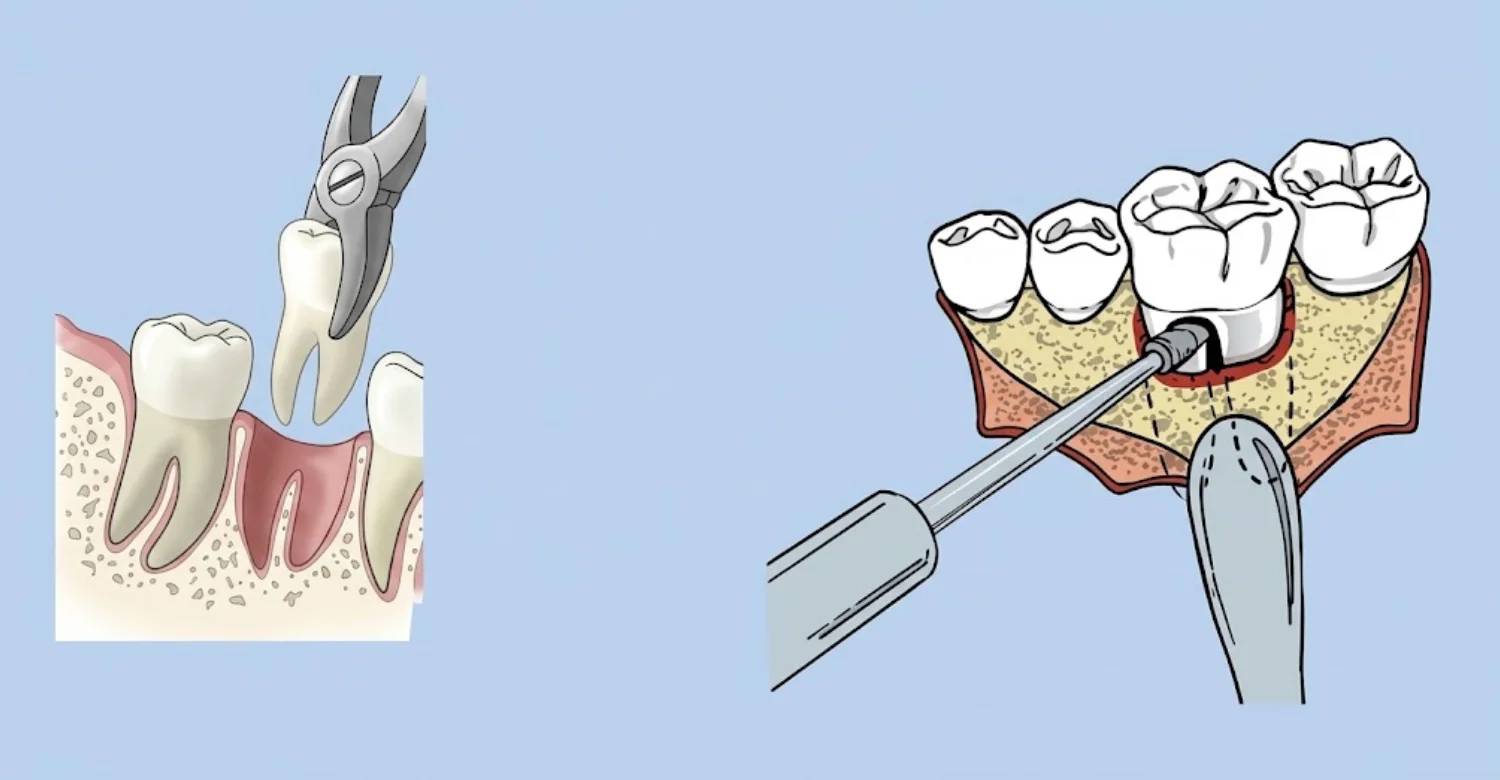
Note - All images are for editorial and illustrative purposes only. They may not originate from the original news provider or associated company.
Problems Caused by Delaying Necessary Tooth Extraction
Whichever procedure your case needs, postponing a needed extraction can allow dental problems to progress.
Persistent Tooth Pain
A severely decayed, cracked, or infected tooth may keep causing pain. The nerve and surrounding tissues remain irritated. Pain may worsen with chewing, with hot or cold foods, or at night. Delaying treatment rarely solves the problem. It may also make the eventual procedure more complex.
Dental Infection
Severely damaged teeth can let bacteria reach the pulp and surrounding bone. This can lead to a dental abscess. Untreated infections may spread to nearby tissues. In rare cases, they reach other areas of the head and neck. Early evaluation helps your dentist choose the safest type of extraction.
Gum and Bone Problems
Infected or loose teeth can cause ongoing gum inflammation. They can also lead to gradual loss of the supporting jawbone. Chronic infection around the root may destroy bone over time. This bone loss can complicate future treatment, including dental implants. It may even turn a straightforward case into a more complex one.
Problems With Nearby Teeth
Untreated dental problems can affect adjacent teeth. Impacted wisdom teeth may press against neighboring molars and trap food. This raises the risk of decay and gum disease. Infection can also spread along the gums. Removing the problem tooth at the right time protects the surrounding teeth.
.webp)
Patient's Perspective
Knowing how simple vs surgical tooth extraction feels in the dental chair can ease anxiety and help you prepare.
What Does Simple Tooth Extraction Feel Like?
Local anesthesia numbs the tooth and surrounding gums, so you should not feel sharp pain. You will likely feel pressure and some movement as the dentist loosens the tooth. Mild soreness is common after the anesthesia wears off. Over-the-counter pain relievers usually manage it, as your dentist directs.
What Does Surgical Tooth Extraction Feel Like?
Surgical extraction also begins with local anesthesia, sometimes combined with sedation. You may feel pressure during gum access or tooth sectioning. However, you should not feel sharp pain. Afterward, swelling, tenderness, and jaw stiffness are common. They usually peak within two to three days. This is a key recovery difference between the two procedures.
Common Patient Concerns
Many patients worry about pain. Anesthesia controls discomfort during the procedure, and soreness afterward is usually manageable. Recovery takes a few days after simple extraction and about a week after surgical removal. Swelling is more noticeable in surgical cases. Stitches are more common after surgery and often dissolve on their own. Soft, cool foods are best at first. Most people resume light activities within one to two days. Cost also differs according to the complexity of the case.
Check the effects of Secondhand Smoke and Tooth Enamel Development
Doctor's Perspective
From a clinical standpoint, choosing between simple vs surgical tooth extraction follows a careful, step-by-step assessment. The dentist combines a clinical examination with dental imaging. This reveals the tooth's condition, root structure, and relationship to nearby nerves, sinuses, and teeth. The goal is to find the safest and least invasive approach for each case. It also prepares the team for any changes needed during the procedure.
How Does the Dentist Choose Between Simple vs Surgical Tooth Extraction?
The dentist starts with a clinical examination. This covers how accessible the tooth is, how much healthy structure remains, and the root shape. The dentist also checks gum and bone condition and looks for infection. Visible teeth with intact crowns and straight roots often suit simple extraction. Complex cases need surgical planning.
Role of Dental X-Rays
Dental X-rays show what the eye cannot see. They reveal the number, length, and curvature of the roots. They also show bone density and the exact position of the tooth. In selected cases, 3D cone beam imaging shows how close the tooth is to nerves and sinuses. Imaging is essential for an accurate treatment decision.
Can a Simple Extraction Become a Surgical Extraction?
Yes. A tooth may fracture during removal, have unexpectedly curved roots, or be fused to the bone. In these cases, the dentist may switch to a surgical technique. This change is a safety decision, not a complication in itself. It lowers the risk of damaging bone or leaving root fragments behind. It also ensures the tooth is removed completely and predictably.
Ready to transform your smile?
Talk to our team and get a personal treatment plan.
Surgical Tooth Extraction vs Regular Extraction
Comparing the two procedures side by side highlights their practical differences.
Accessibility
In a simple or regular extraction, the tooth is visible and accessible. The dentist can remove it directly with instruments. A surgical extraction may require additional access. This happens when the tooth is impacted, broken at the gum line, or covered by gum or bone.
Procedure Complexity
A regular extraction usually involves two main steps: loosening the tooth and removing it from its socket. A surgical procedure may add several steps. These include creating a gum flap, removing some bone, sectioning the tooth, cleaning the socket, and placing sutures. Each step adds time and precision, so the session is usually longer. This is a clear distinction in simple vs surgical tooth extraction.
Recovery
After a regular extraction, discomfort and swelling are typically mild and short-lived. Initial healing takes several days. Surgical extraction often causes more swelling, bruising, and tenderness, with a longer initial recovery. In both cases, the gum closes over several weeks. The bone continues to remodel for several months.
Stitches and Surgical Access
Stitches are commonly placed after surgical extraction. They reposition the gum flap and support healing. Gum incisions are made when the tooth or root cannot be reached directly. Simple extractions usually do not need stitches. However, the dentist may place some to control bleeding or close a larger socket.
Understand the link in Sinonasal Disease and Dental Health
Simple vs Surgical Tooth Extraction Cost: Turkey vs US vs UK
Cost differs mainly because the two procedures need different levels of complexity, time, and clinical resources. Prices also vary widely between countries. The table below gives an indicative comparison.
Factor | Turkey | United States | United Kingdom (Private) |
Simple extraction (per tooth) | ~$35 – $90 | ~$100 – $300 | ~$105 – $265 |
Surgical extraction (per tooth) | ~$90 – $280 | ~$250 – $650+ | ~$265 – $660+ |
Impacted wisdom tooth | ~$140 – $350 | ~$300 – $800+ | ~$400 – $925+ |
X-ray (2D) | Often included or low cost | ~$25 – $150 | ~$25 – $105 |
3D scan (CBCT) | ~$45 – $115 | ~$150 – $400 | ~$130 – $400 |
Sedation (if needed) | ~$115 – $350 | ~$250 – $800+ | ~$265 – $660+ |
Sutures & post-op care | Usually included in the fee | Sometimes billed separately | Sometimes billed separately |
Waiting time | Usually within days | Varies by clinic and insurance | Can be long on NHS; shorter privately |
Insurance / public coverage | Mostly self-paid for international patients | Depends on dental insurance plan | NHS covers extractions at a fixed band fee; private care is self-paid |
Why Does Surgical Extraction Usually Cost More?
In all three countries, surgical extraction involves more steps than a simple extraction. These include gum incision, bone removal, tooth sectioning, sutures, and postoperative care. It also needs specialized instruments and additional clinical time. Tooth location matters too, since multi-rooted molars take longer than single-rooted front teeth.
The lower cost in Turkey mainly reflects lower operating and labor costs, not a different procedure. In any country, the exact price depends on an individual assessment of your case. This includes imaging and examination findings. A personalized consultation is the only reliable way to estimate the cost of simple vs surgical tooth extraction.
When Is It Serious and Requires a Checkup?
Some symptoms mean a tooth needs prompt attention, whatever the final treatment turns out to be.
Signs That Require Prompt Dental Evaluation
Book a dental evaluation promptly if you have severe or persistent tooth pain. Facial or gum swelling, pus, or drainage around a tooth are also warning signs. So are fever, a severely broken tooth, or bleeding that does not stop. Pain that increases several days after an extraction also deserves attention. It may indicate dry socket or infection.
Emergency Warning Signs
Seek emergency medical care immediately if you have difficulty breathing or swallowing. The same applies if facial or neck swelling increases rapidly. Signs of spreading infection, such as high fever, chills, or feeling very unwell, also need urgent attention. These symptoms may point to a serious infection that needs hospital treatment. Do not wait for a routine dental appointment.
When the Patient Should Rest
Rest needs differ between the two procedures because they involve different amounts of tissue.
After Simple Tooth Extraction
Rest is usually recommended for the rest of the day so a stable blood clot can form. Avoid strenuous activity, heavy lifting, and bending for about 24 to 48 hours. Raised blood pressure can trigger bleeding and slow early healing.
After Surgical Tooth Extraction
After a more complex extraction, two to three days of additional rest are often advised. Swelling and tenderness tend to be greater. If you received sedation, do not drive or make important decisions that day. Specific recommendations depend on the procedure performed and your overall health.
Learn How to Stop Acid Erosion on Teeth
Rest Tips
The following tips support healing whichever option in simple vs surgical tooth extraction you receive. Follow them during the first few days to protect the extraction site. They help reduce swelling and discomfort. They also lower the risk of bleeding or dry socket. Small daily habits, like how you sleep, eat, and move, can make a real difference to your recovery.
Avoid Strenuous Exercise
Heavy exercise raises heart rate and blood pressure. This can cause bleeding, throbbing, and loss of the blood clot. Limit intense workouts for at least 48 to 72 hours, or longer after surgical extraction. Gentle walking is usually fine. Return to normal exercise gradually, as comfort allows and your dentist advises.
Keep the Head Elevated
Rest with your head slightly raised on extra pillows during the first few days. This helps reduce swelling and bleeding. Lying completely flat can increase pressure and throbbing at the extraction site. During the first 24 to 48 hours, apply cold compresses to the cheek in short intervals.
Get Adequate Sleep
Sleep supports tissue repair and immune function, both essential for healing. Aim for enough uninterrupted rest during the first nights. Taking your recommended pain relievers before bedtime may improve comfort. Good sleep matters equally after either type of extraction.
Protect the Blood Clot
The blood clot in the socket protects the underlying bone and nerves during healing. For the first few days, avoid straws, smoking, vigorous rinsing, and spitting. These create pressure that can dislodge the clot. Try not to touch the site with your tongue or fingers. Losing the clot can cause a painful condition called dry socket. Follow all postoperative instructions carefully. This includes gentle salt-water rinses when your dentist advises them.
Read about Vitamin B1 Deficiency and Tooth Damage
About Vitrin Clinic
At Vitrin Clinic, every decision about simple vs surgical tooth extraction starts with a careful, individual assessment. Before recommending any procedure, our team reviews the tooth's position and root anatomy. We also check bone density and gum health using clinical examination and dental imaging. When the tooth is visible and accessible, we favor the least invasive technique. This keeps treatment comfortable and recovery quick. When surgical access is needed, we plan the procedure carefully. The goal is to protect nearby nerves, bone, and teeth. From the first consultation to follow-up care, we keep patients informed at every step.
.jpg)
.jpg)
.jpg)
.jpg)
.jpg)
What We Notice Clinically
At Vitrin Clinic, we evaluate tooth position, root anatomy, surrounding bone, and gum condition before recommending treatment. Dr. Rifat Alsaman is Head of the Medical Team at Vitrin Clinic and a Cosmetic Dentist. Dr. Alsaman emphasizes choosing the least complex appropriate extraction technique. At the same time, patient safety, comfort, and preservation of surrounding tissues always come first. According to Dr. Alsaman, unnecessary surgical steps should be avoided. However, this should never come at the expense of a safe and predictable outcome.
Tips for the Patients
To get the most from your consultation about simple vs surgical tooth extraction, ask why the extraction is necessary. Also ask whether the tooth can be restored instead. Confirm which type of extraction is planned so you know what to expect. Follow pre- and postoperative instructions carefully, and avoid disturbing the extraction site. If severe pain, swelling, or persistent bleeding occurs, contact Vitrin Clinic promptly.
Resource:
https://pmc.ncbi.nlm.nih.gov/articles/PMC7389870/
FAQs
Dr. Rifat Alsaman has more than 5 years of clinical experience in dentistry and currently serves as the Head of the Medical Team at Vitrin Clinic. He is dedicated to providing exceptional patient care, overseeing treatment planning, and ensuring the highest clinical standards across the team. His expertise, attention to detail, and commitment to continuous professional development have helped countless patients achieve healthier, more confident smiles.


.webp&w=3840&q=75)