Dental Implant
October 18, 2026
Melatonin and Immediate Dental Implants: Can It Improve Bone Healing?
 Dr. Rifat Alsaman

Melatonin and immediate dental implants is a topic many patients search for after hearing that melatonin may help bone heal. That curiosity makes sense. An immediate implant is placed on the same day a tooth is removed, so patients naturally want the best possible healing. Melatonin is a hormone that helps regulate the sleep–wake cycle, and researchers are also studying its roles in bone metabolism. However, promising biological findings do not make it a proven supplement for implant patients. Site assessment, healing, and professional guidance still come first.
.jpg)
.jpg)
.jpg)
.jpg)
.jpg)
.jpg)
.jpg)
Ready to transform your smile?
Talk to our team and get a FREE treatment plan.
Melatonin and Immediate Dental Implants: What Does the Evidence Say?
Melatonin & immediate dental implants have been studied together mainly in experimental settings. The evidence is promising but incomplete. Laboratory work shows melatonin can influence bone cells. Animal studies have reported more bone contact around implants treated with melatonin. A small number of human studies exist, but they involve few patients and short follow-up. Methods also differ widely between studies. For now, the evidence supports further research rather than routine use. The sections below explain each part of this picture.
What Is Melatonin, and How Might It Affect Bone Healing?
Melatonin is a hormone produced mainly by the pineal gland, mostly at night. It helps signal the body's daily rhythm. Melatonin also acts as an antioxidant, neutralizing harmful free radicals, and it may reduce some inflammatory signals. In bone, researchers have studied its effects on cells that build and break down bone. These findings come largely from cell cultures and animals. They suggest a plausible mechanism, but not a proven effect in people. This is why melatonin for dental implants remains a research topic.
What Are Immediate Dental Implants?
Immediate placement means the implant is inserted into the extraction socket during the same appointment as tooth removal. It can reduce the number of surgical visits. Immediate loading is a different concept. It means a restoration is attached soon after placement, often within about a week. A patient can have immediate placement without immediate loading. Not every extraction site is suitable, because socket walls, bone volume, infection, and gum tissue all matter. Understanding this is the first step in evaluating melatonin and immediate dental implants.
What Is Osseointegration, and Why Does It Matter?
Osseointegration is the process through which living bone forms a stable, direct connection with the implant surface. Without it, an implant cannot reliably support chewing forces. Bone healing, initial implant stability, and controlled loading all influence this process. That is why clinicians plan the timing of the final teeth carefully. Melatonin and osseointegration is one area researchers are exploring, mainly in animal models. Understanding immediate dental implants and bone healing shows why timing decisions rest on clinical findings, not supplements.
What Does Current Research Say About Melatonin for Dental Implants?
Systematic reviews of this topic generally reach a cautious conclusion. Animal studies, often in dogs and rabbits, have reported improved bone-to-implant contact when melatonin was applied at the implant site. Human research is far more limited. Existing trials are small, use different doses and delivery methods, and follow patients for short periods. Safety and long-term outcomes are not well defined. When it comes to melatonin and immediate dental implants specifically, human evidence is even scarcer. Nothing shows improved implant survival or guaranteed faster healing.
.webp)
How Can Melatonin and Dental Implant Healing Be Connected?
The link between melatonin and dental implant healing rests mostly on biology. Researchers propose that melatonin may support bone-forming cells, limit excessive bone breakdown, and reduce oxidative stress at the surgical site. These are logical mechanisms. However, a mechanism describes how something might work, not whether it works in patients. The following sections look at bone formation, stability, marginal bone levels, and peri-implant healing. Each explains what is proposed and what remains unproven for melatonin and immediate dental implants.
How Might Melatonin Influence Bone Formation?
Laboratory studies suggest melatonin may encourage osteoblasts, the bone-forming cells, to mature and lay down new bone. It may also reduce the formation and activity of osteoclasts, the cells involved in bone breakdown. Its antioxidant effects could calm some inflammatory pathways after surgery. These findings explain the interest in melatonin for bone regeneration. Still, proposed mechanisms are not demonstrated clinical benefits. Results in cells and animals do not always translate to people, so careful human trials are needed.
Could Melatonin Affect Dental Implant Stability?
Primary stability is the implant's initial mechanical grip in the bone at placement. Secondary stability develops later as new bone forms around the implant. Some studies have measured stability values, such as resonance frequency readings, after melatonin use. Results have been mixed and based on small groups. Dental implant stability and melatonin therefore remain a research question. For melatonin & immediate dental implants, stability still depends mainly on bone quality, implant design, surgical technique, and appropriate loading.
Could Melatonin Reduce Marginal Bone Loss?
Marginal bone loss refers to changes in the bone level around the neck of an implant. Some early bone remodeling is expected after placement. Larger losses can relate to implant positioning, surgical technique, inflammation, oral hygiene, and long-term maintenance. A few small studies have examined melatonin and marginal bone loss, with limited and inconsistent findings. This remains a research question. Melatonin is not an established preventive treatment. Good planning and maintenance remain the proven protective steps.
What Do We Know About Peri-Implant Bone Healing?
Peri-implant bone healing begins with a blood clot around the implant. New, immature bone then forms and gradually matures. Over time, the bone adapts to biting forces through remodeling. Melatonin and peri-implant bone healing have been linked in experimental studies, some of which reported more bone formation. These results are encouraging but early. Whatever future research shows about melatonin and immediate dental implants, established surgical protocols, controlled loading, and regular maintenance remain central to care.
Who May Be Suitable for Immediate Implant Placement?
Suitability depends on the extraction site and the patient's overall health. An ideal candidate usually has enough healthy bone to hold the implant firmly at placement. The surrounding gum tissue should also be in reasonable condition. Infection, bite forces, and medical history all need review. No supplement can make an unsuitable site suitable. In discussions about melatonin & immediate dental implants, this point is essential: clinical findings determine eligibility, not the hope of faster healing.
What Does Your Dentist Check Before Immediate Implant Placement?
Your dentist examines the tooth being removed and predicts how the socket will look afterward. Bone availability matters because the implant needs firm anchorage. Soft tissue thickness affects appearance and long-term stability. Infection is assessed carefully. Bite forces, grinding habits, and general medical history are also reviewed. Three-dimensional imaging, such as CBCT, may help when indicated. Questions about melatonin for immediate implant placement belong within this individualized planning, alongside every medication and supplement you take.
When Might Immediate Placement Not Be the Best Option?
Immediate placement may not suit a site with too little bone support. Unfavorable socket anatomy can prevent stable positioning. Significant damage to the bone walls or gum tissue can also be a concern. Some infections may be compatible with immediate placement after thorough cleaning in carefully selected cases. Others, such as extensive or acute infections, may need a different approach. Delayed placement, sometimes with bone grafting first, can be the safer choice. It is not a lesser treatment.
Which Factors Can Affect Bone Healing After Implant Surgery?
Several factors can slow or disrupt bone healing. Smoking reduces blood flow and is linked to higher implant complication rates. Poorly controlled diabetes can impair healing and raise infection risk. Untreated gum disease and poor oral hygiene increase inflammation. Some medications, including certain bone-related drugs, may also matter. Excessive early loading can disturb integration. The effect of each factor varies by individual. Interest in melatonin and immediate dental implants should never replace managing these established risks.
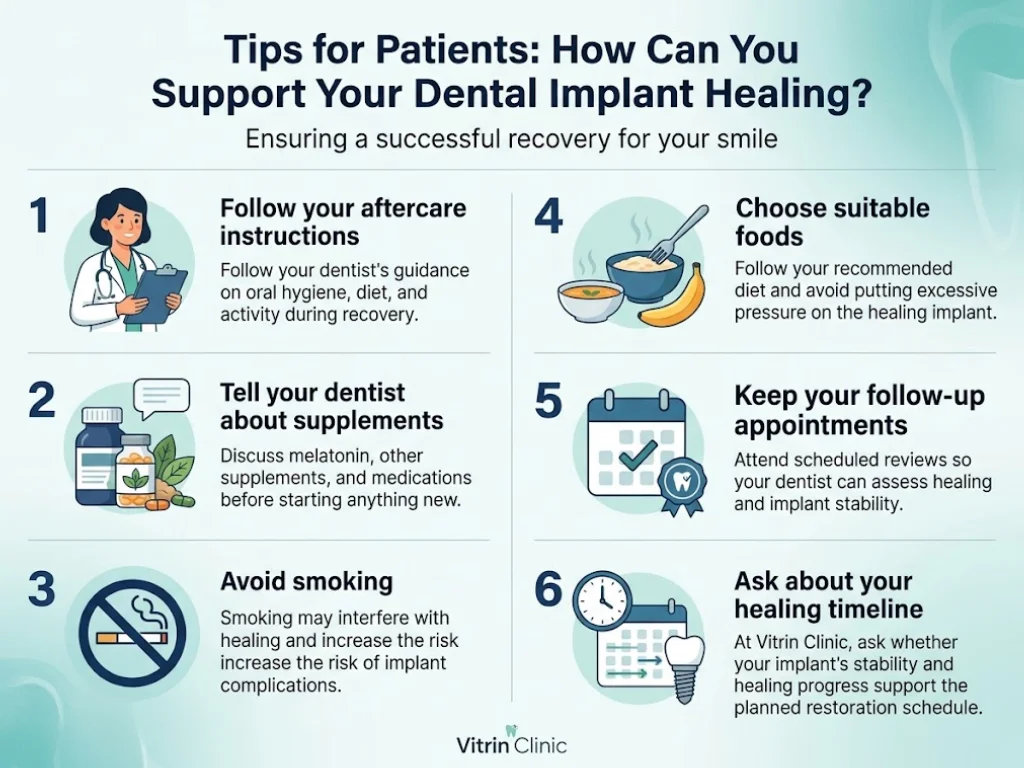
What Symptoms and Healing Changes Might You Notice After Implant Surgery?
Most people notice some changes after implant surgery. These usually reflect normal tissue healing rather than a problem. Their intensity depends on the procedure, the number of implants, and whether grafting was performed. Symptoms typically improve day by day. Patients exploring melatonin & immediate dental implants should understand that no supplement removes the need to watch for warning signs. Knowing what is expected helps you recognize when something is not right and when to call your dental team.
Which Changes Are Common During Early Recovery?
Mild swelling, tenderness, and bruising are common in the first days. Minor oozing of blood can occur, especially on the first day. Some patients feel stiffness when opening wide. Symptoms are often greater when bone grafting or more extensive surgery was needed. Recovery speed varies between individuals and procedures. For this reason, no single timeline suits everyone. Your dental team will explain what to expect in your situation and give instructions to keep you comfortable.
How Can You Tell Whether Healing Needs Professional Attention?
Healing usually moves in one direction: steady improvement. Pain that worsens after the first few days deserves attention. So do increasing swelling, persistent bleeding, fever, or pus. A feeling that the implant is moving also warrants prompt assessment. Some complications cause only mild symptoms, so a lack of severe pain does not guarantee success. If you suspect movement, do not test the implant with your tongue or fingers. Contact your clinic and let a clinician assess it.
What Can You Do at Home to Support Dental Implant Healing?
Your daily habits play a real role in recovery. Following instructions, keeping the area clean, and protecting the implant from pressure all help healing. These steps are simple, but they matter. Many patients asking about melatonin and immediate dental implants are looking for extra ways to help. The most reliable support, however, comes from consistent care at home combined with professional follow-up. The next sections cover helpful habits and the question of melatonin supplements.
Which Daily Habits May Help During Recovery?
Follow your postoperative instructions closely. Keep your mouth clean as directed, including gentle brushing and any prescribed rinses. Choose soft foods and avoid chewing directly on the implant site. Avoid smoking, which can impair healing. Rest and adequate sleep support general recovery after any surgery. Stay hydrated and attend your scheduled reviews. These habits reduce avoidable irritation and infection risk. However, they support recovery rather than guarantee osseointegration, which depends on many clinical factors.
Should You Take Melatonin After Dental Implant Surgery?
Research on melatonin in dentistry uses different formulations and routes. Many studies applied melatonin directly to the implant site during surgery. That differs from taking an ordinary sleep supplement by mouth. Results from local application cannot be assumed for oral tablets. Melatonin can cause drowsiness and may interact with some medicines. Before starting it, discuss your supplements, health conditions, and medications with your treating clinician. Routine supplementation has not been shown to improve outcomes with melatonin and immediate dental implants.
When Should You Contact Your Dentist About Implant Healing?
Contact your dentist whenever healing seems to be moving in the wrong direction. Early assessment allows problems to be managed before they become more serious. Do not wait for a routine review if symptoms are worsening. Patients interested in melatonin and immediate dental implants should remember that supplements cannot treat infection or instability. Clear warning signs need professional care. The sections below list the signs that should never be ignored and explain how clinicians evaluate implant healing.
Which Warning Signs Should You Never Ignore?
Contact your dentist promptly if pain worsens rather than improves. Spreading swelling, fever, pus, or bleeding that will not stop also need attention. Suspected implant mobility should be checked quickly. Some signs require emergency medical care. Seek immediate help for difficulty breathing or swallowing. The same applies to rapidly spreading swelling in the face or neck. Do not try to manage these complications with supplements or home remedies. Timely assessment offers the best chance of effective treatment.
How Is Implant Healing Evaluated Clinically?
Clinicians start with a clinical examination of the gum tissue and implant area. Appropriate imaging, such as a dental X-ray, helps evaluate bone levels. Stability may be measured when indicated, for example with resonance frequency analysis. A single symptom or X-ray cannot always confirm that osseointegration is complete. Findings are interpreted together. The timing of the final restoration or loading depends on these results and the treatment plan, rather than on a fixed calendar date.
.jpg)
Ready to transform your smile?
Talk to our team and get a FREE treatment plan.
What Treatments Can Support Immediate Dental Implant Healing?
Support for healing ranges from simple conservative care to medications and additional procedures. The right approach depends on the clinical situation. Most patients need only careful home care and follow-up. Some need medicines or further procedures. Research on melatonin and immediate dental implants explores a possible adjunct, but it is not part of standard treatment. The following sections explain conservative care, when medications or procedures are used, and where melatonin may fit in the future.
How Can Conservative Care Support Recovery?
For patients researching melatonin and immediate dental implants, conservative care remains the proven foundation. It includes following postoperative instructions, cleaning the area as directed, and switching to soft foods. Avoiding pressure on the implant is part of this care. Scheduled follow-up visits let clinicians check the gum tissue, monitor bone healing, and spot early problems. These measures reduce avoidable irritation. They also give your dental team a clear picture of how recovery is progressing.
When Are Medications or Additional Procedures Needed?
Pain relief may be recommended based on your needs and medical history. Antibiotics are prescribed according to the clinical situation and are not automatically required in every case. Bone grafting or soft-tissue procedures may be used when a site needs extra support. Suspected complications may require further investigation, such as imaging, and targeted treatment. These problems need clinical management. Melatonin supplementation is not a treatment for implant complications, and it should not delay professional care.
Could Melatonin Become an Adjunct to Implant Treatment?
Melatonin may one day play a role as an adjunct, meaning an addition to standard care. That possibility depends on better human trials. Future studies need larger groups and clinically meaningful outcomes, such as implant survival and long-term bone levels. They also need to define dosage, delivery method, and safety. Until then, melatonin and immediate dental implants remain a research pairing. Current evidence does not support replacing established implant protocols with melatonin.
How Can You Reduce the Risk of Implant Healing Problems?
Many healing problems can be reduced with good preparation and consistent care. Risk reduction starts before surgery and continues for years afterward. It involves your habits, your general health, and regular professional reviews. Questions about melatonin and immediate dental implants are reasonable, but proven measures deserve priority. Small, steady steps often make the biggest difference. The next sections cover habits to maintain around surgery and explain why follow-up visits remain important long after the implant has healed.
Which Habits Should You Maintain Before and After Surgery?
Stopping smoking, ideally before surgery, supports better healing. Effective daily oral hygiene helps control bacteria around the implant. Gum disease should be treated and kept under control. Relevant medical conditions, such as diabetes, should be well managed with your doctor. Tell your dental team about every medication and supplement before surgery, including melatonin. Avoid excessive pressure on the healing implant, such as chewing hard foods on that side. A night guard may be advised if you grind.
Why Are Follow-Up Visits Important?
Follow-up visits let your clinician monitor healing and check implant stability. They also allow evaluation of the final restoration and your bite. Early complications can be found before they become serious. Maintenance continues after initial healing, with professional cleaning and periodic checks of the gum and bone. The effect of melatonin on dental implants is a topic worth raising at these visits. It should be discussed in light of your individual circumstances and the available evidence.
What We Notice Clinically
Clinical experience adds practical context to research findings. In daily implant care, outcomes are shaped mainly by careful case selection, precise surgery, and consistent maintenance. Patients sometimes arrive asking about melatonin and immediate dental implants after reading online articles. These questions deserve honest answers. The perspectives below reflect the clinical approach at Vitrin Clinic, as shared by Dr. Rifat Alsaman, Head of the Medical Team and cosmetic dentist at Vitrin Clinic, and are presented for clinical review and approval.
Why Does Implant-Site Assessment Matter More Than Supplement Choice?
Bone anatomy, soft tissue, gum health, bite forces, and medical history all shape implant planning. These factors largely determine whether an implant can be placed immediately and how it will heal. Dr. Rifat Alsaman, Head of the Medical Team and cosmetic dentist at Vitrin Clinic, emphasizes that immediate placement should depend on clinical suitability, not a desire to shorten treatment. In his view, individualized assessment and realistic expectations matter far more than any supplement choice.
How Should Patients Approach Melatonin After Implant Surgery?
A promising biological mechanism is not enough to justify routine supplementation. Before anyone takes melatonin, the clinician should understand why the patient wants it. Their medications and health history also need review. Dr. Rifat Alsaman, Head of the Medical Team and cosmetic dentist at Vitrin Clinic, advises prioritizing established clinical protocols. He encourages patients to discuss any supplement with the treating team first. With melatonin and immediate dental implants, open communication helps prevent avoidable risks.
What Should Patients Understand About Healing Timelines?
Elapsed time alone cannot show whether an implant is ready for its final restoration. Bone quality, stability, and healing response vary from person to person. Readiness is confirmed through clinical follow-up and appropriate assessment. Dr. Rifat Alsaman, Head of the Medical Team and cosmetic dentist at Vitrin Clinic, highlights the value of individualized follow-up. He also cautions against promises of accelerated healing. Each stage should progress only when the clinical findings support moving forward.
Patient Reviews
Ready to transform your smile?
Talk to our team and get a FREE treatment plan.
Clinical Note
Clear terminology helps patients make sense of implant research. Two ideas are often confused when people read about melatonin and immediate dental implants. One concerns timing. The other concerns biology. Mixing them up can create unrealistic expectations about how quickly treatment can be completed. This clinical note separates these concepts. It also places melatonin in its proper, investigational context, and summarizes what clinicians and patients should keep in mind when interpreting research and planning care.
What Is the Most Important Clinical Distinction?
Immediate implant placement describes when the implant is inserted: on the day of extraction. Osseointegration describes how bone integrates with the implant surface over time. Immediate placement therefore does not mean healing is immediately complete. Bone still needs time, often several months, to mature around the implant. In this context, melatonin remains an investigational adjunct. It is not an established standard of care for immediate implants, and it should not be presented as one.
What Should Clinicians and Patients Keep in Mind?
Patient selection, surgical planning, primary stability, appropriate loading, and ongoing maintenance remain the priorities. Research findings should be interpreted according to study design. A cell study, an animal model, and a human clinical trial offer very different levels of evidence. Outcomes should also be relevant to real patients, such as implant survival and bone stability. This educational perspective reflects the view of Dr. Rifat Alsaman, Head of the Medical Team and cosmetic dentist at Vitrin Clinic, subject to clinical review.
Takeaway: What Should You Know Before Using Melatonin for Dental Implants?
Melatonin has antioxidant properties and may influence bone-forming and bone-resorbing cells. Animal studies show encouraging results. Human evidence on melatonin and immediate dental implants, however, remains limited and inconsistent. Proven outcomes depend on implant suitability, surgical planning, oral hygiene, medical risk management, and regular follow-up. Melatonin should not replace any of these. Before taking melatonin or changing your care routine, talk with your dental team. They can advise based on your full medical picture.
How Does Vitrin Clinic Approach Dental Implant Planning?
At Vitrin Clinic, we offer dental implant treatment for patients who need to replace one tooth, several teeth, or a full arch. This includes immediate implant placement when the extraction site is suitable, as well as delayed placement when it is not. Each treatment begins with a full assessment of oral health, bone condition, and general health. Patients who ask about melatonin and immediate dental implants receive evidence-based answers as part of their consultation.
How Is an Individualized Implant Plan Developed?
The clinical team assesses oral health, bone anatomy, gum condition, medical history, and the intended restoration. A clinical examination is the starting point. Digital scans help plan the restoration and implant position. CBCT imaging is used when indicated to evaluate bone volume and nearby structures. Not every patient needs the same investigations. The protocol, including immediate or delayed placement, is chosen according to each patient's findings rather than a standard template.
How Are Healing and Treatment Expectations Discussed?
The team explains placement timing, possible grafting, healing milestones, maintenance, and potential complications. Supplements and medications are reviewed before treatment, including any interest in melatonin. Dr. Rifat Alsaman, Head of the Medical Team and cosmetic dentist at Vitrin Clinic, coordinates this assessment so each plan is individualized and realistic. Patients leave with a clear understanding of each stage. If you are considering implant treatment, you are welcome to request a consultation and an individualized treatment plan.






Ready to transform your smile?
Talk to our team and get a FREE treatment plan.
References:
FAQs
Dr. Rifat Alsaman has more than 5 years of clinical experience in dentistry and currently serves as the Head of the Medical Team at Vitrin Clinic. He is dedicated to providing exceptional patient care, overseeing treatment planning, and ensuring the highest clinical standards across the team. His expertise, attention to detail, and commitment to continuous professional development have helped countless patients achieve healthier, more confident smiles.


