General Dentistry
October 11, 2026
What Is the Link Between Nighttime Snacking and Tooth Decay?
 Dr. Rifat Alsaman
Nighttime snacking and tooth decay are closely linked. The late night eating effects on teeth are stronger than many people expect. When food stays on teeth during sleep, bacteria have hours to produce acid. This guide explains why it happens, which foods matter most, and how to prevent cavities at night.
What Is the Connection Between Nighttime Snacking and Tooth Decay?
The link between this habit and cavities comes down to timing. Food eaten late in the evening often stays on the teeth for hours. At the same time, the mouth's natural defenses slow down. Understanding eating before bed and cavities helps you make small changes that protect your enamel.
How Does Eating Before Bed Increase the Risk of Cavities?
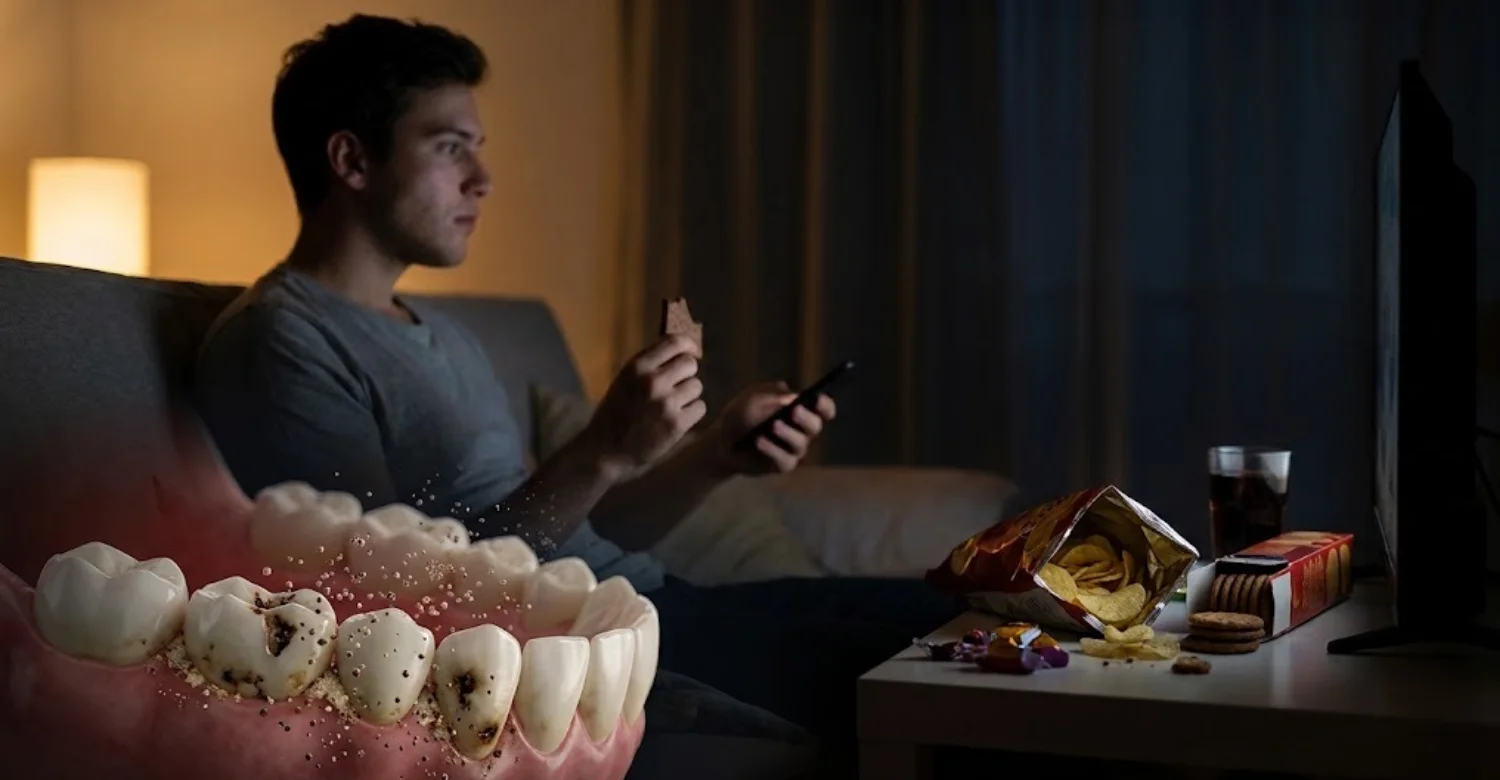
Eating before bed and cavities are connected because leftover food feeds plaque bacteria all night. If you snack and go straight to sleep, sugars and starches remain on tooth surfaces. This extended contact explains why late snacking and decay often appear together in dental patients.
Why Does Saliva Production Decrease During Sleep?
Saliva production naturally drops during sleep as part of the body's normal resting cycle. Saliva normally rinses away food and helps neutralize acids. Less flow means teeth lose this protection. This drop explains much of the risk, especially after sugary or sticky foods.
How Do Oral Bacteria Contribute to Tooth Decay at Night?
Oral bacteria in plaque break down fermentable carbohydrates and release acids as a by-product. At night, with lower saliva flow, these acids linger longer on the enamel. Over time, repeated acid attacks soften and weaken the tooth surface. This is how nighttime snacking and tooth decay gradually lead to cavities.
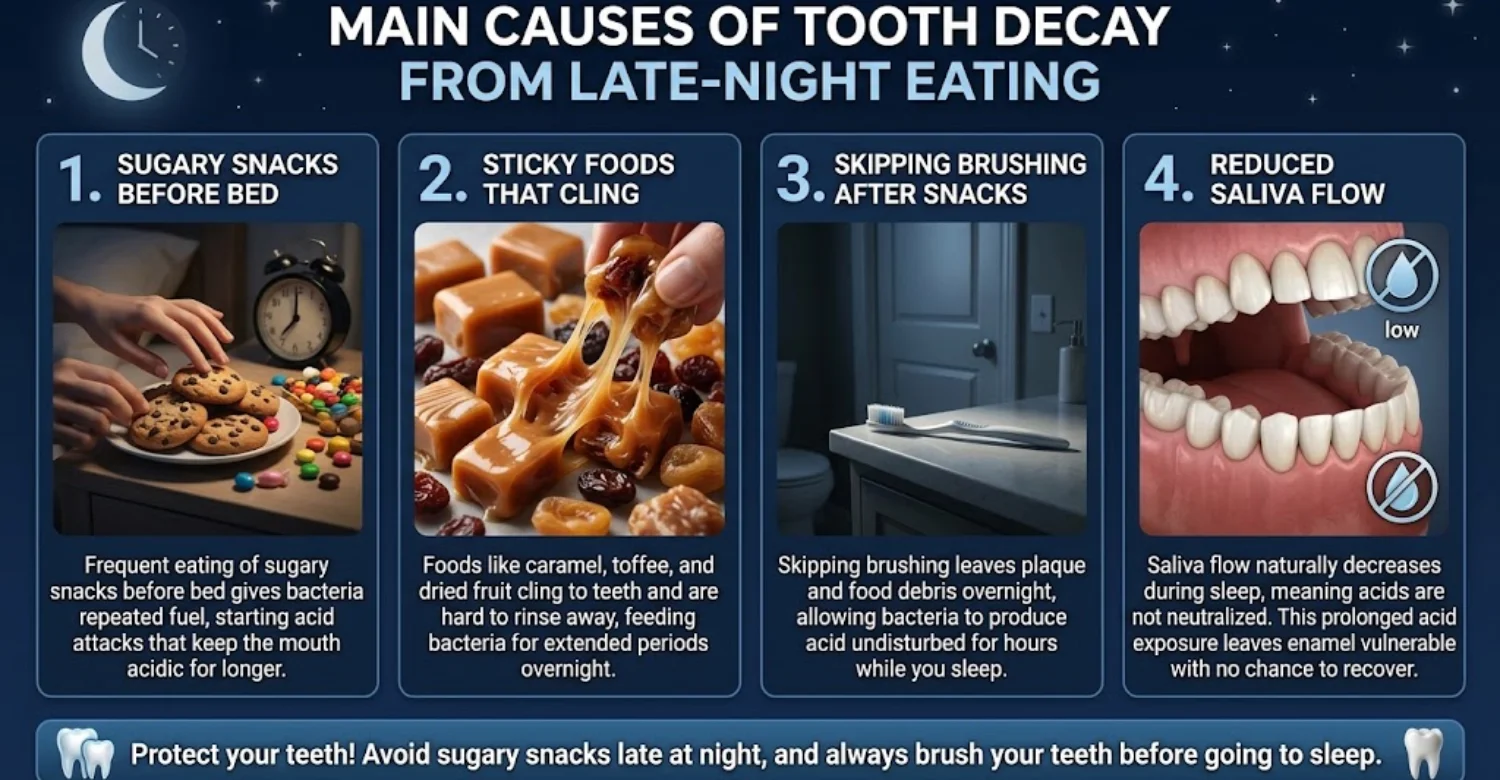
What Are the Main Causes of Tooth Decay From Late-Night Eating?
Several habits combine to create the problem. The late night eating effects on teeth depend on three things. These are what you eat, how often you eat, and whether you clean your teeth afterward. Looking at each cause separately shows where the damage begins and how to stop it.
Frequent Consumption of Sugary Snacks Before Bed
Frequent sugary snacks before bed give bacteria repeated fuel. Each snack starts a new acid attack. Several evening treats keep the mouth acidic for longer. Nighttime sugar and tooth decay are strongly connected, so eating fewer sweets in the evening makes a real difference.
Eating Sticky Foods That Remain on Teeth
Sticky foods such as caramel, toffee, and dried fruit cling to grooves and between teeth. They are hard to rinse away, so they feed bacteria for extended periods. When eaten late and left overnight, they cause even more damage.
Skipping Brushing After Late-Night Snacks
Skipping brushing after late-night snacks leaves plaque and food debris on the teeth during sleep. Without brushing, bacteria keep producing acid for hours. Brushing teeth after late night snacks removes much of this material. Brushing again before bed lowers the risk of cavities forming.
Reduced Saliva Flow and Prolonged Acid Exposure
Reduced saliva flow during sleep means bacterial acids are not neutralized quickly. This prolonged acid exposure gives enamel little chance to recover between attacks. It is one reason night snacks harm teeth more than daytime snacks, when saliva is active.
Which Foods Cause Cavities When Eaten at Night?
Not all foods carry the same risk. Foods that cause cavities at night are usually high in sugar, rich in fermentable carbohydrates, or sticky. Knowing the most harmful snacks helps you break the cycle of nighttime snacking and tooth decay.
Candy, Chocolate, and Sugary Desserts
Candy, chocolate, and sugary desserts are classic examples of bedtime snacks and tooth decay risk. They deliver concentrated sugar that bacteria quickly turn into acid. Hard candies dissolve slowly, extending exposure, while desserts often coat the teeth. Enjoying these earlier in the day, followed by brushing, is a safer choice.
Cookies, Cakes, and Sweet Baked Goods
Cookies, cakes, and sweet baked goods combine sugar with refined starches. These carbohydrates break down into sugars in the mouth and can become trapped between teeth. Eaten late at night without brushing, they feed plaque bacteria for hours.
Sugary Cereals and Sweetened Yogurt
Sugary cereals and sweetened yogurt may seem like light evening options. However, many contain significant added sugar. Cereal can also soften and stick to teeth. Choosing plain, unsweetened versions reduces risk. Reading nutrition labels helps you avoid hidden sugars that raise your cavity risk at night.
Dried Fruits and Other Sticky Snacks
Dried fruits and other sticky snacks are often seen as healthy. Yet their concentrated natural sugars and chewy texture help them cling to teeth. Raisins, dates, and fruit bars can stay lodged in grooves overnight. If you eat them in the evening, rinse with water and brush before sleeping.
Tips for the Patients
Small, consistent changes to your evening routine can reduce this risk:
Limit sugary snacks before bedtime.
Choose tooth-friendly snacks when you feel hungry at night.
Avoid repeatedly snacking on foods containing fermentable carbohydrates.
Drink water after eating to help clear food debris from the mouth.
Note : All images used are for editorial and illustrative purposes only. They may not originate from the original news provider or associated company.
Does Eating Sweets Before Bed Increase the Risk of Cavities?
Yes, eating sweets before bed can increase cavity risk. Sugar remains on teeth while saliva flow is low. The issue is not sweetness itself but how bacteria use sugar to produce acid. This explains why nighttime sugar plays such a big role in decay.
How Sugar Feeds Cavity-Causing Bacteria
Cavity-causing bacteria in plaque feed on sugars and fermentable carbohydrates from your food. As they digest these sugars, they release acids directly onto the tooth surface. More sugar means more acid. That is why eating sweets before bed creates ideal conditions for decay overnight.
How Acid Attacks Weaken Tooth Enamel
Acid attacks draw minerals out of tooth enamel, gradually weakening its structure. Early on, this may appear as white spots. If attacks continue without enough recovery time, the weakened enamel can break down into a cavity. Nighttime snacking and tooth decay follow this same step-by-step pattern.
Why Frequent Sugar Exposure Matters More Than a Single Snack
How often you eat sugar matters more than a single snack. Each exposure triggers an acid attack. Grazing on sweets all evening keeps enamel under repeated stress. One treat followed by brushing is far less harmful than constant snacking.
Clinical Note
When oral bacteria break down fermentable carbohydrates, they produce acids that can weaken tooth enamel. The dental team at Vitrin Clinic highlights that repeated sugar exposure and poor plaque removal raise cavity risk. This is especially true when nighttime snacking becomes a regular habit.
Ready to transform your smile?
Talk to our team and get a personal FREE treatment plan.
Should You Brush Your Teeth After Late-Night Snacks?
Yes. Brushing teeth after late night snacks is one of the most effective ways to reduce risk. Removing food debris and plaque before sleep limits the acid bacteria can produce overnight. With fluoride toothpaste, this simple step breaks the link between nighttime snacking and tooth decay for many people.
Why Brushing Before Bed Is Essential
Brushing before bed clears plaque and food particles before the mouth's longest period of low saliva flow. A clean mouth at bedtime gives bacteria less fuel to produce acid. Skipping this step is one of the most common reasons cavities form after evening snacks.
How Fluoride Toothpaste Helps Protect Enamel
Fluoride toothpaste helps strengthen tooth enamel and makes it more resistant to acid attacks. It also supports the repair of early mineral loss before a cavity forms. Brushing with fluoride toothpaste before sleep leaves a protective layer on teeth. This is especially valuable after evening snacks or sweet drinks.
How Long Should You Wait to Brush After Acidic Foods and Drinks?
After acidic foods or drinks, such as citrus, soda, or juice, enamel may be temporarily softened. Rinse with water and wait about 30–60 minutes before brushing. This allows saliva to begin neutralizing acids, so brushing does not wear the weakened surface. Plan late snacks so this waiting time fits before bed.
What to Do if You Eat After Brushing Your Teeth
If you eat after brushing your teeth, brush again before sleeping. Even a small snack leaves sugars and particles that bacteria can use overnight. If brushing is not possible, rinse well with water to reduce debris. This habit helps keep nighttime snacking and tooth decay under control.
Tips for the Patients
Follow these simple daily habits to protect your teeth at night:
Brush twice daily with fluoride toothpaste, including before bed.
If you eat after brushing, brush again before sleeping.
After acidic foods or drinks, rinse with water and wait about 30–60 minutes before brushing.
Clean between your teeth daily to remove plaque and trapped food particles.
What Are the Warning Signs of Tooth Decay Caused by Nighttime Snacking?
Tooth decay often starts quietly, so recognizing early signs matters. Symptoms range from subtle enamel changes to noticeable pain. Spotting these signs early allows simpler treatment. It also helps prevent damage from reaching deeper into the tooth. Watch for the following changes.
White Spots on Tooth Enamel
White, chalky spots on tooth enamel are often the earliest visible sign of mineral loss. They show that acid has started weakening the surface. At this stage, better oral hygiene, less frequent sugar, and fluoride may help strengthen the enamel. This can stop the damage before it turns into a true cavity.
Tooth Sensitivity to Sweet, Hot, or Cold Foods
Tooth sensitivity to sweet, hot, or cold foods can signal that decay has reached deeper layers. A brief, sharp twinge when eating dessert or drinking something cold is worth noting. If sensitivity persists, a dental examination can find out whether decay or another issue is responsible.
Visible Holes or Dark Spots on Teeth
Visible holes, pits, or dark spots on teeth often mean decay has progressed beyond the early stage. Brown or black areas may indicate a cavity that needs professional treatment. When late-night snacking habits continue unchecked, these changes become more common. Booking a dental visit promptly is important.
Persistent Toothache or Pain When Chewing
A persistent toothache or pain when chewing may mean decay has reached deeper parts of the tooth. This type of discomfort should not be ignored, as untreated cavities can worsen over time. Prompt dental care can relieve pain and help preserve as much of the natural tooth as possible.
How Can You Prevent Cavities Caused by Nighttime Snacking?
Learning how to prevent cavities at night does not require drastic changes. A consistent routine, smarter snack choices, and regular professional care work together to reduce risk. These strategies address each factor behind nighttime snacking and tooth decay. They help keep your teeth strong while you still enjoy occasional evening snacks.
Establish a Consistent Bedtime Oral Hygiene Routine
Establish a consistent bedtime oral hygiene routine. Brush for two minutes with fluoride toothpaste. Clean between your teeth with floss or interdental brushes, and avoid eating afterward. Repeating these steps every night removes plaque before sleep. It is the most reliable defense against nighttime snacking and tooth decay.
Reduce Sugary Snacks and Drinks in the Evening
Reducing sugary snacks and drinks in the evening limits the fuel available to bacteria. Try setting a cut-off time for sweets and swapping soda or juice for water. Avoid grazing after dinner. Fewer sugar exposures mean fewer acid attacks and a lower risk linked to bedtime snacks and tooth decay.
Choose Tooth-Friendly Alternatives for Late-Night Hunger
If you feel hungry at night, choose tooth-friendly alternatives. Plain nuts, cheese, plain unsweetened yogurt, or raw vegetables are lower in sugar and less likely to stick to teeth. Drinking water afterward helps rinse away debris.
Schedule Regular Dental Checkups
Regular dental checkups allow early detection of enamel changes and small cavities before they cause pain. Your dentist can also remove hardened plaque that brushing misses. They can assess your individual cavity risk as well. Routine visits help catch problems caused by nighttime snacking and tooth decay at an early, manageable stage.
Consider Fluoride-Based Preventive Care When Appropriate
For patients with higher cavity risk, fluoride-based preventive care may be recommended. This can include professionally applied fluoride treatments that help strengthen enamel against acid attacks. Your dentist will advise whether this suits your oral health, daily habits, and history of decay.
Clinical Note
Preventing cavities requires effective oral hygiene, less frequent sugar exposure, adequate fluoride use, and regular dental assessments. The dental team at Vitrin Clinic stresses that prevention should be tailored to each patient's risk and oral health needs.
How Can Vitrin Clinic Help Prevent and Treat Tooth Decay?
Vitrin Clinic supports patients at every stage, from prevention to treatment. You may want to reduce your risk or address an existing cavity. Either way, the clinic offers dental assessment and individualized treatment planning based on your clinical findings.
.webp)
.webp)
.jpg)
Dental Examinations to Identify Early Signs of Cavities
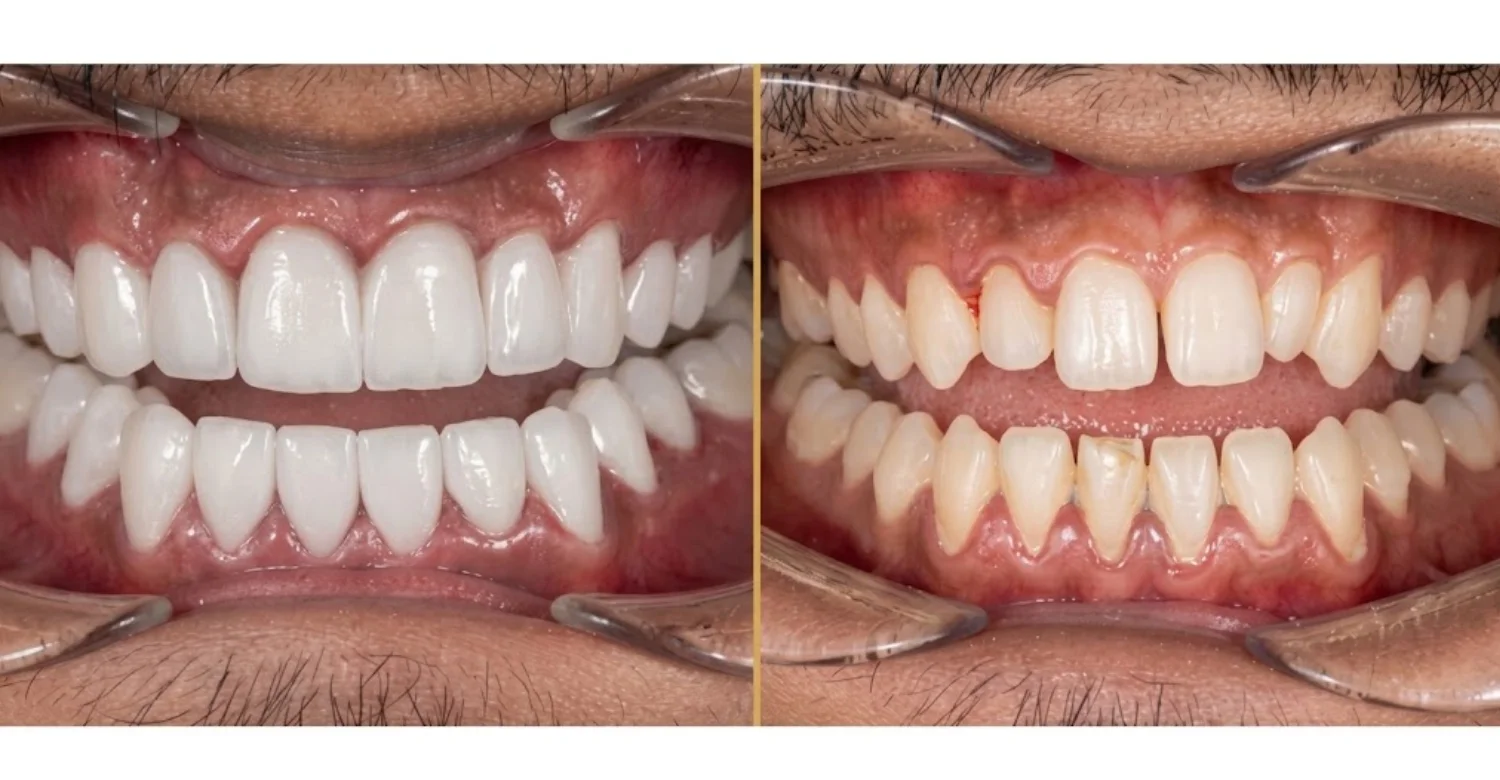
Dental examinations at Vitrin Clinic help identify early signs of cavities before they become painful. These include enamel changes or small areas of decay. Early detection often allows simpler, more conservative care. The dental team emphasizes finding decay early and developing an appropriate care plan.
Personalized Oral Hygiene and Preventive Care Guidance
Every patient's cavity risk is different. Vitrin Clinic provides personalized oral hygiene and preventive care guidance. This includes advice on brushing technique, cleaning between teeth, snack timing, and fluoride use. These tailored tips help patients change the daily habits behind nighttime snacking and tooth decay.
Treatment Options for Existing Tooth Decay
When decay is already present, treatment depends on how far it has progressed. Vitrin Clinic evaluates each case and recommends suitable options based on clinical findings. Early-stage decay may be managed with preventive measures. Established cavities usually need professional treatment to remove damaged tissue and protect the tooth.
Restorative Solutions for Teeth Affected by Cavities
For teeth affected by cavities, restorative solutions aim to rebuild strength, function, and appearance. Depending on the extent of damage, Vitrin Clinic can discuss suitable restorative options. These form part of an individualized treatment plan. The goal is to restore comfortable chewing and preserve the natural tooth wherever possible.
What We Notice Clinically
Dr. Rifat Alsaman is Head of the Medical Team at Vitrin Clinic and a cosmetic dentist. Dr. Alsaman notes that cavities linked to evening habits often appear where food collects. Common areas include chewing grooves and the spaces between teeth. Patients who snack after brushing or eat sweets late tend to show more plaque. This reflects the link between nighttime snacking and tooth decay.
Tips for the Patients
If you have concerns about your teeth, these steps can help you act early:
Book a dental assessment if you notice sensitivity, spots, or pain.
Mention your evening snacking habits during your visit.
Follow your personalized preventive plan at home.
Contact Vitrin Clinic to discuss suitable preventive or restorative options.
Resource:
https://pmc.ncbi.nlm.nih.gov/articles/PMC6890483/
FAQs
Dr. Rifat Alsaman has more than 5 years of clinical experience in dentistry and currently serves as the Head of the Medical Team at Vitrin Clinic. He is dedicated to providing exceptional patient care, overseeing treatment planning, and ensuring the highest clinical standards across the team. His expertise, attention to detail, and commitment to continuous professional development have helped countless patients achieve healthier, more confident smiles.


