General Dentistry
October 11, 2026
Missing Teeth Chewing Problems: Why Tooth Loss Can Make Eating Difficult?
 Dr. Rifat Alsaman
Missing teeth chewing problems can begin with a single gap. Losing one or more teeth changes how you bite, chew, and choose foods. You may avoid meat or crunchy foods, chew on one side, or take longer to finish meals. Food may also feel poorly broken down. This guide explains how tooth loss, chewing ability, nutrition, and tooth replacement are connected. The effect varies with the number and position of missing teeth, your remaining teeth, gum health, and bite.
Missing Teeth Chewing Problems: How Tooth Loss Can Change the Way You Eat
Missing teeth chewing problems affect far more than appearance. They change how meals feel every day. Each tooth has a job, and a gap removes part of the system. You may bite differently, chew longer, or shift food to one side without noticing. Over time, these small adjustments can shape what you choose to eat. Understanding how normal chewing works makes these changes easier to recognize. The sections below explain what chewing requires and why gaps make it harder.
What chewing normally requires
Chewing is teamwork. Your front teeth, the incisors, cut food. The pointed canines grip and tear it. Premolars and molars then crush and grind tougher foods into smaller pieces. Molars do most of this heavy work because their surfaces are broad. Your tongue and cheeks keep food positioned between the teeth. Jaw muscles provide the force and the rhythm. Saliva moistens everything into a soft mass that is safe to swallow. When one part is missing, the whole process becomes less efficient.
Why missing teeth can make chewing feel harder
A gap reduces the surfaces available for breaking down food. Teeth work in pairs, so a missing tooth also leaves its opposing tooth with nothing to bite against. The remaining teeth then carry more of the workload. You may naturally move food to the side that feels stronger. This is a common adaptation. It also explains why missing teeth chewing problems often mean longer meals. Each mouthful needs more chewing strokes and more effort before it feels ready to swallow.
What you might notice during meals
The signs are often subtle at first. You may find yourself avoiding foods that used to be easy to eat. You might cut food into smaller pieces or chew much longer. You may notice that your jaw feels tired after a meal. You might prefer softer foods because they feel easier to manage. None of these changes is unusual. They are typical signs of missing teeth chewing problems, and they are worth mentioning at your next dental visit.
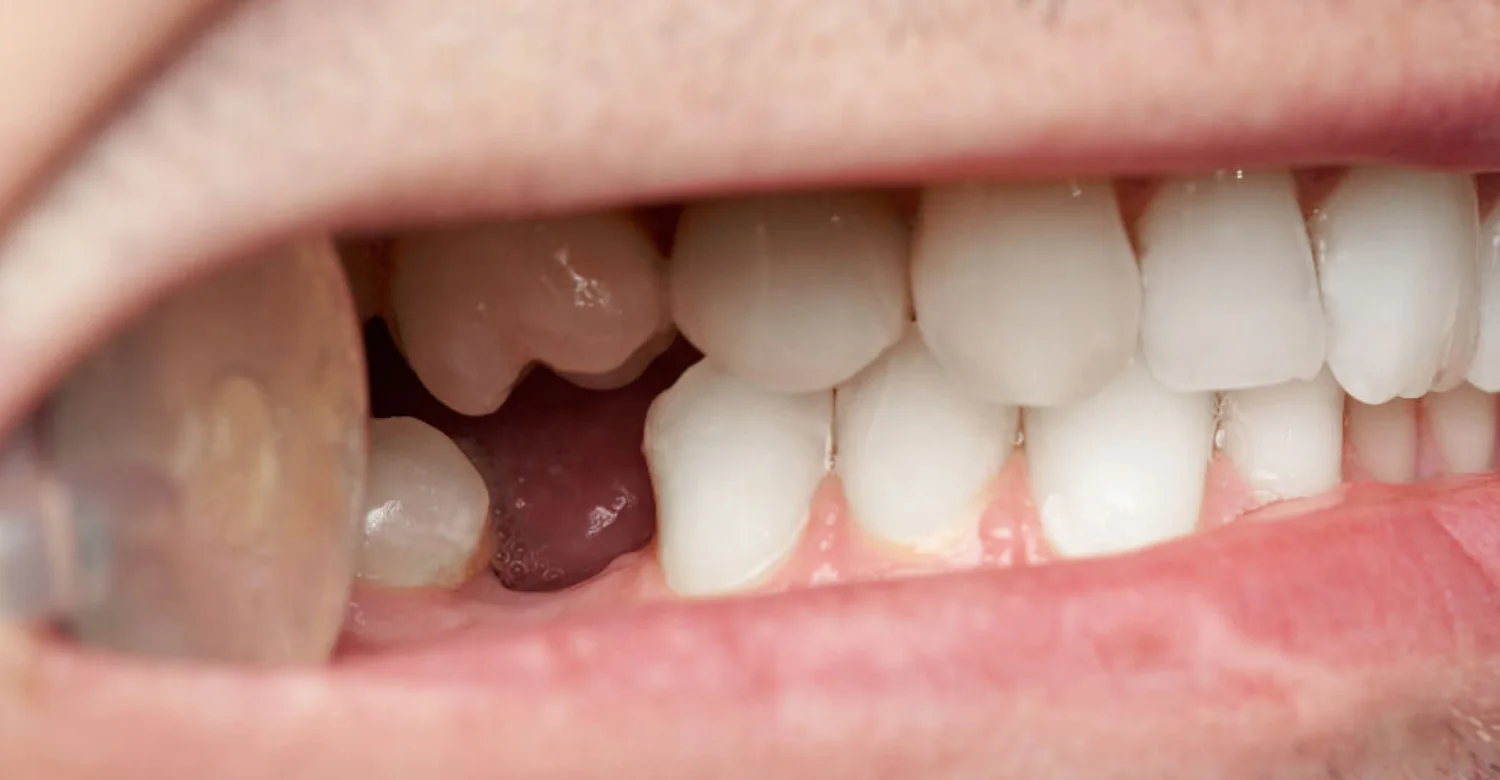
What Problems Can Missing Teeth Cause When You Chew?
Missing teeth can cause several connected difficulties when you chew. Food may not be broken down as well. Certain textures may become uncomfortable. Meals may take longer, and you may rely on one side. These missing teeth chewing problems rarely appear all at once. They tend to develop gradually as you adapt. The effect also differs from person to person. Below, we look at the four main ways tooth loss can influence chewing ability and everyday eating habits.
Missing teeth difficulty chewing
Missing teeth difficulty chewing depends largely on which teeth are lost and how many. Losing a front tooth mainly affects biting into foods, such as an apple or a sandwich. It can also affect speech and appearance. Losing several back teeth is different. It removes the broad surfaces that grind food. As a result, tough or fibrous foods become harder to manage. One missing molar may cause little trouble. Several missing molars on the same side usually cause much more.
Tooth loss chewing ability
Tooth loss chewing ability is closely linked to tooth contact. Food is broken down where upper and lower teeth meet. Each lost tooth removes some of these contact points. With fewer contacts, food particles stay larger after the same number of chews. Your remaining teeth can compensate to a degree. You may chew longer or swallow slightly larger pieces. However, this compensation has limits. It also places extra load on the teeth that are still doing the work.
Missing teeth eating problems
Missing teeth eating problems often show up as practical changes. You might skip steak, crusty bread, or raw carrots. You may eat more slowly than others at the table. Softer meals may start to replace foods you once enjoyed. At first, these are conscious choices. Over time, they can become habits you no longer notice. Family members sometimes notice first. This is why missing teeth chewing problems are sometimes underestimated. The mouth adapts, but the diet may quietly become narrower.
Chewing with missing teeth
Chewing with missing teeth usually leads to a preferred side. This is a natural adaptation, because the body favors the side with more tooth contacts. It does not mean every person needs immediate tooth replacement. Some people function comfortably with a shortened row of teeth. However, constant one-sided chewing may concentrate wear and load on fewer teeth. A dental assessment can clarify your situation. It shows whether your current pattern is stable or likely to cause problems later.
Tips for Patients
A few practical steps can make missing teeth chewing problems easier to manage before your appointment.
Cut harder foods into smaller pieces if chewing feels difficult.
Keep your diet varied instead of relying only on very soft foods.
Tell your dentist if you chew almost entirely on one side.
Bring a list of foods you have stopped eating.
Ask whether your remaining teeth, bite, and gums suit your preferred replacement option.
What Causes Chewing Problems After Tooth Loss?
Several factors decide how strongly tooth loss affects chewing. The number of missing teeth matters. Their position matters too. Over time, the bite itself can change as neighboring teeth move. The gum and bone around the gap may also change. Existing dental problems can add to the difficulty. No single factor acts alone. Together, these factors explain why missing teeth chewing problems vary so widely between people. We cover them below, from the most common to the more clinically significant.
The number of teeth you have lost
The number of lost teeth strongly influences chewing. One missing tooth may cause only a mild change. Your other teeth can usually share the work. Multiple missing teeth reduce the chewing surface much further. Research generally links fewer remaining teeth with lower chewing efficiency. However, numbers alone do not tell the whole story. Position matters as well. What counts most is how many pairs of upper and lower teeth still meet. Those pairs do the chewing.
Where the missing teeth are located
Location shapes the type of difficulty. Molars and premolars grind food, so losing them reduces chewing efficiency most. Tough meats, nuts, and raw vegetables become harder to break down. Even one lost molar can matter. Front teeth have a different role. They cut and bite off pieces of food. Losing them makes biting into foods awkward, but grinding is less affected. For this reason, missing teeth chewing problems are usually greater when back teeth are lost, especially several on one side.
Changes in your bite
Teeth are not fixed in place forever. When a gap is left open, neighboring teeth can tilt or drift into the space. This is called tooth migration, meaning movement of teeth into or toward a gap. The tooth opposite the gap may also gradually over-erupt, moving further out toward the space. These shifts can change how your upper and lower teeth meet. Food may then trap more easily. The changes usually happen slowly and do not occur in every person.
Gum and bone changes
The bone that holds a tooth depends on that tooth for stimulation. After a tooth is lost, the surrounding bone gradually shrinks. This process is called resorption. It is a normal biological response. Most of the change tends to occur in the first months, then continues more slowly. The gum follows the shape of the bone beneath it. The extent varies considerably between individuals. These changes can influence how a denture fits. They can also affect planning for an implant later.
Existing dental problems
Other dental conditions can make missing teeth chewing problems worse. Worn teeth have flatter, less effective surfaces. Cavities can make biting painful. Gum disease may leave teeth tender or loose. Jaw joint or muscle discomfort can limit how hard you bite. Poorly fitting dentures may move during meals. Each of these reduces chewing comfort on its own. Combined with gaps, the effect is greater. This is why a full examination matters more than counting the missing teeth.
Can Missing Teeth Affect Nutrition?
Yes, missing teeth can affect nutrition, mainly through food choices. When chewing is difficult, people tend to choose foods that are easier to eat. Studies have associated tooth loss with lower intake of fruits, vegetables, and fiber. However, these are associations. They do not prove cause. Diet is also shaped by health, income, habits, and preferences. So missing teeth chewing problems do not guarantee poor nutrition. They are simply one factor worth considering, particularly when your diet has clearly changed.
Tooth loss nutrition and food choices
Tooth loss nutrition concerns usually start with texture. Hard, fibrous, or chewy foods demand more effort. If chewing them is uncomfortable, you may gradually choose softer alternatives. Soft foods are not unhealthy in themselves. The concern is reduced variety. Variety is what protects nutritional quality. Many soft, convenient foods are more processed and lower in fiber. When tougher foods become inconvenient, they often disappear from the plate. A balanced diet is still possible, but it may require more planning and preparation.
Foods you might start avoiding
People with missing teeth chewing problems often avoid similar foods. Common examples include:
Raw vegetables, such as carrots and celery
Crisp foods, such as crusty bread
Nuts and seeds
Tough meats, such as steak
Firm fruits, such as apples
These foods need strong, repeated grinding. Many of them are also valuable sources of fiber, protein, and vitamins. If several have left your diet, mention it to your dentist. Preparing them differently can help in the meantime.
Why nutrition should be considered during a dental assessment
Nutrition deserves a place in your dental assessment. Your eating habits show how well your teeth are functioning in daily life. However, a nutrition concern does not automatically mean tooth loss has caused a deficiency. Many other factors influence nutritional health. Only appropriate medical evaluation can confirm a deficiency. If your diet has changed considerably, tell your dentist. Mention any missing teeth chewing problems too. If you have unintended weight loss or ongoing fatigue, speak to a medical professional as well.
What We Notice Clinically
When someone reports chewing difficulty after tooth loss, we assess function before discussing replacement. Dr. Rifat Alsaman, Head of the Medical Team and cosmetic dentist at Vitrin Clinic, supports this approach. A dentist examines which teeth are missing and which teeth still meet. The gums, bite, and jaw movement are checked too. Your own description of meals is equally useful. Together, these findings explain why missing teeth chewing problems have developed and what may realistically help.
We look beyond the visible gap
A gap is only part of the picture. The assessment should include the remaining teeth, gums, bite, jaw function, and the location of the missing teeth. Dr. Rifat Alsaman, Head of the Medical Team and cosmetic dentist at Vitrin Clinic, explains that the functional effect of tooth loss should be assessed alongside the appearance of the smile. A space that looks minor can still disturb chewing. Equally, a visible gap may cause little functional difficulty. Both situations are common.
The way you chew can provide useful clues
Your chewing habits tell us a great deal. Small details matter here. Chewing on one side suggests the other side has fewer working contacts. Avoiding certain foods points to reduced grinding ability or discomfort. Repeatedly repositioning food may mean it keeps slipping into a gap. These observations do not provide a diagnosis on their own. However, they guide where we look more closely. They also help us understand how missing teeth chewing problems affect your daily routine.
Every missing-tooth case needs an individual plan
No two mouths are the same. The number of missing teeth alone does not determine the best treatment. Two people with identical gaps may need different solutions. Dr. Rifat Alsaman, Head of the Medical Team and cosmetic dentist at Vitrin Clinic, stresses the importance of evaluating the whole bite and the remaining oral structures before choosing a replacement option. Bone, gum health, and neighboring teeth all influence the plan. So do your preferences and your ability to maintain the result.
What Can You Do at Home if Missing Teeth Make Chewing Difficult?
At home, you can make eating more comfortable with simple, low-risk measures. Adjust food textures, avoid painful chewing, and look after your remaining teeth. These steps support you while you arrange an assessment. Small changes can help straight away. They do not replace treatment. Home care cannot restore lost chewing surfaces or stop teeth from shifting. Think of it as temporary support. If missing teeth chewing problems persist or worsen, a dental examination is the appropriate next step.
Choose foods that feel manageable
If chewing is uncomfortable, modify texture temporarily rather than removing foods completely. Cut meat, fruit, and bread into smaller pieces. Cook firm vegetables until they are softer. Try minced or slow-cooked meats instead of tough cuts. Ground nuts or smooth nut butters can replace whole nuts. Fish, eggs, yogurt, and lentils are nutritious and easy to chew. Soups and stews work well too. The aim is to keep your diet varied while making each mouthful easier to manage.
Avoid forcing painful chewing
Pain is a signal worth respecting. Repeatedly chewing through significant pain is not a suitable long-term solution. It may overload a tooth or irritate sore gum tissue. Chew on the comfortable side for now, and choose softer textures. However, do not accept this as permanent. Pain while chewing can come from decay, a cracked tooth, gum disease, or a poorly fitting denture. If discomfort persists for more than a few days, arrange a dental assessment. Seek help sooner if pain is severe.
Maintain the teeth you still have
Your remaining teeth are now doing extra work, so protect them. Brush twice daily with fluoride toothpaste. A soft toothbrush is gentle on the gums. Clean between the teeth every day with floss or interdental brushes. Pay attention to the teeth beside a gap, because plaque collects there easily. Attend regular dental examinations, even when nothing hurts. Preventing further tooth loss is the most effective way to stop missing teeth chewing problems from becoming more difficult to manage.
Assistive Options for Eating With Missing Teeth
Some practical options can help while you consider definitive treatment. These include temporary food modifications and removable tooth replacements. Adjusting an existing denture professionally may also help. None of these options suits everyone. Your dentist can advise which is suitable. Their value depends on how many teeth are missing and where. They can, however, reduce missing teeth chewing problems in the short term. This gives you time to consider longer-term solutions without feeling rushed. The options are outlined below.
Temporary food modifications
Temporary changes to meals can keep eating comfortable. Smaller portions and softer textures reduce the effort each mouthful requires. Take smaller bites and allow more time for meals. Chew slowly on both sides if possible. Keep meals nutritionally varied. Include protein, vegetables, fruit, and whole grains in forms you can manage. Soups, stews, and steamed dishes are useful examples. Blending is an option, but it is rarely necessary. These adjustments are a short-term aid, not a permanent answer to reduced chewing ability.
Removable tooth replacement
Removable dentures and partial dentures can restore some chewing surfaces. A partial denture fills gaps between remaining teeth. A complete denture replaces all the teeth in one jaw. Both are removed for cleaning. They are a common answer to missing teeth chewing problems. Function depends heavily on fit and stability. A well-fitting denture supports chewing reasonably well. Even so, removable dentures generally provide less biting force than natural teeth. Adaptation takes practice. Lower complete dentures tend to be less stable than upper ones.
Existing dentures that no longer feel comfortable
A denture that once fitted well may loosen over time. The bone and gums beneath it continue to change shape. A loose denture can rock, rub, or trap food. Sore spots or ulcers may also develop. This makes missing teeth chewing problems worse rather than better. Do not adjust, file, or reline it yourself at home. Home repairs can damage the denture and injure your gums. A dentist can assess whether it needs adjusting, relining, or replacing.
.jpg)
When Should You See a Dentist About Chewing Problems?
You should see a dentist when chewing difficulty lasts, worsens, or limits what you eat. Short-term self-management is reasonable. However, it should not continue indefinitely. Waiting rarely makes the problem simpler. Persistent missing teeth chewing problems deserve a proper examination. Early assessment usually offers more treatment choices, because teeth and bone may change over time. Some symptoms also need attention beyond dentistry. The signs below will help you decide when to book an appointment and when to seek wider medical advice.
Signs that deserve a dental assessment
Book a dental assessment if any of these apply:
You regularly avoid foods because you cannot chew them comfortably.
You chew almost exclusively on one side.
Your jaw becomes tired or painful while eating.
A missing tooth is affecting your ability to eat normally.
Your bite feels different after losing a tooth.
Your denture feels unstable or painful.
These signs do not always mean treatment is needed. They do mean the cause should be checked. Mention how long each sign has lasted.
When chewing difficulty may need broader medical attention
Not every eating difficulty comes from the teeth. Some symptoms should not simply be attributed to missing teeth. These include unexplained difficulty swallowing, significant unintended weight loss, persistent facial swelling, and severe pain. A mouth ulcer or lump that does not heal within about three weeks also needs checking. These signs can have dental or medical causes. Seek prompt dental or medical evaluation. Do not delay in these situations. Rapidly spreading swelling, fever, or difficulty breathing requires urgent care.
How Can Missing Teeth Be Replaced to Improve Chewing?
Missing teeth can be replaced with partial dentures, bridges, or dental implants. The options range from less invasive to more comprehensive. Each option aims to replace missing teeth chewing surfaces in a different way. Chewing usually becomes more balanced afterwards, although results differ between people. No single option is right for everyone. The choice depends on your remaining teeth, gums, bone, bite, and preferences. Careful planning is the best way to address missing teeth chewing problems reliably.
Partial dentures
A partial denture is a removable appliance that replaces one or several missing teeth. It rests on the gums and is held by the remaining teeth, often with clasps. It can replace several teeth in different areas at once. It is usually removed at night. No surgery is required. Expectations should be realistic. Chewing usually improves, but a partial denture may move slightly during use. Most people need a few weeks to adapt. Daily cleaning and regular reviews keep it comfortable.
Dental bridges
A dental bridge is a fixed restoration that replaces a missing tooth. It uses the neighboring teeth for support. In a conventional bridge, those teeth are reshaped and covered with crowns that hold the replacement tooth. A bridge stays in place and often feels stable when chewing. It can reduce missing teeth chewing problems in suitable cases. It may suit you when the supporting teeth are strong and healthy. It may be less suitable when those teeth are weak or the gap is long.
Dental implants
A dental implant is a replacement tooth root placed in the jaw. It is usually made of titanium. The bone bonds with it during healing. This process is called osseointegration. An implant-supported crown can then restore an individual missing tooth without involving neighboring teeth. Many people ask about dental implants chewing performance. Implants can offer stable chewing, and they often help with missing teeth chewing problems. However, function depends on proper planning, healing, restoration, bite, and overall oral health.
Implant-supported restorations for multiple missing teeth
Several missing teeth do not always need one implant each. An implant-supported bridge can replace a row of teeth using fewer implants. When all teeth in a jaw are missing, a fixed bridge or a removable overdenture can attach to implants. Overdentures are generally more stable than conventional dentures. A fixed option is not suitable for everyone. The appropriate design depends on your anatomy, bone volume, and remaining teeth. General health and cleaning ability also matter. Planning is therefore highly individual.
What Are the Benefits of Replacing Missing Teeth for Chewing?
Replacing missing teeth can restore chewing surfaces, ease everyday eating, and support a more balanced bite. These benefits are well recognized. However, they are not identical for every person. Honest expectations matter from the start. The outcome depends on the type of replacement, your oral health, and your adaptation. Suitable treatment often reduces missing teeth chewing problems noticeably. It may not fully recreate your original chewing ability. The sections below explain each benefit and what you can reasonably expect.
Restoring more functional chewing surfaces
Tooth replacement adds surfaces where food can be broken down. Each restored tooth can meet its opposing tooth again. This recreates contact points lost with the original tooth. More contacts usually mean food is crushed more efficiently. You may need fewer chewing strokes per mouthful. The benefit is greatest when back teeth are restored. This is how replacement eases missing teeth chewing problems. How much function returns depends on the restoration. Fixed options generally feel firmer during chewing than removable ones.
Making everyday eating more manageable
Appropriate replacement can make daily meals easier. After healing and adaptation, many people return to a broader range of foods. Firm fruits, vegetables, and meats may become comfortable again. Progress is usually gradual. Start with softer textures and build up. Patience helps during this stage. Not every patient regains their previous chewing ability. Results depend on the restoration, the remaining teeth, and your adaptation. Still, many people find that missing teeth chewing problems interfere far less with their meals.
Supporting a more balanced bite
Replacing teeth can help distribute biting forces more evenly. When both sides have working contacts, you are less likely to rely on one side. The remaining teeth then carry less extra load. Filling a gap can also help prevent neighboring teeth from drifting further. These benefits depend on proper planning. The new tooth must meet the opposing teeth correctly. Your dentist checks this carefully at fitting. A restoration that sits too high or too low can create new discomfort.
Before-and-after expectations
Realistic expectations help you judge your progress.
Before replacement, you may be:
Avoiding certain foods
Chewing mostly on one side
Taking longer to eat
Feeling uncertain about biting or chewing
After appropriate replacement and adaptation, you may notice:
More available chewing surfaces
Greater confidence with different food textures
A more balanced chewing pattern in suitable cases
These improvements develop gradually. Follow-up visits support this adaptation, so be patient with yourself. Missing teeth chewing problems often ease, but individual results vary.
How Long Does It Take to Adapt After Replacing Missing Teeth?
Adaptation time varies with the type of restoration. Fixed bridges and crowns usually feel natural within days to a couple of weeks. Removable dentures often need several weeks or longer. Implants involve a healing period before the final tooth is fitted. Your mouth, muscles, and brain all need time to adjust. Patience is important. Lingering missing teeth chewing problems during this stage are common and usually temporary. Follow-up visits allow your dentist to refine the fit and bite.
Removable dentures
Removable dentures need the longest adjustment period. At first, they may feel bulky. You may produce more saliva, and speech may sound slightly different. Reading aloud can help speech adapt. Chewing takes practice. Start with soft foods cut into small pieces, and chew slowly. Sore spots are common early on and can usually be relieved by a professional adjustment. Most people adapt over several weeks. Complete dentures, particularly lower ones, may take a few months to feel fully comfortable.
Bridges and crowns
Adapting to bridges and crowns is usually relatively straightforward. They are fixed in place, so they do not move during chewing. Many people feel comfortable within a few days. Some temporary sensitivity in the supporting teeth can occur. Occasionally, the new tooth feels slightly high when you bite. This is corrected with a minor bite adjustment. Tell your dentist if the bite still feels uneven after several days. Cleaning beneath a bridge needs special floss or interdental brushes.
Dental implants
Implant treatment has distinct stages. First, the implant is placed in the jaw. Then the bone heals around it, which commonly takes a few months. Next, the crown, bridge, or denture is fitted. Finally, you adapt to chewing on it. Your dentist will outline each stage beforehand. In selected cases, a temporary tooth is fitted earlier. The overall timeline depends on bone volume, healing, and restoration type. Additional procedures, such as bone grafting or a sinus lift, can extend it.
Prevention: How Can You Protect Your Remaining Teeth?
You can protect your remaining teeth through daily hygiene, early treatment, sensible precautions, and regular reviews. Each tooth you keep preserves chewing surfaces and supports your bite. The main causes of tooth loss in adults are decay and gum disease. Both are largely preventable. Small daily routines add up. Prevention also protects any restorations you already have. It remains the simplest way to stop missing teeth chewing problems from progressing. The four habits below make the greatest difference.
Maintain daily oral hygiene
Daily hygiene is the foundation of prevention. Brush twice daily for about two minutes. Use fluoride toothpaste, because fluoride strengthens enamel against decay. Clean between teeth once a day with floss or interdental brushes. A toothbrush alone cannot reach these areas. Replace your toothbrush about every three months. Take extra care around gaps, bridges, and implants. Clean removable dentures daily, and remove them at night unless advised otherwise. Consistent care lowers the risk of decay and gum disease in your remaining teeth.
Treat dental problems early
Small problems are easier to treat than large ones. Untreated decay can spread deeper until a tooth cannot be saved. Gum disease can gradually destroy the bone that supports teeth. A cracked or heavily damaged tooth may break further. Each of these raises the risk of further tooth loss. Early treatment is usually simpler and more conservative. Early signs include bleeding gums, sensitivity, and food trapping. Do not wait for pain, because many conditions are painless at first.
Protect your teeth from avoidable damage
Teeth are strong, but they can chip or crack. Avoid using them as tools to open packaging, bottles, or shells. Do not chew ice, pens, or very hard objects. Wear a mouthguard for contact sports. A custom-made guard usually fits best. If you grind or clench your teeth, ask your dentist about a night guard. Grinding can wear and overload the remaining teeth. Chipped teeth should be checked promptly. These precautions are especially important when fewer teeth share the chewing forces.
Keep regular dental reviews
Regular reviews allow problems to be detected early. Your dentist can monitor the remaining teeth, gums, and bite over time. Drifting teeth, wear, and early decay are often found before you notice symptoms. Existing dentures, bridges, and implants are checked too. Professional cleaning removes hardened deposits that brushing cannot. Attend even when you feel well. The ideal interval varies between people. Your dentist will recommend one based on your risk. This monitoring helps keep missing teeth chewing problems under control.
Clinical Note
Dr. Rifat Alsaman, Head of the Medical Team and cosmetic dentist at Vitrin Clinic, emphasizes that restoring missing teeth is not simply about filling a visible space. The assessment should consider function, remaining teeth, gum health, bone condition, and bite. It should also consider your ability to maintain the proposed restoration. A treatment that looks appropriate visually may not be suitable functionally. Tooth replacement can improve chewing in appropriate cases. The result depends on your individual clinical situation and adaptation.
Vitrin Clinic and Your Missing Teeth Assessment
At Vitrin Clinic, a missing teeth assessment starts with understanding how you eat and what you want to improve. The examination then covers the gaps, the remaining teeth, and the surrounding structures. Diagnostic imaging is used when clinically indicated. The aim is to explain your options clearly, including their limits. You are encouraged to ask questions. This section describes how missing teeth chewing problems are evaluated. It is intended as information, so you know what to expect from a consultation.
Individual treatment planning
Treatment planning begins with assessing the missing teeth and the surrounding oral structures. The gums, bone, neighboring teeth, and bite are all examined. The number and location of missing teeth influence the available options. A single gap between healthy teeth offers different choices from several missing back teeth. Your general health, expectations, and maintenance habits are considered as well. Only then can suitable options be compared. No two plans are identical. The plan should match your situation.
Digital and diagnostic technology
Diagnostic technology supports careful planning. CBCT, a form of three-dimensional X-ray imaging, may be used when clinically indicated. It shows bone volume and nearby structures, which is valuable for implant planning. Intraoral scanning can create a digital model of your teeth when appropriate. This often replaces conventional impressions. These tools improve the information available to the dentist. They support planning rather than guarantee a particular outcome. Imaging is recommended only when it is justified. Radiation exposure is kept as low as reasonably possible.
A function-first approach
A smile should work as well as it looks. Dr. Rifat Alsaman, Head of the Medical Team and cosmetic dentist at Vitrin Clinic, explains that chewing function, bite, gum health, and long-term maintenance should be considered alongside smile aesthetics. A restoration that looks attractive but chews poorly is not a complete result. Likewise, one that cannot be cleaned properly may not last. Both must work together. Addressing missing teeth chewing problems therefore means planning for function and maintenance first.
Don't Ignore Changes in How You Eat
Missing teeth can affect chewing, food choices, bite, and daily comfort. Not every person experiences the same degree of difficulty. Still, changes in how you eat deserve attention. Seek an individualized dental assessment if chewing has become noticeably harder. This matters most if you avoid foods or rely heavily on one side. Missing teeth chewing problems can often be improved. A realistic next step is to discuss your remaining teeth and replacement options with Vitrin Clinic.
Ready to transform your smile?
Talk to our team and get a FREE treatment plan.
References:
FAQs
Dr. Rifat Alsaman has more than 5 years of clinical experience in dentistry and currently serves as the Head of the Medical Team at Vitrin Clinic. He is dedicated to providing exceptional patient care, overseeing treatment planning, and ensuring the highest clinical standards across the team. His expertise, attention to detail, and commitment to continuous professional development have helped countless patients achieve healthier, more confident smiles.


