Dental Veneers in Turkey
October 21, 2026
Permanent Veneers: Cost, Lifespan, Benefits & Risks
 Dr. Rifat Alsaman

Your front teeth are the first thing people notice when you speak or smile. Chips, stains, gaps, or uneven edges can make you hide your smile. Many patients search for permanent veneers hoping for a one-time fix. The answer has two parts: the procedure is usually permanent, but the veneers themselves are not.
Veneers are thin porcelain or composite shells bonded to the visible surface of your teeth. You can treat just one or two teeth, or the full smile zone of six to ten. The right number depends on your goal, your smile line, and your budget. At Vitrin Dental Clinic in Istanbul, every plan starts with a tooth-by-tooth assessment. This guide covers:
What permanent veneers really means
How long veneers last
How many you may need
Typical costs per tooth
When crowns are the better choice
Ready to transform your smile?
Talk to our team and get a personal FREE treatment plan.
Are Veneers Permanent?
Porcelain veneers are considered permanent veneers because the treatment cannot be reversed. To bond porcelain, the dentist usually removes a thin layer of enamel, often about 0.3–0.7 mm. Enamel does not grow back. Once a tooth has been prepared, it will always need a covering.
The shells themselves do not last forever. Most need replacing after 10–15 years or more. "Permanent" describes the commitment, not the lifespan.
Permanent vs. Reversible Veneers
Different types of veneers involve different levels of commitment:
Traditional porcelain and E-max: These are permanent veneers. Enamel is removed, and the treatment is irreversible.
Minimal-prep or no-prep porcelain: Little or no enamel is removed. These may be partly reversible in some cases, but they don't suit every smile. To see when each approach works best, compare no-prep veneers vs traditional veneers.
Composite veneers: These often need little or no enamel removal. They can usually be repaired, adjusted, or removed more easily. Learn more about this option in our guide to composite veneers.
Your dentist should explain which type applies to your teeth before any preparation begins.
.jpg)
.jpg)
.jpg)
.jpg)
.jpg)
What Are Permanent Veneers for Front Teeth?
Permanent veneers are custom shells that cover the front surface of visible teeth. They change colour, shape, length, and alignment without replacing the whole tooth. A dentist bonds each shell to enamel using a strong dental adhesive.
They can help with:
Stains that whitening cannot remove
Chips and worn edges
Small gaps between teeth
Short or uneven teeth
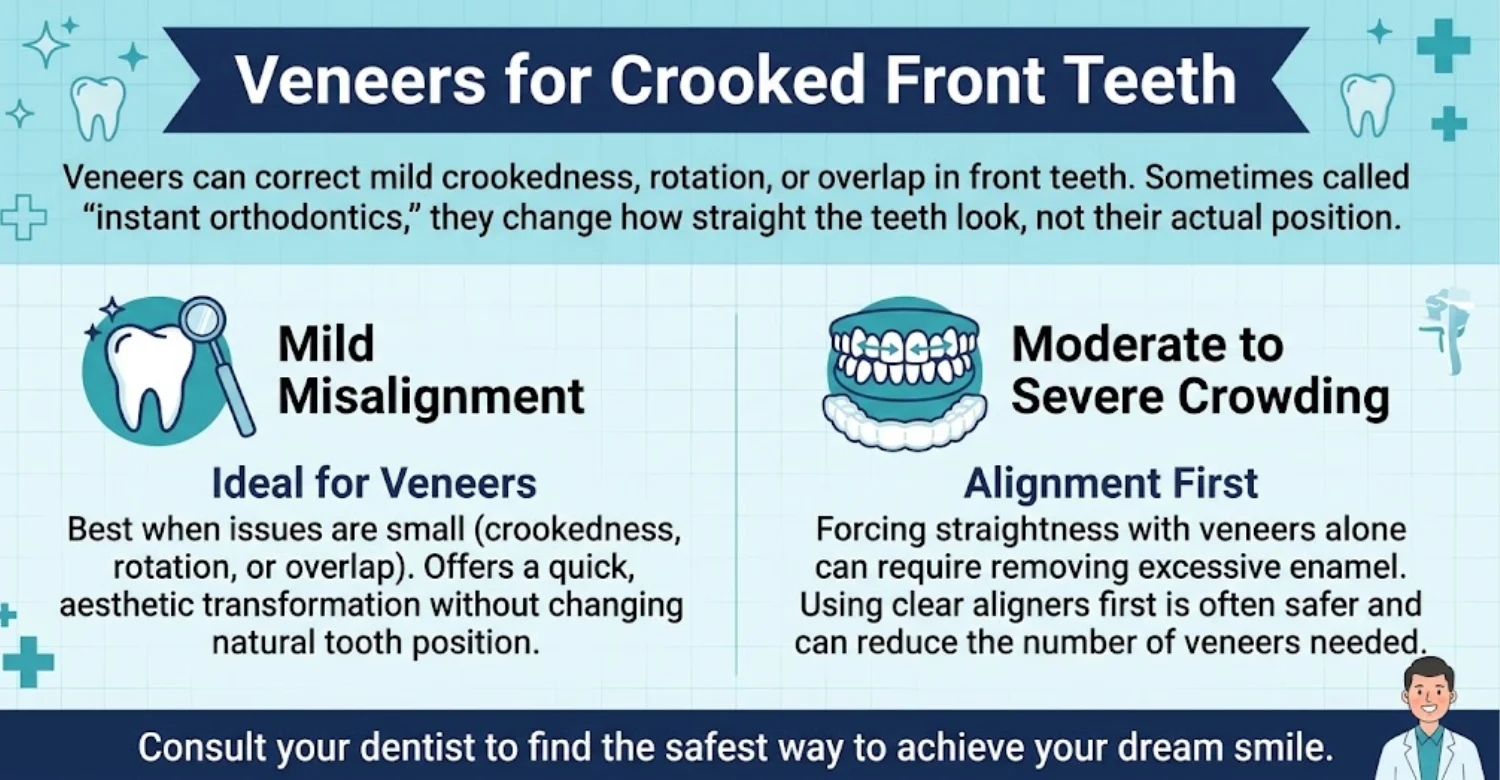
Mild crookedness or rotation
There are two main material groups:
Porcelain veneers, including E-max (lithium disilicate), are made in a dental lab. They resist staining and closely mimic natural enamel.
Composite veneers are sculpted directly onto the tooth in resin. They cost less but usually stain and wear sooner.
Your dentist will match the material to your bite, budget, and goals.
Are Veneers a Good Idea for Front Teeth?
Yes, veneers are often a good idea for front teeth with cosmetic flaws. Front teeth are the most common place for veneers. They are highly visible and carry less chewing force than back teeth.
Veneers work best when the underlying teeth are healthy. The enamel should be sound, and the gums should be free of active disease. Veneers are a cosmetic treatment. They do not fix decay, infection, or weak tooth structure.
Who Is a Good Candidate?
You may be a good candidate if most of these apply:
Your front teeth are healthy, with no active decay.
Your gums are healthy or already treated.
You have enough enamel for bonding.
Your concern is mainly cosmetic, such as colour, shape, or small gaps.
You do not grind heavily, or you will wear a night guard.
You understand that permanent veneers involve enamel removal that cannot be undone.
A clinical exam confirms whether these conditions apply to you.
Can I Get Veneers If My Teeth Are Rotting?
Not until the decay is treated. Decay and gum disease must be managed before any permanent veneers are bonded. Bonding over active decay can trap bacteria and cause the tooth to fail.
Heavily damaged teeth usually need crowns rather than veneers. A crown covers and protects the whole tooth. Some teeth may also need root canal treatment first. Find out what this involves in our guide to root canal therapy. Your dentist will decide the order of treatment after an exam and X-rays.
Can You Get Veneers on Only Your Front Teeth?
Yes, many patients choose veneers only on the teeth that show when they smile. This keeps treatment targeted and budget-friendly. Back teeth rarely show, so they usually stay untouched.
The key challenge is blending the new veneers with your natural neighbouring teeth. Colour, translucency, and surface texture must all look consistent. For more on planning the smile zone, read our guide to veneers for front teeth.
How to Know How Many Veneers You Need
The simplest guide is the smile-line test:
Stand in front of a mirror.
Smile as widely as you can.
Count the upper teeth that show from one side to the other.
Most people show six to ten upper teeth. Veneers should usually cover every tooth that clearly shows. Otherwise, untreated teeth beside the veneers may look darker or narrower. A dentist can confirm the count using photos and a digital smile design. See how this preview works in our guide to digital smile design.
Ready to transform your smile?
Talk to our team and get a personal FREE treatment plan.
Matching Veneers to Your Natural Teeth
Shade matching is the most critical step when only a few teeth are treated. At Vitrin, the dentist records your shade in natural light with a shade guide and photos. These images help the ceramist copy translucency and fine surface detail.
If your natural teeth are yellow, whitening first is often recommended. Porcelain does not whiten after it is bonded, so permanent veneers keep the shade chosen on the day they are bonded. Whitening first lets the veneers match a brighter natural shade. Dentists often wait around two weeks after whitening before final shade selection. If you're unsure which comes first, read teeth whitening vs veneers.
Veneers for 1, 2, 4, 6, or 8+ Front Teeth: Which Option Is Right?
The right number depends on what you want to fix and how widely you smile. Small, isolated problems may need only one or two veneers. Overall colour or shape changes usually need six or more.
Number of teeth | Best for | Typical result | Estimated price at Vitrin Clinic (USD) |
1–2 | Single chip, gap, or dark tooth | Spot correction | 160–650 |
4 | Uneven incisor shapes | Balanced centre smile | 640–1,300 |
6 | Colour and shape across the "social six" | Natural smile upgrade | 960–1,950 |
8–10 | Wide smiles | Full makeover look | 1,280–3,250 |
These prices are estimates calculated from Vitrin Clinic's published starting prices of about $160–325 per veneer, depending on material. The final cost depends on veneer type, clinical suitability, and treatment requirements. Package prices may differ. A personalised assessment is needed for an accurate quote.
Veneers for Two Front Teeth
Two veneers suit a chip, gap, or colour difference between the central incisors. These are the two largest teeth in the middle of your smile.
Two-tooth cases are the hardest to match. The veneers sit directly beside natural teeth, so any shade difference is obvious. Ceramist skill and careful shade photos matter most here. These cases may need more than one try-in.
Veneers for the Front Four Teeth
Four veneers cover both central and lateral incisors. This option suits patients whose lateral incisors are small, peg-shaped, or uneven. It creates a balanced shape across the centre of the smile.
It works best when the canines already look natural in colour and shape. If the canines are darker, the dentist may suggest whitening them or treating six teeth instead.
Veneers for 6 Front Teeth
Six veneers cover canine to canine, often called the "social six." These teeth show in most conversations and photos. Six veneers can change colour, length, and proportions together. This often gives the most natural result. It suits people who show few premolars when they smile.
Veneers for 8–10 Front Teeth
Eight to ten veneers suit wide smiles that show premolars. Treating only six teeth in a wide smile can leave darker teeth visible at the corners. This option creates a full smile-makeover look, Learn how this design differs from standard cases in our guide to Hollywood veneers. sometimes called a Hollywood smile. Lower teeth may also need treatment if they show clearly when you speak.
Veneers vs. Crowns for Front Teeth: Which Is Better?
Veneers are better for healthy front teeth with cosmetic issues because they remove less teeth. Crowns are better for front teeth that are cracked, heavily filled, root-canal treated, or badly broken. For a deeper comparison, see porcelain veneers vs crowns.
Feature | Veneers | Crowns |
Tooth reduction | Front surface, often about 0.3–0.7 mm | All surfaces, usually more |
Protection | Cosmetic, limited | Covers and strengthens the whole tooth |
Appearance | Highly natural | Natural with all-ceramic options |
Best for | Healthy teeth with cosmetic flaws | Weak or damaged teeth |
Lifespan | Often 10–15+ years | Often 10–15+ years |
Price per tooth in Turkey | About $250–500 (porcelain/E-max) | About $250–500 (E-max) |
Porcelain Veneers vs. Crowns for Front Teeth
At Vitrin, the choice between veneers and crowns is made tooth by tooth. The dentist checks enamel, existing fillings, cracks, root health, and bite forces:
A healthy tooth with a stain usually suits a veneer.
A root-canal-treated or heavily filled tooth often needs a crown.
Many smiles need a mix of both. Modern ceramics allow veneers and crowns to share the same shade, so a mixed plan can still look uniform. Choosing veneers where possible preserves more natural tooth structure.
Why Do Some Dentists Discourage Veneers?
Some dentists discourage veneers because permanent veneers usually require enamel removal that cannot be reversed. Once enamel is removed, the tooth will always need a covering.
There is also concern about overtreatment. Some patients receive more veneers than their smile needs. Others get veneers when whitening or bonding would have been enough. Our guide to the risks of veneers explains how to avoid overtreatment.
At Vitrin, the approach is minimal preparation where clinically possible:
A trial mock-up shows the planned result before any tooth is shaped.
Only the teeth that show, or need correction, are treated. Learn how this conservative approach works in our guide to minimal prep veneers.
How Much Do Permanent Veneers Cost?
The cost depends on the material, the number of teeth, and the country. Veneers are priced per tooth, so the total grows with each tooth treated. Porcelain and E-max cost more than composite.
Extra treatment, such as fillings, gum care, or whitening, may add to the final bill. Published prices are estimates, not guaranteed quotes. A personal plan is needed for an accurate figure.
How Much Is One Tooth Veneer?
One porcelain veneer in Turkey typically costs around $220–500, depending on the material and laboratory requirements. At Vitrin Clinic, published starting prices vary by veneer type.
US
From $150
price per tooth
E-max $260
Zirconia $200
Composite $150
Feldspathic porcelain Not listed
TUERKY
From $125
price per tooth
E-max $225
Zirconia $175
Composite $125
Feldspathic porcelainFrom $220
UK
From $160
price per tooth
E-max $285
Zirconia $225
Composite $160
Feldspathic porcelain Not listed
Prices are published starting estimates and may vary by treatment plan.
Composite veneers generally cost less than ceramic options, but they don't always cost half as much. Composite may also need more frequent repair or replacement, depending on wear, oral habits, and maintenance.
Cost of Veneers for Two Front Teeth
The cost of two veneers is twice the per-tooth price:
US
$1,800–$5,000
Two porcelain veneers
Price range $1,800–$5,000
Based on typical published fees
TURKEY
$500–$1,000
Two porcelain veneers
Price range $500–$1,000
Based on published guide ranges
UK
$1,800–$3,000
Two porcelain veneers
Price range$1,800–$3,000
Based on typical private fees
Two-tooth cases sometimes need extra appointments for precise shade matching. Ask whether try-ins and adjustments are included in the quote.
Cost for 4, 6, and 8 Front Teeth
Most clinics price veneers per tooth, so packages scale with the count. The table uses published Turkish porcelain guide ranges of $250–500 per tooth.
4 teeth
$800–$1,140
Vitrin estimated cost
Vitrin $800–$1,140
Turkey range $1,000–$2,000
6 teeth
$1,200–$1,710
Vitrin estimated cost
Vitrin $1,200–$1,710
Turkey range $1,500–$3,000
8 teeth
$2,000–$3,000
Vitrin estimated cost
Vitrin $2,000–$3,000
Turkey range $2,000–$4,000
Some clinics reduce the per-tooth price on larger cases. Always confirm what each package includes.
How Much Does a Full Set of Veneers Usually Cost?
A full set usually means 16–20 veneers covering the visible upper and lower teeth:
Turkey: 20 porcelain veneers cost roughly $5,000–10,000, at published guide ranges of $250–500 per tooth.
US: typical fees of $900–2,500 per tooth produce far higher totals.
Most people who only want to improve their front teeth do not need a full set. For full-arch pricing details, see costs of full mouth veneers in Turkey.
Turkey vs. UK / US / EU Veneer Cost Per Tooth
Turkey is usually much cheaper per tooth than the UK or US. The table shows published 2026 estimates for porcelain veneers.
EU
Varies
Porcelain veneer per tooth
Varies by country; no single reliable EU-wide average
One UK dataset reports a lower median of about $614 per tooth. Prices vary by clinic, region, and material. Add travel and accommodation costs when comparing Turkey with other countries. For a full breakdown by material, read our guide to veneers cost in Turkey.
What's Included in a Vitrin Package?
Vitrin veneer packages typically include the items below. Confirm the final list in your written treatment plan.
Consultation and clinical examination
Digital X-rays when clinically needed
Digital smile design and mock-up
Temporary veneers
Final veneers and bonding
Hotel accommodation and airport transfers
Written warranty
Get your veneers quote. Send your smile photos to Vitrin for a personal estimate.
Are Veneers Worth the Cost?
For many people, yes, when the teeth are healthy and the concern is cosmetic:
Well-made porcelain veneers often last 10–15 years or more.
They resist staining better than natural enamel or composite.
Dividing the cost by years of use gives a clearer sense of value.
Many patients also report improved confidence.
Veneers are not maintenance-free, though. Permanent veneers commit you to future replacements, which adds a lifelong cost. They are worth it mainly when simpler options cannot meet your goals.
Ready to transform your smile?
Talk to our team and get a personal FREE treatment plan.
What Is a Cheaper Option Than Veneers?
Several options cost less than porcelain veneers, depending on the problem. Unlike permanent veneers, whitening and bonding usually need no enamel removal.
Option | Cost | Lifespan | Best for |
Teeth whitening | Low | Months to years | Mild yellowing |
Composite bonding | Low–moderate | About 5–7 years | Small chips and gaps |
Composite veneers | Moderate | About 5–7 years | Shape and colour on a budget |
Clear aligners | Moderate–high | Long-term with retainers | Crooked teeth |
An honest consultation shows whether a cheaper option meets your goals. Sometimes it is enough on its own. Sometimes it works best alongside veneers. For small chips and gaps, see our guide to composite bonding in Turkey.
The Veneers Procedure at Vitrin
At Vitrin, treatment begins with understanding why your teeth look the way they do. A stain, chip, or gap can have different causes. Decay, gum disease, old fillings, or a bite problem can all change the plan. Because permanent veneers cannot be undone, planning always comes first.
The steps usually follow this order:
Free online assessment of your smile photos.
Exam, scan, and shade matching in Istanbul, with digital X-rays when clinically appropriate.
Digital smile design and mock-up to preview the result.
Minimal preparation and temporary veneers.
Lab fabrication with custom shade matching.
Try-in and bonding once you approve the fit and colour.
Aftercare guidance and follow-up checks.
Your plan may change if the exam reveals problems that need treating first.
How Many Days Do You Need in Istanbul?
Most porcelain veneer cases need two visits several days apart. Many Istanbul clinics plan around five to seven days. Your exact stay depends on how many teeth are treated. Extra treatment, such as fillings or gum care, can lengthen the timeline.
A written estimate before travel helps you plan flights and accommodation. Follow-up can continue by video consultation after you return home.






How Long Do Permanent Veneers Last?
Veneers commonly last 10–15 years or more, depending on material and care. Porcelain usually outlasts composite. Composite veneers often need repair or replacement within about 5–7 years.
Long-term research on porcelain veneers shows high survival rates, although results vary between studies and clinics. Care habits matter as much as material. Grinding, biting habits, and gum health all affect lifespan.
Can Veneers Last 20 Years?
Yes, well-made permanent veneers can last 20 years or more with excellent care. However, 10–15+ years is a more typical expectation. The research so far:
One long-term study followed 499 feldspathic porcelain veneers placed by one prosthodontist. It estimated 91% survival at 20 years across the full sample.
A study of lithium-disilicate veneers reported 87% survival at 20 years.
A systematic review notes that firm evidence beyond 20 years is still limited.
Your dentist should confirm what is realistic for your teeth. When the time comes, our guide to veneer replacement explains what to expect.
Can I Bite Into an Apple With Veneers?
Yes, but carefully. Porcelain is strong but can chip under sudden force on its edges. Cut hard foods into slices, and chew firm foods with your side teeth when possible.
Care tips:
Wear a night guard if you grind or clench.
Avoid nail-biting and chewing pens or ice.
Never open packages with your teeth.
Brush twice daily with a non-abrasive toothpaste.
Floss daily around the veneer edges.
Keep regular dental check-ups.
.jpg)
.webp)
.jpg)
.jpg)
.jpg)
.jpg)
Veneers Before and After
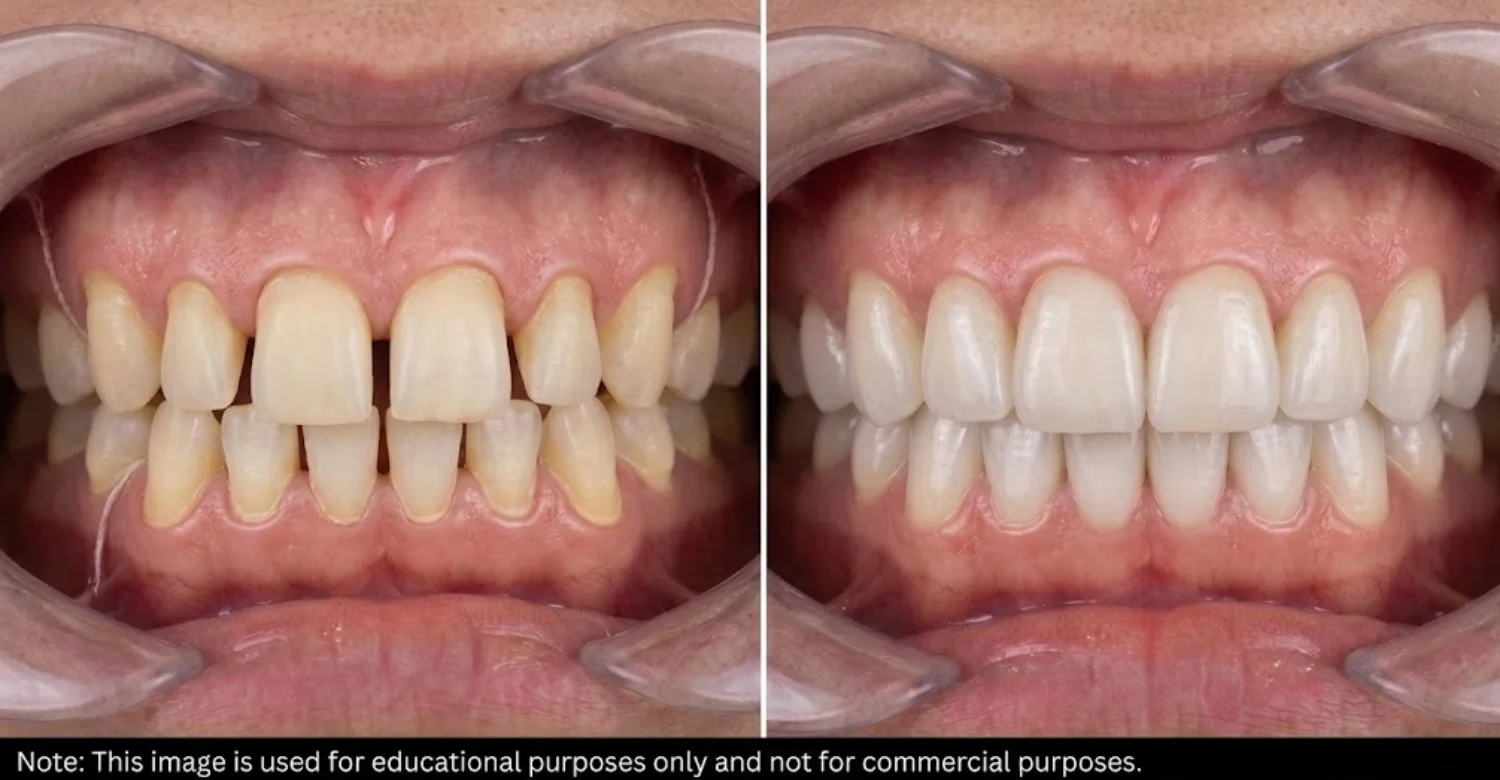
Before-and-after photos show how veneers change colour, shape, and proportion. Vitrin cases are grouped by the number of teeth treated:
2 teeth: shade-match close-ups beside natural teeth
4 teeth: balanced incisor shapes
6 teeth: canine-to-canine smile upgrades
8+ teeth: full smile makeovers
When reviewing photos, look at natural-light shots, not only studio images. Also check how the gum line and tooth edges look. Results vary from person to person.
Why Choose Vitrin for Veneers in Istanbul
When choosing a clinic for permanent veneers in Istanbul, look for careful planning, precise shade matching, and materials suited to each smile. At Vitrin Clinic, the treatment plan focuses on your individual dental needs and aesthetic goals:
Personalised shade matching: Tooth colour is selected to complement your natural teeth and desired result.
Conservative tooth preparation: Enamel is preserved wherever clinically possible.
Digital smile design: Digital planning helps you understand the proposed changes before treatment begins.
Quality ceramic materials: Material selection is based on your clinical needs, aesthetic preferences, and treatment plan.
Clear warranty information: Any applicable warranty terms and conditions are explained before treatment.
Transparent pricing: Your written quote outlines the planned treatment and associated costs.
Coordinated patient support: International patients can receive help with appointment scheduling, accommodation, and transfers, where available.
Every treatment plan begins with an individual assessment of tooth condition, gum health, bite, and smile proportions. No cosmetic result can be guaranteed, but careful diagnosis and planning help support a natural-looking result and reduce avoidable complications.
Ready to transform your smile?
Talk to our team and get a personal FREE treatment plan.
Conclusion
Permanent veneers can improve chips, stains, gaps, and mild crookedness when the underlying teeth are healthy. The procedure is permanent because enamel is removed, but the veneers themselves usually last 10–15 years or more before replacement. The right number depends on your smile line, and crowns suit weaker teeth better. Per-tooth pricing, honest alternatives, and careful shade matching help you treat only what you need.
Book your free consultation at Vitrin Clinic.
Medical Disclaimer
This article is for general information only. It does not replace a personal dental examination. Suitability for veneers depends on your oral health, bite, and goals. Prices are published estimates and may change. Seek prompt dental care for pain, swelling, or a broken tooth. Get emergency care if facial swelling spreads quickly or you struggle to breathe or swallow.
Sources
FAQs
Dr. Rifat Alsaman has more than 5 years of clinical experience in dentistry and currently serves as the Head of the Medical Team at Vitrin Clinic. He is dedicated to providing exceptional patient care, overseeing treatment planning, and ensuring the highest clinical standards across the team. His expertise, attention to detail, and commitment to continuous professional development have helped countless patients achieve healthier, more confident smiles.


