Dental Veneers in Turkey
October 25, 2026
Dental Veneer Replacement: When to Replace Veneers, How It Works and What It Costs
 Dr. Rifat Alsaman

A chipped, stained, loose or fallen-off veneer can feel urgent. Dental veneer replacement is a routine, well-established procedure. Yes, dental veneers can be replaced, either one at a time or as a full set. The dentist removes the old veneer, checks the tooth underneath and bonds a new one. If too little healthy tooth remains, a crown may be the better replacement.
This guide explains when veneer replacement is needed, how it works and what affects the price. It also covers what to do if a veneer breaks today.
Ready to transform your smile?
Talk to our team and get a personal FREE treatment plan.
Can a Tooth Veneer Be Replaced?
Yes, a tooth veneer can usually be replaced. Success depends on the health of the tooth underneath. It also depends on how much enamel remains after earlier preparation. Placing a porcelain veneer usually removes a thin layer of enamel. For this reason, the tooth normally needs a covering for life. Veneer replacement, rather than simple removal, is the usual path. A dentist confirms suitability with an exam and, when needed, X-rays.
Can You Replace Just One Veneer?
Yes, you can often replace just one veneer if the others are in good condition. Single veneer replacement is common after a chip, crack or debond. The main challenge is color matching. Older veneers may have aged slightly, and natural teeth darken over time. A new veneer must match its neighbors in shade, translucency, texture and shape. At Vitrin, the dentist records existing shades with photos and a shade guide. The ceramic technician then layers the new veneer to blend in. A try-in before bonding lets you check the match in daylight. A perfect match cannot be guaranteed in every case. If matching proves difficult, the dentist will explain the other options.
When the Whole Set Should Be Replaced
A full set should be replaced when most veneers show similar wear or aging. Common reasons include dark staining along several edges. Gum recession may expose margins on many teeth at once. Some people simply want a new shade, a new shape or a more natural look. Replacing all veneers together gives a uniform color and design. It costs more, so ask whether a partial veneer replacement could work instead.
.jpg)
.jpg)
.jpg)
.jpg)
.jpg)
Signs Your Veneers Need Replacing
Veneers may need replacing if they become chipped, cracked, loose, discoloured, or poorly fitted. Other warning signs include visible edges caused by gum recession, persistent sensitivity, or an unpleasant smell that may indicate an underlying dental problem. Some issues can be repaired without replacing the entire veneer. A dental examination can determine the best option and check the health of the underlying teeth.
1. Do Chips or Cracks Mean Your Veneers Need Replacing?
Chips or cracks may require veneer repair or replacement, depending on the damage and the material used. Minor damage may be repairable, while severe cracks often require replacement.
2. Should You Replace a Loose Veneer?
Yes, a loose or fallen veneer needs prompt dental attention. Your dentist will check the bonding and underlying tooth before deciding whether the veneer can be reattached or needs replacing.
3. Do Dark Lines or Stains Mean Veneers Need Replacing?
Dark lines or stains around veneer edges may indicate discolouration, worn bonding, or underlying dental problems. A dental examination can determine whether cleaning, repair, or replacement is appropriate.
4. Can Gum Recession Make Veneers Need Replacing?
Yes, gum recession can expose veneer margins and affect their appearance. Replacement is not always necessary, but your dentist should assess the fit, gum health, and underlying tooth.
5. Can Sensitivity, Odour, or a Bad Taste Indicate Problems Under Veneers?
Yes, these symptoms may indicate decay, gum disease, or problems with the veneer’s fit. They do not always mean the veneer needs replacing, but a dental examination is important.
6. Do Dull or Stained Composite Veneers Need Replacing?
Composite veneers can become dull or stained over time. Professional polishing may improve their appearance, while deeper discolouration or significant wear may require repair or replacement.
7. Should You Replace Veneers That Look Bulky or Artificial?
Veneers that look bulky, overly white, or unnatural may need adjustment or replacement. Your dentist can assess their shape, colour, and fit to determine the most suitable solution.
Remember: Not every problem requires replacement. A dental examination can establish whether your veneers need polishing, repair, or replacement and check the health of the underlying teeth.
.jpg)
.jpg)
.jpg)
How Often Do Veneers Need to Be Replaced?
Porcelain veneers often last 10 years or longer, while composite veneers usually need attention sooner. A systematic review estimated 95.5% survival for porcelain laminate veneers at 10 years. Fracture and debonding were the most common problems. A 2018 review suggested composite veneers last around 5 years or more. Care habits, grinding and gum health strongly affect how often veneer replacement is needed.
Material | Typical lifespan | Common reason for replacement |
Porcelain / E-max | 10+ years; some over 20 | Fracture, debonding, edge staining, gum recession |
Composite | Around 5+ years | Staining, wear, chipping, loss of shine |
No-prep veneers | Reported 10–20 years | Chipping, debonding, bulky look |
These are averages, not guarantees. Your dentist can estimate yours after an exam.
What Happens After 20 Years of Having Veneers?
After 20 years, many well-made porcelain veneers still work, but the smile around them changes. Gums can recede and reveal the veneer edges. The bonding layer may weaken with age and chewing forces. Natural teeth nearby may darken, chip or wear. As a result, the veneers may look brighter or longer than the surrounding teeth. Some people choose veneer replacement at this stage for appearance. Others need it because of decay or leakage at the margins. A check-up helps decide whether a refresh or a repair fits best.
How Many Times Can You Replace a Veneer?
There is no fixed number of times a veneer can be replaced. A veneer can be replaced as long as enough healthy tooth structure remains. Each removal can take away a little more enamel or bonding surface. Over time, the tooth may become too thin to support a veneer. At that point, a crown may be needed instead. Careful, minimally invasive removal helps preserve the remaining tooth. Dentists often use magnification and fine instruments to separate the old veneer from the bond. Skilled removal and good home care give each future veneer replacement a better starting point.
What Can You Replace Veneers With?
You can replace old veneers with new porcelain, new composite or, when the tooth is weak, a crown. The best choice depends on the remaining tooth structure, your bite and your goals.
Option | Best suited for | Main trade-off |
New porcelain or E-max veneers | Healthy teeth with enough enamel | Higher cost; some enamel preparation |
Composite veneers | Lower budgets and minor changes | Stains and wears faster |
Crown | Decayed, cracked or heavily worn teeth | More tooth reduction |
Bonding after removal | Rare cases with little earlier preparation | Rarely possible after porcelain |
No-prep veneers | Teeth with little or no earlier reduction | Can look bulky; not always suitable |
Replace a Veneer With a Crown
A crown is often the better choice when the tooth under a veneer is damaged. This includes deep decay, a large crack or heavy wear. A crown covers the whole visible tooth, not just the front surface. That gives more strength to a weakened tooth. It also needs more tooth reduction than a veneer. If the nerve is affected, root canal treatment may be needed first. The dentist decides after removing the old veneer and checking the tooth, sometimes with an X-ray. In these cases, a crown is the stronger veneer replacement. An all-ceramic crown can be shaded to blend with nearby veneers.
Upgrading From Composite to Porcelain
Upgrading from composite to porcelain is a common reason for veneer replacement. Composite veneers are shaped directly on the tooth from resin. They cost less but stain and wear faster. Porcelain and E-max veneers are made in a lab and resist staining better. Many composite veneers are placed with little tooth reduction. Moving to porcelain may still need light preparation for a natural thickness. The dentist will check your bite and enamel before recommending the upgrade.
Broken or Fallen-Off Veneer: What to Do Right Now
If a veneer breaks or falls off, keep it, protect the tooth and contact a dentist soon.
Rinse the veneer gently and store it in a small, clean container.
Do not use household glue or superglue. These products are not made for the mouth.
Avoid chewing on that side. Skip very hot, cold or hard foods, as the tooth may be sensitive.
Keep the area clean with gentle brushing.
Contact your dentist and send clear photos if possible.
Vitrin can review photos remotely and plan an emergency veneer replacement before you travel. See a dentist urgently if you have facial swelling, fever or severe pain. Get emergency medical help immediately if swelling affects breathing or swallowing.
Can a Fallen-Off Veneer Be Re-Bonded?
Sometimes a fallen-off veneer can be re-bonded if it is intact and the tooth is healthy. The dentist first checks the veneer for hidden cracks. The tooth is then examined for decay or damage. If both are sound, the old cement is cleaned away. The veneer and tooth are prepared and bonded again. A cracked veneer, or decay underneath, usually means veneer replacement instead. Keeping the veneer safe gives you the best chance of re-bonding.
Ready to transform your smile?
Talk to our team and get a personal FREE treatment plan.
The Veneer Replacement Procedure at Vitrin
At Vitrin Clinic, the veneer replacement procedure begins with a dental assessment to evaluate your existing veneers and the health of the underlying teeth. The team uses digital scans and shade matching to plan natural-looking replacements. Old veneers are carefully removed, any dental issues are addressed, and new veneers are fitted and bonded. A final bite check helps ensure comfort and proper function.
1. Can I Get a Free Veneer Replacement Consultation Before Arriving in Istanbul?
Yes, Vitrin Clinic offers a free remote review of your photos and any recent X-rays to help assess your veneer replacement needs before your visit.
2. What Happens During the Initial Dental Examination?
In Istanbul, the dental team examines your teeth and gums and may take X-rays and a digital scan to evaluate your oral health and plan treatment.
3. How Are Old Veneers Removed?
The dentist carefully removes the existing veneers using an appropriate technique while aiming to preserve as much healthy tooth structure as possible.
4. Are Teeth Checked for Problems Before New Veneers Are Placed?
Yes, the underlying teeth are examined for decay, damage, and gum problems. Any issues requiring treatment are addressed before new veneers are placed.
5. How Are the New Veneers Designed to Match My Smile?
Digital smile design and shade matching help plan the shape, colour, and appearance of the new veneers, particularly when replacing a single veneer.
6. Will I Wear Temporary Veneers During Replacement?
A temporary veneer may be placed to protect the prepared tooth while the permanent restoration is being fabricated.
7. How Are the New Veneers Fitted?
The new veneers are checked for fit, shape, and colour before being bonded to the teeth. Necessary adjustments are made to achieve a natural-looking result.
8. Is a Bite Check Necessary After Veneer Replacement?
Yes, the dentist checks your bite to ensure the veneers function comfortably. If you grind your teeth, a night guard may also be recommended to help protect them.
Important: Your veneer replacement procedure may vary depending on your examination results and any underlying dental problems that require attention first.
How Long Does It Take to Replace a Veneer?
Replacing a porcelain veneer usually takes several days, because a lab makes the new one. At Vitrin, most veneer replacement cases are planned within one trip of about [X] days. The first visit covers the exam, removal and scan. The lab then makes the veneer while you wear a temporary. A final visit covers try-in and bonding. Extra time may be needed for decay, gum treatment or root canal treatment. A composite repair can often be done in one visit.
Is Replacing Veneers Painful?
Replacing veneers is usually not painful, because the dentist numbs the area with local anesthesia. You may feel pressure or vibration during removal. Afterwards, some people notice mild sensitivity or gum tenderness for a few days. This usually settles on its own. Tell your dentist if pain is severe or lasting, or if the bite feels high. Those signs need a check.
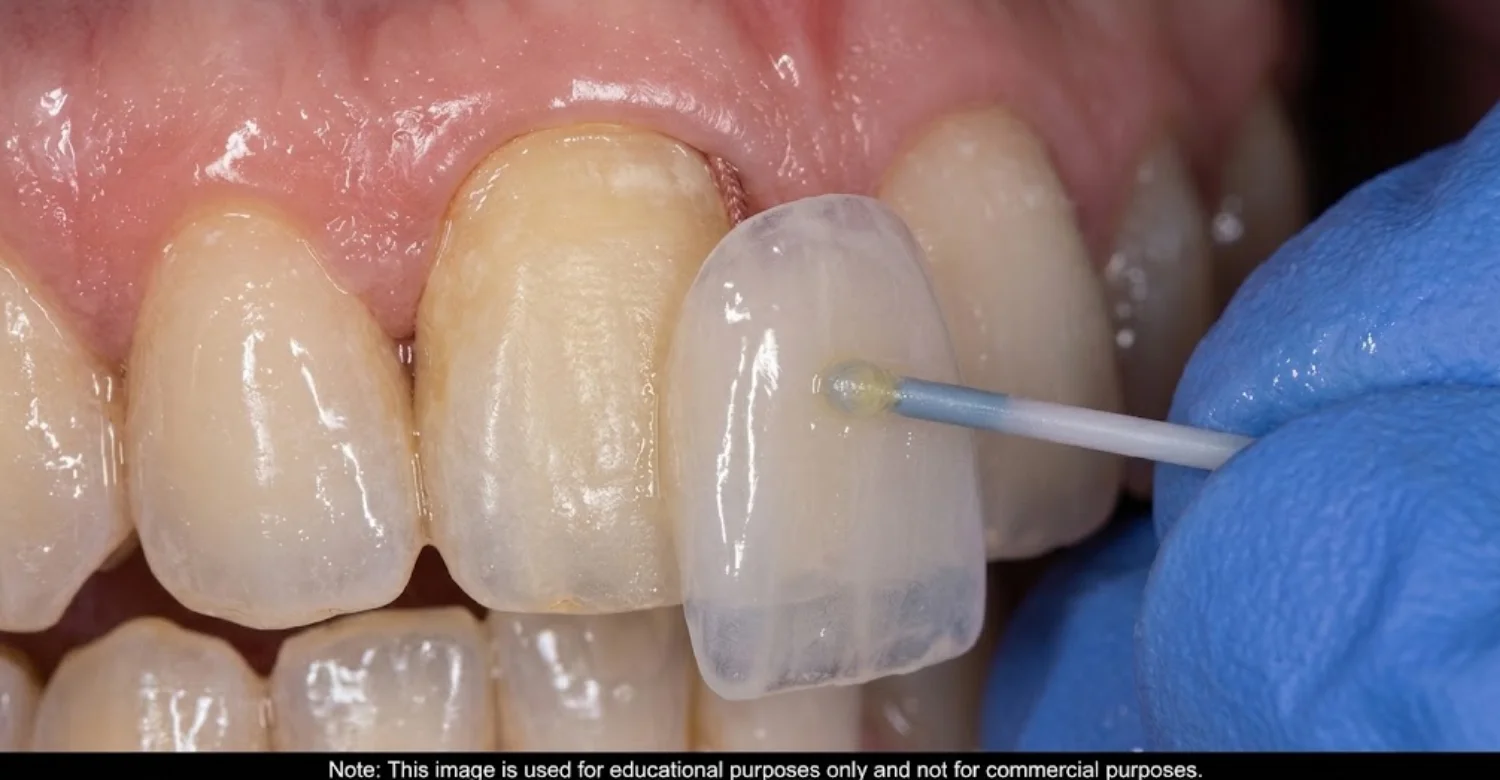
Fixing Veneers Done Elsewhere (Including Abroad)
Vitrin also assesses veneers placed at other clinics, including abroad. Some patients feel their veneers look bulky, too white or mismatched. Others report discomfort, bite problems or early chipping. In some cases, crowns were placed where veneers were expected. Vitrin's revision approach includes:
An honest assessment of the teeth, gums and existing work
Treating any decay, gum inflammation or nerve problems first
Redesigning shape and shade for a more natural look
Switching to crowns only where the tooth needs one
Not every case needs a full redo. Sometimes a single veneer replacement solves the concern. A revision cannot reverse earlier tooth reduction. The dentist will explain what is realistic for your teeth.
Request a second opinion by sending photos and any X-rays.
Veneer Replacement Before and After
Real cases help show what veneer replacement can achieve. Results vary with tooth health, gums and the original work.
.jpg)
.jpg)
.jpg)
.jpg)
Single veneer replacement with a shade match to existing veneers
A full set replaced after more than 10 years
A composite-to-E-max upgrade
A revision of overly white or bulky veneers
How Much Does Veneer Replacement Cost?
Veneer replacement cost depends on the material, the number of teeth, and the condition of the underlying teeth. The tables below show estimated starting prices for new veneers and average planning ranges for replacement treatment. Removal, temporary veneers, diagnostic tests, and additional dental procedures may cost extra.
Vitrin's Price to Replace One Veneer
The cost of replacing one veneer at Vitrin Clinic depends on the replacement material and whether additional treatment is needed. The prices below are published starting prices for new veneers, not confirmed all-inclusive replacement fees.
United Kingdom
From $50
Veneer replacement costs
Existing veneer
removal$50–$200
Temporary veneer, if needed$50–$150
New composite veneer$250–$650
New zirconia veneer$350–$800
New E-max veneer$400–$1,000
New Lumineers / no-prep$500–$1,200
Examination and X-rays$50–$200
Follow-up appointments$50–$150per visit
Turkey
From $20
Veneer replacement costs
Existing veneer
removal$20–$100
Temporary veneer, if needed$20–$60
New composite veneer$160–$300
New zirconia veneer$225–$400
New E-max veneer$285–$500
New Lumineers / no-prep$325–$600
Examination and X-rays$20–$100
Follow-up appointments$20–$80per visit
United States
From $75
Veneer replacement costs
Existing veneer
removal$100–$300
Temporary veneer, if needed$100–$300
New composite veneer$250–$1,500
New zirconia veneer$800–$2,000
New E-max veneer$900–$2,500
New Lumineers / no-prep$800–$2,000
Examination and X-rays$100–$300
Follow-up appointments$75–$250per visit
What is included?
Published starting prices indicate the cost of new veneers, but they do not confirm whether removal, temporary restorations, examinations, X-rays, or follow-up appointments are included in a replacement plan. Request an itemised written quote.
What may cost extra?
Root canal treatment, gum treatment, or a dental crown may incur additional charges if clinically necessary. A crown may be more appropriate than another veneer when the underlying tooth is too damaged to support one safely.
Vitrin Clinic can initially review photographs, followed by a clinical examination when appropriate. Your final quote should specify the material, removal fee, temporary restoration, diagnostic costs, and any additional treatment.
Full Set Replacement Packages
The cost of replacing a full set of veneers depends on the number of teeth, the material selected, and the condition of the existing restorations. The following estimates use Vitrin Clinic's stated starting prices for new veneers; they are not confirmed replacement-package prices.
Zirconia
From ~$1,600
~$200 per veneer
8 veneers ~$1,600
10 veneers ~$2,000
16 veneers ~$3,200
20 veneers ~$4,000
Existing veneer removal Quoted separately
Porcelain
From ~$1,760
~$220 per veneer
8 veneers~$1,760
10 veneers~$2,200
16 veneers~$3,520
20 veneers~$4,400
Existing veneer removalQuoted separately
E-max
From ~$2,000
~$250 per veneer
8 veneers~$2,000
10 veneers~$2,500
16 veneers~$4,000
20 veneers~$5,000
Existing veneer removalQuoted separately
These totals are calculated from the stated per-tooth starting prices. Actual package discounts and replacement costs may differ.
What should each replacement package include?
Veneer removal: Confirm the fee per tooth after the existing restorations are assessed.
Material and laboratory work: Specify whether zirconia, porcelain, or E-max will be used.
Temporary veneers: Confirm whether temporary restorations are included.
Treatment visits: Standard veneer treatment may take 5–7 days and involve two clinic visits, but replacement cases can require additional appointments.
Warranty and aftercare: Confirm the duration, coverage, exclusions, and eligibility for replacement cases.
Additional dental treatment: Root canal treatment, gum treatment, or crowns may cost extra when clinically necessary.
Vitrin Clinic's standard package guide describes inclusions such as consultation, digital smile design, diagnostic imaging, temporary veneers, aftercare, and a warranty. Confirm which benefits apply specifically to your replacement treatment.
Replacing old veneers can require additional work to assess and protect the underlying teeth. A personalised written quote is the most reliable way to establish the final cost.
What Affects the Cost?
Several factors influence the total price of veneer replacement.
Cost factor | How it affects the price |
Veneer material | Composite generally costs less than porcelain or E-max. |
Removal difficulty | Carefully removing strongly bonded veneers may require additional clinical time. |
Tooth health | Decay, gum disease, or root canal treatment can increase costs. |
Crown instead of veneer | A crown may be required if the tooth needs greater structural protection. |
Number of teeth | Replacing more veneers increases the overall treatment cost. |
Diagnostic tests | Additional imaging or specialist assessments may incur separate fees. |
Tooth location | The restoration required depends on the tooth's position, function, and clinical condition. |
Turkey vs. UK / US / EU Replacement Prices
The following table compares estimated costs for new restorations. These are indicative planning ranges, not verified averages for veneer removal and replacement specifically. EU prices vary considerably by country.
United Kingdom
From $200
Price per tooth
Porcelain veneer $500–$1,000
Composite veneer $200–$500
Dental crown Median ~$720
Examination and X-rays Often extra
Old veneer removal Depends on clinic
Turkey
From $95
Price per tooth
Porcelain veneer $175–$430
Composite veneer $95–$270
Dental crown $150–$485
Examination and X-rays $0–$100Depends on clinic & imaging
Old veneer removal ~$20–$100Confirm with the clinic
United States
From $250
Price per tooth
Porcelain veneer $930–$2,440
Composite veneer $250–$1,500
Dental crown $1,015–$2,670
Examination and X-rays Often extra
Old veneer removal Depends on clinic
These figures are broad estimates for restorations, not directly comparable all-inclusive replacement prices. Removal fees and consistent EU-wide averages are not reliably established.
How should you compare replacement costs?
Compare itemised quotes that include veneer removal, new restorations, temporary veneers, diagnostic tests, and follow-up care. At Vitrin Clinic, request a personalised assessment to establish the appropriate material and the full cost of replacing your existing veneers.
Ready to transform your smile?
Talk to our team and get a personal FREE treatment plan.
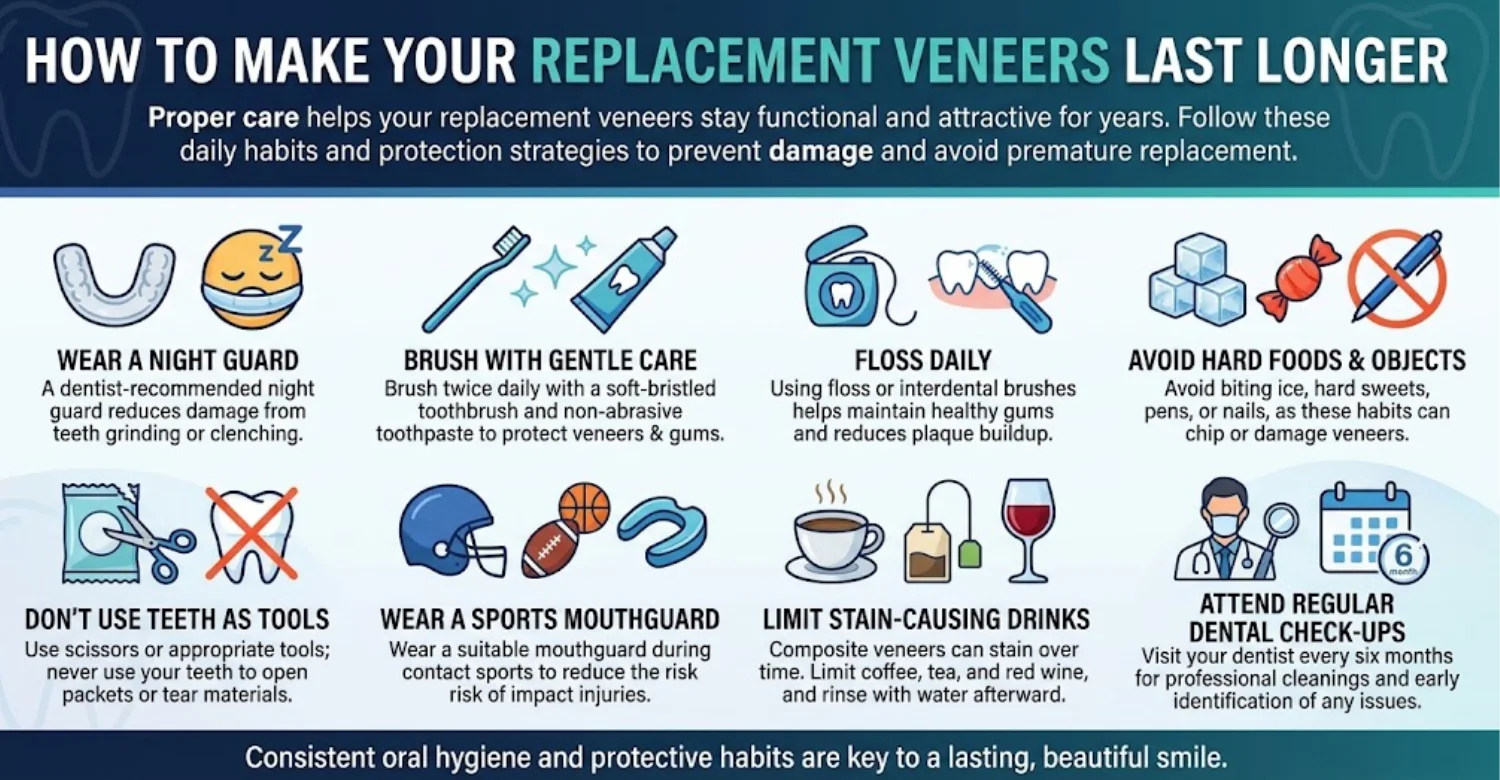
Why Choose Vitrin for Veneer Replacement
Vitrin focuses on careful, individual veneer replacement rather than a one-size plan.
Minimally invasive removal to preserve tooth structure
Detailed shade matching for single replacements
Experience revising veneers placed elsewhere
3D scans and digital X-rays for planning
Materials from established manufacturers, with documentation
A written warranty, with terms explained before treatment
Packages that list what is and is not included
Diagnosis Comes Before Treatment
The right treatment depends on why the veneer failed. A chip from grinding needs a different plan from decay under the margin. Gum recession needs a different approach from a debonded veneer. At Vitrin, the dentist first examines the teeth, gums and bite. Digital dental X-rays are taken when appropriate to check for decay, nerve problems or bone changes. The tooth is checked again once the old veneer is removed. Only then is the final plan confirmed. It may be a new veneer, a crown, a repair or other treatment first. This order helps avoid placing new work over an untreated problem.
Estimates, Follow-Up and International Patients
Vitrin gives an estimate after reviewing your photos and any X-rays. The estimate may change after the in-person exam. Any change is explained before treatment continues. International patients should plan several days in Istanbul, with some flexibility. Extra time may be needed if a tooth needs treatment first. Before you fly home, the dentist checks the bite and fit. You receive written aftercare advice and copies of your records. Remote follow-up by photo is available after you return. A local dentist can continue routine check-ups. Ask how the warranty applies if a problem appears later.
Final Thoughts on Veneer Replacement
A broken, loose, or damaged veneer can expose your tooth to further problems. Early assessment helps identify whether repair, re-bonding, or replacement is the best option.
Contact our team today for a personalized consultation and discover the right veneer replacement options for your smile. Get your FREE Treatment Plan!
Ready to transform your smile?
Talk to our team and get a personal FREE treatment plan.
Medical Disclaimer
This article is for general information only. It does not replace a dental exam or personal advice. Suitability, risks and results vary from person to person. Seek urgent care for severe pain, swelling or fever. Call emergency services if you have difficulty breathing or swallowing.
Sources
FAQs
Dr. Rifat Alsaman has more than 5 years of clinical experience in dentistry and currently serves as the Head of the Medical Team at Vitrin Clinic. He is dedicated to providing exceptional patient care, overseeing treatment planning, and ensuring the highest clinical standards across the team. His expertise, attention to detail, and commitment to continuous professional development have helped countless patients achieve healthier, more confident smiles.


