Dental Tourism in Turkey
November 8, 2026
Resin bonded dental bridge Turkey: Is It the Right Solution for a Missing Tooth?
 Dr. Rifat Alsaman

A resin bonded dental bridge Turkey treatment can replace a missing tooth while preserving much of the neighbouring natural tooth structure. It uses an artificial tooth supported by thin wings attached to adjacent teeth. Dentists often consider this conservative option for replacing missing front teeth.
However, suitability depends on enamel quality, bite forces, gum health, and the position of the missing tooth. Understanding the procedure, available designs, costs, and possible complications helps patients make informed decisions.
This guide explores the treatment process at Vitrin Clinic and what international patients should consider before travelling to Turkey.
Key Takeaways
Conservative Tooth Replacement: Resin-bonded bridges replace missing teeth while preserving much of the neighbouring natural tooth structure.
Ideal for Selected Front Teeth: Healthy enamel, stable gums, and favourable bite conditions are essential for suitability.
Different Bridge Designs: Maryland, Rochette, and cantilever bridges offer different bonding and support approaches.
Treatment Process: Includes clinical examination, digital impressions, laboratory fabrication, and adhesive placement.
Affordable Option in Turkey: Indicative prices range from $280–$900, depending on the design and materials.
Possible Complications: Debonding, sensitivity, gum irritation, and framework fractures may occur.
Long-Term Success: Good oral hygiene, regular dental check-ups, and appropriate bite management help maintain the restoration.
Ready to transform your smile?
Talk to our team and get a personal FREE treatment plan.
Resin-Bonded vs Traditional Dental Bridges: What's the Difference?
The main difference concerns how each restoration is supported.
Feature | Resin-Bonded Bridge | Traditional Bridge |
Support | Adhesive wings | Dental crowns |
Preparation | Usually minimal | More extensive |
Tooth preservation | Greater | Less |
Common use | Front teeth | Front and back teeth |
Main concern | Debonding | Supporting tooth complications |
What Types of Adhesive Dental Bridges Are Available?
Three common designs include:
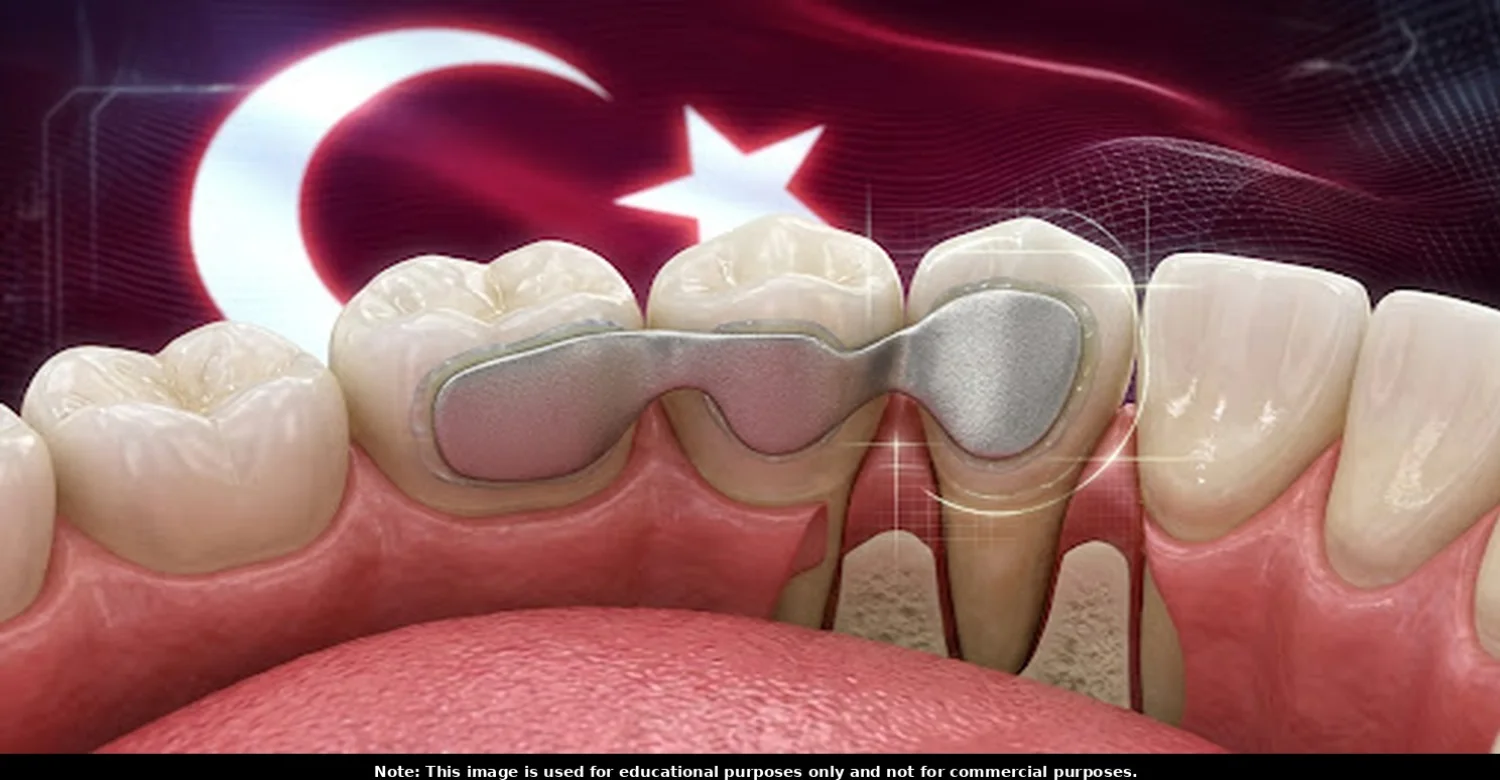
Maryland bridge: Uses metal or ceramic wings attached behind supporting teeth.
Rochette bridge: Features a perforated metal framework for mechanical resin retention.
Cantilever bridge: Uses one supporting tooth instead of two. It may suit selected anterior cases.
The appropriate design depends on tooth position, supporting enamel, and bite conditions.
.jpg)
Who Is Suitable for a Resin Bonded Dental Bridge?
A resin bonded dental bridge Turkey treatment may suit patients with one missing tooth, particularly a front tooth. Ideal candidates generally have healthy enamel, stable gums, well-positioned supporting teeth, and favourable bite conditions.
Can a Maryland Bridge Replace a Missing Front Tooth?
Yes. A Maryland bridge can replace a missing front tooth without requiring full crowns on neighbouring teeth.
Front-tooth cases may be suitable because biting forces differ from those affecting back teeth. However, tooth alignment, available enamel, smile proportions, and bite contacts influence suitability.
A single-wing design may also be considered for selected missing incisors.
What Dental Conditions Affect Suitability?
Several clinical factors influence treatment planning:
Healthy enamel and suitable supporting surfaces.
Stable gums and supporting bones.
Adequate space for the replacement tooth.
Favourable tooth alignment and bite contacts.
No untreated decay or active gum disease.
Existing crowns, large fillings, enamel defects, and heavy biting forces may also affect restoration retention.
When Is a Resin Bonded Bridge Not Recommended?
This option may be unsuitable when supporting teeth cannot provide adequate retention or withstand functional forces.
Common concerns include:
Extensive restorations or insufficient enamel.
Active decay or gum disease.
Severe deep bites or unfavourable contacts.
Significant teeth grinding.
Insufficient space for the pontic.
Multiple missing teeth requiring additional support.
In these situations, another replacement option may offer more appropriate support. At Vitrin Clinic, treatment planning considers supporting teeth, gum health, bite, and available space before recommending a restoration.
How Does a Resin Bonded Dental Bridge Turkey Procedure Work at Vitrin Clinic?
The procedure typically involves five stages: dental examination, tooth preparation, digital impressions, laboratory fabrication, and final placement.
The timeline depends on the restoration design and individual clinical requirements.
1. Dental Examination and Treatment Planning
The dentist examines the missing tooth space, neighbouring teeth, gums, and bite.
The examination may include:
Supporting tooth and enamel evaluation.
Gum and periodontal health checks.
Bite and jaw movement assessment.
Review of existing restorations.
Dental X-rays when clinically indicated.
These findings help determine whether adhesive retention is appropriate.
2. Tooth Preparation and Digital Impressions
Preparation is usually minimal and may involve small adjustments to the supporting teeth. Some cases require little or no enamel removal.
Digital impressions record the supporting teeth and missing space. Accurate measurements help guide laboratory fabrication and restoration design.
For a resin bonded dental bridge Turkey treatment, the preparation approach depends on the selected framework and available enamel.
3. Bridge Design and Laboratory Fabrication
The dentist selects suitable restorative materials based on strength, appearance, and clinical requirements.
Options may include:
Metal-ceramic frameworks.
Zirconia.
Lithium disilicate ceramic.
The laboratory fabricates the pontic and supporting wings according to the prescribed design.
Shade selection helps the replacement tooth blend with neighbouring teeth. Framework thickness and connector dimensions also influence the final design.
4. Final Placement and Bite Adjustment
Before placement, the dentist checks the restoration's fit, shade, and contact points.
The supporting surfaces receive appropriate preparation before an adhesive resin cement secures the framework.
The final stage involves checking the bite and adjusting excessive contacts where necessary. This helps reduce avoidable loading on the restoration.
5. How Many Visits Are Needed at Vitrin Clinic?
Treatment may require a few appointments, depending on laboratory production and clinical requirements.
International patients should allow time for:
Initial examination and digital records.
Laboratory fabrication.
Final placement and bite adjustment.
Necessary corrections or follow-up.
Vitrin Clinic provides a proposed treatment schedule before patients arrange travel. However, the final completion date depends on individual clinical and laboratory requirements.
resin bonded dental bridge Turkey Cost vs UK vs US
The initial cost varies according to the restoration material, design, laboratory work, and clinical complexity.
The following figures are indicative estimates, not guaranteed quotations.
UK
Indicative Cost: $595–$975
Indicative Cost
Indicative cost: $595–$975
Private UK clinic standard rate
Domestic specialist dental treatment
Turkey
Indicative Cost: 280–900
Indicative Cost
Indicative cost: 280–900
Up to ~65–75% savings vs. US/UK
Full professional clinic standard care
US
Indicative Cost: 1,100–2,500
Indicative Cost
Indicative cost: 1,100–2,500
US private clinic standard rate
Highest domestic private expense
What Affects the Final Treatment Cost?
Several factors influence the final quotation:
Bridge material: Metal-ceramic and ceramic options have different costs.
Bridge design: Wing configuration and pontic requirements affect fabrication.
Laboratory work: Customisation and technical complexity influence pricing.
Clinical requirements: Additional imaging or necessary dental procedures may increase the total.
A resin bonded dental bridge Turkey quotation should clearly separate the restoration fee from any additional treatment charges.
What Is Included in the Treatment Price at Vitrin Clinic?
Your treatment quotation should clearly outline the services covered, including:
Treatment Component | Details |
Dental examination | Initial clinical review |
Digital diagnostics | Necessary X-rays or scans |
Laboratory work | Custom bridge fabrication |
Final placement | Bridge fitting and bite adjustment |
Follow-up care | Post-treatment review, as arranged |
Is a Resin Bonded Bridge More Affordable Than a Dental Implant?
Generally, yes. A resin-bonded restoration usually has a lower initial cost because it avoids implant surgery and implant components.
An implant requires surgical placement and additional restorative components. Some patients may also need bone-related procedures.
However, a resin-bonded bridge does not replace the missing tooth root. Potential maintenance and future repairs should also be considered when comparing long-term costs.
Ready to transform your smile?
Talk to our team and get a personal FREE treatment plan.
Maryland Bridge: What Are Its Strengths and Limitations?
A Maryland bridge offers a conservative solution for replacing a missing tooth. It usually requires minimal preparation and avoids implant surgery. However, its suitability depends on enamel quality, bite forces, and supporting tooth condition.
The Main Benefits and Drawbacks at a Glance
Advantages | Disadvantages |
Preserves more natural tooth structure | May detach from supporting teeth |
Requires minimal tooth preparation | Needs suitable enamel for bonding |
Avoids implant surgery | May not withstand heavy bite forces |
Provides a fixed replacement | Can experience ceramic or framework fractures |
Restores the appearance of a missing tooth | Requires careful daily cleaning |
Some failures may be repaired | Replacement may eventually be necessary |
How Many Years Can a Resin-Bonded Bridge Last?
A resin bonded dental bridge Turkey restoration can function for several years. However, its lifespan varies between patients and designs.
Material, framework design, bonding quality, and bite forces all influence durability.
Clinical studies report different survival rates across materials and follow-up periods. Some ceramic designs show favourable long-term outcomes, although results vary.
A bridge surviving for years does not mean it remains complication-free. Debonding, fractures, and changes in supporting teeth may require intervention.
At Vitrin Clinic, maintenance guidance is based on individual clinical findings.
What Complications Should You Watch For With a Maryland Bridge?
Most complications involve bonding failure, bite discomfort, or plaque accumulation. Recognising early changes helps prevent further problems.
Common Problems, Warning Signs and Possible Solutions
Complication | What You May Notice | Possible Management |
Debonding | Movement, clicking, or detachment | Examination and possible rebonding |
Bite discomfort | Pain or uneven chewing contact | Bite and supporting tooth checks |
Tooth sensitivity | Sensitivity to temperature or pressure | Examination to identify the cause |
Plaque accumulation | Red, swollen, or bleeding gums | Improved cleaning and professional care |
Framework damage | Visible cracks or fractures | Repair or replacement |
When Is a Dental Check-Up Necessary?
Arrange a dental appointment if you experience:
A loose or moving bridge.
Pain during biting or chewing.
Persistent tooth sensitivity.
Swollen or bleeding gums.
Visible cracks or damage.
Repeated food trapping beneath the replacement tooth.
If the bridge detaches, keep it safe and contact your dentist. Do not attempt to reattach it yourself.
.jpg)
.jpg)
.jpg)
Maryland Bridge, Traditional Bridge or Implant: Which Is Different?
All three options replace missing teeth, but their support systems and treatment requirements differ. The choice depends on oral health, tooth preparation, bone condition, and long-term maintenance.
Comparing Your Three Main Tooth Replacement Options
Feature | Maryland Bridge | Traditional Bridge | Dental Implant |
Support | Adhesive wings | Crowns on natural teeth | Artificial tooth root |
Tooth preparation | Usually minimal | More extensive | Implant surgery |
Treatment time | Often shorter | Usually several appointments | May require months |
Main concern | Debonding | Supporting tooth complications | Surgical and biological complications |
Maintenance | Cleaning around bonding wings | Cleaning beneath the bridge | Gum and bone monitoring |
Initial cost | Generally lower | Varies by material and units | Generally higher |
Which Restoration Matches Your Dental Condition?
Maryland bridge: May suit a single missing front tooth with healthy supporting enamel.
Traditional bridge: May be considered when neighbouring teeth already need crowns or provide suitable support.
Dental implant: May suit patients with adequate bone and suitable conditions for implant surgery.
Every option requires daily oral hygiene and regular dental reviews. No restoration is maintenance-free.
What Determines the Success of a Resin Bonded Bridge?
Planning a resin bonded dental bridge Turkey treatment involves more than filling a visible gap. Dentists examine the supporting teeth, enamel, bite forces, and smile proportions before selecting a design.
Are Your Supporting Teeth Suitable for Bonding?
Healthy enamel provides an important surface for reliable bonding.
Large fillings, cracks, tooth mobility, and previous damage may affect retention. Gum health and periodontal support also influence suitability.
Could Your Bite Put Extra Pressure on the Bridge?
Bite contacts influence how forces transfer through the restoration.
Deep bites, heavy contacts, and teeth grinding may increase the risk of debonding or fracture. Cantilever designs need particular attention because forces concentrate around one supporting tooth.
How Will the Replacement Tooth Blend Into Your Smile?
For a front tooth, dentists consider:
Shade and shape.
Alignment with neighbouring teeth.
Gum appearance.
Available space.
Natural-looking proportions.
The replacement tooth should complement the surrounding teeth while maintaining balanced aesthetics.
Clinical Insight: Dr. Rifat Alsaman on Preserving Natural Teeth
Dr. Rifat Alsaman, Head of the Medical Team and Cosmetic Dentist at Vitrin Clinic, emphasises preserving healthy tooth structure without compromising function.
A conservative design is appropriate only when supporting teeth provide reliable retention. Patients should also understand possible bonding failure and receive clear maintenance instructions.
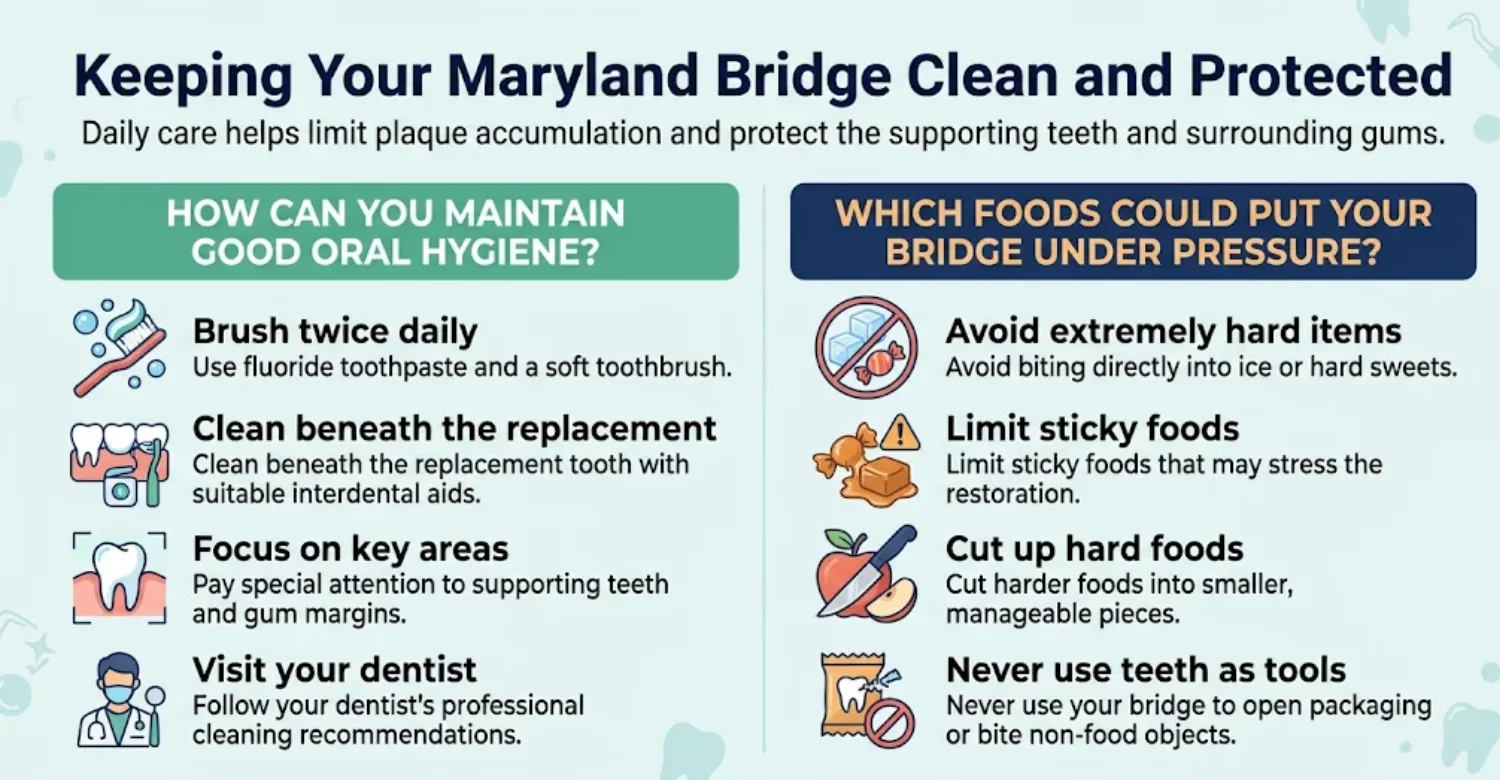
Keeping Your Maryland Bridge Clean and Protected
Daily care helps limit plaque accumulation and protect the supporting teeth and surrounding gums.
How Can You Maintain Good Oral Hygiene?
Brush twice daily using fluoride toothpaste and a soft toothbrush.
Clean beneath the replacement tooth with suitable interdental aids.
Pay attention to supporting teeth and gum margins.
Follow your dentist's professional cleaning recommendations.
Which Foods Could Put Your Bridge Under Pressure?
Avoid biting directly into ice or hard sweets.
Limit sticky foods that may stress the restoration.
Cut harder foods into smaller pieces.
Never use your bridge to open packaging or bite objects.
How Vitrin Clinic Plans Your Dental Bridge Treatment
At Vitrin Clinic, treatment planning starts with examining the missing tooth space and the condition of its supporting teeth.
The aim is to select a restoration that balances tooth preservation, function, and appearance.
Examining the Supporting Teeth and Available Space
The dentist examines enamel, supporting teeth, gums, and bite relationships. Digital X-rays are used when clinically indicated to examine underlying structures.
Digital scans and clinical photographs may also record tooth anatomy, available space, and smile proportions.
Selecting the Bridge Design and Material
The dentist considers the replacement tooth shape, supporting wing design, available bonding surfaces, and material requirements.
Shade selection helps the replacement tooth blend with neighbouring teeth. The final design depends on individual clinical findings rather than a standard approach.
.jpg)
.jpg)
.jpg)
Your Dental Treatment Journey at Vitrin Clinic
For international patients, treatment involves more than the clinical procedure. Appointment coordination, clear planning, and aftercare guidance are also important.
Before You Travel: Initial Consultation
Share dental photographs and available records.
Discuss your concerns and possible treatment options.
Receive preliminary guidance before an in-person examination.
Confirm final recommendations after clinical review.
Understanding Your Treatment Plan and Costs
Review the recommended procedure and materials.
Understand the expected appointment schedule.
Request a written, itemised cost breakdown.
Clarify included services and possible additional expenses.
Coordinating Your Appointments in Istanbul
Organise appointments around clinical and laboratory requirements.
Review the expected treatment timeline.
Allow flexibility for necessary adjustments.
Confirm arrangements before travelling.
After Treatment: Maintenance and Follow-Up
Follow instructions for cleaning and bridge maintenance.
Monitor changes in comfort, fit, or gum health.
Understand which symptoms require dental attention.
Review follow-up arrangements before returning home.
Ready to transform your smile?
Talk to our team and get a personal FREE treatment plan.
Conclusion: Is a Resin Bonded Dental Bridge Turkey Right for You?
A resin bonded dental bridge Turkey treatment can replace a missing tooth while preserving much of the neighbouring natural tooth structure. However, suitability depends on enamel quality, gum health, bite forces, and tooth position.
Before choosing treatment, consider the restoration's benefits, possible complications, maintenance requirements, and long-term costs. A clinical examination helps determine whether this conservative option or an alternative better suits your needs.
Medical Disclaimer
The information in this article is intended for educational purposes only. It should not be considered a substitute for professional dental advice or an individual clinical examination. All prices are indicative 2026 estimates and may change according to the treatment required and individual clinical findings.
Every smile has different needs. Speak with the Vitrin Clinic dental team for a personalised clinical review and a treatment plan tailored to your dental condition.
Reference
FAQs
The indicative price ranges from approximately $280 to $900. The final quotation depends on material, design, laboratory requirements, and clinical complexity. Additional procedures may increase the total. Request an itemised estimate before travelling.
Dr. Rifat Alsaman has more than 5 years of clinical experience in dentistry and currently serves as the Head of the Medical Team at Vitrin Clinic. He is dedicated to providing exceptional patient care, overseeing treatment planning, and ensuring the highest clinical standards across the team. His expertise, attention to detail, and commitment to continuous professional development have helped countless patients achieve healthier, more confident smiles.


