Dental Tourism in Turkey
November 8, 2026
What Is the Best Dental Bridge for Missing Teeth Turkey? Costs, Types & Treatment
 Dr. Rifat Alsaman

Choosing a dental bridge for missing teeth Turkey can help restore chewing function, fill visible gaps, and improve smile appearance. However, the best option depends on the number of missing teeth, supporting tooth health, and bite alignment. Different bridge designs offer different benefits and limitations. Understanding these differences helps patients make informed decisions before treatment. This guide explores bridge types, materials, treatment stages, longevity, possible complications, and costs. It also explains what international patients should consider before travelling to Istanbul.
Key Takeaways
Different Bridge Types: Traditional, Maryland, cantilever, and implant-supported bridges offer different solutions for missing teeth.
Individual Suitability: Supporting tooth health, gum stability, bite alignment, and gap size determine the most appropriate design.
Material Options: Zirconia, porcelain-fused-to-metal, and E-max offer different aesthetic and functional characteristics.
Digital Treatment Planning: Clinical examinations, X-rays, and digital scans help guide accurate bridge design and placement.
Dental Bridge Costs in Turkey: A three-unit bridge typically costs around 750–1,800, depending on material and clinical complexity.
Long-Term Maintenance: Good oral hygiene and regular dental check-ups help protect supporting teeth and extend restoration longevity.
Potential Complications: Sensitivity, gum irritation, decay, bite discomfort, and bridge damage may occur.
Ready to transform your smile?
Talk to our team and get a personal FREE treatment plan.
How Does Dental Bridge Replace Missing Teeth?
A dental bridge replaces one or more missing teeth with artificial teeth called pontics. These are supported by neighbouring natural teeth or dental implants, creating a fixed restoration that fills the gap.
A dental bridge for missing teeth Turkey may offer an alternative to removable dentures. Conventional bridges rely on prepared supporting teeth, while implant-supported designs use dental implants. The pontic restores the missing tooth's position, helping distribute chewing forces and maintain contact with opposing teeth.
What Happens If Missing Teeth Are Not Replaced?
An untreated gap may affect more than your smile. Depending on its location, it can contribute to:
Nearby teeth shifting into the empty space.
Opposing teeth moving out of position.
Reduced chewing efficiency and uneven bite forces.
Food collecting around neighbouring teeth.
Speech changes, particularly when front teeth are missing.
These effects vary between patients. The right treatment depends on the gap's location, gum health, surrounding teeth, and available support.

.jpg)
.jpg)
.jpg)
.jpg)
What Are the Different Dental Bridge Options for Missing Teeth?
The right dental bridge for missing teeth Turkey depends on the number of missing teeth, gap location, bite forces, and available support. The main options include traditional, Maryland, cantilever, and implant-supported bridges.
Traditional Fixed Dental Bridges
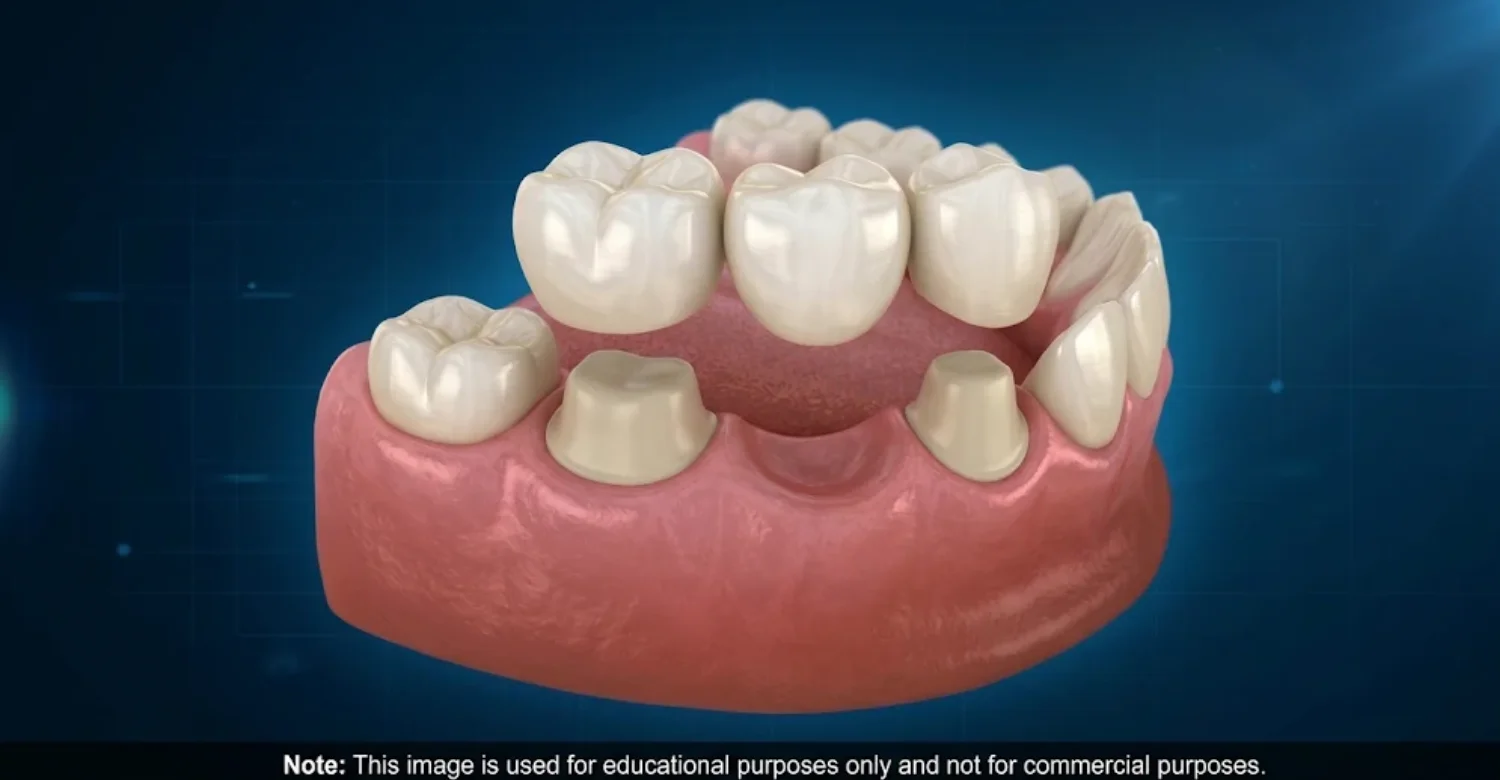
A traditional bridge replaces missing teeth using crowns placed on neighbouring prepared teeth. It provides fixed support and restores chewing contact.
Advantages:
Fixed and non-removable.
Restores chewing function.
Available in different materials.
Limitations:
Requires removing some natural tooth structure.
Supporting teeth may develop sensitivity or decay.
Cleaning underneath needs extra attention.
Maryland (Resin-Bonded) Dental Bridges
A Maryland bridge uses thin wings attached to the backs of neighbouring teeth. It generally requires less preparation and may suit selected front-tooth replacements.
However, the wings can detach under excessive biting forces. Suitability depends on tooth position and bite pattern.
Cantilever Dental Bridges
A cantilever bridge uses one supporting tooth instead of two. It may work when suitable support is available on only one side.
However, chewing forces place additional stress on that supporting tooth. Careful evaluation is essential before choosing this design.
Implant-Supported Dental Bridges
This bridge uses dental implants placed in the jawbone for support, rather than neighbouring natural teeth. It avoids preparing healthy adjacent teeth.
However, treatment requires suitable bone conditions and may involve surgery, healing time, or additional procedures.
Which Dental Bridge Is Best for Multiple Missing Teeth?
Traditional and implant-supported bridges can replace several missing teeth. The choice depends on the gap's length, supporting structures, and distribution of chewing forces.
Longer restorations need careful planning to manage functional pressure. A personalized clinical examination helps determine the most suitable design.
Who Is Suitable for Dental Bridge Treatment in Turkey?
Choosing a dental bridge for missing teeth Turkey depends on gum health, supporting teeth, bite alignment, and the size of the gap. A clinical examination helps determine whether a fixed bridge is suitable.
Can a Dental Bridge Replace Several Missing Teeth?
Yes. Some bridge designs can replace several consecutive teeth. However, longer bridges place greater demands on their supporting structures and may experience increased bending forces.
The dentist evaluates support distribution and bite alignment. Depending on the findings, separate restorations or an implant-supported bridge may be more appropriate.
What Makes Someone Suitable for a Fixed Dental Bridge?
Good candidates generally have stable supporting teeth or suitable implant support, healthy gums, and enough space for the restoration.
Key factors include:
Strong, stable supporting teeth.
Controlled gum health.
Suitable space and bite alignment.
Good daily oral hygiene.
No untreated decay or active infection.
Existing dental problems may need treatment before bridge placement.
When Are Dental Implants a Better Alternative?
Implants may be preferable when neighbouring teeth are healthy and do not need crowns. They replace missing teeth without preparing adjacent natural teeth.
However, implant treatment involves surgery and requires suitable bone conditions. Healing may also be affected by certain medical conditions and lifestyle factors.
A conventional bridge may be more suitable when neighbouring teeth already need crowns. The decision should consider clinical needs, risks, costs, and long-term maintenance.
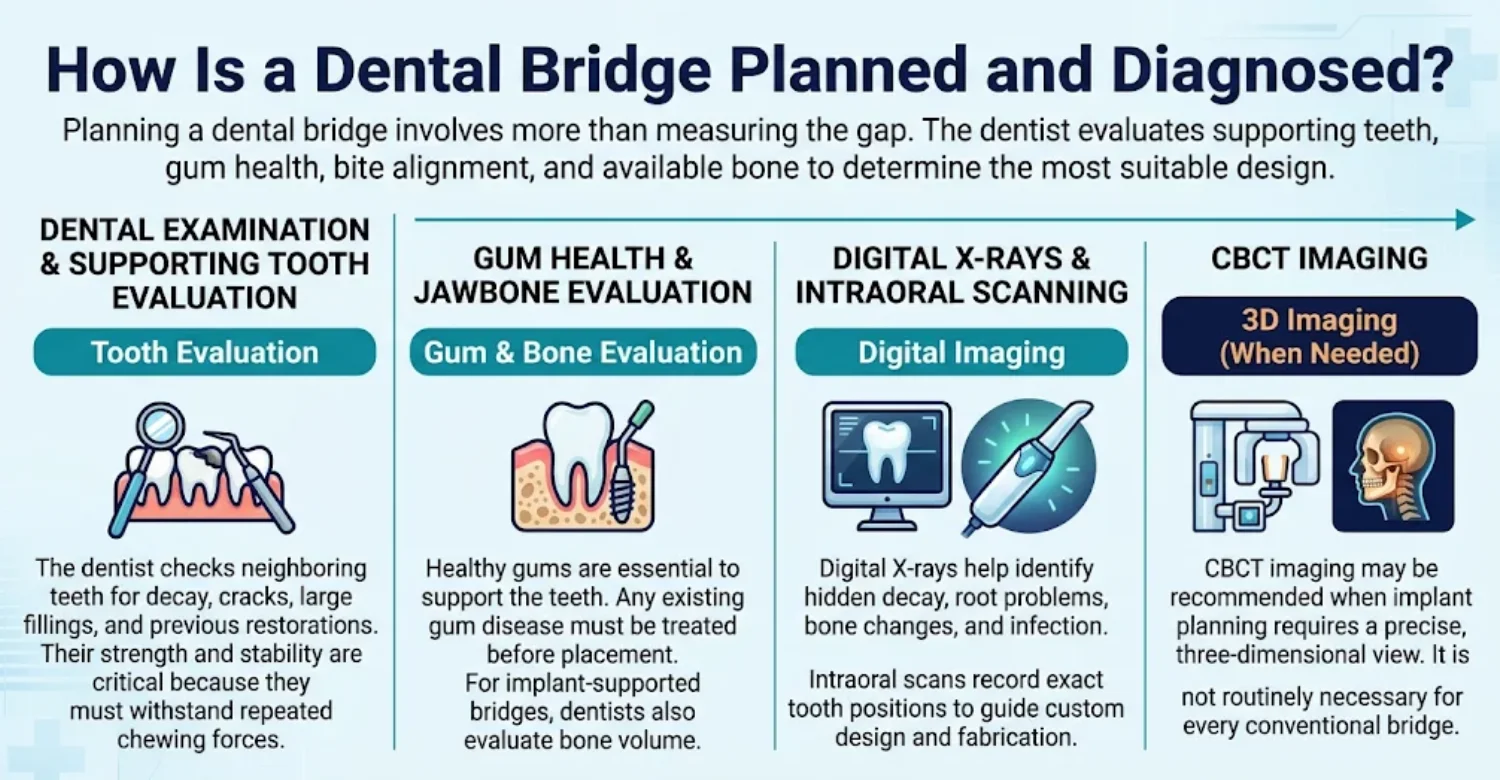
How Is a Dental Bridge Planned and Diagnosed?
Planning a dental bridge for missing teeth Turkey involves more than measuring the gap. The dentist evaluates supporting teeth, gum health, bite alignment, and available bone to determine the most suitable design.
Dental Examination and Supporting Tooth Evaluation
The dentist checks neighbouring teeth for decay, cracks, large fillings, and previous restorations. Their strength and stability matter because they must withstand repeated chewing forces.
Gum Health and Jawbone Evaluation
Healthy gums help maintain stable supporting teeth. Existing gum disease may need treatment before bridge placement. For implant-supported bridges, the dentist also evaluates bone volume and nearby anatomical structures.
Digital X-Rays and Intraoral Scanning
Digital X-rays help identify hidden decay, root problems, bone changes, and infection. Intraoral scans record tooth positions and surrounding structures to guide bridge design and laboratory fabrication.
CBCT imaging may be recommended when implant planning requires a three-dimensional view. It is not routinely necessary for every conventional bridge.
How Is a Dental Bridge Procedure Performed at Vitrin Clinic?
At Vitrin Clinic, dental bridge treatment follows a personalised process based on the selected design, material, and clinical needs. Each stage focuses on fit, function, and appearance.
Preparing the Supporting Teeth
For a conventional bridge, the dentist carefully reshapes the supporting teeth to accommodate the crowns. Local anaesthesia may be used to improve comfort during preparation.
The amount of tooth preparation depends on the natural tooth structure and restoration design.
Digital Scanning and Material Selection
Vitrin Clinic uses digital scanning to record the prepared teeth and surrounding structures. These records guide the bridge design and laboratory fabrication.
Material selection considers tooth shade, bite forces, restoration position, and clinical requirements. Options may include zirconia, lithium disilicate, or metal-ceramic, depending on the case.
Temporary Bridge Placement
When needed, a temporary bridge protects prepared teeth while the permanent restoration is being made. It can also help maintain appearance and basic chewing function.
Patients receive guidance on caring for temporary restorations until their final appointment.
Laboratory Fabrication and Final Placement
The laboratory fabricates the permanent bridge using the approved digital records and treatment specifications. Once ready, the dentist checks its fit, appearance, and contact with neighbouring teeth.
Any necessary adjustments are made before final placement.
Bite Adjustment and Final Checks
The dentist checks how the upper and lower teeth meet to identify excessive pressure or uneven contacts. The bridge is adjusted when necessary to support comfortable chewing.
Final checks focus on fit, appearance, contact points, and comfort. The patient also receives instructions for cleaning and maintaining the restoration.
Which Dental Bridge Materials Are Available at Vitrin Clinic?
At Vitrin Clinic, material selection depends on the bridge position, bite forces, aesthetic goals, and supporting tooth structure. Each option has different strengths and clinical indications.
Zirconia Dental Bridges
Zirconia is a strong ceramic available in different formulations and translucency levels. It may be suitable for front or back teeth, depending on the required thickness and functional demands.
Porcelain-Fused-to-Metal Bridges
These bridges combine a supportive metal framework with an outer porcelain layer. They offer structural support and a tooth-coloured appearance.
However, porcelain may chip, and metal margins can sometimes become visible.
E-max Dental Bridges
E-max is a lithium disilicate ceramic known for its natural-looking optical properties. Its use in bridges depends on the design, span, and manufacturer's clinical indications.
It is not automatically suitable for longer bridges or areas exposed to heavy chewing forces.
Which Material Is Best for Front and Back Teeth?
Front-tooth restorations often require greater attention to shade and translucency. Back teeth need materials that can withstand stronger chewing forces.
Zirconia may suit selected posterior bridges, while lithium disilicate may be appropriate for certain shorter-span designs. Porcelain-fused-to-metal is another possible option.
At Vitrin Clinic, the final material choice is based on clinical findings, restoration design, and functional requirements not appearance alone.
How Much Does a Dental Bridge Cost in Turkey Compared with the US and UK?
The cost of a three-unit dental bridge for missing teeth Turkey is approximately $750–$1,800. By comparison, estimated prices range from 2,700–5,900 in the US and $2,000–$4,000 in the UK.
Average Three-Unit Dental Bridge Prices
UK
Estimated Price: $2,000 – $4,000
Estimated Price
Estimated price: $2,000 – $4,000
Private UK clinic standard rate
Domestic specialist dental care
Turkey
Estimated Price: $750 – $1,800
Estimated Price
Estimated price: $750 – $1,800
Up to ~65–70% savings vs. US/UK
Full professional clinic standard care
US
Estimated Price: 2,700–5,900
Estimated Price
Estimated price: 2,700–5,900
US private clinic standard rate
Highest domestic private expense
What Factors Affect Dental Bridge Prices?
Factor | Possible Effect on Cost |
Material and number of units | Affect laboratory and fabrication costs |
Supporting teeth | May require fillings or other treatment |
Imaging | Necessary X-rays or scans may add fees |
Case complexity | Influences clinical and laboratory costs |
What Additional Treatment Costs Should You Consider?
A dental bridge quotation may not include every procedure needed before placement. Additional costs depend on the patient's oral health and treatment plan.
UK
From $50
Additional treatment costs in USD
Examination and X-rays: $50 – $150
Filling: $80 – $200
Root canal treatment: $300 – $900+
Tooth extraction: $100 – $300
Abscess treatment: Case-dependent
Turkey
From $30
Additional treatment costs in USD
Examination and X-rays: $30 – $100
Filling: $40 – $100
Root canal treatment: $100 – $350
Tooth extraction: $40 – $150
Abscess treatment: $50 – $200+
US
From 50
Additional treatment costs
Examination and X-rays: 50–250
Filling: 100–300
Root canal treatment: 500–1,500+
✓ Tooth extraction: 150–500
Abscess treatment: Case-dependent
What Should a Dental Bridge Treatment Quote Include?
Before booking, request a written, itemised quotation. It should clarify whether the price covers the clinical examination, necessary imaging, bridge fabrication, placement, and follow-up appointments.
Any additional treatment should be listed separately, with its cost confirmed before treatment begins.
Ready to transform your smile?
Talk to our team and get a personal FREE treatment plan.
How Long Does a Permanent Dental Bridge Last?
A dental bridge for missing teeth Turkey is not a lifetime restoration. Its longevity depends on material quality, supporting teeth, gum health, bite pressure, and daily care.
What Affects Dental Bridge Longevity?
Good oral hygiene, healthy gums, regular dental check-ups, and early treatment of decay all help maintain a bridge. Teeth grinding and excessive biting forces may increase wear or damage.
A well-maintained bridge can last for many years, but its lifespan varies between patients.
Can a Dental Bridge Be Repaired or Replaced?
Yes. Minor porcelain damage may sometimes be repaired. However, major fractures, recurrent decay, or weakened supporting teeth may require replacement.
A clinical examination helps determine whether repair is possible or a new restoration is needed. Replacing a bridge does not always mean another bridge is the best option.
.jpg)
.jpg)
.jpg)
.jpg)
What Are the Possible Side Effects and Complications of Dental Bridges?
A dental bridge for missing teeth Turkey may cause temporary sensitivity or complications involving the supporting teeth and gums. The risks depend on preparation, oral hygiene, bridge fit, and bite forces.
Common Dental Bridge Problems
Tooth sensitivity: Prepared teeth may react temporarily to hot or cold foods. Persistent pain needs dental examination.
Gum irritation: Food trapped beneath the pontic may cause inflammation, especially when cleaning is difficult.
Decay around supporting teeth: Plaque near crown margins can increase the risk of decay.
Bite discomfort: Uneven contact may create pressure or pain when chewing.
Bridge damage: A restoration may loosen, chip, or fracture over time.
When Should You Visit Your Dentist?
Seek dental advice if you notice persistent pain, increasing sensitivity, bleeding gums, swelling, a loose bridge, or discomfort when biting.
Facial swelling with fever requires urgent dental or medical attention. Difficulty breathing or swallowing requires immediate emergency care.
How Can You Stay Comfortable and Protect Your Dental Bridge After Placement?
After receiving a dental bridge for missing teeth Turkey, proper aftercare helps control sensitivity, protect supporting teeth, and maintain healthy gums.
What Helps Relieve Sensitivity After Bridge Placement?
Mild sensitivity may occur temporarily after treatment. You can manage it by:
Avoiding very hot or cold foods initially.
Choosing softer foods if chewing feels uncomfortable.
Following your dentist’s aftercare instructions.
Scheduling a review if sensitivity persists or worsens.
Severe, persistent, or increasing pain needs prompt dental attention.
How Do You Clean Beneath a Dental Bridge Properly?
Food debris and plaque can collect beneath the replacement tooth. Keep the area clean by:
Brushing twice daily with a soft-bristled toothbrush.
Using suitable interdental brushes or bridge floss.
Cleaning carefully around the supporting teeth.
Attending regular professional hygiene appointments.
Ask your dentist to demonstrate the correct cleaning technique for your bridge.
Which Foods Should You Avoid After Getting a Dental Bridge?
Avoid hard, sticky, or chewy foods while the area feels tender. Hard sweets, ice, and sticky confectionery can place unnecessary pressure on the restoration.
Gradually return to your usual diet as comfort improves. Follow any specific dietary advice from your dentist.
How Can You Keep the Supporting Teeth Healthy?
Your bridge depends on healthy supporting teeth and surrounding gums. Brush and clean between your teeth consistently. Attend routine dental reviews to detect decay or gum inflammation early.
If you grind or clench your teeth, ask whether a custom night guard could help protect your bridge.
Ready to transform your smile?
Talk to our team and get a personal FREE treatment plan.
What We Notice Clinically When Replacing Missing Teeth
Choosing a dental bridge for missing teeth Turkey involves more than closing a visible gap. Supporting tooth health, bite forces, and restoration design all influence the final decision.
Why Supporting Tooth Health Matters
Supporting teeth must withstand repeated chewing pressure. Their roots, remaining structure, and gum support need careful examination. Extensive decay or weakened teeth may compromise bridge stability, so underlying problems should be addressed first.
Why Multiple Missing Teeth Need Careful Bite Planning
Longer bridges place greater demands on supporting structures. Uneven bite contact can increase mechanical stress and affect restoration durability.
Evaluating chewing patterns and opposing teeth helps determine whether a longer bridge is suitable.
Clinical Note: Dr. Rifat Alsaman on Dental Bridge Selection
For Dr. Rifat Alsaman, the condition of supporting teeth is a key consideration when planning a dental bridge. Preserving healthy tooth structure, maintaining function, and choosing an appropriate design should guide treatment decisions.
.webp)
.webp)
Before Choosing a Dental Bridge in Turkey: Essential Things to Consider
Planning a dental bridge for missing teeth in Turkey involves several important decisions. Understanding your options, treatment costs, and travel requirements can help you prepare.
What Questions Should You Ask Before Getting a Dental Bridge?
Which bridge type is suitable for your dental condition?
Will the supporting teeth need preparation?
Is an implant-supported bridge another possible option?
Which material offers the right balance of strength and appearance?
What complications could affect the final restoration?
What happens if the bridge needs repair or replacement?
How Do You Know If a Dental Bridge Quote Covers Everything?
A low starting price may not reflect the full treatment cost. Before accepting a quote, check:
Whether the clinical examination and necessary imaging are included.
Whether tooth preparation and temporary restorations carry extra fees.
Whether laboratory work, placement, and bite adjustments are covered.
Whether follow-up appointments are included.
How additional procedures or unexpected costs are handled.
Always request a written, itemised treatment estimate.
How Can You Prepare for Dental Bridge Treatment Abroad?
Travelling for dental treatment requires careful coordination. Prepare by:
Sending recent dental X-rays and relevant records.
Sharing details of previous treatments and existing restorations.
Confirming the appointment schedule before booking flights.
Checking the expected laboratory and treatment timelines.
Arranging accommodation and transport.
Understanding the aftercare and remote follow-up process.
Allowing extra time if clinical findings change the treatment plan.
Good preparation helps you organise your visit without overlooking important clinical or practical details.
How Vitrin Clinic Plans Dental Bridge Treatment in Istanbul
At Vitrin Clinic, planning a dental bridge for missing teeth Turkey starts with understanding each patient's dental condition, functional needs, and treatment goals.
Clinical Examination and Digital Diagnostics
The team examines supporting teeth, gums, and bite alignment. Digital X-rays help identify hidden decay, root problems, and bone changes when needed. Intraoral scanning supports accurate restoration planning.
Selecting the Right Bridge Design and Material
The recommended bridge depends on tooth position, supporting structures, and chewing forces. Material options may include zirconia, porcelain-fused-to-metal, and other suitable ceramics.
Personalised Treatment Planning
Each treatment plan outlines the proposed bridge design, preparation requirements, laboratory stages, and maintenance advice.
Vitrin Clinic provides an initial treatment estimate based on the available dental records. Final recommendations and costs are confirmed after clinical examination and any necessary diagnostic imaging.
How Vitrin Clinic Supports Your Treatment Journey
At Vitrin Clinic, dental bridge treatment involves more than the restoration itself. Our team helps coordinate the key stages, from initial consultation to follow-up care.
Initial Consultation and Treatment Coordination
Share existing dental records and relevant X-rays before travelling.
Discuss potential treatment options with the team.
Receive a preliminary treatment plan based on available information.
Confirm the final recommendation after clinical examination.
Digital Planning and Laboratory Coordination
Use digital scans to support accurate restoration planning.
Coordinate restoration design with the dental laboratory.
Check fit, appearance, and function before final placement.
International Patient Support and Follow-Up
Receive clear information about appointments and treatment estimates.
Understand the expected treatment stages and timelines.
Discuss follow-up arrangements before returning home.
Know how to contact the team for professional guidance after treatment.
Every dental bridge for missing teeth Turkey plan should include clear communication and appropriate follow-up arrangements.
Ready to transform your smile?
Talk to our team and get a personal FREE treatment plan.
Conclusion: Choosing the Right Dental Bridge for Missing Teeth Turkey
Choosing a dental bridge for missing teeth Turkey means finding the right balance between appearance, chewing function, and long-term oral health.
Each bridge design and material has specific indications. The best choice depends on supporting teeth, gum health, bite forces, and individual needs.
A clinical examination and clear, itemised treatment plan help you understand your options, costs, and potential risks. The goal is simple: replace missing teeth while protecting the health of your remaining natural teeth.
Reference
FAQs
Yes. Certain bridge designs can replace three or more missing teeth. Suitability depends on gap length, supporting teeth, implant availability, and bite forces. Longer bridges may need additional support or a different restoration design.
Dr. Rifat Alsaman has more than 5 years of clinical experience in dentistry and currently serves as the Head of the Medical Team at Vitrin Clinic. He is dedicated to providing exceptional patient care, overseeing treatment planning, and ensuring the highest clinical standards across the team. His expertise, attention to detail, and commitment to continuous professional development have helped countless patients achieve healthier, more confident smiles.


