Cosmetic Dentistry
September 23, 2026
Full Dentures vs Partial Dentures: Which One Do I Need?
 Dr. Rifat Alsaman
Full dentures vs partial dentures is a common question when several teeth are missing. You may be considering a removable replacement and wondering which design suits you. The answer depends on how many teeth remain and where they sit. Your gum health, bone support, and bite also matter. Full dentures replace an entire arch. Partial dentures replace some teeth and work around your natural ones. Knowing these differences helps you have a clearer, more realistic conversation with your dentist.
Full Dentures vs Partial Dentures: What Is the Difference?
Full dentures vs. partial dentures differ mainly in how much of the arch they replace. A full denture replaces every tooth in the upper or lower jaw. A partial denture fills gaps while keeping suitable natural teeth. However, the choice is not based only on how many teeth are missing. Your dentist also looks at the condition and position of your remaining teeth. Gum health, jawbone support, bite, comfort, and expected function all shape the final decision.
What Are Full Dentures?
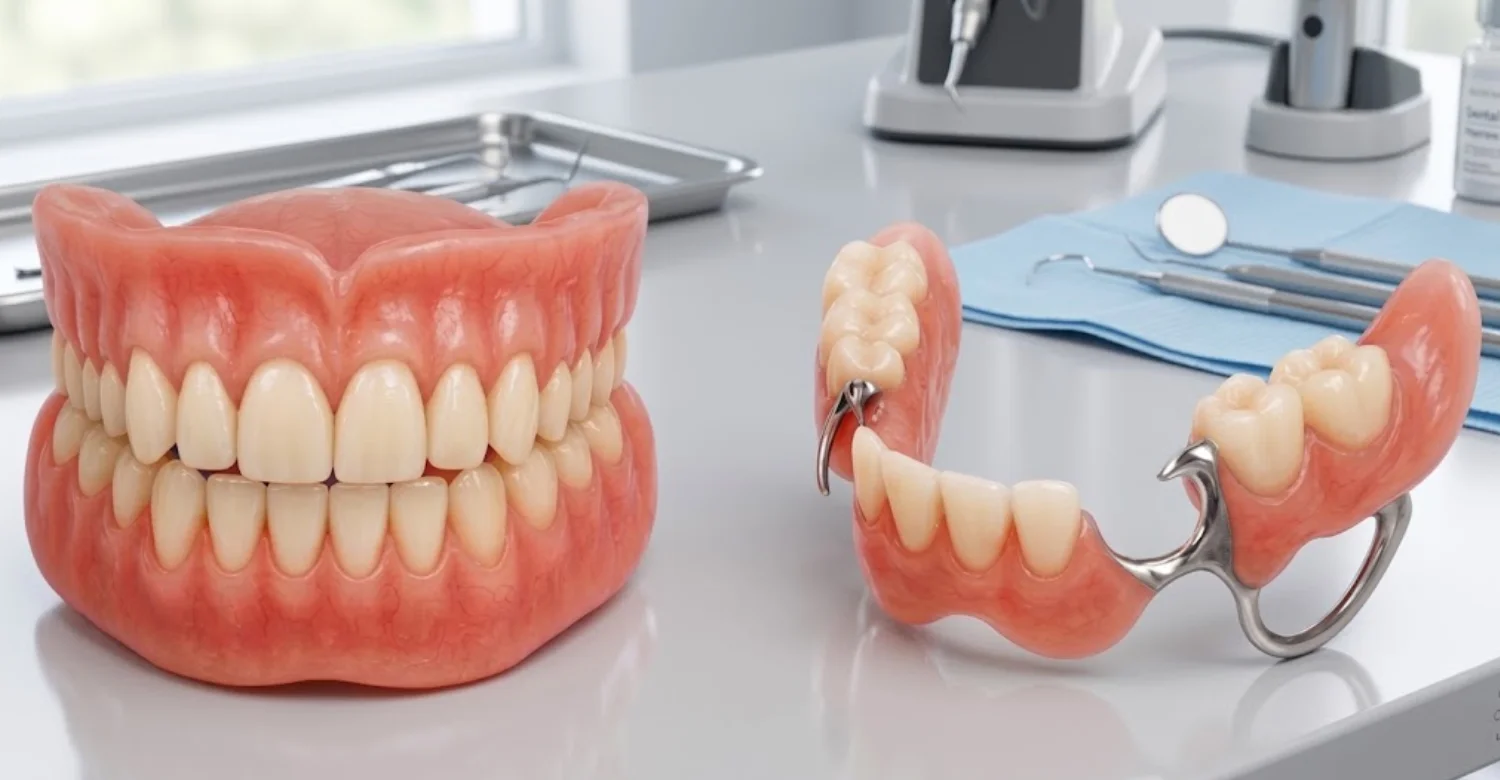
Full dentures, also called complete dentures, are removable appliances that replace all teeth in one arch. An upper denture usually covers the palate, which helps with suction and stability. A lower denture rests on a horseshoe-shaped ridge, so it often feels less stable. Both rely on the gums and underlying bone for support. At first, eating may feel awkward, and some words may sound different. Many people adapt with practice, although the experience varies from person to person.
What Are Partial Dentures?
Partial dentures are removable appliances that replace several missing teeth while keeping suitable natural teeth in place. They usually have a base that holds artificial teeth and sits on the gums. Clasps or other components may grip nearby teeth to improve support, depending on the design. Some partials use a metal framework, while others are made mainly of acrylic or flexible material. Before a partial is planned, your remaining teeth may need assessment to confirm they can support it safely.
Complete Dentures vs Partial Dentures: How Do They Compare?
When looking at complete dentures vs partial dentures, it helps to compare practical factors side by side. This full dentures vs. partial dentures overview is descriptive only. Neither option is universally better, and your own case may differ.
Factor | Full Dentures | Partial Dentures |
Number of missing teeth | All teeth in one arch | Some teeth in one arch |
Remaining natural teeth | None in that arch | Suitable teeth are kept |
Stability and support | Gums and bone | Gums, bone, and natural teeth |
Appearance | Replaces the full smile line | Blends with existing teeth |
Eating and speaking | Often needs longer practice | May feel familiar sooner |
Cleaning requirements | Denture, gums, and tongue | Denture plus natural teeth, especially around clasps |
Adjustment period | Can take several weeks or longer | Varies; clasps may feel noticeable at first |
Long-term maintenance | Relines as gums change | Relines plus care of supporting teeth |
How Do I Know Which Type of Denture I Might Need?
You may already have a rough idea based on how many teeth are missing. Still, a proper assessment is needed before choosing between full dentures or partial dentures. Your dentist examines your remaining teeth for decay, mobility, and old restorations. They check your gums, bite, and bone support. They also consider how you chew and speak. The full dentures vs partial dentures decision becomes clearer once these findings are available, rather than guessing from the number of gaps alone.
When Might Full Dentures Be Considered?
Full dentures may be considered when all teeth in an arch are already missing. They may also be discussed when remaining teeth cannot be reliably preserved. This might happen with severe decay, advanced gum disease, or teeth that have become very loose. However, extraction should not be assumed simply because a full denture is being considered. Some teeth may be worth saving with treatment. Your dentist should explain why each tooth can or cannot be kept before any decision is made.
When Might Partial Dentures Be Considered?
Partial dentures may be considered when some natural teeth remain and can provide useful support. These teeth help hold the denture in place and share chewing forces. For this reason, their condition matters a great deal. A tooth with active gum disease or significant mobility may not support a clasp well. A periodontal assessment can show whether the gums and bone around those teeth are healthy. In some cases, gum treatment may be recommended before the partial denture is made.
Note: All images used are for editorial and illustrative purposes only and may not originate from the original news provider or associated company.
What Problems Can Full or Partial Dentures Help With?
Tooth loss affects more than appearance. It can change how you eat, speak, and feel in social situations. Replacing missing teeth may help restore some chewing ability, speech clarity, and facial support. Whichever side of the full dentures vs partial dentures question applies to you, the aim is improved function. Dentures cannot fully match natural teeth, but they may make daily life easier. You might recognize some of these concerns:
You may avoid certain foods because chewing feels difficult.
You might feel uncomfortable smiling because several teeth are missing.
You may notice changes in how clearly you pronounce certain words.
You may feel that your bite has changed as more teeth are lost.
Tips for Patients
These tips can help at every stage of the full dentures vs partial dentures journey:
Take your denture out and clean it according to your dentist's instructions.
Keep your remaining natural teeth clean if you have a partial denture, paying attention to areas under clasps.
Do not use household adhesives or try to reshape the denture yourself.
Bring your current denture to your consultation if you are considering a replacement.
Tell your dentist which foods or activities feel difficult with your denture.
At Vitrin Clinic, ask whether your remaining teeth and gum health should be assessed before choosing a denture design.
Discover more about burning mouth syndrome
What Factors Affect the Choice Between Full and Partial Dentures?
The choice rarely comes down to a single rule. Several clinical factors are weighed together. Your dentist looks at which teeth are missing and which remain. They assess the health of those remaining teeth, your gums, and your jawbone. Your bite and daily function also play a role. Personal goals, such as appearance and comfort, are part of the discussion too. Understanding these factors makes the full dentures vs partial dentures decision feel less confusing.
Number and Position of Missing Teeth
The location of missing teeth can matter as much as the number. Missing front teeth mainly affect appearance and speech. Missing back teeth often affect chewing more. Gaps at the end of an arch, with no tooth behind them, may need a different design from gaps between teeth. Scattered gaps across the arch can also change how a partial is supported. Two people missing six teeth may therefore need very different dentures. Your dentist will map each gap before recommending a design.
Condition of Your Remaining Teeth
Healthy remaining teeth can make a partial denture a practical option. Teeth that anchor a partial must handle extra forces from clasps and chewing. Decay, looseness, large old fillings, or cracked crowns may weaken them. Gum disease can also reduce the bone that holds them. Your dentist may recommend fillings, gum treatment, or other care first. If key teeth are too compromised, the full dentures vs. partial dentures balance may shift. This is why every tooth needs evaluation.
Gum and Jawbone Health
Your gums and jawbone form the foundation for any denture. Firm, healthy gums help a denture sit comfortably. Adequate bone gives the denture a stable ridge to rest on. Periodontal health simply means the health of the gums and bone around the teeth. When gum disease is present, supporting bone may shrink over time. This can affect denture stability and treatment planning. Treating inflamed gums before making a denture may improve comfort and help protect remaining teeth.
Your Bite and Oral Function
Dentists assess how your upper and lower teeth meet when you close and chew. This is called your bite. If teeth have drifted, tilted, or moved into gaps, the bite may become uneven. An uneven bite can affect comfort and how forces spread across a denture. It may also influence where clasps go and how artificial teeth are arranged. Recording your bite accurately helps the denture feel more natural. It may also reduce sore spots during chewing.
Explore oral allergy syndrome and its symptoms
Full vs Partial Dentures: What Is the Adjustment Period Like?
Both types usually need an adaptation period. With full vs partial dentures, early experiences differ slightly, but several sensations are common. You may feel very aware of the appliance at first. Speech may sound different for a while, and saliva may increase for a few days. Certain foods may feel difficult. In the full dentures vs partial dentures comparison, lower full dentures often need the longest practice. Adaptation varies between individuals. Persistent pain, ulcers, or looseness should be assessed rather than ignored.
How Should You Care for Full or Partial Dentures?
Good daily care keeps your denture comfortable and your mouth healthy. It also helps the appliance last longer. The same basic routine applies in the full dentures vs partial dentures debate, although partials need extra attention around natural teeth. Follow these steps:
Remove your denture as advised, particularly when sleeping, unless your dentist recommends otherwise.
Clean the denture daily with a soft brush and products made for dentures.
Clean your gums, tongue, and any remaining natural teeth every day.
Handle the denture over a folded towel or a basin of water in case it slips.
Keep regular dental appointments to check your oral tissues and denture fit.
Avoid making any adjustments to the denture yourself.
Find out what causes an oral mucocele
Can I Eat Normally With Full or Partial Dentures?
Eating may feel different during the first weeks. Start with softer foods cut into smaller pieces. Chew slowly and, when appropriate, use both sides of your mouth to keep the denture balanced. Gradually introduce firmer foods as comfort improves. Be cautious with very hard, sticky, or chewy foods, which can dislodge or damage dentures. Persistent difficulty chewing may point to a fit or design issue. In that case, arrange a professional review rather than forcing it.
Learn about tooth luxation and dental trauma
What We Notice Clinically
Dr. Rifat Alsaman, Head of the Medical Team at Vitrin Clinic and cosmetic dentist, often meets patients who arrive asking only about full dentures vs. partial dentures. In his approach, planning begins with assessment rather than a choice between two appliances. He considers remaining teeth, periodontal health, bite, facial appearance, and functional needs. Two people with a similar number of missing teeth may still need different plans. The goal is to understand what remains healthy and usable first.
Clinical Note
Denture treatment may involve more than impressions and a finished appliance. Depending on the case, assessment may include a dental examination, periodontal evaluation, and bite analysis. Digital scans, photographs, or imaging may be used when clinically indicated. Dr. Rifat Alsaman, Head of the Medical Team at Vitrin Clinic and cosmetic dentist, notes that realistic planning should account for both function and appearance. The final design may change after the patient's oral condition has been fully evaluated.
What Can I Expect Before and After Getting Dentures?
The treatment journey usually has two stages. The first covers assessment, planning, and any preparation your mouth needs. The second begins once the denture is fitted and you start adapting to it. Every stage depends on your individual findings, so no specific result can be promised in advance. Knowing what each stage involves can make the process feel more predictable. It also helps you plan time for follow-up visits and small adjustments.
Before Treatment
Treatment starts with a consultation and examination. Your dentist discusses your concerns and checks your remaining teeth, gums, and bite. X-rays or scans may be taken when needed. Next comes treatment planning, where your options are explained. Impressions or digital records are then used to design the denture. Some patients need preliminary care first, such as fillings, extractions, or periodontal treatment. Completing this groundwork helps your new denture rest on a healthy foundation.
After Receiving the Denture
Once the denture is fitted, the adaptation period begins. Practice speaking by reading aloud. Start eating with soft foods and small bites. Build a daily cleaning routine from the first day. Sore spots are common early on and are usually handled with small adjustments. The initial fit may need refinement as your tissues settle and you get used to the appliance. Attend follow-up appointments even if things feel fine, because minor issues are easier to correct early.
How Much Do Complete Dentures vs Partial Dentures Cost?
Complete vs partial dentures cost can vary substantially. Factors include the number of teeth being replaced, denture materials, and design complexity. Laboratory work, preliminary treatments, and any additional procedures also affect the total. A metal-framework partial may cost differently from an acrylic one. Because of these variables, a universal price cannot be given without a clinical assessment. Also remember that a cheaper appliance may not cover the same treatment scope as another plan in the full dentures vs partial dentures comparison.
Discover the role of fibroblasts around the mouth
How Long Do Full and Partial Dentures Take?
Treatment duration depends on your oral condition, the laboratory process, and any preparatory treatment. The type of denture matters too. It helps to separate two timelines. The first is the time needed to plan and fabricate the appliance, which may involve several appointments. The second is the longer adaptation period after delivery. Healing after extractions can also extend the process. For these reasons, no fixed number of days applies to every patient in the full dentures vs. partial dentures decision.
Can Dentures Be Repaired or Replaced Later?
Yes, dentures can often be adjusted, repaired, or replaced. Over time, they may wear, crack, or lose their fit. Natural changes in the gums and bone also affect how a removable denture feels. A small sore spot may need only an adjustment. A loose denture may benefit from relining, which reshapes the fitting surface. Broken teeth or clasps can sometimes be repaired. When wear is significant or the fit cannot be restored, replacement may be considered.
Vitrin Clinic and Denture Treatment
At Vitrin Clinic, denture planning starts with understanding each patient's mouth. Assessment may include remaining teeth, gum health, bite, oral function, and aesthetic considerations. Dr. Rifat Alsaman, Head of the Medical Team at Vitrin Clinic and cosmetic dentist, may contribute to individualized treatment planning when appropriate. The proposed denture type should follow clinical findings. In other words, full dentures vs partial dentures is not decided by a one-size-fits-all approach. Each plan reflects what the examination shows.
Takeaway: Choosing Between Full and Partial Dentures
Full dentures vs partial dentures is ultimately a question of how many teeth remain and whether they can be preserved. The condition of your gums, supporting bone, and bite also matters, as do your functional needs. Full dentures replace an entire arch. Partial dentures work around suitable remaining teeth. If you are unsure which option applies to you, arrange a dental assessment. Your teeth, gums, bite, and oral function can then be evaluated before treatment is selected.
References:
FAQs
Dr. Rifat Alsaman has more than 5 years of clinical experience in dentistry and currently serves as the Head of the Medical Team at Vitrin Clinic. He is dedicated to providing exceptional patient care, overseeing treatment planning, and ensuring the highest clinical standards across the team. His expertise, attention to detail, and commitment to continuous professional development have helped countless patients achieve healthier, more confident smiles.


