General Dentistry
October 7, 2026
Can Habitual Unilateral Chewing and Tooth Surface Loss Damage Your Teeth?
 Dr. Rifat Alsaman
Habitual unilateral chewing and tooth surface loss are closely connected dental concerns. When you rely on chewing on one side for months or years, certain teeth absorb more force than others. This article explains causes, effects, diagnosis, prevention, and how Vitrin Clinic evaluates uneven tooth wear and bite-related problems.
What Is Habitual Unilateral Chewing and Tooth Surface Loss?
Habitual unilateral chewing means consistently using one side of the mouth to break down food. Understanding how this habit affects your teeth starts with recognizing the pattern. Many people develop it unconsciously, and while it is not always harmful, a strong chewing side preference deserves attention when it persists over time.
What Does Chewing on One Side Mean?
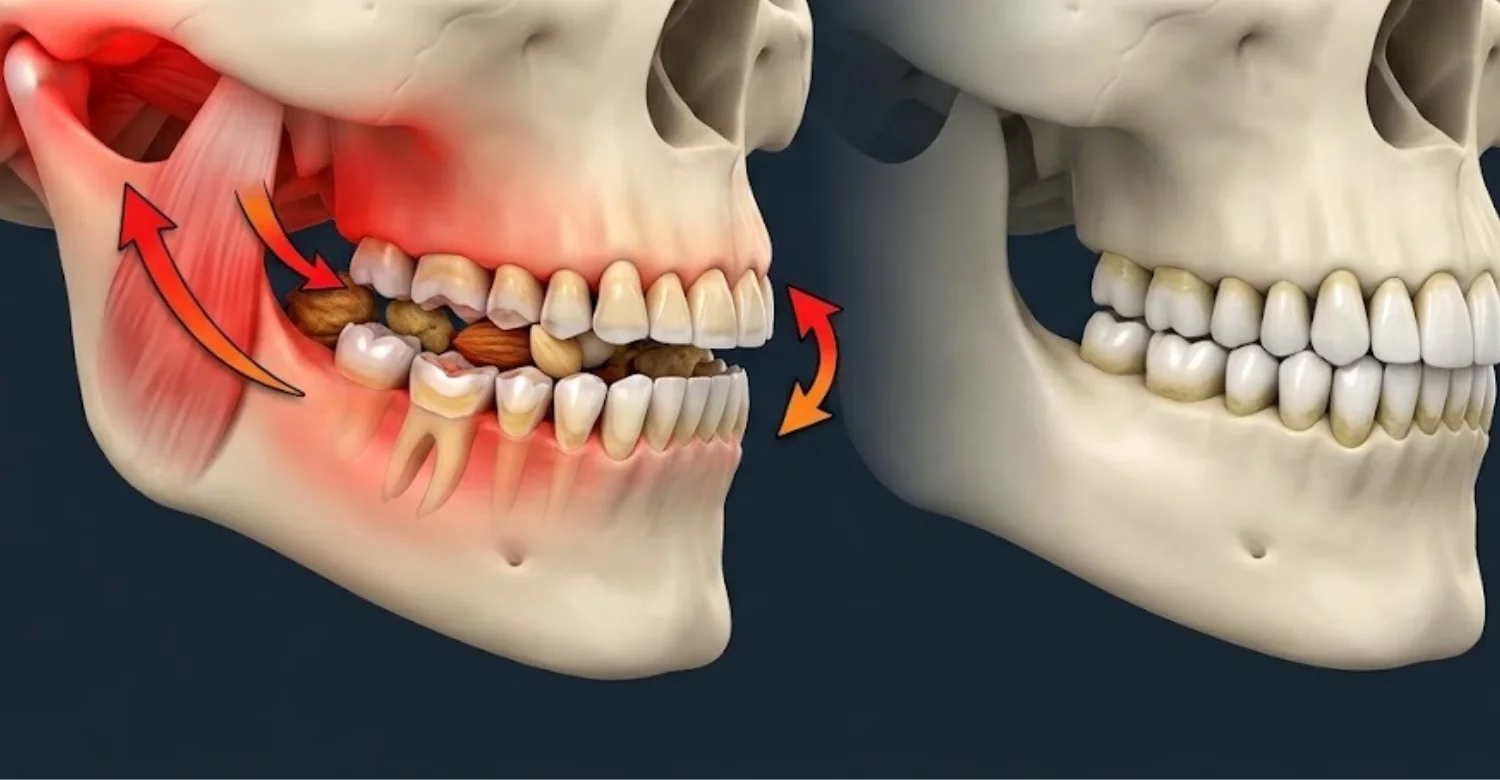
Chewing on one side means the teeth on your left or right side do most of the grinding work during meals. The opposite side may still touch food, but it contributes far less. Over time, this imbalance can concentrate pressure on specific teeth, joints, and muscles rather than sharing it evenly.
What Is One-Sided Chewing?
One sided chewing is the clinical description of a dominant chewing side. In discussions of uneven tooth wear, dentists use this term when one side is used most of the time. It may be mild and harmless or strong enough to influence how teeth wear.
Why Do People Develop a Chewing Side Preference?
A chewing side preference usually develops for comfort or convenience. Pain, sensitivity, a missing tooth, a loose filling, or jaw discomfort can push you toward the easier side. Sometimes no clear cause exists, and the preference simply becomes automatic through years of repetition, much like being right- or left-handed.
Is It Normal to Chew on One Side?
A mild preference is common and often normal. Most people favor one side slightly without problems. However, the habit becomes a concern when the preference is strong, long-standing, or linked to pain. In those cases, a dental evaluation helps determine whether the pattern is harming your teeth.
What Causes One-Sided Chewing?
One sided chewing rarely happens without a reason. Dental pain, missing teeth, bite problems, restorations, and jaw discomfort are common triggers. Identifying the cause is central to managing habitual unilateral chewing and tooth surface loss, because treating the underlying problem is usually more effective than simply trying to switch chewing sides.
Dental Pain or Tooth Sensitivity
Pain from decay, an infected tooth, or exposed dentine makes people avoid the affected side. Sensitivity to cold, heat, or sweet foods has the same effect. The body naturally protects the painful area, so the other side takes over, gradually turning a temporary adjustment into a long-term chewing habit.
Missing or Damaged Teeth
When a tooth is missing, broken, or heavily worn, chewing on that side becomes less efficient. Food is harder to grind, and gaps can trap debris. People naturally shift meals to the side with more working teeth, which is one of the most common origins of a long-term chewing side preference.
Uneven Bite or Malocclusion
Malocclusion means the upper and lower teeth do not meet properly. Crowding, crossbites, open bites, or shifted teeth can make one side feel more stable during chewing. The mouth adapts by favoring the side where teeth fit together best, reinforcing a chewing side preference that may last for years.
Dental Restorations That Affect the Bite
A filling, crown, or bridge that sits slightly too high or too low can change how teeth contact. Even small differences feel noticeable during chewing. Patients may avoid the restored side without realizing it. Checking and adjusting restorations is an important step when assessing uneven chewing patterns.
Jaw Discomfort and TMJ Problems
Problems with the temporomandibular joint (TMJ) or jaw muscles can make chewing on one side more comfortable than the other. Clicking, stiffness, or aching may lead you to protect the sore side. Unfortunately, this shift can overload the opposite side, creating a cycle of muscle strain and uneven tooth wear.
Habitual Chewing Side Preference
Sometimes no dental or jaw problem explains the pattern. The chewing side preference simply develops through habit and repetition. Even habit-based preferences matter, because uneven tooth wear can still develop when one side handles the majority of chewing forces day after day for years.
 Note : All images used are for editorial and illustrative purposes only and may not originate from the original news provider or associated company.
Does Chewing on One Side Damage Teeth?
Does chewing on one side damage teeth? Not always, but it can contribute to problems when the habit is strong and persistent. Concentrated forces may increase wear, sensitivity, or fracture risk. The real impact of habitual unilateral chewing and tooth surface loss depends on your bite, enamel strength, diet, and other habits.
Can One-Sided Chewing Cause Tooth Surface Loss?
Yes, one sided chewing can contribute to tooth surface loss. When the same teeth handle most chewing, their enamel experiences more friction and pressure. Over the years, this may gradually flatten or thin biting surfaces. However, it is usually one factor among several rather than the only cause of wear.
How Does Chewing on One Side Affect Teeth?
Questions about chewing on one side teeth usually focus on the working side. Those teeth carry heavier loads, more contact, and more friction, which may cause faster wear, small cracks, or sensitivity. The less-used side may collect more plaque, because chewing naturally helps clean tooth surfaces during meals.
Can One-Sided Chewing Cause Uneven Tooth Wear?
Yes. Uneven tooth wear is one of the most recognized consequences of a strong chewing side preference. The dominant side may show flatter cusps and shinier facets, while the other side looks less worn. This asymmetry is often a key clue when dentists evaluate chewing-related wear.
What Is Tooth Wear From Chewing?
Tooth wear from chewing, also called attrition, is the gradual loss of enamel caused by teeth contacting each other and food. Some wear is a normal part of aging. It becomes concerning when it progresses quickly, appears uneven, exposes dentine, or causes sensitivity, pain, or visible changes in tooth shape.
Which Teeth Are Most Affected by One-Sided Chewing?
The back teeth, especially molars and premolars, on the dominant side are usually most affected because they do the heavy grinding. Canines may also show wear if they guide side-to-side jaw movements. With a strong one-sided chewing pattern, these teeth often display the earliest flattening and enamel thinning.
Clinical Note
Repeated mechanical forces gradually remove enamel through friction and microscopic fatigue. When loading is uneven, wear concentrates on specific teeth, creating localized patterns. Still, tooth wear has multiple causes, including grinding, clenching, acidic erosion, abrasion, and normal aging. Habitual unilateral chewing and tooth surface loss should always be assessed alongside these other factors.
What Are the Effects of Chewing on One Side?
Chewing on one side effects range from barely noticeable to clinically significant. Some people never experience problems, while others develop wear, sensitivity, cracks, or jaw fatigue. The severity of these effects depends on how strong the habit is, how long it has lasted, and your overall dental health.
Uneven Tooth Wear
Uneven tooth wear is the most common effect. The dominant side gradually loses enamel faster, while the opposite side stays relatively intact. Over time, the difference may become visible as flatter, shorter, or shinier teeth on one side, which can influence both appearance and chewing efficiency.
Increased Tooth Sensitivity
As enamel thins, the softer dentine underneath moves closer to the surface or becomes fully exposed. Dentine contains tiny channels leading to the nerve, so hot, cold, sweet, or acidic foods may trigger sharp discomfort. Sensitivity on the dominant side can signal that enamel loss is progressing.
Flattened or Worn Tooth Surfaces
Healthy back teeth have defined cusps and grooves that help crush food. Repeated heavy chewing can gradually flatten these features. Flattened teeth may chew less efficiently, so you may need more effort to break food down, which can further increase load on the same side and continue the wear cycle.
Cracked or Damaged Teeth
Teeth that absorb excessive force repeatedly may develop small cracks, chipped edges, or fractured fillings. Heavily restored or already worn teeth are especially vulnerable. Cracks can cause sharp pain when biting or releasing. Among chewing on one side effects, cracked teeth deserve prompt attention because they can worsen if left untreated.
Changes in the Bite
When one side wears faster, the way upper and lower teeth meet can gradually shift. You may notice that your bite feels different, uneven, or less stable. These occlusal changes are a recognized consequence of long-term one-sided chewing and may need assessment before restorative treatment is planned.
Jaw Muscle Fatigue or Discomfort
Chewing muscles on the dominant side may work harder and become more developed or fatigued. Some people notice tiredness, tightness, or aching after meals, particularly with tough foods. In some cases, imbalanced muscle activity is associated with jaw joint discomfort, although many different factors contribute to TMJ problems.
Possible Changes in Chewing Function
Over time, worn or uneven teeth may make chewing less efficient. Food may take longer to break down, and the neglected side may feel unfamiliar or awkward when used. These functional changes can reinforce the chewing side preference, making the pattern harder to change without addressing its underlying causes.
Tips for the Patients
Pay attention to whether you consistently chew on the same side during meals.
Do not force yourself to chew on the opposite side if doing so causes pain.
Seek a dental evaluation if your chewing side preference comes from discomfort or difficulty chewing.
How Does One-Sided Chewing Cause Uneven Tooth Wear?
One sided chewing causes uneven tooth wear by concentrating repeated forces on the same teeth thousands of times each day. Small amounts of enamel loss accumulate gradually. This mechanism explains why habitual unilateral chewing and tooth surface loss often develop slowly and silently, sometimes becoming noticeable only after significant changes occur.
How Repeated Chewing Forces Affect Tooth Surfaces
Each chewing cycle creates pressure and friction between teeth and food. Enamel is very hard, but it cannot regenerate once lost. Repeated loading over years causes microscopic wear and, sometimes, tiny fatigue cracks. When forces are spread evenly, wear is shared; when concentrated, specific teeth deteriorate faster than others.
Why Does One Side Experience More Mechanical Stress?
The dominant side performs most of the grinding, so its teeth meet more often and under greater pressure. The jaw also moves in patterns that favor that side. With a dominant chewing side, this concentrated mechanical stress explains why wear, sensitivity, and cracks frequently appear on one side first.
How Can Uneven Tooth Wear Progress Over Time?
Uneven tooth wear usually progresses slowly, moving from subtle enamel changes to visible flattening and, eventually, dentine exposure. Progression speed varies depending on bite force, diet, grinding, acid exposure, and enamel quality. Monitoring at regular dental visits helps detect changes early, before significant structural damage or bite alteration occurs.
Early Signs of Tooth Surface Loss
Early signs of tooth surface loss include small shiny facets, slightly flattened cusp tips, mild sensitivity, and subtle chipping along edges. These changes are easy to overlook because they rarely cause pain. Recognizing them early is valuable in managing one-sided wear before damage becomes extensive.
Advanced Signs of Tooth Wear
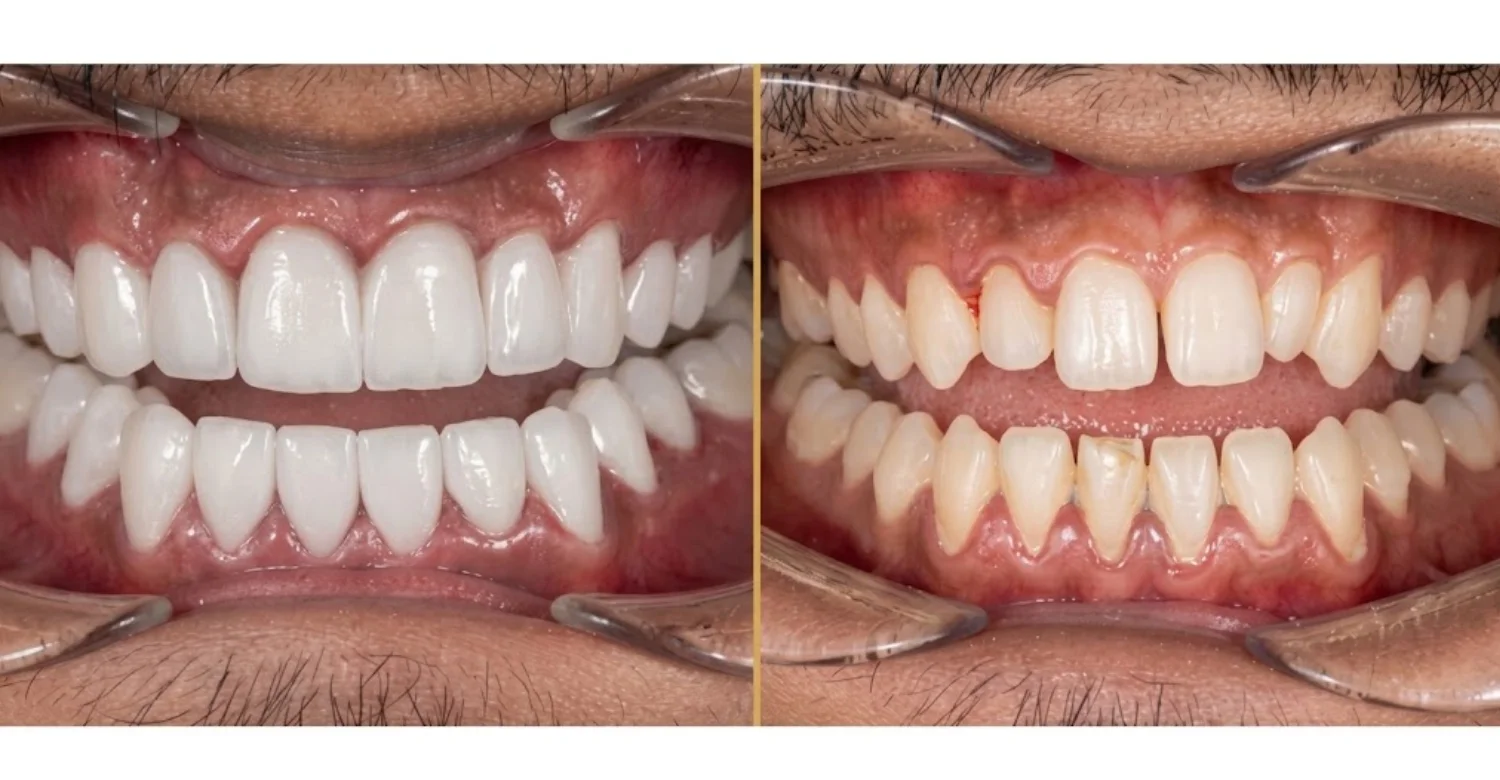
Advanced wear may include visibly shorter teeth, exposed yellowish dentine, cupped or hollowed surfaces, fractured fillings, persistent sensitivity, and noticeable bite changes. Teeth may look uneven when smiling. At this stage, tooth wear from chewing often requires restorative treatment to protect remaining structure and restore function and appearance.
When Tooth Wear May Require Dental Treatment
Treatment may be needed when wear causes pain, sensitivity, cracks, dentine exposure, functional difficulty, or aesthetic concerns. It may also be recommended if wear is progressing quickly. For chewing-related wear, treatment aims to address the cause, protect teeth, and restore balanced function where appropriate.
Can Chewing on One Side Affect Your Bite?
Yes, chewing on one side can influence your bite over time. Uneven wear may alter how teeth meet, and bite problems can also cause the habit. This two-way relationship is important during a dental assessment, because cause and effect must be carefully separated.
What Is the Relationship Between Chewing Patterns and Occlusion?
Occlusion describes how upper and lower teeth fit together. Chewing patterns and occlusion influence each other: an uneven bite may encourage one sided chewing, while persistent one sided chewing may gradually alter tooth contacts. Dentists evaluate both together to understand which problem came first and how to treat it.
Can Uneven Tooth Wear Change How Your Teeth Meet?
Yes. As teeth on one side lose height, the contact relationship between upper and lower teeth may shift. Some contacts become heavier while others lighten. With a long-standing chewing side preference, these gradual changes can affect bite comfort, chewing efficiency, and the stability of existing dental restorations.
Can a Damaged or Missing Tooth Cause a Chewing Side Preference?
Absolutely. A broken, painful, or missing tooth is one of the most common reasons people develop a chewing side preference. Missing teeth also allow neighboring teeth to drift or tilt, affecting the bite further. Restoring the damaged area often helps make both sides comfortable and functional again.
Why Is a Balanced Bite Important for Tooth Function?
A balanced bite distributes chewing forces across many teeth, joints, and muscles, reducing stress on any single area. This helps protect enamel, restorations, and supporting tissues. Maintaining balance is a key goal when managing uneven tooth wear, because it slows wear and supports comfortable function.
Ready to transform your smile?
Talk to our team and get a personal FREE treatment plan.
How Can You Stop Chewing on One Side?
Stopping chewing on one side starts with understanding why it happens. Simply forcing yourself to switch sides rarely works if pain or dental problems remain. Effective management of habitual unilateral chewing and tooth surface loss usually combines diagnosis, treatment of underlying issues, and gradual adaptation guided by a dental professional.
Identify Why You Prefer One Side
Start by noticing when and why you favor one side. Do certain foods hurt? Does one area feel sensitive, loose, or uneven? Sharing these observations with your dentist helps identify whether the cause is pain, a missing tooth, a bite issue, a restoration problem, or simple habit.
Treat Tooth Pain or Sensitivity
Treating decay, infection, cracks, or sensitivity often removes the reason for avoiding one side. Options may include fillings, desensitizing treatments, or root canal therapy, depending on the problem. Once chewing becomes comfortable, many patients naturally return to using both sides, reducing the risk of further uneven wear.
Replace Missing or Severely Damaged Teeth When Appropriate
Missing teeth may be replaced with implants, bridges, or dentures, depending on your oral health and preferences. Severely damaged teeth may need crowns or other restorations. Restoring chewing surfaces on the weaker side helps distribute forces more evenly and makes balanced, comfortable chewing on both sides possible again.
Correct Bite-Related Problems
If malocclusion or high restorations contribute to the habit, bite correction may help. This could involve adjusting a filling or crown, orthodontic treatment, or restorative work to rebalance contacts. Correcting the bite addresses one of the root causes of the habit rather than just the symptoms.
Restore Worn or Damaged Teeth When Necessary
When enamel loss is significant, restorations such as bonding, onlays, or crowns can rebuild worn surfaces, reduce sensitivity, and protect teeth from further damage. Restoring tooth shape may also improve chewing efficiency and appearance. The right choice depends on the extent of wear and your overall bite.
Clinical Note
Changing the chewing side alone may not solve the problem if pain, missing teeth, bite problems, or tooth damage are responsible. Forcing a switch can even cause discomfort. Individualized dental assessment should come first, because chewing-related tooth wear requires treatment tailored to each patient's specific condition.
How Is Habitual Unilateral Chewing and Tooth Surface Loss Diagnosed?
Diagnosis combines a careful history, clinical examination, bite assessment, and, when needed, imaging. Dentists look for patterns that distinguish chewing-related wear from erosion, grinding, or abrasion. Accurate diagnosis guides appropriate treatment and helps prevent unnecessary or ineffective interventions.
Dental Examination
The dentist reviews your symptoms, diet, habits, and dental history, then examines teeth, gums, restorations, and jaw muscles. They may ask about grinding, clenching, acidic drinks, or reflux. This comprehensive approach helps determine whether one sided chewing is the main contributor or part of a broader problem.
Bite and Occlusion Assessment
Bite assessment checks how teeth meet when closing and moving sideways. Marking paper may highlight heavy or uneven contacts. The dentist also observes jaw movement and comfort. In patients with a chewing side preference, this assessment reveals whether bite imbalances are causing or resulting from the chewing pattern.
Evaluation of Tooth Wear Patterns
Wear patterns provide important diagnostic clues. Chewing-related wear typically appears as flattened facets on biting surfaces, often more pronounced on one side. Erosion tends to create smooth, cupped areas, while abrasion often affects the gumline. Distinguishing these patterns helps the dentist identify the true cause of tooth surface loss.
Checking for Cracks, Sensitivity, and Enamel Loss
The dentist may use bite tests, cold tests, magnification, or transillumination to detect cracks and sensitivity. Enamel thickness and dentine exposure are also assessed. Identifying these problems early is essential, because cracked or thin teeth can deteriorate quickly under continued load.
Dental Imaging When Necessary
X-rays may be used to check for decay, bone changes, root problems, or hidden damage beneath restorations. Photographs and digital scans can document wear and allow comparison over time. Imaging is used only when clinically necessary, helping dentists monitor progression and plan treatment accurately and safely.
How Can You Prevent Tooth Surface Loss From Chewing?
Preventing tooth surface loss involves early detection, prompt treatment, and protecting teeth from additional damage. Since wear accumulates slowly, small preventive steps make a significant difference. Managing habitual unilateral chewing and tooth surface loss early helps preserve natural tooth structure and reduces the need for extensive restorative treatment later.
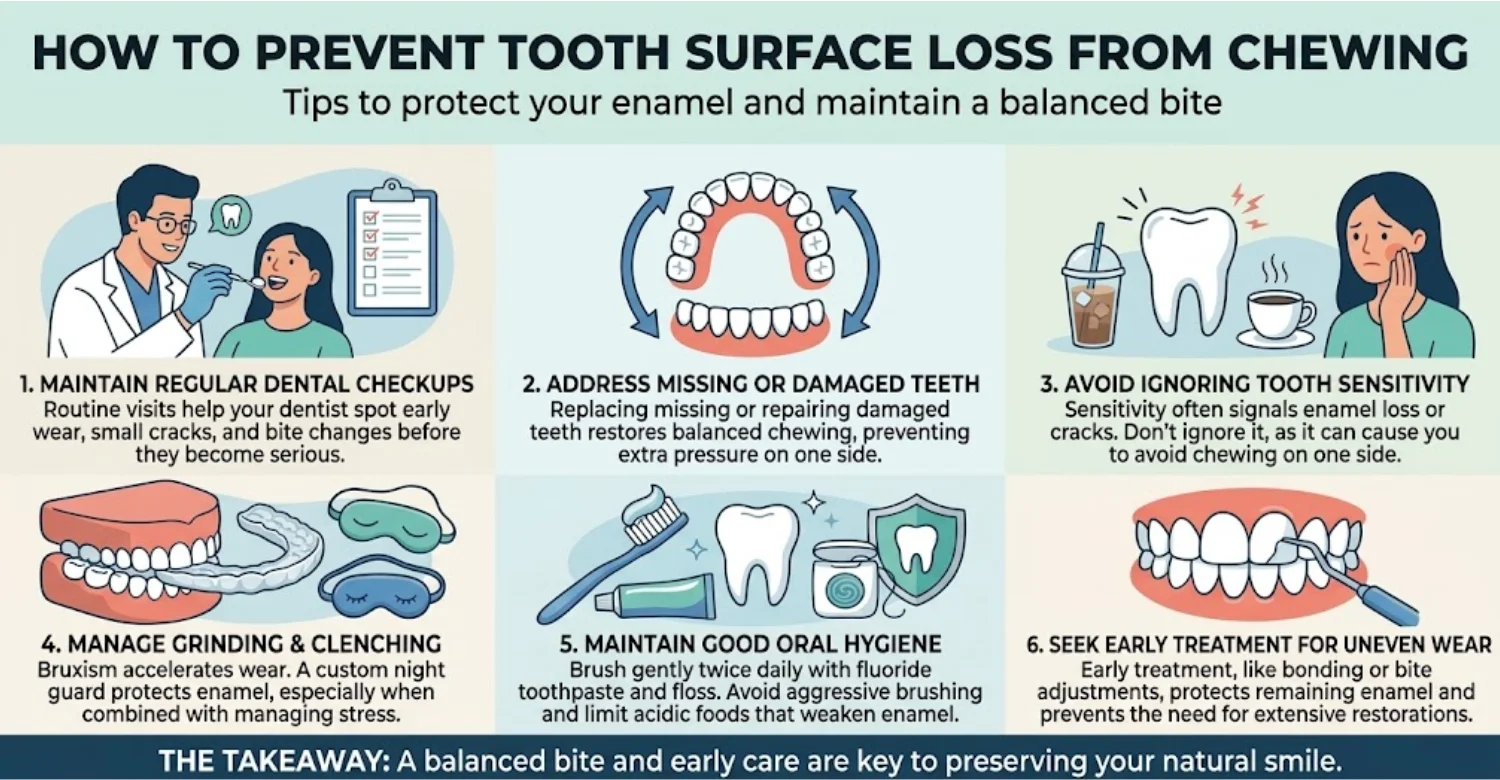
Maintain Regular Dental Checkups
Routine checkups allow your dentist to spot early wear, small cracks, and bite changes before symptoms appear. Comparing records over time shows whether wear is stable or progressing. Regular visits are one of the simplest and most reliable ways to monitor chewing-related wear effectively.
Address Missing or Damaged Teeth
Replacing missing teeth and repairing damaged ones restores chewing ability on both sides. This reduces pressure on the dominant side and prevents neighboring teeth from drifting. Early treatment usually requires simpler procedures and helps maintain a balanced bite that supports long-term oral health and comfort.
Avoid Ignoring Tooth Sensitivity
Sensitivity often signals enamel loss, exposed dentine, decay, or a crack. Ignoring it may cause you to avoid one side and strengthen the habit. Reporting sensitivity early helps your dentist manage the problem before minor issues develop into painful or complex conditions.
Manage Teeth Grinding and Clenching
Grinding and clenching, especially during sleep, can significantly accelerate wear. When combined with one sided chewing, damage may concentrate even further on the same teeth. A custom night guard can protect enamel, and identifying contributing factors such as stress may help reduce these habits over time.
Maintain Good Oral Hygiene
Brushing twice daily with fluoride toothpaste and a soft brush, plus cleaning between teeth, helps protect enamel and prevent decay. Avoid aggressive brushing, which can cause abrasion. Limiting acidic foods and drinks also reduces erosion that can combine with tooth wear from chewing to weaken teeth.
Seek Early Treatment for Uneven Tooth Wear
Early treatment of uneven tooth wear often involves conservative options, such as bonding or bite adjustments. Waiting longer may require more extensive restorations. Acting early helps protect remaining enamel, maintain natural tooth shape, and preserve comfortable, efficient chewing.
Tips for the Patients
Do not ignore a persistent chewing side preference, even if it causes no pain.
Avoid chewing excessively hard foods, such as ice or hard candy, on already worn teeth.
Report new sensitivity, cracks, pain, or bite changes to your dentist promptly, as these may signal progressing tooth wear.
How Can Vitrin Clinic Help With One-Sided Chewing and Tooth Wear?
Vitrin Clinic offers professional evaluation for patients concerned about one sided chewing, tooth wear, and bite problems. The team focuses on identifying underlying causes and developing individualized treatment plans. For habitual unilateral chewing and tooth surface loss, Vitrin Clinic provides comprehensive assessment and restorative care tailored to each situation.
.webp)
.webp)
How Does Vitrin Clinic Evaluate Chewing Side Preference?
At Vitrin Clinic, evaluation begins with a detailed discussion of symptoms, habits, and dental history. The team examines teeth, restorations, gums, jaw movement, and bite contacts to understand why a chewing side preference exists. This helps distinguish pain-related, bite-related, and habit-based causes before recommending treatment.
How Does Vitrin Clinic Assess Uneven Tooth Wear?
Vitrin Clinic assesses uneven tooth wear by examining wear patterns, enamel thickness, dentine exposure, cracks, and sensitivity. Imaging and records may be used when appropriate. This careful assessment helps determine severity, likely causes, and whether monitoring or treatment is needed.
What Treatments May Help Restore Damaged or Worn Teeth?
Depending on the condition, Vitrin Clinic may recommend bonding, fillings, onlays, crowns, bite adjustments, or tooth replacement options. Treatment for sensitivity or protective night guards may also be considered. Each plan aims to restore function, protect remaining tooth structure, and support balanced chewing on both sides.
What Does Vitrin Clinic's Medical Team Recommend About One-Sided Chewing?
The Head of the Medical team at Vitrin Clinic, a cosmetic dentist, emphasizes finding the underlying reason behind habitual unilateral chewing and tooth surface loss. Rather than simply telling patients to switch sides, Vitrin Clinic bases treatment on each patient's individual dental condition, offering professional evaluation of tooth wear and bite concerns.
What We Notice Clinically
At Vitrin Clinic, we notice that a consistent chewing side places greater functional load on certain teeth. Our medical team evaluates chewing patterns, tooth wear, and bite concerns together. Most one sided chewing teeth problems improve only when the cause is identified, so understanding the reason matters more than switching sides.
Resource:
https://karger.com/mpp/article/22/6/545/203601/Relationship-between-the-Preferred-Chewing-Side
FAQs
Dr. Rifat Alsaman has more than 5 years of clinical experience in dentistry and currently serves as the Head of the Medical Team at Vitrin Clinic. He is dedicated to providing exceptional patient care, overseeing treatment planning, and ensuring the highest clinical standards across the team. His expertise, attention to detail, and commitment to continuous professional development have helped countless patients achieve healthier, more confident smiles.


.webp&w=3840&q=75)

