General Dentistry
October 1, 2026
Is It TMJ or Tooth Pain? How Can You Tell the Difference?
 Dr. Rifat Alsaman
Jaw pain and tooth pain often feel surprisingly similar. The teeth, jaw joint, and chewing muscles share the same nerve network. Pain from one area can be felt in another, which is called referred pain. So, is it TMJ or tooth pain? Finding the true source is essential for choosing the right treatment.
What Is the Difference Between TMJ or Tooth Pain?
The main difference lies in the source. Dental pain starts inside a tooth or its surrounding gums. TMJ pain comes from the jaw joint and chewing muscles. To find the answer, dentists look at pain location, triggers, and quality.
What Is TMJ-Related Pain?
The temporomandibular joint connects the lower jaw to the skull, just in front of each ear. TMJ disorders affect the joint, the surrounding muscles, or both. TMJ-related tooth pain often feels dull, aching, and widespread. It may involve several teeth at once. It usually worsens with chewing, clenching, or opening wide.
What Causes True Tooth Pain?
True tooth pain usually comes from a problem in the tooth or gums. Common examples include cavities, cracks, infected pulp, abscesses, and gum disease. This pain is often sharp or throbbing. Hot, cold, or sweet foods may trigger it. Answering "Is it TMJ or tooth pain?" starts with checking these causes.
Can TMJ Cause Tooth Pain?
Yes, it can, through referred pain. The jaw joint, chewing muscles, and teeth share branches of the trigeminal nerve. Tense or inflamed jaw muscles can send pain signals that seem to come from the teeth. The back molars are affected most often.
How to Tell if Tooth Pain Is From TMJ
Knowing how to tell if tooth pain is from TMJ means noticing patterns. TMJ pain often affects several teeth at once. It tends to feel worse in the morning or after chewing. It also comes with jaw tenderness or clicking. Tracking these clues helps your dentist reach a diagnosis.
Key Differences Between TMJ and Tooth Pain
Tooth pain is usually sharp and limited to one tooth. Temperature or biting often triggers it. TMJ tooth pain tends to be diffuse and aching. It is linked to jaw movement, clenching, or muscle tension. Dental pain often lingers after cold exposure. TMJ discomfort often comes with jaw stiffness or headaches.
Learn more about the Pain of Toothache
Causes of the Condition
Pain in the jaw or teeth can come from many sources, sometimes more than one at once. Understanding the common causes behind each type guides the dentist toward an accurate diagnosis. It also helps build an effective treatment plan.
Causes of TMJ-Related Tooth Pain
TMJ-related tooth pain can result from several jaw problems. These include muscle tension, grinding or clenching, and joint inflammation. Arthritis, a displaced joint disc, or a jaw injury can also play a role. Overworked chewing muscles can develop tender spots. These spots refer pain to the teeth, so it feels like a real dental problem.
Common Causes of Tooth Pain
Common causes include tooth decay, cracked teeth, and worn or lost fillings. Infected pulp, dental abscesses, gum disease, and exposed roots are also frequent. Impacted wisdom teeth can cause pain as well. Sinus congestion may cause discomfort in the upper back teeth. Ruling these out is a key step when deciding "Is it TMJ or tooth pain?"
How Clenching and Grinding Can Cause TMJ Tooth Pain
Clenching and grinding often happen during sleep. They overload the jaw muscles and joint. This constant pressure can cause morning jaw soreness, headaches, and pain across several teeth. Grinding can also wear enamel and cause sensitivity. That is why some patients have TMJ and dental pain at the same time.
Can Stress Contribute to TMJ Symptoms?
Yes. Stress and anxiety are commonly linked to jaw clenching and muscle tension. Both can worsen TMJ symptoms. Many people clench without noticing while concentrating or sleeping. Relaxation techniques, good sleep, and awareness of jaw habits can help. These steps reduce flare-ups and related discomfort.
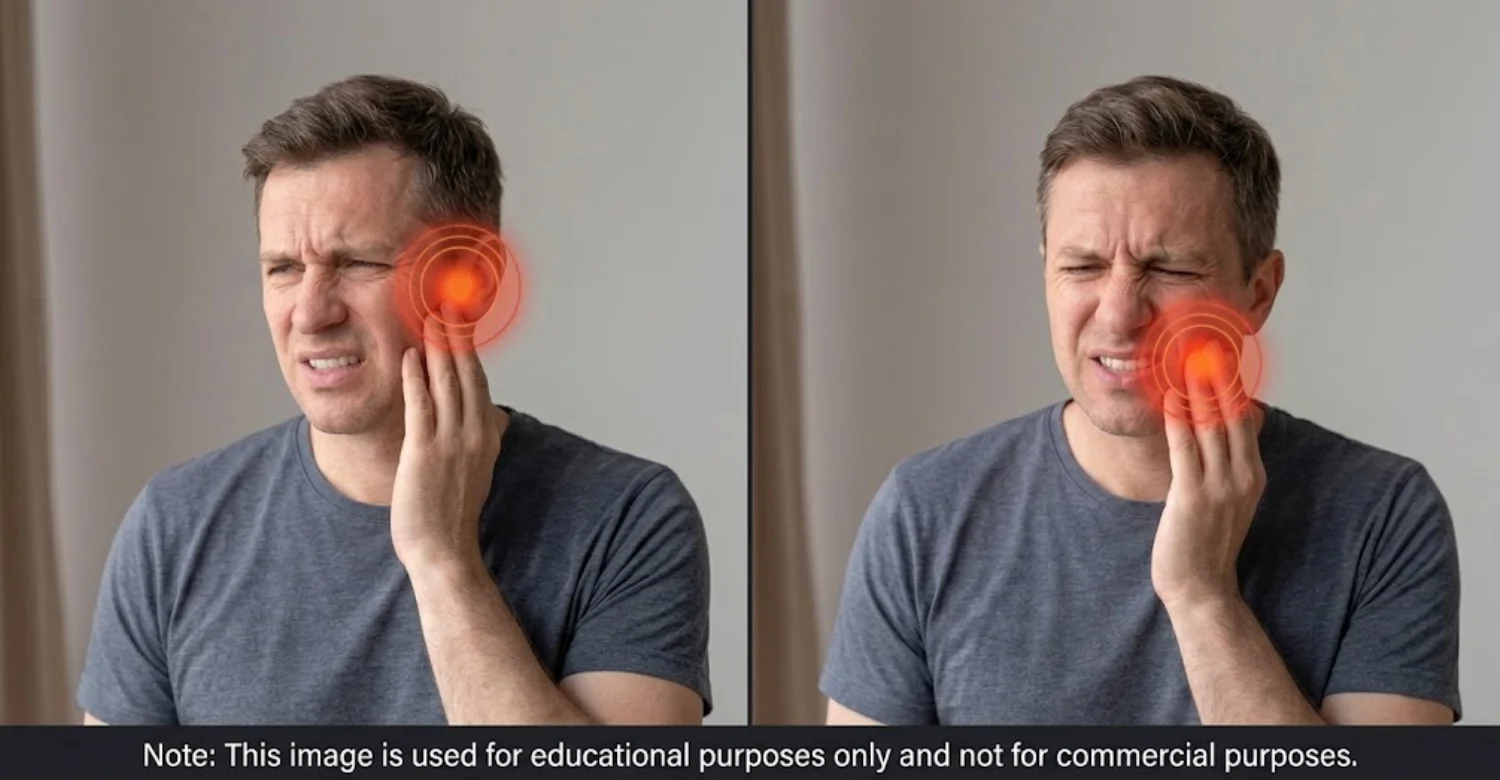
Note : All images used are for editorial and illustrative purposes only and may not originate from the original news provider or associated company.
Understand the symptoms and treatment of Salivary Gland Infection
What Are the Common TMJ Symptoms?
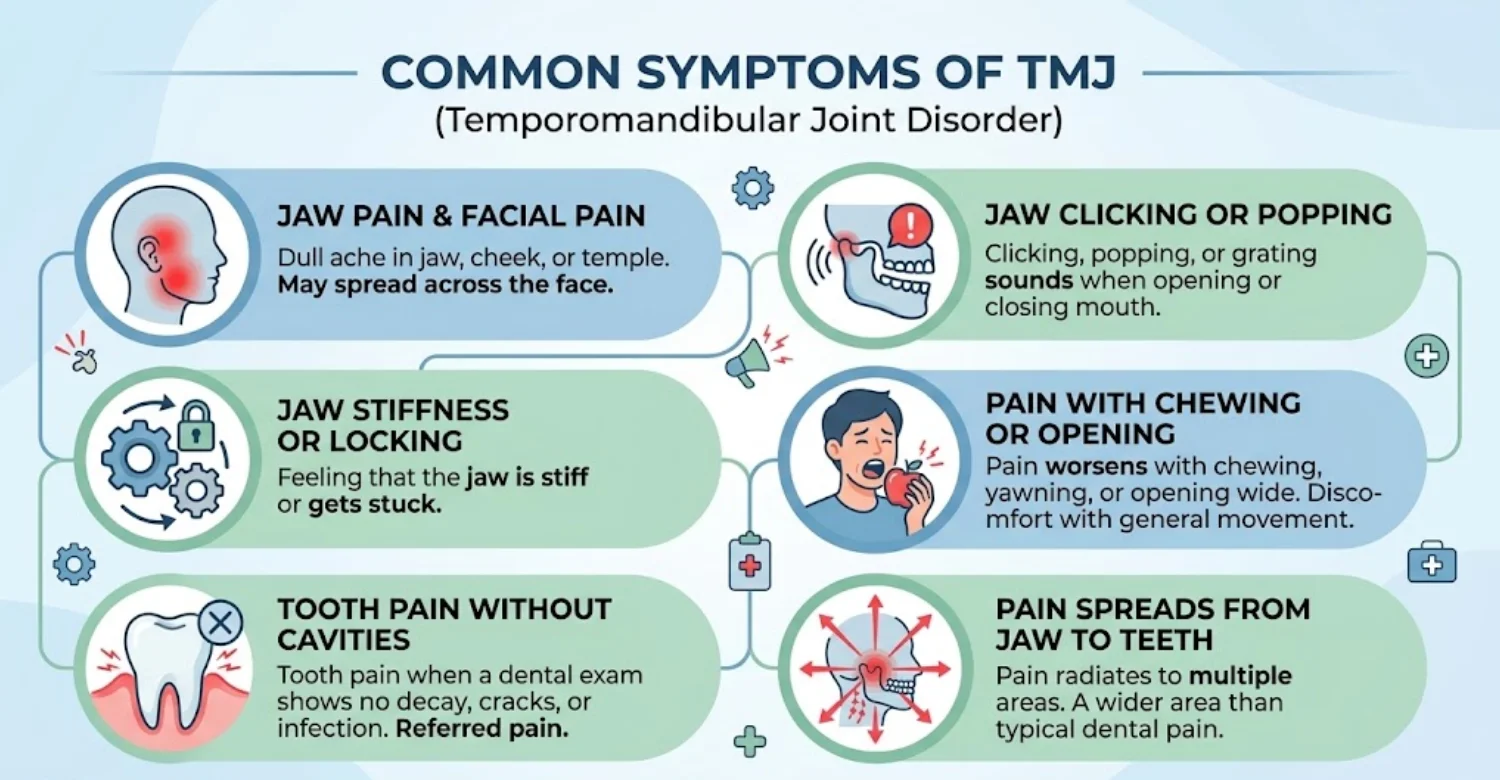
TMJ symptoms range from mild to disruptive and may come and go. Recognizing them helps you answer "Is it TMJ or tooth pain?" with more confidence. Common signs include jaw pain, clicking or popping, stiffness, and pain with chewing. Headaches, ear discomfort, and aching teeth without a clear dental cause are also common.
TMJ Jaw Pain and Facial Pain
TMJ jaw pain usually appears in front of the ear or along the jaw. It may also affect the cheeks and temples. It often feels like a dull ache that spreads across the face. Many patients also notice earaches or headaches. This makes the source harder to pinpoint without a professional evaluation.
Jaw Clicking, Popping, or Stiffness
Clicking, popping, or grating sounds are common TMJ symptoms. They happen when opening or closing the mouth. Sounds alone, without pain, don't always need treatment. However, clicking with pain, stiffness, or locking suggests joint involvement.
Pain With Chewing or Opening the Mouth
Pain that increases while chewing, yawning, or opening wide often points to the jaw. Tooth pain may also worsen with biting, but usually on one specific tooth. Does discomfort appear with every jaw movement rather than one bite point? Then TMJ is a likely contributor.
Tooth Pain Without Cavities
Many patients start asking "Is it TMJ or tooth pain?" when they have no cavities. Sometimes a dental exam shows no decay, cracks, or infection. In that case, referred pain from the jaw muscles or joint becomes possible. Sinus problems or grinding-related sensitivity should also be considered.
Pain That Spreads From the Jaw to the Teeth
TMJ pain often radiates from the jaw toward the teeth, ears, temples, or neck. This spreading pattern differs from typical dental pain. Dental pain usually stays near one tooth. Pain that moves around or covers a wide area points more toward TMJ.
Problems Caused by the Condition
Untreated jaw or tooth pain can affect eating, sleeping, speaking, and overall comfort. Some problems develop slowly. Others worsen quickly when a dental infection is involved. Getting a clear answer to "Is it TMJ or tooth pain?" helps prevent complications. It also ensures the right problem gets timely treatment.
Persistent Jaw Pain and Tooth Discomfort
Ongoing jaw pain and tooth pain can become a daily burden. TMJ discomfort may last for weeks or return during stressful periods. Untreated dental problems usually get worse over time. Persistent pain from either source deserves a proper evaluation. Repeated painkillers only mask the symptoms for a while.
Difficulty Chewing and Eating
Both TMJ problems and dental issues can make eating uncomfortable. TMJ pain may limit opening and make chewing tiring. A damaged tooth may hurt when biting. Patients often avoid certain foods or chew on one side only. This habit can strain the jaw further and worsen TMJ symptoms.
Increased Tooth Sensitivity
Grinding and clenching can wear enamel and cause small cracks. This increases sensitivity to hot and cold. The overlap makes diagnosis harder, since sensitivity is also a classic dental symptom. In such cases, a patient may have TMJ and a dental problem at the same time.
Jaw Stiffness and Limited Movement
TMJ disorders can cause morning stiffness or reduced mouth opening. The jaw may also feel like it is getting stuck. In some cases, it may lock open or closed. Limited movement can affect eating, speaking, and routine dental care. A dental professional should assess it.
Why Misidentifying TMJ Tooth Pain Can Delay Treatment
Treating the wrong source can prolong discomfort. Unnecessary dental procedures won't relieve TMJ tooth pain. On the other hand, mistaking a real toothache for TMJ may let decay or infection progress. Asking "Is it TMJ or tooth pain?" early prevents delays and unnecessary treatment.
Explore the breakdown of Whole Mouth Dental Implants Cost
Patient's Perspective
Many patients arrive unsure whether their discomfort comes from a tooth or the jaw. The overlap is confusing and often frustrating. Looking at how patients describe their symptoms explains why this question is so common in daily dental practice.
What TMJ-Related Tooth Pain Feels Like
Patients often describe it as a deep, dull ache in several teeth. The upper or lower molars are usually affected. The pain may feel worse after waking, during stress, or after long meals. The teeth may feel sore or tender. Yet no single tooth seems clearly responsible.
How Patients Describe Jaw Pain and Tooth Pain
Patients often say the whole side of their face aches. Some say their teeth feel bruised or their jaw feels tired. Many cannot point to a single tooth. Others describe sharp pain in one tooth with cold drinks. That description usually suggests a dental cause rather than TMJ.
Why It Can Be Difficult to Identify the Source
The teeth and jaw share nerve pathways. As a result, the brain can misread where pain starts. Pain may also shift location or come and go. Because of this overlap, patients asking "Is it TMJ or tooth pain?" often can't be sure alone. A professional exam of both areas is usually needed.
How TMJ Symptoms Can Affect Daily Activities
TMJ symptoms can interfere with eating, talking, yawning, and sleeping. Morning jaw pain, headaches, and poor sleep may affect work and focus. Some people avoid social meals or favorite foods. Identifying the cause and following proper care can greatly improve comfort and quality of life.
Ready to transform your smile?
Talk to our team and get a personal FREE treatment plan.
Doctor's Perspective
From a clinical standpoint, answering "Is it TMJ or tooth pain?" requires a systematic approach. Dentists combine the patient's history with a careful exam of the teeth, gums, jaw joints, and muscles. They add imaging when needed. This process reliably separates dental problems from TMJ-related pain.
How Dentists Evaluate TMJ or Tooth Pain
Dentists begin by asking when the pain started and what triggers it. They ask how it feels and whether it affects one tooth or several. They also ask about clenching, grinding, stress, and jaw sounds. This history helps narrow down the source.
Examining the Teeth and Gums
The dentist checks each tooth for decay, cracks, worn fillings, and gum problems. Tests may include tapping the teeth or applying cold. The patient may also bite on a special instrument to detect cracks. A tooth that reacts strongly usually indicates a dental source. The same applies when pain lingers after cold testing.
Evaluating the TMJ and Jaw Muscles
The dentist gently presses on the jaw joints and chewing muscles to find tenderness. They listen for clicking or grating and measure how wide the mouth opens. Sometimes pressing a tender muscle spot reproduces the toothache. This strongly suggests the pain comes from the muscles.
When Dental X-Rays or Other Imaging May Be Needed
Dental X-rays help detect hidden decay, infections, bone loss, or problems beneath fillings. These issues are often invisible during a normal exam. Sometimes the jaw joint needs a closer look. In that case, panoramic X-rays, cone-beam CT, or MRI may be recommended. The choice depends on the symptoms and exam findings.
How Dentists Rule Out Cavities, Cracks, and Infection
Before diagnosing TMJ tooth pain, dentists must rule out dental causes. They use visual exams, X-rays, and cold and tapping tests. They also use bite tests for cracks and check the gums. Only when the teeth look healthy does the diagnosis point more confidently toward TMJ.
Discover treatment options for a Recessed Maxilla
When Is It Serious and Requires a Checkup?
Most TMJ discomfort is manageable, but certain symptoms need prompt attention. Infection, swelling, or difficulty breathing can signal serious conditions. Whatever the answer to "Is it TMJ or tooth pain?", these signs need quick care. Seek a dental or medical evaluation without delay.
Persistent or Severe Tooth Pain
Get tooth pain checked if it lasts more than a day or two. The same applies if it wakes you at night or worsens despite painkillers. Severe or throbbing pain may indicate inflamed or infected pulp. Dental problems rarely resolve on their own, so don't wait.
Jaw or Facial Swelling
Swelling in the jaw, face, or gums often indicates a dental infection such as an abscess. TMJ disorders don't usually cause visible facial swelling. Seek prompt care if swelling spreads, feels hot, or comes with pain. Infections can progress and spread to nearby tissues.
Fever or Signs of Infection
Watch for fever, a bad taste, pus, or swollen lymph nodes alongside tooth pain. Feeling generally unwell is another warning sign. These signs point toward a dental cause rather than TMJ. Dental infections need professional treatment. Never manage them with painkillers alone or leave them untreated.
Difficulty Opening the Mouth
Difficulty opening the mouth can result from TMJ problems or muscle spasm. A dental infection affecting nearby muscles can also cause it. A jaw that suddenly locks needs urgent assessment. The same is true for limited opening with swelling or fever.
Difficulty Swallowing or Breathing
Difficulty swallowing or breathing with tooth or jaw pain is a medical emergency. It may signal a spreading infection affecting the throat or airway. Seek emergency care immediately rather than waiting for a dental appointment. These infections can become life-threatening quickly without treatment.
When Jaw Pain Requires Urgent Evaluation
Seek urgent care if jaw pain follows an injury or the jaw locks. A sudden change in your bite also needs attention. Jaw pain with chest pain, shortness of breath, sweating, or arm pain may signal a heart problem. This requires emergency care right away. In these situations, the question "Is it TMJ or tooth pain?" becomes secondary.
Find out causes and solutions for a Mucocele Lip
When the Patient Should Rest
Resting the jaw can ease many TMJ flare-ups. This is especially true when pain is linked to muscle strain or clenching. However, rest helps TMJ symptoms, not dental infections. Knowing the source tells you whether jaw rest is enough or a dental visit is needed.
When Jaw Rest May Help TMJ Symptoms
Jaw rest may help when pain follows heavy chewing or long dental appointments. It also helps after stressful periods or nights of grinding. Limiting jaw movement for a few days lets strained muscles recover. Mild TMJ symptoms often improve with rest and simple self-care.
Foods and Activities to Avoid During a Flare-Up
During a flare-up, avoid hard, chewy, or crunchy foods. Examples include nuts, tough meats, raw vegetables, and hard bread. Also avoid wide yawning, loud singing, nail biting, and resting your chin on your hand. Take smaller bites and cut food into small pieces to reduce jaw strain.
When Rest Is Not Enough and a Dental Checkup Is Needed
Rest alone isn't enough if pain lasts beyond one to two weeks. The same applies if it worsens or focuses on one tooth. A dental checkup can find hidden decay, cracks, or infection. It can also confirm TMJ involvement. A clear answer to "Is it TMJ or tooth pain?" ensures you get the right care.
Read about the procedure for Intraoral Periapical First
Rest Tips
Simple at-home measures can reduce TMJ discomfort and support recovery. These tips are meant for jaw-related pain, not dental infections. If you're still unsure of the source, follow them with caution. Arrange a dental evaluation if symptoms persist or get worse.
Choose Soft Foods Temporarily
Choose soft foods during flare-ups, such as yogurt, eggs, soups, and mashed potatoes. Cooked vegetables, fish, and smoothies are also good options. These foods need less chewing and give the jaw muscles time to recover. Return to your regular diet gradually once pain improves. Avoid very hard or chewy foods at first.
Avoid Gum Chewing and Excessive Jaw Movement
Chewing gum keeps the jaw muscles working nonstop and can worsen TMJ jaw pain. Avoid gum, chewing on pens, biting nails, and opening your mouth very wide. Support your jaw with your hand when yawning. Less jaw movement helps calm irritated muscles and the joint.
Reduce Jaw Clenching
Notice when you clench during the day. This often happens while concentrating, driving, or feeling stressed. Gently relax your jaw whenever you catch yourself. For nighttime grinding, a dentist may recommend a custom night guard. Stress management and relaxation exercises can also reduce clenching over time.
Use Heat or Cold When Appropriate
Cold packs applied for about 10 to 15 minutes can reduce acute pain and inflammation. Moist heat may relax tight jaw muscles and improve movement. Wrap ice packs in a cloth to protect your skin. Don't apply heat over a swollen area, since swelling may indicate infection.
Maintain a Relaxed Jaw Position
A relaxed jaw position means lips gently together and teeth slightly apart. The tongue rests lightly on the roof of the mouth. This posture reduces pressure on the joint and chewing muscles. Practicing it during the day helps break clenching habits that feed TMJ symptoms.
Find out the answer to Is Root Canal Painless?
About Vitrin Clinic
Vitrin Clinic provides thorough dental evaluations for jaw discomfort, toothaches, and sensitivity. The team examines both the teeth and the jaw to answer "Is it TMJ or tooth pain?" accurately. They then create a personalized treatment plan. The focus is on comfort, function, and long-term oral health.
.jpg)
.jpg)
.jpg)
.jpg)
.jpg)
What We Notice Clinically
Dr. Rifat Alsaman is Head of the Medical Team at Vitrin Clinic and a Cosmetic Dentist. Dr. Alsaman notes that TMJ-related tooth pain can sometimes mimic a dental problem. As a result, patients often suspect a damaged tooth. Dr. Alsaman stresses evaluating both the teeth and the jaw carefully. Only then can the true source of pain be confirmed.
Clinical Note
TMJ symptoms and dental problems can occur at the same time. A patient with a TMJ disorder may also have a cavity or a cracked tooth. Therefore, a toothache should never be blamed on TMJ automatically. Dental causes must always be ruled out first.
Tips for the Patients
Track your pain triggers, such as chewing, stress, cold drinks, or waking up in the morning.
Avoid excessive chewing and clenching, especially during flare-ups.
Do not ignore persistent tooth pain, even if you suspect TMJ.
Seek professional evaluation when symptoms continue or worsen.
Resource:
https://pmc.ncbi.nlm.nih.gov/articles/PMC4520529/
FAQs
Dr. Rifat Alsaman has more than 5 years of clinical experience in dentistry and currently serves as the Head of the Medical Team at Vitrin Clinic. He is dedicated to providing exceptional patient care, overseeing treatment planning, and ensuring the highest clinical standards across the team. His expertise, attention to detail, and commitment to continuous professional development have helped countless patients achieve healthier, more confident smiles.


