Dental Implant
September 24, 2026
Mini Dental Implants vs Regular Implants: Which Is Right for You?
 Dr. Rifat Alsaman
Choosing between mini dental implants vs regular implants depends on bone anatomy, chewing forces, restoration type, and long-term maintenance. Mini dental implants have a smaller diameter than conventional implant systems. They may provide useful options for selected patients, particularly those needing denture stabilization. Regular implants generally provide greater flexibility for complex restorative situations. However, implant diameter alone does not determine treatment suitability. A clinical examination must consider available bone, implant position, prosthetic design, bite forces, and oral hygiene. Medical history and individual risk factors also influence treatment planning.
Research supports reduced-diameter implants for specific indications, especially mandibular overdentures. That evidence should not automatically extend to every missing-tooth situation. At Vitrin Clinic, implant planning begins with diagnosis rather than implant size or advertised price. This guide to mini dental implants vs regular implants explains differences, indications, costs, risks, planning, and recovery.
What Are Mini Dental Implants?
Mini dental implants are reduced-diameter implants designed for selected dental applications. Their smaller dimensions can be useful when available ridge width is limited. The term generally refers to implants below approximately 3 mm in diameter. However, terminology varies between manufacturers and research studies. Mini implants are commonly discussed for stabilizing removable dentures. Some systems have also been investigated for selected anterior tooth applications. They are not simply smaller versions suitable for every conventional indication. A dentist must evaluate whether their design and restoration can tolerate the expected functional forces.
What is a mini dental implant?
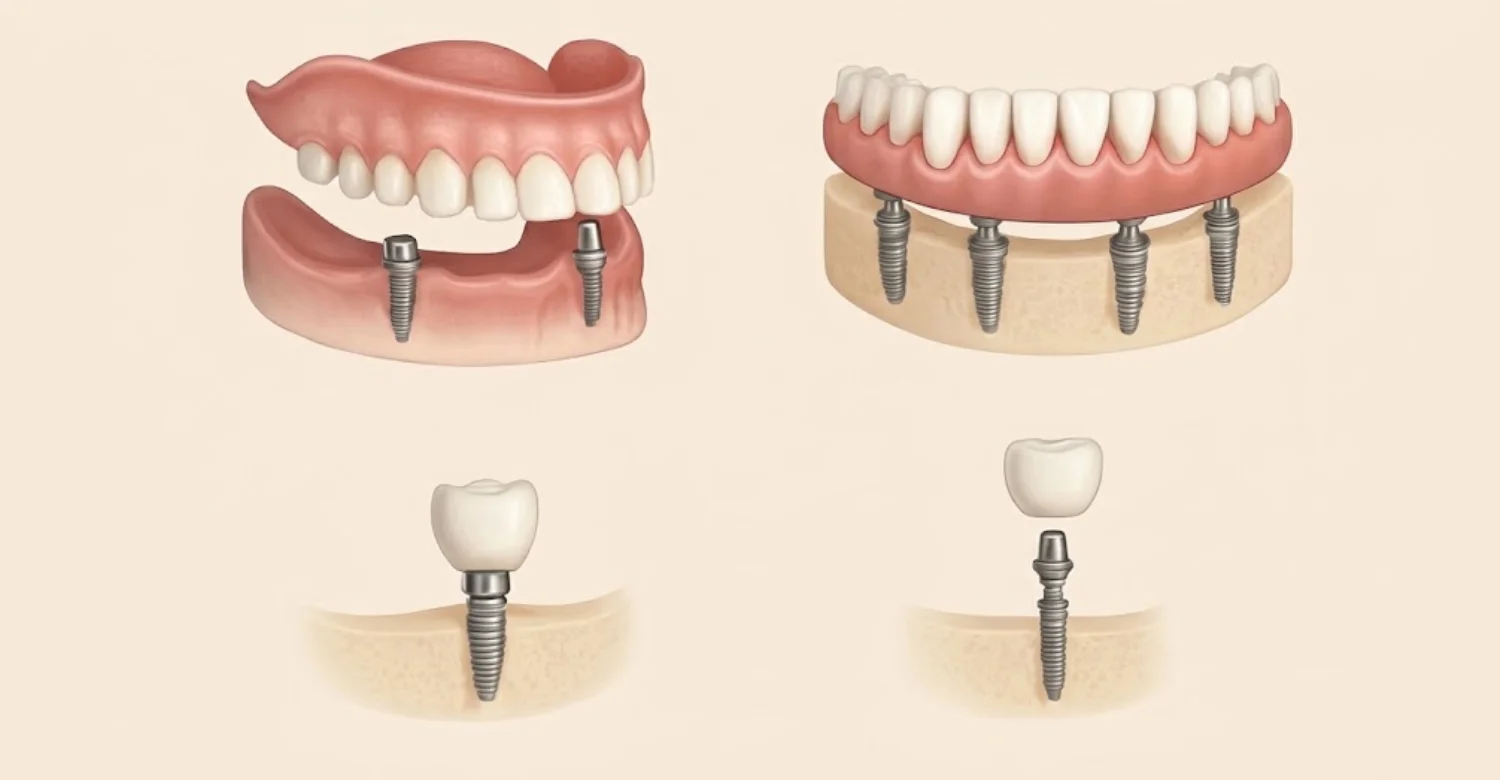
A mini dental implant is a narrow implant designed to support or retain a dental restoration. Many mini implants have a diameter below 3 mm. Some designs are one-piece systems with an integrated abutment. Their narrow profile can help clinicians work within reduced horizontal bone dimensions. Mini implants are particularly associated with removable overdentures. Research has investigated their ability to improve denture retention and patient satisfaction. However, a device suitable for denture retention may not offer the same options as a two-piece implant. Patients should discuss the complete treatment design rather than focusing only on diameter.
How small are mini dental implants?
Mini implants are commonly defined as implants with a diameter below 3 mm. The ITI consensus classification identifies one-piece implants measuring 1.8–2.9 mm as mini implants. Some commercial systems use different terminology or dimensional ranges. Therefore, the exact diameter should always be confirmed with the treating dentist. Diameter is only one implant dimension among several. Length, thread design, surface characteristics, material, and connection design also influence clinical performance. A smaller diameter may allow placement in a narrower ridge. However, reducing diameter also changes mechanical behavior under functional loading. The appropriate size depends on anatomy, restoration, occlusion, and expected functional demands.
How do mini implants differ from narrow-diameter and standard implants?
Mini implants are generally the smallest category within reduced-diameter classifications. The ITI describes them as one-piece implants below 3 mm. Two-piece narrow-diameter implants usually measure between 3.0 and 3.5 mm. Standard implants have larger diameters and often use a separate abutment connection. These differences affect surgical planning and prosthetic flexibility. However, these categories overlap across different manufacturers. Patients should therefore ask about the actual diameter and connection design. Evidence supporting narrow implants for overdentures does not prove equal performance for every single-tooth or posterior application. Clinical selection should combine anatomy, biomechanics, restoration requirements, and long-term maintenance.
Why implant diameter matters clinically
Implant diameter affects how forces spread through the implant and surrounding bone. A narrower implant has less cross-sectional area than a wider implant. Mechanical stress therefore becomes important under heavy functional loading. The effect depends on geometry, material, bone quality, position, and restoration design. Narrow implants can be useful when ridge width limits conventional placement. However, limited bone width is only one planning factor. Patients who clench or grind need particularly careful biomechanical assessment. The ITI notes that bone quality, opposing dentition, splinting, and implant-abutment design influence narrow implant outcomes.
What are regular dental implants?
Regular dental implants are conventional endosseous implants used to replace missing teeth. They commonly consist of a fixture placed in the jawbone and a separate abutment. The abutment then supports a crown, bridge, or implant-supported denture. Standard implants generally offer more diameter options for load-bearing areas and complex prosthetic designs. They may be used individually or connected within larger restorative systems. A standard implant is not automatically appropriate simply because it is larger. Likewise, a mini implant is not automatically preferable because surgery may be smaller. When comparing mini dental implants vs regular implants, patients should focus on the complete restorative plan.
Are mini dental implants and short implants the same?
No, mini implants and short implants describe different characteristics. Mini implants primarily refer to reduced diameter. Short implants primarily refer to reduced length. An implant can therefore be narrow without being short. Short implants are often considered when vertical bone height is limited. Reduced-diameter implants relate more directly to limited horizontal ridge width. Recent evidence has also examined short implants supporting overdentures. A 2026 systematic review reported 97.2% one-year survival in its included short-implant studies. However, evidence certainty varied across outcomes. The dentist should explain both diameter and length during treatment planning.
Explore more about bacteria in the mouth
Mini Dental Implants vs Regular Implants: What Is the Difference?
The main differences involve diameter, design, mechanical behavior, surgery, bone requirements, and restoration options. Mini implants are narrower and suit selected clinical situations. Regular implants generally provide broader restorative flexibility. Evidence is particularly established for reduced-diameter implants supporting mandibular overdentures. One systematic review found competitive survival and patient-reported outcomes compared with regular-diameter implants there. However, that evidence cannot automatically apply to every missing-tooth treatment. A single posterior molar has different requirements from a removable lower denture. Understanding mini dental implants vs regular implants therefore begins with the restoration and anatomy. At Vitrin Clinic, planning reviews bone anatomy, tooth position, periodontal conditions, and restorative objectives first.
Mini dental implants vs regular implants at a glance
Factor | Mini implants | Regular implants |
Diameter | Smaller | Generally wider |
Typical use | Selected cases, especially dentures | Broad range of restorations |
Bone width | May work in narrower ridges | Usually requires adequate width |
Design | Often one-piece | Commonly two-piece |
Prosthetic flexibility | More limited in some systems | Generally broader |
Mechanical demands | Requires careful loading assessment | Often suited to higher loads |
Surgery | May be less extensive in selected cases | May be more conventional |
Evidence | Strongest for selected indications | Extensive across many indications |
This table summarizes mini dental implants vs regular implants in general terms only. It is not a treatment recommendation for any individual patient.
Diameter and implant design
Diameter and design influence how an implant interacts with bone and the restoration. Mini implants often use narrow, one-piece designs. Conventional systems commonly use a separate implant fixture and abutment. A two-piece system can provide greater prosthetic flexibility. The implant-abutment connection also affects mechanical behavior. A clinician must consider length, surface, thread design, connection type, and restoration together. Results from one implant system cannot automatically be generalized to another.
Implant stability and load distribution
Primary stability depends on implant geometry, bone density, preparation technique, and insertion conditions. Long-term stability also depends on osseointegration and control of biological complications. A narrow implant has less cross-sectional area, which can raise mechanical stress under load. Restoration design changes how those forces are transferred. Splinting several implants distributes forces differently from using one implant alone. The patient's bite pattern and opposing dentition also matter.
Surgical approach
Mini implants may sometimes allow a less extensive surgical approach. Some systems can be placed using flapless techniques when conditions permit. However, minimally invasive surgery does not make planning unnecessary. The clinician still needs to identify bone dimensions and anatomical structures. Regular implant placement may involve more conventional surgery. Bone augmentation may be needed when available bone is insufficient. The ITI notes that reduced invasiveness depends on clinical circumstances.
Bone requirements
Bone availability has both horizontal and vertical dimensions. Mini implants may help when horizontal ridge width is limited. However, the available bone must still support the planned implant adequately. Bone quality matters as much as bone quantity. CBCT imaging can evaluate three-dimensional anatomy when clinically indicated. Bone should also be assessed relative to nerves, sinuses, and adjacent roots. A narrow ridge does not automatically mean mini implants are correct.
Restoration options
The restoration determines how the implant will function. Mini implants are frequently used to stabilize removable overdentures. Some systems support other restorations, but options vary by design. Regular implants commonly support crowns, bridges, and implant-retained dentures. A single implant crown has different requirements from a full-arch prosthesis. The implant and restoration should be designed as one treatment system. This prosthetic-first approach helps prevent inappropriate implant selection.
Healing and maintenance
Healing involves biological integration between the implant surface and surrounding bone. The timeline depends on stability, technique, bone conditions, loading protocol, and restoration. Some mini-implant protocols allow immediate denture attachment. Other cases require healing before functional loading. Maintenance remains necessary regardless of implant size. Research on implant overdentures found attachment insert replacement and relining were common maintenance events. Surgery is therefore only one part of long-term implant care.
Are mini dental implants as strong as regular implants?
Strength cannot be compared meaningfully by diameter alone. A mini implant has a smaller cross-sectional area, which influences mechanical behavior. However, performance also depends on material, geometry, connection, bone conditions, restoration, and loading. For mandibular overdentures, systematic reviews report high survival and improved patient-reported outcomes. That evidence does not establish mechanical equivalence between every mini and regular implant. An implant retaining a denture experiences different forces from one supporting a posterior crown. When judging strength, mini dental implants vs regular implants must be compared within the same indication.
Do regular implants provide greater support for heavy chewing forces?
Regular implants may provide biomechanical advantages when substantial chewing forces are expected. Their larger diameter offers greater cross-sectional area. This can matter when replacing posterior teeth or supporting complex fixed restorations. However, diameter is not the only determinant of load capacity. Position, length, bone quality, restoration design, occlusion, and connection also influence performance. Patients with bruxism need additional assessment because repeated excessive forces raise mechanical risks. The decision should rest on a complete biomechanical and restorative assessment.
How does implant location affect the choice?
Implant location strongly affects treatment planning. Anterior teeth generally experience different forces from posterior teeth. The upper and lower jaws also differ in bone characteristics and anatomical limits. These differences affect implant diameter, length, position, number, and loading protocol. Mini implants have been extensively studied for mandibular overdentures. A recent systematic review found lower survival in the maxilla than the mandible. With mini dental implants vs regular implants, the same diameter can behave differently in different locations.
Front teeth vs back teeth
Front and back teeth have different functional and aesthetic requirements. Anterior implant treatment may involve narrow spaces and demanding aesthetic positioning. Reduced-diameter implants can help when a narrow anterior space limits available width. Posterior implants must often tolerate higher chewing forces. This may make conventional implant designs preferable in selected cases. Bruxism or heavy clenching can increase mechanical demands considerably. Selection should consider both location and function together.
Upper jaw vs lower jaw
The mandible often provides denser bone in the front region. The maxilla may contain less dense bone, particularly in posterior areas. Structures such as the maxillary sinus also affect implant planning. A 2025 systematic review reported lower cumulative survival for maxillary mini-implant overdentures than mandibular cases. This does not mean mini implants cannot be used in the upper jaw. It means the number, distribution, design, loading protocol, and denture design need careful evaluation.
Discover how bacteria on teeth can affect oral health
Mini Implants for Dentures vs Regular Implants
Mini implants are particularly associated with denture stabilization. They retain removable overdentures through attachments built into the denture. Regular implants can also support overdentures effectively. The choice depends on bone anatomy, denture design, implant number, and long-term maintenance. For denture wearers, mini dental implants vs regular implants is often the most relevant comparison. One systematic review found no significant survival or marginal bone difference between narrow and regular implants for mandibular overdentures. However, outcomes vary by arch and treatment protocol. Patients should ask about evidence supporting the proposed system for their specific denture.
How do mini implants stabilize dentures?
Mini implants stabilize a removable denture through attachment components. The implants are positioned within the jawbone. Matching components are incorporated into the denture base. When the denture is seated, the attachments engage the implants. This reduces unwanted movement during speaking and chewing. Some systems use ball attachments, while others use different retention designs. The quality and fit of the denture remain important. A recent systematic review listed attachment wear and prosthesis fracture among reported maintenance concerns.
How many mini implants are usually used for a denture?
The number depends on the jaw, anatomy, implant system, and prosthetic design. Four implants are commonly studied for mandibular overdentures. Some protocols use fewer implants, while other cases need additional support. Maxillary overdentures may require a different number and distribution. One review found better survival for four-implant mandibular overdentures than two-implant designs. These findings should not be treated as a universal prescription. Implant distribution can matter more than simply counting implants.
How do mini implants compare with regular implants for mandibular overdentures?
Both approaches can stabilize mandibular overdentures successfully. A 2024 systematic review analyzed five randomized controlled trials involving mandibular overdentures. It found improved quality of life across several of those studies. Reported survival did differ between groups in some included trials. Therefore, mini implants should not be described as universally equivalent to standard implants. Instead, they are an evidence-supported option for selected mandibular cases. Here, mini dental implants vs regular implants becomes a question of anatomy, design, and prosthetic flexibility.
Can mini implants make loose dentures more stable?
Yes, they can improve retention in appropriately selected cases. Mini implants connect a removable denture to the jawbone. This reduces movement during everyday activities. Improved retention can make speaking and chewing more comfortable. Research repeatedly reports better satisfaction and oral-health-related quality of life after treatment. However, implant retention does not correct every denture problem. Poor fit, incorrect vertical dimension, or worn teeth may still need correction. A dentist should therefore evaluate the existing denture before implant placement.
Can mini implants be used for upper dentures?
They can be used in selected maxillary overdenture cases. However, the upper jaw requires particular caution. Bone quality and anatomy can differ significantly from the mandible. Recent evidence shows lower mini-implant survival in maxillary overdentures than mandibular ones. The number and distribution of implants may therefore need to change. A dentist should assess bone volume, positioning, occlusion, and prosthetic space before treatment. A lower-jaw protocol should not simply be transferred to the upper jaw.
Can mini implants replace regular implants for fixed teeth?
Not in every situation. Some reduced-diameter systems can support selected fixed restorations. However, evidence is stronger for certain anterior and overdenture applications. High-load posterior restorations have less supporting evidence. Fixed full-arch rehabilitation may require specific implant numbers, positions, connections, and components. Regular two-piece implants often provide broader restorative flexibility for fixed work. For fixed teeth, mini dental implants vs regular implants requires especially careful evaluation. The dentist should explain why the selected system suits the intended restoration.
What does current research show about mini implants for dentures?
Current evidence supports their use in selected overdenture treatments. A 2018 meta-analysis reported approximately 98% average survival for mini and narrow implants retaining mandibular overdentures. A separate review involving 1,715 mini implants reported 95.63% overall survival. Follow-up in that review ranged from six to 84 months. More recent research highlights differences between arches and implant configurations. The evidence therefore supports careful clinical use rather than universal substitution.
Implant survival
Implant survival measures whether an implant remains in place over a specified period. It does not mean the restoration needed no maintenance. A 2019 systematic review reported 95.63% overall survival for mini implants retaining mandibular overdentures. A 2025 review reported 91.4% seven-year cumulative survival across maxillary and mandibular overdentures. These statistics come from different populations and protocols. They should not be compared as though they describe one standardized situation.
Patient satisfaction and oral-health-related quality of life
Implant retention reduces denture movement and improves confidence during daily activities. A 2024 systematic review found quality-of-life improvements in three of five randomized trials. Another review reported better satisfaction across studies of mini-implant overdentures. However, patient-reported outcomes depend on expectations and existing denture problems. A patient with a very loose denture may notice dramatic improvement. Success requires both appropriate implant selection and appropriate prosthetic design.
Marginal bone and soft-tissue outcomes
Bone remodeling can occur after placement and during functional loading. Research generally reports acceptable bone outcomes for reduced-diameter implants in selected overdenture applications. A 2023 meta-analysis found no significant marginal bone difference between narrow and regular implants for mandibular overdentures. Soft-tissue health also depends on plaque control and prosthetic design. Regular professional monitoring helps identify biological complications early.
Learn about bacteriophage therapy for gum disease
What Are the Pros and Cons of Mini Dental Implants?
Mini dental implants offer practical benefits for carefully selected patients. Their reduced diameter can help clinicians work within narrower ridges. They are also commonly considered for stabilizing removable dentures. However, smaller dimensions can create mechanical limitations in some situations. Success depends on design, bone quality, restoration type, loading forces, and maintenance. Evidence is strongest for selected overdenture indications. It should not be generalized automatically to complex fixed restorations. At Vitrin Clinic, planning focuses on the complete restorative objective rather than diameter alone.
Mini dental implant pros and cons
The main advantage is the ability to consider implants when ridge width is restricted. Reduced diameter may sometimes decrease the need for horizontal bone augmentation. Mini implants can also provide retention for removable dentures. Potential disadvantages include reduced mechanical strength and more limited prosthetic options. Suitability also varies according to the implant system. Weighing mini dental implants vs regular implants means balancing these benefits against limitations honestly. A lower initial cost does not necessarily mean lower quality.
What are the potential advantages of mini dental implants?
Potential benefits depend on the individual case. A narrower implant needs less horizontal bone width. Some placement protocols involve less extensive surgery. Mini implants can improve retention of removable dentures. Treatment may sometimes cost less than conventional rehabilitation. However, none of these benefits is guaranteed. One meta-analysis reported approximately 98% average survival across selected overdenture studies. That figure applies to specific clinical situations rather than every application.
Smaller diameter
The defining characteristic of mini implants is their reduced diameter. A smaller diameter can accommodate limited horizontal bone width. However, a narrower implant contains less material across its cross-section. Mechanical stress can therefore become more important under heavy loading. The effect depends on material, design, length, bone support, and restoration. Clinicians must balance anatomical limitations against mechanical requirements.
Potentially less invasive placement
Some mini-implant procedures involve less extensive surgery. Certain systems may be placed through conservative techniques when anatomy permits. This may reduce postoperative discomfort for some patients. However, reduced invasiveness does not remove the need for diagnostics. Three-dimensional anatomy still needs appropriate assessment. Some cases may still require flap surgery or additional procedures.
Possible use in narrow ridges
Narrow ridges can limit placement of conventional implants. A reduced-diameter implant may sometimes fit within the available bone. This can avoid or reduce horizontal ridge augmentation. However, sufficient bone must still surround the implant. CBCT imaging can provide valuable information when clinically indicated. Narrow bone alone does not establish that a mini implant is appropriate.
Denture stabilization
Denture stabilization is among the most established mini-implant applications. The implants provide attachment points for removable overdentures. This reduces movement during speaking and chewing. Clinical studies report improved satisfaction and oral-health-related quality of life. The denture must still fit correctly. Worn attachments may need replacement over time.
Potentially lower treatment cost
Mini implants may cost less than conventional treatment in selected cases. Reduced surgical complexity can lower expenses. However, implant price is only one part of total treatment cost. Diagnostics, restoration, attachments, travel, and aftercare all add up. Patients should request an itemized treatment estimate. At Vitrin Clinic, international patients can discuss the complete restorative plan before coordination.
What are the potential disadvantages of mini dental implants?
Mini implants are not appropriate for every clinical situation. Their reduced diameter can create mechanical limitations. Some systems offer fewer restorative options than two-piece conventional implants. Posterior fixed restorations may create greater mechanical demands. Bruxism can further increase forces on implants. Mechanical complications can include loosening, fracture, or prosthetic problems. These risks mean selection must be individualized.
Limited indications for some clinical situations
The strongest evidence often concerns denture stabilization. Evidence may be less extensive for high-load posterior restorations. A mini implant supporting an overdenture faces different forces from a posterior molar crown. Regular implants may offer broader flexibility in complex cases. Patients should ask whether evidence supports the proposed implant for their specific treatment.
Load and fracture considerations
A narrower implant generally has a smaller cross-sectional area. Mechanical stress therefore matters more under high functional loads. Repeated excessive forces may increase mechanical complications. Implant material and geometry also influence fracture resistance. Splinting implants may reduce the load carried by each one. Mini implants should not automatically be chosen for heavy-load areas.
Prosthetic limitations
Many mini implants use one-piece designs. This can limit prosthetic options compared with two-piece systems. The restoration may require specific attachment components. Full-arch rehabilitation may need carefully distributed conventional implants. Changing the restoration after placement may not be straightforward. Prosthetic planning should therefore come before implant placement.
Long-term evidence varies by indication
Mandibular overdentures have been studied extensively. Other applications may have fewer long-term controlled studies. Follow-up duration and implant systems also differ between studies. A 2025 review highlighted survival differences between maxillary and mandibular applications. Patients should ask how long the proposed implant has been studied. They should also ask whether studies involved the same restoration.
Patient-specific risk factors
Smoking can impair healing and increase complications. Poor oral hygiene increases inflammation around implants. Bruxism increases mechanical loading. Poor bone quality may reduce primary stability. Uncontrolled systemic conditions may need additional clinical consideration. These factors may change implant selection, timing, or maintenance rather than excluding treatment.
Are mini dental implants suitable for everyone?
No implant system is universally suitable. Mini implants may suit selected patients with specific restorative needs. Patients with high chewing loads may need different designs. Complex fixed restorations may also require conventional systems. Bone quality, ridge dimensions, oral hygiene, and habits all need assessment. Age alone does not determine suitability. The question of mini dental implants vs regular implants has no single answer for everyone. The final decision should follow examination and imaging.
Find out more about bile acid malabsorption and dental health
Who May Be a Candidate for Mini Dental Implants?
Potential candidates are patients whose anatomy and restoration match the implant system's capabilities. Mini implants can be considered for selected denture stabilization cases. They may also help when horizontal bone width is limited. However, candidate selection requires more than measuring ridge width. The clinician should assess bone quality, implant position, bite forces, and prosthetic requirements. Age does not automatically prevent treatment. Patients with bone loss may qualify in selected cases, while severe deficiency can require alternatives. The final decision should be based on individualized diagnosis.
When might a dentist consider mini dental implants?
A dentist may consider mini implants when reduced diameter offers a clear anatomical or restorative advantage. Denture stabilization is the most common indication. They may also be considered when horizontal bone width is limited. The restoration must be compatible with the implant system. Functional forces must remain within acceptable limits. The dentist may compare mini, narrow-diameter, and conventional options side by side. Patients should ask whether evidence supports the proposed treatment for their restoration.
Can mini implants be used when the jawbone is narrow?
They can sometimes be used in narrow ridges. Their smaller diameter requires less horizontal bone width. This may help avoid certain augmentation procedures. However, sufficient bone must remain around the implant. CBCT imaging can evaluate the ridge in three dimensions when appropriate. A narrow ridge does not automatically make mini implants the best solution. Ridge augmentation or different implant designs may sometimes offer more flexibility.
Can mini implants help patients with dentures?
Yes, denture stabilization is a major application. Mini implants provide retention for removable overdentures through attachments. This can reduce movement during chewing and speaking. Research reports improved satisfaction following implant-retained overdenture treatment. The existing denture should still be evaluated, and poorly fitting dentures may need replacement. Mandibular overdentures have particularly strong evidence. Upper-denture cases require more careful evaluation.
Can older adults receive mini dental implants?
Older adults can receive implant treatment when their oral and general health permit it. Chronological age alone is not a contraindication. The dentist should evaluate bone quality and available bone. Oral hygiene and the ability to attend follow-up are equally important. Planning should consider manual dexterity and the ability to clean around implants. The restoration should be simple enough for long-term home maintenance. Vitrin Clinic includes these factors in consultation and planning.
Can patients with bone loss receive mini implants?
Some patients with bone loss can receive reduced-diameter implants. The remaining bone must still provide adequate support. The direction of bone loss matters. Horizontal loss may create situations where narrow implants are considered. Severe vertical loss presents a different challenge. CBCT imaging helps determine the remaining bone dimensions. Patients should not assume mini implants automatically eliminate bone grafting.
When might regular implants be preferable?
Conventional implants may be preferable when a restoration needs greater mechanical support or prosthetic flexibility. This can include many posterior tooth replacements. Complex fixed restorations may also benefit from two-piece systems. The need for angled or customized abutments can influence the choice. In these situations, mini dental implants vs regular implants often favors conventional systems. The objective is a stable and maintainable restoration, not the smallest implant.
High chewing loads
Posterior teeth can experience substantial chewing forces. Force magnitude and direction vary between patients. Bruxism increases repeated mechanical loading. A wider conventional implant may provide greater cross-sectional support. However, length, position, bone quality, restoration, and occlusion still matter. The decision should follow a complete biomechanical assessment.
Posterior tooth replacement
Molars generally face higher functional demands than many anterior teeth. Available restorative space can also affect implant selection. Conventional implants may provide broader prosthetic options in these areas. Narrow implants can be considered in selected posterior situations after careful evaluation. Bone density and nearby anatomical structures must also be assessed.
Complex restorative requirements
Complex restorations may require specific abutments and prosthetic components. Two-piece implants provide greater flexibility in many conventional systems. The clinician can often select different abutment configurations. This helps address implant angulation and emergence-profile requirements. Complex aesthetic or full-arch cases may therefore favor conventional systems.
Situations requiring a two-piece implant system
Two-piece systems separate the implant fixture from the abutment. This allows different abutment components to be used. Some implant positions benefit from customized prosthetic solutions. Two-piece systems are widely used for crowns, bridges, and full-arch restorations. A one-piece mini implant may not offer the same flexibility. The dentist should explain the connection type before treatment.
How do smoking, oral hygiene, bruxism, and bone quality affect implant selection?
Smoking can negatively influence healing and implant outcomes. Poor oral hygiene increases plaque accumulation and inflammation. Bruxism increases mechanical forces on the implant-restoration system. Poor bone quality may reduce initial implant stability. These factors can influence implant selection and treatment timing. The clinician may recommend behavior changes, a night guard, or extra maintenance visits. Patients should disclose smoking, clenching, and previous implant problems openly.
Understand bite strength and what affects it
How Are Mini and Regular Dental Implants Diagnosed and Planned?
Implant planning begins with a comprehensive clinical assessment. The dentist evaluates teeth, gums, bone, bite, restoration needs, and oral hygiene. Imaging shows bone dimensions and anatomical structures. CBCT provides three-dimensional information when clinically indicated. The planned crown or denture should then guide implant location. Bite forces and opposing teeth also influence planning. Good diagnosis is what makes the choice of mini dental implants vs regular implants reliable. At Vitrin Clinic, digital diagnostics are incorporated when clinically appropriate.
What does a dental implant assessment involve?
An assessment usually begins with a clinical examination. The dentist evaluates missing teeth and existing restorations. Gum health and remaining teeth are also assessed. The bite is examined to identify excessive forces. Existing dentures are checked for fit and function. Medical and dental history are reviewed carefully. The assessment may include photographs, digital scans, and imaging. The restoration must be defined before final implant selection.
Why are X-rays and CBCT scans important?
Dental imaging reveals information that visual examination cannot provide. Conventional X-rays show important anatomical relationships. CBCT provides three-dimensional information about bone dimensions. It helps identify nerves, sinus anatomy, and adjacent structures. CBCT should be used when clinically justified rather than automatically for everyone. At Vitrin Clinic, CBCT and digital X-rays may be used when clinically appropriate. The objective is gathering information needed for safe planning.
How is available bone evaluated?
Bone is evaluated in three dimensions. Horizontal width determines whether an implant fits within the ridge. Vertical height affects implant length and proximity to anatomical structures. Bone density influences primary stability. Bone defects may require augmentation or an alternative treatment. The implant should not be positioned solely where bone happens to exist. Its location must also support the planned prosthesis.
How are bite forces and prosthetic requirements assessed?
The dentist evaluates how the patient bites and chews. Opposing teeth influence the forces transferred to an implant. Bruxism can create repeated excessive forces. A single posterior crown differs from an overdenture in functional demands. A full-arch fixed restoration creates different requirements again. The clinician may look for tooth wear or signs of clenching. These observations influence implant diameter and number.
What factors determine implant diameter and position?
Implant diameter depends on bone width and restorative requirements. Implant position depends on anatomy and prosthetic design. The clinician must keep safe distances from nerves and adjacent roots. Aesthetic areas require careful three-dimensional positioning. Posterior areas require attention to functional loading. Implant length is selected according to available vertical bone. Choosing between mini dental implants vs regular implants is part of this wider process.
What questions should patients answer before implant treatment?
Patients should explain their main treatment objective. They should say whether they want fixed teeth or removable dentures. They should disclose clenching, grinding, and smoking habits. Previous dental treatments and complications are relevant information. Concerns about surgery or recovery should be raised early. International patients should discuss treatment timing and travel requirements. Clear answers help the dentist design a realistic and safe plan.
Read more about biting your cheek while eating
How Are Mini Dental Implants Placed?
Placement begins with diagnostic planning. The dentist identifies the implant positions and restorative requirements. Local anesthesia is commonly used during implant placement. The surgical technique depends on implant design and anatomy. Some mini implants may be placed using conservative techniques. Others may require more conventional surgical access. Primary stability is assessed during placement. Immediate loading may be possible in selected cases, depending on stability and protocol. Healing continues after the procedure, so postoperative instructions matter.
What happens before mini implant placement?
The dentist first confirms the treatment plan. Clinical examination and appropriate imaging are completed. Bone dimensions are reviewed carefully. The restoration and attachment system are also planned. Any existing denture is evaluated. Oral hygiene should be optimized, and active infection treated first. Patients receive instructions about medications, eating, and smoking.
What happens during mini dental implant placement?
Local anesthesia is generally used. The implant site is prepared according to the system's protocol. The implant is positioned within the planned bone area. The clinician then evaluates primary stability. If the protocol permits, the denture may be connected the same day. Other cases require healing before loading. Patients may feel mild discomfort afterward and receive clear aftercare instructions.
How does mini implant placement compare with regular implant surgery?
Mini implant placement can sometimes require less extensive surgery. Some cases can be treated without extensive flap elevation. Conventional implants may need more surgical preparation. Bone augmentation can make regular implant treatment more involved. However, a mini implant does not automatically mean less treatment overall. Surgically, mini dental implants vs regular implants differ most in invasiveness and grafting needs. The approach should match anatomy and implant design.
How long does mini implant treatment take?
Treatment time varies by case. Some denture stabilization procedures can be completed relatively quickly. Other cases require staged treatment over several months. Immediate denture attachment may be possible with adequate primary stability. Bone grafting can extend the timeline considerably. Laboratory work on attachments or restorations may need extra time. International patients should request a detailed schedule before travel.
What should patients expect during healing?
Mild discomfort and swelling can occur after placement. Symptoms usually improve during the early recovery period. Patients should follow the clinic's hygiene and dietary instructions. Excessive pressure on the surgical site should be avoided. Follow-up appointments allow the dentist to monitor healing. Implant mobility should never be ignored. Persistent or worsening symptoms require professional assessment.
When can a denture be attached to mini implants?
A denture may sometimes be attached immediately. This depends on implant stability and the treatment protocol. Immediate loading is not appropriate for every patient. The clinician must confirm that functional loading is safe. Some cases need a healing period before attachment. The denture may also need adjustment after placement. Patients should follow the specific loading instructions provided.
Discover why biting your tongue while eating can happen
How Long Do Mini Dental Implants Last Compared With Regular Implants?
Implant longevity depends on biological health, mechanical loading, restoration, and maintenance. Mini implants can show high survival in selected indications. Evidence is particularly supportive for mandibular overdentures. A 2019 review reported 95.63% overall survival for mini implants with mandibular overdentures. A newer review reported 91.4% seven-year cumulative survival across included overdenture studies. Regular implants also show high long-term survival when appropriately selected and maintained. For longevity, mini dental implants vs regular implants must be compared within the same indication.
What affects mini dental implant longevity?
Stability during healing is important. Bone quality affects biological integration. Excessive loading can create mechanical complications. Bruxism increases repeated forces. Poor oral hygiene contributes to inflammation. Denture attachment wear can affect function. Implant position and restoration design also matter. Longevity should never be estimated from diameter alone.
What affects regular dental implant longevity?
Adequate bone support is important for regular implants too. Good plaque control helps maintain peri-implant tissue health. Smoking can increase biological risks. Excessive occlusal forces can cause mechanical complications. Poorly fitting prostheses can create additional problems. Regular professional reviews help identify complications early. The implant system is only one part of the outcome.
Does implant survival depend on the treatment indication?
Yes, the indication strongly influences survival. An implant supporting a mandibular overdenture faces different demands from one supporting a posterior crown. Full-arch fixed restorations have different requirements again. The jaw also affects outcomes. Recent evidence showed different survival patterns between maxillary and mandibular mini-implant overdentures. A percentage from one application should not be presented as universal.
How do maintenance and oral hygiene affect implant outcomes?
Maintenance helps control biological and mechanical complications. Patients should clean around implants according to professional instructions. Removable dentures should be cleaned daily. Attachment components may need replacement over time. Professional examinations can identify inflammation or mobility early. Smoking cessation supports healthier tissues. The responsibility is shared between the patient and dental team.
Why should survival statistics not be compared without considering the clinical situation?
Survival statistics come from specific study populations. Different studies use different implant systems and follow-up periods. Jaw location, implant number, and restoration design change loading conditions. Patient selection also influences reported results. A mandibular overdenture study cannot predict posterior single-tooth outcomes. When quoting figures on mini dental implants vs regular implants, the study context must be stated. Meaningful comparison requires similar indications and conditions.
Learn more about chewing gum and teeth
What Are the Risks and Side Effects of Mini Dental Implants?
Mini implants carry risks similar to other implant procedures. Early effects can include discomfort, swelling, and minor bleeding. Biological complications can involve infection or inflammation. Mechanical complications can include loosening or fracture. Attachment components can wear or need replacement. Smoking, poor hygiene, bruxism, and poor bone quality increase complications. Patients should receive clear postoperative instructions. Persistent or worsening symptoms should be evaluated promptly.
What side effects are common after implant placement?
Mild pain can occur after surgery. Swelling is common during early healing. Minor bleeding may occur at first. Tenderness around the surgical area can develop. These symptoms generally improve as healing progresses. Patients should follow prescribed medication instructions rather than adjusting doses themselves. The clinic should provide emergency contact information.
What complications can occur with mini dental implants?
Possible complications include implant mobility and infection. Mechanical complications can involve fracture or attachment failure. Soft tissue may become irritated around the implant or attachment. Bone loss can occur around implants affected by biological complications. Poor positioning can create restorative difficulties. Research on mini-implant overdentures reports both biological and prosthetic maintenance events.
Pain and swelling
Pain and swelling are most noticeable during the early recovery period. Cold applications may sometimes be recommended. Patients should follow the clinic's specific instructions. Pain that progressively worsens requires professional assessment. Increasing swelling can indicate infection or another complication.
Soft-tissue irritation
A denture attachment may rub against the surrounding tissue. Poor denture fit can increase irritation. Plaque accumulation can also affect soft-tissue health. The dentist can assess the attachment and adjust the denture. Persistent irritation should not simply be tolerated.
Infection around an implant
Symptoms may include swelling, tenderness, drainage, or persistent redness. Poor oral hygiene and smoking increase biological risks. Early professional assessment is important. Treatment depends on the cause and severity. Patients should not treat suspected implant infection without dental guidance.
Implant loosening or failure
An implant should generally remain stable. Mobility can indicate loss of integration or mechanical problems. Patients should avoid testing a loose implant with their tongue or fingers. Possible causes include excessive loading or inadequate integration. Early evaluation determines whether the implant can be managed or needs removal.
Prosthetic or attachment problems
Attachment components wear during normal use. A denture may gradually become less retentive. The attachment insert may need replacement. The denture can also fracture or require relining. These are maintenance issues rather than necessarily implant failures.
Are mini implants more likely to fracture?
Their smaller diameter creates greater mechanical considerations. A narrower implant contains less cross-sectional material. This can influence fracture resistance under excessive forces. However, risk depends on material, design, loading, and indication. Splinted implants in an overdenture share the load between them. On fracture risk, mini dental implants vs regular implants depends heavily on loading conditions. A dentist should assess mechanical demands before choosing a reduced-diameter system.
What factors can increase the risk of implant complications?
Smoking can negatively affect healing. Poor oral hygiene increases biological risks. Bruxism can increase mechanical forces. Poor bone quality can affect implant stability. Incorrect implant positioning can create restorative problems. Poorly maintained dentures can increase attachment problems. Patients should disclose all relevant habits and treatment history.
What symptoms require prompt dental assessment?
Certain symptoms should never be ignored after implant treatment. Persistent pain, increasing swelling, and drainage need assessment. Implant mobility should always be reported. Persistent bleeding and fever also require attention. The safest approach is contacting the treating dental team promptly.
Persistent or worsening pain
Pain should generally improve during recovery. Increasing pain can indicate infection or another complication. Patients should follow prescribed medication instructions. They should contact the dental team if pain becomes severe or keeps worsening.
Increasing swelling or drainage
Swelling can occur after surgery. However, increasing swelling after the initial period requires assessment. Drainage or pus is particularly important. These symptoms can indicate infection. Patients should contact their provider promptly.
Implant mobility
An implant should not move. Mobility can indicate a mechanical or biological problem. The dentist should evaluate the implant quickly. Patients should avoid chewing heavily on that area until assessed.
Persistent bleeding
Minor bleeding can occur shortly after surgery. Persistent or heavy bleeding requires professional guidance. Patients should follow the clinic's bleeding-control instructions. If bleeding does not settle, the dental team should be contacted.
Fever or signs of spreading infection
Fever can indicate systemic involvement. Spreading facial swelling is also concerning. Difficulty swallowing or breathing requires urgent medical attention. Patients should seek prompt care rather than waiting for symptoms to resolve.
.jpg)
.jpg)
.jpg)
What We Notice Clinically
Clinical implant selection should focus on the complete treatment objective. Implant diameter is important but cannot determine suitability alone. Bone width, bone height, position, bite forces, restoration, and maintenance must be evaluated together. Research supports reduced-diameter implants for selected applications. The strongest evidence involves mandibular overdenture stabilization. That evidence should not transfer automatically to every fixed restoration. A clinically appropriate implant meets both biological and restorative requirements.
Why the smallest implant is not automatically the best implant
Smaller does not automatically mean safer or better. A narrow implant can help when bone width is limited. However, reduced diameter changes mechanical characteristics. High-load restorations may need greater mechanical support. Many patients approach mini dental implants vs regular implants assuming smaller means simpler. The correct size is actually determined by anatomy and function together.
Why mini implants are often discussed in relation to dentures
Denture stabilization is one of their most established clinical applications. Mini implants provide retention without requiring a large implant diameter. Research has shown improvements in retention and patient-reported outcomes. The approach is relevant for patients struggling with loose dentures. However, the denture must still be appropriately designed. Implant number and distribution should follow the prosthetic plan.
Why implant diameter, length, position, and restoration must be considered separately
Each factor affects treatment differently. Diameter relates to horizontal bone width and mechanical behavior. Length relates more closely to vertical bone availability. Position determines anatomical safety and prosthetic emergence. Restoration determines how functional forces are transferred. Changing one variable can affect the others. Implant planning should therefore evaluate the complete system.
Why bone availability is only one part of treatment planning
Adequate bone does not guarantee a successful restoration. The implant must be positioned correctly. The bite must be compatible with the planned restoration. Oral hygiene must support long-term tissue health. The patient's ability to maintain the restoration also matters. Bone is one component within a larger treatment assessment.
Common misconceptions about mini dental implants
Several simplified claims create unrealistic expectations. Some describe mini implants as universally easier. Others suggest they can replace conventional implants in every case. Some advertisements imply planning is unnecessary. These statements overlook anatomy and biomechanics. Clinical evidence supports selected applications rather than universal replacement.
“Mini implants are always easier”
Some procedures may be less invasive. However, treatment still requires diagnosis and planning. The restoration may also require several appointments. Bone anatomy and implant positioning remain important.
“Mini implants can replace regular implants in every situation”
They cannot automatically replace conventional systems. Different restorations have different biomechanical requirements. Evidence is strongest for selected overdenture applications. Posterior and complex fixed cases may need different implant systems.
“Mini implants never require careful planning”
All implant procedures require planning. Imaging may be needed to evaluate anatomy. Restorative requirements must also be defined. Reduced size does not eliminate anatomical risks.
“Lower cost means lower clinical quality”
Cost and clinical quality are not interchangeable. Mini implants may cost less because they involve different components or procedures. A lower price does not automatically indicate inferior treatment. Patients should still evaluate systems, evidence, materials, and clinician qualifications.
Clinical Note
Dr. Rifat Alsaman, Head of the Medical Team at Vitrin Clinic and cosmetic dentist, emphasizes one principle. Implant selection should always follow clinical assessment. The appropriate implant depends on the patient's anatomy and restorative objective. CBCT provides three-dimensional information about available bone when clinically appropriate. Digital X-rays and 3D intraoral scanning support diagnosis and restorative planning. The examination also includes teeth, gums, and oral tissues. In his view, mini dental implants vs regular implants is a clinical question, not a marketing one.
Explore the effects of chewing on one side of the mouth
How Much Do Mini Dental Implants Cost Compared With Regular Implants?
Implant prices vary substantially between countries and treatment situations. The implant itself is only one part of the final cost. Complete treatment can include imaging, surgery, abutments, crowns, attachments, temporary restorations, and aftercare. Bone grafting or sinus procedures increase costs. International patients also face travel and accommodation expenses. The cost gap in mini dental implants vs regular implants partly reflects different restorations. The ranges below are approximate planning figures, not fixed Vitrin Clinic prices.
Mini dental implants cost vs regular implants
Mini implants may cost less per implant than conventional implants. Their placement can sometimes require fewer surgical procedures. However, the total cost depends heavily on the restoration. A mini implant supporting a denture differs from an implant supporting a crown. Regular implants involve separate fixtures, abutments, and restorations. Comparing mini dental implants vs regular implants by fixture price alone can be misleading.
What is the average cost of mini dental implants in the USA?
Mini-implant pricing varies by clinic, location, system, and restoration. An approximate planning range is $500–$1,500 per implant. The final treatment may cost more when attachments or denture modifications are included. Some clinics quote a complete overdenture package rather than individual implants. Patients should confirm exactly what the advertised price includes.
What is the average cost of regular dental implants in the USA?
A conventional implant with crown commonly ranges around $3,000–$6,000 per tooth. The amount varies with location and treatment complexity. Bone grafting and specialist consultations can add expenses. The quotation should separate implant, abutment, crown, imaging, and extra procedures. Patients should not compare it against a mini-implant fixture-only price.
What is the average cost of mini dental implants in the UK?
An approximate planning range is around $650–$2,000 equivalent per mini implant. Actual prices vary between regions and clinics. The final amount depends on whether the restoration is included. Denture attachments and imaging may be charged separately. Patients should request a complete written treatment plan.
What is the average cost of regular dental implants in the UK?
A conventional implant with crown commonly falls around $2,400–$4,700 equivalent. The final cost depends on the clinic, system, crown material, and additional procedures. Bone grafting can significantly raise the overall price. Some clinics advertise implant placement separately from the crown. Patients should confirm the full cost in writing.
What is the average cost of mini dental implants in Turkey?
A general planning range is around $250–$600 equivalent per mini implant. Prices vary by brand, clinic, restoration, and complexity. International packages may include consultation, imaging, transfers, or accommodation. These inclusions differ between clinics. Patients should therefore compare complete treatment packages.
What is the average cost of regular dental implants in Turkey?
A conventional implant commonly ranges around $500–$1,800 equivalent, depending on treatment. The price may cover placement alone or a more complete package. Patients should clarify whether the crown and abutment are included. Bone grafting and sinus procedures may be additional. The final price should follow clinical assessment.
Mini dental implants vs regular implants cost in Turkey vs USA vs UK
The figures below show broad differences between markets. They are approximate planning ranges, not individualized quotations.
Estimated mini implant cost comparison
Country | Approximate mini implant cost* | Approximate regular implant cost* |
USA | ~$500–$1,500 per implant | ~$3,000–$6,000 per implant with crown |
UK | ~$650–$2,000 equivalent | ~$2,400–$4,700 equivalent |
Turkey | ~$250–$600 equivalent | ~$500–$1,800 equivalent |
*Prices vary with clinic, implant system, restoration, imaging, and additional procedures. A fixture-only price should never be compared with a complete implant-and-crown package.
What is included in the quoted implant price?
The quotation should clearly identify every treatment component. Some clinics quote only implant placement. Others provide a package covering the entire restorative process. Patients should ask for an itemized breakdown.
Implant fixture
The implant fixture is the component placed inside the bone. The brand and implant system can affect its cost.
Abutment
The abutment connects the implant to the restoration. Some systems include it in the package. Others price it separately.
Crown or denture attachment
A crown is required for fixed tooth replacement. Denture cases need attachment components instead. These components should be listed separately.
CBCT or diagnostic imaging
Advanced imaging may be included or charged separately. Patients should confirm whether CBCT is part of the quoted treatment.
Bone grafting or sinus procedures
Additional bone procedures can substantially change treatment costs. They should be identified before treatment begins.
Follow-up and aftercare
Patients should ask whether postoperative reviews are included. International patients should also clarify remote follow-up arrangements.
Why can mini implants cost less than regular implants?
Mini implants can involve fewer components. Some systems use less extensive surgical procedures. The restoration can also be simpler. Denture stabilization may need fewer components than a fixed crown. However, lower cost does not apply to every case. Additional procedures can still raise the final price.
Why should patients compare complete treatment costs rather than implant price alone?
A low fixture price can be misleading on its own. The final cost may include abutments, crowns, attachments, imaging, grafting, and follow-up. Travel costs also matter for international patients. Financially, mini dental implants vs regular implants should be judged on the complete pathway. A written, itemized quotation gives the most accurate comparison.
Find out how chronic venous insufficiency and periodontal health may be connected
Mini Dental Implants vs Regular Implants in Turkey
Turkey has become a major destination for international dental treatment. Patients often compare prices with those in the USA and UK. However, international patients should evaluate more than price. Implant brand, clinician experience, diagnostics, materials, and aftercare all influence the experience. Travel logistics are also important. Patients should receive a written treatment plan before travelling. At Vitrin Clinic, coordination can include consultation, diagnostic review, planning, and aftercare communication. The choice of mini dental implants vs regular implants must still rest on clinical suitability.
What should international patients know about mini dental implants in Turkey?
International patients should request a detailed treatment plan before travelling. The plan should specify the number of implants, implant type, and restoration. Patients should ask whether CBCT imaging is required. They should understand whether bone grafting could change the treatment. The timeline should be clearly explained. Aftercare arrangements are especially important for those returning home.
How does mini dental implant treatment in Turkey compare with treatment in the USA and UK?
The major difference is often the overall treatment price. Turkey can offer lower quoted costs than many USA and UK clinics. However, prices cannot be compared without matching treatment components. Different clinics include different services and implant brands. Some international packages include accommodation, transfers, and coordination. Travel distance and time away from work also affect the practical cost. The most useful comparison is an itemized plan from each clinic.
What can affect mini dental implant prices in Turkey?
Several factors change the final price. The implant system, number of implants, and restoration type are major variables. Diagnostic imaging and additional procedures can also add costs. Patients should ask how each factor applies to their case.
Implant system and materials
Different manufacturers use different implant designs and materials. The system also influences laboratory and prosthetic components. Patients should ask which system will be used.
Number of implants
More implants generally increase surgical and component costs. However, the number should always be clinically determined.
Denture or restoration type
A removable overdenture differs from a fixed restoration. The laboratory work and components can therefore differ substantially.
Diagnostic imaging
CBCT may be needed in selected cases. The imaging requirement should be discussed before treatment.
Additional procedures
Bone grafting and sinus procedures can increase costs. Temporary restorations can also add expenses.
Mini dental implants vs regular implants Istanbul
Istanbul hosts many dental clinics serving international patients. Patients should evaluate clinics based on clinical planning and treatment transparency. The implant system and restoration should be clearly identified. Diagnostic evaluation should come before accepting any recommendation. A lower advertised price does not establish clinical suitability. Treatment should be based on the patient's individual anatomy.
Mini dental implants vs regular implants in Istanbul
The choice in Istanbul follows the same clinical principles used elsewhere. Bone dimensions, restoration, implant design, and functional demands remain central. International treatment adds logistical considerations. Patients should understand how many visits are required. They should also confirm aftercare arrangements. At Vitrin Clinic, international patients can discuss their objectives during the initial consultation.
What should international patients ask an Istanbul dental clinic before treatment?
Patients should ask which implant system is recommended and why that diameter suits them. The proposed restoration should be clearly explained. They should ask whether CBCT is included and confirm the complete price. The expected number of appointments should be documented. Patients should ask what happens if imaging changes the plan. Asking directly about mini dental implants vs regular implants shows how the clinic reasons. A clinic that answers openly usually plans carefully too.
Discover more about daytime mouth guards for clenching teeth
How Should Patients Choose Between Mini and Regular Dental Implants?
The decision should begin with the restoration and anatomy. Mini implants can suit selected denture stabilization cases. Regular implants provide broader restorative flexibility. Neither option is universally appropriate. Bone width, bone height, bite forces, location, and prosthetic design all matter. Cost should be considered after clinical suitability is established. Choosing between mini dental implants vs regular implants becomes easier with a detailed treatment plan. Patients should ask their dentist to explain the reasoning behind the proposed system.
Which implant type is better for dentures?
Both mini and regular implants can support dentures. Mini implants are particularly well studied for mandibular overdentures. Regular implants also provide excellent overdenture support. The appropriate option depends on anatomy and denture design. Implant number and distribution matter greatly. Maxillary cases require additional consideration.
Which implant type may be better for replacing a single tooth?
A conventional implant is commonly considered for single-tooth replacement. However, reduced-diameter implants may suit selected situations, such as narrow front spaces. Available bone width is important. Anterior and posterior teeth have different functional requirements. The planned crown must be compatible with the implant system.
Which option may be considered when bone width is limited?
A reduced-diameter implant may be considered when horizontal bone width is limited. It can sometimes reduce the need for horizontal augmentation. However, adequate surrounding bone remains necessary. CBCT helps evaluate the available ridge. A conventional implant with augmentation may still be preferable in some cases.
Which option may be more appropriate for high-load areas?
Conventional implants may provide greater mechanical support in selected high-load situations. Posterior teeth experience substantial chewing forces. Bruxism increases loading further. Diameter, length, position, and restoration should all be evaluated together. A mini implant should never be selected solely because it costs less.
Why should the decision be based on diagnosis rather than price?
Price does not determine biological or mechanical suitability. An inexpensive implant may be wrong for the planned restoration. A higher-cost option may also be unnecessary for a simple indication. An unsuitable implant can cost far more to correct later. In mini dental implants vs regular implants, diagnosis should always come before price.
What questions should you ask your implant dentist?
Ask which implant system is proposed and its exact diameter and length. Ask whether it is a one-piece or two-piece design. Ask why that design suits your anatomy and restoration. Ask whether bone grafting is required. Ask how long healing may take and what maintenance follows. Ask about evidence for your specific indication. Ask exactly what the quoted price includes.
Tips for Patients
Good preparation makes implant treatment more predictable. Patients should gather previous dental records and recent imaging when available. The treatment objective should be explained clearly. Relevant habits such as smoking and bruxism should be disclosed. International patients should confirm their travel schedule early. The clinic should provide clear postoperative instructions and explain the expected timeline. Patients should also know exactly how aftercare will be provided.
What should you bring to an implant consultation?
Bring previous dental records and recent X-rays when available. Bring a list of current medications. Bring existing dentures when they are relevant. Previous implant or dental treatment history should be discussed. International patients should bring earlier treatment plans or quotations. Write down your main concerns so nothing is forgotten.
What should you ask about implant diameter and design?
Ask for the exact implant diameter and length. Ask whether the system is one-piece or two-piece. Ask why the chosen diameter suits your available bone. Ask how the implant will support the restoration. Ask whether published evidence supports the proposed indication. Ask what maintenance the design will require.
How can you prepare for implant treatment?
Follow the clinic's preoperative instructions carefully. Maintain good oral hygiene in the days beforehand. Avoid smoking when advised. Arrange transportation if sedation or extensive treatment is planned. Prepare soft foods for early recovery. Organize prescribed medications in advance. International patients should plan enough recovery time before flying home.
What should you avoid after implant placement?
Avoid disturbing the surgical site. Follow instructions about brushing and rinsing. Avoid chewing directly over the surgical area when instructed. Avoid smoking because it can impair healing. Do not repeatedly touch or test the implant. Follow dietary restrictions and do not change medication without professional advice.
How can you protect your implants long term?
Maintain daily oral hygiene around every implant. Attend regular dental examinations. Replace worn denture attachments when needed. Manage bruxism with a night guard when clinically indicated. Avoid using implants to open packages or bite hard objects. Long-term care matters whichever side of mini dental implants vs regular implants you choose. Report unusual symptoms early.
What should international dental patients confirm before travelling?
Confirm the complete treatment plan in writing. Confirm the implant system and restoration. Ask whether CBCT will be performed. Confirm the number of appointments and recommended days in Istanbul. Confirm accommodation and transport arrangements when applicable. Ask about emergency support and postoperative follow-up. Understand what happens if additional procedures become necessary.
Note : All images used are for editorial and illustrative purposes only and may not originate from the original news provider or associated company.
Relief, Recovery, and Medical Tips After Implant Placement
Recovery varies between patients. Mild discomfort and swelling can occur after implant surgery. The dental team should provide individualized instructions. Pain medication should be used according to professional guidance. Soft foods reduce pressure on the surgical area. Oral hygiene should follow the clinic's instructions. Patients should avoid smoking during healing. International patients should have a clear contact route for postoperative concerns.
What can help with normal discomfort after implant surgery?
Follow the pain-management instructions provided by the dental team. Cold packs may be recommended during the early period. Rest supports recovery. Avoid unnecessary pressure around the surgical site. Take prescribed medications exactly as instructed and never exceed recommended doses. Pain that worsens rather than improves should be assessed.
How can patients manage swelling during recovery?
Swelling is a normal response after oral surgery. Cold application may help during the early postoperative period. Keeping the head elevated may also be recommended. Avoid strenuous activity when instructed. Increasing swelling after the initial period requires dental assessment.
What foods are easier to tolerate after implant placement?
Soft foods are often easier during early healing. Good examples include yogurt, eggs, mashed vegetables, and soft grains. Food should not be excessively hot. Avoid hard or sharp foods near the surgical area. The dental team may provide specific dietary restrictions.
What oral hygiene instructions should patients follow?
Oral hygiene remains important after implant placement. The surgical area may need modified cleaning at first. Follow the clinic's instructions about brushing. Use prescribed rinses exactly as directed. Avoid aggressive brushing around the surgical site when instructed. Long-term implant care depends on consistent plaque control.
Which symptoms are expected during recovery and which are not?
Mild discomfort, swelling, and minor tenderness can be expected. These symptoms should stabilize and gradually improve. Increasing pain, swelling, drainage, fever, or implant mobility are more concerning. Persistent bleeding also requires assessment. Recovery that does not follow the expected pattern needs professional review.
When should a patient contact the dental team?
Contact the clinic for worsening pain or increasing swelling. Report implant mobility immediately. Report drainage or bleeding that does not settle. Fever should also be reported without delay. Patients should not wait for symptoms to become severe.
Dental Implant Assessment and Treatment Planning at Vitrin Clinic
At Vitrin Clinic, implant treatment begins with individual assessment. The goal is understanding the patient's anatomy and restorative needs. The assessment can include examination of teeth, gums, and oral tissues. Digital diagnostics may be used when clinically appropriate. CBCT, digital X-rays, and 3D intraoral scanning each add useful information. The findings are then considered alongside the patient's treatment objectives. This helps compare different implant possibilities fairly.
How Vitrin Clinic evaluates patients for implant treatment
The assessment begins with the patient's own dental concerns. The clinical team evaluates teeth, gums, and oral tissues. Missing teeth and existing restorations are documented. Bone availability is assessed using appropriate imaging. The bite and restorative requirements are considered carefully. For mini dental implants vs regular implants, this evaluation shows which approach fits.
How digital diagnostics can support implant planning
Digital diagnostics provide detailed information for treatment planning. They help evaluate bone anatomy and restorative space. Digital workflows also improve communication between clinical and laboratory teams. At Vitrin Clinic, these tools are used when clinically appropriate.
CBCT and digital X-rays when clinically appropriate
CBCT provides three-dimensional anatomical information about bone and nearby structures. Digital X-rays provide useful two-dimensional diagnostic views. The appropriate imaging depends on the clinical situation.
3D intraoral scanning when clinically appropriate
3D intraoral scanning captures digital information about oral structures. It supports restorative planning. Digital models also help explain proposed restorations to patients.
Digital evaluation of teeth, gums, and oral tissues
Digital information supports documentation and treatment communication. Clinical examination remains essential. Digital tools complement rather than replace professional assessment.
How personalized treatment planning helps compare implant options
Personalized planning considers anatomy and restoration together. The clinician compares implant diameter and design against available bone. The planned restoration defines functional requirements. This helps show whether reduced-diameter or conventional implants are appropriate. The objective is a maintainable long-term restoration.
How Vitrin Clinic's implant treatments relate to the patient's restorative needs
Vitrin Clinic offers implant-related treatments according to individual clinical requirements. Treatment may involve single implants, implant-supported restorations, or full-arch approaches. The exact treatment depends on the patient's diagnosis. Implant selection therefore follows restorative planning, not the reverse.
What patients should discuss during an implant consultation
Patients should discuss their preferred restoration. They should ask about implant type and diameter. The treatment timeline should be explained. Patients should ask about imaging requirements and aftercare. International patients should also discuss travel timing.
How Vitrin Clinic Supports Your Treatment Journey
Dental treatment involves more than the surgical procedure. International patients also need communication, scheduling, diagnostics, and aftercare. Vitrin Clinic coordinates these stages as part of the patient journey. The process begins with consultation and case assessment. Diagnostic information is then reviewed and a personalized plan developed. Digital workflows support communication throughout. Aftercare planning remains part of every treatment journey.
Initial consultation and case assessment
The first stage is understanding the patient's dental needs. Patients can discuss missing teeth, dentures, previous treatments, and desired outcomes. The clinical team reviews available diagnostic information. Additional imaging may be recommended when clinically appropriate.
Diagnostic review and personalized treatment planning
Diagnostic findings are reviewed alongside restorative goals. The clinician considers bone dimensions and implant positioning. The proposed restoration is also considered. The final plan reflects the patient's individual anatomy.
Digital treatment workflow and communication
Digital tools support clear treatment communication. 3D scans provide digital models when clinically appropriate. Digital information helps coordinate restorative planning with the laboratory. The workflow also supports communication with international patients before and after travel.
Treatment coordination for international patients
International patients need clear scheduling. The clinic can coordinate appointments and communication. Travel timing should be planned around the clinical procedure. Patients should understand how many visits may be required.
Follow-up and aftercare planning
Aftercare is an essential part of implant treatment. Patients should understand their postoperative instructions clearly. Follow-up visits monitor healing and restoration function. International patients should know how to contact the clinic after returning home.
Why treatment planning should account for the patient's long-term restorative needs
An implant is intended to support a restoration for many years. The future restoration should therefore influence implant placement. Maintenance requirements should be planned from the start. The patient's ability to clean the restoration also matters. Long-term planning reduces avoidable restorative complications.
Key Takeaways
Choosing an implant requires more than comparing implant sizes. Mini implants can provide useful options for selected patients. Regular implants offer broader restorative flexibility in many situations. The correct choice depends on anatomy and functional requirements. Research particularly supports reduced-diameter implants for selected mandibular overdentures. Costs should be compared using complete treatment packages. The key lesson of mini dental implants vs regular implants is that context decides.
Mini dental implants vs regular implants: the main differences
Mini implants have a smaller diameter and are often one-piece. Regular implants are wider and commonly two-piece. Mini implants are strongly associated with denture stabilization. Conventional systems are widely used for crowns, bridges, and complex restorations. The correct option depends on the clinical indication.
The most important factors affecting implant choice
Important factors include bone width and bone height. Implant location also matters. Bite forces influence mechanical requirements. The restoration determines functional demands. Oral hygiene and maintenance ability affect long-term outcomes.
Mini dental implant pros and cons to remember
Potential advantages include reduced diameter and possible use in narrow ridges. Denture stabilization is another important benefit. Potential disadvantages include mechanical and prosthetic limitations. Long-term evidence varies according to indication.
Cost differences between Turkey, the UK, and the USA
Turkey often has lower quoted implant costs. However, treatment components differ between clinics. USA and UK prices also vary significantly. Patients should compare equivalent, itemized treatment packages.
Why professional assessment matters before choosing an implant
Professional assessment identifies anatomical and functional requirements. Imaging helps evaluate available bones. The restoration should guide implant placement. The smallest or cheapest option is not automatically appropriate.
Warning signs that require dental evaluation
Persistent or worsening pain should be assessed. Increasing swelling requires attention. Drainage can indicate infection. Implant mobility should be reported immediately. Persistent bleeding or fever requires prompt professional assessment.
Relief, side effects, and medical tips to remember
Mild discomfort and swelling can occur after placement. Soft foods help during early recovery. Good oral hygiene supports long-term implant health. Patients should follow individualized postoperative instructions.
At Vitrin Clinic
Vitrin Clinic approaches to dental implant treatment through individualized assessment and restorative planning. The clinical team evaluates teeth, gums, oral tissues, bone anatomy, and restorative requirements. Digital diagnostics support planning when clinically appropriate. CBCT, digital X-rays, and 3D intraoral scanning provide complementary information. The goal is selecting an implant approach that matches each patient's clinical needs. For international patients, coordination includes appointment planning and aftercare communication. The final plan should explain the implant system, restoration, expected timeline, and associated costs. A personalized consultation can clarify whether a reduced-diameter or conventional approach fits your anatomy.
Reference
FAQs
Dr. Rifat Alsaman has more than 5 years of clinical experience in dentistry and currently serves as the Head of the Medical Team at Vitrin Clinic. He is dedicated to providing exceptional patient care, overseeing treatment planning, and ensuring the highest clinical standards across the team. His expertise, attention to detail, and commitment to continuous professional development have helped countless patients achieve healthier, more confident smiles.


