General Dentistry
October 4, 2026
What Is Nicotine Gum and Does It Help You Quit Smoking?
 Dr. Rifat Alsaman
.webp&w=3840&q=75)
Nicotine gum is a licensed stop-smoking medicine that releases measured nicotine through the lining of the mouth. It eases withdrawal while you break the habit of reaching for cigarettes. Large Cochrane reviews link nicotine replacement with quit rates roughly 50 to 60 percent higher than placebo. It works best inside a clear plan with a quit date, a dosing schedule, and behavioral support. The aim is complete freedom from tobacco, followed by a gradual step down from nicotine itself. Results still vary with dependence level, technique, and personal circumstances. At Vitrin Clinic, we also watch how the mouth, teeth, and jaw respond during this period. A pharmacist or clinician can help tailor the plan to your situation.
What Is Nicotine Gum?
It is a medicated chewing gum containing nicotine bound to a resin. It is sold over the counter in many countries as nicotine replacement therapy, often shortened to NRT. Unlike tobacco, it contains no tar, carbon monoxide, or combustion products. Its only purpose is to replace part of the nicotine a smoker would otherwise inhale. That replacement softens withdrawal while new, smoke-free routines take shape. It is a short-term treatment, not a permanent habit.
How Nicotine Gum Works as Nicotine Replacement Therapy
Cigarettes deliver nicotine to the brain within seconds, which strongly reinforces dependence. This medicine delivers a smaller dose more slowly through the cheek lining. The steady supply keeps withdrawal manageable without recreating the rapid spike of smoking. Over several weeks, the dose is reduced in planned steps. The brain gradually adapts to lower nicotine levels until none is needed. Behavioral changes made during this time help prevent relapse once treatment ends.
What Is Nicotine Polacrilex?
Nicotine polacrilex is the active ingredient listed on most product labels. It is nicotine attached to an ion-exchange resin called polacrilex. Chewing releases the nicotine gradually rather than all at once. Buffering agents keep the mouth slightly alkaline, which improves absorption through the cheek lining. Seeing this name on a Drug Facts panel suggests a regulated cessation medicine. Always confirm the strength and directions on the same label.
What Happens to Nicotine After It Is Released in the Mouth?
Released nicotine passes through the thin lining of the cheek and enters the bloodstream directly. Blood levels usually peak about 20 to 30 minutes after chewing begins. Nicotine that is swallowed is largely broken down by the liver before reaching circulation. Swallowed nicotine can also irritate the throat and stomach. This is why correct technique matters more than chewing harder or faster. Slow, patient use gives the most reliable craving control.
Who Is Nicotine Gum Intended For?
This medicine is intended for adults who smoke and want to stop. In the US, over-the-counter nicotine replacement is approved for people aged 18 and older. It suits people who want flexible control over when each dose is taken. Those with heart conditions, pregnancy, or jaw problems should seek advice before starting. Younger people should use it only under professional guidance. Non-smokers should not use it at all.
Using the gum for smoking cessation
For most users, the core purpose is stopping smoking completely. Combined with a quit date and counseling, the gum meaningfully improves the chance of lasting success. Each piece helps cover a craving window during the difficult first weeks. The dose is then tapered as cravings fade and confidence grows. Completing the full course matters more than any single day of use.
Gum use for people who smoke fewer cigarettes
Light smokers still develop real dependence and often benefit from support. Someone smoking fewer than ten cigarettes a day may start with the 2 mg strength. Fewer daily pieces may be enough to control withdrawal. A pharmacist can match the dose to actual smoking patterns. Light smoking is not harmless, so quitting fully remains the goal.
Gum use for people who vape or use other nicotine products
Some people use the gum to stop vaping, chewing tobacco, or using pouches. Labels are written mainly for cigarette smokers, so dosing for vapers is less standardized. Nicotine intake from vaping varies widely between devices and liquids. A clinician can estimate a sensible starting strength based on daily use. Using the gum alongside continued vaping can cause excess nicotine exposure.
Is Nicotine Gum the Same as Ordinary Chewing Gum?
No, and treating it like ordinary gum is a common mistake. It is a medicine with a specific chewing method. Constant chewing releases nicotine too quickly, causing hiccups, heartburn, and nausea. It also tastes peppery or bitter rather than simply sweet. Each piece is designed for about 30 minutes of intermittent chewing and resting. Ordinary sugar-free gum can later serve as a nicotine-free oral substitute.
Read about how to relieve throbbing tooth pain
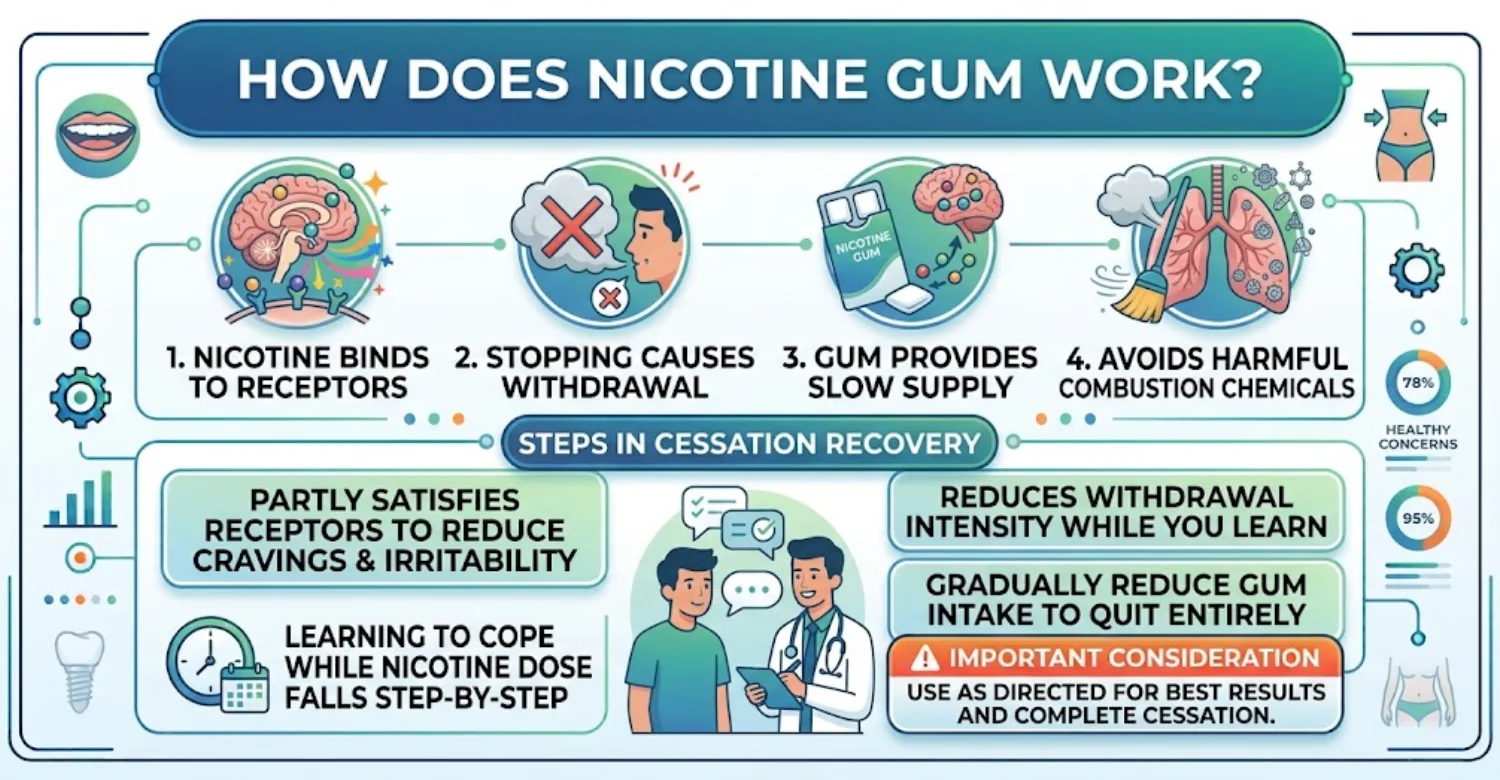
How Nicotine Gum Reduces Cravings and Withdrawal
Cravings have both a physical and a learned component. The physical side comes from falling nicotine levels between cigarettes. The learned side comes from cues like coffee, driving, stress, or meals. NCI notes withdrawal usually peaks in the first three days and eases over several weeks. A single piece can soften the physical side of a craving within minutes. Planned coping strategies then address the learned triggers.
Why the Gum Is Chewed and Then “Parked”
The chew-and-park method controls how fast nicotine is released. Chewing slowly frees nicotine until a peppery tingle appears. Parking the piece between the cheek and gum lets that nicotine absorb through the lining. When the tingle fades, a few more chews release the next portion. This cycle prevents swallowing large amounts that would irritate the stomach. It also delivers a steadier dose.
How Long Does Nicotine Gum Last?
A single piece is typically used for about 30 minutes. After that, most of its nicotine has been released and the piece should be discarded. The effect on cravings may last one to two hours, depending on the person. Nicotine itself has a half-life of roughly two hours in the body. A full course usually runs about 12 weeks with gradual reduction.
How Quickly Can the Gum Relieve a Craving?
Relief often begins within minutes of starting the chew-and-park cycle. Blood nicotine levels rise more slowly than with a cigarette. This means a piece works best when used early, before a craving becomes intense. People who wait until a craving peaks may feel the medicine is too weak. Using pieces on schedule prevents many cravings from building at all.
Can the Gum Help With Smoking Triggers and Habitual Cravings?
It helps with the nicotine part of trigger-driven cravings. It also gives the hands and mouth something to do during familiar routines. However, it cannot erase the learned link between coffee, alcohol, or stress and smoking. Changing routines and avoiding high-risk settings early on remain essential. Many people find a written trigger list useful during the first month. Each trigger then gets a planned response.
Understand the causes and treatment for gum pockets treatment
What Are the Benefits of Nicotine Gum?
The main benefit is higher quit success compared with trying without support. The gum is widely available, relatively affordable, and often sold without a prescription. It allows fast, flexible dosing during sudden cravings. It also avoids the tar and carbon monoxide found in cigarette smoke. For oral health, stopping smoking lowers the risk of gum disease and staining. These gains build steadily over time.
Benefits of Nicotine Gum for Smoking Cessation
Evidence for this medicine is among the strongest for any cessation aid. Cochrane reviews of more than 100 trials link nicotine replacement with quit rates 50 to 60 percent higher. ADA summaries report similar advantages over placebo, although individual outcomes vary. Benefits are greatest when the dose matches dependence and the full course is completed. Pairing it with counseling or a quitline improves outcomes further.
The Gum and Nicotine Withdrawal Relief
Withdrawal symptoms include irritability, anxiety, poor concentration, low mood, restlessness, and increased appetite. NCI reports these usually peak during the first three days. Most ease substantially over two to four weeks. Regular doses during this window reduce their intensity. Sleep problems and appetite changes may need separate strategies alongside the medicine. Gentle exercise and regular meals can also help.
NRT Gum vs Smoking Cigarettes
Both deliver nicotine, but the overall exposure is very different. Cigarette smoke contains thousands of chemicals, including dozens of known carcinogens. The gum delivers nicotine without combustion, tar, or carbon monoxide. Smoking also delivers nicotine faster, which drives stronger dependence. Switching fully from cigarettes to the gum, then tapering, greatly lowers health risk. Partial switching offers far less benefit.
Can Nicotine Gum Be Used With a Nicotine Patch?
Yes, combination therapy is common and well supported. A patch provides steady background nicotine throughout the day. The gum covers breakthrough cravings that appear despite the patch. Cochrane evidence shows combination replacement works better than a single form for many smokers. The combined dose should be planned with a pharmacist or clinician. This matters most for heavy smokers and people with heart conditions.
What Are the Pros and Cons of the Gum?
Like any medicine, the gum has strengths and drawbacks. Weighing both helps you decide whether it suits your routine, health, and mouth. Some people value the control it offers during sudden cravings. Others find the chewing method inconvenient or tiring for the jaw. The two lists below summarize the most important points.
Potential advantages
It offers flexible, fast relief for sudden cravings. It is available without a prescription for adults in many countries. It can be combined with a patch for stronger support. It keeps the mouth busy during habitual moments. It avoids all smoke-related toxins.
Limitations and practical disadvantages
The chewing technique takes practice and discipline. Jaw fatigue, hiccups, and mouth irritation are common early complaints. It may stick to dentures, bridges, or crowns. Eating and acidic drinks must be avoided around each piece. Some users continue chewing long after the planned course ends.
How Do You Use Nicotine Gum Correctly?
Correct use starts with choosing the right strength and setting a quit date. On that day, stop smoking completely and begin regular doses. Use one piece at a time and follow the chew-and-park method. Avoid eating or acidic drinks for 15 minutes before and during use. Follow the label's tapering schedule rather than stopping abruptly. Correct use is the biggest factor in its effectiveness.
How to Chew Nicotine Gum Step by Step
Place one piece in your mouth and chew slowly a few times. Stop when you notice a peppery taste or tingling. Park the piece between your cheek and gum. Wait about a minute until the tingling fades. Chew again slowly until the tingle returns, then park in a different spot. Repeat for about 30 minutes, then discard the piece wrapped in paper.
Chew slowly until a tingling or peppery sensation appears
Begin with slow, gentle bites rather than fast chewing. Around 15 slow chews are often enough to release the first portion. The tingle signals that nicotine is ready for absorption. A strong burning feeling usually means you are chewing too quickly. Slower chewing usually reduces throat irritation and hiccups.
Park the gum between the cheek and gum
Once the tingle appears, rest the piece against the inside of your cheek. This lets nicotine pass through the oral lining into the bloodstream. Keep it parked for about one minute or until the tingle fades. Rotating parking spots helps reduce local irritation. Avoid parking it against sore spots or recent dental work.
Repeat the chew-and-park cycle
Return to slow chewing once the tingle has faded. Park again as soon as the sensation returns. Each cycle releases a small portion of the total dose. Continue this rhythm for roughly 30 minutes per piece. A steady rhythm gives more even nicotine levels than continuous chewing.
Stop when the nicotine taste or tingling fades
When chewing no longer produces a tingle, the piece is largely spent. This usually happens after about half an hour. Discard it wrapped, where children and pets cannot reach it. Continuing to chew a spent piece offers no benefit. It may simply tire the jaw muscles.
How Often Should You Use Nicotine Gum?
CDC guidance describes a stepwise schedule over about 12 weeks. During weeks 1 to 6, use one piece every 1 to 2 hours. During weeks 7 to 9, use one piece every 2 to 4 hours. During weeks 10 to 12, use one piece every 4 to 8 hours. Most labels advise at least nine pieces daily in the first six weeks. Never exceed 24 pieces in one day.
What Is the Difference Between 2 mg and 4 mg Nicotine Gum?
The two strengths match different levels of nicotine dependence. The 4 mg strength suits people whose first cigarette comes within 30 minutes of waking. The 2 mg strength suits those who wait longer than 30 minutes. Both follow the same chew-and-park method and tapering schedule. Starting too low is a common reason for early relapse. Starting too high can cause nausea or dizziness.
How Is the Gum Dose Chosen?
Dosing is based on dependence, not only the number of cigarettes smoked. The timing of the first cigarette is the simplest practical marker. Daily cigarette count, past quit attempts, and withdrawal severity also matter. Health conditions and other nicotine products are considered as well. A pharmacist can confirm the starting strength in a short conversation.
First-cigarette timing and nicotine dependence
Smoking within 30 minutes of waking signals higher dependence. It shows the body reacts strongly to overnight nicotine loss. People with this pattern usually need the 4 mg strength. Those who comfortably wait longer generally start on 2 mg. This simple question appears on most product labels.
People who smoke fewer than 10 cigarettes per day
Lighter smokers can still be strongly dependent. Many start with 2 mg and adjust based on withdrawal symptoms. Some need fewer daily pieces than the standard schedule suggests. Professional advice helps avoid both underdosing and overdosing. Dose decisions should follow symptoms rather than guesswork.
Avoiding too little nicotine and uncontrolled cravings
Underdosing is more common than overdosing in real life. People often chew only when cravings are already severe. This leaves long gaps with low nicotine levels and intense withdrawal. Using pieces on a regular schedule prevents these troughs. Strong cravings despite correct use suggest the strength or plan needs review.
How Long Should You Use Nicotine Gum?
Standard courses run for about 12 weeks. Tapering in the final weeks helps the body adjust to lower nicotine. Labels usually advise asking a doctor if use is needed beyond 12 weeks. Some people benefit from longer support, which should be professionally guided. Extended use is still far safer than returning to cigarettes.
What Should You Avoid Before and During Use?
Avoid acidic drinks such as coffee, soda, juice, and alcohol for 15 minutes before and during use. Acidity reduces nicotine absorption through the cheek lining. Avoid eating while a piece is in your mouth. Do not smoke, vape, or use other nicotine products unless advised. Avoid fast chewing and swallowing nicotine-rich saliva.
Can You Eat or Drink While Using the Gum?
It is best not to eat or drink while a piece is in use. Food and acidic drinks interfere with how nicotine is absorbed. Plain water between pieces is generally fine. Wait about 15 minutes after acidic drinks before starting another piece. Plan pieces around meals rather than during them.
What Happens If You Smoke While Using the Gum?
Smoking during treatment adds nicotine from two sources at once. This can cause nausea, dizziness, headache, or a racing heart. US consumer guidance advises against smoking or using other nicotine products during treatment. A single slip does not mean the quit attempt has failed. Restart the plan and review which trigger caused the slip.
Explore options and fit for a bottom denture
Nicotine Gum Side Effects: What Is Normal and What Is Not?
Most side effects are mild and related to chewing technique. Mouth soreness, hiccups, jaw ache, and mild nausea are common early on. These usually improve once the user learns slower chewing. Severe symptoms, persistent palpitations, or signs of overdose are not normal. Lasting sores or bleeding in the mouth also need professional review.
Common Nicotine Gum Side Effects
Common effects include mouth or throat irritation, hiccups, jaw soreness, and indigestion. Some users notice increased saliva or a mild headache. These effects are often linked to dose or technique. A 2025 review linked oral nicotine replacement with higher odds of some oral complaints. However, the certainty of several findings was low or very low.
Mouth irritation
A burning feeling beyond the expected tingle can indicate fast chewing. Rotating parking spots helps reduce localized irritation. Small sore areas often settle within days. Sores lasting more than two weeks should be examined by a dentist.
Jaw soreness
Repetitive chewing tires the jaw muscles, especially in the first weeks. People with clenching habits or joint problems feel this more. Gentler chewing and longer parking times often help. Persistent jaw pain may suggest switching to a lozenge or patch.
Hiccups
Hiccups usually mean nicotine is being swallowed rather than absorbed in the mouth. Slowing the chewing pace often resolves them. Parking the piece sooner and longer also helps. Ongoing hiccups suggest the technique needs adjusting.
Nausea
Nausea can come from swallowed nicotine or excess total intake. It may also appear if someone smokes during treatment. Using fewer pieces or a lower strength can help. Severe or persistent nausea needs medical advice.
Stomach discomfort
Swallowed nicotine can cause indigestion or heartburn. Slower chewing reduces the amount that reaches the stomach. People with stomach ulcers should ask a doctor before starting. Persistent discomfort should be discussed with a pharmacist.
Increased saliva
Chewing naturally stimulates saliva flow. Swallowing nicotine-rich saliva can increase hiccups and nausea. Parking the piece reduces saliva production. This effect usually settles as technique improves.
Throat irritation
A scratchy or burning throat often follows rapid chewing. Nicotine released too quickly is swallowed before it can absorb. Slower chewing and sipping water between pieces may help. Persistent throat symptoms should be reviewed.
Light-headedness
Light-headedness can signal that nicotine intake is too high. It may also appear when products are combined without a plan. Remove the current piece and rest if it occurs. Repeated episodes need a dose review with a professional.
Side Effects of Overusing the Gum
Overuse can cause nausea, vomiting, dizziness, sweating, headache, and a fast heartbeat. It may also lead to weakness or diarrhea. These are signs of excess nicotine exposure. Using more than 24 pieces a day exceeds label limits. Severe symptoms require urgent medical care or a call to poison control.
How Incorrect Chewing Can Increase Side Effects
Fast, continuous chewing releases nicotine faster than the mouth can absorb it. The excess is swallowed, irritating the throat and stomach. This can cause hiccups, heartburn, and nausea. It also reduces the effective dose reaching the bloodstream. Many side effects disappear once the chew-and-park method is followed carefully.
What Can Help Relieve Mild Side Effects?
Slowing the chewing pace solves many problems. Rotating parking spots reduces mouth irritation. Sipping water between pieces can soothe the throat. A lower strength may help if symptoms suggest excess nicotine. Keeping a simple symptom diary helps identify patterns. Ask a pharmacist if mild symptoms persist after technique changes.
When Side Effects Suggest That the Dose or Technique Needs Review
Recurring hiccups, heartburn, or nausea often point to technique problems. Dizziness, palpitations, or sweating may suggest the dose is too high. Persistent strong cravings may suggest the dose is too low. Worsening jaw pain may mean another format suits you better. A review with a pharmacist or clinician can adjust the plan safely.
Learn about different types of partial dentures
Is Nicotine Gum Bad for You?
Nicotine is addictive and can affect the heart and blood vessels. However, most smoking harm comes from smoke, not nicotine alone. FDA describes approved nicotine replacement as nicotine delivery without the toxins of cigarette smoke. Used as directed for cessation, the gum usually offers benefits that outweigh its risks. Recreational or indefinite use is a different question and is not recommended.
Is Nicotine Gum Safe When Used as Directed?
For most adults, labeled use is considered safe and effective. Following the strength, schedule, and maximum daily limit is essential. Certain conditions require advice first, including heart disease and pregnancy. Side effects are usually mild and manageable. Reading the full label before starting is always worthwhile.
Is Gum Safer Than Smoking?
Yes, by a wide margin, according to major health agencies. Cigarette smoke contains tar, carbon monoxide, and many carcinogens. The gum contains none of these combustion products. Smoking-related diseases are driven mainly by those smoke chemicals. Fully replacing cigarettes during a quit attempt reduces harmful exposure substantially.
Can the Gum Raise Blood Pressure?
Nicotine can temporarily increase heart rate and blood pressure. The effect of labeled doses is usually smaller than smoking. People with uncontrolled hypertension should ask a doctor before use. Monitoring blood pressure during the first weeks can be reassuring. Dizziness or headaches should be reported.
Can the Gum Cause a Buzz?
A noticeable buzz is uncommon when the gum is used correctly. Fast chewing can release nicotine quickly and cause light-headedness. Non-smokers may feel strong effects because they have no tolerance. A buzz signals possible excess intake rather than a desired effect. The medicine is not intended for recreational use.
Does Nicotine Gum Cause Cancer?
Nicotine is not classed as a direct carcinogen by major health bodies. ADA notes that replacement therapy does not carry the cancer risks of tobacco smoke. Some laboratory studies suggest nicotine may influence tumor biology. These findings are not established in people using replacement therapy. Cancer risk falls considerably after quitting smoking with replacement support.
Can the Gum Cause Gum Recession?
There is no strong evidence that this medicine causes gum recession. Smoking, by contrast, is a well-established cause of periodontal disease and recession. Repeated parking in one spot may irritate local tissue. Rotating parking sites and good oral hygiene reduce this risk. Any receding gumline should be assessed by a dentist.
Is Nicotine Gum Bad for Your Teeth?
Sugar-free versions do not feed decay-causing bacteria the way sugary gum does. Chewing can also stimulate protective saliva. However, the gum may loosen fillings that are already weak. It can also stick to crowns, bridges, or dentures. Overall, quitting smoking benefits teeth far more than these minor risks harm them.
Can the Gum Affect Dentures, Crowns, Bridges, or Other Dental Work?
Yes, product labels warn that the gum may stick to dental work. This can pull on dentures or loosen temporary restorations. People with extensive dental work may prefer a lozenge or patch. A dentist can check whether restorations are secure. Stop use and seek advice if dental work becomes damaged.
Find relief and remedies for an ache in mouth
What Should You Know?
Nicotine Gum
Oral Health
The biggest oral-health gain comes from stopping smoking. Smoking raises risks of gum disease, staining, bad breath, and slow healing. The gum avoids smoke but can still cause local irritation. Good brushing, interdental cleaning, and regular dental visits remain essential. New or lasting oral symptoms deserve examination rather than assumption.
NRT Gum, Mouth Irritation, and Oral Soreness
Mild soreness at parking sites is relatively common. It is usually linked to repeated contact in one place. Moving the piece between sites helps tissues recover. Lesions lasting over two weeks are not typical. These should be examined to exclude other causes.
NRT Gum and Dry Mouth
Some users report dry mouth, although chewing often increases saliva. Dry mouth may also follow changes in fluid intake during quitting. Sipping water between pieces improves comfort. Sugar-free products avoid adding sugar to a dry mouth. Persistent dryness raises decay risk and should be discussed with a dentist.
NRT Gum and Aphthous Ulcers
A 2025 network meta-analysis reported higher odds of aphthous ulcers with replacement gum versus standard care. The certainty of this finding was limited. Some people also develop mouth ulcers after quitting smoking, regardless of product. Most ulcers heal within two weeks. Ulcers lasting longer need dental assessment.
Does the Gum Cause Gum Disease?
There is no strong evidence that the medicine itself causes periodontal disease. Gum disease is driven mainly by plaque bacteria and is worsened by smoking. Local irritation from parking differs from true periodontal disease. Quitting smoking usually improves gum healing over time. Bleeding gums should still be checked by a dentist.
NRT Gum vs Nicotine Pouches for Gum Health
Both products sit against the gum and cheek tissue. Pouches are often held in one spot for long periods, which can irritate tissue. Most pouches are consumer nicotine products, not approved cessation medicines. The gum is designed around a structured tapering plan. Anyone concerned about gum health should rotate sites and attend dental checkups.
How Smoking and Nicotine Replacement Therapy Differ in Oral Health Effects
ADA notes smoking is linked with periodontal disease, impaired healing, staining, and oral mucosal problems. Replacement therapy removes heat, smoke, and tar from the mouth. It may still cause local irritation in some users. The overall oral-health balance strongly favors replacement over smoking. Regular dental care supports recovery during cessation.
Tobacco smoke exposure
Smoke exposes the mouth to heat, tar, and many toxic chemicals. It narrows blood vessels and slows tissue healing. It stains teeth and restorations. It increases the risk of oral cancer and gum disease.
Nicotine replacement exposure
Replacement therapy delivers nicotine without combustion products. Nicotine still affects blood vessels to some degree. The exposure is planned to decrease over time. It carries no tar or carbon monoxide.
Local irritation from oral nicotine products
Gum, lozenges, and pouches all contact oral tissue directly. Repeated contact in one area can cause soreness or redness. Rotating placement reduces this risk. Persistent white or red patches should be checked by a dentist.
Note : All images used are for editorial and illustrative purposes only and may not originate from the original news provider or associated company.
Discover the signs to help answer should I get a root canal?
What We Notice Clinically
At Vitrin Clinic, we often see patients during or after quit attempts. Common concerns include jaw tiredness, mild cheek irritation, and worries about recession. Many issues relate to technique rather than the medicine itself. Others turn out to be unrelated dental problems. A careful examination helps separate these causes.
Common Patient Patterns With the Gum
Many patients chew too quickly in the first week. Some use pieces only when cravings peak, then feel underdosed. Others park in the same spot every time and develop local soreness. A few continue chewing well beyond 12 weeks without a tapering plan. Each pattern has a practical fix.
Why Patients Sometimes Think the Gum Is “Too Strong”
The gum often feels too strong because of fast chewing. Rapid release creates a burning sensation and possible dizziness. Some people also choose a strength above their dependence level. Slowing down usually solves the problem. If not, a lower strength may be appropriate.
Why Jaw Pain May Reflect Chewing Technique Rather Than Nicotine Toxicity
Jaw pain is usually muscular, not chemical. Many hours of chewing tire the muscles that move the jaw. People who clench or grind are especially prone. Nicotine toxicity typically causes nausea, dizziness, or palpitations rather than jaw pain. Gentler chewing and longer parking breaks often relieve the discomfort.
Distinguishing Gum-Related Irritation From Existing Dental Problems
Not every sore spot comes from the medicine. Decay, cracked teeth, gum infection, or trauma can cause similar symptoms. Irritation from the gum usually appears at parking sites and improves with rotation. Pain on biting or temperature sensitivity suggests a tooth problem. A dental examination clarifies the true cause.
Why Smoking Cessation and Oral Health Should Be Considered Together
Quitting smoking is one of the best steps a person can take for oral health. Gum healing, implant success, and treatment outcomes all tend to improve. A dental visit during cessation can catch problems that smoking has masked. Gums may bleed more once smoking stops because blood flow returns. Knowing this prevents unnecessary worry.
Clinical Note
Bleeding gums shortly after quitting are not necessarily a sign of harm. Smoking constricts blood vessels and can hide gum inflammation. Once smoking stops, underlying gingivitis may become visible. A professional cleaning and better home care usually resolve this. Persistent bleeding still needs assessment.
How Is Nicotine Gum Use Assessed Clinically?
Assessment covers dependence level, current use, symptoms, and health history. Clinicians ask how many pieces are used daily and at what strength. Technique is reviewed, since errors are common. Dentists examine the cheeks, gums, teeth, and jaw. The goal is to confirm that the gum is safe, effective, and well tolerated.
How a Healthcare Professional Assesses Nicotine Dependence
Clinicians often ask when the first cigarette is smoked after waking. They also ask about daily cigarette count and past withdrawal experiences. Short questionnaires such as the Fagerström test may be used. Dependence level guides strength and schedule. It also helps predict who may need combination therapy.
How Smoking and Vaping History Can Affect Gum Strength Selection
Heavy smokers often need the 4 mg strength or combination therapy. Light smokers usually start at 2 mg. Vapers present a challenge because nicotine intake varies widely. Previous experience with nicotine replacement also matters. A clear history helps choose a realistic starting dose.
Reviewing Medical Conditions and Current Medicines
Heart disease, high blood pressure, stomach ulcers, and diabetes need consideration. Labels advise asking a doctor if you take medicine for depression or asthma. Quitting smoking can change how some medicines are processed. Doses may need adjustment once smoking stops. A pharmacist can review current medicines before you start.
When a Dentist Should Assess the Mouth Before or During Gum Use
A dental check before starting helps people with dentures, bridges, or loose fillings. It is also useful when gum disease or jaw problems already exist. During use, persistent sores, bleeding, or loosening restorations need assessment. New lumps or patches always warrant prompt examination. Regular checkups support both cessation and oral health.
When Another Nicotine Replacement Option May Be More Appropriate
Other options may suit people with jaw disorders or extensive dental work. They may also suit those who cannot master the chewing technique. Lozenges dissolve without chewing. Patches provide steady delivery without oral contact. Prescription medicines such as varenicline are alternatives where available.
Understand potential reasons if you have a tooth hurts no cavity
Who Should Speak With a Doctor or Pharmacist Before Using Nicotine Gum?
Certain groups should get advice before starting this medicine. These include people with recent heart attacks, serious arrhythmias, or worsening angina. Pregnant or breastfeeding women also need guidance. People under 18 and those with significant jaw problems should ask first. So should anyone with persistent, unexplained oral symptoms.
Recent Heart Attack or Serious Heart Rhythm Problems
Labels advise asking a doctor first after a recent heart attack. The same applies to irregular heartbeat or palpitations. Nicotine can increase heart rate and cardiac workload. Even so, replacement therapy is generally considered safer than continued smoking for heart patients. A cardiologist can guide the safest approach.
Worsening or Serious Angina
Angina that is worsening or unstable needs medical oversight. Nicotine may affect heart rate and blood vessel tone. Doctors may still recommend replacement therapy under supervision. Any new chest pain requires urgent assessment.
Temporomandibular Joint Problems or Significant Jaw Pain
Repetitive chewing can aggravate jaw joint disorders. Clicking, locking, or ongoing pain suggests the gum may not be suitable. Lozenges or patches avoid this strain. A dentist can assess the jaw joint and muscles.
Pregnancy or Breastfeeding
Stopping smoking is very important during pregnancy. Behavioral support is usually tried first. Replacement therapy may be recommended when benefits outweigh risks. Nicotine passes into breast milk, so timing and dose need advice. Decisions should be made with a doctor or midwife.
People Under the Recommended Age for Self-Use
In the US, over-the-counter replacement products are approved for adults aged 18 and older. Younger people who smoke or vape should seek professional guidance. Some clinicians may recommend replacement therapy for teenagers under supervision. Counseling is a central part of youth cessation.
People With Persistent or Unexplained Oral Symptoms
Ongoing mouth sores, white patches, or bleeding should not be ignored. These symptoms may have causes unrelated to the gum. A dental examination should come before continued use. Early assessment allows timely diagnosis.
Nicotine Gum Relief: Practical Ways to Manage Cravings and Discomfort
Relief depends on timing, technique, and coping strategies. Using pieces on schedule prevents many cravings from building. Planning around predictable triggers reduces surprises. Gentle chewing limits jaw and stomach discomfort. Together, these steps make the gum more effective and comfortable.
Using the Gum Before a Predictable Craving
Some cravings arrive at predictable times, such as after meals or during commutes. Starting a piece 15 to 20 minutes beforehand gives nicotine time to absorb. This can soften the craving before it peaks. Remember to avoid acidic drinks during the piece.
Managing Strong Cravings During the Quit Process
Most cravings pass within a few minutes. Delay, deep breathing, drinking water, and changing activity can help. Using a piece early adds physical relief. Calling a quitline or support person can also help. Each craving resisted weakens the habit loop.
Supporting the Gum With Behavioral Counseling
Behavioral support adds to the effect of medication. WHO recommends combining pharmacotherapy with behavioral interventions. Counseling helps identify triggers and plan coping responses. Quitlines, apps, and group programs are widely available. Combining support with medication gives the strongest chance of success.
What to Do When the Gum Is Not Relieving Cravings
First, check the technique and avoid acidic drinks. Next, review whether the strength matches dependence. Using pieces on a fixed schedule may help. Adding a patch for background support is often effective. If cravings persist, ask a pharmacist about other medicines.
How to Reduce Gum-Related Jaw Discomfort
Chew more slowly and with less force. Increase parking time between chews. Alternate sides of the mouth. Take breaks between pieces where possible. If discomfort persists, consider a lozenge or patch instead.
Learn how to care for swollen gum from wisdom tooth
Medical Tips for Safer Nicotine Gum Use
Safe use relies on a few simple habits. Follow the label, use the correct technique, and store products safely. Track daily use to avoid excess. Report persistent symptoms promptly. Treat the gum as a medicine, not a casual habit.
Follow the Product Label and Recommended Schedule
Labels contain strength guidance, dosing schedules, and warnings. Formulations can differ between brands and countries. Reread the label when switching products. Never exceed the maximum daily number of pieces.
Do Not Chew It Like Regular Gum
Continuous chewing releases nicotine too fast. This increases hiccups, heartburn, and nausea. It also wastes nicotine that should be absorbed in the mouth. Use the chew-and-park cycle every time.
Keep the Gum Away From Children and Pets
Nicotine can poison children and pets even in small amounts. Sugar-free products may also contain xylitol, which is toxic to dogs. Store packs out of reach and sight. Wrap used pieces before discarding them. Contact poison control immediately if a child swallows any.
Track How Many Pieces You Use
A simple daily count helps you follow the tapering plan. It also reveals whether use is creeping upward. Note the time of each piece and any triggers. Share this record with your pharmacist or clinician.
Discuss Persistent Side Effects With a Healthcare Professional
Mild effects usually fade within days. Effects lasting longer deserve professional review. A pharmacist can adjust strength or suggest another format. Dentists can assess mouth or jaw symptoms.
Do Not Treat the Gum as a Casual or Recreational Nicotine Product
This product is a medicine designed to help people stop tobacco. It is not intended for non-smokers or long-term recreational use. Using it casually can create or prolong dependence. The goal is always to taper off completely.
Nicotine Gum Compared With Other Nicotine Products
Products differ in speed, dose control, and regulatory status. Patches give steady background nicotine. Gum and lozenges give quick, flexible doses. Pouches and e-cigarettes are mostly consumer products rather than approved medicines. The right choice depends on dependence, routine, health, and goals.
Nicotine Gum vs Nicotine Patch
The patch releases nicotine steadily over 16 or 24 hours. It requires little effort once applied. The gum offers faster relief for breakthrough cravings. Many people use both together for better results. Skin irritation is the main patch complaint, while jaw tiredness affects gum users.
NRT Gum vs Nicotine Lozenge
Lozenges dissolve slowly without chewing. They suit people with jaw problems or extensive dental work. Both forms offer flexible, on-demand dosing. Lozenges may cause hiccups or heartburn if sucked or chewed too quickly. Effectiveness is similar when either is used correctly.
NRT Gum vs Nicotine Pouches
Nicotine pouches are mostly sold as consumer products, not cessation medicines. Many contain high nicotine doses and lack tapering instructions. Approved gum carries clear cessation labeling and dosing schedules. Pouches may support continued dependence rather than quitting. For a structured quit attempt, approved replacement therapy is preferable.
NRT Gum vs ZYN
ZYN is a popular brand of nicotine pouch. In January 2025, FDA authorized marketing of certain ZYN products as tobacco products. That authorization is not approved as a smoking-cessation aid. Approved replacement gum is labeled specifically for quitting. Authorization does not mean a product is safe or risk-free.
Is Nicotine Gum Better Than Vaping?
For a structured quit attempt, approved replacement therapy has clearer evidence and regulation. FDA has not approved any e-cigarette as a smoking-cessation aid. Some studies suggest e-cigarettes help certain smokers quit. However, many users continue vaping long-term. The gum is designed with a defined endpoint and tapering plan.
When a Combination of Nicotine Replacement Therapies May Be Considered
Combination therapy suits people with strong dependence. It also helps when one product alone leaves persistent cravings. A patch covers background needs while the gum covers peaks. Cochrane evidence supports this approach over single replacement products. Doses should be planned with a pharmacist or clinician.
Check safety tips on using peroxide to help with tooth pain
Nicotine Gum Brands and Product Types
Products vary by brand, strength, flavor, coating, and package size. Most contain nicotine polacrilex at 2 mg or 4 mg. Store brands often match branded products at lower cost. Some newer brands market themselves as lifestyle products. Checking the label confirms whether a product is a regulated cessation medicine.
What to Look for When Comparing Brands
Look for a Drug Facts panel listing nicotine polacrilex. Check the strength, flavor, and number of pieces. Read the directions and warnings carefully. Compare cost per piece rather than pack price. Choose a product intended for smoking cessation.
2 mg vs 4 mg Products
Both strengths appear across most brands. The 4 mg product suits more dependent smokers. The 2 mg product suits lighter dependence. Choosing the correct strength matters more than the brand name.
Sugar-Free Nicotine Gum
Sugar-free versions are widely available and kinder to teeth. They usually contain sweeteners such as xylitol or sorbitol. Large amounts of sugar alcohols may upset the stomach. Xylitol is dangerous for dogs, so safe storage matters. Dentists generally prefer sugar-free options for oral health.
Flavors, Package Sizes, and Cost Per Piece
Common flavors include mint, fruit, cinnamon, and original. Flavor can improve tolerability but does not change effectiveness. Larger packs usually lower the cost per piece. Calculate the total pieces needed for a 12-week course before buying.
How to Evaluate “Best Gum” Claims
Online rankings often reflect marketing or affiliate interests. The best product is the one that suits your dependence, mouth, and routine. Focus on strength, regulatory status, and clear instructions. Tolerability and price matter more than packaging.
Dosage suitability
The strength should match first-cigarette timing and dependence. Underdosing leads to strong cravings. Overdosing causes nausea and dizziness.
Correct use instructions
Clear chew-and-park instructions should appear on the label. Tapering guidance should also be included. Products without clear directions deserve caution.
Regulatory status
Approved products carry a Drug Facts panel or a national medicine license. Consumer nicotine products do not carry the same cessation claims. Regulatory status matters more than popularity.
Tolerability and oral considerations
Consider jaw comfort, dental work, and sensitivity to flavors. Sugar-free formulas suit most people's teeth. Switching formats is reasonable if irritation persists.
Consumer Searches for Specific Brands and Products
Many people search by store or brand name. Availability, pricing, and labeling vary between retailers and regions. Store brands often contain the same active ingredient as leading brands. Always check the label rather than relying on brand reputation. The sections below cover commonly searched options.
CVS Health Sugar Free Gum
This is a store-brand product sold by CVS pharmacies. It typically comes in 2 mg and 4 mg strengths. Store brands usually cost less than national brands. Check the Drug Facts panel for directions and warnings.
Buying at Walgreens
Walgreens stocks branded and store-brand options. Strengths, flavors, and pack sizes vary by location. Online stock may differ from in-store availability. Pharmacists in store can answer dosing questions.
Buying at Walmart
Walmart sells branded products and its Equate store brand. Prices are often competitive. Availability varies by store and online. Compare the cost per piece across pack sizes.
Buying at Costco
Costco usually offers large packs, sometimes under its Kirkland Signature label. Large packs can reduce the cost per piece. Membership may be required. Check the strength before buying in bulk.
Buying at Target
Target stocks a selection of branded and store-brand options. The range may be smaller than at pharmacies. Online ordering may offer more choice. Labels should be checked before purchase.
Buying on Amazon
Amazon lists many brands and third-party sellers. Not all listings are clear about regulatory status. Buy from reputable sellers and check expiration dates. Verify the product carries proper drug labeling.
Habitrol Gum
Habitrol is an established replacement-therapy brand. It is sold in 2 mg and 4 mg strengths in several flavors. It follows the standard chew-and-park method. Pricing is often lower than leading national brands.
Equate Gum
Equate is Walmart's store brand. It generally matches leading brands in active ingredient and strength. It is often among the most affordable options. Directions follow standard labeling.
Lucy Gum
Lucy markets nicotine products with a lifestyle-focused brand image. Some of its products may be sold as consumer nicotine products rather than cessation medicines. Check the packaging for a Drug Facts panel. Confirm the intended use before including it in a quit plan.
Rogue Gum
Rogue sells gum alongside pouches and lozenges. Regulatory status can differ between products in its range. Read the label to confirm whether it is intended for cessation. Ask a pharmacist if unsure.
Blip Gum
Blip is a newer name that appears in consumer searches. Information about its regulatory status may vary by market. Treat unfamiliar brands with caution. Confirm labeling, strength, and intended use before buying.
Product claims vs evidence-based smoking-cessation guidance
Marketing may stress flavor, energy, or focus. Evidence-based guidance focuses on dependence, dosing, and tapering. Claims of improved performance are not cessation evidence. CDC, FDA, NCI, and WHO provide reliable cessation information. Choose products that align with that guidance.
.jpg)
.jpg)
.jpg)
.jpg)
.jpg)
.jpg)
.jpg)
Where Can You Buy Nicotine Gum?
The gum is sold in pharmacies, supermarkets, and online stores in many countries. Rules vary by country and retailer. Some places sell it only in pharmacies. Public health programs may provide it free or at reduced cost. Check that the product is intended for smoking cessation.
Where to Buy It Near You
Local pharmacies are usually the most reliable source. Pharmacists can give dosing advice at the point of sale. Supermarkets and convenience stores may stock limited ranges. Call ahead or check online stock to save time.
Pharmacy, Supermarket, and Online Purchasing
Pharmacies offer professional advice alongside products. Supermarkets can be convenient and sometimes cheaper. Online purchasing offers wider choice but requires careful seller selection. Check expiry dates and packaging integrity on delivery.
What “Near Me” Searches Really Mean
These searches usually reflect urgent cravings or an approaching quit date. Local availability matters, but so does choosing the right strength. A nearby pharmacy can provide both the product and advice. Map listings may not show livestock.
Can You Get Free NRT Gum?
Many public health services offer free or subsidized replacement therapy. In the US, state quitlines at 1-800-QUIT-NOW often provide free starter kits. In the UK, local NHS stop smoking services may supply it. Some insurers and employers also cover the cost. Eligibility varies by region and program.
Do You Have to Be 21 to Buy NRT Gum?
In the US, FDA approves over-the-counter replacement products for adults aged 18 and older. The federal Tobacco 21 law applies to tobacco products. The gum is regulated as a medicine, not a tobacco product. Some retailers may still request identification under store policy. Rules differ in other countries.
Distinguishing tobacco-product age laws from nicotine replacement medicines
Tobacco laws cover cigarettes, e-cigarettes, and most pouches. Replacement therapy falls under medicine regulations. This creates different age limits and sales rules. Checking the product category clarifies which rules apply.
Why age and purchasing rules can differ by country and retailer
Each country sets its own medicine and tobacco regulations. Retailers may add stricter policies. Some countries restrict replacement therapy to pharmacies. International travelers should check local rules before arriving.
How to Check Whether a Product Is Intended for Smoking Cessation
Look for a Drug Facts panel or a national medicine license number. Check for quit-smoking directions and a tapering schedule. Approved products list nicotine polacrilex as the active ingredient. Ask a pharmacist if the label is unclear.
Explore types and benefits of dental prosthesis
How Much Does Nicotine Gum Cost?
Cost varies by brand, strength, pack size, and country. Larger packs usually reduce the cost per piece. A full 12-week course may require several hundred pieces. Store brands and promotions can lower costs. Free programs may cover part or all of the course.
Average Retail Cost of Nicotine Gum in the US, UK, and Turkey
Country | Typical current package examples | Approximate planning range | Planning midpoint* |
US | CVS examples include 4 mg, 100-count products and larger CVS Health packs | ~30–40 per package | ~$35 |
UK | Boots examples: 2 mg/105 pieces around $17.95; promotional pricing can be lower; 210-piece packs around $21.85 | ~$12–$22 per package | ~$17 |
Turkey | Current listings show 4 mg/30-piece Nicorette products around $317–$481; larger 105-piece 2 mg packs are around $949–$1,021 | ~$300–$1,050 per package, depending strongly on pack size | Not directly comparable by pack size |
*Planning midpoint is an approximate reference, not a fixed quote. Prices can change by retailer or country.
These figures are planning references rather than fixed quotes. The UK examples show how larger packs reduce the cost per piece. Turkish prices are listed in Turkish lira and vary by importer and format. Always confirm the live price before buying.
What Changes the Price?
Strength, pack size, brand, and retailer all affect price. Taxes and import costs differ by country. Promotions and bundles can reduce cost temporarily. Insurance or public programs may lower out-of-pocket spending.
2 mg versus 4 mg strength
The 4 mg strength sometimes costs slightly more. Price differences are usually small within the same brand. Choose strength based on need, not price.
Number of pieces per pack
Packs range from small trial sizes to more than 200 pieces. Larger packs reduce the cost per piece. Buy smaller packs first if unsure about tolerability.
Brand and formulation
National brands usually cost more than store brands. Flavored or coated versions may carry a premium. The active ingredient is generally the same.
Pharmacy versus online retailer
Online prices may be lower but can include shipping costs. Pharmacies offer immediate access and advice. Compare total cost, not just the listed price.
Discounts, bundles, and quit-smoking programs
Multipack bundles often lower unit cost. Loyalty schemes and coupons can help. Quit programs may provide free starter supplies.
How Many Pieces Might Be Needed During a Quit Attempt?
On the standard schedule, weeks 1 to 6 may need about 9 to 12 pieces daily. Use then declines over weeks 7 to 12. A full course may total several hundred pieces. Combination therapy usually reduces daily gum use. Personal needs vary with dependence.
When Should You Stop Using Nicotine Gum and Seek Medical Care?
Stop and seek advice if you develop palpitations or an irregular heartbeat. Seek care for symptoms of nicotine overdose. These include nausea, vomiting, dizziness, weakness, and a rapid heartbeat. Stop if mouth, teeth, or jaw problems develop. Allergic reactions also require stopping and medical review.
Severe or Persistent Symptoms After Using the Gum
Symptoms that are severe or last more than a few days need assessment. Do not keep increasing the dose to push through them. A clinician can decide whether to adjust or switch products. Recording symptoms and timing helps the review.
Chest Pain, Significant Heart Symptoms, or Severe Palpitations
Chest pain requires urgent medical attention. Severe palpitations or fainting also need immediate care. Stop the product while being assessed. Do not drive yourself if symptoms are severe.
Severe Vomiting, Confusion, or Other Signs of Excess Nicotine Exposure
These signs may indicate nicotine poisoning. Seek emergency care or contact poison control promptly. Children are at particular risk from accidental ingestion. Bring the packaging to help clinicians.
Persistent Mouth Sores, Unexplained Bleeding, or New Oral Lumps
Sores lasting over two weeks need dental examination. Unexplained bleeding or new lumps should be checked promptly. These signs may have causes unrelated to the gum. Early diagnosis matters for all oral lesions.
Severe or Persistent Jaw Pain
Persistent jaw pain suggests muscle strain or joint problems. Stop chewing and consider a lozenge or patch. A dentist can assess the jaw joint and bite. Untreated strain may worsen over time.
When a Dentist Should Evaluate Ongoing Gum or Tooth Symptoms
See a dentist for bleeding gums lasting over two weeks. Also seek care for tooth pain, loose fillings, or damaged restorations. Recession, swelling, or persistent bad breath also warrant review. Early care prevents larger problems.
How Vitrin Clinic Evaluates Oral Health During Nicotine Gum Use
Our evaluation starts with your smoking history and current product use. We then examine the teeth, gums, cheeks, tongue, and jaw. We check restorations for wear or loosening. Imaging is used only when it answers a clinical question. Findings guide clear, practical next steps.
Clinical Assessment of Teeth, Gums, and Oral Tissues
The dentist checks for decay, staining, and cracked teeth. Gum health is assessed for bleeding, pockets, and recession. Soft tissues are examined for sores, patches, or lumps. The jaw is checked for tenderness and movement.
Evaluating Persistent Gum Irritation, Mouth Sores, or Jaw Symptoms
We review where and when symptoms appear. Parking-site irritation is distinguished from other causes. Jaw symptoms are assessed for muscle or joint involvement. Advice may include technique changes or product switching.
Periodontal Assessment When Gum Disease Is a Concern
Periodontal charting measures pocket depths around each tooth. X-rays may show bone levels when clinically indicated. Smoking history influences risk and treatment planning. Cleaning and home-care guidance usually come first.
Dental Evaluation for Patients With Crowns, Bridges, Dentures, or Other Restorations
We check that restorations are secure and well fitted. The gum may stick to some dental work. Loose or damaged restorations are repaired or adjusted. Alternative replacement formats may be suggested when appropriate.
Internal link opportunity: existing Vitrin Clinic Treatments page
Patients needing dental care can explore our treatments page. It outlines options such as cleanings, restorations, and periodontal care. Linking here helps readers move from information to action.
Internal link opportunity: relevant gum disease or periodontal content
Readers concerned about gum health can explore our periodontal content. It explains gum disease stages, signs, and treatments. This adds depth to the oral-health discussion above.
How Vitrin Clinic Supports Your Treatment Journey
We support oral health while your medical team supports cessation. Care is personalized to your symptoms and goals. We coordinate appointments for local and international patients. Follow-up confirms that symptoms are resolving as expected.
Personalized Consultation for Persistent Oral Symptoms
Consultations begin with listening to your concerns. We review your history, products, and symptoms. Examination findings are explained clearly. You receive a practical plan tailored to your needs.
Digital Diagnostics When Clinically Appropriate
Digital X-rays, CBCT, or 3D scanning may be used when needed. Imaging helps assess bone, roots, and jaw structures. It is not used routinely without a clinical reason. Results guide accurate treatment planning.
Individualized Treatment Planning Based on Oral Findings
Treatment depends on what the examination reveals. Plans may include cleaning, repairs, or periodontal therapy. Some patients need only reassurance and technique advice. Each plan is explained before treatment starts.
Coordinating Dental Care for International Patients
International patients often need efficient scheduling. We coordinate assessments and treatment around travel plans. Records can be shared with home dentists. Follow-up can be arranged remotely where suitable.
Follow-Up When Oral Symptoms Need Reassessment
Some symptoms need monitoring over several weeks. Follow-up confirms that irritation or sores are healing. Persistent findings may require further investigation. We adjust advice as your quit journey progresses.
Internal link opportunity: existing Vitrin Clinic contact/consultation page
Readers with ongoing oral symptoms can book through our contact page. Booking a consultation allows timely examination and advice. This link offers a clear next step.
Ready to transform your smile?
Talk to our team and get a personal FREE treatment plan.
Evidence-Based Sources and EEAT Opportunities
Medical claims in this guide rely on authoritative sources. These include CDC, FDA, NCI, NIDCR, ADA, NHS, and WHO. Peer-reviewed studies support the oral-health discussions. Sources should be date-checked before publication. Clear sourcing builds reader trust.
CDC Guidance on Gum Use, Dosing, Technique, and Side Effects
CDC explains how to choose between the 2 mg and 4 mg strengths. It describes the chew-and-park technique and a 12-week tapering schedule. It also lists common side effects such as mouth soreness and hiccups. This guidance supports the dosing sections above.
FDA Guidance on Approved Smoking-Cessation Products and Nicotine Replacement Therapy
FDA lists approved replacement products, including gum, lozenges, and patches. It explains that these are approved for adults aged 18 and older. FDA also confirms that no e-cigarette is approved for cessation. Labels provide official warnings and directions.
NIH and NCI Evidence on Nicotine Replacement Therapy and Smoking Cessation
NCI summarizes withdrawal timelines and replacement options. It notes that withdrawal often peaks in the first three days. NIH-funded research supports the role of replacement therapy in cessation. These sources help explain craving patterns.
NIDCR Evidence on Smoking, Gum Disease, Oral Hygiene, and Dental Assessment
NIDCR identifies smoking as a major risk factor for gum disease. It explains how smoking impairs healing and treatment success. It also emphasizes daily oral hygiene and regular dental visits. These points support the oral-health sections.
ADA Guidance on Tobacco Cessation and Oral Effects of Nicotine Replacement Therapy
ADA encourages dentists to support tobacco cessation. It summarizes replacement therapy effectiveness and oral effects. It notes that nicotine is not considered a direct carcinogen. Dentists are well placed to spot tobacco-related oral changes.
NHS Guidance on NRT Gum and Smoking Cessation
The NHS describes nicotine replacement as a safe and effective quitting aid. It recommends combining it with local stop smoking services. NHS guidance also covers side effects and correct use. It is a useful reference for UK readers.
WHO Clinical Treatment Guideline for Tobacco Cessation
WHO published its first clinical tobacco cessation guideline for adults in 2024. It recommends replacement therapy, varenicline, bupropion, and cytisine. It also recommends behavioral support alongside medication. The guideline supports the combined approach described here.
PubMed and Peer-Reviewed Evidence on Oral Adverse Effects of Nicotine Replacement Therapy
Peer-reviewed studies examine mouth ulcers, irritation, and other oral effects. A 2025 network meta-analysis found higher odds of some oral adverse events. Several findings had low or very low certainty. More research is needed for firmer conclusions.
Use primary or authoritative sources for safety and dosing claims
Safety and dosing statements should cite regulators and health agencies. Product labels are primary references for directions. Avoid relying on forums or marketing pages.
Use peer-reviewed literature for oral-health risk discussions
Oral-health claims should rest on published studies. Systematic reviews offer stronger evidence than single reports. Certainty levels should be stated clearly.
Date-check medical guidance before publication
Guidance and labels change over time. Each source should be checked for its latest version. Publication dates help readers judge currency.
Key Takeaways
NRT gum is an effective, evidence-based quitting aid. Correct technique and dosing matter greatly. Side effects are mostly mild and manageable. Oral health generally improves after quitting smoking. Professional advice helps people with health conditions.
What the Gum Does
It replaces part of the nicotine from cigarettes without smoke. It reduces withdrawal and cravings during the quit process. Doses are tapered over about 12 weeks.
How to Use It Correctly
Choose the right strength based on first-cigarette timing. Follow the chew-and-park method for about 30 minutes per piece. Avoid acidic drinks and food during use. Taper gradually rather than stopping suddenly.
Main Side Effects and Practical Relief
Common effects include hiccups, jaw ache, and mouth irritation. Slower chewing usually helps. Persistent or severe symptoms need professional review.
Important Oral-Health Considerations
Quitting smoking benefits teeth and gums greatly. Rotate parking sites to reduce irritation. Watch for problems with dental work. Keep regular dental checkups during cessation.
Who Should Seek Professional Advice Before Using It
People with heart disease, uncontrolled blood pressure, or recent heart attacks should ask first. So should pregnant or breastfeeding women. People under 18 and those with jaw disorders also need advice.
Warning Signs That Need Medical or Dental Evaluation
Chest pain, severe palpitations, and signs of overdose need urgent care. Mouth sores lasting over two weeks need dental review. New lumps or unexplained bleeding should be checked promptly.
Reference
FAQs
Dr. Rifat Alsaman has more than 5 years of clinical experience in dentistry and currently serves as the Head of the Medical Team at Vitrin Clinic. He is dedicated to providing exceptional patient care, overseeing treatment planning, and ensuring the highest clinical standards across the team. His expertise, attention to detail, and commitment to continuous professional development have helped countless patients achieve healthier, more confident smiles.


