Are Dental Clinics Abroad Accessible for Patients with Disabilities or Mobility Issues?
Finding an Accessible Dental Clinic Abroad involves more than checking treatment prices.

Finding an Accessible Dental Clinic Abroad involves more than checking treatment prices. Patients may require adapted facilities, specialised equipment, accessible transport, and additional clinical support. International dental care may be suitable for some wheelchair users and people with mobility limitations. However, accessibility must be verified before travel.
The World Health Organization estimates that 1.3 billion people worldwide experience significant disability. This represents approximately 16% of the global population. Individual mobility, communication needs, medical history, and oral health all influence dental care requirements.
This guide explains how to check clinic accessibility, compare treatment costs, and prepare for dental care. It also highlights important questions to ask Vitrin Clinic before travelling to Istanbul.
Key Takeaways
Choosing an accessible dental clinic abroad involves checking facilities, equipment, transportation, and clinical support not just wheelchair access.
Patients should confirm entrances, lifts, corridors, toilets, treatment-room dimensions, and safe transfer arrangements before travelling.
Disabilities and mobility limitations do not automatically prevent dental treatment, but individual medical and accessibility needs must be reviewed.
Dental implants, All-on-6, crowns, root canal treatment, and orthodontics may be suitable for selected patients following clinical examination.
Patients should share medical history, medication details, wheelchair measurements, positioning requirements, and communication preferences in advance.
Accessible transportation, suitable accommodation, caregiver support, and additional recovery time should be included in travel planning.
Compare itemised treatment quotations and confirm whether accessibility services involve additional charges.
Arrange follow-up care before returning home, and obtain clinical records, imaging, and clear aftercare instructions.
Ready to transform your smile?
Talk to our team and get a personal FREE treatment plan.
Which Accessibility Standards Should You Look for in a Dental Clinic?
An Accessible Dental Clinic Abroad should accommodate physical, sensory, communication, and medical requirements. Accessibility covers the complete patient experience, not just wheelchair entry. Patients should be able to reach treatment rooms, communicate effectively, and receive appropriate care. Clinics should also consider fatigue, involuntary movements, and sensory sensitivities. Discuss your requirements before confirming treatment.
What Accessibility Facilities Should a Dental Clinic Have?
Physical accessibility requires suitable entrances, spacious corridors, accessible toilets, and adapted treatment areas. Important facilities include:
Step-free entrances or suitable ramps.
Accessible lifts connecting different floors.
Wide corridors and doorways.
Wheelchair-accessible toilets.
Suitable reception and waiting areas.
Clear signs and accessible information.
Appropriate emergency evacuation arrangements.
Request photographs and measurements before travelling. Accessible building entrances do not necessarily mean every treatment room is suitable.
Can Wheelchairs Move Easily Through Clinic Entrances, Corridors, and Lifts?
Wheelchair accessibility depends on the entire route from the entrance to the treatment room. Check doorway widths, ramp gradients, lift dimensions, and available turning space. Ask about raised thresholds and automatic doors. Powered wheelchairs may need additional clearance. Sharing your wheelchair measurements beforehand can help identify potential restrictions.
What Should an Accessible Dental Treatment Room Include?
A suitable treatment room should provide enough space for movement, transfers, and dental equipment. The clinical team should understand positioning requirements before treatment begins. Important considerations include:
Space for wheelchairs and mobility aids.
Adjustable dental chairs.
Transfer equipment, where available.
Support cushions and positioning aids.
Adequate space for caregivers.
Safe arrangements for medical equipment.
How Can Dental Clinics Accommodate Sensory and Communication Requirements?
Effective communication helps patients understand procedures and express their needs. Available arrangements may include written instructions, interpreters, and accessible digital documents. Patients with sensory sensitivities may prefer quieter treatment rooms. Written communication can support patients with hearing difficulties. People with visual impairments may need verbal explanations before procedures. Clinics should discuss individual preferences rather than make assumptions.
.jpg)
.jpg)
.jpg)
Can People with Disabilities Travel Abroad for Dental Treatment?
Yes, many people with disabilities can receive dental treatment abroad. Suitability depends on medical circumstances, mobility, oral health, and available facilities. An Accessible Dental Clinic Abroad should consider clinical requirements alongside physical accessibility. Some patients need minor adjustments. Others may require medical coordination or specialist arrangements. Travel should only be planned after reviewing these requirements.
Can Wheelchair Users Access Dental Treatment in Turkey?
Wheelchair users may receive dental treatment in Turkey when suitable facilities are available. However, accessibility differs between buildings and treatment rooms. Confirm step-free entrances, lift access, room dimensions, and transfer arrangements. Ask whether the dental chair supports your positioning requirements. Some procedures may be possible while remaining in your wheelchair. The treating dentist must confirm clinical suitability.
What Dental Care Options Are Available for People with Limited Mobility?
Many patients with limited mobility can receive dental care through appropriate arrangements. Some may require longer appointments or adapted seating. Conditions affecting balance, walking, or joint movement can influence treatment positioning. Explain which movements cause discomfort. Clarify whether you can transfer independently. These details help the dental team organise suitable appointments.
How Can Dentists Accommodate Neurological and Muscular Conditions?
Neurological and muscular conditions can affect movement, coordination, swallowing, and breathing. Some patients experience tremors, stiffness, or involuntary movements. Others may struggle with fatigue or keeping their mouths open. Dentists can consider positioning adjustments, shorter appointments, and alternative treatment schedules. Medical coordination may be necessary when symptoms affect safety. An Accessible Dental Clinic Abroad should review relevant medical information before complex procedures.
What Support Can Patients with Communication Difficulties Receive?
Patients with communication difficulties can receive dental care when suitable support is available. They need reliable ways to express discomfort, ask questions, and provide consent. Communication boards, written instructions, and interpreters may help. Agreed non-verbal signals can also support communication. Caregivers may explain established preferences, while respecting the patient's independence and autonomy.
When Do Patients Need Additional Dental Treatment Arrangements?
Additional arrangements may be necessary when a disability affects positioning, movement, communication, or medical stability. This may apply to patients who:
Cannot transfer independently.
Experience involuntary movements.
Have swallowing or breathing difficulties.
Require oxygen or medical equipment.
Experience significant fatigue.
I need communication assistance.
Require additional medical supervision.
These circumstances do not automatically prevent dental treatment. They indicate that the clinical team needs further information.
How Can a Disability Influence Dental Examinations and Procedures?
Disabilities may affect dental examinations through positioning, movement, communication, and equipment requirements. Dentists should identify necessary adjustments before treatment. Some patients need extra time or modified examination techniques. Others may require alternative imaging arrangements. An Accessible Dental Clinic Abroad should consider comfort and clinical safety throughout every appointment.
Is It Possible to Transfer from a Wheelchair to a Dental Chair?
Some wheelchair users can transfer independently or with assistance. However, transferring is not necessary for every dental examination. The clinical team should establish:
Whether independent transfers are possible.
Whether assistance is needed.
Whether transfer equipment is available.
Whether a caregiver should participate.
Whether treatment can take place in the wheelchair.
Never attempt an unsafe transfer to accommodate standard equipment. Agree on a suitable transfer method before arrival.
How Can Dentists Adjust Positioning for Patients During Treatment?
Dentists may modify patient positioning using adjustable chairs, cushions, and suitable headrests. The appropriate arrangement depends on the patient's condition and procedure. Spinal conditions may require additional support. Other patients may need gradual reclining or shorter sessions. Discuss positioning limitations before making adjustments. The final position must also allow the dentist adequate clinical access.
Can Wheelchair Users Have Dental X-Rays and Digital Scans?
Wheelchair users may be able to undergo dental X-rays and digital scans. However, not every imaging machine accommodates wheelchair positioning. Possible investigations include:
Intraoral digital X-rays.
Panoramic dental imaging.
CBCT scans, when indicated.
Intraoral digital scanning.
Alternative positioning techniques, where appropriate.
Some patients may need help maintaining their position. Radiation protection and image quality remain essential. Imaging should only be performed when clinically justified.
How Can Dental Teams Reduce Fatigue and Discomfort During Appointments?
Dental teams can consider shorter appointments and planned breaks to manage fatigue. Patients should explain their limitations before treatment. Appointments may be arranged around periods of higher energy. Supportive cushions can help reduce pressure discomfort. Additional recovery time between procedures may also be beneficial. Report pain, numbness, or breathing difficulties immediately.
What Happens If Standard Dental Equipment Cannot Accommodate a Patient?
The dentist should explore alternative arrangements before starting treatment. Options may include different positioning methods or specialised equipment. Not every clinic has transfer lifts or wheelchair-compatible dental chairs. Certain procedures may require hospital-based care or specialist referral. An Accessible Dental Clinic Abroad should explain equipment limitations clearly. Treatment should never proceed without suitable clinical conditions.
Which Dental Treatments May Be Suitable for Patients with Disabilities at Vitrin Clinic?
Patients with disabilities may receive dental care when their individual circumstances allow. Suitability depends on oral health, medical history, treatment complexity, and accessibility. Having a procedure available does not mean every patient qualifies. Vitrin Clinic should review each patient's requirements before confirming treatment.
Can Patients with Disabilities Receive Dental Implant Treatment at Vitrin Clinic?
Dental implants may be appropriate for some patients with disabilities. Before treatment, the clinical team must review bone health, medical history, oral hygiene, and surgical considerations.
The implant process generally includes:
Examining the teeth, gums, and jawbone.
Taking suitable dental images.
Reviewing medical and surgical suitability.
Placing implants when clinically indicated.
Allowing time for healing and implant integration.
Fitting the planned dental restoration.
Is All-on-6 Dental Implant Treatment Suitable for Patients with Disabilities?
All-on-6 uses six implants to support a full-arch dental prosthesis. It may be considered for extensive tooth loss or teeth that cannot be preserved. Planning involves reviewing bone volume, gum health, and medical history. The dentist then determines implant positions and surgical requirements. A temporary restoration may be possible when clinically appropriate. Healing periods vary, and some patients require bone grafting. Having six implants does not automatically make this option suitable. Patients with mobility limitations should consider appointment length and postoperative support. Swallowing difficulties may also affect dietary planning during recovery.
Can Patients with Mobility Limitations Receive Dental Crowns at Vitrin Clinic?
Dental crowns may be suitable for patients with limited mobility. Treatment generally involves a clinical examination, tooth preparation, digital impressions, and crown placement. Crowns can restore teeth affected by extensive decay or fractures. They may also protect teeth following root canal treatment. However, the dentist must first determine whether the remaining tooth structure is suitable for restoration. Appointment arrangements should also reflect each patient's mobility and positioning requirements.
Can Patients with Special Needs Receive Root Canal Treatment at Vitrin Clinic?
Root canal treatment may be possible for some patients with special needs. The dentist must examine the affected tooth and consider the patient's ability to tolerate treatment. The procedure removes infected or inflamed tissue from inside the tooth. The root canals are then cleaned, disinfected, and sealed. A suitable restoration may help protect the treated tooth. Involuntary movements, swallowing difficulties, or restricted mouth opening may require additional arrangements. More complex cases may also need specialist coordination before treatment proceeds.
Can Patients with Disabilities Receive Orthodontic Treatment at Vitrin Clinic?
Some patients with disabilities may be suitable for orthodontic treatment. The decision depends on oral health, treatment requirements, and the patient's ability to maintain the appliance. Options may include fixed braces or clear aligner systems. Both require regular monitoring and effective daily oral hygiene. Restricted hand movement can make cleaning more challenging. Certain neurological conditions may also affect appliance management.
How Does Vitrin Clinic Decide Which Dental Treatments Are Suitable?
Treatment recommendations depend on clinical findings and individual accessibility requirements. Vitrin Clinic should review available dental records, medical history, and mobility limitations. Digital imaging may help examine the teeth and supporting bone when indicated. Some medical conditions may require additional advice from the patient's healthcare team. Patients should receive clear information about suitable options, expected costs, and follow-up requirements. Final treatment decisions require an in-person clinical examination.
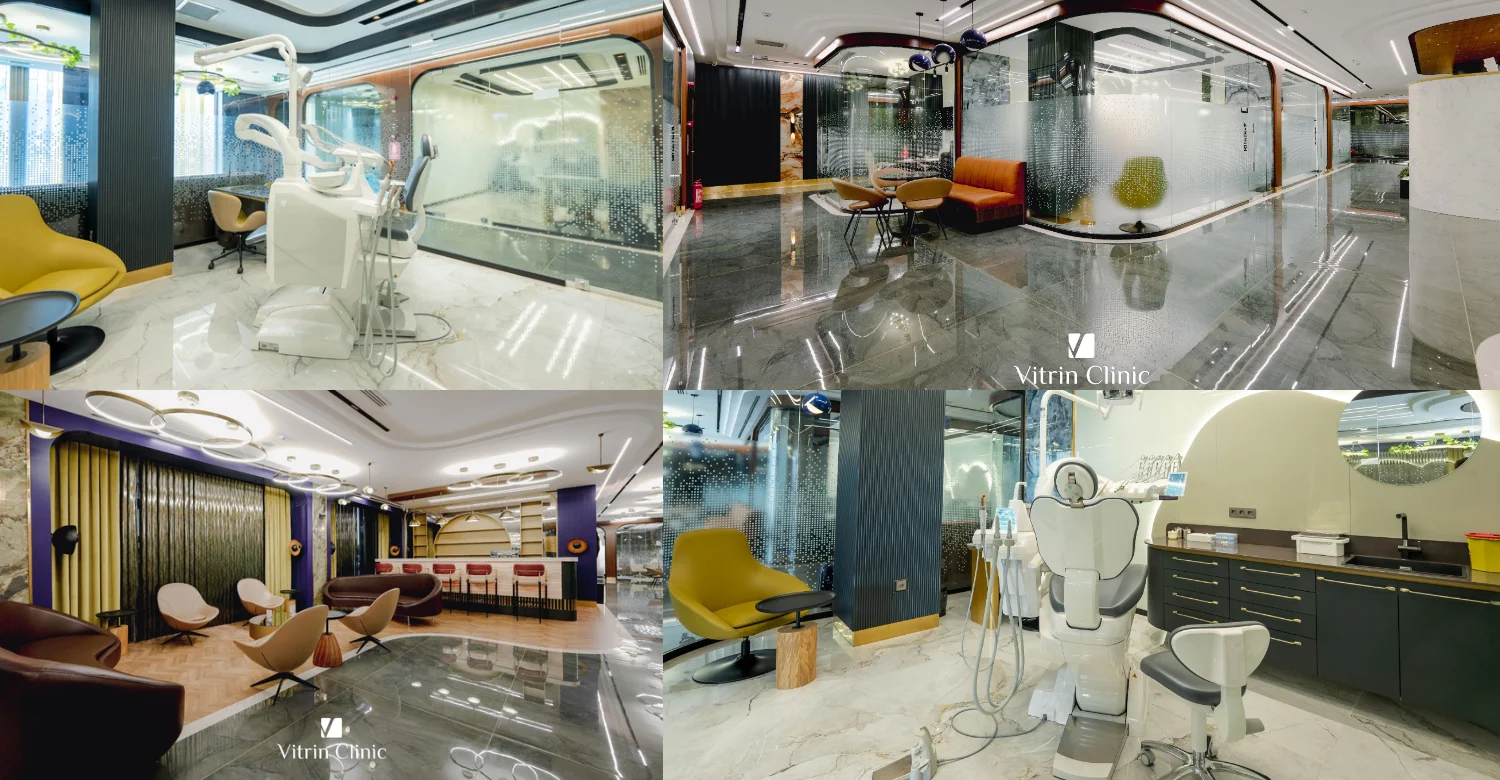
How Can You Find a Wheelchair-Accessible Dental Clinic at Vitrin Clinic in Turkey?
Finding an Accessible Dental Clinic Abroad requires checking the actual facilities and equipment. General accessibility statements do not confirm that every area is suitable. Ask Vitrin Clinic about entrances, lifts, treatment rooms, toilets, and transfer arrangements. Request written confirmation of essential requirements before travelling. This can help identify potential barriers before arrival.
How Can You Confirm Wheelchair Access at Vitrin Clinic Before Booking?
Ask Vitrin Clinic to confirm the complete route through the building. This should include the entrance, reception, waiting area, treatment room, and toilets. Request information about steps, ramps, doorway widths, and lift dimensions. Share your wheelchair measurements when relevant. Access to the main entrance alone does not guarantee access to dental treatment areas.
How Can You Check Whether Vitrin Clinic's Treatment Rooms Meet Your Needs?
Request recent photographs or videos showing the actual treatment rooms. Ask about doorway widths, turning space, and equipment placement. Confirm whether the dental chair can accommodate your positioning requirements. Check whether a caregiver can enter the room. If you need to remain in your wheelchair, ask whether the planned procedure can be performed safely.
What Mobility Assistance Should You Confirm with Vitrin Clinic?
Ask which mobility arrangements the clinic can genuinely provide. Do not assume general patient coordination includes physical assistance. Discuss entering the building, moving between departments, and transferring to dental chairs. Ask whether staff can assist with mobility equipment. If you need trained transfer support, confirm staff experience beforehand. Personal care may require an external caregiver or support worker.
Which Accessible Facilities Should You Ask Vitrin Clinic About?
Before arranging travel, ask about the following facilities:
Step-free access throughout the required areas.
Wheelchair-accessible entrances.
Lift dimensions and availability.
Accessible toilets.
Sufficient treatment-room clearance.
Dental equipment compatible with your needs.
Suitable waiting areas.
Emergency evacuation arrangements.
How Can You Check Vitrin Clinic's Experience Supporting Patients with Disabilities?
Ask whether the clinical team has experience supporting patients with similar requirements. Relevant experience may involve transfers, communication support, and adapted positioning. Find out who will coordinate your arrangements. Also ask whether the dentist can review your medical information before arrival. Specific answers provide more useful information than general statements about accessibility.
What Should You Ask Vitrin Clinic Before Travelling for Dental Treatment?
Before travelling, clarify clinical suitability, accessibility, equipment, and available support. An Accessible Dental Clinic Abroad should provide enough information for informed planning. Written confirmation is particularly important when you depend on mobility equipment or additional assistance. Discuss the following points before booking flights or accommodation.
What Should You Ask Vitrin Clinic About Wheelchair Accessibility?
Check whether you can reach every area required during your appointments. Ask about entrances, lifts, corridors, toilets, and treatment rooms. Clarify whether wheelchair access covers the complete route. Mention any steps, narrow doorways, or restricted areas. Share your wheelchair dimensions and weight when relevant.
Should You Confirm Dental Equipment and Transfer Arrangements Before Arrival?
Yes. Confirm the available equipment and transfer arrangements before travelling. Standard dental chairs may not accommodate every patient's physical requirements. Ask whether transfer aids are available. Explain whether you can transfer independently or need assistance. Confirm whether treatment in your wheelchair is clinically possible. Staff should never attempt unsafe transfers without suitable equipment and training.
Can You Request Mobility Assistance During Dental Appointments at Vitrin Clinic?
You can explain your mobility requirements and ask which assistance is available. However, the type and extent of support need individual confirmation.
Describe whether you need help entering the building or moving through corridors. Ask whether assistance is available throughout your appointments. Personal care may require a caregiver or dedicated support worker.
Can Vitrin Clinic Schedule Appointments Around Your Individual Needs?
Appointment planning should account for mobility, fatigue, medical routines, and treatment duration. Some patients may need longer appointments or additional breaks. Discuss suitable appointment times and recovery requirements. Ask whether procedures can be divided across separate visits. Allow sufficient time for transfers and communication. Patient safety should remain more important than fitting procedures into a tight schedule.
Can You Request Photos or Videos of Vitrin Clinic's Facilities Before Booking?
Yes. Current photographs and videos can help you review the clinic's accessibility. Request images of entrances, lifts, toilets, corridors, and treatment rooms. Videos may show movement between areas and available clearance. However, images cannot confirm exact measurements. Request dimensions and discuss specific barriers during a video consultation.
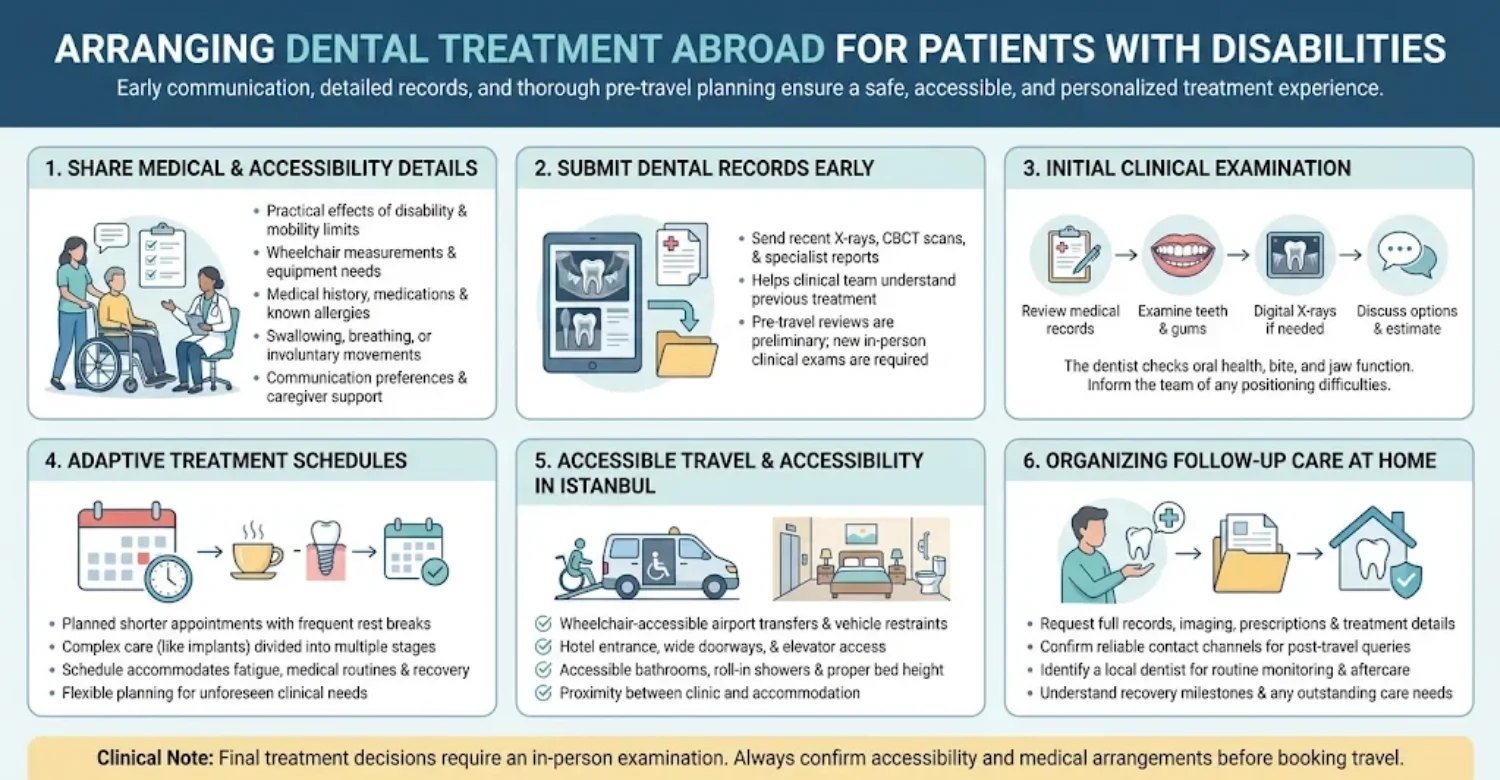
How Can You Arrange Dental Treatment at Vitrin Clinic as a Patient with Disabilities?
Arranging treatment requires early communication about medical history, mobility, and accessibility. Vitrin Clinic can review the information provided before your appointment. However, final treatment decisions depend on an in-person clinical examination. Confirm essential arrangements before booking flights or accommodation. This allows time to discuss possible limitations and practical requirements.
What Medical and Accessibility Information Should You Share Before Travelling?
Share details that could affect treatment, positioning, or medical safety. Relevant information includes:
Your disability and its practical effects.
Mobility limitations and wheelchair measurements.
Previous dental procedures and medical history.
Current medication and known allergies.
Swallowing or breathing difficulties.
Involuntary movements or muscle spasms.
Communication preferences.
Required equipment and caregiver support.
Can You Send Your Dental Records to Vitrin Clinic Before Your Appointment?
Yes. Available dental records can help the clinical team understand your previous treatment. Useful documents include recent X-rays, CBCT scans, treatment summaries, and specialist reports. Medical documents may also identify conditions affecting surgical suitability. Send clear, current records whenever possible. Previous images may not replace new investigations. The dentist will determine whether additional examinations are necessary.
What Happens During Your Initial Dental Examination at Vitrin Clinic in Turkey?
The initial examination helps identify oral health concerns and possible treatment options. The dentist reviews your medical history and examines your teeth and supporting tissues.
The appointment may involve:
Reviewing previous dental and medical records.
Examining the teeth and gums.
Checking the bite and jaw function.
Taking digital X-rays when indicated.
Requesting further imaging when necessary.
Discussing appropriate treatment options.
Preparing an individual treatment estimate.
Tell the clinical team about discomfort or positioning difficulties throughout the examination.
How Can Your Treatment Schedule Accommodate Your Mobility Requirements?
Your schedule should reflect mobility, fatigue, medical routines, and recovery needs. Some patients may benefit from shorter appointments and planned breaks. Complex procedures can require several visits. Implant treatment, for example, may involve separate surgical and restorative stages. The dentist should explain the expected schedule before travel. Allow flexibility if clinical findings require changes.
How Can You Arrange Accessible Transportation and Accommodation in Istanbul?
Transportation and accommodation should match your mobility equipment and support requirements. Confirm the following details before booking:
Wheelchair-accessible airport transfers.
Vehicle dimensions and wheelchair restraints.
Hotel entrance and lift accessibility.
Suitable bathroom facilities.
Bed height and room clearance.
Distance between accommodation and clinic.
Availability of personal assistance.
How Can You Organise Follow-Up Care After Returning Home?
Plan follow-up care before starting international dental treatment. You should receive clear recovery instructions and reliable contact arrangements. Request copies of your treatment records, imaging, prescriptions, and restoration details. Confirm whom to contact if symptoms develop after returning home. Identify a local dentist for routine follow-up where appropriate. Implant patients may need ongoing monitoring. Your treatment plan should also explain any outstanding appointments.
Ready to transform your smile?
Talk to our team and get a personal FREE treatment plan.
What Travel Challenges Should Patients with Disabilities Consider Before Visiting Vitrin Clinic?
International dental travel involves more than attending clinic appointments. Patients should plan for airports, transportation, accommodation, medication, and emergency support. An Accessible Dental Clinic Abroad is only one part of a suitable travel plan. Every stage of the journey should reflect individual requirements.
How Can You Arrange Airport Assistance and Accessible Transfers in Istanbul?
Request airport assistance directly from your airline and the airport. You may need wheelchair support, boarding assistance, or help during connections. Confirm whether you can use your own wheelchair throughout the journey. Ask about special handling and transfer arrangements. Check whether your vehicle can accommodate your wheelchair safely. Notify the airline about medical equipment when required. Remember, airport assistance does not automatically include private hotel transfers.
How Can You Choose Wheelchair-Accessible Accommodation Near Vitrin Clinic?
Choose accommodation based on confirmed accessibility, not location alone. Check bathroom dimensions, shower access, grab rails, lift capacity, and bed height. Ask whether emergency assistance is available. Request written confirmation that your allocated room includes the facilities you need. Ensure sufficient space for wheelchair movement and safe transfers.
How Far Should Your Hotel Be from Vitrin Clinic?
The suitable distance depends on mobility, transportation, and appointment frequency. Nearby accommodation may reduce travel time and physical fatigue. However, a short distance does not always mean an accessible journey. Consider pavements, vehicle access, traffic, and transfer arrangements. Ask about realistic journey times. Extensive treatment may also require suitable recovery facilities.
Which Medication and Medical Equipment Should You Bring to Turkey?
Bring enough prescribed medication for your stay and possible travel delays. Keep medicines in their original packaging whenever possible. Prepare the following items:
A current medication list.
Prescriptions and medical summaries.
Relevant allergy information.
Mobility aids and spare components.
Medical equipment documentation.
Emergency contact information.
Necessary charging equipment.
Check Turkish entry requirements and airline rules for medicines and medical devices. Keep essential medication in hand luggage when permitted. Never change prescribed medication without consulting your healthcare professional.
How Can You Prepare for Unexpected Medical or Accessibility Problems During Your Stay?
Prepare a contingency plan before departure. Identify nearby medical facilities and emergency contact arrangements. Carry copies of important medical information. Ensure caregivers understand emergency procedures. Bring spare supplies for essential mobility equipment.
Check whether your travel insurance covers your disability and planned dental treatment. Review exclusions involving pre-existing conditions and medical evacuation. These preparations can help manage unexpected changes during your stay.
.jpg)
.jpg)
.jpg)
Can a Caregiver Accompany You to Vitrin Clinic During Dental Treatment?
A caregiver may accompany a patient, depending on clinical and clinic arrangements. Their presence can support communication, mobility, and practical needs. However, patient consent and privacy remain important. Confirm companion arrangements before travelling.
Can a Family Member Attend Your Dental Appointments at Vitrin Clinic?
Ask whether a family member can enter the treatment room. This depends on available space, infection-control requirements, and the procedure. A companion may help with communication and practical support. Some procedures may require companions to wait outside. Discuss your preferences before treatment begins.
What Support Can Caregivers Provide During Dental Treatment?
Caregivers can explain established needs and assist with practical arrangements. Their involvement should respect the patient's preferences and independence. They may help with:
Explaining communication preferences.
Supporting mobility arrangements.
Sharing relevant medical information.
Understanding aftercare instructions.
Organising medication schedules.
Coordinating follow-up appointments.
Caregivers should not replace the patient's involvement in treatment decisions. Their support must also respect privacy and consent.
How Is Patient Consent Managed When a Caregiver Is Involved?
The patient should provide consent when they have legal capacity. Having a disability does not automatically mean someone cannot make informed decisions. The dental team should explain treatment, risks, benefits, and alternatives clearly. Communication support should be arranged when necessary. If legal decision-making arrangements apply, the team should verify the authorised person's role.
How Can Vitrin Clinic Coordinate Appointments for Patients and Their Companions?
Appointment planning should consider both patient and companion requirements. Discuss scheduling, waiting arrangements, and accessibility needs. Confirm whether companions can attend consultations and receive relevant instructions. Ask about suitable seating and accessible facilities. Explain the support worker's responsibilities beforehand. Transportation and accommodation arrangements should also consider the companion.
How Much Does Accessible Dental Treatment Cost at Vitrin Clinic Compared with Other Countries?
Dental prices depend on the procedure, clinical complexity, and provider. Accessibility requirements may introduce additional expenses. The following tables reproduce the available price comparisons from the source material. NHS charges should not be compared directly with private dental fees.
How Much Does Dental Treatment Cost at Vitrin Clinic Compared with the USA, UK, Canada, and Australia?
Dental fees vary considerably between countries and clinics. The table provides the available reference figures for each location. Vitrin Clinic prices require confirmation against the proposed treatment plan.
UK
From $27.90
UK dental benchmark
Examination and X-rays: $27.90
Filling: $76.60
Root canal: $76.60
Extraction: $76.60
Crown or bridge: $332.10
Turkey / Vitrin Clinic
From $40
Restorative & general care
Examination and X-rays: Free consultation and required X-rays
Filling: From $40
Root canal: From $100
Extraction: From $50
Crown or bridge: Crown: from $150 per tooth; bridge: from $200 per unit
USA
From $50
US private dental benchmark
Examination and X-rays: $50–350
Filling: $90–340
Root canal: $550–1,850
Extraction: $90–350
Crown or bridge: Crown: $600–2,000; 3-unit bridge: $3,600–7,500
Australia
From $150
Australian dental benchmark
Examination and X-rays: $200–350
Filling: $150–400
Root canal: $900–3,400
Extraction: $200–400
Crown or bridge: Crown: $1,200–2,800; bridge: individual quotation
Canada
From $150
Canadian dental benchmark
Examination and X-rays: $150–405
Filling: $150–350
Root canal: $795–1,355
Extraction: $260–910
Crown or bridge: Crown: $1,073+ lab; 3-unit bridge: $2,916+ lab
How Do Vitrin Clinic's Dental Prices Compare with Germany, France, and Italy?
Dental costs vary across European countries. The following table compares estimated prices for selected dental procedures. Final costs depend on materials, clinical complexity, and treatment specifications.
Germany
From $500
German private dental rates
Single dental implant: $1,800–4,000
All-on-4, one arch: $8,000–15,000
Zirconia crown, per tooth: $500–1,000
Porcelain veneer, per tooth: $600–1,200
Vitrin Clinic (Turkey)
From $150
Restorative & implant pricing
Single dental implant: $700–1,500
All-on-4, one arch: From $2,000
Zirconia crown, per tooth: From $150
Porcelain veneer, per tooth: Not offered
France
From $500
French private dental rates
Single dental implant: $1,189–1,890
All-on-4, one arch: $13,000–20,000
Zirconia crown, per tooth: $500–1,000
Porcelain veneer, per tooth: $850–1,200
Italy
From $600
Italian private dental rates
Single dental implant: $1,800–2,800
All-on-4, one arch: $12,000–18,000
Zirconia crown, per tooth: $700–1,500
Porcelain veneer, per tooth: $600–800
How Much Could You Save at Vitrin Clinic Compared with Your Home Country?
Dental treatment in Turkey may cost less than equivalent private treatment in some countries. However, actual savings depend on the procedures, materials, and clinical requirements. Compare itemised quotations before calculating potential savings.
Use the following formula:
Saving percentage = (Home-country total − Vitrin total) ÷ Home-country total × 100
The table below illustrates how different treatment costs can affect potential savings. These figures are hypothetical examples for calculation purposes, not confirmed Vitrin Clinic prices or guaranteed savings.
Home-country treatment cost | Example Vitrin treatment cost | Potential saving |
$5,000 | $3,000 | 40% |
$8,000 | $4,000 | 50% |
$10,000 | $4,000 | 60% |
$15,000 | $6,000 | 60% |
$20,000 | $8,000 | 60% |
For example, a $10,000 treatment quotation compared with a $4,000 quotation represents a $6,000 difference. This equals a 60% saving before travel and additional expenses.
What Is the Total Cost After Including Flights, Accommodation, and Transportation?
The total cost of dental treatment abroad extends beyond the clinic's quotation. International patients should calculate treatment expenses alongside travel and accessibility requirements.
Consider these potential expenses:
Dental treatment: Procedures, consultations, and required diagnostic imaging.
Flights: Return tickets, baggage fees, and additional seating requirements.
Airport transfers: Accessible vehicles, wheelchair assistance, and suitable transportation.
Accommodation: Hotel rates, accessible rooms, and additional nights.
Personal assistance: Caregivers, support workers, or accompanying family members.
Daily expenses: Meals, local transportation, and essential supplies.
Recovery costs: Medication, recovery supplies, and additional rest days.
Follow-up care: Additional appointments or return flights when clinically necessary.
Allow an additional budget for unexpected schedule changes or extended accommodation. These expenses can affect the overall financial benefit of travelling for dental treatment.
Does Vitrin Clinic's Treatment Price Include Accessibility and Mobility Assistance?
Accessibility services should be confirmed separately unless they appear in the written treatment quotation. Do not assume wheelchair transfers, specialist equipment, or personal assistance are automatically included.
Before travelling, ask Vitrin Clinic to clarify:
Whether accessible transportation is available.
Whether wheelchair assistance can be arranged.
Whether accommodation includes suitable accessibility facilities.
Whether mobility support involves additional charges.
Whether accompanying caregivers can receive logistical assistance.
Request written confirmation of all included services and additional fees. Clarify which arrangements are provided by the clinic and which require separate bookings.
Which Additional Expenses Should International Patients with Disabilities Include in Their Budget?
Additional expenses depend on individual accessibility and support requirements. Some patients may need specialised transportation, accessible accommodation, or personal assistance throughout their stay.
Consider budgeting for:
Accessible hotel rooms and bathroom facilities.
Wheelchair-accessible airport and clinic transfers.
Caregiver or companion accommodation.
Additional baggage for mobility equipment.
Medical equipment transportation or rental.
Extra hotel nights for recovery or schedule changes.
Travel insurance covering relevant medical and accessibility needs.
Unexpected transportation or medical support expenses.
Discuss your requirements before booking flights or accommodation. Allow sufficient recovery time and avoid arranging return travel without considering the planned treatment stages.
How Should You Compare Vitrin Clinic's Treatment Packages with Private Dental Costs Abroad?
Compare packages according to their actual clinical inclusions. A headline price alone cannot establish what a package covers.
Package component | What You Should Confirm |
Consultation | Is the clinical examination included? |
Imaging | Are indicated X-rays or CBCT scans included? |
Surgery | Are implant placement and surgical fees covered? |
Restoration | Are abutments and final teeth included? |
Temporary teeth | Are temporary restorations included? |
Medication | Are prescribed medicines included? |
Transfers | Are accessible vehicles available? |
Accommodation | Are accessible rooms included? |
Follow-up | Which follow-up appointments are covered? |
What Should You Check Before Comparing Vitrin Clinic's Quotation with Overseas Prices?
Compare identical procedures, materials, and treatment stages. Check whether imaging, temporary restorations, and follow-up are included. For implants, confirm the implant system and number of implants. Establish whether the quoted restoration is temporary or final. Ask about additional surgery and possible complications. List accessibility arrangements separately to avoid overlooking extra costs.
What Details Should an Itemised Dental Treatment Quotation Include?
A clear quotation should identify every proposed procedure and its associated cost. It should also explain what is included and what remains uncertain.
Request the following information:
Clinical findings and proposed treatment.
Number of teeth or implants involved.
Diagnostic imaging requirements.
Materials and restoration specifications.
Surgical and laboratory fees.
Temporary and final restorations.
Medication and aftercare.
Follow-up requirements.
Accessibility and transportation costs.
Possible additional expenses.
Ready to transform your smile?
Talk to our team and get a personal FREE treatment plan.
How Does Vitrin Clinic Approach Individual Treatment Planning for International Patients?
Individual treatment planning connects clinical needs with practical accessibility arrangements. Vitrin Clinic should review dental records, medical history, and mobility requirements. Planning should also consider examinations, treatment stages, and recovery. All essential arrangements require confirmation before travelling.
How Are Individual Dental Needs Reviewed Before Travelling?
Initial planning begins with available dental records and medical information. The dentist reviews oral health, previous procedures, and possible treatment requirements. Patients should also explain mobility limitations and communication preferences. Remote reviews can support preliminary discussions but cannot replace an in-person clinical examination. The final treatment plan may change after reviewing current clinical findings.
How Can Patients Explain Their Mobility Requirements Clearly?
Describe your mobility requirements using practical examples. Explain whether you can walk short distances, transfer independently, or remain seated. Share wheelchair dimensions and relevant equipment details. Mention movements or positions that cause discomfort. Photographs or short videos may help explain specific difficulties. Written information can also reduce misunderstandings.
How Can Digital Dental Records Help with Treatment Planning?
Digital records allow dentists to review previous investigations and identify areas requiring further examination. These records may include X-rays, CBCT images, and intraoral scans. They can support preliminary discussions about implants, crowns, and root canal treatment. However, image quality and clinical relevance must be checked. Additional investigations may still be necessary.
How Are Appointments Organised Around Individual Patient Requirements?
Appointments should reflect mobility, fatigue, and medical needs. Complex procedures may require additional time or separate visits. The coordinator should explain the proposed schedule clearly. Patients should understand appointment duration and expected recovery periods. Accessible transportation should also influence appointment planning.
How Can Patients Confirm Accessibility Arrangements Before Arrival?
Request written confirmation of the relevant facilities and services. Ask for photographs, measurements, and details about available assistance. Confirm important arrangements again before departure. Changes involving equipment, staff, or accommodation may affect accessibility. An Accessible Dental Clinic Abroad should explain any limitations before patients travel.
.jpg)
.jpg)
.jpg)
What Limitations Should Patients with Disabilities Consider Before Dental Treatment?
Having a disability does not automatically prevent someone from receiving dental treatment. However, medical conditions and functional limitations may influence treatment suitability. Some patients require additional clinical coordination or specialist support. Understanding possible restrictions helps patients make informed decisions before arranging international care.
Which Medical Conditions Could Influence Dental Treatment Suitability?
Certain medical conditions may affect positioning, healing, breathing, swallowing, or surgical safety. Examples include:
Conditions affecting muscle control.
Neurological disorders.
Significant cardiovascular conditions.
Respiratory disorders.
Conditions affecting immune function.
Bleeding or clotting disorders.
Severe swallowing difficulties.
These conditions do not automatically exclude patients from treatment. Their severity, stability, and associated medication matter. Additional medical advice may sometimes be necessary.
Can Mobility Limitations Affect Dental Treatment Positioning?
Yes. Mobility limitations can affect sitting, reclining, and maintaining dental positions. Joint stiffness and spinal conditions may make standard positioning uncomfortable. The dentist should discuss positioning requirements before treatment. Supportive cushions and adjusted chair angles may help some patients. Certain procedures require specific access, so alternative arrangements may be necessary.
How Can Medication Affect Dental Treatment Planning?
Medication can influence bleeding, healing, sedation, and possible drug interactions. Patients should provide a complete list of current medicines. Never stop prescribed medication independently before treatment. Some medicines require coordination with the prescribing clinician. The dentist should review relevant risks before surgery. Any medication changes must follow appropriate medical advice.
When Might Patients Need Additional Medical Coordination?
Additional coordination may be necessary when a medical condition affects treatment safety. Examples include significant respiratory problems, uncontrolled conditions, or complex surgical histories. The dentist may request medical records or specialist advice. Hospital-based treatment may be more appropriate in certain circumstances. The decision depends on the proposed procedure and available support.
Why Is an Individual Clinical Examination Important Before Treatment?
An individual clinical examination helps determine whether proposed treatment is appropriate. Two patients with the same disability may have different clinical requirements. The dentist considers oral health, medical history, medication, positioning, and communication needs. This review helps identify potential complications and alternative approaches. An Accessible Dental Clinic Abroad should never promise suitability based only on descriptions or photographs.
What Are the Advantages and Disadvantages of Choosing Dental Treatment Abroad?
Dental treatment abroad may offer financial and practical benefits. However, international care also introduces travel, accessibility, and follow-up challenges. Patients should compare the complete treatment experience, not prices alone. Clinical suitability and continuity of care remain important considerations.
What Are the Main Advantages of Dental Treatment Abroad?
Potential advantages may include:
Access to different dental treatment options.
Opportunities to compare international quotations.
Coordinated appointments for suitable treatment plans.
Access to digital dental investigations.
Potential savings on selected private procedures.
An opportunity to combine treatment with a planned stay.
These benefits depend on individual clinical needs and verified facilities. An Accessible Dental Clinic Abroad must also accommodate the patient's specific requirements.
What Are the Possible Disadvantages of Dental Treatment Abroad?
Potential disadvantages include:
Long-distance travel and physical fatigue.
Difficulties arranging accessible transportation.
Additional accommodation expenses.
Possible communication barriers.
Complications after returning home.
Additional travel for further treatment.
Limited access to the original treating dentist.
Patients should consider these challenges before committing to treatment abroad.
What Side Effects and Recovery Considerations Should Patients Understand?
Dental procedures may cause temporary discomfort, swelling, bleeding, or sensitivity. Expected effects depend on the procedure and individual health circumstances.
Which Side Effects Can Occur After Dental Procedures?
Common temporary effects include local soreness, mild swelling, and tenderness. Implant surgery and extractions may cause postoperative discomfort. Some patients experience temporary difficulty chewing. Root canal treatment may also cause tenderness. Persistent or worsening symptoms require professional dental advice. Severe swelling, uncontrolled bleeding, or breathing difficulties require urgent medical attention.
How Can Patients Make Dental Recovery More Manageable?
Recovery arrangements should reflect the procedure and individual mobility requirements. Helpful preparations include:
Arranging suitable transportation after treatment.
Following written aftercare instructions.
Preparing appropriate meals.
Keeping prescribed medication accessible.
Allowing sufficient time for rest.
Arranging caregiver assistance when necessary.
Confirming emergency contact arrangements.
What Should Patients Do If Unexpected Symptoms Develop?
Contact the treating dental team if symptoms worsen or recovery changes unexpectedly. Seek urgent medical attention for spreading facial swelling or breathing difficulties. Do not delay emergency care while waiting for an international clinic. Arrange local medical support before travelling. Keep treatment records available for other healthcare professionals.
.jpg)
.jpg)
.jpg)
What Can Patients Do to Relieve Dental Discomfort Before Treatment?
Dental discomfort should be managed according to its cause and individual medical circumstances. Home care may offer temporary relief but cannot replace necessary dental treatment.
Which Measures May Help Relieve Discomfort Before a Dental Appointment?
Avoid very hot or cold foods if they increase discomfort. Choose softer meals and maintain gentle oral hygiene. Avoid chewing on the affected side. An external cold compress may help with certain types of swelling. Never apply aspirin directly to the gums. Persistent dental pain requires a clinical examination.
What Should Patients Know Before Taking Pain-Relief Medication?
Medication safety depends on the product, label instructions, health conditions, and other medicines. People with liver or kidney problems should seek professional advice. Pregnancy and breastfeeding also require individual guidance. Never combine medicines without checking their ingredients. Suspected overdose requires immediate professional medical advice.
Clinical Note: Why Should Accessibility and Clinical Suitability Be Considered Together?
Accessibility and clinical suitability are two separate requirements. A physically accessible building does not guarantee appropriate care for every medical condition. Dental teams should review positioning, oral health, communication, and medical history together. Equipment limitations should be explained before treatment. Patients should understand possible alternatives and referrals. This approach supports informed decisions without promising that every procedure can be accommodated.
Dr Rifat's Clinical Opinion: Why Does Individual Treatment Planning Matter?
Patients should not be defined by their mobility limitations alone. Their dental needs require careful clinical consideration. However, treatment arrangements may need individual adjustments. Reviewing medical history, oral health, positioning, and communication helps establish an appropriate approach. Patient safety and realistic planning should always remain priorities.
Ready to transform your smile?
Talk to our team and get a personal FREE treatment plan.
What Do We Notice Clinically When Treating Patients with Mobility Limitations?
Mobility limitations can influence positioning, appointment duration, oral hygiene, and recovery support. Some patients maintain good oral health independently. Others need assistance cleaning difficult-to-reach areas. Limited hand movement may affect brushing and interdental cleaning. Muscle weakness can also influence positioning tolerance. These differences make individual treatment planning essential.
Is an Accessible Dental Clinic Abroad the Right Choice for Your Needs?
An Accessible Dental Clinic Abroad may suit patients whose clinical, physical, and travel requirements can be accommodated. Affordability should not be the only consideration.
Before deciding, consider the following:
Can the clinic accommodate your wheelchair?
Do treatment rooms meet your positioning requirements?
Will the dentist review your medical history?
Is the necessary equipment available?
Are transportation and accommodation accessible?
Is postoperative support properly organised?
Can you arrange follow-up care after returning home?
Patients considering Vitrin Clinic in Istanbul should confirm these arrangements individually. Request written information before booking. The decision should balance clinical suitability, accessibility, cost, and continuity of care.
What Dental Treatments Are Available at Vitrin Clinic in Turkey?
Vitrin Clinic offers cosmetic, restorative, and specialist dental treatments in Istanbul. Recommendations depend on individual clinical needs.
Hollywood Smile: A personalized full smile makeover using selected materials and digital smile design.
Dental Implants: Fixed tooth replacement designed to restore function and appearance.
Subperiosteal Implants: An option for selected patients with significant jawbone loss, potentially avoiding conventional bone grafting.
Invisalign: Clear aligner treatment without traditional metal brackets.
Dental Crowns: Restorations designed to protect damaged teeth, including same-day CEREC options when suitable.
Dental Bridges: Traditional and zirconia options for replacing missing teeth.
Periodontics: Treatments for gum disease, gum recession, and supporting bone problems.
Gingival Esthetics: Gum reshaping for selected concerns, including uneven gum contours.
Endodontics: Root canal treatment to address infection inside teeth.
Teeth Whitening: Professional options for improving the shade of natural teeth.
Same Visit Dentistry: Selected fillings, root canal treatments, and implant procedures may be organised during your stay when clinically suitable.
Reference

Medically reviewed by
Dr. Rifat AlsamanDr. Rifat Alsaman has more than 5 years of clinical experience in dentistry and currently serves as the Head of the Medical Team at Vitrin Clinic. He is dedicated to providing exceptional patient care, overseeing treatment planning, and ensuring the highest clinical standards across the team. His expertise, attention to detail, and commitment to continuous professional development have helped countless patients achieve healthier, more confident smiles.
More in Discovery & Decision
View all 19 min readHow Much Time Should You Take Before Agreeing to Dental Treatment?There is no single waiting period that suits every patient. The right time to decide on dental treatment can be a few hours, a few days, or several weeks. It depends on how urgent your condition is, how complex the procedure is, and how ready you feel.
 32 min readIs Dental Treatment Abroad a Suitable Option for Older Adults?Dental treatment abroad for seniors can provide access to restorative care and coordinated treatment.
 19 min readHow Do Dental Clinics Use Patient Photos, and Do They Need Your Permission?Dental patient photo consent is your permission for a dental clinic to take, store, and use photographs of your teeth, smile, or face. Clinics use these images to support diagnosis, plan treatment, track progress, and record final results.
 19 min readCan You Get Dental Treatment Abroad If You Have Dental Anxiety?Dental treatment abroad with anxiety is possible with careful preparation, clear communication, and individualised clinical planning.
Still have a question?
Our patient coordinators answer every day of the week: before, during and long after your treatment.