Can You Get Dental Treatment Abroad If You Have Dental Anxiety?
Dental treatment abroad with anxiety is possible with careful preparation, clear communication, and individualised clinical planning.

Dental treatment abroad with anxiety is possible with careful preparation, clear communication, and individualised clinical planning. Many patients postpone dental care because of previous painful experiences, fear of injections, or uncertainty about procedures. Travelling abroad can introduce additional concerns, including unfamiliar surroundings, language barriers, and recovery arrangements. However, understanding your options can make treatment more manageable. This guide explains dental anxiety, sedation options, preparation, recovery, and dental treatment costs in Turkey, the UK, and the USA.
Key Takeaways
Dental anxiety does not automatically prevent treatment abroad.
Identifying personal triggers helps dentists plan appropriate support.
Behavioural techniques, local anaesthesia, and sedation serve different purposes.
Sedation requires medical screening, qualified supervision, and appropriate monitoring.
Share your medical history and dental records before travelling.
Request a written treatment plan and itemised quotation.
Confirm accommodation, transport, escort requirements, and recovery arrangements.
Arrange follow-up care and retain your dental records after returning home.
Ready to transform your smile?
Talk to our team and get a personal FREE treatment plan.
Can You Travel to Turkey for Dental Care If You Have Dental Anxiety?
Yes. Dental anxiety does not automatically mean you must postpone treatment abroad. The right approach depends on your anxiety levels, medical history, and planned procedures. Some patients benefit from reassurance and behavioural techniques, while others may need additional support. Any sedation option must be clinically appropriate. Before treatment, understand the proposed procedures, monitoring arrangements, and emergency protocols.
How Are Dental Anxiety, Fear, and Phobia Different?
Dental anxiety involves worry about dental visits. Dental fear describes a stronger reaction to specific situations. Dental phobia involves persistent, intense fear that can prevent necessary care. A systematic review involving 72,577 adults estimated dental fear and anxiety prevalence at 15.3%. Severe dental fear affected approximately 3.3%.
Dental anxiety: Nervousness before or during appointments.
Dental fear: Strong reactions to specific dental situations.
Dental phobia: Severe fear that interferes with receiving dental care.
Why Do Patients Avoid Dental Appointments for Years?
Previous painful experiences, embarrassment, financial concerns, and uncertainty can contribute to avoidance. Delaying appointments may allow tooth decay, gum disease, and infections to progress. Travelling abroad can introduce further worries about communication, clinical standards, and recovery. Written treatment plans and confirmed appointments help reduce uncertainty. Dental anxiety should not prevent urgent care. Persistent pain, swelling, or suspected infection requires prompt dental attention. Breathing difficulties, swallowing problems, or rapidly spreading swelling require emergency medical care.
.jpg)
.jpg)
Why Can Dental Treatment Feel Overwhelming?
Dental anxiety can develop from psychological, physical, or environmental triggers. Previous painful experiences, fear of injections, unfamiliar surroundings, or feeling unable to control the situation can increase anxiety. Understanding these triggers helps us address individual concerns and provide more suitable support throughout treatment.
What Causes Dental Fear?
Common triggers include:
Fear of injections, drilling sounds, vibration, or pressure.
Previous painful or traumatic dental experiences.
Feeling unable to communicate or request breaks.
Embarrassment about missing teeth, decay, or gum problems.
Language barriers and unfamiliar clinical environments.
Local anaesthesia prevents pain during many procedures, although pressure and movement may remain noticeable. Explaining expected sensations beforehand can reduce uncertainty. Patients should also feel comfortable discussing previous experiences privately. A hand signal can provide a simple way to request a pause when clinically safe.
How Do Dentists Evaluate Dental Anxiety?
Dentists consider anxiety severity, medical history, previous experiences, and planned procedures. These factors help determine suitable comfort measures.
How Can You Identify Your Dental Fears?
Explain which situations cause the strongest reactions. These might include needles, instruments, unfamiliar sounds, previous surgery, or lengthy appointments.
Identifying triggers before treatment allows clinicians to adapt communication and appointment arrangements.
How Do Dentists Classify Anxiety Levels?
The following descriptions provide general guidance rather than formal diagnoses.
Level | Typical experience |
Mild | Nervousness before appointments |
Moderate | Difficulty relaxing during treatment |
Severe | Significant distress or treatment avoidance |
Dental phobia | Persistent fear preventing necessary care |
Can Dental Anxiety Questionnaires Help?
Yes. The Modified Dental Anxiety Scale (MDAS) is a commonly used questionnaire. It contains five questions about situations such as injections, drilling, and waiting for treatment. Scores range from 5 to 25. A score of 19 or above commonly indicates high dental anxiety. However, results support clinical judgement rather than independently determining treatment or sedation suitability.
Why Must Dentists Review Your Medical History?
Medical history helps identify potential risks before treatment or sedation. Clinicians should review:
Existing medical conditions and prescribed medication.
Allergies and previous anaesthetic reactions.
Pregnancy or breastfeeding.
Relevant liver, kidney, respiratory, and cardiovascular conditions.
Previous sedation experiences.
Never stop prescribed medication without medical advice.
Which Treatments Can Help Manage Dental Anxiety?
Options include behavioural techniques, local anaesthesia, conscious sedation, and general anaesthesia. Their suitability depends on clinical needs, medical history, anxiety severity, and patient preferences.
How Can Behavioral Techniques Reduce Dental Fear?
Behavioral techniques help patients manage emotional reactions and physical tension. They can be used independently or alongside other approaches.
Technique | How It Helps |
Controlled breathing | Helps manage physical tension |
Muscle relaxation | Encourages physical relaxation |
Gradual familiarisation | Introduces dental procedures progressively |
Stop signal | Allows patients to request pauses |
Clear explanations | Reduces uncertainty about treatment |
How Does Local Anaesthesia Help?
Local anaesthesia temporarily blocks sensation in the treatment area. It allows many procedures to take place without pain while patients remain awake. However, it does not directly eliminate psychological anxiety. Dentists should explain injections and confirm adequate numbness before proceeding.
Can Sedation Help You Relax During Dental Treatment?
Sedation may reduce anxiety during suitable procedures. Its effects depend on the technique, medication, and individual response.
Oral sedation: Medication is taken before a planned procedure. Effects can include drowsiness, dizziness, and temporary memory impairment.
Intravenous sedation: Medication is delivered through a vein. Patients generally remain responsive during conscious sedation, although awareness and memory may change.
Both techniques require appropriate supervision and monitoring. Patients must understand recovery restrictions and transport arrangements beforehand.
When Might General Anaesthesia Be Considered?
General anaesthesia produces unconsciousness during dental procedures. It requires specialist anaesthetic care and an appropriately equipped facility. Clinicians may consider it for selected complex cases or when other approaches are unsuitable. Severe anxiety alone does not automatically justify general anaesthesia.
What Are the Benefits and Limitations of Anxiety Management Options?
Approach | Potential Benefit | Limitation |
Behavioural techniques | Accessible support for tension | May not manage severe phobia alone |
Local anaesthesia | Controls procedural pain | Does not directly treat psychological fear |
Nitrous oxide | Short-acting conscious sedation | May be unsuitable for some patients |
Oral sedation | Helps reduce anxiety | Effects and recovery vary |
Intravenous sedation | Helps manage significant anxiety | Requires trained personnel and monitoring |
General anaesthesia | Allows selected procedures during unconsciousness | Greater medical complexity and recovery requirements |
What Side Effects Can Occur After Dental Sedation?
Possible effects include:
Drowsiness or dizziness.
Nausea or vomiting.
Headache.
Temporary memory impairment.
Reduced coordination.
Changes in breathing or circulation.
Potential complications include excessive sedation and cardiovascular or respiratory changes. Appropriate screening, monitoring equipment, trained personnel, and emergency preparation help manage these risks.
Which Anxiety Management Options Suit Different Patients?
Patient Needs | Possible Approach |
Mild nervousness | Reassurance and controlled breathing |
Moderate anxiety | Behavioural techniques and local anaesthesia |
Significant anxiety | Individual consideration of conscious sedation |
Severe dental phobia | Specialist anxiety management and psychological support |
Complex clinical needs | Individual planning with relevant specialists |
How Should You Prepare Before Travelling to Vitrin Clinic in Turkey?
Preparing for dental treatment abroad with anxiety helps you communicate concerns and understand available options. Sharing your medical and dental history allows our clinical team to review your needs before arrival.
What Information Should You Share?
Before travelling, provide:
Previous dental experiences and procedures.
Specific anxiety triggers and concerns.
Current medications, medical conditions, and allergies.
Recent dental X-rays and clinical reports.
Clear photographs of your teeth and gums.
Relevant implant or surgical records.
Photographs and remote records cannot establish a complete diagnosis. Additional examinations or imaging may be necessary after arrival.
Why Should You Request a Written Treatment Plan?
A written plan should explain proposed procedures and their clinical purpose. It should distinguish confirmed findings from provisional recommendations. Request separate costs for treatment, imaging, sedation, and follow-up. Clarify exclusions and potential additional charges before confirming travel arrangements.
How Can You Verify Sedation Availability and Safety?
Do not assume every clinic offers every sedation technique. Confirm:
Which sedation methods are available?
Who administers and monitors sedation.
Relevant professional qualifications and training.
Monitoring equipment and emergency protocols.
Fasting instructions and medication requirements.
Escort, transport, and recovery arrangements.
Ready to transform your smile?
Talk to our team and get a personal FREE treatment plan.
What Should You Expect During Your First Dental Appointment at Vitrin Clinic?
Your first appointment at Vitrin Clinic includes discussing your concerns, reviewing your dental history, and examining your oral health. We then explain suitable treatment options, expected stages, and comfort measures before proceeding.
Meeting the Dental Team
We discuss your expectations, previous experiences, and concerns about injections, drilling, or lengthy appointments. You can ask who will perform each procedure and how treatment will be organised.
Examining Your Teeth and Oral Health
The dentist examines your teeth, gums, and surrounding oral tissues. Your bite and relevant jaw symptoms are also considered. This helps identify decay, inflammation, infection, and damaged restorations.
Using Digital Imaging When Necessary
Dental X-rays can reveal problems that are not visible during examination. CBCT imaging may be recommended for specific clinical indications. Intraoral scanning captures digital information about your teeth and oral structures.
Every investigation should have a clear clinical purpose.
Reviewing Treatment Options and Consent
We explain suitable options, their benefits, limitations, and potential risks. You should understand alternative treatments and the consequences of delaying care.
Informed consent means understanding and voluntarily accepting the proposed treatment. You can ask questions or withdraw consent before or during treatment.
Agreeing on Comfort Measures
Discuss hand signals, planned breaks, step-by-step explanations, and comfortable positioning before treatment begins. Any pause must be coordinated with the clinical team.


.jpg)
How Does Vitrin Clinic Personalise Treatment Plans for Anxious Patients?
At Vitrin Clinic, treatment planning considers oral health, clinical needs, and individual concerns.
Discussing anxiety: We identify previous experiences and specific triggers.
Reviewing clinical findings: Recommendations follow examination and appropriate investigations.
Organising appointments: Schedules consider treatment priorities, procedure duration, and recovery.
Explaining treatment stages: Patients receive information about expected sensations and postoperative care.
Coordinating international care: We organise appointments and provide relevant treatment information and aftercare guidance.
How Can You Manage Anxiety During Lengthy Dental Appointments in Vitrin Clinic?
Long appointments require careful scheduling, communication, and recovery planning.
Divide complex treatment: Some procedures can be organised into shorter appointments when clinically appropriate.
Arrange breaks: Agree on a pause signal and planned rest periods.
Report discomfort: Tell your dentist about pain, pressure, nausea, or distress.
Reduce fatigue: Discuss shorter sessions or additional recovery time.
Know when to stop: Treatment may need pausing if safety or cooperation becomes compromised.
What Should You Expect After Dental Treatment with Sedation at Vitrin Clinic ?
Recovery after dental treatment with sedation depends on the medication used, the procedure performed, and your individual response. You may feel sleepy, dizzy, or less alert for several hours. Recovery instructions vary by sedation type, so follow the clinical team's guidance before travelling, driving, or returning to normal activities.
Understanding Recovery and Monitoring
The clinical team checks recovery against appropriate discharge criteria. You should receive written instructions, medication guidance, and emergency contact details.
Arranging an Escort and Transport
Many sedation procedures require a responsible adult escort. Sedation can temporarily affect judgement, coordination, and memory. After intravenous sedation, restrictions commonly apply for 24 hours. These may include avoiding:
Driving or cycling.
Operating machinery.
Alcohol consumption.
Work and important decisions.
Follow your sedation team's specific instructions.
When Can You Safely Fly Home?
There is no universal waiting period after every sedation technique. Flight timing depends on recovery, the procedure, and individual circumstances. Obtain written travel advice from your treating clinician before booking your return flight.
Which Symptoms Require Urgent Medical Attention?
Seek urgent medical help for:
Difficulty breathing or swallowing.
Rapidly increasing facial or neck swelling.
Severe or uncontrolled bleeding.
Sudden changes in vision.
Signs of a severe allergic reaction.
Significant deterioration in your general condition.
Breathing or swallowing difficulties require emergency medical attention.
How Much Does Dental Treatment Abroad Cost When You Have Dental Anxiety?
The total cost depends on the dental procedure, clinical complexity, and any additional anxiety-management support required. The following figures provide an indicative comparison, not a guaranteed quotation.
Can Managing Dental Anxiety Increase Treatment Costs?
Anxiety management may increase costs when medication, specialist sedation, or additional monitoring is required. Behavioral support may not involve additional fees.
Local anaesthesia may be included in the procedure fee or charged separately. Conscious sedation requires additional staffing and monitoring. General anaesthesia involves more extensive specialist arrangements.
How Much Does Dental Treatment Cost at Vitrin Clinic?
Vitrin Clinic publishes starting prices for selected dental procedures in Istanbul.
Extractions & Root Canal
From $50
Vitrin Clinic price
Simple tooth extraction: From $50
Root canal treatment: From $100
Pain-free infection & damaged tooth care
Dental Crowns
From $150 per tooth
Vitrin Clinic price
Zirconia crown: From $150 per tooth
E.max crown: From $180 per tooth
CEREC same-day crown: From $200 per tooth
Preventive & Fillings
From $30
Vitrin Clinic price
Professional teeth cleaning: From $30
Composite filling: From $40
Routine hygiene & tooth-colored restoration
How Can You Calculate Potential Savings at Vitrin Clinic?
Use the following calculation to compare Vitrin Clinic prices with equivalent treatment quotations in the USA and UK:
Comparison | Calculation |
USA vs Vitrin Clinic | (US price − Vitrin price) ÷ US price × 100 |
UK vs Vitrin Clinic | (UK price − Vitrin price) ÷ UK price × 100 |
For example, a procedure costing $5,000 in the USA compared with $3,000 at Vitrin Clinic represents a potential saving of 40%, before travel expenses. This is an illustration, not a guaranteed saving.
How Do Dental Treatment Costs Compare in Turkey, the UK, and the USA?
The following figures are based on the 2026 professional guide tariff supplied for this article. They are not Vitrin Clinic prices.
UK Private
From 23
UK private clinic benchmark
Examination and X-rays: 23–180+
Filling: 75–280
Root canal: 179–900
Extraction: 90–292
Abscess treatment: Variable
Turkey Guide
From 2,475
Turkish Dental Association minimum fee guide reference
Examination and X-rays: 2,480–3,690
Filling: 3,375–5,300
Root canal: 4,610–10,350
Extraction: 2,475–4,950
Abscess treatment: 8,790–11,165
USA
From 50
US private clinic benchmark
Examination and X-rays: 50–350
Filling: 90–450
Root canal: 500–1,500
Extraction: 75–800
Abscess treatment: Variable
Which Factors Can Change Your Final Dental Treatment Cost?
Your final quotation depends on:
Number and location of affected teeth.
Treatment complexity and specialist involvement.
Infection severity and additional procedures.
Imaging and laboratory requirements.
Sedation, staffing, and monitoring.
Follow-up appointments and postoperative care.
What Should an Overseas Dental Treatment Package Include?
Package Component | What to Confirm |
Clinical care | Procedures and appointments |
Diagnostics | Examination and required imaging |
Anxiety support | Available comfort measures |
Sedation | Technique, fees, and monitoring |
Travel | Hotel and transport arrangements |
Aftercare | Reviews and emergency contacts |
Is Dental Treatment in Turkey Less Expensive Than in the UK or USA?
Private dental treatment in Turkey may cost less than comparable treatment in the UK or USA. However, comparisons must consider equivalent procedures, materials, and clinical standards. International patients should also budget for flights, accommodation, transfers, and possible follow-up travel. The lowest initial quotation may not represent the lowest overall cost.
Ready to transform your smile?
Talk to our team and get a personal FREE treatment plan.
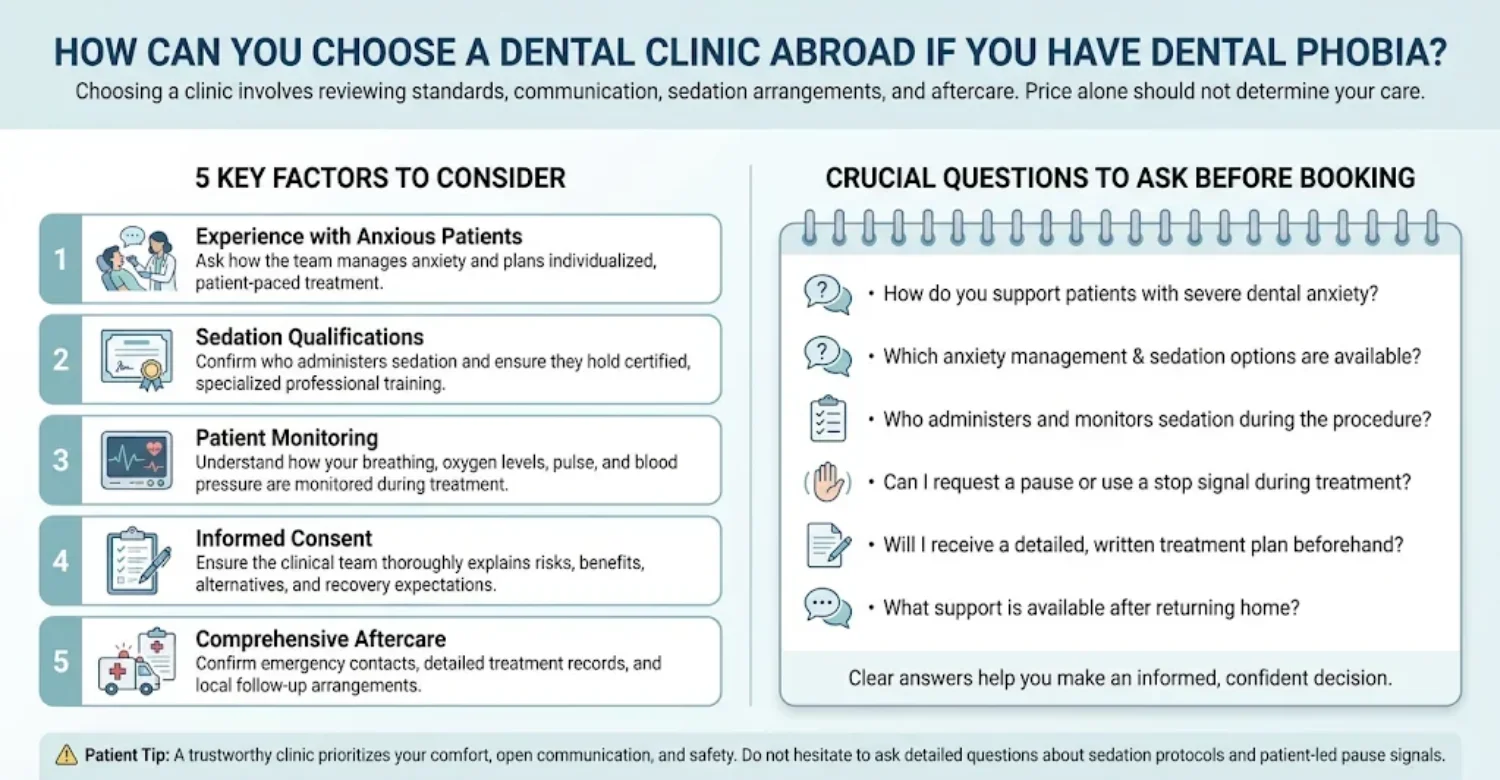
How Can You Choose a Dental Clinic Abroad If You Have Dental Phobia?
Choosing a clinic involves reviewing clinical standards, communication, sedation arrangements, and aftercare. Price alone cannot determine whether treatment is suitable.
Consider these five factors:
Experience with anxious patients: Ask about anxiety management and individual treatment planning.
Sedation qualifications: Confirm who administers sedation and their professional training.
Patient monitoring: Understand how breathing, oxygen levels, pulse, and blood pressure are monitored.
Informed consent: Ensure the team explains risks, benefits, alternatives, and recovery.
Aftercare: Confirm emergency contacts, treatment records, and follow-up arrangements.
What Should You Ask Before Booking?
How do you support patients with severe dental anxiety?
Which anxiety management options are available?
Who administers and monitors sedation?
Can I request a pause during treatment?
Will I receive a written treatment plan?
What support is available after returning home?
Clear answers help you make an informed decision.
What Follow-Up Care Do You Need After Returning Home?
Follow-up care remains essential after international dental treatment. It helps monitor healing, identify potential complications, and check that your treatment is progressing as expected. Before travelling home, we provide aftercare instructions and explain when to contact Vitrin Clinic if you have concerns.
Keeping Your Dental Records
Request a complete treatment summary, relevant imaging, materials used, and medication instructions. These records help local dentists understand your treatment history.
Recognising Recovery Symptoms
Some tenderness, swelling, and sensitivity can occur after dental procedures. However, worsening pain, increasing swelling, fever, or persistent bleeding requires professional advice.
Breathing or swallowing difficulties require emergency medical attention.
Staying in Contact with Your Treating Dentist
Remote consultations can help address recovery questions. However, photographs and video calls cannot replace every clinical examination. Your clinic should explain when an in-person review is necessary.
Maintaining Long-Term Dental Care
Arrange follow-up appointments after returning home. Share your treatment records with your local dentist and discuss unresolved symptoms.
Regular dental visits help identify problems before they progress. Patients with persistent dental phobia may benefit from CBT and gradual familiarisation.
Clinical Considerations for Managing Dental Anxiety
Dental anxiety should be considered alongside oral health and treatment complexity. Sedation is not automatically the first option. Behavioral support, effective local anaesthesia, and clear communication remain important.
Dr Rifat Alsaman's Clinical Perspective
"The first priority is understanding why a patient needs dental treatment. We must also understand what makes them uncomfortable. Their treatment plan should address clinical needs and individual concerns. Patient safety must guide every decision, including anxiety management."
Managing Discomfort While Waiting for Dental Treatment
Simple measures may help manage temporary discomfort:
Choose soft foods when chewing causes discomfort.
Avoid very hot or cold foods if teeth feel sensitive.
Maintain gentle oral hygiene.
Use suitable pain relief according to professional advice and product instructions.
Seek dental advice if symptoms persist or worsen.
Medication suitability depends on medical history and other medicines. Home remedies cannot replace necessary dental treatment.
.jpg)
.jpg)
.jpg)
What Are the Benefits and Limitations of Dental Treatment Abroad?
International dental care may offer financial and practical advantages. However, travelling also creates additional responsibilities.
Potential advantages:
Access to different treatment options.
Potentially lower private treatment costs.
Opportunity to organise multiple appointments.
International patient coordination.
A planned treatment journey.
Potential limitations:
Additional travel and accommodation expenses.
Possible communication difficulties.
More complicated follow-up arrangements.
Limited access to the original treating dentist.
Further travel costs if complications require additional treatment.
Practical Tips for Patients with Dental Anxiety
Share Your Fears Early: Explain previous experiences and specific triggers.
Prepare Your Medical History: Disclose conditions, allergies, and medications.
Ask Questions: Understand procedures, expected sensations, and recovery.
Agree on a Stop Signal: Establish a way to request a pause.
Avoid Rushing Decisions: Review your treatment plan and alternatives.
Plan Your Appointments: Allow time for rest and recovery.
Follow Clinical Instructions: Follow pre-treatment and postoperative guidance.
Arrange Support: Organise an accompanying person when required.
Keep Your Records: Request treatment summaries and imaging.
Attend Follow-Up Visits: Maintain communication after returning home.
Why Choose Vitrin Clinic?
Vitrin Clinic focuses on individual treatment planning and clear communication for international patients.
Individual Treatment Plans: Recommendations based on oral health and clinical needs.
Experienced Clinical Team: Dentists working across different areas of dental care.
Digital Dentistry: Modern scanning and diagnostic technologies when indicated.
Clear Communication: Explanations of procedures, treatment stages, and recovery.
International Patient Support: Assistance with appointments, accommodation, and travel arrangements.
Transparent Pricing: Written treatment plans and itemised quotations.
Continued Aftercare: Post-treatment guidance and follow-up arrangements.
A More Comfortable Dental Experience at Vitrin Clinic
Our team aims to make your dental journey easier to understand and navigate through:
Patient-centred communication.
Personalised appointment coordination.
A welcoming clinical environment.
Organised treatment schedules.
International patient assistance.
Ongoing communication before and after treatment.
At Vitrin Clinic, every detail matters in making your dental journey clearer and easier to navigate.
.jpg)
.jpg)
.jpg)
What Dental Treatments Are Available at Vitrin Clinic in Turkey?
Vitrin Clinic offers cosmetic, restorative, and specialist dental treatments in Istanbul. Recommendations depend on individual clinical needs.
Hollywood Smile: A personalized full smile makeover using selected materials and digital smile design.
Dental Implants: Fixed tooth replacement designed to restore function and appearance.
Subperiosteal Implants: An option for selected patients with significant jawbone loss, potentially avoiding conventional bone grafting.
Invisalign: Clear aligner treatment without traditional metal brackets.
Dental Crowns: Restorations designed to protect damaged teeth, including same-day CEREC options when suitable.
Dental Bridges: Traditional and zirconia options for replacing missing teeth.
Periodontics: Treatments for gum disease, gum recession, and supporting bone problems.
Gingival Esthetics: Gum reshaping for selected concerns, including uneven gum contours.
Endodontics: Root canal treatment to address infection inside teeth.
Teeth Whitening: Professional options for improving the shade of natural teeth.
Same Visit Dentistry: Selected fillings, root canal treatments, and implant procedures may be organised during your stay when clinically suitable.
Ready to transform your smile?
Talk to our team and get a personal FREE treatment plan.
How Can You Make Dental Treatment Abroad with Anxiety More Manageable?
Dental treatment abroad with anxiety starts with understanding your concerns, reviewing your oral health, and discussing suitable comfort options. Clear communication, realistic planning, and reliable aftercare can make the experience more manageable. At Vitrin Clinic, we consider your clinical needs and individual concerns when planning treatment in Istanbul.
Ready to explore your options? Contact Vitrin Clinic for your FREE Treatment Plan and take the first step towards your new smile..
References

Medically reviewed by
Dr. Rifat AlsamanDr. Rifat Alsaman has more than 5 years of clinical experience in dentistry and currently serves as the Head of the Medical Team at Vitrin Clinic. He is dedicated to providing exceptional patient care, overseeing treatment planning, and ensuring the highest clinical standards across the team. His expertise, attention to detail, and commitment to continuous professional development have helped countless patients achieve healthier, more confident smiles.
More in Discovery & Decision
View all 19 min readHow Much Time Should You Take Before Agreeing to Dental Treatment?There is no single waiting period that suits every patient. The right time to decide on dental treatment can be a few hours, a few days, or several weeks. It depends on how urgent your condition is, how complex the procedure is, and how ready you feel.
 34 min readAre Dental Clinics Abroad Accessible for Patients with Disabilities or Mobility Issues?Finding an Accessible Dental Clinic Abroad involves more than checking treatment prices.
 32 min readIs Dental Treatment Abroad a Suitable Option for Older Adults?Dental treatment abroad for seniors can provide access to restorative care and coordinated treatment.
 19 min readHow Do Dental Clinics Use Patient Photos, and Do They Need Your Permission?Dental patient photo consent is your permission for a dental clinic to take, store, and use photographs of your teeth, smile, or face. Clinics use these images to support diagnosis, plan treatment, track progress, and record final results.
Still have a question?
Our patient coordinators answer every day of the week: before, during and long after your treatment.