Dental Implant
October 21, 2026
What Are the Main Peri Implantitis Risk Factors and How Can You Prevent Them?
 Dr. Rifat Alsaman

Peri Implantitis risk factors include poor plaque control, smoking, previous gum disease, diabetes, and implant crowns that are hard to clean. Studies suggest roughly one in five implant patients develops Peri Implantitis at some point. Most cases start silently, so regular checks matter more than waiting for pain.
At Vitrin Clinic, our team assesses inflamed implants, explains the findings clearly, and builds a personalized treatment plan. Book a consultation to have a problematic implant checked.
Quick facts | Details |
Patients affected by Peri Implantitis | About 20% (patient level, meta-analyses) |
Patients affected by peri-implant mucositis | About 43% (weighted mean) |
Strongest risk factors | Poor plaque control, previous periodontitis, smoking |
Typical treatment time | 4–12 weeks, plus long-term maintenance |
Treatment in Turkey | From about $100 for non-surgical care |
Ready to transform your smile?
Talk to our team and get a personal FREE treatment plan.
What Is Peri Implantitis ?
Peri Implantitis is an inflammatory disease affecting the gum and bone around a dental implant. It starts with bacterial plaque and can slowly destroy the bone that holds the implant. The 2017 World Workshop defines it as inflammation plus progressive loss of supporting bone. Understanding Peri Implantitis risk factors early helps patients protect an expensive and valuable treatment.
How does Peri Implantitis affect the gums and bone around a dental implant?
Bacteria collect on the implant and crown surface near the gumline. The body responds with inflammation, so the gum becomes red, swollen, and prone to bleeding. Over time, this inflammation spreads deeper and breaks down the surrounding bone. A pocket forms between the gum and the implant, which traps even more bacteria. Implant tissues lack the protective ligament that natural teeth have. For this reason, inflammation around implants may spread faster and wider than around teeth.
What is the difference between peri-implant mucositis and Peri Implantitis ?
Peri-implant mucositis is inflammation limited to the soft gum tissue around the implant. There is bleeding or redness, but no loss of supporting bone. Peri Implantitis adds progressive bone loss to that inflammation. Meta-analyses estimate mucositis affects about 43% of implant patients, while Peri Implantitis affects about 22%. Mucositis is usually reversible with professional cleaning and better home care. Peri Implantitis is harder to treat, and lost bone rarely returns completely.
Can Peri Implantitis develop months or years after implant surgery?
Yes, Peri Implantitis can appear months or many years after placement. A large Swedish study found that bone loss often started within the first three years. However, some cases only become visible a decade later. Changes in health, smoking habits, or cleaning routines can raise risk at any stage. This is why Peri Implantitis risk factors should be reviewed at every maintenance visit, not only before surgery.
Does Peri Implantitis always lead to dental implant failure?
No, Peri Implantitis does not always cause implant failure. Many cases are stabilized when they are detected and treated early. Long-term studies still report implant survival rates above 95% after ten years. However, untreated disease can continue removing bone until the implant becomes loose. Once an implant is mobile, removal is usually the only option. Early diagnosis, therefore, makes the biggest difference to the final outcome.
.jpg)
.jpg)
.jpg)
.jpg)
What Are the Most Common Causes and Symptoms of Peri Implantitis ?
The main cause of Peri Implantitis is bacterial biofilm left on the implant for long periods. Symptoms usually start with bleeding and swelling before any pain appears. Knowing both the causes and the warning signs helps patients act sooner.
What causes inflammation around a dental implant?
Inflammation around an implant is mainly caused by bacterial plaque that is not removed regularly. Other Peri Implantitis risk factors then increase how strongly the tissues react to that plaque.
Bacterial biofilm and plaque accumulation
Biofilm is a sticky layer of bacteria that forms on teeth and implants within hours. If it remains, the bacterial mix becomes more aggressive and triggers inflammation. Research on volunteers shows gum inflammation around implants can begin within three weeks without cleaning. Removing biofilm daily is the single most effective preventive step.
Inadequate plaque removal around implant-supported restorations
Implant crowns and bridges have shapes and margins that differ from natural teeth. Standard brushing often misses the area where the crown meets the gum. Bridges and full-arch restorations create hidden spaces underneath. Without the right tools, plaque collects there and inflammation follows.
Factors that make implant cleaning difficult
Some situations make daily cleaning harder for patients. Common examples include:
Implants placed very deep or at an awkward angle.
Bulky crowns that cover the gumline.
Little or no firm, keratinized gum around the implant.
Reduced hand dexterity, arthritis, or poor eyesight.
Full-arch bridges with tight spaces underneath.
What are the early signs of Peri Implantitis ?
The early signs of Peri Implantitis are usually subtle and painless. Patients and clinicians should watch for the following changes.
Bleeding during brushing or professional probing
Bleeding is often the first sign of implant inflammation. It may appear on the toothbrush, floss, or during gentle probing by your dentist. Bleeding around an implant should always be checked, even when there is no discomfort.
Red, swollen, or tender gum tissue around an implant
Healthy implant gums are pink, firm, and close to the crown. Inflamed tissue looks red, shiny, or puffy and may feel tender. Swelling sometimes comes and goes, which can make patients ignore it.
Pus, persistent bad breath, or an unpleasant taste
Pus, also called suppuration, suggests an active infection in a deep pocket. Patients may notice a salty or bitter taste near the implant. Persistent bad breath that does not improve with brushing is another warning sign.
Progressive bone loss or implant mobility in advanced cases
In advanced cases, X-rays show bone loss around the implant threads. The gum may recede, exposing metal parts of the implant. Eventually, the implant may feel loose or move when chewing. Mobility usually means the disease is at a very late stage.
Can Peri Implantitis develop without pain?
Yes, Peri Implantitis often develops without any pain for a long time. Implants have no nerve inside, so patients rarely feel early inflammation. Many people only notice a problem when bone loss is already significant. Studies show a large share of diagnosed cases were symptom-free before examination. Regular professional checks are therefore essential, even when everything feels normal.
How can patients distinguish normal postoperative healing from possible implant infection?
Mild swelling, soreness, and slight bleeding are normal for a few days after surgery. These symptoms should improve steadily over one to two weeks. Signs of possible infection include worsening pain, spreading swelling, pus, fever, or a bad taste. Bleeding that starts months after healing is also not normal. Contact your clinic if symptoms worsen instead of improving.
What Are the Main Risk Factors for Peri Implantitis ?
The main Peri Implantitis risk factors are poor plaque control, a history of periodontitis, and smoking. Diabetes, restoration design, residual cement, and missed maintenance also play important roles. Many Peri Implantitis risk factors can be changed, which gives patients real control over their implant health.
How does poor oral hygiene increase the risk of dental implant infection?
Poor oral hygiene is the strongest and most consistent of all Peri Implantitis risk factors. One study reported patients with poor plaque control had about 14 times higher odds of Peri Implantitis . Plaque left near the implant feeds the bacteria that start inflammation.
Plaque buildup around dental implants and the gumline
Plaque gathers most easily where the crown meets the gum. Over days, it hardens into tartar that brushing alone cannot remove. This rough deposit holds even more bacteria against the tissues. Daily, careful brushing at the gumline helps break this cycle.
Inadequate interdental cleaning and professional maintenance
A toothbrush cannot reach the spaces between implants and neighbouring teeth. Interdental brushes or floss are needed every day. Professional cleaning removes hardened deposits that patients cannot reach. Research shows implants with no access for cleaning had Peri Implantitis far more often, around 48% versus 4%.
Why are smokers at greater risk of Peri Implantitis ?
Smoking is one of the best-documented Peri Implantitis risk factors. Several reviews link smoking with roughly 1.7 to 2 times higher odds of implant inflammation. Smokers also show more bone loss and higher implant failure rates overall.
How tobacco exposure affects gum healing and implant-supporting tissues
Tobacco narrows blood vessels and reduces oxygen supply to the gums. It also weakens immune cells that fight bacteria. As a result, healing is slower and infection spreads more easily. Smoking can also hide bleeding, which delays diagnosis.
Does vaping or nicotine use affect dental implant health?
Evidence on vaping is still limited, but early studies are concerning. Nicotine itself narrows blood vessels and may impair tissue repair. Some studies report more inflammation and bone loss in e-cigarette users. Patients should discuss any nicotine use with their dentist.
How quitting smoking may support periodontal and implant care
Quitting smoking improves blood flow to the gums within weeks. Former smokers generally respond better to gum and implant treatment than current smokers. Stopping before surgery and during healing gives the implant the best start. Support programs can greatly improve the chance of quitting successfully.
How does a history of periodontitis affect dental implant complications?
A history of periodontitis is among the most important Peri Implantitis risk factors. Meta-analyses suggest these patients have about twice the risk of Peri Implantitis . The same bacteria and immune response can affect implants as they once affected teeth.
Why previous gum disease requires careful monitoring
Patients who lost teeth to gum disease have shown susceptibility to bacterial inflammation. This tendency does not disappear after teeth are replaced. Closer monitoring helps detect early changes before bone loss progresses. Shorter maintenance intervals are often recommended for this group.
The importance of periodontal stability before implant placement
Active gum disease should be treated before any implant is placed. Deep pockets around remaining teeth can act as a reservoir of bacteria. These bacteria may colonize the new implant soon after placement. Stable gums before surgery reduce this risk considerably.
Can patients with treated gum disease still receive dental implants?
Yes, patients with treated and stable gum disease can still receive implants successfully. Long-term success depends on strict home care and regular maintenance visits. Your dentist will confirm periodontal stability before planning surgery. Ongoing control of Peri Implantitis risk factors remains essential afterwards.
Does diabetes increase the risk of Peri Implantitis ?
Yes, diabetes, especially when poorly controlled, is a recognized risk factor. One meta-analysis found hyperglycemia raised Peri Implantitis risk by about 1.9 times. Well-controlled diabetes carries a much lower risk.
How poorly controlled blood glucose may affect healing
High blood glucose impairs immune cell function and slows wound healing. It also increases inflammation throughout the body, including the gums. Bone repair around implants may be weaker in these patients. Infections can therefore progress more quickly.
Why diabetes management matters before and after implant surgery
Good glucose control before surgery supports normal healing and implant integration. Your dentist may ask for a recent HbA1c result before treatment. After surgery, stable control helps protect the tissues long term. Managing diabetes is one of the modifiable Peri Implantitis risk factors.
How do implant placement and restoration design influence inflammation?
Implant position and crown design strongly affect how easily patients can clean. Poor design can turn otherwise minor Peri Implantitis risk factors into serious problems.
Implant positioning and access for daily cleaning
An implant placed too close to a tooth or another implant leaves little room for cleaning. Implants placed too deep may create pockets that collect bacteria. Correct three-dimensional positioning gives both patient and dentist good access. Careful planning with imaging helps achieve this.
Overcontoured crowns and difficult-to-clean prosthetic designs
Some crowns are made too bulky where they meet the gum. This shape blocks brushes and floss from reaching the implant surface. Research links wide emergence angles above 30 degrees with more Peri Implantitis . A well-designed crown allows easy access for daily cleaning.
Residual cement around implant-supported crowns
Excess cement can remain hidden under the gum after a crown is fitted. It provides a rough surface where bacteria can grow. One well-known study linked residual cement to about 81% of examined peri-implant disease cases. Removing the cement resolved signs in roughly three-quarters of those cases.
Prosthetic fit, emergence profile, and soft-tissue access
A crown must fit the implant precisely to avoid gaps that trap bacteria. The emergence profile should support the gum without pressing on it. Screw-retained crowns can be removed for cleaning or assessment. These details make long-term maintenance easier and more predictable.
Can a history of implant complications increase future risk?
Yes, previous implant problems are significant Peri Implantitis risk factors for future implants. Past complications often reveal underlying susceptibility or habits that still need attention.
Previous Peri Implantitis or implant loss
Patients who already had Peri Implantitis are more likely to develop it again. The same may apply to other implants in the same mouth. Recurrence rates after treatment vary widely between studies. Strict maintenance is therefore needed after any previous implant loss.
Inadequate follow-up and inconsistent professional maintenance
Skipping maintenance visits is one of the most underestimated Peri Implantitis risk factors. One five-year study found Peri Implantitis in 43.9% of patients without maintenance. Among patients who attended regular maintenance, the rate was 18%. Consistent follow-up clearly protects implant health.
What other factors may contribute to Peri Implantitis risk?
Several less common Peri Implantitis risk factors may also influence individual cases. These usually require personal assessment rather than general rules.
Genetic susceptibility and individual inflammatory responses
Some people produce a stronger inflammatory response to the same amount of plaque. Certain genetic variations have been linked to faster bone loss. Research in this area is still developing. Family history of severe gum disease may be worth mentioning to your dentist.
Certain systemic conditions and medications requiring individualized assessment
Conditions affecting immunity or bone metabolism may influence implant health. Examples include autoimmune diseases, osteoporosis treatments, and some cancer therapies. Medications such as immunosuppressants may also affect healing. Share your full medical history so risks can be assessed safely.
Limited access to effective oral hygiene tools or regular dental care
Some patients cannot easily obtain interdental brushes or attend regular visits. Distance, cost, or mobility problems can all interfere with care. These practical barriers can still raise the risk of inflammation. A realistic maintenance plan should consider each patient's circumstances.
Who Is Most at Risk of Developing Peri Implantitis ?
Patients with several Peri Implantitis risk factors together face the highest risk. Smokers with previous gum disease and poor plaque control are a typical example. Risk also rises with more implants and longer time in function.
Are patients with multiple dental implants at greater risk?
Yes, patients with several implants appear to have a higher risk overall. A large Swedish study found higher odds of Peri Implantitis in patients with four or more implants. More implants mean more surfaces to clean and more potential sites for bacteria. Full-arch restorations can also make cleaning more difficult.
Are older adults more vulnerable to implant inflammation?
Age alone is not a strong independent risk factor. However, older adults are more likely to have other Peri Implantitis risk factors. These include diabetes, reduced dexterity, medications, and longer implant time in the mouth. Simple adapted cleaning tools and regular support help older patients maintain healthy implants.
Can Peri Implantitis affect otherwise healthy patients?
Yes, Peri Implantitis can affect patients who are otherwise healthy. Plaque buildup alone can trigger inflammation in anyone who misses cleaning areas. A poorly shaped crown or residual cement can also cause problems in healthy patients. General health does not replace good daily care and regular checks.
Which risk factors can patients change, and which require ongoing monitoring?
Patients can change several Peri Implantitis risk factors directly. Others cannot be changed but can be monitored closely.
Modifiable risk factors | Risk factors requiring monitoring |
Plaque control and daily cleaning | History of periodontitis |
Smoking and nicotine use | Genetic susceptibility |
Blood glucose control | Previous Peri Implantitis |
Attendance at maintenance visits | Some systemic conditions and medications |
Correctable crown design or residual cement | Number of implants |
Ready to transform your smile?
Talk to our team and get a personal FREE treatment plan.
What We Notice Clinically
In daily practice, the same patterns appear repeatedly around problematic implants. These observations help explain why early assessment matters so much.
Why plaque control and periodontal history matter during implant follow-up
Most inflamed implants we see show visible plaque near the gumline. Patients with previous periodontitis often show inflammation earlier and more severely. For these patients, we review cleaning techniques at every visit. We also adjust maintenance intervals according to their periodontal history.
Why bleeding around an implant should not automatically be dismissed
Patients often assume a little bleeding is harmless. Around implants, bleeding is frequently the earliest and only sign of disease. Ignoring it can allow mucositis to progress into Peri Implantitis . We always investigate bleeding, even when the patient feels no pain.
How clinicians distinguish soft-tissue inflammation from supporting bone loss
Clinical signs such as bleeding and swelling show soft-tissue inflammation. Bone loss, however, can only be confirmed with radiographs. We compare current X-rays with baseline images taken after crown placement. This comparison shows whether bone levels are stable or declining.
Why a loose crown does not always mean the implant itself has failed
A loose crown is often caused by a loose screw or failed cement. In these cases, the implant itself may still be firmly fixed in bone. We examine the crown, the abutment, and the implant separately. Correct diagnosis prevents unnecessary removal of a healthy implant.
Clinical Note
Many patients come to us only when an implant feels loose or painful. By then, significant bone loss has often occurred. Bleeding around an implant is a signal, not a minor detail. Reviewing Peri Implantitis risk factors at every visit helps us act before damage becomes permanent.
Dr. Rifat Alsaman, Head of the Medical Team at Vitrin Clinic
Dr. Rifat Alsaman leads the medical team at Vitrin Clinic. He oversees implant assessments, treatment planning, and long-term maintenance protocols for local and international patients.
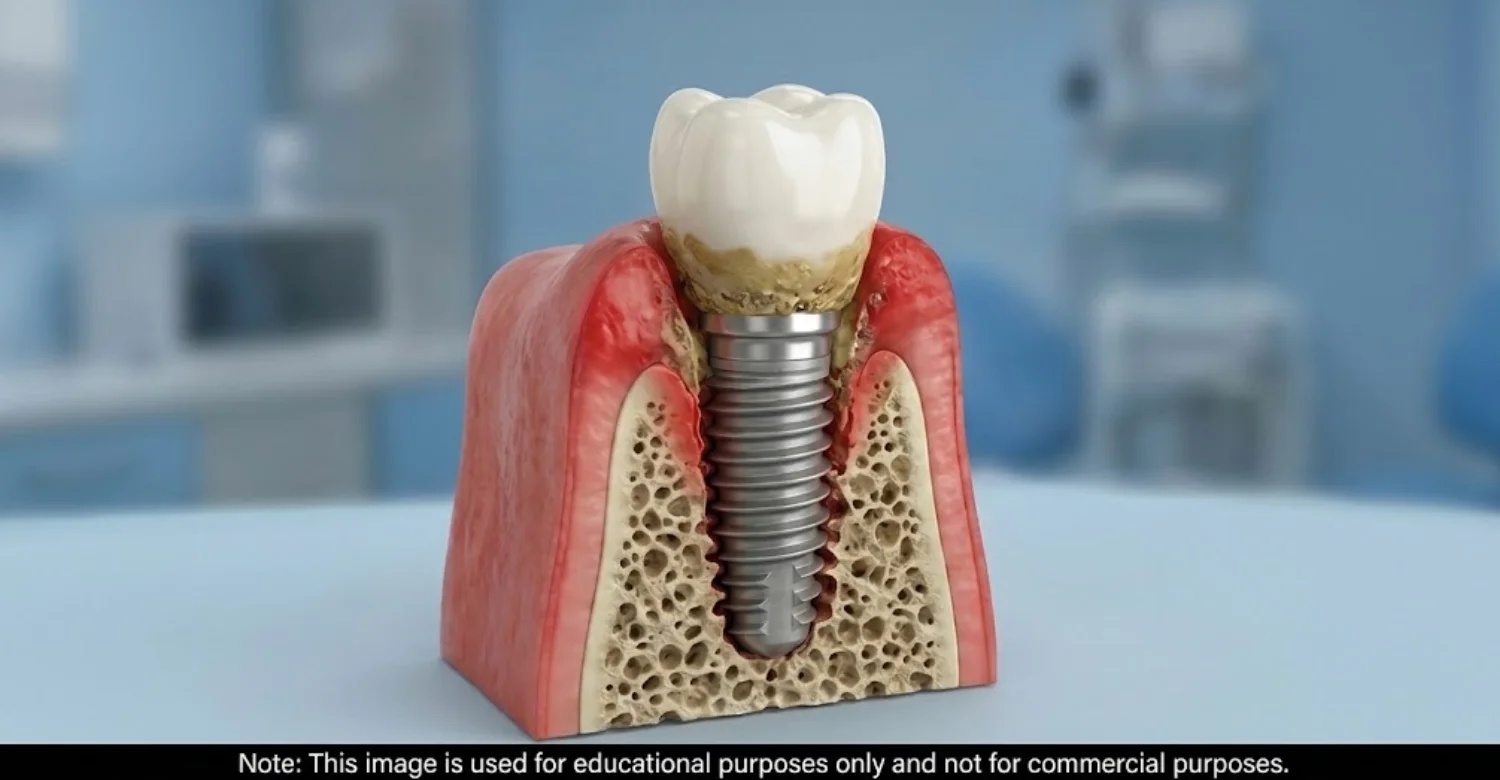
How Is Peri Implantitis Diagnosed?
Peri Implantitis is diagnosed through a clinical examination combined with dental X-rays. The dentist looks for bleeding or pus, deeper pockets, and bone loss over time.
What happens during a dental implant examination?
An implant examination checks the gums, the crown, and the supporting bone. It also includes a review of Peri Implantitis risk factors and past records.
Checking bleeding, swelling, suppuration, and probing depths
The dentist gently measures pocket depth around the implant with a probe. Bleeding or pus after probing suggests active inflammation. Probing depths of 6 mm or more often accompany Peri Implantitis . Measurements are recorded at several points around each implant.
Reviewing implant records and previous periodontal findings
Previous records show how the tissues looked when they were healthy. The dentist compares current pocket depths with earlier measurements. A history of periodontitis is also noted. These records make diagnosis faster and more accurate.
Assessing implant stability and the surrounding restoration
The dentist checks whether the implant or crown moves under gentle pressure. The crown shape, fit, and cleaning access are also examined. Loose screws or cracked parts are identified at this stage. Bite forces may be checked if overload is suspected.
Are dental X-rays needed to diagnose Peri Implantitis ?
Yes, X-rays are needed to confirm bone loss around an implant. Clinical signs alone cannot show what is happening inside the bone.
How radiographs help identify changes in supporting bone
X-rays show the bone level along the implant threads. Bone loss appears as a dark area or a lower bone line. The 2017 classification uses bone loss of 3 mm or more when baseline images are missing. Small periapical X-rays usually give the clearest view.
Why previous images can improve diagnostic accuracy
Some bone remodelling is normal during the first year after placement. Comparing new images with baseline X-rays separates normal change from disease. Without earlier images, diagnosis relies on stricter thresholds. Patients should keep copies of all their implant X-rays.
When additional imaging, such as CBCT, may be appropriate
CBCT provides a three-dimensional view of the bone around the implant. It may help plan surgery or assess defects that X-rays cannot show clearly. However, metal implants can create artefacts on CBCT images. It is used only when the benefit justifies the extra radiation.
How do dentists distinguish Peri Implantitis from peri-implant mucositis?
Both conditions show bleeding or redness on gentle probing. The key difference is bone loss beyond normal initial remodelling. Mucositis has no progressive bone loss on X-rays. Peri Implantitis shows bleeding or pus together with increasing pocket depth and bone loss.
Can Peri Implantitis be diagnosed at home?
No, Peri Implantitis cannot be diagnosed at home. Patients can notice warning signs such as bleeding, swelling, or a bad taste. However, measuring pockets and confirming bone loss requires professional tools and X-rays. If you notice any warning sign, book an examination rather than waiting.
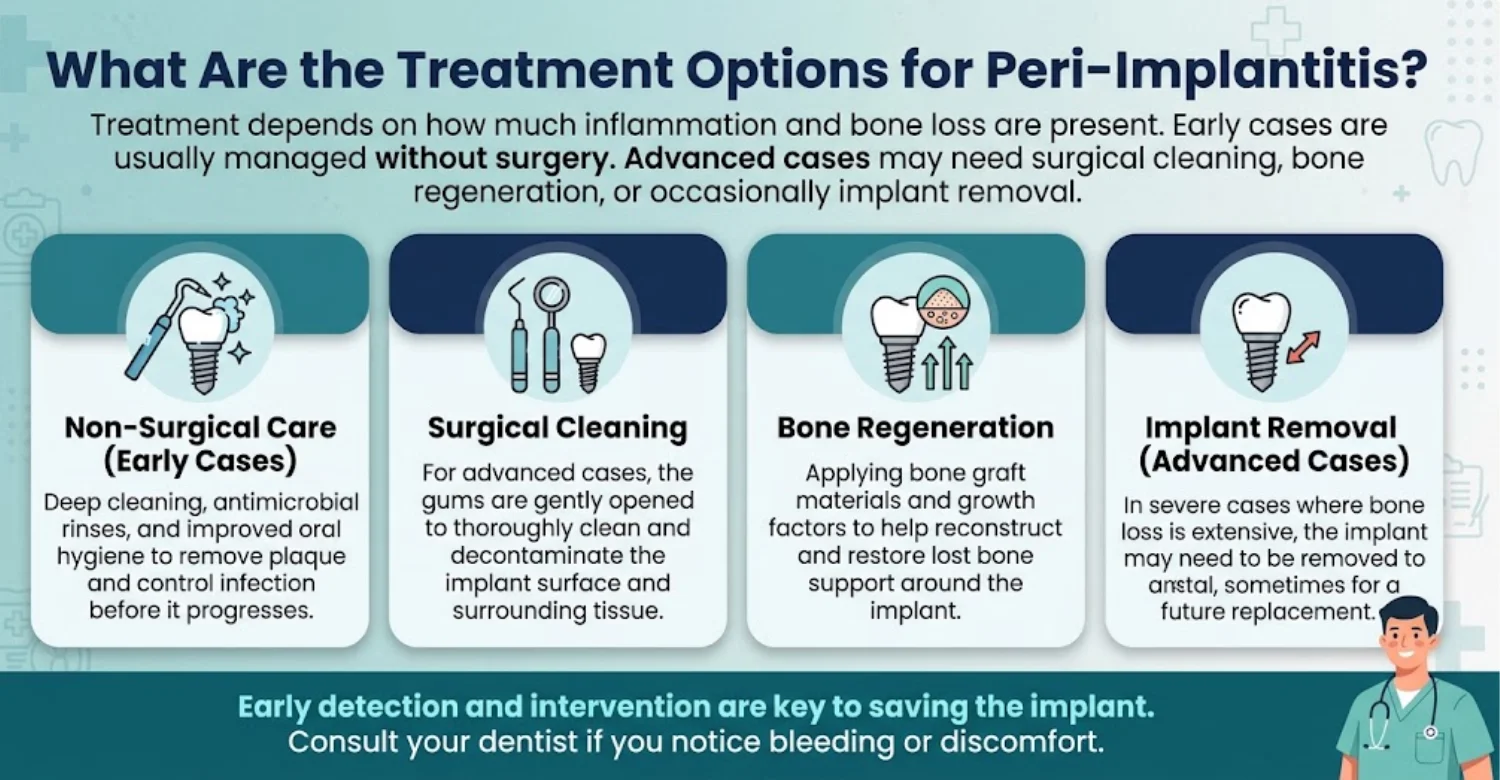
Can Peri Implantitis be treated without removing the implant?
Yes, most cases can be treated without removing the implant. The goal is to stop inflammation and prevent further bone loss. Studies report disease resolution in roughly half to two-thirds of surgically treated cases. Success is higher when treatment starts early and Peri Implantitis risk factors are controlled.
How is early inflammation around a dental implant managed?
Early inflammation is managed by removing biofilm and improving daily cleaning. Correcting any design problems also supports healing.
Professional mechanical cleaning and biofilm disruption
The dentist removes plaque and tartar from the implant and crown surfaces. Special instruments are used to avoid scratching the implant. Air-polishing devices with fine powders may disrupt biofilm effectively. Local antiseptics are sometimes added.
Improving home plaque control
Patients receive personalized instructions for brushing and interdental cleaning. The dentist shows which brush sizes fit their spaces. A follow-up visit checks whether bleeding has reduced. Good home care is essential for any treatment to succeed.
Correcting restoration-related factors that prevent effective cleaning
Sometimes the crown itself prevents effective cleaning. The dentist may reshape, remove, or replace it. Residual cement must be removed completely. These corrections often improve inflammation significantly within weeks.
What treatments may be used when bone loss is present?
When bone loss is present, treatment usually progresses in stages. The dentist reassesses healing before deciding on further steps.
Non-surgical treatment and reassessment
Non-surgical cleaning is usually the first step even when bone loss exists. The tissues are reassessed after about six to eight weeks. If bleeding and deep pockets persist, surgery may be recommended. Non-surgical care alone often fails to resolve advanced Peri Implantitis .
Surgical access for cleaning the affected implant surface
The surgeon opens the gum to reach the contaminated implant surface directly. The surface is cleaned and decontaminated thoroughly. In some cases, rough threads are smoothed to reduce plaque retention. The gum is then repositioned to create cleanable contours.
Selected regenerative or reconstructive procedures
Some bone defects are suitable for regeneration with bone grafts and membranes. Contained defects, with bone walls around them, respond best. Regeneration aims to rebuild support and improve gum appearance. Results vary, and complete bone fill is uncommon.
When implant removal may need to be considered
Removal may be needed when the implant is mobile or bone loss is severe. Repeated treatment failure can also lead to this decision. Removing a failing implant can protect surrounding bone and teeth. A new implant may sometimes be placed after the site heals.
Are antibiotics always necessary for Peri Implantitis ?
No, antibiotics are not always necessary. Mechanical cleaning of the implant surface remains the main treatment. Antibiotics may be prescribed alongside surgery in selected cases. Unnecessary antibiotic use increases resistance and side effects. Your dentist decides based on your diagnosis and medical history.
What are the possible side effects and limitations of Peri Implantitis treatment?
Like any treatment, Peri Implantitis care has side effects and realistic limits. Understanding them helps patients set accurate expectations.
Temporary soreness, swelling, bleeding, or sensitivity after treatment
Mild soreness and swelling are common for a few days. Minor bleeding may occur during the first day. Some patients notice sensitivity in nearby teeth. These effects usually settle within one week.
Risks associated with surgical treatment and medication
Surgery may cause gum recession, exposing parts of the implant. Infection, bruising, or delayed healing occasionally occur. Antibiotics can cause stomach upset or allergic reactions. Your clinician will explain these risks before treatment.
Why treatment cannot guarantee complete regeneration of lost bone
Lost bone does not always grow back, even with grafting. Treatment mainly aims to stop disease progression. Partial bone fill is a realistic goal in many cases. Long-term maintenance is still required after successful treatment.
How long does Peri Implantitis treatment take, and what affects recovery?
Non-surgical treatment usually takes one to two visits, followed by reassessment after six to eight weeks. Surgical treatment adds several weeks of healing. Bone grafting may require three to six months before final evaluation. Recovery depends on the defect size, smoking status, diabetes control, and home care. Ongoing control of Peri Implantitis risk factors shapes long-term success.
How Can You Find Relief From Peri Implantitis Symptoms?
Home measures can ease discomfort temporarily but cannot cure Peri Implantitis . They help while you wait for a professional assessment.
What can help relieve discomfort while waiting for a dental appointment?
Simple, gentle care can reduce irritation until your appointment.
Gentle cleaning with a soft-bristled toothbrush
Keep cleaning the area gently instead of avoiding it. A soft brush removes plaque without injuring inflamed tissue. Angle the bristles toward the gumline and use small movements. Avoiding the area allows more plaque to accumulate.
Avoiding smoking and irritation of the affected area
Smoking slows healing and worsens inflammation. Avoid very hot, spicy, or hard foods near the implant. Try chewing on the other side if possible. These steps reduce discomfort while you wait.
Following individualized postoperative instructions when applicable
If you recently had surgery, follow your clinic's written instructions carefully. They may include specific rinses or cleaning restrictions. Do not change your routine without advice. Contact the clinic if symptoms worsen.
Which medical tips are safe for patients with implant inflammation?
Some common home reactions can make inflammation worse. These precautions keep the area safe.
Do not squeeze swollen gum tissue or attempt to drain pus
Squeezing the gum can push bacteria deeper into the tissues. It may also injure the gum and delay healing. Pus means a professional assessment is needed soon.
Do not scrape the implant or use unapproved chemicals on it
Metal tools or sharp objects can scratch the implant surface. Scratches make plaque removal harder later. Bleach, peroxide pastes, or household products can damage gum tissue. Leave surface cleaning to your dentist.
Use pain relief or mouthwash only when appropriate for your health and clinician's advice
Over-the-counter pain relief may help some patients, but it does not suit everyone. Check with a pharmacist or doctor about your medications. Antiseptic mouthwashes should be used only as advised. Long-term chlorhexidine use can stain teeth.
Can mouthwash or salt-water rinses cure Peri Implantitis ?
No, mouthwash or salt-water rinses cannot cure Peri Implantitis . They may temporarily reduce bacteria and soothe the tissues. However, rinses cannot reach deep pockets or remove hardened deposits. Professional cleaning is required to treat the cause.
When should home care stop and professional treatment begin?
Home care should never replace professional treatment for implant inflammation. Book an appointment if bleeding or swelling lasts more than a few days. Seek care sooner if you notice pus, a bad taste, or worsening pain. Early assessment usually means simpler and less costly treatment.
When Should You Seek Professional Care for Possible Peri Implantitis ?
Seek professional care whenever implant symptoms persist, recur, or worsen. Some symptoms need prompt appointments, while others need urgent medical attention.
Which symptoms require a prompt dental appointment?
The following symptoms should be assessed within days, not months.
Persistent bleeding, redness, or swelling around an implant
Bleeding that continues beyond a few days needs assessment. Redness or swelling that keeps returning is also significant. These signs often indicate mucositis or early Peri Implantitis .
Pus, recurring bad taste, or worsening discomfort
Pus suggests an active infection in a deep pocket. A recurring bad taste may indicate drainage from the implant area. Increasing discomfort means the condition may be progressing.
Changes in the fit or stability of an implant-supported restoration
A crown that feels loose, moves, or changes your bite needs checking. Clicking sounds when chewing can indicate a loose screw. Early repair prevents damage to the implant and surrounding bone.
When is urgent medical or dental care necessary?
Some signs suggest a spreading infection that requires urgent attention.
Rapidly spreading facial or jaw swelling
Swelling that spreads across the face or jaw needs same-day assessment. It may indicate an infection moving beyond the implant area. Contact your dentist or emergency services immediately.
Fever or feeling systemically unwell alongside suspected infection
Fever, chills, or general weakness can mean the infection is affecting your body. These symptoms require prompt medical evaluation. Do not wait for a routine appointment.
Difficulty swallowing or breathing as an emergency warning sign
Difficulty swallowing or breathing is a medical emergency. Call emergency services or go to the nearest emergency department immediately. Do not attempt home treatment in this situation.
Why waiting for pain or implant mobility can delay appropriate care
Pain and mobility usually appear late in Peri Implantitis . By then, much of the supporting bone may already be lost. Waiting reduces treatment options and increases the chance of implant removal. Acting on early signs, such as bleeding, protects your implant and your budget.
Ready to transform your smile?
Talk to our team and get a personal FREE treatment plan.
How Can You Prevent Peri Implantitis After Dental Implant Surgery?
Prevention combines daily cleaning, regular maintenance, and control of modifiable Peri Implantitis risk factors. Patients who attend maintenance show far lower disease rates over time.
What is the best daily oral hygiene routine for dental implants?
A good routine removes plaque from every implant surface every day. It should be simple enough to follow consistently.
Brushing twice daily with a soft-bristled toothbrush
Brush for two minutes, twice daily, with a soft-bristled toothbrush. Focus on the area where the crown meets the gum. Electric toothbrushes can help patients with limited dexterity. Use a low-abrasive toothpaste to protect crown surfaces.
Cleaning between implants with suitable interdental brushes or floss
Clean between implants and teeth once daily. Interdental brushes in the correct size work well for most spaces. Implant-specific floss or super floss can clean under bridges. Ask your hygienist to select the right sizes for you.
Using a water flosser when appropriate for the patient's needs
Water flossers can help clean under bridges and full-arch restorations. Some studies show they reduce bleeding around implants more than string floss. They are useful for patients with limited dexterity. They complement, but do not replace, brushing.
How often should patients with dental implants visit their dentist?
Most implant patients need maintenance every three to six months. The interval depends on individual Peri Implantitis risk factors.
Professional implant maintenance based on individual risk
Low-risk patients may need maintenance every six months. Patients with previous periodontitis, smoking, or diabetes often need visits every three months. The interval can be adjusted as risk changes. Regular attendance reduces Peri Implantitis rates substantially.
Monitoring gum inflammation and changes in probing depth
Each visit includes checks for bleeding and pocket depth. Changes are compared with earlier records. Small increases can be treated before bone loss occurs. This monitoring makes early intervention possible.
Comparing radiographs when clinically indicated
X-rays are not needed at every visit. They are taken when signs suggest bone changes or at planned intervals. Comparing images with baseline X-rays shows any bone loss. This keeps radiation exposure as low as reasonably possible.
How can patients reduce modifiable implant complications?
Patients can reduce several Peri Implantitis risk factors through practical changes.
Stopping smoking and discussing nicotine use with a healthcare professional
Stopping smoking is one of the most valuable steps for implant health. Your doctor or pharmacist can recommend support options. Mention vaping or nicotine products to your dentist as well.
Maintaining appropriate blood glucose control
Patients with diabetes should keep regular checks with their doctor. Stable glucose levels support healthy gums and bone. Inform your dentist about any changes in your treatment.
Treating active periodontal disease before implant placement
Gum disease around remaining teeth should be treated first. Stable periodontal health reduces bacteria that could reach the implant. This step is essential for long-term implant success.
Following personalized cleaning and aftercare instructions
Each patient's mouth and restoration are different. Follow the specific tools and techniques your clinician recommends. Ask for a demonstration if anything is unclear.
Can a healthy diet and lifestyle help maintain dental implants?
Yes, a balanced diet and healthy lifestyle support gum and bone health. Adequate vitamin D, calcium, and protein help tissue repair. Limiting sugary snacks reduces plaque formation. Managing stress and sleeping well may also support immune function. Lifestyle helps, but it cannot replace daily cleaning.
Does professional implant cleaning prevent Peri Implantitis completely?
No, professional cleaning reduces risk but cannot prevent Peri Implantitis completely. Studies show maintenance roughly halves disease rates over five years. Daily home care is still needed between visits. Prevention works best when patients and clinicians share responsibility.
.jpg)
.jpg)
.jpg)
Tips for Patients
Simple decisions often protect implants more than complex treatments. These tips help patients respond correctly to common situations.
What should you do if your implant gums bleed during brushing?
Do not stop cleaning the area. Continue brushing gently with a soft brush and use interdental cleaners. Note how long the bleeding continues. If it lasts more than a few days or keeps returning, book an implant examination.
Which questions should you ask during an implant maintenance appointment?
Asking clear questions helps you understand your implant's condition and your own Peri Implantitis risk factors.
Is there evidence of inflammation or supporting bone loss?
Ask whether bleeding, deeper pockets, or bone changes were found. Ask how today's findings compare with earlier visits.
Is my implant crown easy to clean?
Ask whether your crown shape allows effective cleaning. Request a demonstration of the best tools for your restoration.
How frequently should I return for maintenance?
Ask for a maintenance interval based on your personal risk. Higher-risk patients often benefit from three-month visits.
What should you avoid if you suspect an implant infection?
Some common reactions can delay healing or hide important symptoms.
Avoiding self-prescribed antibiotics and harsh home remedies
Leftover antibiotics may mask symptoms without solving the problem. They can also contribute to antibiotic resistance. Avoid strong chemicals or home remedies on the gum.
Avoiding smoking and aggressive brushing around inflamed tissues
Smoking slows healing and worsens inflammation. Hard brushing can injure tender gums. Gentle, thorough cleaning is safer and more effective.
Avoiding delays in assessment when symptoms persist or worsen
Persistent symptoms rarely resolve on their own. Early assessment usually allows simpler treatment. Book an appointment rather than waiting for pain.
What should international patients prepare before travelling for implant complication treatment?
Good preparation helps the treating clinic plan care safely and efficiently.
Previous implant records, treatment dates, and radiographs
Bring implant brand, size, and placement dates if available. Include all previous X-rays and CBCT scans. These records help compare bone levels over time.
A medication list and relevant medical history
List all current medications, including doses. Mention diabetes, heart conditions, allergies, and smoking status. This information supports safe treatment planning.
A written diagnosis, proposed treatment, and follow-up plan
Request a written diagnosis and treatment plan before travel. Confirm how follow-up will be handled after you return home. A local dentist should be involved in long-term maintenance.
How Much Does Peri Implantitis Treatment Cost in the US, UK, and Turkey?
Peri Implantitis treatment costs depend on disease severity and treatment type. Turkey is usually the most affordable of the three countries. All prices below are approximate and shown in US dollars.
What is the average cost of Peri Implantitis treatment by country?
Costs vary widely between clinics, cities, and individual cases. The ranges below give a general guide only. Average costs are calculated using the midpoint of each stated price range.
United States: estimated costs for examination, professional cleaning, and surgical treatment
In the US, an implant examination usually costs 100–300. Non-surgical cleaning ranges from about $200 to $600 per implant. Surgical treatment often costs 1,000–3,000 or more. Bone grafting may add 300–3,000.
Treatment category | Estimated cost range (USD) | Average estimated cost (USD) |
Examination and diagnostic assessment | 100–300 | $200 |
Non-surgical implant cleaning and inflammation management | 200–600 | $400 |
Surgical Peri Implantitis treatment | 1,000–3,000+ | $2,000* |
Additional bone grafting, if indicated | 300–3,000 | $1,650 |
United Kingdom: private periodontal assessment and treatment costs
Private UK assessments typically cost around 50–150. Non-surgical implant cleaning costs about 150–500. Surgical treatment often ranges from $800 to $2,500 or more. Specialist periodontist fees are usually higher than general dentist fees.
Treatment category | Estimated cost range (USD) | Average estimated cost (USD) |
Examination and diagnostic assessment | 50–150 | $100 |
Non-surgical implant cleaning and inflammation management | 150–500 | $325 |
Surgical Peri Implantitis treatment | 800–2,500+ | $1,650* |
Additional bone grafting, if indicated | 200–1,500 | $850 |
Turkey: estimated costs for non-surgical management and specialist implant treatment
In Turkey, an examination usually costs about 20–80. Non-surgical management ranges from around $100 to $300. Surgical treatment typically costs 300–1,200 or more. Patients should also budget for travel and follow-up.
Treatment category | Estimated cost range (USD) | Average estimated cost (USD) |
Examination and diagnostic assessment | 20–80 | $50 |
Non-surgical implant cleaning and inflammation management | 100–300 | $200 |
Surgical Peri Implantitis treatment | 300–1,200+ | $750* |
Additional bone grafting, if indicated | 130–600 | $365 |
Average Peri Implantitis Treatment Cost Comparison
The following table compares average estimated costs across the three countries.
US
$200
Average cost
Examination & diagnostic assessment $200
Non-surgical implant cleaning & inflammation management $400
Surgical peri-implantitis treatment $2,000*
Additional bone grafting, if indicated $1,650
TUERKEY
$50
Average cost
Examination & diagnostic assessment $50
Non-surgical implant cleaning & inflammation management $200
Surgical peri-implantitis treatment $750*
Additional bone grafting, if indicated $365
UK
$100
Average cost
Examination & diagnostic assessment $100
Non-surgical implant cleaning & inflammation management $325
Surgical peri-implantitis treatment $1,650*
Additional bone grafting, if indicated $850
Note: These figures are calculated midpoints based on the indicative ranges provided, not independently verified national averages. Surgical prices may exceed the stated ranges. Bone grafting is an additional procedure and is not necessary in every case. Actual costs depend on clinical findings, clinic fees, materials, and follow-up requirements.
Based on these indicative estimates, surgical treatment in Turkey costs approximately 63% less than the US estimate. Actual savings depend on whether the treatment plans include comparable procedures and aftercare.
What factors affect the total cost of Peri Implantitis treatment?
The final cost depends on several clinical and practical factors.
The extent of inflammation and bone loss
Early mucositis usually needs only cleaning and home-care guidance. Advanced bone loss requires more visits and complex procedures. Costs rise as the disease progresses.
Non-surgical versus surgical treatment
Non-surgical treatment is the least expensive option. Surgical access adds surgeon fees, materials, and longer appointments. Many patients start with non-surgical care and progress if needed.
Bone grafting, regenerative materials, or implant removal
Grafting materials and membranes add significant cost. Implant removal and later replacement add further expense. These steps are only used when clinically appropriate.
Imaging, specialist fees, medication, and follow-up visits
X-rays, CBCT scans, and specialist consultations add to the total. Medication and several follow-up visits are often needed. Ask whether these are included in your quote.
Does dental insurance or the NHS cover Peri Implantitis treatment?
Coverage varies widely. In the US, some dental plans partially cover periodontal treatment around implants, but limits often apply. In the UK, NHS implant care is limited to specific clinical cases. Most UK patients with implant complications pay privately. Always check your policy before treatment.
How can patients compare treatment quotes across countries?
Comparing quotes carefully helps avoid hidden costs and unclear responsibilities.
Requesting an itemized quote and written treatment plan
Ask for each item to be listed separately. The plan should name the diagnosis and treatment stages. This makes fair comparison between clinics easier.
Checking what is included in follow-up and complication management
Confirm whether reassessment visits are included. Ask how complications will be handled after treatment. Clear policies prevent unexpected costs later.
Understanding travel-related costs and the need for ongoing local care
Add flights, accommodation, and time off work to your budget. Peri Implantitis needs long-term maintenance after treatment. Plan for regular visits with a local dentist at home.
Peri Implantitis Assessment and Treatment at Vitrin Clinic
Vitrin Clinic assesses inflamed implants through a structured examination and evidence-based treatment planning. Each plan reflects the patient's findings and Peri Implantitis risk factors.
How does the Vitrin Clinic assess inflammation around dental implants?
Our assessment combines your history, a clinical examination, and imaging when needed.
Reviewing symptoms, medical history, smoking status, and previous gum disease
We begin by discussing your symptoms and when they started. We review medical conditions, medications, smoking, and past gum disease. This identifies Peri Implantitis risk factors that may affect treatment.
Examining the gums, implant-supported crown, and surrounding tissues
We check for bleeding, swelling, pus, and pocket depth. The crown's fit, shape, and cleaning access are also assessed. We look for residual cement and loose components.
Using dental X-rays or CBCT when clinically indicated
Dental X-rays confirm whether bone loss is present. CBCT is used only when three-dimensional information is needed. Images are compared with previous records when available.
Which treatment options may be considered for Peri Implantitis ?
Treatment options depend on the stage of disease and your general health.
Professional cleaning and personalized plaque-control guidance
Early cases are treated with thorough professional cleaning. We show you which tools suit your implant and restoration. Follow-up visits check whether inflammation is resolving.
Assessment of restoration design and access for cleaning
If the crown blocks effective cleaning, we discuss modification or replacement. Residual cement is removed when found. These changes help prevent recurrence.
Referral or surgical treatment planning when clinically appropriate
Advanced cases may need surgical cleaning or regenerative treatment. We explain the expected benefits, risks, and limitations clearly. Specialist referral is arranged when appropriate.
Why is a personalized treatment plan important for implant complications?
No two implant complications are exactly the same. Bone defect shape, crown design, and health factors all influence treatment. A personalized plan targets the actual cause instead of only the symptoms. It also sets a maintenance schedule based on your individual risk.
How can patients request an assessment for a problematic dental implant?
Contact Vitrin Clinic by phone, WhatsApp, or our online form. Share your symptoms, implant history, and any available X-rays. Our team will advise on the next steps and arrange an appointment.
How Vitrin Clinic Supports Your Treatment Journey
We support patients from the first consultation through to long-term maintenance. Clear communication is part of every step.
What happens during the initial consultation?
The consultation includes a discussion of your symptoms and medical history. The dentist examines your implant and takes X-rays if needed. You will receive an explanation of the findings in plain language. Treatment options, timing, and costs are then discussed openly.
How are diagnostic findings used to plan treatment?
Clinical and radiographic findings show the stage of disease. They help decide between non-surgical and surgical care. Findings also reveal which Peri Implantitis risk factors need attention. The plan addresses both the current problem and future prevention.
How does treatment coordination support international patients?
International patients need careful planning to complete treatment safely within their stay.
Reviewing available records before travel where possible
Patients can share X-rays and records before travelling. This allows an initial review and an estimated plan. It also helps plan the length of stay.
Coordinating appointments according to clinical priorities
Appointments are arranged in the order the treatment requires. Healing time between stages is considered. Urgent problems are addressed first.
Providing treatment documentation and aftercare instructions
Patients receive written records of diagnosis and treatment provided. Aftercare instructions explain cleaning and warning signs. These documents help your local dentist continue care.
Why is follow-up important after Peri Implantitis treatment?
Follow-up confirms that treatment is working and helps prevent recurrence.
Monitoring healing and inflammation
Reassessment checks bleeding and pocket depth after healing. X-rays may confirm stable bone levels. Early recurrence can be treated promptly.
Reinforcing personalized home-care techniques
Each visit reviews your cleaning routine. Techniques are adjusted if plaque remains in specific areas. This keeps your home care effective over time.
Arranging continuing maintenance with the treating clinic or a local dentist
Long-term maintenance continues after treatment ends. International patients can continue care with a local dentist. We provide records to support this transition.
Ready to transform your smile?
Talk to our team and get a personal FREE treatment plan.
Key Takeaways
Peri Implantitis is common, often painless, and largely preventable. Understanding your own risk and attending maintenance protects your implants for longer.
Which Peri Implantitis risk factors should patients understand first?
Poor plaque control, previous periodontitis, and smoking are the most important Peri Implantitis risk factors. Diabetes, crown design, residual cement, and missed maintenance follow closely. Most of these can be changed or managed with professional support.
Why do early detection and regular implant maintenance matter?
Early disease is easier, faster, and cheaper to treat. Maintenance roughly halves the rate of Peri Implantitis over five years. Regular checks find problems before bone loss becomes severe.
Which symptoms should prompt a professional assessment?
Bleeding, swelling, redness, pus, or a bad taste around an implant need assessment. A loose crown or change in bite should also be checked. Spreading swelling, fever, or breathing difficulty require urgent care.
How can patients protect their implants through daily care and risk-factor management?
Brush twice daily and clean between implants every day. Stop smoking and keep diabetes well controlled. Attend maintenance visits at the interval your dentist recommends. Managing Peri Implantitis risk factors gives your implants the best chance of lasting.




How Vitrin Clinic Helps Protect Dental Implants
Vitrin Clinic combines careful diagnosis, personalized treatment, and long-term maintenance planning for dental implant patients. Our team reviews Peri Implantitis risk factors at each stage of care. We also support international patients with records, coordination, and clear aftercare instructions. Contact us to book an implant assessment and protect your investment.
Reference
FAQs
Dr. Rifat Alsaman has more than 5 years of clinical experience in dentistry and currently serves as the Head of the Medical Team at Vitrin Clinic. He is dedicated to providing exceptional patient care, overseeing treatment planning, and ensuring the highest clinical standards across the team. His expertise, attention to detail, and commitment to continuous professional development have helped countless patients achieve healthier, more confident smiles.


