General Dentistry
September 21, 2026
What Causes Perioral Dermatitis and How Is It Treated?
 Dr. Rifat Alsaman
Perioral Dermatitis is an inflammatory facial eruption that usually affects the skin around facial openings. It commonly appears around the mouth, nose, and eyes. Small red or skin-colored bumps can resemble acne, eczema, or rosacea. Burning, itching, dryness, scaling, and sensitivity may also occur. The exact cause remains uncertain, although several triggers are recognized. Topical corticosteroids are among the most frequently associated factors. Cosmetics, toothpaste, occlusive products, and environmental irritation may also contribute. Diagnosis is usually clinical after examining the distribution and appearance of lesions. Treatment commonly involves removing triggers and simplifying skincare. Doctors may prescribe topical or oral medications when necessary. Improvement can take several weeks or months.
What Is Perioral Dermatitis?
This condition is a chronic inflammatory facial eruption involving areas around facial openings. The classic pattern appears around the mouth, while the nose and eyes may also become involved. Lesions commonly include small papules, pustules, redness, scaling, and dryness. The immediate lip border is often spared, creating a characteristic clear zone. Symptoms can include burning, tightness, itching, and skin sensitivity. The condition is not contagious and does not spread through person-to-person contact. Its exact cause remains incompletely understood. Researchers suggest impaired skin barrier function and external irritation may contribute.
What Does Perioral Dermatitis Look Like?
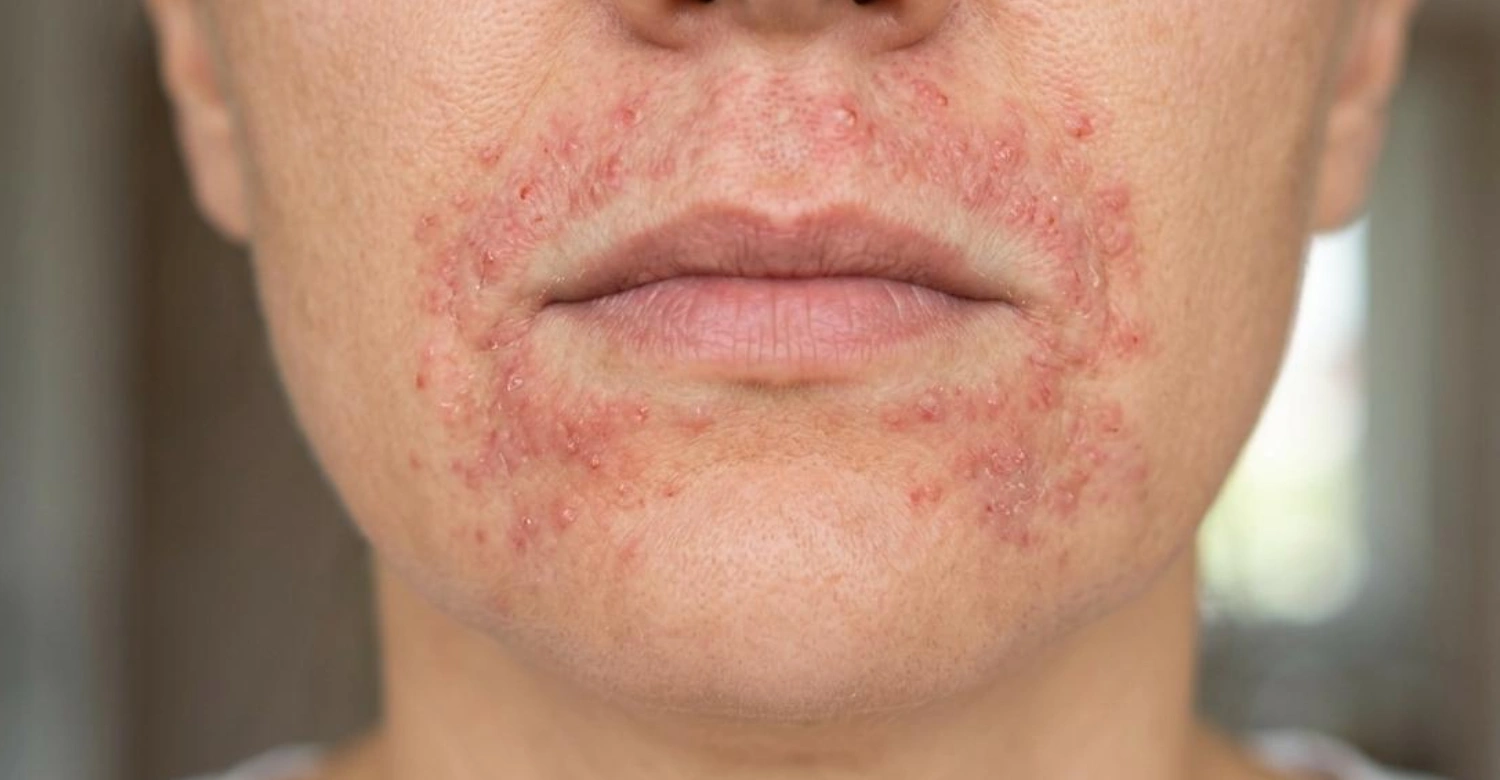
The rash usually consists of clusters of small red or skin-colored bumps. Some lesions may contain fluid or resemble tiny pustules. Surrounding skin can appear dry, flaky, irritated, or inflamed. A narrow area directly beside the lips may remain relatively clear. This spared border can help clinicians distinguish the condition from other facial rashes. More extensive cases may involve the chin, cheeks, eyelids, forehead, or nose. Appearance can vary according to skin tone and disease severity. The rash may resemble acne, eczema, contact dermatitis, or rosacea. Therefore, visual comparison alone should not establish a diagnosis.
Perioral Dermatitis Symptoms
Common symptoms include small facial bumps, redness, dryness, scaling, itching, and burning. Some people describe tightness or increased sensitivity rather than significant pain. The affected skin may feel irritated when applying cosmetics or skincare products. Lesions commonly cluster around the mouth, nose, or eyes. Severe cases can extend toward nearby facial areas. Symptoms can fluctuate and may temporarily improve before returning. Corticosteroid use can also alter the appearance and course of the eruption. A dermatologist can distinguish this condition from similar facial disorders.
Where Does Perioral Dermatitis Appear?
The condition most often affects skin surrounding the mouth. However, the eruption can involve several facial openings. The nose and eyelids are recognized locations. Some patients develop lesions around multiple areas simultaneously. Severe disease may extend toward the chin, cheeks, forehead, or glabella. The distribution can provide important diagnostic information. Doctors usually consider both lesion appearance and location during examination. Periorificial dermatitis is a broader term when several facial openings are involved.
Perioral Dermatitis Around the Mouth
The area surrounding the mouth represents the classic presentation. Small bumps can develop beside the lips and across nearby facial skin. The immediate lip margin often remains unaffected. Dryness and scaling may surround the papules. Burning or itching can occur, especially after skincare application. Toothpaste and cosmetic products can sometimes act as irritants. However, a suspected trigger does not necessarily prove causation. Persistent or worsening lesions require professional assessment.
Perioral Dermatitis Around the Nose
The eruption can develop beside the nostrils or across the nasolabial region. Red or skin-colored papules may appear with dryness and scaling. Nasal products can sometimes contribute to facial irritation. Inhaled or nasal corticosteroids may also be associated with facial eruptions. Patients should discuss necessary steroid medications with their prescribing clinician. Stopping essential medication without medical guidance can create other health risks.
Perioral Dermatitis Around the Eyes
Periocular involvement can affect the upper or lower eyelids. Small papules, redness, dryness, and burning may occur around the eyes. Eye-area symptoms deserve careful evaluation because several conditions look similar. Cosmetics, topical medications, and irritants may contribute. Patients should avoid experimenting with strong treatments near the eyes. Persistent eyelid inflammation should receive professional assessment.
Learn why lip biting can affect your teeth
What Causes Perioral Dermatitis?
The precise cause remains uncertain. Current evidence supports multiple interacting factors rather than one confirmed cause. Topical corticosteroid exposure is strongly associated with the condition. Cosmetic products, occlusive skincare, toothpaste, and irritants may also contribute. Skin barrier dysfunction may increase sensitivity to external substances. Hormonal changes have been observed in some patients. Heat, wind, ultraviolet exposure, and other environmental factors can worsen symptoms. However, associations do not mean every suspected trigger causes the disease. Individual evaluation remains important.
Common Causes of Perioral Dermatitis
No single cause explains every case. The condition appears to develop through interactions between skin barrier dysfunction and environmental factors. Corticosteroid exposure is one of the strongest recognized associations. Cosmetics and occlusive products may also aggravate susceptible skin. Toothpaste and other substances contacting facial skin may act as irritants. Hormonal changes have also been reported in some patients. The evidence surrounding microorganisms remains uncertain. Therefore, treatment focuses on recognized triggers rather than assuming one infectious cause.
Perioral Dermatitis Triggers
Potential triggers include topical steroids, cosmetics, heavy moisturizers, sunscreens, and irritating skincare products. Toothpaste and dental products may occasionally irritate susceptible skin. Environmental factors such as heat, ultraviolet exposure, and wind can worsen symptoms. Hormonal changes may also coincide with flares. Some patients notice symptoms after changing several products simultaneously. Keeping a simple product diary can help identify patterns. However, patients should not discontinue medically necessary medications independently.
Steroid Cream and Perioral Dermatitis
Topical corticosteroids are strongly associated with this facial eruption. They can temporarily suppress redness and inflammation. However, symptoms may rebound after discontinuation. Repeated steroid use can create a cycle of temporary improvement followed by worsening. The recommends discussing prescribed corticosteroids with the prescribing doctor. Patients should not restart steroid cream simply because symptoms temporarily improve.
Skincare Products and Other Possible Triggers
Heavy, occlusive products can aggravate sensitive facial skin. Cosmetics and certain sunscreens may also contribute in susceptible individuals. Fragrances and other ingredients can produce irritation or allergic reactions. Not every product used before a flare is necessarily responsible. A simplified skincare routine can reduce unnecessary exposure. Dermatologists may recommend gentle cleansing and fewer topical products during active disease.
What Are the Symptoms of Perioral Dermatitis?
The condition commonly causes small facial papules, redness, scaling, dryness, itching, or burning. Symptoms usually remain localized around facial openings. More extensive cases can involve nearby facial regions. Unlike many infections, patients generally remain systemically well. Significant fever or severe illness suggests another process requiring medical evaluation.
Perioral Dermatitis Itching and Burning
Itching and burning are common symptoms, although they do not occur in everyone. Some patients primarily experience tightness or increased sensitivity. Burning may become noticeable after applying skincare products. Scratching can further irritate the skin barrier. Persistent discomfort can also affect daily cosmetic routines and quality of life. Professional evaluation can determine whether the symptoms fit this diagnosis.
Redness, Bumps, and Pustules
Small red or skin-colored papules commonly form around facial openings. Some lesions may develop into pustules or vesicles. Their acne-like appearance can cause confusion with acne vulgaris. Unlike typical acne, the distribution and surrounding dryness can provide useful diagnostic clues. Lesions may cluster closely together and form an inflamed facial border.
Dry or Flaking Skin
Dryness and scaling frequently surround the inflammatory lesions. The skin may feel tight, rough, or unusually sensitive. Excessive moisturizing can sometimes worsen the eruption when products are occlusive. Gentle skincare is generally preferred during active disease. Persistent severe dryness should be discussed with a healthcare professional.
Can Perioral Dermatitis Spread?
The eruption can extend beyond its initial location. Severe cases may involve the chin, cheeks, eyelids, forehead, or glabella. This does not mean the condition is contagious. It usually represents progression across nearby facial skin. A changing distribution should prompt reassessment when the diagnosis is uncertain.
Perioral Dermatitis on Different Areas of the Face
The eruption can affect several areas beyond the classic mouth region. Distribution often provides useful information during clinical diagnosis. The chin and nasolabial region are commonly involved. Cheeks, forehead, and eyelids can become involved in more extensive cases. Eye involvement requires particular care because other dermatological conditions can appear similar.
Perioral Dermatitis on the Chin
The chin can become involved when the eruption extends beyond the mouth area. Small papules may appear against dry or inflamed skin. This pattern can resemble acne or irritant dermatitis. Doctors consider lesion morphology, distribution, symptoms, and product exposure together. Treatment generally focuses on removing aggravating factors and controlling inflammation.
Perioral Dermatitis on the Cheeks
Cheek involvement usually indicates a broader facial distribution. Papules can extend laterally from the mouth or nose. The skin may become dry, rough, and sensitive. Cheek lesions can resemble rosacea, acne, or contact dermatitis. Clinical examination helps determine the most appropriate diagnosis and treatment.
Perioral Dermatitis on the Forehead
Forehead involvement is less typical than mouth or nose involvement. It may occur when the eruption becomes more extensive. Acne, folliculitis, seborrheic dermatitis, and other conditions can produce similar lesions. Therefore, forehead bumps should not automatically be attributed to this condition.
Perioral Dermatitis Around the Eyes
Eyelid involvement is recognized within the broader peri-orificial pattern. Symptoms may include redness, papules, dryness, and burning. The delicate eyelid area can react strongly to topical products. Patients should avoid applying unprescribed medications near the eyes. Persistent symptoms warrant professional assessment.
Perioral Dermatitis Under the Eyes
Lower eyelid involvement may appear as small bumps with surrounding redness. Dryness and scaling can accompany the eruption. The appearance may resemble eczema or allergic contact dermatitis. Eye symptoms require careful evaluation because different conditions need different treatments. Avoid applying steroid or acne products without professional guidance.
Perioral Dermatitis Near the Eyes
Skin beside the eyes can become affected even when the eyelid itself remains relatively clear. Cosmetics and topical medications can irritate this sensitive region. A clinician may examine the entire facial distribution to identify the underlying pattern. Treatment should account for the sensitivity of the periocular area.
Discover what chewing ice can do to your teeth
Perioral Dermatitis vs. Other Skin Conditions
Several facial conditions can resemble this eruption. Acne, eczema, rosacea, contact dermatitis, and seborrheic dermatitis are important alternatives. The location, lesion pattern, scaling, symptoms, and medication history can help distinguish them. A correct diagnosis matters because treatments differ between conditions.
Perioral Dermatitis vs. Eczema
Eczema commonly causes itching, dryness, inflammation, and scaling. However, this condition often produces small papules around facial openings. Eczema may also involve other characteristic areas depending on age and subtype. A history of atopic disease can provide additional context. Clinical examination helps separate overlapping presentations.
Perioral Dermatitis vs. Rosacea
Rosacea commonly affects the central face and may cause persistent redness. Flushing, visible blood vessels, papules, and pustules can also occur. This condition usually has a different distribution and clinical pattern. Both disorders can coexist or resemble each other. A dermatologist can assess the distinguishing features.
Perioral Dermatitis vs. Contact Dermatitis
Contact dermatitis develops after exposure to an irritating or allergenic substance. It may produce redness, itching, scaling, or swelling. Patch testing can sometimes help identify allergic contact dermatitis. Distribution often corresponds with product exposure.
Clinical Note
Diagnosis should consider the patient's skincare routine, medication history, and lesion distribution. Steroid exposure is particularly important because it can modify the rash. Other diagnoses may require cultures, skin scrapings, or patch testing. The condition is usually diagnosed clinically without extensive laboratory testing.
How Is Perioral Dermatitis Diagnosed?
Diagnosis usually relies on clinical examination. Doctors assess the lesion type, location, distribution, symptoms, and surrounding skin. They also review skincare products, medications, and possible triggers. Previous corticosteroid exposure is especially relevant. Additional testing may be considered when another diagnosis remains possible.
Medical and Skin Examination
A clinician examines facial lesions closely and evaluates their distribution. The skin around the lips, nose, eyes, chin, and cheeks may be assessed. The examination also considers dryness, scaling, papules, pustules, and redness. Medication and cosmetic history can provide important diagnostic clues. Clinical diagnosis is usually sufficient.
Identifying Possible Triggers
Doctors may ask about topical steroids, cosmetics, moisturizers, sunscreens, toothpaste, and nasal products. They may also ask about inhaled medications and recent skincare changes. Identifying possible triggers helps guide management. However, suspected associations should not automatically be considered proven causes.
When Additional Testing May Be Needed
Testing is usually unnecessary when the clinical appearance is typical. Skin scrapings or cultures may help exclude fungal or bacterial infections. Patch testing can investigate suspected allergic contact dermatitis. Additional evaluation becomes more relevant when symptoms are atypical or treatment fails.
How to Treat Perioral Dermatitis
Treatment usually begins by reducing recognized triggers. A simplified skincare routine may be recommended during active disease. Corticosteroid exposure should be reviewed carefully with a clinician. Topical medications may help mild cases. Oral therapy can be considered for more extensive or persistent disease. Treatment commonly lasts several weeks and sometimes longer.
Perioral Dermatitis Treatment Options
Treatment depends on severity, age, pregnancy status, medication exposure, and clinical findings. Common approaches include trigger avoidance, gentle skincare, topical medications, and oral antibiotics. Some patients improve with simplified skincare alone. Others require prescription therapy. Treatment should be individualized rather than based on internet photographs.
Topical Treatment for Perioral Dermatitis
Topical options may include metronidazole, erythromycin, pimecrolimus, or other prescribed agents. Evidence varies between treatments and patient groups. Sensitive facial skin may also react to topical medications. Doctors therefore balance potential benefits against irritation.
Topical Antibiotics for Perioral Dermatitis
Topical metronidazole and erythromycin are among the commonly used options. They may be considered for localized or milder disease. Treatment should follow professional instructions regarding concentration and duration. Evidence for different topical agents varies. A systematic review found that available evidence remains limited overall.
Oral Antibiotics for Perioral Dermatitis
Oral tetracyclines are commonly used for moderate or extensive disease. They may reduce inflammatory lesions over several weeks. Alternatives may be necessary for children or during pregnancy. Medication choice depends on age, medical history, contraindications, and pregnancy status. A systematic review found low-certainty evidence supporting oral tetracycline benefit.
How Long Does Perioral Dermatitis Treatment Take?
Improvement is usually gradual rather than immediate. The notes that complete clearing can require weeks or months. DermNet describes treatment courses commonly lasting four to eight weeks. Longer treatment may sometimes be necessary. Recurrence can occur when treatment is stopped too early or triggers remain.
Can Steroid Cream Make Perioral Dermatitis Worse?
Yes, facial corticosteroid exposure can contribute to this condition and may worsen its course. Steroids can temporarily reduce redness while allowing the underlying eruption to persist. Repeated application may create rebound flares after discontinuation. However, medically necessary steroids should not be stopped without professional guidance.
Perioral Dermatitis and Steroid Cream
Topical corticosteroids are among the strongest recognized associations. Patients may initially see rapid improvement after applying them. This improvement can encourage continued use. The eruption may subsequently become more extensive or inflamed. Prescription steroid use should therefore be reviewed with the prescribing clinician.
Why Steroids May Trigger or Worsen Symptoms
The exact mechanism remains incompletely understood. Corticosteroids can alter local immune responses and skin barrier behavior. They may temporarily suppress visible inflammation without addressing the underlying process. Withdrawal can produce a rebound flare. DermNet specifically identifies topical steroid use as a major association.
What to Do After Steroid Use
Do not automatically restart the steroid when symptoms flare after stopping. Speak with the clinician who prescribed it, especially if it treats another medical condition. Some patients require a supervised reduction rather than abrupt withdrawal. Treatment plans may include alternative topical medications.
Clinical Note
A rebound flare after steroid withdrawal does not necessarily mean the steroid should be restarted. The appropriate approach depends on potency, duration, location, and clinical history. Medical supervision is particularly important after prolonged or potent steroid use.
Note : All images used are for editorial and illustrative purposes only and may not originate from the original news provider or associated company.
What We Notice Clinically
The facial distribution often provides important clues during clinical assessment. However, several conditions can produce similar redness and papules. A medication and skincare history can therefore be as important as visual appearance. Dental products may also deserve consideration when irritation surrounds the mouth.
Dr. Rifat Alsaman’s Clinical Opinion
Dr. Rifat Alsaman, Head of the Medical Team at Vitrin Clinic and cosmetic dentist, emphasizes careful assessment around the mouth. From a dental perspective, toothpaste and oral-care products can sometimes irritate surrounding facial skin. However, persistent facial inflammation should be evaluated by an appropriate medical specialist. Dental assessment can identify oral factors that may be relevant. It should not replace dermatological diagnosis. Coordinating dental and medical perspectives can provide a more complete evaluation when symptoms involve the mouth area.
Tips for Patients With Perioral Dermatitis
Simple daily habits can reduce unnecessary irritation during treatment. The goal is to protect the skin barrier while following professional recommendations. Avoid adding multiple new products during an active flare. Track products and medications that appear to coincide with worsening symptoms. Most importantly, avoid self-treating persistent facial rashes with strong medications.
Keep Your Skincare Routine Simple
Use gentle cleansing and minimize unnecessary facial products. Avoid heavy, occlusive creams unless specifically recommended. Fragrance-free products may reduce exposure to potential irritants. Do not repeatedly change products while monitoring improvement. A simple routine makes potential triggers easier to identify.
Avoid Known Irritants and Triggers
Avoid products that repeatedly cause burning or worsening redness. Review cosmetics, moisturizers, sunscreens, and toothpaste when symptoms persist. Environmental exposure can also influence symptoms. Heat, wind, and ultraviolet exposure may aggravate the condition.
Be Careful With Steroid Creams
Do not use facial corticosteroids without appropriate medical guidance. Over-the-counter hydrocortisone can also contribute to problems. If a prescribed steroid is medically necessary, discuss alternatives with the prescribing clinician. Never change essential medication independently.
Follow the Recommended Treatment Plan
Prescription treatments often require consistent use for several weeks. Stopping too early may allow symptoms to return. Treatment duration varies according to severity and response. Follow the exact instructions provided by your clinician.
Avoid Picking or Scratching the Rash
Scratching can increase irritation and damage the skin barrier. Picking lesions can also introduce bacteria into damaged skin. Gentle cleansing is preferable to aggressive scrubbing. Avoid exfoliating acids or abrasive tools unless professionally recommended.
When Should You See a Doctor?
Professional evaluation is appropriate when a facial rash persists, worsens, or repeatedly returns. Diagnosis becomes especially important when symptoms involve the eyes. Atypical lesions may indicate another skin disorder. Persistent disease despite appropriate treatment also warrants reassessment.
Persistent or Worsening Facial Rash
A rash lasting weeks deserves professional evaluation. Worsening redness, increasing lesions, or spreading inflammation may require treatment. Persistent symptoms should not be repeatedly treated with cosmetic products alone. A clinician can reconsider the diagnosis and identify overlooked triggers.
Symptoms Around the Eyes
Eye-area inflammation requires additional caution. Several dermatological and ocular conditions can produce similar symptoms. Avoid applying unprescribed medications around the eyes. Persistent eyelid involvement should receive professional assessment.
Recurrent or Stubborn Perioral Dermatitis
Recurrence can occur after apparently successful treatment. Short treatment courses may not always be sufficient. Ongoing triggers can also contribute to repeated flares. Recurrent disease deserves reassessment rather than repeated self-treatment.
Signs That Another Skin Condition May Be Present
Unusual scaling, severe pain, crusting, fever, or rapidly changing lesions may suggest another condition. Significant systemic symptoms are not typical. Atypical lesions may require cultures, scrapings, patch testing, or other investigations.
Perioral Dermatitis in Children
Children can develop peri-orificial eruptions, although presentation differs from adults. Steroid exposure is an important historical factor. Atopic dermatitis and asthma may also appear in pediatric populations. A 222-child retrospective study found previous steroid use in 58.1% of cases. The same study reported complete resolution in 71.8% of children with documented follow-up. These findings describe one clinical cohort, not every child.
Common Features in Children
Children may develop small red or skin-colored papules around the mouth, nose, or eyes. Granulomatous variants are more frequently described in younger children. The eruption can resemble eczema, acne, rosacea, or other inflammatory conditions. Diagnosis should consider the child's age and medication history.
Possible Triggers in Kids
Topical corticosteroids are an important possible trigger. Inhaled or nebulized steroids can also be relevant. Sunscreens and occlusive products may contribute in susceptible children. Dental products can occasionally irritate facial skin. Parents should discuss suspected triggers with a pediatric clinician.
When Children Need Medical Evaluation
Children with persistent facial papules should receive professional evaluation. Infants and preschool children require particular diagnostic care because several conditions overlap. Medication choices also differ according to age. Oral tetracyclines are generally unsuitable for young children.
Perioral Dermatitis in Males
Although more commonly reported among females, males can also develop the condition. Facial skincare, shaving, topical medications, and occupational exposures may influence irritation. Diagnosis remains based on clinical findings rather than sex. Treatment should be individualized according to severity and medical history.
Perioral Dermatitis in Men
Men may develop lesions around the mouth, nose, or eyes. The eruption can resemble shaving irritation, acne, folliculitis, or contact dermatitis. A detailed history can help separate these possibilities. Previous corticosteroid use should always be considered.
Skincare and Shaving-Related Irritation
Shaving can mechanically irritate already sensitive facial skin. Fragranced shaving products may also increase exposure to potential irritants. Aggressive exfoliation after shaving can worsen barrier disruption. Gentle products and careful shaving practices may reduce unnecessary irritation.
Treatment Considerations
Treatment principles are generally similar across adults. However, shaving habits and product exposure may require additional attention. Prescription choices depend on severity, medical history, and contraindications. Persistent symptoms should be assessed rather than repeatedly treated as razor burn.
Perioral Dermatitis at Vitrin Clinic
Vitrin Clinic is primarily a dental clinic, so facial inflammatory skin disease requires appropriate medical referral. Our dental team can evaluate oral and dental factors that may coincide with symptoms around the mouth. This may include reviewing toothpaste, dental materials, oral-care products, and recent dental procedures. A facial rash should not automatically be considered dental in origin. When dermatological assessment is required, coordination with an appropriate medical specialist is important. This approach helps avoid unnecessary dental treatment for a skin condition. It also supports a broader assessment when oral and facial symptoms occur together.
Personalized Evaluation of Facial and Perioral Symptoms
At Vitrin Clinic, assessment can focus on oral factors surrounding the affected area. Dental history, toothpaste use, oral hygiene products, and recent procedures may be reviewed. Visible facial lesions still require appropriate medical diagnosis. Our role is to identify potential dental contributors rather than diagnose dermatological disease independently.
Identifying Oral, Dental, and Skin-Related Causes
Some facial irritation may overlap with exposure to oral-care products. Toothpaste is recognized as a potential irritant associated with peri-orificial eruptions. Dental materials can also be relevant when contact sensitivity is suspected. However, these associations do not establish causation.
Individualized Care Based on Clinical Findings
Treatment should follow the confirmed diagnosis and responsible specialist's recommendations. Dental treatment should address genuine oral conditions rather than unexplained facial redness. When both oral and facial concerns exist, coordinated care may be appropriate. Vitrin Clinic can focus on the dental component while medical professionals manage dermatological treatment.
Personalized Oral and Facial Care at Vitrin Clinic
Oral health and facial symptoms can sometimes overlap through products used around the mouth. A coordinated approach can help distinguish dental problems from dermatological conditions. Vitrin Clinic focuses on comprehensive dental assessment and appropriate referral when facial symptoms fall outside dentistry.
Comprehensive Assessment Around the Mouth
Dental examination can identify gum inflammation, tooth problems, oral infections, or other local findings. Clinicians can also review oral hygiene products and recent dental procedures. Facial lesions themselves require medical assessment when dermatological disease is suspected.
Coordination With Appropriate Medical Care
Dermatologists manage persistent or uncertain facial inflammatory conditions. Dental professionals can provide information about oral exposures and dental treatments. Coordinating these perspectives may help identify whether oral factors are relevant. Neither specialty should replace the other when both systems are involved.
Follow-Up for Persistent Perioral Concerns
Persistent symptoms should be reassessed if they do not improve as expected. Treatment response can provide useful information about the original diagnosis. Vitrin Clinic can continue monitoring relevant dental factors during appropriate dental follow-up. Dermatological treatment should remain under qualified medical supervision.
Conclusion: Understanding Perioral Dermatitis
This facial inflammatory condition commonly produces small papules, redness, dryness, scaling, itching, or burning. It often affects the mouth area but can involve the nose and eyes. Topical corticosteroids are strongly associated with its development and recurrence. Cosmetics, occlusive products, toothpaste, and environmental factors may also contribute. Diagnosis is usually clinical, although additional testing may exclude similar conditions. Treatment commonly combines trigger reduction with topical or oral prescription therapy. Improvement is gradual and may require several weeks or months. Patients should avoid self-treating persistent facial rashes with steroid creams. Appropriate professional assessment can identify the diagnosis and guide treatment.
Reference
FAQs
Dr. Rifat Alsaman has more than 5 years of clinical experience in dentistry and currently serves as the Head of the Medical Team at Vitrin Clinic. He is dedicated to providing exceptional patient care, overseeing treatment planning, and ensuring the highest clinical standards across the team. His expertise, attention to detail, and commitment to continuous professional development have helped countless patients achieve healthier, more confident smiles.


.webp&w=3840&q=75)


