General Dentistry
September 9, 2026
Lip Biting Teeth: Dental Effects, Causes, and How to Stop ?
 Dr. Rifat Alsaman
Lip biting is a repetitive oral habit that can affect the lips, teeth, and surrounding tissues. Occasional biting usually causes temporary irritation without lasting dental damage. Frequent biting can create repeated trauma, inflammation, and localized tissue changes. In some patients, tooth position or bite characteristics may contribute to repeated lip trapping. Stress, anxiety, unconscious behaviors, and previous oral injuries can also reinforce the habit. Research describes chronic oral biting as a form of repetitive self-inflicted mucosal trauma. One review reported cheek and lip biting prevalence of 1.89% among children aged two to seventeen years. Persistent symptoms deserve professional assessment because several oral conditions can resemble traumatic lesions. Vitrin Clinic can evaluate the teeth, bite, lips, and soft tissues together. Early assessment can help identify the trigger before repeated trauma becomes more difficult to control.
What Is Lip Biting and How Does It Affect Your Teeth?
Lip biting happens when the upper or lower lip becomes repeatedly caught between the teeth. The behavior may occur intentionally, unconsciously, or during concentration. Mild episodes commonly produce short-lived soreness or redness. Repeated episodes can create a cycle of trauma, inflammation, and further biting. Dental effects depend on frequency, intensity, duration, and individual bite anatomy. Research on damaging oral habits emphasizes these factors when evaluating lasting dental effects. The teeth themselves are not always the primary source of injury. Sometimes the soft tissue becomes irritated first, making the patient bite the same area again. A dentist should therefore examine both the mucosa and dental occlusion. Vitrin Clinic approaches repetitive biting by looking for contributing dental and behavioral factors.
What Is a Lip Biting Habit?
Lip Biting Teeth is a topic every dental patient should understand. A lip biting habit is a repeated behavior involving the upper or lower lip. It can develop gradually without the person recognizing it. Some people bite while studying, working, driving, watching television, or concentrating. Others notice it during stressful conversations or emotionally demanding situations. The behavior can become automatic after repeated reinforcement. Chronic oral habits may become nearly involuntary after frequent repetition. The habit may also begin after accidental lip trauma. Swelling can make the tissue easier to catch between the teeth. Continued biting then maintains the irritation. Patients often report that they only recognize the behavior after noticing soreness. Identifying when and where biting occurs is an important first step toward controlling it.
Is Lip Biting Bad for Your Teeth?
Lip Biting Teeth often begins as a small, unnoticed habit. Frequent lip biting can be harmful, although the degree of dental damage varies. The most direct effect usually involves soft-tissue trauma rather than enamel destruction. Repeated pressure can irritate the lip and create localized swelling or thickened tissue. In some situations, unfavorable tooth positioning can make the lip easier to trap. A case report described lip trauma aggravated by a malpositioned lateral incisor. Persistent habits can also complicate existing bite problems. However, ordinary occasional biting does not automatically cause permanent tooth damage. The clinical concern increases when biting happens repeatedly or causes bleeding, ulcers, or persistent soreness. Patients should avoid assuming every lip lesion comes from biting. A dentist can distinguish traumatic lesions from other oral conditions requiring different treatment.
Occasional vs. Frequent Lip Biting
Lip Biting Teeth can develop for many different reasons. Occasional lip biting commonly happens during eating, speaking, or unexpected jaw movement. It usually resolves without significant consequences when the tissue heals normally. Frequent biting creates a different clinical situation because trauma happens before complete healing. Repeated injury can produce swelling, white or rough areas, tenderness, or localized thickening. Research describes chronic biting lesions as potentially pale, thickened, scarred, or frayed. Frequency alone does not determine severity. Bite force, duration, tissue location, and individual healing also matter. A patient who bites once daily may experience more damage than someone biting lightly several times weekly. The important question is whether the tissue repeatedly fails to recover. Persistent lesions should receive professional evaluation rather than prolonged self-treatment.
How Does Lip Biting Create Tooth Pressure?
Lip Biting Teeth deserves attention even when symptoms seem mild. Biting places mechanical forces between the teeth and soft tissues. When the lip becomes trapped, the teeth compress the tissue during jaw closure. Repeated compression can irritate the lip and encourage another biting episode. Dental pressure becomes more relevant when tooth position repeatedly directs the lip into the biting pathway. Crowding, protruding teeth, spacing, or altered bite relationships can sometimes contribute. A dental examination can determine whether occlusion is influencing the habit. The relationship between oral habits and malocclusion depends strongly on duration and intensity. This means occasional biting should not automatically be blamed for tooth movement. Instead, dentists consider the complete functional pattern. They evaluate tooth contacts, jaw movement, lip position, and soft-tissue findings together.
Repeated Pressure and Dental Effects
Lip Biting Teeth affects patients differently depending on habit intensity. Repeated pressure can create localized irritation around the area where the lip contacts the teeth. The soft tissue may become swollen, tender, rough, or visibly different from surrounding tissue. Severe repetitive trauma can occasionally produce ulcers or scars. Published case reports demonstrate that chronic lip biting can create persistent lesions requiring treatment. Dental effects are usually indirect rather than immediate enamel destruction. Problems become more concerning when abnormal tooth position causes repeated trapping. The dentist may evaluate whether smoothing a sharp edge could reduce trauma. In selected cases, an oral appliance may protect the tissue. Treatment should address the cause rather than simply covering the lesion. Breaking the trauma cycle allows damaged tissues an opportunity to heal.
Clinical Note
Lip Biting Teeth is closely linked to how the upper and lower jaw meet. A clinical assessment should determine whether the biting habit is actually responsible for the lesion. White plaques, ulcers, swellings, and thickened tissues can have multiple causes. Chronic trauma is one possibility, but it should not be assumed automatically. Research specifically warns that other mucosal diseases can mimic traumatic biting lesions. A dentist therefore considers medical history, duration, location, appearance, and behavioral triggers. The clinician may also examine tooth edges and occlusal relationships. Persistent lesions sometimes require additional investigation or biopsy. This depends on their appearance and clinical behavior. At Vitrin Clinic, evaluation can combine soft-tissue examination with dental and bite assessment. This approach helps distinguish a simple habit from a problem requiring broader treatment.
Learn more about electrolyte drinks and dental health
What Are the Dental Effects of Lip Biting?
The dental effects depend on how often the habit occurs and how strongly the tissues are compressed. Most patients initially experience soft-tissue symptoms rather than major tooth damage. Repeated biting can create soreness, swelling, superficial trauma, or persistent rough areas. If tooth position contributes, the habit may continue until the underlying contact is addressed. Chronic oral habits have been associated with soft-tissue trauma and possible dental or orthodontic complications. The presence of a habit does not prove that every dental change resulted from it. Dentists assess other causes such as bruxism, trauma, malocclusion, or enamel defects. Early evaluation is particularly useful when symptoms persist. A structured examination can separate reversible irritation from signs requiring restorative or orthodontic care.
Can Lip Biting Cause Tooth Damage?
Lip Biting Teeth can become a cycle of injury and repeated trauma. Direct tooth damage from lip biting is possible but is not the most typical outcome. The teeth generally contact the lip rather than damaging themselves through the habit. However, repeated force may occur alongside other behaviors such as clenching or object biting. These additional forces can increase the risk of tooth wear or fractures. A dentist should therefore determine whether multiple oral habits are present. Dental examination may reveal chips, cracks, worn surfaces, or abnormal contact patterns. A history of repeated trauma can help explain findings. The evidence does not support assuming that routine lip biting automatically causes cracked teeth. More significant dental injury usually involves stronger mechanical forces or additional risk factors. Professional evaluation is recommended when pain, sensitivity, or visible tooth changes develop.
Can Lip Biting Cause Enamel Wear?
Enamel wear is not usually the primary consequence of ordinary lip biting. Enamel wear more commonly results from tooth-to-tooth contact, acidic erosion, abrasion, or other mechanical factors. However, repetitive biting can occur alongside clenching or grinding. Those behaviors can increase mechanical loading on teeth. Oral habits should therefore be evaluated as part of the complete clinical history. Researchers emphasize that the intensity and duration of oral habits influence their effects. A dentist can distinguish enamel wear from other surface changes through clinical examination. Tooth sensitivity, flattened edges, or visible loss of enamel deserve assessment. Patients should not attempt aggressive polishing or home enamel treatments. Removing additional tooth structure could worsen the problem.
Can Lip Biting Cause Chipped or Cracked Teeth?
Chipped or cracked teeth are possible around repetitive trauma, but ordinary lip biting is not a common direct cause. Strong biting forces, accidental injuries, bruxism, and weakened teeth are more relevant considerations. A sharp tooth edge can also repeatedly injure the lip. In that situation, the tooth may cause the tissue problem rather than the habit damaging the tooth. Dentists examine both sides of this relationship. They may check for cracks, old restorations, wear facets, and sharp edges. Traumatic dental injuries can have significant consequences when substantial force is involved. Sudden pain while biting, temperature sensitivity, or a visible fracture should receive prompt evaluation. Early diagnosis can help prevent a small structural problem from becoming larger.
Can Lip Biting Affect Tooth Alignment?
Habitual oral behaviors can influence dental structures when sufficient force, duration, and frequency are present. However, the evidence is stronger for some habits than for simple lip biting. Persistent lip positioning may contribute to pressure around the front teeth. Existing spacing or tooth protrusion can also make lip trapping easier. This creates a possible feedback loop between dental anatomy and repetitive behavior. Research on oral habits indicates that sufficiently persistent habits may contribute to malocclusion. This does not mean every patient with the habit develops tooth movement. Age, skeletal development, bite characteristics, and habit intensity all matter. Orthodontic assessment may be appropriate when noticeable alignment changes accompany persistent biting.
Can Lip Biting Cause Mouth Irritation?
Lip Biting Teeth is one of several repetitive oral habits dentists evaluate. Yes, repeated biting can irritate the lip and nearby oral tissues. Mechanical trauma may cause redness, swelling, tenderness, erosions, or roughened tissue. Chronic lesions can sometimes become white or thickened because the tissue repeatedly experiences injury. Published clinical literature describes these changes in patients with habitual oral biting. Healing becomes difficult when the same location continues receiving trauma. This explains why some lesions remain present for weeks. Irritation can also encourage the person to touch or bite the area repeatedly. Patients should avoid picking at the tissue while waiting for improvement. Persistent lesions require examination because infections, inflammatory conditions, and other disorders can look similar.
Signs of Repeated Soft-Tissue Trauma
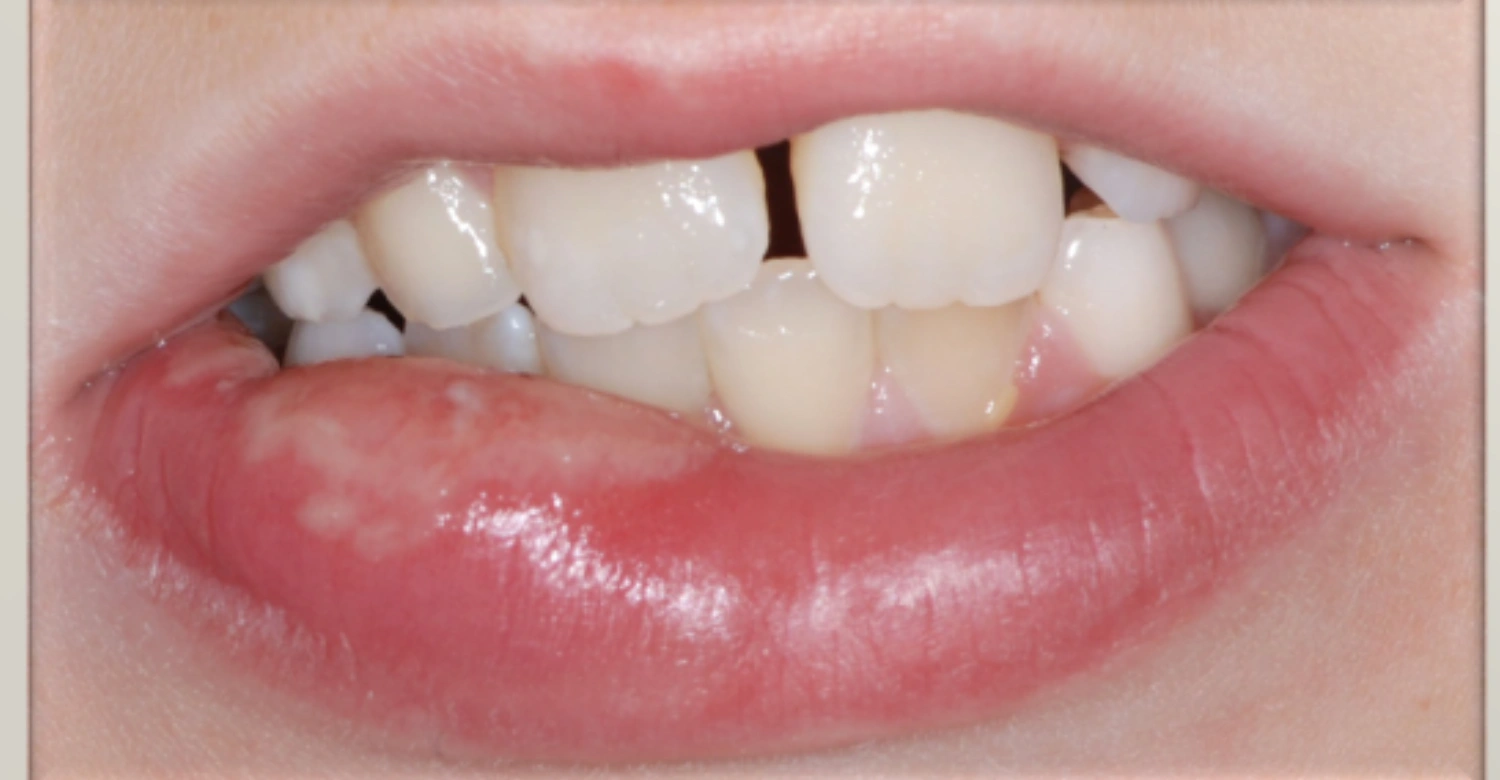
Lip Biting Teeth should be assessed alongside the surrounding soft tissue. Repeated soft-tissue trauma may produce several recognizable clinical signs. These include localized redness, swelling, tenderness, roughness, or tissue thickening. Some lesions appear pale, white, frayed, or irregular. Small erosions or ulcers can develop when trauma is frequent. Chronic lesions may occasionally develop scar-like changes. A published case report documented a lower-lip scar associated with persistent biting. The appearance alone cannot establish the diagnosis. A dentist should consider the lesion's duration, location, and relationship to tooth contacts. Bleeding, worsening pain, or persistent ulceration deserves particular attention. The goal is to remove repeated trauma while confirming that another condition is not present.
Find out more about chickenpox in mouth
Lip Biting vs. Other Oral Habits
Lip Biting Teeth is rarely caused by a single isolated factor. Lip biting belongs to a broader group of repetitive oral behaviors. These behaviors can involve the lips, cheeks, tongue, nails, or teeth. Some occur consciously, while others become automatic. Stress, concentration, sensory stimulation, and dental anatomy can influence their frequency. Their clinical effects vary according to intensity and duration. Research describes several oral habits as potentially contributing to soft-tissue trauma or orthodontic problems. Comparing habits helps clinicians identify the main source of tissue injury. Patients may also have more than one habit simultaneously. For example, someone may bite their lip while clenching their teeth. Treatment should therefore address the entire behavioral and dental pattern.
Lip Biting vs. Cheek Biting
Lip and cheek biting are similar because both repeatedly traumatize oral mucosa. Their locations differ, but the clinical mechanism can be comparable. Cheek biting commonly affects the inner cheek along the biting surfaces. Lip biting usually affects the inner or outer lip depending on the pattern. Both habits can produce thickened, pale, rough, or irritated tissue. A large clinical study cited in the literature reported cheek-biting lesions among common oral mucosal findings. Treatment begins by identifying the biting location and trigger. Dentists may inspect sharp teeth, restorations, and occlusion. Behavioral awareness can also reduce unconscious episodes. Protective appliances are sometimes considered when repeated trauma continues despite behavioral strategies.
Lip Biting vs. Nail Biting
Lip Biting Teeth can be influenced by stress, anatomy, or both. Lip biting and nail biting are both repetitive habits that can occur unconsciously. Nail biting mainly affects fingernails, fingertips, and sometimes the front teeth. Lip biting directly exposes oral soft tissues to repetitive mechanical trauma. Nail biting can also contribute to chipped teeth when hard nail edges contact enamel. Both behaviors may become more frequent during stress or concentration. Treatment commonly starts with awareness and trigger identification. The patient may need alternative behaviors that do not injure oral tissues. Dentists can assess whether tooth damage has already occurred. Behavioral support may be useful when the habit is difficult to control independently. The main goal is reducing repetitive mechanical stress while protecting oral health.
Lip Biting vs. Tongue Biting
Tongue biting and lip biting can both cause soft-tissue trauma. Tongue injuries may be particularly noticeable because the tongue moves constantly during speech and eating. Accidental tongue biting can happen during chewing or sudden jaw movement. Repetitive tongue biting may also occur with neurological or functional disorders. Severe cases have been documented alongside involuntary chewing movements. Lip biting is more commonly associated with behavioral repetition or tooth-lip trapping. Both conditions require assessment when injuries repeatedly fail to heal. Dentists evaluate the location, frequency, severity, and possible neurological or dental contributors. Treatment varies significantly depending on the underlying cause.
How Do Biting Habits Affect Oral Health?
Biting habits can affect oral health through repeated mechanical trauma. The consequences depend on force, duration, frequency, and the tissues involved. Soft-tissue injuries may appear before noticeable dental changes. Persistent trauma can create inflammation and delay normal healing. Some habits can also interact with existing malocclusion or tooth abnormalities. Research emphasizes that long-term effects depend heavily on habit intensity and duration. Patients should therefore focus on controlling persistent behavior rather than fearing occasional accidents. A dentist can determine whether the habit is clinically significant. Maintaining regular dental examinations can also identify changes early. Vitrin Clinic can assess the teeth, bite, and oral tissues during a comprehensive evaluation.
Discover more about veneers and bad breath
What Causes a Lip Biting Habit?
There is rarely one universal cause of repetitive lip biting. The behavior may develop through a combination of psychological, behavioral, and dental factors. Stress and anxiety can increase repetitive oral behaviors in some individuals. Unconscious biting may happen during concentration without emotional distress. Dental alignment can sometimes make the lip easier to trap. Dryness or irritation may also encourage repeated touching and biting. Previous trauma can create swelling that changes the normal relationship between teeth and tissue. Chronic habits can become reinforced when the behavior temporarily provides sensory stimulation. Clinical literature recommends evaluating the underlying cause instead of treating the lesion alone. Understanding the trigger is essential for long-term prevention.
Stress and Anxiety
Stress can increase repetitive behaviors, including several oral habits. Some patients bite their lips during work, studying, driving, or emotionally difficult situations. The behavior may provide temporary sensory stimulation or distraction. Over time, repeated episodes can become automatic. Clinical reports have associated chronic oral biting with emotional and psychological factors. This does not mean every patient who bites their lip has an anxiety disorder. Stress is only one possible contributor. Patients can begin by identifying situations when biting becomes more frequent. Relaxation techniques, habit awareness, and behavioral strategies may reduce episodes. When severe psychological distress is suspected, appropriate professional support may complement dental treatment.
Unconscious Lip Biting
Unconscious biting can happen without the patient realizing it. Many people discover the habit after noticing soreness or repeated tissue damage. The behavior may occur during concentration, reading, working, or screen use. Because it happens automatically, simply deciding to stop may not be enough. Awareness training can help patients recognize early movements before biting occurs. Setting reminders may also make the behavior easier to notice. A dentist can identify characteristic injury patterns during examination. Chronic lesions may correspond closely with the position of specific teeth. Research describes habitual oral behaviors as actions that can become nearly involuntary. This explains why consistent behavioral awareness is often important.
Dental Alignment and Bite Problems
Lip Biting Teeth requires a careful look at the entire bite relationship. Tooth alignment can sometimes contribute to repeated lip trapping. Protruding, rotated, crowded, or displaced teeth may change the normal lip-tooth relationship. A sharp edge can also repeatedly contact the same area. In selected cases, correcting the dental environment may reduce the mechanical trigger. Published case literature describes situations where tooth position contributed to repetitive lip trauma. However, not every alignment problem causes biting. Dentists should evaluate actual functional contacts rather than assuming causation. Orthodontic treatment may be considered when malocclusion clearly contributes to persistent trauma. Restorative treatment may help when a single sharp edge is responsible. The treatment should match the underlying cause.
Dry or Irritated Lips
Dry lips can make patients more aware of their lips and encourage repeated touching. Some people respond to rough or peeling tissue by biting the area. This creates additional mechanical irritation and may delay recovery. Lip licking can worsen dryness in some situations, creating another repetitive cycle. Patients should avoid biting peeling tissue or removing flakes with their teeth. Gentle lip care can reduce the sensory trigger. Persistent cracking, swelling, or lesions should receive professional assessment. Not every lip problem results from a habit. Allergic reactions, infections, inflammation, and other conditions can produce similar symptoms. Treating the underlying lip irritation may therefore reduce the urge to bite.
Other Oral Habits and Behavioral Triggers
Lip Biting Teeth is a pattern that dentists can often recognize quickly. Lip biting may coexist with clenching, grinding, cheek biting, nail biting, or object chewing. Multiple habits can increase mechanical stress within the mouth. Some patients perform these behaviors during stress, concentration, or boredom. Others may develop them following an injury or change in dental anatomy. Research identifies several repetitive oral habits with potential soft-tissue and dental consequences. A complete dental history should therefore ask about related behaviors. Patients may not recognize them as connected. Recording when each behavior happens can reveal useful patterns. Treatment becomes more effective when the main triggers are identified. Behavioral strategies should be practical and sustainable.
Clinical Note
Lip Biting Teeth may resolve once the underlying trigger is identified. The cause of repetitive biting should be investigated rather than assumed. A dentist can assess whether dental anatomy, behavioral triggers, or soft-tissue irritation plays the largest role. The clinician may examine tooth position, bite contacts, restorations, and tissue condition. Persistent lesions require careful differential diagnosis. Research reports that traumatic biting lesions can resemble other mucosal disorders. This is especially important when lesions persist despite stopping the habit. Vitrin Clinic can combine oral examination with dental and occlusal evaluation. The aim is to identify the trigger and protect the tissue. Treatment should be conservative when conservative management is appropriate. More complex cases may require specialist referral.
Learn more about ADHD and gum disease
Can Lip Biting Cause Permanent Tooth Damage?
Lip Biting Teeth can persist for months when the trigger goes unnoticed. Permanent tooth damage is possible in the presence of significant repetitive forces, but ordinary lip biting rarely destroys healthy teeth. The more common concern involves chronic soft-tissue trauma. Dental damage becomes more plausible when biting occurs alongside clenching, grinding, or strong object chewing. Existing restorations or weakened teeth may also respond differently to mechanical forces. A dentist should evaluate sensitivity, cracks, chips, and abnormal wear when these symptoms occur. Research on oral habits emphasizes the importance of habit duration and intensity. The presence of a habit alone does not prove permanent dental injury. Early intervention can reduce ongoing trauma and prevent avoidable complications. Patients should seek evaluation when symptoms persist or worsen.
When Does Lip Biting Become a Dental Concern?
The habit becomes more concerning when it causes persistent or recurrent symptoms. Warning signs include repeated bleeding, ulcers, swelling, significant tenderness, or tissue thickening. Persistent lesions can sometimes develop scarring or other structural changes. Published case reports demonstrate that chronic biting can produce significant soft-tissue lesions. Dental evaluation is also appropriate when tooth sensitivity or visible changes appear. Frequent biting during sleep may require additional assessment. A dentist should investigate whether occlusion contributes to the behavior. Patients should not repeatedly traumatize an area while waiting for spontaneous healing. Early assessment can identify simple triggers and prevent the habit from becoming more entrenched.
Temporary Effects vs. Long-Term Dental Effects
Temporary effects usually include soreness, mild swelling, and localized irritation. These symptoms often improve after the traumatic behavior stops. Long-term effects become more relevant when repeated injury continues for months or years. Chronic trauma can produce thickening, scarring, persistent lesions, or recurring ulcers. Dental effects may occur when repetitive habits interact with tooth position or other oral behaviors. The distinction between temporary and permanent effects requires clinical assessment. Tissue healing capacity also varies among individuals. Patients should monitor whether symptoms improve after reducing the behavior. Failure to improve warrants examination. The goal is to stop repeated trauma before structural changes become established.
Can Repeated Tooth Pressure Change Your Bite?
Repeated oral forces can influence dental structures when sufficient intensity and duration are present. However, the relationship is complex and depends on the specific habit. Lip biting alone should not automatically be considered a cause of major malocclusion. Existing tooth positions can instead contribute to the habit by trapping the lip. This creates a two-way relationship between anatomy and behavior. Research on oral habits supports evaluating duration, frequency, and intensity. Orthodontic assessment may help determine whether tooth movement is clinically meaningful. A dentist can compare current bite relationships with previous records when available. Treatment should target the underlying mechanical problem rather than the symptom alone.
When Should You See a Dentist?
See a dentist when the habit causes persistent pain, bleeding, ulcers, swelling, or tissue changes. An appointment is also appropriate when teeth become sensitive, chipped, cracked, or visibly altered. Persistent lesions should not be assumed to be harmless trauma. Some oral conditions can resemble biting injuries. Professional evaluation becomes especially important when symptoms continue despite stopping the habit. Children with persistent biting may benefit from pediatric dental assessment. Adults may need restorative, orthodontic, or behavioral evaluation depending on the cause. Vitrin Clinic can assess both dental structures and oral soft tissues. Early diagnosis can reduce unnecessary treatment and support more targeted prevention
Read more about roof of mouth rough
.
How to Stop Lip Biting and Protect Your Teeth
Lip Biting Teeth sometimes points to a deeper dental alignment issue. Stopping repetitive biting usually requires identifying the behavior's trigger. Awareness is often the first practical step because many episodes happen automatically. Patients can record when biting occurs and what they were doing immediately beforehand. Dental contributors should also be assessed when the same area is repeatedly trapped. Protecting irritated tissue can help interrupt the trauma cycle. Chronic cases may require behavioral support or an oral appliance. Published clinical reports describe conservative approaches using awareness, counseling, and protective appliances. The correct strategy depends on severity and cause. Patients should avoid attempting irreversible dental changes without professional guidance. A structured plan can make habit reduction more realistic and measurable.
Identify Your Lip Biting Triggers
Start by identifying when the biting occurs. Common situations include working, studying, driving, watching screens, eating, or experiencing stress. Note whether the behavior occurs more frequently at particular times. Also record whether a specific tooth repeatedly catches the same lip area. Trigger tracking can reveal patterns that are difficult to notice naturally. Once the pattern is recognized, patients can introduce an alternative response. Taking a sip of water or relaxing the jaw may interrupt the movement. Reminders on phones or workspaces can increase awareness. The objective is not to blame the patient. Habitual behaviors can become automatic through repetition. Consistent awareness can gradually make the behavior easier to interrupt.
Increase Awareness of the Habit
Lip Biting Teeth is best managed with a combination of awareness and care. Awareness is especially important when biting occurs unconsciously. Patients can use gentle reminders rather than constant self-criticism. A simple reminder can prompt relaxation of the jaw and repositioning of the lips. Tracking successful interruption can reinforce progress. Family members should avoid repeatedly criticizing the behavior. Supportive reminders are generally more useful than embarrassment. Clinical literature describes awareness and behavioral modification as important approaches for repetitive oral habits. The patient should also identify situations where awareness becomes difficult. Sleep-related or highly automatic habits may require additional professional strategies. Progress can be gradual. Reducing frequency and tissue trauma is a meaningful clinical improvement.
Protect Your Lips From Repeated Irritation
Lip Biting Teeth can be reduced through simple behavioral adjustments. Protecting the affected area allows damaged tissue to recover. Patients should avoid biting, picking, or peeling irritated tissue. Gentle oral hygiene should continue around the affected region. Sharp dental edges should not be filed at home. A dentist can determine whether professional smoothing is appropriate. In selected cases, protective appliances may reduce contact between teeth and soft tissues. Case reports describe soft appliances successfully helping chronic traumatic lesions heal. Treatment should always consider comfort, age, bite, and severity. Persistent swelling or ulceration requires professional assessment. Protection works best when combined with strategies addressing the underlying habit.
Address Underlying Dental Problems
Lip Biting Teeth may also respond well to a protective dental appliance. Dental problems should be addressed when they contribute to repeated tissue trapping. A dentist may examine tooth position, sharp edges, restorations, spacing, and occlusion. Correcting the contributing factor can sometimes reduce the mechanical opportunity for biting. A case report demonstrated improvement after dental and behavioral factors were addressed together. Treatment can range from simple smoothing to restorative or orthodontic care. The choice depends on the actual clinical cause. Not every patient needs orthodontic treatment. Unnecessary dental intervention should be avoided when the habit is primarily behavioral. Comprehensive assessment helps match treatment intensity with clinical need.
When Professional Treatment Is Needed
Lip Biting Teeth should never be treated with home remedies alone. Professional treatment becomes appropriate when self-management does not control the habit. Persistent lesions, bleeding, scarring, severe pain, or repeated swelling deserve evaluation. Dental examination is also recommended when bite changes or tooth damage are suspected. Treatment may involve behavioral counseling, protective appliances, restorative care, or orthodontic management. Severe cases can require interdisciplinary care. Published literature emphasizes individualized management because clinical presentations vary. A dentist may also refer patients when neurological or psychological factors appear relevant. Treatment should focus on eliminating repeated trauma while treating any underlying condition. Vitrin Clinic can help coordinate an individualized dental evaluation.
Note : All images used are for editorial and illustrative purposes only and may not originate from the original news provider or associated company.
Clinical Note
Lip Biting Teeth is a habit that benefits from professional evaluation. Habit control works best when the underlying cause is understood. Simply telling a patient to stop may not address unconscious triggers. Dental anatomy, emotional factors, tissue irritation, and other oral habits should be considered. Chronic cases may require more than one intervention. Clinical evidence includes successful conservative management using protective appliances and behavioral approaches. The appropriate treatment depends on lesion severity and patient circumstances. Patients should also receive clear instructions for monitoring healing. A lesion that fails to improve needs reassessment. This approach protects patients from both under-treatment and unnecessary procedures.
Explore the causes of jaw hurts on one side when chewing
Tips for Patients With a Lip Biting Habit
Lip Biting Teeth can look different from one patient to the next. Patients can take several practical steps to reduce repetitive biting. First, identify when the behavior occurs most frequently. Second, create reminders that increase awareness without causing stress. Third, protect irritated tissues from additional trauma. Fourth, maintain regular dental examinations. Fifth, address sharp edges or bite problems professionally. Avoid filing teeth or applying unverified substances to oral lesions. Persistent tissue changes require clinical evaluation. Research supports individualized management rather than one universal treatment method. Patients should also understand that progress may take time. Habits reinforced over months may not disappear immediately. Small reductions in frequency can still represent meaningful improvement.
How to Reduce Unconscious Lip Biting
Lip Biting Teeth often improves once the tissue is allowed to heal. Use gentle reminders during situations associated with the habit. Relax the jaw and keep the teeth slightly apart when resting. Avoid holding the lips tightly between the teeth. During concentration, take short breaks to check jaw and lip position. If biting occurs during stress, relaxation techniques may help reduce the trigger. Patients can also record successful periods without biting. This creates measurable feedback and encourages continued awareness. If the habit remains difficult to control, professional behavioral support may be appropriate. Chronic oral habits can become involuntary through repetition. Patients should therefore focus on consistent practice rather than immediate perfection.
How to Prevent Mouth Irritation
Lip Biting Teeth is a concern that the Vitrin Clinic evaluates carefully. Preventing irritation begins with stopping repeated mechanical trauma. Avoid chewing or peeling the affected lip area. Maintain normal hydration and gentle oral hygiene. Avoid products that cause burning or additional irritation. Protect the tissue when a dentist recommends an appropriate appliance. Do not apply medications to persistent lesions without professional advice. Chronic traumatic lesions may resemble other oral disorders. If swelling, ulceration, or bleeding continues, arrange an examination. Patients should monitor whether the tissue improves after the habit decreases. Lack of improvement may indicate another cause. Early evaluation can prevent unnecessary prolonged irritation.
How to Protect Your Teeth
Protecting teeth involves reducing excessive mechanical forces. Patients should avoid combining lip biting with hard-object chewing or aggressive clenching. Dental examinations can identify sharp edges, worn surfaces, or damaged restorations. A dentist may recommend a protective appliance in selected cases. Appliances should be professionally designed because poorly fitted devices can create new problems. Good oral hygiene remains important throughout treatment. Patients should also avoid filing or reshaping their teeth themselves. Tooth structure does not regenerate after unnecessary removal. If sensitivity or visible cracks develop, prompt assessment is appropriate. Vitrin Clinic can evaluate tooth condition and bite relationships during a comprehensive examination.
When Home Strategies Are Not Enough
Home strategies may not work when biting is strongly automatic or linked to dental anatomy. Persistent lesions can also continue because the tissue itself remains swollen. In these situations, professional assessment becomes more important. A dentist can determine whether an appliance, restorative correction, orthodontic care, or referral is appropriate. Chronic lesions sometimes require biopsy when their appearance is uncertain. Recent literature highlights the need to differentiate traumatic lesions from other pathologies. Patients should not repeatedly self-treat an unexplained lesion. Professional evaluation can provide reassurance while preventing delayed diagnosis. The goal is targeted treatment rather than unnecessary intervention.
Learn more about melioidosis and oral health
What We Notice Clinically
Lip Biting Teeth can be part of a broader pattern of oral habits. Clinicians often notice that repetitive biting produces a recognizable pattern. The lesion may occur exactly where a tooth repeatedly contacts the lip. Tissue can appear thickened, pale, rough, swollen, or irritated. The patient may not realize the habit is occurring. Examination may reveal a sharp cusp, displaced tooth, or other contributing contact. Clinical history is equally important because symptoms may fluctuate with stress or concentration. Chronic oral biting has been associated with traumatic lesions and, in rare cases, scarring. Dentists also look for unrelated conditions that mimic traumatic injury. This prevents the habit from becoming an assumption rather than a diagnosis. At Vitrin Clinic, clinical evaluation focuses on both cause and consequence.
Common Signs of Repetitive Lip Biting
Common signs include localized soreness, redness, swelling, roughness, and thickened tissue. White or pale areas may develop where repeated trauma occurs. Small erosions can appear when biting is particularly frequent. Some patients develop persistent ulcers or scar-like tissue. Published cases document chronic lip lesions associated with repetitive biting. The location often corresponds with the patient's tooth contact pattern. A dentist may ask whether symptoms worsen during stressful or concentrated activities. The clinical appearance should always be interpreted alongside patient history. Persistent lesions deserve examination even when biting seems obvious. Other mucosal conditions can produce similar findings.
Evaluating Tooth Pressure and Bite
Lip Biting Teeth may be mistaken for other oral conditions. Evaluating tooth pressure involves examining how the upper and lower teeth contact during jaw movement. The dentist may assess whether a particular tooth repeatedly catches the lip. Tooth position, overjet, crowding, restorations, and sharp edges can influence this relationship. A functional examination may reveal why biting happens in one specific location. Published case evidence demonstrates that dental positioning can sometimes aggravate repetitive lip trauma. The assessment should not automatically assume that tooth alignment is the cause. Behavioral and anatomical factors often interact. Treatment should address the factor most responsible for continued trauma.
Dr. Rifat Alsaman's Clinical Opinion
Lip Biting Teeth is worth discussing at a routine dental visit. Dr. Rifat Alsaman emphasizes that persistent biting should be evaluated rather than ignored. The priority is identifying whether the problem comes from habit, tooth position, or tissue irritation. Occasional accidental biting usually does not indicate permanent dental damage. Repeated trauma deserves more attention when the same location remains irritated. The examination should include the teeth, bite, lips, and surrounding tissues. Treatment should be conservative when simple habit modification can resolve the problem. When dental anatomy contributes, correcting the mechanical trigger may be necessary. Persistent lesions should receive appropriate diagnostic evaluation. This patient-centered approach avoids unnecessary treatment while addressing genuine risks. Vitrin Clinic can provide a structured assessment when repetitive biting continues.
Clinical Note
Lip Biting Teeth can be managed successfully with the right plan. A clinical diagnosis should be based on examination rather than keyword symptoms alone. Lip irritation can result from trauma, inflammation, infection, allergy, or other disorders. The lesion's appearance and duration help guide the diagnostic process. Persistent unexplained lesions may require specialist assessment. Published literature specifically notes that several mucosal diseases can mimic traumatic biting lesions. This is why prolonged self-treatment is not recommended. Clinicians should also consider neurological conditions when biting is severe or involuntary. Interdisciplinary management can sometimes be necessary. Accurate diagnosis is the foundation of effective treatment.
Discover more about chewing pens and teeth
How Vitrin Clinic Can Help With Lip Biting Teeth
Vitrin Clinic can approach repetitive biting through a comprehensive dental and oral evaluation. The assessment can examine the lips, oral tissues, teeth, restorations, and bite relationship. This helps determine whether the habit is primarily behavioral or mechanically influenced. Patients may also receive guidance on reducing repetitive behavior. When dental anatomy contributes, appropriate restorative or orthodontic options can be considered. The goal is not simply to treat visible irritation. The underlying reason for repeated trauma should also be addressed. Persistent lesions may require additional diagnostic evaluation. Treatment recommendations should be individualized according to clinical findings. A comprehensive approach can reduce unnecessary procedures while protecting oral health.
Comprehensive Dental and Oral Examination
A comprehensive examination begins with a detailed history. The dentist may ask when biting occurs and how frequently it happens. The lips and oral mucosa are then inspected for trauma. Teeth are checked for sharp edges, cracks, wear, restorations, and alignment. Bite relationships may also be assessed during different jaw movements. Additional diagnostic tools can be used when clinically indicated. Persistent lesions may require further investigation. The purpose is to distinguish habitual trauma from unrelated oral conditions. Patients benefit when both symptoms and contributing factors are considered. Vitrin Clinic can integrate these findings into an individualized treatment plan.
Identifying the Cause of Repetitive Biting
Lip Biting Teeth is an issue that becomes easier to treat early on. Identifying the cause requires connecting the patient's behavior with clinical findings. Dentists may look for patterns between specific teeth and injured tissue. They may also ask about stress, concentration, sleep, and other repetitive behaviors. A previous injury may have started the cycle. Dental spacing or tooth displacement can sometimes maintain it. Research shows that conservative management may succeed when awareness and dental correction address the underlying environment. The clinician should avoid assuming a psychological cause without evidence. Likewise, dental alignment should not automatically be blamed. The most useful diagnosis considers behavioral and physical contributors together.
Personalized Treatment and Prevention
Lip Biting Teeth may involve more than one contributing habit. Treatment should match the severity and cause of the habit. Mild cases may improve through awareness and trigger management. Persistent trauma may benefit from a protective oral appliance. Sharp dental edges can sometimes be professionally adjusted. Orthodontic treatment may be considered when tooth position contributes significantly. Severe or unexplained lesions may require specialist assessment. Published evidence supports individualized management because oral habits vary considerably. Vitrin Clinic can develop a treatment pathway based on examination findings. Prevention should continue after symptoms improve. Otherwise, the same habit may cause recurrent trauma.
Explore more about tick borne diseases and oral health
Why Choose Vitrin Clinic for Your Dental Evaluation?
Vitrin Clinic combines dental examination with individualized treatment planning. Repetitive oral habits require more than simply examining a painful area. The dentist should understand the relationship between the lips, teeth, bite, and behavior. This broader evaluation can identify contributing factors that might otherwise be missed. Patients can receive recommendations based on their specific clinical findings. The focus remains on preserving healthy tooth structure whenever possible. Persistent oral lesions are also approached carefully because not every lesion represents trauma. Vitrin Clinic emphasizes clear communication and patient-centered planning. The objective is a healthier oral environment and a practical strategy for preventing recurrence.
Patient-Centered Dental Care
Patient-centered care means considering the patient's symptoms, concerns, lifestyle, and treatment goals. Repetitive habits can be frustrating because many episodes happen unconsciously. Patients should receive practical guidance rather than criticism. The clinician can explain why the habit occurs and how treatment can help. Recommendations should be realistic enough for daily life. This can improve adherence to behavioral and dental strategies. Patients should also understand when monitoring is sufficient and when reassessment is needed. Vitrin Clinic focuses on individualized communication throughout the evaluation process. The goal is to make dental care understandable and actionable.
Modern Diagnostic and Treatment Approach
Modern dental evaluation combines clinical examination with appropriate diagnostic technology. Dentists can assess tooth surfaces, bite relationships, restorations, and soft tissues systematically. Imaging may be considered when deeper dental problems are suspected. Not every patient requires extensive testing. Diagnostic procedures should be selected according to clinical indications. A modern approach therefore means targeted assessment rather than unnecessary technology. Persistent oral lesions may require additional diagnostic procedures when their appearance is uncertain. Current clinical literature supports careful differential diagnosis for chronic traumatic lesions. Vitrin Clinic can use an individualized diagnostic pathway based on the patient's findings.
Expert Guidance for Oral Habits
Expert guidance can help patients understand why repetitive habits continue. Dentists can identify triggers and explain how dental anatomy may contribute. They can also recommend protective strategies when necessary. Habit management may involve behavioral awareness, dental correction, or both. Chronic cases can require collaboration with other healthcare professionals. Research supports individualized management because high-quality evidence remains limited for some oral habits. Patients should therefore receive recommendations based on clinical evaluation. The aim is to reduce trauma without creating unnecessary treatment.
Dr. Rifat Alsaman and the Clinical Team
Lip Biting Teeth is not always obvious to the person experiencing it. Dr. Rifat Alsaman and the Vitrin Clinic clinical team approach oral concerns through individualized assessment. Repetitive biting should be evaluated according to the patient's symptoms and dental anatomy. The team can assess whether the lip is repeatedly contacting a specific tooth. They can also identify signs of tissue trauma and possible bite-related contributors. Treatment recommendations should remain proportional to the clinical problem. Mild habits may need awareness and monitoring rather than extensive intervention. More persistent cases may require protective or corrective treatment. The priority remains preserving oral health while reducing repeated trauma.
Learn more about H5N1 bird flu and oral health
Conclusion About Lip Biting Teeth
Lip Biting Teeth can affect comfort, hygiene, and long-term dental health. Lip biting is often a manageable oral habit, but persistent repetition deserves attention. Occasional biting generally causes temporary irritation rather than permanent dental damage. Chronic trauma can produce soreness, swelling, thickening, ulcers, or scarring. Dental alignment can sometimes contribute by repeatedly trapping the lip. Stress and unconscious behavior may also reinforce the cycle. Research shows that chronic oral biting can create clinically significant soft-tissue injury in some patients. The best approach is to identify the cause and interrupt repeated trauma. Patients should seek professional evaluation when lesions persist or tooth symptoms develop. Vitrin Clinic can provide a comprehensive assessment and individualized treatment strategy. Early attention can help protect the teeth and surrounding oral tissues.
Dive deeper into the oral gut microbiome axis
Reference
FAQs
Dr. Rifat Alsaman has more than 5 years of clinical experience in dentistry and currently serves as the Head of the Medical Team at Vitrin Clinic. He is dedicated to providing exceptional patient care, overseeing treatment planning, and ensuring the highest clinical standards across the team. His expertise, attention to detail, and commitment to continuous professional development have helped countless patients achieve healthier, more confident smiles.


