Dental Implant
September 30, 2026
Implant Supported Dentures vs Traditional Dentures: Which Is Right for You?
 Dr. Rifat Alsaman
Choosing between implant-supported and traditional dentures depends on anatomy, function, maintenance, budget, and treatment preferences. The choice of implant supported dentures vs traditional dentures involves very different clinical requirements. Traditional dentures rest mainly on the oral tissues and underlying ridge. Implant-supported dentures gain additional retention from implants placed into the jawbone. The implant option introduces surgery, healing, attachments, and implant maintenance. It can also improve denture stability for appropriately selected patients. Traditional dentures avoid surgery and usually involve a simpler treatment pathway. However, they can become less stable as the supporting ridge changes. Neither option is automatically right for every patient. The right decision follows a clinical examination and individualized prosthetic assessment.
What Are Implant Supported Dentures and Traditional Dentures?
Both options replace missing teeth using prosthetic teeth set in a denture base. Their main difference is how the prosthesis gains support and retention. Traditional dentures depend mainly on the shape of the mouth and soft tissues. Implant-supported dentures use dental implants as additional anchors. Understanding implant supported dentures vs traditional dentures starts with this distinction. A prosthodontic assessment can determine which design matches the patient's anatomy and needs. Some implant designs remain removable, while fixed designs belong to a separate category. The choice also affects surgery, cleaning, stability, and treatment time.
What are traditional dentures and how do they stay in place?
Traditional dentures replace missing teeth without using dental implants. Complete dentures replace all teeth in one arch. The acrylic base rests over the gums and supporting oral tissues. Retention depends on denture fit, ridge anatomy, saliva, and muscular control. Upper dentures often benefit from broad tissue coverage and palatal suction. Lower dentures have less supporting surface and greater movement risk. Adhesives may help some wearers but cannot correct a poor fit. Regular reviews identify when adjustment or relining becomes necessary. Partial dentures, by contrast, clip onto remaining natural teeth.
What are implant-supported or implant-retained dentures?
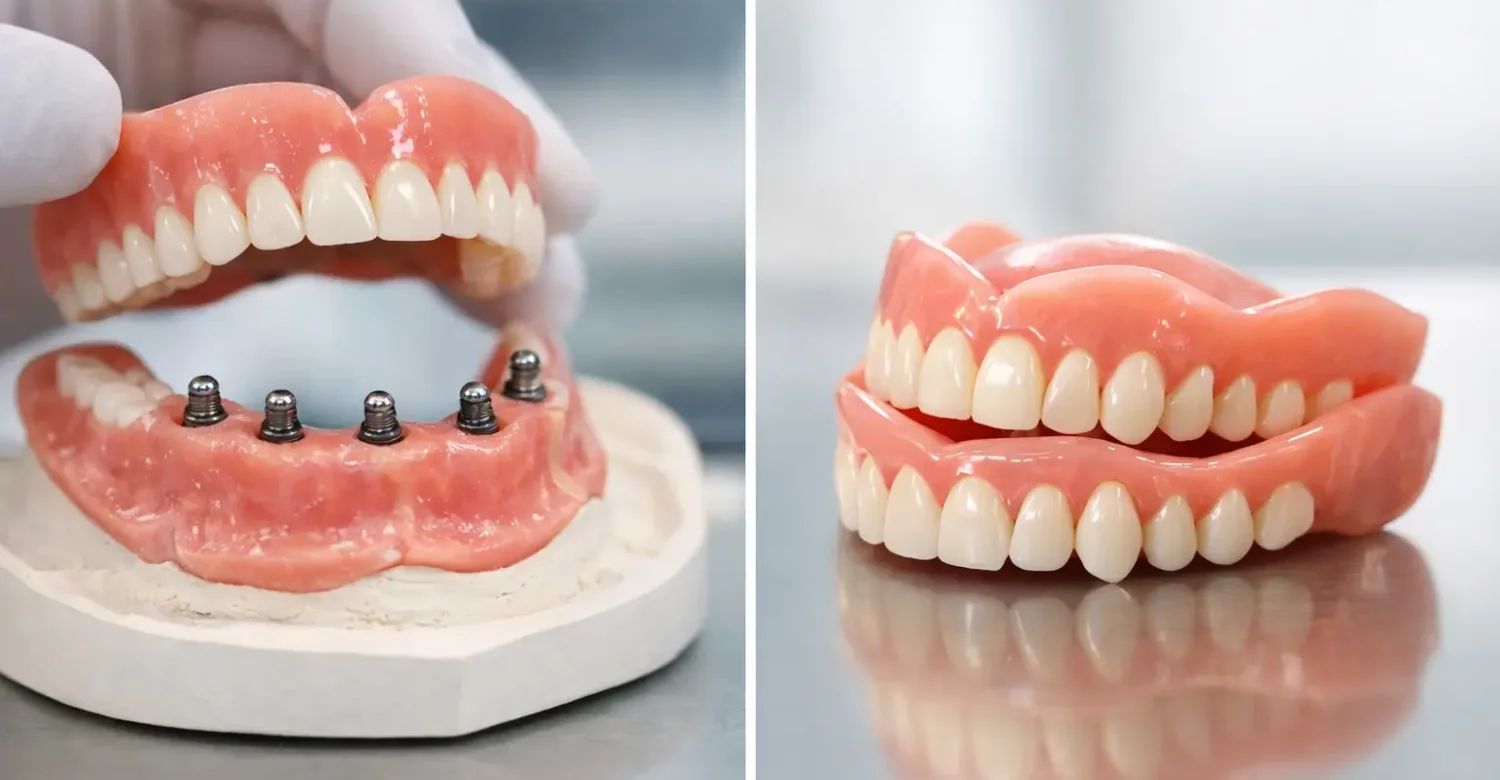
Implant-retained dentures use implants inside the jaw to provide additional retention. The denture attaches through locator attachments, ball attachments, or a connecting bar. The prosthesis remains removable when designed as an overdenture. Implant retention can reduce movement during chewing and speaking. It can also reduce reliance on denture adhesive. These attachments are the defining feature in implant supported dentures vs traditional dentures. Implant number and location depend on anatomy and prosthetic design. Lower dentures often need fewer implants than upper-arch designs.
Are implant-supported dentures removable?
Many implant-supported dentures are removable by the patient. They attach to implants but still come out for daily cleaning. This design is commonly called an implant overdenture. The denture snaps onto locator, ball, or bar attachments. Fixed full-arch restorations, by contrast, stay secured to the implants. The difference affects cleaning, maintenance, cost, and daily expectations. Your dentist should explain exactly which parts you can remove at home. Patients learn a simple technique for inserting and removing it safely.
What is the difference between an implant-supported denture and a fixed implant bridge?
An implant-supported overdenture is removable by the patient. A fixed implant bridge stays attached to implants during everyday use. The two designs therefore need different cleaning and maintenance routines. Fixed bridges may involve more implants and greater prosthetic complexity. They can also create more demanding hygiene around the implants. A fixed restoration is not simply an upgraded overdenture. They are different designs with different benefits and limitations. Planning must consider bone, prosthetic space, bite, smile design, and expectations.
Learn how to prevent enamel loss from Sports Drinks and Dental Erosion
Implant Supported Dentures vs Traditional Dentures: Key Differences at a Glance
The most important differences involve retention, surgery, maintenance, and long-term tissue changes. Traditional dentures usually have a lower initial treatment burden. Implant overdentures add surgery but can improve stability. The table summarizes implant supported dentures vs traditional dentures side by side. Clinical results still vary between patients and arches.
Feature | Traditional Dentures | Implant-Supported Dentures |
Implant surgery | No | Yes |
Patient removable | Yes | Usually yes |
Retention | Tissue and denture fit | Implants plus denture fit |
Bone assessment | Usually clinical and radiographic when indicated | More detailed implant planning |
Stability | Depends strongly on ridge anatomy | Typically greater retention |
Maintenance | Relines, repairs, replacement | Denture plus implant and attachment maintenance |
Initial cost | Usually lower | Usually higher |
Healing period | Generally none from implant surgery | Required after implant placement |
How do they differ in stability and retention?
Traditional dentures depend heavily on tissue support and accurate fitting. Lower dentures can be especially challenging when the ridge is severely resorbed. Implant attachments create additional mechanical retention. This reduces lifting, rocking, or sliding during everyday use. Stability is often the biggest practical gap in implant supported dentures vs traditional dentures. A 2026 systematic review found more favorable oral-health quality outcomes with overdentures. Attachment wear and poor fit can still cause movement. The same review noted substantial heterogeneity across the included studies.
How do they compare chewing and speaking?
Both options restore some ability to chew and speak. Traditional dentures may move when chewing sticky or hard foods. Implant retention can reduce movement and improve functional control. A 2026 clinical study reported higher masticatory efficiency with implant overdentures. Results still vary with denture design, bite, and muscle adaptation. Speech usually improves as the tongue and lips adapt. Some adjustment time is normal with any new prosthesis. Sounds such as "s" and "f" may feel unusual during the first weeks.
How do they differ in comfort and everyday function?
Comfort depends on fit, tissue tolerance, bite, prosthetic thickness, and adaptation. Well-fitted traditional dentures can feel comfortable. Implant overdentures can reduce movement that causes friction or insecurity. However, implants add surgical healing and attachment maintenance. Poorly fitted overdentures can still create sore areas. In implant supported dentures vs traditional dentures, comfort is personal rather than guaranteed. Patient feedback remains essential during adjustments. Comfort is best judged after the denture has been worn for several weeks.
How do they compare in appearance and facial support?
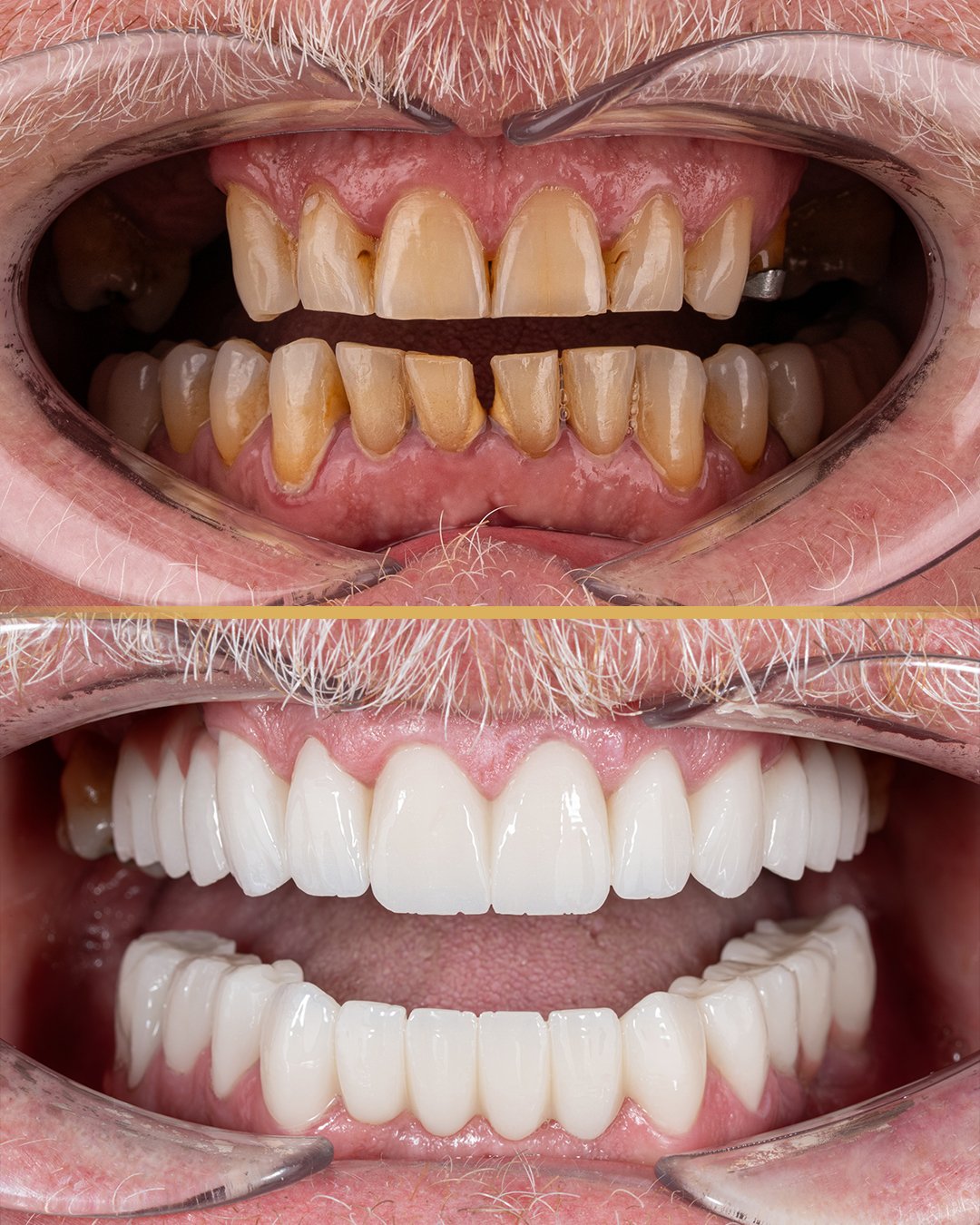
Both options can restore the smile and support facial contours. Traditional dentures use a flange to replace lost soft-tissue volume. Implant overdentures can sometimes reduce the need for extensive flange coverage. The final look depends mainly on tooth arrangement and prosthetic design. Lip support, bite height, and smile display need careful planning. Implant retention alone does not guarantee a more attractive result. Wax try-ins let patients preview the smile before final fabrication. Cosmetic goals should always be balanced with function and oral anatomy.
How do maintenance and cleaning requirements differ?
Traditional dentures need daily cleaning and periodic professional evaluation. They may also need relining as the supporting tissues change. Implant overdentures need the same care plus implant maintenance. Patients must clean around implants and attachments carefully. Mayo Clinic recommends daily denture cleaning and regular dental checkups. Daily routines differ noticeably between implant supported dentures vs traditional dentures. Review intervals should match individual risk and prosthetic design. Abrasive toothpaste and harsh chemicals can damage denture materials.
Which option requires surgery?
Traditional dentures do not require implant surgery. Implant-supported dentures require surgical placement of dental implants. The procedure usually uses local anesthesia. Bone grafting may be needed when anatomy limits implant positioning. Cleveland Clinic reports that implant integration commonly takes several months. Surgery is the clearest dividing line in implant supported dentures vs traditional dentures. Patients should receive a personalized timeline before treatment begins. Exact timing depends on healing, anatomy, loading strategy, and any extra procedures.
Understand the connection between Circulatory System Diseases and Periodontal Disease
How Do Implant Dentures Compare With Conventional Dentures for Jawbone Health?
Jawbone changes are an important part of long-term denture planning. Tooth loss removes root stimulation, and the ridge gradually remodels. Conventional dentures do not recreate natural tooth roots. Implants create an anchor within the bone itself. However, evidence on complete ridge preservation remains mixed. Bone health is a nuanced part of implant supported dentures vs traditional dentures. Implants should never be promoted as guaranteeing complete bone preservation. Anatomy, implant distribution, and chewing forces all influence outcomes.
Why does the jawbone change after natural teeth are lost?
The tooth socket contains bone that adapts to the presence of a root. Extraction starts a natural healing and remodeling process. The ridge gradually loses height and width. The rate varies greatly between individuals and locations. Denture wearing habits and relining frequency may also play a role. This explains why some dentures stay stable longer than others. Continued ridge changes can eventually alter the original fit. Bone loss never follows an identical pattern in two patients.
Can implant-supported dentures help preserve the jawbone around implants?
Implants can provide functional stimulation around the implant site. The FDA lists reduced jawbone shrinkage among potential implant benefits. However, implant therapy does not eliminate all bone remodeling. Areas away from implants may still continue to remodel. Inflammation around implants can also cause supporting bone loss. Bone benefits in implant supported dentures vs traditional dentures should be described honestly. Careful monitoring matters more than assumptions about permanent stability. A 2026 meta-analysis reported high one-year survival for selected short implants.
Do traditional dentures stop bone resorption?
Traditional dentures do not recreate tooth roots inside the jaw. Ridge remodeling can therefore continue after tooth loss. Dentures spread chewing forces across the supporting tissues. Good fitting may reduce excessive localized pressure. Still, a well-fitting denture cannot stop underlying biological remodeling. Relining can restore fit when the ridge changes. A new denture may be needed when adjustments no longer work. Removing dentures at night, when advised, lets the tissues rest.
How does existing bone loss affect denture stability and implant planning?
Severe ridge resorption reduces support for conventional dentures. It can also complicate implant positioning. The clinician evaluates bone height, width, density, and nearby anatomy. CBCT imaging shows three-dimensional anatomy when needed. Upper-jaw planning considers the sinuses. Lower-jaw planning considers the mandibular nerve canal. Existing bone loss often shapes how implant supported dentures vs traditional dentures compare for one patient. Implant numbers cannot be decided from a generic online rule.
Learn about the causes and solutions for Habitual Jaw Clenching and Tooth Wear
What Are the Benefits and Limitations of Each Denture Option?
Each denture approach solves different clinical and practical problems. Traditional dentures offer simplicity, removability, and lower initial complexity. Implant overdentures provide extra retention and functional support. They require surgery, healing, and long-term implant maintenance. A fair look at implant supported dentures vs traditional dentures weighs both sides. The best option depends on anatomy and patient priorities. Neither option removes the need for professional follow-up. Recent evidence favors overdentures for selected functional and quality-of-life outcomes.
What are the potential benefits of implant-supported dentures?
Implant overdentures can improve retention and reduce unwanted movement. They may improve chewing control and oral-health-related quality of life. They can also reduce dependence on denture adhesives. Many patients report more confidence when eating or speaking socially. The prosthesis stays removable, which supports easier cleaning. These benefits depend on successful integration and proper maintenance. The FDA also notes risks linked to implant surgery and failure. Patients also need enough bone or suitable preparation before placement.
What are the advantages of traditional dentures?
Traditional dentures avoid implant placement and its surgical risks. Treatment can begin without a surgical healing period. They are removable and relatively simple to clean. Initial costs are generally lower than implant-based options. They restore speech, appearance, and chewing function. In implant supported dentures vs traditional dentures decisions, these advantages remain significant. A denture can be remade when fit or wear becomes a problem. They also suit patients who simply prefer non-surgical treatment.
What are the limitations of implant-retained dentures?
Implant-retained dentures require surgery and biological healing. Their components can wear or loosen over time. Implants need careful hygiene around the surrounding tissues. Peri-implant disease can affect soft tissue and supporting bone. Some patients need bone grafting first. Treatment may therefore take several months. Maintenance costs should be weighed alongside the initial fee. Implant care also requires a long-term commitment to professional reviews. The denture itself can still fracture, wear, or lose fit.
What problems can occur with traditional dentures?
Traditional dentures can move when tissues provide limited retention. Sore spots may develop where pressure concentrates. Ridge changes can gradually reduce the original fit. Hard or sticky foods may be difficult to manage. Speech can suffer when the denture moves. These problems often lead people to research implant supported dentures vs traditional dentures. Persistent issues deserve a professional assessment rather than home fixes. Over-the-counter reline kits are not recommended for underlying fit problems.
Denture movement or slipping
Movement occurs when the denture no longer fits the supporting tissues. Lower dentures are usually more affected than upper dentures. Tongue movement and jaw anatomy also influence stability. Adhesive may help temporarily but cannot correct a major fit change. A reline or new denture may be needed. Implant retention is another option for suitable patients. Professional review identifies which option fits your situation.
Sore spots and gum irritation
Sore areas result from pressure, uneven contact, or denture movement. New dentures may cause minor irritation while tissues adapt. Persistent soreness should not be accepted as normal. The dentist can locate pressure points and adjust the denture. Poor hygiene can also contribute to tissue inflammation. Mayo Clinic recommends regular dental checks for comfort and oral health.
Changes in fit over time
The mouth keeps changing after tooth loss. Ridge resorption reduces contact between the denture and tissues. The denture may then rock or loosen. A reline can often restore adaptation. ACP guidance recommends professional assessment when dentures no longer fit. Gradual fit loss affects both sides of implant supported dentures vs traditional dentures. Avoid household materials or home modifications to tighten a loose denture.
Difficulty chewing certain foods
Traditional dentures can limit which foods feel comfortable to chew. Hard, sticky, or fibrous foods may cause movement. Cutting food small and chewing on both sides helps. Better fit also improves control. Implant retention can reduce movement for suitable patients. A 2026 comparative study reported better chewing efficiency with implant overdentures.
Does a higher cost always mean an implant denture is more appropriate?
No. Price does not determine clinical suitability. Implant treatment needs surgery, healing, maintenance, and adequate anatomy. A conventional denture may better match some patients' priorities. Some people value avoiding surgery more than extra retention. Others accept greater complexity for improved stability. Price alone should never settle this decision. Compare costs across the entire treatment pathway. A personalized assessment remains the key decision point.
Find out how thick saliva impacts recovery in Salivary Viscosity and Root Canal Retreatment Healing
Who May Be a Candidate for Implant Supported Dentures?
Candidate assessment involves dental, anatomical, surgical, and prosthetic factors. The clinician evaluates available bone and surrounding structures. Oral hygiene, gum health, and medical history also matter. Age alone does not decide eligibility. Candidacy is where implant supported dentures vs traditional dentures becomes personal. The final decision requires examination and imaging when indicated. Existing dentures also reveal useful information about functional limits. Implant options are often explored after unsuccessful conventional denture experiences.
What dental and bone factors are assessed before treatment?
The dentist evaluates the gums, oral tissues, bite, and existing denture. Bone height and width are assessed for implant placement. Nerves, sinuses, and other structures can affect positioning. Available prosthetic space between the jaws is measured. Untreated gum disease or infection may need management first. A successful implant plan begins with the planned final teeth. Any remaining teeth are checked to decide whether they can be kept.
Does everyone need bone grafting before implants?
No. Bone grafting is not required for every implant patient. It depends on existing bone volume and planned implant positions. Many patients have enough bone without augmentation. Alternative positions or shorter implants can sometimes avoid grafting. CBCT imaging helps assess three-dimensional anatomy. Your dentist should explain why grafting is recommended in your case. Treatment should never rest on a routine grafting assumption.
Can older adults receive implant-supported dentures?
Yes, after appropriate clinical assessment. Age alone is not a reason to exclude treatment. The dentist reviews general health, medications, bone, and hygiene. Manual dexterity matters because attachments need daily cleaning. A 2026 meta-analysis of 21 randomized trials found favorable outcomes in older adults. Older adults weighing implant supported dentures vs traditional dentures deserve individual review. The same review reported substantial heterogeneity between studies.
Can implant dentures be considered when conventional dentures are uncomfortable?
Yes, especially when conventional dentures remain persistently unstable. The clinician should first find out why the denture is uncomfortable. Sometimes adjustment, relining, or a better-designed denture solves it. Other cases involve advanced ridge resorption. Implant overdentures can then add retention without a fixed restoration. Recent reviews report improved satisfaction after switching. Expectations should be discussed before any surgical planning.
When might traditional dentures be more appropriate?
Traditional dentures may suit patients who prefer to avoid surgery. They may also suit anatomy that limits implant placement. Medical factors can influence surgical planning. Budget can make conventional dentures more practical. Some people already have comfortable dentures needing only minor changes. For some patients, implant supported dentures vs traditional dentures clearly favors the conventional route. The right option is the one supported by the overall clinical assessment.
Insufficient bone or anatomy that limits implant placement
Implants need suitable bone and safe distance from key structures. Severe bone loss can restrict ideal positions. Grafting or alternative designs may be discussed. Some patients remain unsuitable for implant surgery. Traditional dentures then offer a non-surgical alternative. CBCT imaging clarifies whether adequate anatomy exists.
Medical or medication-related considerations requiring further assessment
Medical history can affect healing and surgical risk. Medications should be reviewed before implant treatment. Some therapies need coordination with the patient's physician. Smoking also increases healing concerns. These factors need individual evaluation, not automatic exclusion. The FDA lists infection and delayed healing among implant risks.
Preference to avoid implant surgery
Some patients simply prefer a non-surgical option. That preference is valid and should be respected. Traditional dentures can meet treatment goals without implants. Implant treatment can be revisited later if circumstances change. Personal preference is a legitimate factor in implant supported dentures vs traditional dentures. The current denture should be optimized first.
Financial or treatment-time considerations
Implant treatment generally costs more upfront. It also requires extra appointments and healing time. International patients may need several coordinated visits. Traditional dentures offer a shorter, simpler pathway. Written estimates clarify what is included and excluded. Compare complete treatment plans rather than headline fees.
Explore how liver health influences gum disease in Cirrhosis and Periodontics
What Does the Diagnosis and Implant Denture Assessment Involve?
Assessment starts with understanding the patient's current problem. Movement, soreness, poor chewing, and speech concerns are documented. The dentist evaluates oral tissues and supports anatomy. Imaging is selected according to the clinical question. A structured assessment turns implant supported dentures vs traditional dentures into an evidence-based choice. Digital planning connects implant positions with the final denture. The existing denture is evaluated as well.
What does a dentist check before recommending implant-supported dentures?
The dentist reviews dental history, current dentures, hygiene, and goals. Gums, oral tissues, and supporting structures are examined. Bite relationships and prosthetic space are assessed. Existing infections are identified and treated first. Bone anatomy is evaluated when implants are considered. The assessment should end with realistic treatment alternatives. Implant placement should never be planned separately from the final prosthesis.
Why are dental X-rays and CBCT scans sometimes needed?
Standard X-rays show useful information about teeth and bone. CBCT provides three-dimensional views of the jaw and nearby structures. It helps evaluate bone volume and anatomical boundaries. It can also support guided surgery with a printed template. Current 2026 consensus guidance supports advanced imaging in appropriate edentulous cases. Imaging should always match diagnostic needs. Not every patient needs the same scans.
How are bone volume, gum health, bite, and existing dentures evaluated?
Bone volume is checked for safe implant positioning. Gum health is reviewed because inflammation affects implant outcomes. Bite analysis guides final tooth position and force distribution. Existing dentures reveal tooth arrangement and functional limits. Digital records improve communication with the dental laboratory. The final prosthetic design should guide implant positioning. Pressure areas and worn denture teeth are also noted.
How does the assessment differ for upper and lower dentures?
Upper and lower arches have different anatomy and retention patterns. Lower dentures lose retention through tongue and floor-of-mouth movement. Upper dentures gain support from broader tissue coverage. The upper jaw also involves sinus anatomy and often softer bone. Implant numbers can therefore differ between arches. The implant supported dentures vs traditional dentures comparison can differ between arches too. Recent consensus guidance addresses upper-jaw rehabilitation separately.
How is the number and position of implants determined?
Implant number depends on anatomy, prosthesis design, loading strategy, and stability goals. Bone quality and prosthetic space also matter. Implant spacing affects how evenly biting forces are shared. More implants do not automatically mean better treatment. Too few may fail to give the intended support. Too many can add surgical and maintenance complexity. Current consensus favors patient-centered implant planning.
When should an existing denture be replaced, adjusted, or modified?
Adjustment may be enough when the denture is structurally sound. Relining restores adaptation after ridge changes. Replacement suits dentures that are badly worn or damaged. Poor tooth position can also justify a new denture. An existing denture can sometimes be modified around new implants. The ACP notes it must be in excellent condition for this. Each denture needs individual evaluation.
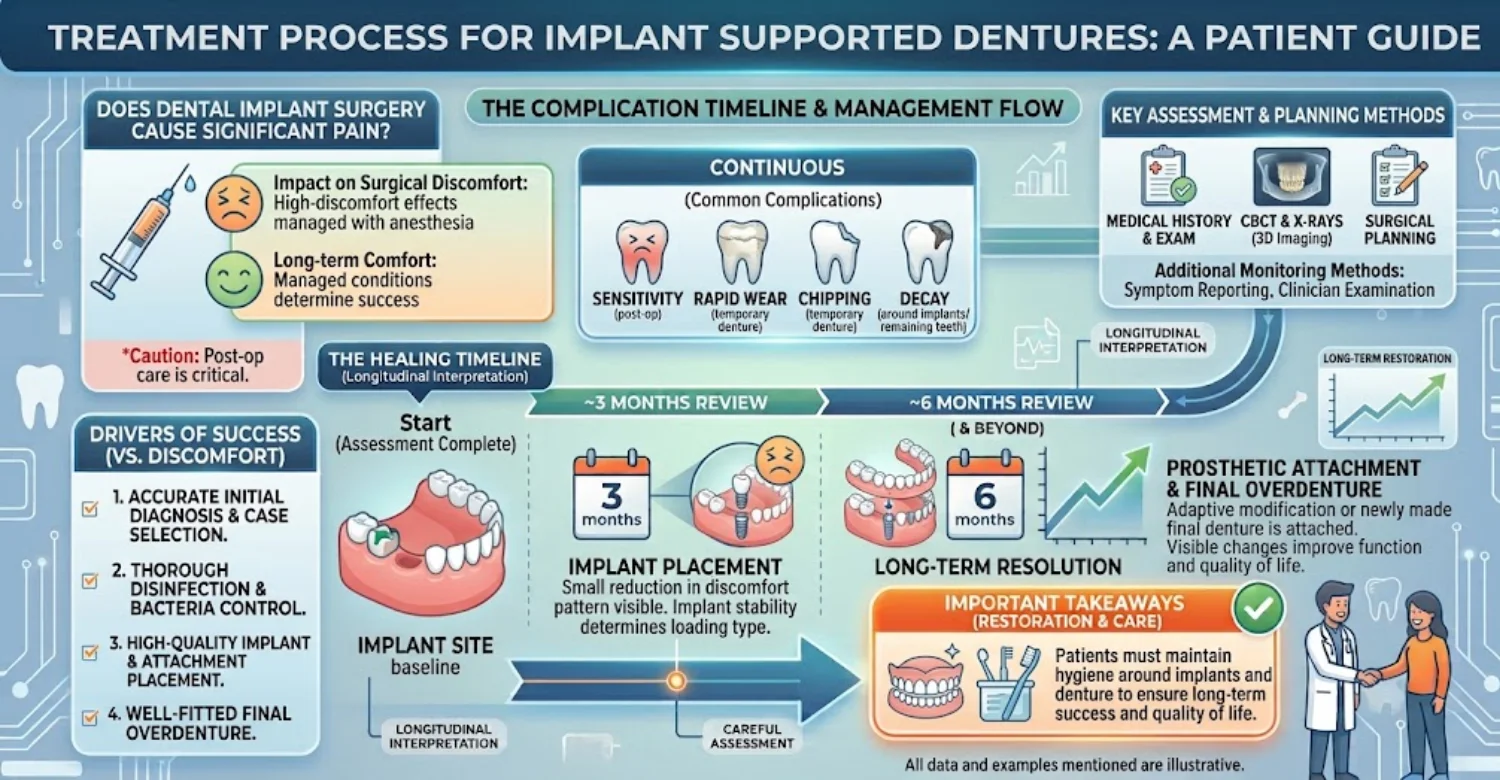
What happens during the consultation and treatment planning stage?
The dentist reviews your dental history and treatment goals. Existing dentures are checked for fit, wear, and tooth position. Imaging is ordered when clinically appropriate. Implant positions are planned around the intended prosthesis. Alternatives, risks, timelines, and maintenance are explained. You should also receive a clear, itemized cost breakdown. Ask questions freely before giving consent.
How are the dental implants placed?
Implants are surgically inserted into selected areas of the jawbone. Local anesthesia is commonly used. Sedation may be available in some clinics. The surgeon prepares each site and positions the implant precisely. A surgical guide may be used when digital planning supports it. Temporary dentures are often worn while healing occurs. The exact procedure varies with bone quality and complexity.
What happens while the implants heal?
The implants undergo osseointegration with the surrounding bone. This process provides the stability needed for the final denture. Cleveland Clinic reports typical healing periods of several months. Healing can take longer after additional procedures. A soft liner may cushion the healing denture. Follow-up visits monitor tissue recovery and implant stability. The healing denture is adjusted to avoid pressure on surgical sites.
How is the denture attached to the implants?
After healing, attachments are connected to the implants. The denture is designed to engage those attachments. Locator, ball, and bar systems are common examples. The dentist checks retention, bite, comfort, and insertion technique. You receive instructions for removal and cleaning. This stage is what separates implant supported dentures vs traditional dentures mechanically. Attachments will need periodic replacement as they wear.
Can an existing denture be converted into an implant-retained denture?
Sometimes, but not every denture is suitable. It needs adequate fit, strength, tooth position, and space. The ACP advises careful examination before adapting an existing denture. A new denture is often better when the current one is worn. Conversion can still work well in selected cases. The decision depends on the quality of the current prosthesis.
What should patients expect during recovery?
Swelling, soreness, and tenderness can occur after implant surgery. The first healing stage commonly improves within about one week. Deeper bone healing continues for several months. Soft foods are usually recommended early on. Follow your clinician's medication and hygiene instructions. Worsening symptoms should prompt a call to the clinic. Activity restrictions depend on the procedure performed.
How long does the complete treatment process take?
Timing depends on placement, healing, grafting, and denture fabrication. Cleveland Clinic states complete implant treatment may take six to twelve months. Integration alone commonly takes three to nine months. Traditional dentures can often be finished within a few appointments. International patients should receive a written visit schedule before traveling. Simple cases need fewer stages than complex ones.
Compare procedure steps in Simple vs Surgical Tooth Extraction
Relief, Recovery, and What Patients Can Expect After Implant Denture Treatment
Recovery focuses on protecting healing tissues and controlling normal discomfort. Soft foods reduce pressure during early healing. Oral hygiene remains important throughout. Denture adjustments may be needed as tissues settle. Recovery is an added consideration when weighing implant supported dentures vs traditional dentures. Worsening pain always requires professional evaluation. Discomfort should generally trend toward improvement. Implant healing continues after early symptoms settle.
What can help relieve normal discomfort after implant placement?
Use medications exactly as your clinician recommends. Cold compresses help reduce early swelling. Avoid pressure around surgical areas. Softer foods make chewing more comfortable. Sleeping with the head slightly raised may ease swelling. Cleveland Clinic describes about one week for initial recovery in many patients. Do not modify the denture without professional guidance.
What foods are easier to eat during early recovery?
Soft foods need less chewing pressure during healing. Good choices include yogurt, eggs, soft pasta, soups, and mashed vegetables. Smoothies and soft fish add useful protein. Avoid very hot foods right after surgery. Hard, sharp, or sticky foods can stress healing tissues. Increase food texture gradually as healing allows. Good nutrition supports healing when chewing is limited.
How should the mouth and denture be cleaned during healing?
Cleaning instructions depend on the surgical sites and denture design. Brush gently and avoid healing incisions. Mayo Clinic recommends rinsing dentures after eating and cleaning them daily. Harsh products can damage denture surfaces. A prescribed mouth rinse may be advised early on. Implant areas need careful plaque control from the start. Clean your tongue and oral tissues gently as well.
How can patients reduce irritation and pressure points?
Pressure points usually come from an uneven or changing fit. Report localized soreness rather than tolerating it. The dentist can find high-pressure areas and adjust them. Relining helps when tissue contours have changed. Never grind or alter the denture at home. Excess pressure during implant healing can also affect comfort. Professional adjustment is safer and more predictable.
When should discomfort be improving rather than continuing?
Normal discomfort should ease steadily as healing progresses. Increasing pain can signal infection or another complication. Persistent swelling also needs assessment. The FDA advises contacting your dentist about loose or painful implants. Fever or unusual discharge should be reported promptly. Early assessment can prevent avoidable complications.
See what fits your needs in Dental Implants vs Implant Supported Dentures
What Are the Possible Side Effects and Complications?
Both treatments carry potential problems. Traditional dentures can cause irritation, instability, and fit changes. Implant overdentures add surgical and implant-related risks. These include infection, component loosening, peri-implant inflammation, and bone loss. Understanding risks is essential when weighing implant supported dentures vs traditional dentures. Mechanical wear can also affect retention components. A 2026 meta-analysis found maintenance events common with short-implant overdentures.
What temporary side effects can occur after implant placement?
Temporary swelling and soreness are common after surgery. Mild bruising and minor bleeding can also occur. The area may feel sensitive during early healing. Symptoms should become less intense over time. Unexpected deterioration requires professional review. Temporary dietary changes may be needed.
What denture-related problems can develop with either option?
Both designs can cause sore areas when fit changes. Denture teeth can wear or fracture. The acrylic base can crack or break. Staining builds up without careful cleaning. Overdentures add attachment wear as another maintenance issue. These shared issues apply to both sides of implant supported dentures vs traditional dentures. Regular reviews catch mechanical problems early.
What complications can affect dental implants?
Implant complications can appear soon after surgery or years later. Infection and delayed healing are recognized risks. Implant loosening can indicate failed integration. Nerve injury is a less common surgical concern. Peri-implant inflammation can damage supporting tissues. Careful planning and imaging help prevent surgical problems. Good plaque control and regular reviews reduce later risks.
Peri-implant inflammation
Peri-implant mucositis is inflammation of the soft tissues without bone loss. Peri-implantitis involves inflammation with supporting bone loss. Early mucositis is often reversible. Warning signs include redness, tenderness, and bleeding around implants. Risk factors include poor plaque control, smoking, gum disease history, and diabetes. Regular professional cleaning helps detect these changes early.
Implant or attachment loosening
An attachment can loosen while the implant stays healthy. The dentist can tighten or replace the component. A mobile implant body is more serious. It needs prompt assessment before normal use continues. Bring any loose part with you to the appointment.
Mechanical wear of retention components
Attachments wear through repeated insertion and removal. Worn inserts reduce retention and allow movement. Replacing these small parts is routine maintenance. A 2026 systematic review listed insert replacement among common maintenance events. This shows why overdentures remain ongoing prosthetic treatments.
Bone loss around an implant
Bone loss around implants can follow inflammation or excessive force. Peri-implantitis is the most common cause. Regular monitoring and X-rays help detect changes early. Early detection usually allows simpler management.
What complications can occur with traditional dentures?
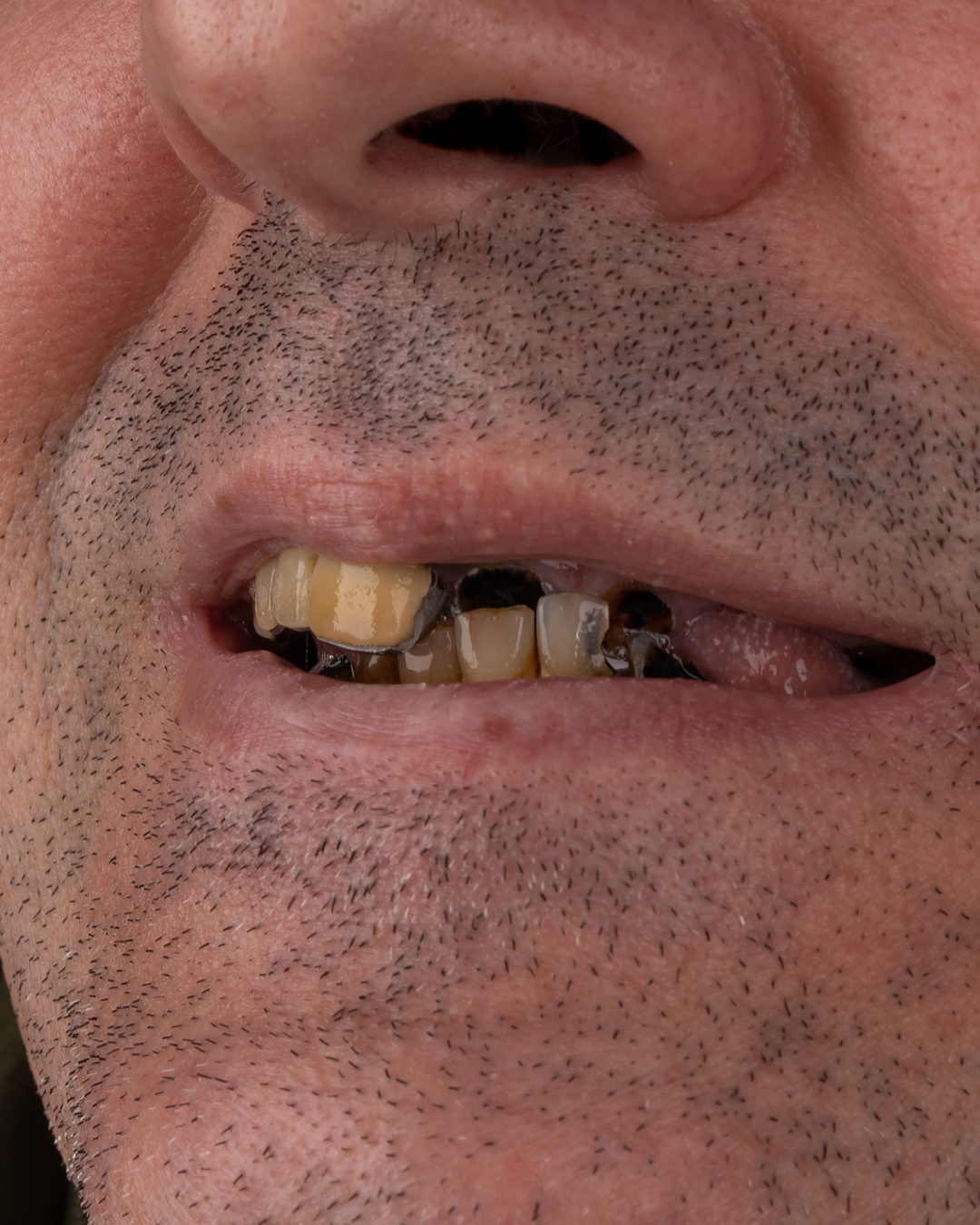
Traditional dentures can create pressure spots and tissue irritation. Poor fit increases movement and reduces chewing comfort. Dentures can fracture after repeated stress. Ridge resorption steadily changes retention. Poor hygiene may cause fungal irritation under the denture. Regular assessment catches these problems early. Loose dentures may also contribute to sores.
When does a denture problem require urgent dental assessment?
Seek urgent care for severe pain, swelling, active bleeding, or infection signs. A sudden mobile implant needs prompt evaluation. A sudden bite change may signal a mechanical problem. Difficulty swallowing or breathing requires immediate medical attention. Never wait for a routine appointment when symptoms are severe.
Note : All images used are for editorial and illustrative purposes only and may not originate from the original news provider or associated company.
How Long Do Implant Supported Dentures and Traditional Dentures Last?
Denture lifespan depends on material, wear, fit, hygiene, and maintenance. Implants and prosthetic parts have separate lifespans. Cleveland Clinic notes many dentures last at least seven years. Longevity is a frequent question in implant supported dentures vs traditional dentures. Individual timelines vary substantially. An implant can remain healthy while the overdenture needs repair or replacement.
What affects the lifespan of a conventional denture?
Longevity depends on material quality and daily chewing forces. Ridge changes shorten the period of good fit. Tooth wear affects function and appearance. Cracks or bite changes may require repair or replacement. Handling dentures over a towel or water basin prevents drop damage. Good cleaning reduces deposits and staining. Regular reviews spot problems before major failure.
What affects the lifespan of an implant-supported denture?
The implants may stay stable for many years with proper care. Cleveland Clinic states implants can last a lifetime with good care. The denture base and attachments need separate maintenance. Inserts wear through repeated use. Acrylic teeth may wear or fracture. The denture itself may need replacing much sooner than the implants.
How often may relining, repairs, or replacement be needed?
There is no universal interval for every denture. Relining is considered when the fit loosens. Repairs suit certain fractures or component problems. Replacement follows when the denture cannot be reliably restored. Both sides of implant supported dentures vs traditional dentures need planned servicing. Overdentures also need periodic attachment insert replacement.
Why do implants and the denture itself have different maintenance timelines?
The implant is anchored biologically in the jawbone. The denture is a removable structure exposed to daily wear. Attachments link the two and absorb mechanical stress. Each component ages at a different rate. Maintenance plans should separate biological monitoring from prosthetic servicing. An intact implant does not guarantee an intact denture.
Evaluate your choices in Implant Supported Bridge vs Traditional Bridge
Implant Dentures vs Conventional Dentures Cost: US, UK, and Turkey
Prices vary by clinic, city, materials, implant number, laboratory work, and complexity. These published 2026 figures are planning benchmarks, not individual quotes.
Treatment | United States | United Kingdom | Turkey |
Implant-supported overdenture | About $8,289 per arch at Aspen Dental | Often about $4,000–$10,000 privately | Around $2,000 starting benchmark for two implants |
Traditional denture | From about $499 per arch at Aspen Dental | Median published price about $928 | About $783 for full acrylic dentures |
US figures come from Aspen Dental's 2026 pricing data. UK and Turkey figures reflect published market and clinic benchmarks.
What is the typical cost of implant-supported dentures in the United States?
Aspen Dental's 2026 pricing reports an average of $8,289 per arch. Its stated range is about $7,628 to $13,297. Other clinics may charge quite different fees. Imaging, extractions, grafting, and sedation can raise the total. Insurance coverage for implants varies widely. Compare complete treatment plans, not advertised numbers. Implant number and treatment needs drive most of the variation.
Indicative 2026 benchmark: around $8,000 for a snap-in denture, with published clinic fees varying substantially
A practical US planning figure is around $8,000 per arch. Published ranges extend above $13,000. One national number can therefore be misled. In US pricing, implant supported dentures vs traditional dentures shows a wide cost gap. Implant count and surgical needs set the final fee.
What is the typical cost of implant-supported dentures in the United Kingdom?
UK private implant-retained denture prices vary considerably between practices. One 2026 UK clinic publishes two-implant retention from $3,800. A 2025 market comparison reported roughly $4,000–$10,000. Fees depend on implant number, prosthesis, and complexity. NHS provision is generally limited to specific clinical circumstances. Extra procedures can raise the overall price. Treat these figures as planning ranges, not national averages.
Indicative 2026 private range: approximately $4,000–$10,000 depending on implant number, prosthesis, and complexity
The $4,000–$10,000 range is a useful private planning estimate. Simpler two-implant designs sit at the lower end. More implants and extra surgery push costs higher. Always confirm what the advertised fee includes. Individual practices may publish prices outside this range.
What is the typical cost of implant-supported dentures in Turkey?
Istanbul listings show two-implant overdentures starting around $2,000. One medical travel platform lists a 2,000–3,000 range. Its reported national average is approximately $1,551. Prices depend on clinic, implant brand, attachments, and package. Some packages bundle imaging and follow-up, while others do not. Travel and accommodation add to the real cost. Request an itemized quote before traveling.
Indicative 2026 benchmark: around $2,000 for a two-implant snap-on denture, with higher prices for additional implants and more complex restorations
A $2,000 figure is a starting point, not a universal fee. Four-implant designs, premium brands, and grafting increase costs. For international patients, implant supported dentures vs traditional dentures in Turkey remains a clinical decision first. Compare the full clinical package before choosing on price.
How much do traditional dentures cost in the United States, United Kingdom, and Turkey?
Traditional dentures generally cost less than implant overdentures. US starting prices can be below $500 per arch. UK private pricing shows a median around $928. Turkey data lists full acrylic dentures around $783. The upfront gap in implant supported dentures vs traditional dentures is substantial everywhere. Materials, laboratory quality, and customization affect the final fee.
United States: basic dentures may start around $499 per arch, with materials and customization affecting the final fee
Aspen Dental publishes basic dentures from $499 per arch under specific savings-plan conditions. Premium teeth and bases usually cost more. Treat this as a starting benchmark, not an average. Additional services can raise the total cost.
United Kingdom: published private denture prices commonly vary widely, with recent 2026 market data placing the median around $928 per denture
A 2026 UK analysis reviewed 498 published denture prices. It found a median of $928 per denture. One in ten prices fell below $500, and one in ten above $2,045. This shows substantial variation across practices.
Turkey: published dental-tourism data lists full acrylic dentures at approximately $783
Dental Departures lists about $783 for full acrylic dentures in Turkey. This is a published dental-tourism benchmark. Individual clinic quotes vary with materials and services. The same source lists prices in several currencies.
What is included in the quoted price for implant-supported dentures?
A complete quote should list surgery, implants, abutments, attachments, denture, and imaging. It should state the number and brand of implants. It should say whether temporary dentures are included. Follow-up visits should be clearly described. Excluded items should be named in writing. Confirm laboratory materials and any warranties. Clear pricing prevents misunderstandings, especially for international patients.
Implant surgery, abutments, attachments, denture fabrication, imaging, and follow-up
These are the core parts of an overdenture plan. Clinics package them differently. Ask for a written breakdown before treatment starts. Some include imaging and follow-up, while others price each stage separately.
Possible additional costs for bone grafting, extractions, sedation, or replacement components
Grafting and extractions may be charged separately. Sedation can add cost. Replacement inserts and repairs create future expenses. Ask for both expected and possible extra costs upfront.
Why should implant dentures and traditional dentures not be compared by headline price alone?
Headline prices describe different treatment pathways. One quote may include imaging and follow-up, another may not. Implants add surgery and component maintenance. Traditional dentures may need relining and replacement later. A headline figure rarely captures implant supported dentures vs traditional dentures fairly. Compare scope, durability, maintenance, and your own priorities instead.
How can patients compare two dental quotes accurately?
Ask both clinics to quote the same prosthetic design. Confirm implant number, brand, and attachment type. Check which imaging and surgery are included. Confirm whether grafting and extractions are extra. Ask about follow-up and replacement parts. Comparable quotes should describe identical treatment stages. International patients should also ask about care after returning home.
Learn which procedure you need between Bone Graft vs Sinus Lift
Which Is More Cost Effective Over Time?
Long-term cost depends on maintenance, repairs, replacement, and durability. Traditional dentures cost less initially. Implant overdentures cost more upfront but may add stability. Attachments and dentures still need servicing. Value over time is a fairer lens than upfront price. A 2026 meta-analysis documented maintenance events even when implant survival was high.
How should upfront cost be compared with maintenance and replacement?
Compare the initial fee with expected maintenance. Traditional dentures may need relines or replacement. Overdentures may need new inserts and prosthetic servicing. Use the same time horizon for both options. Ten-year planning reveals different patterns than first-year pricing. Quality-of-life benefits matter too, though they are harder to price.
What ongoing costs can occur with traditional dentures?
Common expenses include relines, repairs, replacement teeth, and new dentures. Check-ups add ongoing costs. Adhesives and cleaning products are recurring purchases. Repairs become more likely as materials age. Poor fit may also increase adjustment visits.
What ongoing costs can occur with implant-retained dentures?
Overdentures need periodic attachment insert replacement. Relining may still be needed as the ridge changes. Repairs can follow wear or fracture. Professional implant maintenance is an ongoing service. Budgeting for these visits avoids surprises. A recent systematic review listed insert replacement and relining among maintenance events.
Does the number of implants change the overall cost significantly?
Yes. Each implant adds surgical and component costs. More implants may also add imaging and prosthetic complexity. Implant numbers should follow clinical needs, not price targets. Current consensus guidance supports individualized implant planning.
What We Notice Clinically
Many patients seek implant dentures because their conventional dentures move. For them, stability matters more than appearance. Others mainly want to avoid surgery. In daily practice, implant supported dentures vs traditional dentures is rarely a simple either-or choice. Individualized care works better than one universal design. Upper and lower dentures should never be treated as interchangeable cases.
Why patients often consider implant dentures after struggling with denture movement
Movement interferes with eating and speaking. It can also create sore areas. Many patients first try adjustments or adhesives. When those fail, implant retention becomes worth considering. The existing denture should still be evaluated first. The goal is better mechanical control, not simply adding implants.
Why stability concerns can be more important than appearance for some denture patients
Many patients already have good-looking dentures. Their real problem is movement during function. Social meals can make this especially stressful. Implant attachments address the mechanical problem directly. Patient priorities should guide the consultation. Appearance still matters, but stability often drives daily satisfaction.
A common misconception: implant-supported dentures are not the same as fixed full-arch implants
An overdenture is usually removable by the patient. A fixed full-arch prosthesis stays attached to the implants. The two differ in cleaning, cost, and design. Check which one appears on your treatment quote. Confusing the two creates unrealistic expectations.
Why upper and lower dentures should not automatically be treated as equivalent cases
Upper and lower arches differ in anatomy and retention. The lower arch is affected by tongue movement and smaller support area. The upper arch involves sinuses and different bone density. Implant numbers can therefore differ between arches. Planning must reflect these anatomical differences.
Why bone quantity, prosthetic space, bite, oral hygiene, and patient priorities all matter
Bone quantity decides where implants can safely go. Prosthetic space affects denture thickness and attachment choice. Bite determines how forces reach implants and tissues. Hygiene influences long-term implant health. Priorities decide acceptable surgery, maintenance, and cost. A balanced plan weighs all these factors together.
Clinical Note: Dr. Rifat Alsaman’s Perspective on Implant Retained Dentures
Dr. Rifat Alsaman, Head of the Medical Team at Vitrin Clinic and cosmetic dentist, emphasizes individualized planning. Implant-retained treatment should start with a full assessment of oral health and expectations. Denture stability is only one part of the decision. Bone, gums, bite, prosthetic space, and hygiene ability also matter. From this view, implant supported dentures vs traditional dentures is answered by examination, not trends. The final plan should reflect each patient's anatomy and goals. Patients should understand each stage before surgery begins.
Why individualized assessment matters more than choosing a treatment based on popularity
Popular treatments are not automatically suitable for everyone. Implant overdentures involve surgery and long-term maintenance. Traditional dentures remain appropriate when they function well. Online trends cannot replace a clinical examination. Consensus guidance supports patient-centered rehabilitation planning.
Check out the differences in Root Canal vs Crown
Tips for Patients Choosing Between Implant and Traditional Dentures
Go into your consultation with specific questions. Treatment names alone do not describe the full design. A written plan should list implants, attachments, materials, stages, and follow-up. These tips make implant supported dentures vs traditional dentures easier to evaluate. International patients also need clear information about travel timing.
What should you ask your dentist before choosing an implant denture?
Ask why implant retention suits your anatomy. Ask how many implants are planned and why. Ask whether the denture will be removable. Ask whether your current denture can be adapted. Ask about attachment replacement and long-term maintenance. Request alternatives with their advantages and limitations.
What should you bring to a denture or implant consultation?
Bring your current dentures. Bring previous X-rays or scans if available. Provide a full list of medications. Describe past denture problems clearly. International patients should share their travel dates. Mention pain, movement, chewing difficulty, or speech concerns.
What information should be included in a written treatment plan?
The plan should state the diagnosis and proposed prosthesis. It should list implant numbers and positions. It should describe surgery and healing stages. Costs should be itemized by stage. Possible extra charges should be disclosed. Follow-up and maintenance should be included in writing.
What should you ask about implant brands, prosthetic materials, maintenance, and aftercare?
Ask which implant system will be used. Check that replacement parts are widely available. Ask which attachment system holds the denture. Discuss the denture materials. Ask who handles maintenance afterward. Ask how often attachments usually need replacing.
What should international patients ask about follow-up after returning home?
Ask which visits must happen before you fly home. Ask what to do if an attachment loosens abroad. Request copies of imaging and treatment records. Ask which components were used. Good records help your local dentist continue care. Confirm the recommended healing and loading timeline.
.jpg)
.jpg)
.jpg)
.jpg)
How Can Patients Protect Their Dentures and Oral Health?
Daily care supports comfort, hygiene, and denture longevity. Traditional dentures are cleaned outside the mouth. Overdentures also need cleaning around implants and attachments. Daily habits protect results on both sides of implant supported dentures vs traditional dentures. Regular examinations catch irritation or mechanical wear early.
How should traditional dentures be cleaned?
Rinse dentures after meals. Brush them daily with a soft brush and denture cleanser. Avoid abrasive toothpaste. Clean your tongue and gums after removing them. Never use hot water, which can warp the material. Store them in water or a recommended solution when out.
How should implant-supported dentures be cleaned?
Remove the overdenture as instructed. Clean the denture and attachment surfaces carefully. Brush around the implants and gumline. Clean under bars with floss or interdental brushes. A water flosser helps some patients reach tricky areas. Regular professional maintenance monitors the tissues around implants.
Why are regular dental and implant maintenance visits important?
Check-ups catch problems before symptoms become severe. Dentures lose fit as the ridge changes. Attachments wear and lose retention. Implant tissues can develop inflammation. Reviews also include oral cancer screening. X-rays may be taken when clinically appropriate.
What habits can damage dentures, attachments, implants, or supporting tissues?
Avoid hot water and abrasive cleaners. Never force attachments into place. Avoid chewing very hard objects. Never attempt home repairs with household glue. Smoking harms implant healing and gum health. Follow your dentist's maintenance instructions closely.
When Should You See a Dentist About Denture Problems?
Persistent symptoms should not be managed at home indefinitely. A sudden change in fit deserves examination. Implant mobility needs prompt review. Swelling or bleeding may signal inflammation or infection. Early care often prevents bigger treatment later. Ongoing chewing trouble may also point to fit or bite issues.
What warning signs should not be ignored?
Watch for persistent pain, swelling, bleeding, or infection signs. Sudden denture movement can mean a major fit change. Implant mobility may signal failure. Ongoing chewing or speech difficulty deserves assessment. Do not wait for symptoms to become severe.
Persistent pain or sore areas
Temporary irritation is normal with new dentures. Persistent sore spots need professional evaluation. Adjustment or relining usually solves them. Never keep wearing a painful denture without assessment.
Swelling, bleeding, or signs of infection
Swelling and bleeding suggest tissue inflammation. Around implants, they may indicate peri-implant disease. Infection may need professional treatment. Report them promptly.
A suddenly loose denture or attachment
Sudden looseness may come from attachment wear or denture damage. It may also reflect a change in fit. An examination identifies the cause. Avoid home adjustments.
Implant mobility or a change in how the denture fits
A mobile implant is never routine. The FDA advises contacting your dentist if an implant feels loose or painful. A changed fit can also affect implant loading.
Persistent difficulty chewing or speaking
Ongoing chewing or speech problems often reflect fit or bite changes. Professional adjustment can usually restore function. Persistent symptoms are not simply normal adaptation.
When should a dental problem be assessed urgently?
Seek urgent care for severe pain, major swelling, active bleeding, or infection signs. Mobile implants need prompt evaluation. Breathing or swallowing difficulty needs emergency medical care. Delayed care can make complications harder to manage.
At Vitrin Clinic: Personalized Assessment for Implant Supported Dentures
Vitrin Clinic approaches implant denture treatment through individualized clinical assessment. The process considers oral tissues, bone, bite, existing dentures, and goals. Digital diagnostics support planning when clinically appropriate. At Vitrin Clinic, implant supported dentures vs traditional dentures is discussed openly, including non-surgical options. Recommendations follow clinical findings, not standard packages. International patients receive coordinated planning before travel.
How Vitrin Clinic assesses oral health before implant treatment
Vitrin Clinic examines the teeth, gums, and oral tissues before implant treatment. The team reviews your dental history and denture concerns. Bone and anatomy are assessed before placement. Existing dentures are checked for possible adjustment or reuse. Bite and prosthetic requirements complete the picture.
Digital X-rays and CBCT imaging when clinically appropriate
Digital X-rays provide key diagnostic information. CBCT adds three-dimensional detail when implant planning requires it. It shows bone volume and nearby structures. Vitrin Clinic uses imaging according to each case's clinical needs. The aim is accurate diagnosis and safe planning.
How digital planning can support implant-supported denture treatment
Digital planning links implant positions to the intended denture. It helps evaluate spacing, angulation, and restorative needs. Three-dimensional records improve communication with the laboratory. Digital workflows also simplify planning for international patients. The final design still requires clinical validation.
How the number and position of implants are planned for the individual patient
Vitrin Clinic evaluates bone anatomy and denture design together. Implant distribution should support the planned overdenture. The number of implants never comes from a generic formula. Imaging and digital planning confirm feasible positions. Long-term maintenance is considered from the start.
Internal-link opportunity: Dental Implant Treatment
Use "Dental Implant Treatment" as the internal-link anchor here. Link it to Vitrin Clinic's main dental implant treatment page. This guides readers toward treatment-specific information. Keep the anchor descriptive and natural. Relevant internal links also support topical organization.
How Vitrin Clinic Supports Your Treatment Journey
Vitrin Clinic's support extends beyond implant placement. Coordination covers diagnostics, scheduling, prosthetic planning, and aftercare. International patients receive extra logistical support. Every plan stays individualized to the clinical findings. Clear explanations help patients understand each stage.
Consultation and review of the patient’s dental history and concerns
The consultation begins with your current dental situation. Existing dentures and past treatments offer valuable clues. You can describe movement, discomfort, chewing, and appearance concerns. The team links those concerns to examination findings. This creates a more patient-centered discussion.
Coordinating diagnostics and individualized treatment planning
Vitrin Clinic coordinates examination and digital diagnostics. Imaging is chosen when clinically appropriate. Plans connect implant positions to the proposed denture. Individual anatomy remains the foundation. Digital records support smooth laboratory communication.
Explaining treatment stages, expected timelines, and aftercare
You should understand surgery, healing, fitting, and maintenance. Vitrin Clinic explains the sequence before treatment begins. Aftercare instructions cover hygiene and warning signs. Clear communication prepares patients for recovery.
Supporting international patients with treatment coordination
International patients need scheduling around travel dates. Coordinators align consultations and procedures. Transport and accommodation support may also be arranged. The clinical schedule still follows your treatment plan. Coordination is part of Vitrin Clinic's service model.
Follow-up planning after implant-supported denture treatment
Follow-up checks healing, retention, bite, and tissue health. Attachments are inspected during maintenance. International patients receive guidance for care back home. You should know when future reviews are due.
Read about managing a sharp fragment in your gum with Bone Spicule
Ready to transform your smile?
Talk to our team and get a personal FREE treatment plan.
Key Takeaways
The two approaches differ mainly in retention, surgery, maintenance, and anatomy. Traditional dentures remain effective for many patients. Implant overdentures add retention for well-selected cases. A personalized examination should guide the final decision. Costs differ widely between countries and designs. Maintenance is needed with either option.
Implant supported dentures vs traditional dentures: the main differences
Traditional dentures rest on oral tissues and avoid surgery. Implant overdentures attach to implants for extra retention. The implant option requires surgery, healing, and ongoing maintenance. Both options restore appearance, speech, and chewing. Traditional dentures may need relining as the ridge changes.
The factors that determine which option may be suitable
Suitability depends on bone, gum health, prosthetic space, and bite. Medical history and the current denture also matter. Personal preferences about surgery, cost, and time count too. No single factor should decide treatment alone.
What patients should know about cost, maintenance, relief, and side effects
Traditional dentures cost less upfront. Implant overdentures cost more but may add stability. Both need follow-up and maintenance. Persistent discomfort or implant mobility needs professional assessment. Attachment components can wear or loosen.
Warning signs that require professional dental assessment
Seek care for persistent pain, swelling, or bleeding. Sudden looseness or implant mobility needs prompt review. So does ongoing chewing or speech difficulty. Early care keeps problems simpler.
Why a personalized clinical evaluation should guide the final treatment choice
Anatomy varies greatly between patients and between arches. Treatment should follow diagnosis, not popularity. Consensus guidance supports patient-centered planning. Your examination, not a trend, should decide.
Reference
FAQs
Dr. Rifat Alsaman has more than 5 years of clinical experience in dentistry and currently serves as the Head of the Medical Team at Vitrin Clinic. He is dedicated to providing exceptional patient care, overseeing treatment planning, and ensuring the highest clinical standards across the team. His expertise, attention to detail, and commitment to continuous professional development have helped countless patients achieve healthier, more confident smiles.


