Dental Implant
August 5, 2026
Subperiosteal vs Bone Graft Implant : Which Option Is Better for Severe Bone Loss?
 Dr. Rifat Alsaman
The better option depends on the patient’s bone condition, treatment goals, and overall oral health. Bone grafting may be preferred when rebuilding the natural jawbone is possible and traditional implants can be placed afterward. Subperiosteal implants may be a suitable alternative for patients with severe bone loss who lack enough bone support for conventional implants.
When choosing between a subperiosteal design and a bone graft, dentists evaluate factors such as bone volume, healing ability, treatment timeline, and long-term stability. Advanced imaging, including CBCT scans, helps determine the most predictable solution. At Vitrin Clinic, specialists create personalized implant plans based on each patient’s anatomy to restore function, comfort, and a natural-looking smile.
Introduction: Understanding Subperiosteal vs Bone Graft Implant Options
Severe jaw bone loss can make traditional dental implants challenging because conventional implants require enough healthy bone support for stability. The choice between advanced implant solutions depends on bone condition, treatment goals, and long-term oral health needs. Subperiosteal vs Bone Graft Implant options represent two different approaches for patients with insufficient jawbone volume.
A bone graft rebuilds lost bone structure before implant placement, allowing traditional implants to be inserted after healing. A subperiosteal implant uses a customized framework positioned above the jawbone, creating support without requiring significant bone rebuilding. According to implant dentistry research, bone volume evaluation remains one of the most important factors affecting implant planning and predictable outcomes.
Studies indicate that reduced bone height and width are common reasons patients are considered unsuitable for conventional implants. At Vitrin Clinic, treatment decisions begin with detailed digital diagnosis to identify the safest and most effective solution. Each patient receives a personalized approach based on anatomy, function, and aesthetic expectations.
Why Bone Loss Can Prevent Traditional Dental Implant Placement
Dental implants depend on sufficient jawbone quality and quantity to achieve primary stability. When teeth are missing for long periods, the jawbone naturally begins to shrink because it no longer receives stimulation from tooth roots. Bone resorption can reduce the available space needed for implant placement. In advanced cases, the remaining bone may become too thin or weak to support traditional implants without additional procedures.
Research in implant dentistry shows that significant bone changes often occur within the first year after tooth loss. Studies commonly report that the alveolar ridge can lose noticeable width and height during the healing process. Patients with severe bone loss may require alternative solutions, including bone regeneration procedures or customized implant designs.
The correct option depends on individual anatomy rather than a single treatment approach. Studies show that after tooth extraction, the alveolar ridge can lose approximately 30–60% of its width during the first 6 months, making implant placement more challenging. Bone height reduction may also continue over time without tooth replacement. These changes explain why many patients require bone augmentation or alternative implant solutions.
How Jaw Bone Loss Affects Dental Implant Success
Jawbone plays a critical role in dental implant stability because it acts as the foundation surrounding the implant structure. When bone volume decreases, achieving strong implant support becomes more difficult. Insufficient bone may affect implant positioning, chewing efficiency, and long-term stability. Poor implant placement can also influence the appearance of the final restoration, especially in visible smile areas.
Clinical studies show that successful implant treatment depends on multiple factors, including bone density, implant design, surgical technique, and patient maintenance. Bone quality is considered one of the strongest predictors of predictable healing. Advanced bone loss does not always mean patients cannot receive fixed teeth.
Modern implant dentistry provides different solutions depending on the severity of bone deficiency. Dr. Rifat Alsaman at Vitrin Clinic emphasizes that accurate diagnosis is essential before selecting any implant method. Understanding the patient’s bone condition helps create a safer and more predictable treatment plan.
Common Causes of Severe Jaw Bone Loss
Severe jaw bone loss can develop from several dental and medical factors. The most common cause is prolonged tooth loss because the jawbone requires stimulation from natural teeth to maintain volume. Advanced gum disease is another major contributor because infection can destroy the supporting tissues around teeth. When periodontal disease progresses, bone levels may gradually decrease.
Other causes include trauma, infections, failed previous dental treatments, and long-term denture use. Some patients also experience natural bone limitations due to anatomy or age-related changes. According to global oral health data, more than 3.5 billion people worldwide experience oral diseases, and severe tooth loss remains a significant condition affecting older adults.
Tooth loss is strongly associated with progressive jawbone resorption because the bone no longer receives stimulation from natural tooth roots, with many developing reduced jawbone support over time. This creates a growing demand for advanced implant alternatives. Before choosing treatment, dentists evaluate the cause and severity of bone loss. At Vitrin Clinic, understanding the reason behind bone deficiency helps specialists recommend the most suitable rehabilitation approach. This connection is covered in more depth in our guide to whether you can get dental implants after dentures.
Clinical Note: Why Bone Evaluation Is the First Step Before Implant Treatment
A complete bone evaluation is essential before any implant procedure because every patient has unique anatomical conditions. Dentists must understand bone thickness, height, density, and surrounding structures. Traditional X-rays may provide limited information for complex cases. Advanced imaging technologies allow specialists to analyze the jaw in three dimensions before treatment begins.
Clinical experience shows that inaccurate bone assessment can increase treatment risks. Proper evaluation helps determine whether patients need bone augmentation, customized implants, or other advanced solutions. Studies in digital implant dentistry highlight that three-dimensional planning improves surgical accuracy and supports better treatment communication between patients and clinicians.
Clinical studies show that CBCT imaging provides more accurate three-dimensional evaluation compared with traditional two-dimensional radiographs, especially in complex implant cases. Research indicates that digital planning can improve implant positioning accuracy and help reduce surgical complications.
The Role of CBCT Scans and Digital Implant Planning
CBCT scans provide detailed three-dimensional images of the jawbone, nerves, sinuses, and surrounding anatomical structures. This technology allows dentists to evaluate complex implant cases more accurately. Digital implant planning uses CBCT information to simulate treatment before surgery. Specialists can identify available bone, determine implant positioning, and predict possible challenges.
For patients with severe bone loss, digital planning becomes especially important. It helps dentists compare different approaches, including regeneration procedures and customized implant solutions. Research shows that computer-assisted implant planning can improve surgical precision and reduce unexpected complications.
These technologies support more predictable outcomes for complex dental rehabilitation. At Vitrin Clinic, advanced digital workflows help create personalized treatment plans. Patients can better understand their options and receive care designed around their specific oral condition. This diagnostic technology is explained in full in our guide to CBCT and 3D imaging.
What Is a Subperiosteal Implant?
A subperiosteal implant is an advanced dental implant solution designed for patients with limited jawbone support. Unlike traditional implants, it does not depend on placing a titanium post deeply inside the jawbone. Instead, it uses a customized framework positioned above the bone and beneath the gum tissue.
The main purpose of this approach is to provide fixed tooth support when bone volume is insufficient for conventional implants. When evaluating a subperiosteal framework against a bone graft procedure, this option may be considered when rebuilding the jawbone is difficult or requires extensive procedures.
Modern subperiosteal implants are created using digital scans and customized designs. This allows the framework to match the patient’s unique anatomy. At Vitrin Clinic, specialists evaluate bone condition carefully before recommending this treatment. The goal is to provide a stable, functional, and natural-looking smile solution. For the full clinical service page, see Subperiosteal Implants at Vitrin Clinic.
How Customized Subperiosteal Dental Implants Work
Customized subperiosteal implants are designed according to the patient’s individual jaw structure. The dentist first performs detailed imaging to understand bone shape, available space, and important anatomical areas.
The customized framework is placed over the jawbone surface while remaining under the gum tissue. Small extensions support the final dental restoration and provide attachment points for fixed teeth.
This technique can benefit patients who have severe bone loss and want to avoid complex bone reconstruction procedures. When comparing options in Subperiosteal vs Bone Graft Implant, customization becomes an important factor in treatment planning.
Clinical success depends on proper diagnosis, accurate design, and professional surgical execution. Patients must also maintain excellent oral hygiene after treatment.
Vitrin Clinic uses digital planning methods to create personalized implant strategies based on each patient’s needs and expectations.
3D Printed Subperiosteal Implants for Severe Bone Loss Patients
Three-dimensional printing has improved the development of modern subperiosteal implants. Digital technology allows manufacturers to create highly accurate frameworks that match the patient’s jaw anatomy.
The process begins with advanced imaging, followed by computer-assisted design. The final framework is produced according to the patient’s specific bone structure and treatment requirements.
For individuals with severe bone loss, this technology may provide an alternative when traditional implant placement is challenging. In Subperiosteal vs Bone Graft Implant discussions, digital customization is one reason some patients consider this approach.
Research in personalized implant dentistry shows that computer-designed solutions can improve accuracy and treatment predictability. However, patient selection remains essential.
Recent studies on patient-specific 3D-printed subperiosteal implants report promising outcomes, with researchers highlighting improved adaptation to individual anatomy and better treatment planning compared with traditional manually fabricated designs. However, long-term clinical studies are still developing.
What We Notice Clinically: Using Subperiosteal Implants in Advanced Bone Loss Cases
Clinically, patients with advanced jawbone loss often require careful evaluation before selecting an implant solution. Severe bone deficiency can limit traditional treatment options and require alternative approaches.
Dentists usually examine bone condition, gum health, medical history, and patient expectations. In these cases, Subperiosteal vs Bone Graft Implant evaluation helps identify which method may provide better support.
Many patients are concerned about lengthy procedures and recovery periods. Customized implant solutions may reduce the need for additional bone rebuilding in selected cases.
However, not every patient is automatically suitable for subperiosteal implants. Proper planning remains the foundation of successful treatment.
At Vitrin Clinic, clinical decisions focus on safety, function, and long-term oral health. Every case receives an individualized assessment before treatment recommendations are made.
Dr. Rifat Alsaman’s Opinion on Patient Selection and Treatment Planning
Dr. Rifat Alsaman explains that successful implant treatment begins with selecting the right option for the right patient. Severe bone loss requires detailed analysis rather than a standard approach.
According to his clinical perspective, dentists should evaluate bone condition, soft tissues, bite function, and overall oral health before deciding between available solutions.
When discussing Subperiosteal vs Bone Graft Implant, he emphasizes that treatment selection should be based on predictable outcomes and patient needs.
Digital diagnosis helps clinicians understand complex cases and create more accurate plans. The goal is not only replacing missing teeth but also restoring comfort and confidence.
At Vitrin Clinic, treatment planning combines modern technology with clinical experience. This approach helps patients receive personalized implant solutions designed around their unique conditions.
What Is Bone Grafting for Dental Implants?
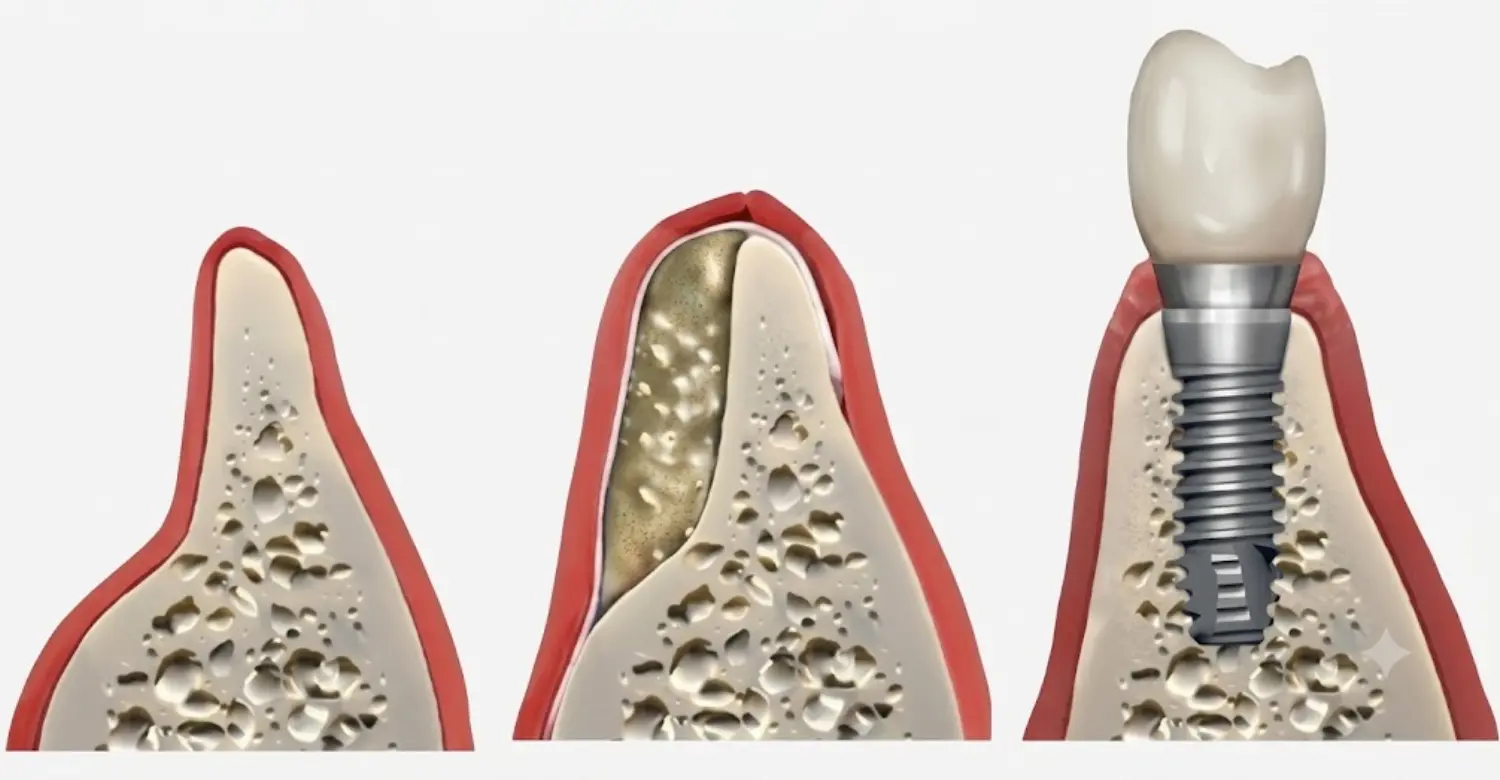
Bone grafting is a regenerative dental procedure used to rebuild lost jawbone before traditional implant placement. When patients lose teeth, the supporting bone may gradually shrink and become insufficient for implant stability.
The procedure adds bone material to areas with reduced volume, allowing the body to develop stronger support over time. In Subperiosteal vs Bone Graft Implant treatment planning, bone grafting is considered when improving natural bone structure is possible.
Different graft materials can be used depending on the patient’s condition, including synthetic materials, donor bone, or processed animal-derived materials. The dentist selects the appropriate option after evaluating bone quality and treatment goals.
Bone grafting may require a healing period before implants are placed. This timeline depends on the amount of regeneration needed and the patient’s healing response.
Research on guided bone regeneration shows that bone grafting can successfully increase ridge width and height in many implant patients. Studies report that implant placement after successful augmentation can achieve high survival rates when proper surgical protocols and maintenance are followed. For the full clinical breakdown, see our dedicated guide to bone grafting for a tooth implant.
How Bone Grafting Rebuilds Jaw Support Before Implant Placement
Bone grafting works by adding volume to areas where the jawbone has weakened or disappeared. The graft material acts as a framework that encourages new bone formation.
Over time, the body integrates the graft and develops stronger bone structure. This process creates improved support for dental implants and helps increase treatment predictability.
The success of regeneration depends on several factors, including graft size, patient health, surgical technique, and oral hygiene habits. Proper planning is essential for achieving stable results.
When comparing options in Subperiosteal vs Bone Graft Implant, bone grafting focuses on rebuilding the natural foundation before implant placement. This approach may be suitable for patients who can achieve adequate bone regeneration.
Vitrin Clinic evaluates bone conditions through advanced digital diagnosis. The team develops treatment plans that consider both immediate needs and long-term oral function.
Types of Bone Grafting Procedures Used in Implant Dentistry
Dental implant specialists use several bone grafting techniques depending on the location and severity of bone loss. Each method has different goals and healing requirements.
A socket preservation graft may be performed after tooth extraction to maintain bone volume. Ridge augmentation can rebuild areas where the jaw has become narrow or reduced.
Sinus lift procedures are commonly used when the upper jaw lacks sufficient bone height near the sinus area. More complex cases may require larger grafting procedures.
Clinical research shows that guided bone regeneration can improve implant placement possibilities in patients with insufficient bone. However, success depends on careful patient selection and treatment planning.
In Subperiosteal vs Bone Graft Implant decisions, dentists consider whether regeneration can provide enough support or whether alternative solutions are more appropriate.
At Vitrin Clinic, specialists choose techniques based on each patient’s anatomy and desired treatment outcome. Sinus lift procedures are covered in complete detail in our guide to sinus lift surgery and implant sinus lift surgery.
Clinical Note: When Bone Regeneration Is the Better Choice
Clinically, bone regeneration can be an excellent option for patients who have enough healing potential and prefer traditional implant placement. The goal is to restore natural bone support before inserting implants.
Dentists often recommend grafting when bone loss is moderate and predictable regeneration can be achieved. This approach allows implants to function within a stronger biological foundation.
However, severe bone loss may require longer treatment periods and additional procedures. Therefore, evaluation is necessary before deciding between different solutions.
During Subperiosteal vs Bone Graft Implant planning, specialists analyze bone dimensions, treatment timeline, and patient expectations.
Studies in implant dentistry indicate that successful grafting depends on factors such as graft stability, infection control, and patient compliance.
At Vitrin Clinic, clinical assessments help determine whether bone regeneration offers the most suitable path toward a stable and natural smile.
Dr. Rifat Alsaman’s Opinion on Bone Augmentation Treatment Decisions
Dr. Rifat Alsaman highlights that bone augmentation decisions should always be based on accurate diagnosis and realistic expectations. Every patient presents different levels of bone loss and healing capability.
He explains that bone grafting can provide excellent results when the patient has suitable conditions for regeneration. However, extensive bone loss may require alternative strategies.
When evaluating Subperiosteal vs Bone Graft Implant, the priority should be long-term stability rather than choosing the simplest procedure.
Modern implant dentistry offers multiple solutions, but each option requires professional evaluation. Factors such as bone anatomy, oral health, and patient goals influence the final recommendation.
At Vitrin Clinic, treatment planning combines clinical experience with digital technology. This helps patients understand available options and choose a solution designed for their individual needs.
Subperiosteal Implant vs Bone Graft Implant: Key Differences
Choosing between advanced implant approaches depends on the patient’s bone condition, treatment goals, and overall oral health. These two methods follow different philosophies.
Bone grafting focuses on rebuilding lost jawbone to allow traditional implant placement. Subperiosteal implants provide support through a customized framework without requiring extensive bone reconstruction.
The main difference involves how stability is achieved. Bone grafting strengthens the natural foundation, while subperiosteal implants create an alternative support structure.
In Subperiosteal vs Bone Graft Implant comparisons, factors such as healing time, bone availability, surgical complexity, and long-term expectations must be considered.
There is no universal solution for every patient. A detailed evaluation helps determine which approach provides the most predictable result.
At Vitrin Clinic, specialists review each case individually to recommend an implant strategy focused on comfort, function, and aesthetic outcomes.
Treatment Process Comparison Between Subperiosteal Implants and Bone Grafting
The treatment process differs significantly between these two approaches because each method addresses bone deficiency differently. Bone grafting usually begins with rebuilding the jaw structure before implant placement. The patient may need several months of healing before receiving permanent teeth.
Subperiosteal implant treatment focuses on designing a customized framework based on digital scans. After planning, the framework is positioned above the jawbone to support fixed restorations.
When comparing Subperiosteal vs Bone Graft Implant, the treatment timeline depends on bone condition, surgical requirements, and patient healing ability. Some bone graft cases require multiple stages, while customized implant solutions may reduce the need for regeneration procedures.
Clinical studies show that digital planning improves accuracy in complex implant treatments. Proper diagnosis helps reduce unexpected complications and improves patient understanding.
At Vitrin Clinic, specialists create personalized treatment pathways using advanced technology. Each patient receives guidance about procedures, recovery expectations, and long-term maintenance.
Bone Graft vs Subperiosteal Implant Recovery Time
Recovery time depends on the complexity of treatment, the patient’s healing response, and the procedures involved. Bone grafting usually requires a healing period because the body needs time to develop stronger bone support.
Patients undergoing grafting may wait several months before implant placement. The exact timeline depends on graft size, location, and biological response.
Subperiosteal implant recovery can differ because it does not focus on rebuilding large amounts of bone. Instead, healing involves soft tissue recovery and adaptation to the customized framework.
In Subperiosteal vs Bone Graft Implant recovery comparisons, patients should understand that faster treatment does not always mean better results. The correct option depends on achieving reliable long-term function.
Research indicates that patient compliance, hygiene, and regular follow-up appointments influence implant success.
Bone graft healing commonly requires approximately 3–9 months depending on the graft type, location, and patient healing response. Subperiosteal implant treatment may reduce the need for a separate regeneration phase, but recovery still depends on surgical complexity and soft tissue healing. General bone graft healing is covered in our guide to recovery after a bone graft, and timing for the next step is explained in when you can get a dental implant after a bone graft.
Success Factors and Long-Term Stability Comparison
Long-term implant success depends on multiple factors, including diagnosis, treatment planning, surgical technique, and patient maintenance. Both approaches can provide successful outcomes when properly selected.
Bone grafting success relies on effective regeneration and integration of the graft material. The regenerated bone must provide enough support for implant stability.
Subperiosteal implant success depends on accurate customization, framework design, and proper placement. Patient selection remains one of the most important factors.
In Subperiosteal vs Bone Graft Implant evaluations, dentists consider bone condition, functional requirements, and aesthetic expectations before recommending treatment.
Studies in implant dentistry report that maintenance and professional follow-up significantly influence long-term implant performance. Patients who maintain good oral hygiene generally experience better outcomes.
Modern dental implants generally demonstrate high survival rates, with many studies reporting implant success rates above 90% after 10 years when patients maintain proper oral hygiene and attend regular follow-up visits. Long-term outcomes depend heavily on patient selection and maintenance. Long-term complication risks are covered in our guides to peri-implantitis and dental implant failure.
Can Subperiosteal Implants Replace Bone Grafting?
Subperiosteal implants may replace bone grafting in selected patients with severe jawbone loss. They provide an alternative method when traditional implants cannot be supported because of limited bone volume.
Instead of rebuilding the jaw through regeneration, this approach uses a customized structure placed above the bone. This allows some patients to receive fixed teeth without extensive bone augmentation.
However, subperiosteal implants are not suitable for every situation. The patient’s anatomy, gum health, bite forces, and treatment goals must be carefully evaluated.
When discussing Subperiosteal vs Bone Graft Implant, specialists focus on finding the safest and most predictable option for each individual case.
Modern implant dentistry provides more choices than previous decades. Advanced imaging and customized designs have expanded possibilities for patients with complex bone conditions.
At Vitrin Clinic, specialists assess every factor before recommending a treatment plan. The goal is restoring function, appearance, and confidence with appropriate implant solutions.
When Subperiosteal Implants Are an Alternative to Bone Augmentation
Subperiosteal implants may become an alternative when traditional bone rebuilding procedures are unsuitable or when patients prefer to avoid extensive grafting. This option is commonly considered for individuals with significant bone loss.
The decision depends on several clinical factors, including remaining bone structure, soft tissue condition, and overall oral health. Dentists must confirm that the framework can achieve stable support.
In Subperiosteal vs Bone Graft Implant planning, alternative solutions are considered when regeneration may require lengthy procedures or provide limited benefits.
Clinical experience shows that customized implants can help selected patients regain fixed teeth without undergoing major bone reconstruction. However, careful diagnosis remains essential.
Patients should understand that every treatment has advantages and limitations. Professional evaluation helps determine whether this approach matches their expectations.
At Vitrin Clinic, advanced digital planning helps identify suitable candidates and create individualized solutions for severe bone loss cases.
Dental Implants Without Bone Graft Surgery: Who May Benefit?
Dental implants without bone graft surgery may benefit patients who have insufficient bone for traditional implants but qualify for alternative implant designs. These solutions focus on creating support without rebuilding large amounts of jawbone.
Candidates are usually evaluated through CBCT imaging, clinical examination, and digital planning. Dentists analyze bone anatomy, gum condition, and functional requirements.
In Subperiosteal vs Bone Graft Implant decisions, avoiding graft surgery may be attractive for patients seeking fewer treatment stages. However, the correct approach depends on individual circumstances.
Research in implant technology continues to develop customized solutions for patients with challenging anatomy. These advancements provide new possibilities for complex cases.
Patients should discuss expected outcomes, maintenance needs, and possible limitations before treatment.
Vitrin Clinic provides comprehensive assessments to help patients understand whether no-graft implant options can meet their functional and aesthetic goals. Alternative implant designs are covered in our guides to mini implants and the 3 types of dental implants.
Limitations of Choosing Subperiosteal Implants Instead of Bone Grafting
Although subperiosteal implants offer important benefits, they also have limitations that patients should understand before treatment. Not every patient with bone loss will qualify for this approach.
The success of treatment depends heavily on accurate framework design and suitable anatomical conditions. Patients with certain oral health problems may require additional treatments first.
Bone grafting may still be preferred when rebuilding natural bone provides better long-term support. The decision should consider future stability, maintenance, and patient expectations.
When comparing Subperiosteal vs Bone Graft Implant, specialists evaluate both benefits and limitations before recommending a solution.
Clinical statistics show that personalized treatment planning improves outcomes in complex implant cases. Individual assessment remains more important than choosing a specific technique.
At Vitrin Clinic, specialists explain all available options clearly. Patients receive guidance based on their unique condition rather than general recommendations.
Who Is a Candidate for Subperiosteal Implants After Bone Loss?
Subperiosteal implants may be considered for patients who have significant jawbone loss and cannot receive traditional implants without extensive reconstruction. These implants are designed for complex cases where available bone volume is limited.
Candidates usually undergo detailed evaluation, including CBCT imaging, digital planning, and a complete oral health assessment. Dentists examine bone condition, gum health, bite forces, and overall treatment goals.
When reviewing Subperiosteal vs Bone Graft Implant options, specialists determine whether bone regeneration can provide predictable support or whether a customized framework may be more suitable.
Patients who choose this treatment should understand that proper maintenance is essential for long-term success. Regular dental visits and excellent oral hygiene help protect the restoration.
Clinical studies suggest that subperiosteal implants are mainly considered for patients with severe ridge atrophy who cannot receive conventional implants without extensive reconstruction. Patient selection remains one of the most important factors influencing treatment predictability. This is explored further in our guides to whether you can get dental implants with bone loss and implants with bone loss in Turkey.
Patients With Severe Jaw Bone Loss and Bone Resorption
Severe jawbone loss occurs when the supporting structure of the jaw gradually decreases after tooth loss, infection, trauma, or advanced gum disease. This condition can create challenges for traditional implant placement.
Bone resorption affects both the height and width of the jaw ridge. When significant changes occur, conventional implants may not achieve sufficient stability.
Patients with advanced bone loss may require specialized treatment options designed around their existing anatomy. In Subperiosteal vs Bone Graft Implant planning, dentists evaluate whether rebuilding bone or using a customized implant structure provides better results.
Clinical studies indicate that bone loss after tooth extraction can progress rapidly during the first months. This highlights the importance of early evaluation and treatment planning.
At Vitrin Clinic, advanced diagnostic methods help identify the severity of bone loss. The team creates individualized solutions based on each patient’s condition and expectations.
Patients With Insufficient Bone for Traditional Dental Implants
Traditional dental implants require adequate bone volume to support the implant fixture securely. When bone height or width is insufficient, additional procedures may be necessary.
Some patients may not have enough natural bone because of long-term tooth loss, previous infections, or anatomical limitations. These conditions can make conventional implant placement more complicated.
In Subperiosteal vs Bone Graft Implant assessments, dentists compare whether increasing bone volume through regeneration is suitable or whether an alternative support method is more appropriate.
Advanced implant dentistry provides solutions for patients who were previously considered difficult cases. Customized treatment approaches can improve access to fixed teeth options.
Proper diagnosis remains essential because every patient has different bone characteristics. A solution that works for one individual may not be appropriate for another.
Vitrin Clinic uses digital planning and clinical expertise to evaluate complex implant cases and develop personalized treatment strategies. Patients managing diabetes specifically should also review our guide to whether diabetics can get dental implants.
Advanced Dental Implant Options for Low Bone Density Patients
Patients with low bone density may require advanced implant solutions because reduced bone quality can affect implant stability. Dentists evaluate density levels before choosing a treatment approach.
Modern dentistry offers several options, including customized implant designs, regenerative procedures, and specialized techniques for complex cases.
When considering Subperiosteal vs Bone Graft Implant, specialists examine bone quality, available support, and the patient’s long-term expectations.
Low bone density does not always prevent patients from receiving fixed teeth. However, treatment planning must be carefully performed to reduce risks and improve predictability.
Research shows that digital diagnosis and customized approaches have expanded treatment possibilities for patients with challenging conditions.
At Vitrin Clinic, specialists combine modern technology with clinical experience to identify suitable options. The focus remains on restoring chewing ability, comfort, and natural aesthetics.
Tips for Patients: Preparing for Implant Treatment After Bone Loss
Preparing properly before implant treatment can improve the overall experience and support better outcomes. Patients should begin with a comprehensive consultation and accurate diagnosis.
Before treatment, it is important to discuss medical history, medications, oral hygiene habits, and previous dental procedures. These details help dentists create safer treatment plans.
Understanding Subperiosteal vs Bone Graft Implant differences allows patients to make informed decisions with their dental team.
Patients should maintain healthy gums, avoid smoking, and follow professional instructions before and after procedures. Good preparation supports healing and long-term implant stability.
Clinical experience shows that patient cooperation plays an important role in successful implant rehabilitation. Following aftercare recommendations can reduce complications.
At Vitrin Clinic, patients receive guidance throughout the treatment journey. The team explains every step clearly, helping patients feel confident before receiving advanced implant solutions. Smoking's specific effect on healing is covered in our guide to smoking after dental implants.
Questions to Ask Your Implant Dentist Before Treatment
Before choosing an implant procedure, patients should ask important questions to understand their treatment options. Clear communication helps create realistic expectations and improves decision-making.
Patients can ask about available procedures, expected recovery time, possible risks, and long-term maintenance requirements. Understanding these details supports better treatment choices.
When discussing Subperiosteal vs Bone Graft Implant, patients should ask which option matches their bone condition and personal goals.
Important questions include:
Why is this treatment recommended for my condition?
Are there alternatives available?
How long will the complete process take?
What results should I expect?
How can I maintain my new teeth?
A detailed consultation helps patients understand their options before committing to treatment.
At Vitrin Clinic, specialists encourage open discussions to ensure patients receive personalized recommendations based on their individual oral health needs.
Advantages of Subperiosteal Implants Compared With Bone Grafting
Subperiosteal implants provide several potential advantages for selected patients with severe bone loss. The main benefit is that they can offer fixed tooth support without requiring extensive bone rebuilding.
Traditional bone grafting focuses on restoring lost jaw structure before implant placement. However, some patients may prefer alternatives that reduce additional surgical procedures.
In Subperiosteal vs Bone Graft Implant comparisons, treatment advantages depend on individual anatomy, timeline preferences, and clinical requirements.
Modern customized designs allow specialists to create frameworks based on detailed digital scans. This improves accuracy and supports personalized treatment planning.
Patients should remember that every procedure has specific indications and limitations. The best choice depends on professional evaluation.
At Vitrin Clinic, specialists analyze each case carefully to determine whether subperiosteal implants provide a suitable solution for restoring function and smile aesthetics.
Avoiding Additional Bone Graft Surgery
One potential advantage of subperiosteal implants is avoiding additional bone graft surgery in selected patients. This can be important for individuals who have extensive bone loss or prefer fewer surgical stages.
Bone graft procedures may require additional healing periods before implant placement. Some patients may seek alternatives because of treatment duration or complexity.
When discussing Subperiosteal vs Bone Graft Implant, avoiding grafting does not mean avoiding planning. Detailed diagnosis remains necessary for predictable results.
Advanced digital imaging allows specialists to design customized solutions based on existing jaw anatomy.
Clinical studies emphasize that patient selection is essential when using alternative implant approaches. Proper candidates may achieve functional improvements with customized solutions.
Vitrin Clinic evaluates each patient individually. The team focuses on selecting treatments that balance safety, effectiveness, comfort, and long-term expectations.
Minimally Invasive Alternatives to Traditional Bone Grafting
Modern implant dentistry has introduced alternative solutions for patients who cannot or do not want to undergo extensive bone grafting procedures. These approaches focus on using advanced planning and customized designs to restore missing teeth.
For selected patients, subperiosteal implants may provide support without requiring major bone rebuilding. This can reduce the number of surgical stages compared with traditional regeneration procedures.
When evaluating Subperiosteal vs Bone Graft Implant, dentists consider bone condition, treatment goals, recovery expectations, and long-term stability.
Minimally invasive approaches do not mean eliminating the need for professional planning. Detailed imaging and clinical evaluation remain essential before treatment begins.
Research in digital implant dentistry shows that customized solutions can improve accuracy and patient communication. These developments have expanded options for individuals with complex bone conditions.
At Vitrin Clinic, specialists use advanced diagnostic technology to identify suitable treatment pathways. The focus remains on achieving functional, aesthetic, and predictable results for every patient.
Fixed Teeth Solutions Without Bone Augmentation
Fixed teeth solutions have become possible for many patients who previously had limited treatment options because of bone loss. Advanced implant techniques allow dentists to create stable restorations using different support methods.
Some patients may benefit from customized implant approaches that do not require traditional bone augmentation. These solutions can restore chewing ability, speech, and smile appearance.
In Subperiosteal vs Bone Graft Implant planning, the decision depends on whether rebuilding bone provides better support or whether an alternative framework can achieve the desired outcome.
Patients should understand that fixed teeth require careful planning and proper maintenance. Oral hygiene, regular examinations, and professional care influence long-term performance.
Clinical insights show that patient-specific treatment plans often provide more predictable outcomes than standard approaches.
At Vitrin Clinic, specialists combine digital planning with advanced implant techniques. Each treatment plan is designed according to the patient’s anatomy, expectations, and functional requirements.
Limitations and Considerations Before Choosing Subperiosteal Implants
Although subperiosteal implants provide an important option for severe bone loss cases, they are not suitable for every patient. Careful evaluation is necessary before selecting this treatment.
The quality of the supporting tissues, gum condition, bite forces, and overall health can influence treatment success. Patients with certain conditions may require additional procedures before implant placement.
When comparing Subperiosteal vs Bone Graft Implant, dentists must consider both advantages and possible limitations of each method.
A customized implant solution requires accurate imaging and experienced treatment planning. Poor patient selection may increase the risk of complications or unsatisfactory results.
Clinical evidence highlights that personalized diagnosis is one of the strongest factors affecting implant outcomes.
At Vitrin Clinic, specialists explain all available options clearly. Patients receive detailed information about benefits, limitations, recovery expectations, and maintenance requirements before making decisions.
Why Subperiosteal Implants Are Not Suitable for Every Patient
Subperiosteal implants are designed for specific cases involving significant bone loss, but they are not a universal replacement for traditional implants or bone grafting.
Patients must have suitable soft tissue conditions and enough anatomical support for proper framework placement. Severe infections or uncontrolled oral health problems may require treatment first.
In Subperiosteal vs Bone Graft Implant decisions, dentists evaluate whether the customized framework can provide predictable support for the patient.
Some patients may achieve better results through bone regeneration because rebuilding natural bone can provide a stronger foundation for conventional implants.
Every treatment choice requires balancing benefits, risks, timeline, and patient expectations. Professional assessment remains the most important step.
At Vitrin Clinic, specialists conduct comprehensive evaluations before recommending treatment. The goal is selecting the safest and most appropriate solution for each individual case.
Factors Dentists Evaluate Before Selecting the Right Implant Option
Dentists evaluate multiple factors before recommending an implant approach for patients with bone loss. The assessment usually includes bone volume, density, gum health, bite function, and aesthetic goals.
Medical history is also important because certain health conditions may affect healing and treatment outcomes. A complete evaluation helps identify possible risks before surgery.
When reviewing Subperiosteal vs Bone Graft Implant, specialists analyze whether bone reconstruction or customized implant support provides better long-term benefits.
CBCT scans and digital planning tools allow dentists to visualize complex anatomy before treatment. These technologies improve accuracy and help create personalized strategies.
Studies in implant dentistry emphasize that successful outcomes depend on combining technology, clinical experience, and patient cooperation.
At Vitrin Clinic, treatment decisions are based on detailed assessments rather than generalized recommendations. Specialists focus on creating solutions that match each patient’s oral health condition.
What We Notice Clinically: The Importance of Personalized Implant Planning
Clinically, every patient with severe bone loss presents a different challenge. Similar levels of bone deficiency can require completely different treatment approaches depending on anatomy and health factors.
Personalized implant planning helps dentists identify the most suitable option while reducing unnecessary procedures. It considers bone structure, functional demands, and the patient’s expectations.
During Subperiosteal vs Bone Graft Implant evaluation, specialists focus on achieving predictable results rather than choosing a technique based only on popularity.
Advanced imaging allows clinicians to study the jaw in detail before treatment. This improves communication and helps patients understand their available choices.
Clinical experience shows that individualized planning improves patient satisfaction because treatment matches their specific needs.
At Vitrin Clinic, digital workflows and expert evaluation support complex implant cases. The team develops customized plans designed for comfort, stability, and natural appearance.
Modern Alternatives to Bone Grafting for Dental Implants
Modern dentistry has expanded treatment possibilities for patients with limited jawbone support. Traditional bone grafting remains an effective approach, but some patients may require alternative solutions because of severe bone loss or personal treatment preferences.
Advanced implant techniques focus on creating stable tooth replacement options without always rebuilding large amounts of bone. These methods rely on digital planning, customized designs, and detailed patient evaluation.
When comparing Subperiosteal vs Bone Graft Implant, dentists consider whether regeneration or alternative implant support provides the most predictable outcome.
Technology has improved the ability to treat complex cases that were previously considered difficult. Three-dimensional imaging and customized frameworks allow specialists to design more precise solutions.
Clinical research shows that personalized treatment planning plays an important role in implant success. Patient anatomy, oral health, and maintenance habits influence long-term results.
Advances in digital dentistry have increased the use of customized implant designs. Recent research highlights that computer-aided design and manufacturing allow clinicians to create patient-specific frameworks with improved anatomical adaptation.
No Bone Graft Dental Implant Solutions
No bone graft dental implant solutions are designed for patients who may not have enough bone for conventional implants but want alternatives to traditional augmentation procedures.
These approaches may include customized implant systems, specialized implant designs, or other advanced rehabilitation methods. The suitable option depends on the patient’s anatomy and treatment objectives.
In Subperiosteal vs Bone Graft Implant evaluations, dentists determine whether avoiding bone grafting can provide a safe and effective pathway for tooth replacement.
Patients should understand that no-graft solutions still require detailed diagnosis. CBCT scans, digital planning, and clinical examinations help identify the most appropriate approach.
Research in implant dentistry continues to develop innovative methods for managing severe bone loss. These advancements have increased options for patients with complex conditions.
At Vitrin Clinic, specialists use modern technology to evaluate available solutions. The team creates personalized treatment plans based on bone structure, oral health, and desired results.
Full Mouth Implants With Limited Bone Support
Full mouth implant rehabilitation can be challenging for patients with limited bone support. However, modern techniques have created new possibilities for restoring complete arches.
Patients with severe bone loss may require specialized approaches that consider remaining bone, facial structure, and functional needs. Treatment planning becomes especially important in full-mouth cases.
When discussing Subperiosteal vs Bone Graft Implant, specialists evaluate whether bone reconstruction or alternative support methods can achieve stable full-mouth restoration.
Full mouth treatment requires coordination between surgical planning, prosthetic design, and long-term maintenance. The final restoration should provide natural appearance and comfortable chewing.
Clinical insights show that successful full-mouth rehabilitation depends on accurate diagnosis and customized planning rather than one universal technique.
At Vitrin Clinic, complex implant cases receive comprehensive evaluation. The team focuses on restoring confidence, function, and quality of life through advanced dental solutions. For a full breakdown of this option, see our guide to full mouth restoration in Turkey.
Best Dental Implant Option After Bone Loss: How Dentists Decide
Selecting the best implant option after bone loss requires a detailed assessment of several factors. Dentists do not choose a treatment based only on the amount of missing bone.
The evaluation includes bone quality, remaining anatomy, gum condition, medical history, aesthetic expectations, and treatment timeline.
In Subperiosteal vs Bone Graft Implant decisions, specialists compare the benefits and limitations of each approach before recommending treatment.
Some patients may benefit from rebuilding their natural bone, while others may require customized alternatives because of severe deficiencies.
Clinical studies emphasize that personalized treatment planning improves predictability and patient satisfaction. Advanced imaging helps dentists understand complex cases before procedures begin.
At Vitrin Clinic, specialists combine digital diagnosis with clinical experience to identify the most suitable implant strategy. Each patient receives a treatment plan designed around their specific needs.
Subperiosteal Implant Treatment at Vitrin Clinic
Subperiosteal implant treatment at Vitrin Clinic focuses on providing customized solutions for patients with severe bone loss. The process begins with detailed diagnosis and digital planning.
Specialists evaluate jaw anatomy, bone condition, oral health, and patient expectations before developing a treatment strategy. This ensures that every step is carefully planned.
When reviewing Subperiosteal vs Bone Graft Implant, the team considers whether a customized implant approach can provide a suitable alternative for the patient’s condition.
Advanced technology allows clinicians to design personalized frameworks that match individual anatomy. This supports accurate treatment planning and improved communication.
Patients with complex cases often need specialized attention and clear guidance throughout their journey. Understanding available options helps them make confident decisions.
At Vitrin Clinic, the goal is to combine modern implant techniques with patient-focused care. Treatment plans aim to restore function, aesthetics, and long-term confidence.
Advanced Digital Technology for Customized Subperiosteal Implants
Digital technology has transformed how customized subperiosteal implants are planned and created. Advanced imaging provides detailed information about the patient’s jaw structure.
CBCT scans allow specialists to analyze bone shape, surrounding tissues, and anatomical limitations. This information helps create accurate implant designs before treatment begins.
In Subperiosteal vs Bone Graft Implant planning, digital tools support better decision-making by showing whether customized implants are appropriate for specific cases.
Computer-assisted design and manufacturing allow frameworks to match individual patient anatomy. This personalized approach can improve treatment accuracy and predictability.
Research in digital dentistry shows that technology improves communication between clinicians and patients. It also helps reduce uncertainty during complex procedures.
At Vitrin Clinic, advanced digital workflows support customized implant planning. Specialists use modern tools to develop treatment strategies focused on safety, comfort, and successful outcomes.
How Vitrin Clinic Creates Personalized Solutions for Severe Bone Loss
Creating personalized solutions for severe bone loss requires combining advanced technology with clinical expertise. Every patient presents unique anatomical challenges that require individual evaluation.
The process begins with digital diagnosis and comprehensive consultation. Specialists analyze bone condition, functional needs, and aesthetic expectations.
During Subperiosteal vs Bone Graft Implant planning, Vitrin Clinic evaluates all available options to determine the most suitable treatment pathway.
Customized planning helps patients understand their choices before beginning treatment. It also allows the dental team to prepare a more accurate approach.
Clinical experience shows that complex implant cases benefit from multidisciplinary planning and detailed communication.
At Vitrin Clinic, specialists focus on creating solutions that address both functional and aesthetic concerns. The approach aims to help patients regain comfortable chewing, natural appearance, and confidence.
Why Patients Choose Vitrin Clinic for Complex Implant Cases
Patients with severe bone loss often require specialized implant care and advanced treatment planning. Choosing an experienced clinic can make a significant difference in complex cases.
Vitrin Clinic provides comprehensive evaluations, modern digital technology, and personalized implant strategies. Each case is reviewed carefully before recommending treatment.
When comparing Subperiosteal vs Bone Graft Implant, specialists help patients understand which option may provide better support based on their condition.
Complex implant treatments require attention to detail, advanced equipment, and experienced dental professionals. Clear communication also helps patients feel more comfortable throughout the process.
Clinical outcomes are influenced by accurate planning, surgical precision, and proper aftercare.
At Vitrin Clinic, the focus is delivering individualized solutions that restore function and aesthetics. The team works to provide patients with reliable treatment experiences and long-term smile improvements.
Why Choose Vitrin Clinic for Dental Implant Solutions After Bone Loss?
Choosing the right dental clinic for complex implant treatment requires experience, advanced technology, and personalized care. Patients with severe bone loss often need detailed evaluation before selecting the appropriate solution.
Vitrin Clinic focuses on creating individualized implant plans based on each patient’s anatomy, oral health condition, and smile goals. The team combines modern digital dentistry with clinical expertise to manage challenging cases.
When discussing Subperiosteal vs Bone Graft Implant, specialists at Vitrin Clinic evaluate all possible approaches before recommending treatment. This helps patients understand their choices and select a solution based on professional guidance.
Complex implant cases require accurate diagnosis and careful execution. Advanced imaging, customized planning, and continuous follow-up support better treatment experiences.
Vitrin Clinic aims to restore more than missing teeth. The approach focuses on improving chewing function, confidence, facial aesthetics, and overall quality of life through modern implant solutions.
Comprehensive Diagnosis and Digital Treatment Planning
Accurate diagnosis is the foundation of successful implant treatment, especially for patients experiencing severe jawbone loss. Before any procedure, dentists must understand the patient’s bone structure and oral condition.
Digital treatment planning allows specialists to analyze CBCT scans, evaluate anatomical limitations, and design a suitable implant strategy. This technology improves precision and helps reduce unexpected challenges.
In Subperiosteal vs Bone Graft Implant planning, digital evaluation helps determine whether bone regeneration or customized implant support may provide better results.
Detailed planning also allows patients to visualize their treatment journey and understand each stage before beginning. Clear communication improves confidence and supports better decision-making.
Clinical research highlights that digital workflows can improve accuracy in complex implant procedures. These methods support more predictable outcomes when combined with professional experience.
At Vitrin Clinic, every patient receives a comprehensive assessment designed around their specific needs. The goal is creating safe, functional, and aesthetically successful implant solutions.
Experienced Implant Team and Advanced Regenerative Dentistry Approach
Complex implant cases require a combination of clinical experience and modern treatment techniques. Patients with severe bone loss often benefit from specialists who understand advanced rehabilitation methods.
An experienced implant team evaluates every factor before recommending treatment. This includes bone condition, gum health, functional requirements, and long-term expectations.
When reviewing Subperiosteal vs Bone Graft Implant, specialists consider both regenerative procedures and customized alternatives to identify the most appropriate solution.
Advanced regenerative dentistry continues to develop new approaches for managing bone deficiencies. These improvements have expanded options for patients who previously had limited choices.
Clinical expertise remains essential because technology must be combined with proper decision-making. The right treatment depends on accurate diagnosis and individualized planning.
At Vitrin Clinic, the medical team uses modern techniques and patient-focused strategies. The approach aims to deliver reliable implant outcomes while maintaining comfort and natural aesthetics.
Restoring Function, Confidence, and a Natural Smile
Dental implant treatment after severe bone loss is not only about replacing missing teeth. It also focuses on restoring important daily functions, including chewing, speaking, and smiling comfortably.
Patients often experience improved confidence after receiving stable and natural-looking dental restorations. A successful treatment plan should address both functional and aesthetic expectations.
In Subperiosteal vs Bone Graft Implant decisions, the final goal is choosing the solution that best supports the patient’s lifestyle and oral health needs.
Modern implant dentistry allows specialists to create personalized restorations that match facial appearance and natural tooth characteristics.
Studies show that tooth replacement can positively influence quality of life by improving oral function and patient confidence.
At Vitrin Clinic, specialists focus on complete smile rehabilitation. Treatment plans are designed to help patients achieve comfortable function, improved appearance, and renewed confidence.
About Severe Bone Loss Implant Treatment
Severe jawbone loss continues to influence dental implant treatment decisions worldwide. Research shows that bone resorption begins quickly after tooth loss, affecting implant placement possibilities. Studies indicate that digital imaging, customized implant designs, and regenerative procedures have improved treatment options for patients with complex cases.
Recent developments in implant dentistry focus on personalized solutions rather than traditional one-size-fits-all approaches. These advancements allow specialists to evaluate anatomy more accurately and select treatments based on individual needs.
Conclusion: Choosing the Right Implant Solution After Severe Bone Loss
Choosing the right implant solution after severe bone loss requires careful evaluation and professional guidance. Every patient has unique anatomical conditions that influence treatment decisions.
Bone grafting and customized implant approaches each have specific benefits depending on the patient’s needs. The correct choice depends on factors such as bone availability, health condition, treatment goals, and expected results.
Understanding Subperiosteal vs Bone Graft Implant options helps patients make informed decisions with their dental specialists.
Modern implant dentistry provides more possibilities than ever before. Advanced imaging, digital planning, and customized solutions allow dentists to treat many complex cases successfully.
At Vitrin Clinic, specialists focus on personalized care and evidence-based treatment planning. The team evaluates each case carefully to recommend the most suitable pathway.
The ultimate goal is not only replacing missing teeth but also restoring comfort, function, and confidence for a healthier smile.
Current implant research shows that successful treatment is not determined by one technique alone. Instead, predictable outcomes depend on accurate diagnosis, digital planning, surgical expertise, and personalized patient selection.
Reference
FAQs
Dr. Rifat Alsaman has more than 5 years of clinical experience in dentistry and currently serves as the Head of the Medical Team at Vitrin Clinic. He is dedicated to providing exceptional patient care, overseeing treatment planning, and ensuring the highest clinical standards across the team. His expertise, attention to detail, and commitment to continuous professional development have helped countless patients achieve healthier, more confident smiles.


