Hollywood Smile
August 24, 2026
Teeth Whitening Side Effects and Sensitivity: What to Know
 Dr. Rifat Alsaman
Bright, white teeth are one of the most requested cosmetic dental outcomes, but many patients worry about discomfort afterward. This guide covers teeth whitening side effects and sensitivity, including why it happens and how long it lasts. It also shares practical ways to stay comfortable before, during, and after treatment. Clinical research shows that tooth sensitivity affects more than 60% of patients undergoing professional bleaching in some study groups. Knowing what to expect helps you whiten with confidence.
What Causes Whitening Sensitivity?
Peroxide-based gels temporarily open tiny channels in the enamel to lift stains. This same process can expose nerve endings underneath. That is why sensitivity is the most commonly reported reaction to any whitening treatment. Patients who already experience sensitivity may also benefit from learning more about sensitive teeth and their common triggers before beginning cosmetic treatment.
What Is Whitening Sensitivity?
Whitening sensitivity is a short, sharp, or tingling discomfort. It's triggered by cold air, water, or pressure during or shortly after treatment. It happens because the whitening gel temporarily makes enamel more porous, letting outside stimuli reach the nerve inside the tooth.
Why Do Teeth Become Sensitive After Whitening?
Peroxide-based whitening products can temporarily soften the tooth surface and affect the dentin layer beneath the enamel. In a randomized comparison, only 20% of patients using a 5% carbamide peroxide gel reported sensitivity after one week. That figure rose to 53% among patients using a 10% concentration. This shows sensitivity tends to scale with gel strength.
Who Is More Likely to Experience Sensitivity?
People with existing sensitivity, thin or worn enamel, gum recession, untreated cavities, or cracked teeth are more prone to discomfort. Prior dental work, exposed roots, and recent procedures can also raise the chances of noticeable sensitivity during a whitening course.
What We Notice Clinically
At Vitrin Clinic, a short dental check before whitening helps predict who is likely to feel discomfort. The clinical team relies on this step consistently. Patients with untreated decay or visible gum recession are flagged early. Addressing these issues first tends to make whitening considerably more comfortable. Patients can also review dental patient safety guidance before treatment.
Common Teeth Whitening Side Effects
Most side effects are mild and short-lived. Still, it helps to know what's typical versus what warrants a second look. This applies whether you're whitening at home or in the dental chair. For broader information about discoloration and cosmetic concerns, see our guide to why teeth become stained.
What Are the Most Common Side Effects?
Temporary sensitivity, mild gum irritation, and general discomfort along the gumline are the most frequently reported effects. A clinical survey of whitening-product users also noted burning sensations in up to 10.5% of users, plus oral mucosal sensitivity in up to 16.6%. Occasional taste changes were reported too.
Can Whitening Cause Tooth Pain?
Mild pain during treatment is common and usually fades within a day or two. However, pain that is sharp, constant, or localized to one tooth may signal an underlying issue, like a crack or cavity. It should be evaluated by a dentist.
Can Whitening Irritate the Gums?
Yes. When whitening gel contacts the gums for too long, or is applied unevenly, it can cause temporary redness, tenderness, or a mild chemical-burn sensation. This usually resolves within a day or two once the gel is removed. It isn't typically linked to lasting tissue damage. Maintaining healthy gums is also important, especially for patients considering cosmetic procedures; our guide to gum health and warning signs explains the basics.
When Should Side Effects Be a Concern?
Most symptoms resolve on their own within days. Symptoms that are severe, one-sided, worsening, or paired with swelling or visible tissue damage should prompt a professional evaluation. These patterns are less typical.
How Long Does Whitening Sensitivity Last?
One of the most searched questions is how long whitening sensitivity lasts. The answer varies by person, product strength, and treatment duration.
How Long Does It Typically Last?
For most patients, sensitivity lasts anywhere from a few hours to a few days after each session. Across placebo-controlled trials, sensitivity has been described as ranging from none to severe, but always transient. It tends to have minimal lasting effect on gum tissue once treatment ends.
Is Sensitivity After Whitening Normal?
Yes. Mild sensitivity is a normal, expected reaction rather than a sign that something has gone wrong. It typically feels like a brief zing or tingle with cold exposure. It tends to improve steadily within a few days as the tooth surface recovers.
Why Does It Last Longer for Some People?
Several factors influence how long discomfort lingers: individual tooth sensitivity, product strength, treatment duration, and pre-existing enamel or gum conditions. Thinner enamel often means a longer recovery window.
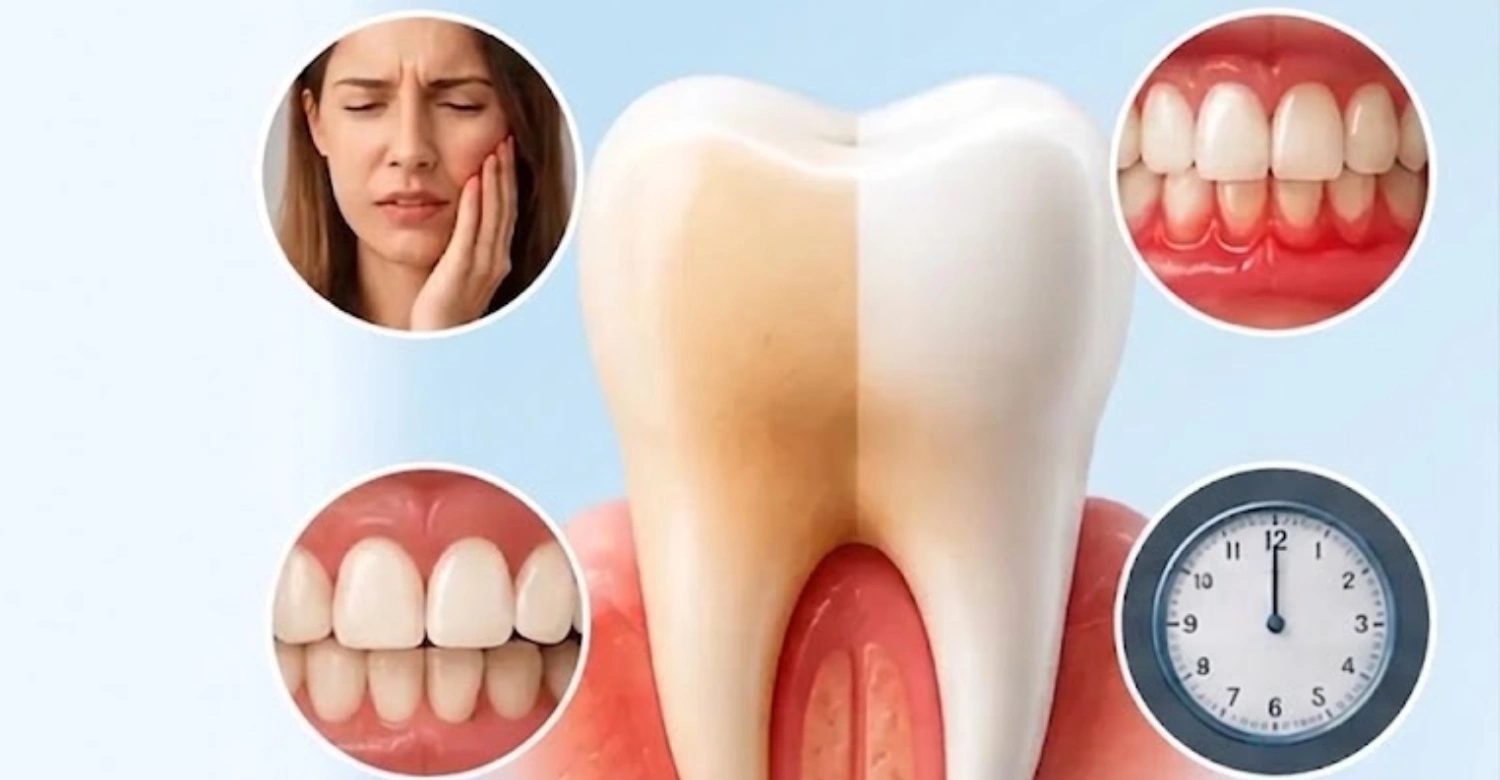
How Can You Reduce Sensitivity After Whitening?
Knowing how to reduce sensitivity can make a real difference. It's the gap between a comfortable experience and a discouraging one, especially for first-time patients.
Practical Ways to Reduce Sensitivity
Spacing out sessions and choosing a lower-concentration gel are proven ways to lower discomfort. Using a desensitizing toothpaste before and after treatment helps too. Shortening the wear time of at-home trays can also help, without meaningfully compromising the final result. Patients interested in professional whitening can explore professional teeth whitening to understand how supervised treatment is planned.
How to Relieve Sensitivity
Apply a potassium-nitrate desensitizing gel and avoid very hot or cold foods for a day or two. Pause treatment if discomfort feels sharp. Over-the-counter pain relief can help with more noticeable pain when needed.
What Foods and Drinks Should You Avoid?
Very hot, cold, acidic, and heavily pigmented foods and drinks are best avoided right after whitening. Coffee, red wine, and citrus are common culprits. Enamel is temporarily more porous, so these items can worsen sensitivity and increase the risk of new staining. For a detailed guide to managing discoloration, see how to remove teeth stains.
Can Desensitizing Toothpaste Help?
Yes. A randomized controlled trial found that adding potassium nitrate and fluoride to a carbamide peroxide gel produced noticeably less sensitivity than a gel without these ingredients. Whitening results stayed comparable either way. Desensitizing toothpaste works on the same principle for at-home relief.
Tips for the Patients
Use a soft-bristled brush and stick to lukewarm water. Apply desensitizing toothpaste for several days before starting whitening. These small habits meaningfully lower the chances of pronounced discomfort during your treatment course.
What Is the Best Sensitivity Treatment?
Choosing the right treatment depends on how severe the discomfort is. It also depends on whether it's tied to whitening itself or to an unrelated dental issue.
What Treatments Can Help?
Potassium nitrate and fluoride desensitizing gels have shown measurable reductions in sensitivity scores in clinical trials. So have casein-based remineralizing pastes and adjusted treatment schedules. Interestingly, a preemptive anti-inflammatory medication tested in one study showed no meaningful benefit for whitening-related discomfort.
Can Fluoride Help?
Fluoride-based products can support enamel strength and help manage discomfort by reducing how easily stimuli reach the nerve. Many desensitizing pastes combine fluoride with potassium nitrate for added comfort.
Should You Stop Whitening If Your Teeth Become Sensitive?
Mild, manageable sensitivity usually doesn't require stopping treatment altogether, reducing frequency or wear time is often enough. But if discomfort becomes sharp or persistent, or interferes with eating and drinking, pause treatment. A professional evaluation is the more sensible option.
When Should You See a Dentist?
Persistent, severe, one-sided, or unusual sensitivity that doesn't improve within a week deserves a dental visit. This is also true if symptoms are paired with swelling, visible tissue changes, or pain that disrupts sleep.
Clinical Note
The clinical team at Vitrin Clinic emphasizes choosing a whitening protocol based on each patient's dental condition, not a one-size-fits-all approach. This is central to minimizing sensitivity and improving comfort. A healthy periodontal foundation is also important before cosmetic treatment, as explained in our periodontal disease guide.
Is Teeth Whitening Safe?
Is teeth whitening safe for most people? Generally yes, when it's done correctly, but the answer depends on several individual factors.
Is It Safe for Your Teeth?
Safety depends on the method used, gel concentration, treatment duration, existing dental health, and whether instructions are followed correctly. A 2018 Cochrane review of numerous randomized, placebo-controlled trials found sensitivity is common. It is far more prevalent, though, than any lasting gum or tissue harm.
Can Whitening Damage Enamel?
Whitening itself does not typically damage enamel structure when used as directed. Overuse, excessive concentration, or leaving gel on too long can increase irritation and sensitivity. Following recommended instructions closely is the most reliable way to avoid unnecessary discomfort.
Is Professional Whitening Safer Than At-Home Whitening?
Professionally supervised whitening allows for tailored concentration and monitored application. It also allows for immediate adjustments if sensitivity develops, something unsupervised at-home products can't always offer. Patients looking for another professionally supervised approach can read about laser teeth whitening.
Who Should Avoid Teeth Whitening?
Some patients should have a dental evaluation before whitening: those with untreated tooth decay, significant existing sensitivity, active gum disease, or visibly cracked or damaged teeth. Addressing these issues first helps avoid unnecessary discomfort and keeps treatment safe and effective.
How Can You Prevent Whitening Sensitivity?
Sensitivity can't always be avoided entirely, but preparation before treatment and care afterward can meaningfully lower the odds of discomfort.
What Should You Do Before Whitening?
A dental assessment before starting is one of the most effective preventive steps. Addressing cavities, gum issues, or existing sensitivity beforehand lowers risk significantly. Notably, a double-blinded trial compared 10% versus 15% carbamide peroxide. Overall sensitivity rates didn't differ much between the two strengths. For patients with active gum concerns, periodontal treatment may need to be considered before cosmetic whitening.
What Should You Do Immediately After?
Right after treatment, avoid very hot, cold, or acidic foods for 24 to 48 hours. Use a desensitizing toothpaste and skip staining beverages like coffee or red wine. These simple aftercare steps reduce the chance of noticeable sensitivity in the following days. More detailed guidance is available in our article about teeth whitening aftercare.
Can You Prevent Sensitive Teeth After Whitening?
Sensitivity can't always be completely prevented. But it can often be reduced with the right preparation, product concentration, and aftercare routine. Most patients experience only mild, short-lived discomfort.
Teeth Whitening Side Effects and Sensitivity at Vitrin Clinic
Vitrin Clinic approaches every whitening case individually. Sensitivity is treated as a factor to plan around, not something patients simply have to tolerate.
How Does Vitrin Clinic Approach Whitening?
Vitrin Clinic begins with a full assessment of tooth and gum health before recommending any whitening protocol. This lets the team personalize gel concentration, session length, and aftercare guidance, managing sensitivity proactively rather than reactively. Patients with deeper discoloration can also review our guide to intrinsic tooth discoloration before deciding whether bleaching is appropriate.
What Can Patients Expect?
Patients go through consultation, dental assessment, personalized treatment planning, the whitening session itself, and tailored aftercare guidance. This structured process is designed to support comfortable results for each individual case. Those seeking faster in-office treatment can also learn more about same-day teeth whitening.
What We Notice Clinically
Dr. Rifat Alsaman, Head of the Medical Team at Vitrin Clinic and a cosmetic dentist, has a clear finding. Individualized whitening protocols, rather than standard, generic ones, consistently help manage sensitivity and improve comfort. This is especially true for patients with a known history of sensitive teeth or enamel wear.
Tips for the Patients
Follow your recommended whitening schedule and avoid overusing products beyond what's advised. Stick to post-whitening dietary guidance too. Reach out to Vitrin Clinic promptly if sensitivity feels unusually strong or doesn't ease within a few days of treatment.
Reference
Teeth whitening side effects and sensitivity are common, well-documented reactions to bleaching, particularly with stronger agents. They are usually mild and temporary. Professional guidance and appropriate whitening protocols can help minimize these effects while supporting safer, more comfortable results.
https://pmc.ncbi.nlm.nih.gov/articles/PMC9671445/
FAQs
Dr. Rifat Alsaman has more than 5 years of clinical experience in dentistry and currently serves as the Head of the Medical Team at Vitrin Clinic. He is dedicated to providing exceptional patient care, overseeing treatment planning, and ensuring the highest clinical standards across the team. His expertise, attention to detail, and commitment to continuous professional development have helped countless patients achieve healthier, more confident smiles.


