
What causes bone loss in teeth is a common question after a dental check-up or X-ray. In most cases, the tooth itself is not losing bone. The real concern is the alveolar bone that surrounds and supports each tooth. This bone keeps teeth stable, helps you chew comfortably, and protects long-term oral health. The main causes include periodontal disease, tooth loss, infection, and trauma. Other factors can also contribute. Symptoms alone rarely reveal the cause. A periodontal examination and dental imaging are usually needed to find it.
What Causes Bone Loss in Teeth?
What can cause bone loss in teeth depends on where the bone is being lost. Dental bone loss means the alveolar bone around a tooth is shrinking or breaking down. Bone loss around a natural tooth is often linked to gum disease. Jawbone loss after tooth loss happens when the ridge left behind gradually resorbs. Infection-related bone changes usually stay localized around a root tip. The most common causes of bone loss around teeth are periodontal disease, missing teeth, dental infection, and trauma.
Periodontal Disease and Chronic Gum Inflammation
Plaque is a sticky film of bacteria that builds up along the gumline. If it is not removed, the gums become inflamed. This early stage is called gingivitis. When inflammation continues, it can spread deeper and damage the ligament and bone holding the tooth. This is how gum disease causes bone loss. Bone loss from periodontal disease often progresses quietly. Many patients feel little or no pain until teeth loosen. That is why periodontal disease is a key answer to what can cause bone loss in teeth
Tooth Loss and Reduced Bone Stimulation
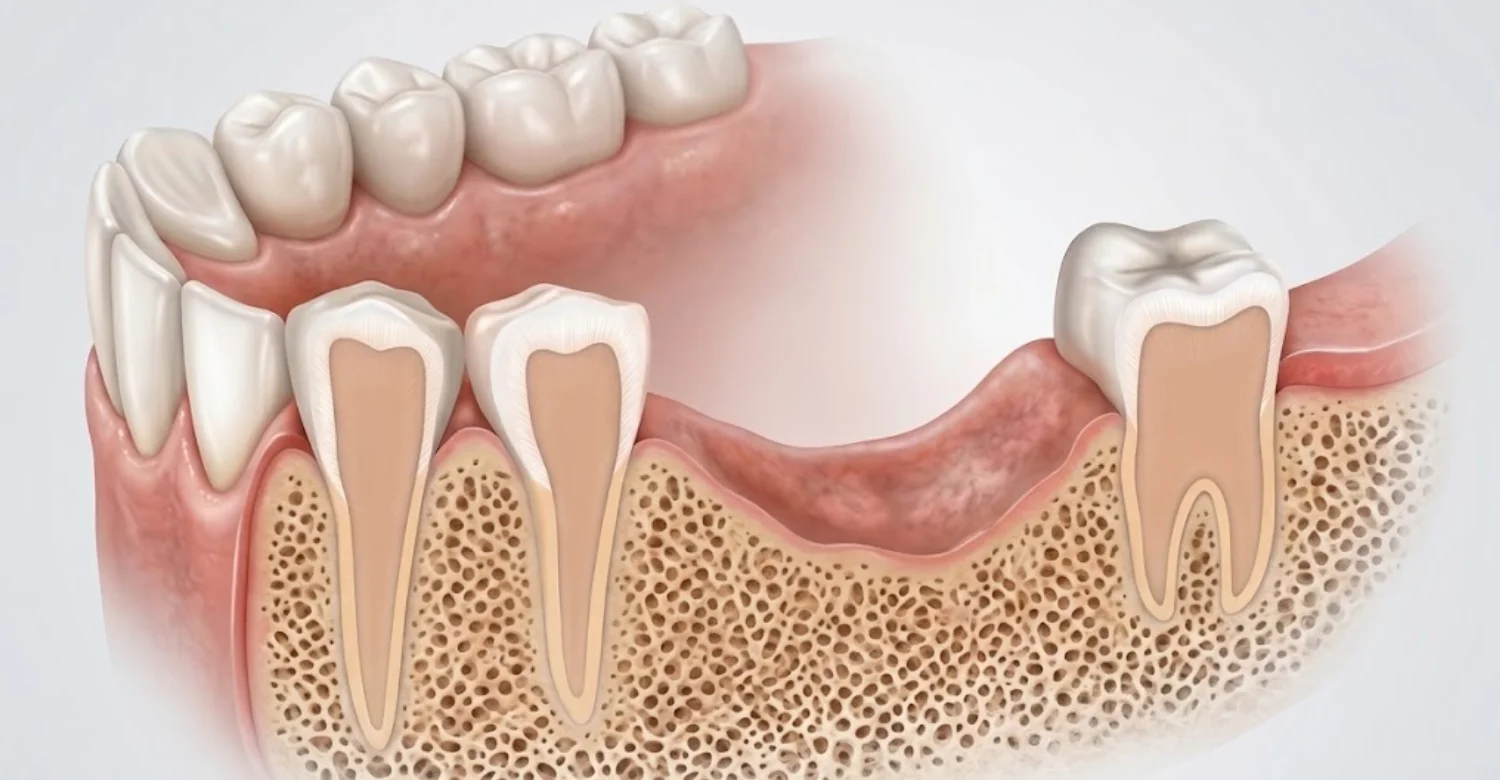
Tooth loss and jawbone loss are closely connected. Tooth roots transmit chewing forces into the jaw. These forces help keep the surrounding bone active. When a tooth is lost, that stimulation stops. The bone around the empty space can then resorb gradually, becoming narrower or shorter. This process is different from periodontal destruction. It is not caused by active bacterial inflammation. Instead, it is the body's response to the bone no longer being used. Both processes, however, explain what causes bone loss in teeth and jaws.
Dental Infection and Bone Destruction
Infections that start inside a tooth can spread to the tissues around it. When bacteria reach the root tip, a periapical infection may develop. The body reacts with inflammation, which can destroy a small area of bone near the root. This bone loss is usually localized, not widespread. An abscess, swelling, or a draining gum bump may appear. Any persistent dental infection needs professional assessment. Untreated, it can keep damaging bone and nearby structures. Infection is another answer to what can cause bone loss in teeth.
Dental Trauma
A strong blow to the mouth can injure more than the tooth. Trauma may damage the periodontal ligament, the socket walls, or the surrounding bone. A tooth pushed out of position or knocked loose can disturb its supporting tissues. Some injuries later lead to nerve damage and infection, which can affect bone. The extent of bone changes depends on the type and severity of the injury. Follow-up X-rays help detect delayed problems. Trauma is a less common but real answer to what causes bone loss in teeth.
Other Factors That May Contribute to Jawbone Loss
Several factors can add to the causes of jawbone loss. Age-related changes may affect bone density and gum tissues. Smoking and tobacco use reduce blood flow and weaken healing. Poor oral hygiene allows plaque to persist. Poorly controlled systemic conditions, such as diabetes, can increase periodontal risk. Certain medications or medical conditions may also influence bone metabolism. However, these factors do not affect every patient in the same way. They also rarely act alone. Individual assessment clarifies what can cause bone loss in teethfor each person.
Learn more about a recessed maxilla
How Does Gum Disease Cause Bone Loss Around Teeth?
Gum disease and bone loss follow a clear sequence. First, plaque accumulates along the gumline. The gums react with redness and bleeding, known as gingivitis. If plaque hardens and stays, inflammation spreads below the gumline. The gum separates from the tooth, forming periodontal pockets where bacteria collect. The body's prolonged inflammatory response then breaks down periodontal fibers and alveolar bone. Attachment is lost gradually over months or years. Because this happens slowly and often painlessly, bone loss from periodontal disease may go unnoticed until it is advanced.
Gingivitis vs. Periodontitis
Gingivitis does not automatically mean bone loss. It is inflammation limited to the gums. With good cleaning and home care, gingivitis is usually reversible. Periodontitis is different. It involves destruction of the ligament and bone that support the tooth. Once this stage begins, structural damage has already occurred. Early periodontal treatment can stop the disease before it removes more support. This distinction matters when asking what can cause bone loss in teeth. Gingivitis is the warning stage, not the damage itself.
Can Gum Disease Cause Permanent Bone Loss?
Yes, in many cases. Bone destroyed by periodontitis generally does not grow back to its original height on its own. Treatment focuses first on controlling infection and inflammation. This stops further loss and helps stabilize the remaining support. In selected cases, periodontal regenerative procedures may rebuild part of certain defects. Results depend on the shape of the defect, the tooth, and the patient's healing. So, while lost bone is often permanent, further damage can usually be prevented with proper care and maintenance.
Note: All images used are for editorial and illustrative purposes only and may not originate from the original news provider or associated company.
Can Cavities Cause Bone Loss?
Can cavities cause bone loss? Not directly in their early stage. An uncomplicated cavity affects only the tooth's enamel and dentin. However, deep untreated decay can reach the pulp. Bacteria may then infect the nerve and spread through the root tip. This can cause localized bone destruction around the root. That is different from generalized periodontal bone loss. Cavities and gum disease are separate conditions. Yet both, left untreated, can eventually threaten tooth-supporting structures. Deep decay is a less obvious part of what causes bone loss in teeth.
Compare root canal vs. implant
What Causes Bone Loss in the Jaw After Tooth Loss?
After an extraction or tooth loss, the alveolar ridge begins to remodel. The socket fills with new bone, but the ridge also shrinks. This is called alveolar ridge resorption. It is often fastest in the first months after tooth loss. The amount and rate vary between patients. Factors include the tooth's location, how it was lost, and how long the gap has existed. Understanding what causes bone loss in the jaw helps dentists plan replacement options before significant bone disappears.
How Tooth Loss Changes the Jawbone
When a tooth is missing, the bone loses functional stimulation. Without chewing forces, the body gradually removes bone it no longer needs. The ridge may lose width first, then height. Over time, neighboring teeth can drift into the gap. The opposing tooth may also over-erupt. These changes can affect bite, facial support, and future treatment. For implant patients, reduced bone volume may complicate placement. This is why tooth loss is an important part of understanding what can cause bone loss in teeth and jaws.
Why Early Assessment Matters Before Dental Implants
Dental implants need enough bone to be placed securely. Before treatment, the dentist must evaluate available bone volume and density. Standard X-rays show some information, but they are two-dimensional. When clinically indicated, CBCT 3D imaging shows bone width, height, and nearby structures such as nerves and sinuses. If bone is insufficient for the planned implant, bone grafting or other augmentation may be considered. Early assessment helps avoid surprises. It also gives patients a clearer picture of timelines and possible staged treatment.
What Are the Symptoms of Bone Loss Around Teeth?
Bone loss around teeth symptoms are often subtle at first. In early stages, bone loss itself may not cause obvious signs. Most symptoms come from the gum disease or infection behind it. As support decreases, changes become easier to notice. Teeth may feel different when you bite. Gums may look lower or bleed more easily. Because symptoms appear late, knowing what can cause bone loss in teethhelps patients recognize risk earlier. Regular check-ups catch problems before they become advanced and harder to treat.
Possible Warning Signs
Watch for these signs, especially if they persist or worsen over time:
Bleeding or swollen gums
Gum recession
Teeth appearing longer
Increasing tooth mobility
Changes in the way teeth meet
Food becoming trapped between teeth
Persistent bad breath
Pus or drainage around the gums
Spaces developing between teeth
Tooth sensitivity associated with gum recession
They often develop slowly, so compare changes over months. One sign alone does not confirm bone loss. However, several signs together deserve a prompt periodontal examination and X-rays.
Can You Have Bone Loss Without Pain?
Yes. Many patients have significant bone loss without any toothache. Periodontal disease is usually a chronic, low-grade process. It rarely causes sharp pain until an abscess forms or teeth become very loose. So, the absence of pain does not mean supporting bone is healthy. If you notice bleeding gums, recession, or looseness, book an assessment. Pain is a poor guide here. An examination and X-rays reveal what symptoms cannot. Understanding what causes bone loss in teeth matters because damage can progress silently for years.
How Is Bone Loss Around Teeth Diagnosed?
Diagnosis requires more than looking at the gums. The dentist starts with your medical and dental history, including smoking and systemic conditions. A visual examination checks gum color, swelling, and recession. Periodontal probing measures pocket depths around each tooth. Tooth mobility and recession are recorded. Dental X-rays then show bone levels. CBCT 3D imaging is added when clinically indicated. Together, these findings reveal the pattern, severity, and most likely bone loss around teeth causes. This helps answer what can cause bone loss in teethfor each individual patient.
What Does Dental Imaging Show?
Conventional dental X-rays show changes in bone height between and around teeth. Bitewing and periapical images can reveal horizontal or vertical bone loss and infection at the root tip. However, they are two-dimensional. When more detail is needed, CBCT 3D imaging shows bone width, defect shape, and nearby anatomy. It is especially useful for implant planning and complex defects. Imaging should always be selected according to the patient's clinical needs. More radiation is not always better. Imaging is key to confirmingwhat can cause bone loss in teeth
Tips for Patients
Small daily habits protect the bone around your teeth:
Brush twice daily using an appropriate technique.
Clean between teeth every day.
Do not ignore bleeding gums.
Attend periodontal maintenance appointments when recommended.
Avoid tobacco products.
Treat cavities and dental infections promptly.
Replace missing teeth after discussing appropriate options with a dentist.
Follow post-treatment instructions carefully.
Ask whether periodontal health should be stabilized before cosmetic or restorative treatment.
Do not rely on pain as the only indicator of oral health.
Discover how copper deficiency can affect teeth
How Is Bone Loss Around Teeth Treated?
Treatment depends on the cause, severity, location, and remaining periodontal support. The first goal is always to control the underlying disease or infection. Without this step, other treatments are unlikely to last. For gum disease, that means periodontal therapy. For an infected tooth, it may mean root canal treatment or extraction. After the disease is controlled, the dentist may discuss regeneration, grafting, or tooth replacement. Knowing what causes bone loss in teeth guides every treatment decision. No single treatment suits every patient.
Professional Dental Cleaning and Periodontal Therapy
Non-surgical periodontal therapy is usually the first step. It includes scaling and root surface debridement. The dentist or hygienist removes plaque and calculus from above and below the gumline. Root surfaces are cleaned so gums can heal and fit more closely against the tooth. This reduces bacterial load and inflammation. Pockets often become shallower after healing. Local anesthesia is used when needed for comfort. A re-evaluation follows several weeks later. This step helps stabilize periodontal tissues and protect the remaining bone.
Improved Home Oral Hygiene
Professional treatment only works when daily plaque control continues at home. Your dental team will show you a personalized brushing technique. Interdental cleaning is essential, because toothbrushes miss the spaces between teeth. Depending on gaps, you may use floss, interdental brushes, or water flossers. An appropriate toothbrush, manual or electric, also matters. Regular periodontal maintenance visits then remove deposits you cannot reach. Good home care will not rebuild bone. But it targets plaque, which is central to what can cause bone loss in teeth.
Periodontal Surgery
Surgery may be considered when deep pockets remain after non-surgical therapy. In these cases, instruments cannot reach all deposits through the gumline. The periodontist lifts the gum to access the root surfaces and bone directly. Persistent inflammatory tissue and calculus are removed. The bone contour may be reshaped when appropriate. The gum is then repositioned to reduce pocket depth. This makes daily cleaning and maintenance easier. Surgery is chosen case by case, based on pocket depth, bone pattern, and healing response.
Regenerative Periodontal Procedures
Some bone defects may be suitable for regenerative procedures. These are typically narrow, vertical defects with walls of bone still present. The dentist may use bone grafts, barrier membranes, or biologic materials to encourage new tissue growth. The aim is to rebuild part of the lost support. However, not every patient with bone loss is a candidate. Wide, horizontal bone loss rarely regenerates predictably. Smoking, poor hygiene, and uncontrolled disease also reduce success. Careful case selection is essential for realistic results.
Tooth Replacement After Tooth Loss
When a tooth cannot be saved, several replacement options exist. Dental implants replace the root and can help load the bone. Fixed prosthetic solutions, such as bridges, rely on neighboring teeth for support. Removable prostheses, including partial or full dentures, are another option. Each choice has advantages and limits. Implant suitability depends partly on available bone. Gum health, bite, and budget also matter. Your dentist will match the option to your needs. Replacing teeth thoughtfully helps limit further tooth loss and jawbone loss over time.
Bone Grafting Before or During Implant Treatment
When bone volume is insufficient, augmentation may be recommended before or during implant placement. Bone grafts can widen or heighten the ridge. In the upper back jaw, a sinus lift may be needed. Some grafts are placed at the same visit as the implant. Others require healing for several months first. However, grafting does not eliminate the need to control active periodontal disease. Placing implants in an inflamed mouth increases the risk of problems. Gum health must come first in every plan.
What Can Patients Expect Before and After Bone Loss Treatment?
Outcomes depend on the original cause and extent of damage. Before treatment, patients may have inflammation, deep periodontal pockets, recession, mobility, or insufficient bone. After appropriate treatment, the main goals are controlling infection, reducing inflammation, improving stability, and preserving remaining bone. Gums may look slightly lower as swelling settles. Regenerative treatment may improve certain defects, but full restoration of original anatomy cannot be guaranteed. Implant patients may need staged treatment when augmentation is necessary. Understanding what can cause bone loss in teeth helps set realistic expectations.
Explore the connection between eczema and dental health
What We Notice Clinically
Dr. Rifat Alsaman, Head of the Medical Team at Vitrin Clinic and a cosmetic dentist, emphasizes identifying the underlying cause before planning restorative or cosmetic treatment. In his view, preserving remaining periodontal support is central to long-term success. Patients with suspected bone loss may need periodontal evaluation before veneers, crowns, implants, or other major procedures. A beautiful restoration will not last on an unstable foundation. He favors individualized assessment rather than applying the same treatment pathway to every patient. Each case is different.
Clinical Note
The presence of bone loss does not automatically mean a tooth must be extracted. Decisions depend on periodontal support, infection control, tooth structure, mobility, root anatomy, overall prognosis, and the patient's goals. Some teeth with moderate bone loss can be maintained for years with proper periodontal treatment and maintenance. Severe bone loss may require a different approach, including extraction and replacement. This must be determined clinically. Dr. Rifat Alsaman, Head of the Medical Team at Vitrin Clinic and a cosmetic dentist, stresses assessing the biological foundation before cosmetic or restorative rehabilitation.
How Can Bone Loss Around Teeth Be Prevented?
Prevention focuses on controlling periodontal inflammation and keeping natural teeth healthy. Since plaque is central to what causes bone loss in teeth, daily habits matter most. Key steps include:
Regular dental and periodontal examinations
Professional cleaning when indicated
Daily plaque control
Early treatment of gum disease
Prompt treatment of cavities and dental infections
Smoking cessation
Management of relevant medical risk factors with your healthcare provider
Appropriate replacement of missing teeth when indicated
Long-term periodontal maintenance after previous periodontal disease
Vitrin Clinic’s Approach to Patients With Bone Loss
At Vitrin Clinic, every treatment plan starts with understanding the individual patient. We focus on what causes bone loss in teeth before recommending any treatment. Patients with bone loss may need periodontal assessment before extensive cosmetic, restorative, or implant treatment. Our evaluation may include:
Comprehensive dental examination
Periodontal assessment
Digital intraoral scanning when indicated
Dental X-rays
CBCT/3D imaging when clinically appropriate
Some cases need coordinated periodontal, restorative, implant, and cosmetic care. Under the guidance of Dr. Rifat Alsaman, Head of the Medical Team at Vitrin Clinic and a cosmetic dentist, every plan is individualized. The right treatment depends on your diagnosis, bone condition, remaining teeth, and overall oral health.
Vitrin Clinic offers professional periodontal treatment tailored to each patient’s needs. With experienced dental specialists, advanced technology, and comprehensive care, the clinic focuses on improving gum health, supporting healthy teeth, and providing a comfortable, personalized dental experience.
Book Your FREE Treatment Plan today.
References:
FAQs

Dr. Rifat Alsaman has more than 5 years of clinical experience in dentistry and currently serves as the Head of the Medical Team at Vitrin Clinic. He is dedicated to providing exceptional patient care, overseeing treatment planning, and ensuring the highest clinical standards across the team. His expertise, attention to detail, and commitment to continuous professional development have helped countless patients achieve healthier, more confident smiles.


