Dental Implant
September 21, 2026
Root Canal vs Implant: Which Treatment Is Right for You?
 Dr. Rifat Alsaman
This is a common question when a tooth is severely damaged or infected. The two treatments solve different clinical problems. Root canal treatment aims to preserve a natural tooth. A dental implant replaces a tooth that has been removed. The correct choice depends on restorability, infection, bone support, gum health, and overall prognosis. Root canal treatment removes infected pulp and seals the tooth internally. An implant replaces the missing tooth root with a biocompatible fixture. The American Association of Endodontists recommends considering tooth preservation whenever possible. However, some teeth cannot be predictably restored. In those cases, extraction and implant replacement can restore function. At Vitrin Clinic, treatment planning begins with clinical examination and diagnostic imaging. Each option should be evaluated according to the individual tooth and patient.
What Is the Difference Between a Root Canal and an Implant?
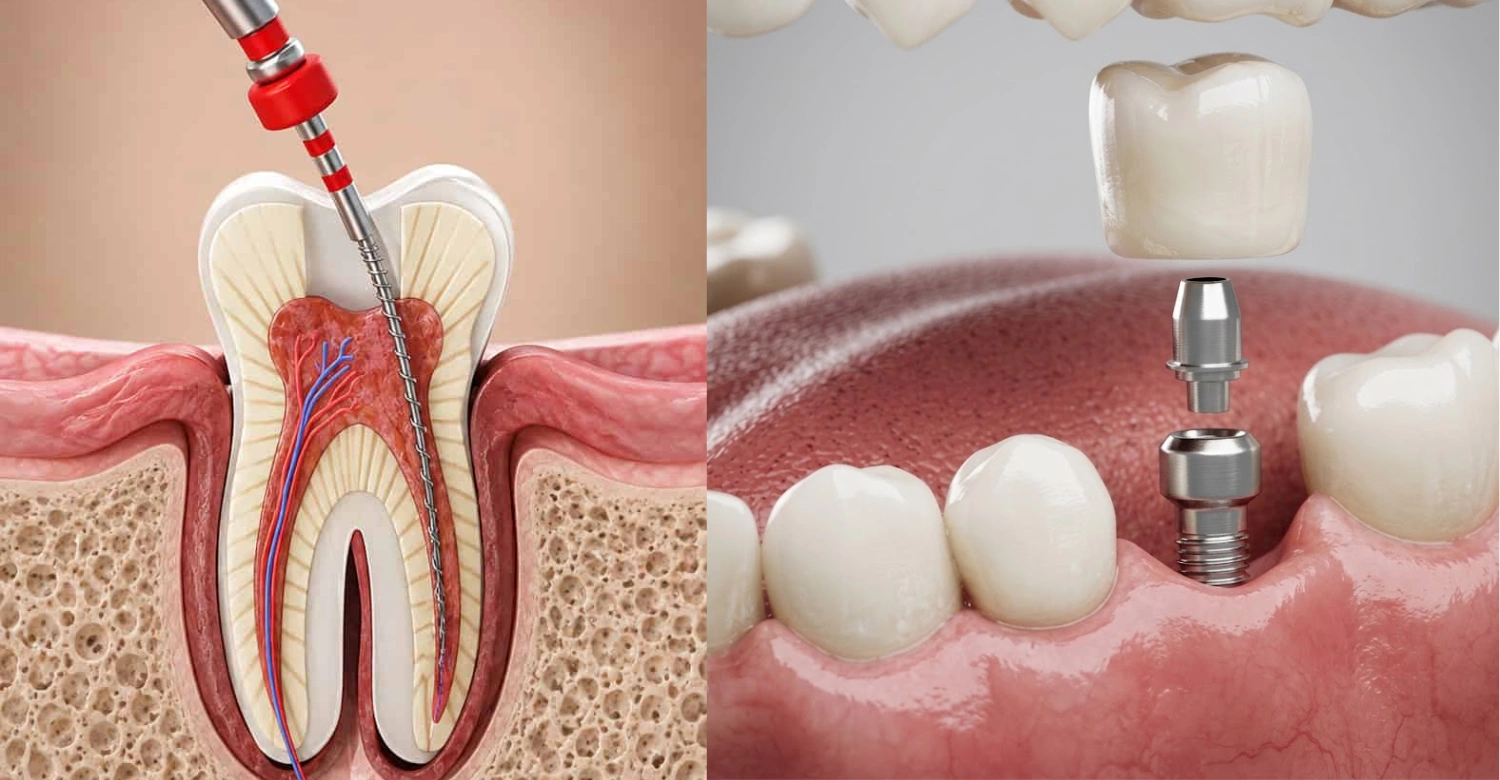
Root Canal vs Implant starts with understanding how each procedure works. A root canal treats a diseased natural tooth from inside. A dental implant replaces a missing tooth after extraction. Root canal treatment removes infected or inflamed pulp. The tooth is then cleaned, disinfected, filled, sealed, and restored. An implant involves placing a fixture into the jawbone. After healing, an abutment and dental crown complete the replacement. Root canal treatment therefore preserves the natural tooth structure. Implant treatment becomes relevant when the natural tooth cannot be predictably maintained. Neither procedure is automatically appropriate for every patient. Diagnosis must determine whether the tooth is restorable and whether supporting tissues are healthy. Medical history, periodontal condition, bone volume, and treatment goals can influence the decision.
What Is Root Canal Treatment?
Understanding root canal treatment is essential to the Root Canal vs Implant decision. Root canal treatment is an endodontic procedure that treats infected or inflamed dental pulp. The dentist accesses the tooth and removes diseased tissue. The root canals are cleaned and disinfected carefully. They are then filled and sealed to reduce reinfection risk. The tooth usually requires a definitive restoration afterward. A crown may provide additional protection when substantial tooth structure has been lost. Root canal treatment allows the patient to retain the natural tooth. The procedure is commonly completed in one or two appointments. Complex cases may require additional treatment or specialist assessment. Proper diagnosis remains essential before treatment begins. At Vitrin Clinic, digital imaging can support assessment of complex tooth conditions.
What Is a Dental Implant?
Understanding dental implants is equally essential to the Root Canal vs Implant decision. A dental implant is a replacement for a missing tooth root. The implant fixture is surgically positioned within the jawbone. After healing, an abutment connects the implant with the replacement crown. The crown restores the visible portion of the missing tooth. Implant treatment therefore replaces both root support and tooth appearance. Adequate bone and healthy soft tissues support predictable implant treatment. Bone grafting may sometimes be required when bone volume is insufficient. Smoking and certain medical conditions can affect healing and implant outcomes. Implants can provide reliable long-term tooth replacement when appropriately planned. A systematic review reported high long-term implant survival in contemporary implant systems.
Root Canal vs Dental Implant: Key Differences
The primary difference is whether the natural tooth remains. Root canal treatment preserves the existing tooth and treats internal infection. Implant treatment replaces a tooth after extraction or tooth loss. Root canal treatment generally avoids implant surgery. Implant treatment requires surgical placement and biological healing. Root canal treatment may require a crown afterward. Implant treatment requires an implant, abutment, and crown. The treatment timeline can therefore differ considerably. Costs also depend on tooth complexity and required procedures. A tooth requiring bone grafting can increase implant treatment complexity. The final decision should follow a detailed assessment rather than preference alone.
Treatment Approach
Root Canal vs Implant differ mainly in overall treatment approach. Root canal treatment focuses on removing infection while preserving the tooth. Implant treatment focuses on replacing a missing tooth root. Root canal treatment uses the existing tooth structure as its foundation. Implant treatment creates a new foundation within the jawbone. The procedures therefore involve different biological processes. Root canal treatment is endodontic and primarily preserves existing anatomy. Implant placement is surgical and depends on osseointegration. The final restoration for either option may involve a dental crown. The appropriate approach depends on whether the natural tooth remains predictably restorable.
Tooth Preservation
Preserving the natural tooth can maintain natural periodontal structures and chewing function. Root canal treatment allows the tooth to remain in its original position. This can help maintain normal relationships with neighboring teeth. Extraction removes the tooth and changes the local biological environment. An implant can restore function after extraction. However, an implant does not recreate every structure of a natural tooth. The AAE states that natural teeth should be preserved whenever predictably possible. Therefore, restorability is an important factor before extraction.
Treatment Time and Recovery
Root Canal vs Implant also differ in treatment time and recovery. Root canal treatment often involves fewer surgical stages than implant replacement. Many straightforward root canals can be completed in one or two appointments. The final restoration may require another appointment. Implant treatment involves surgical placement and a healing period. Some patients may receive temporary teeth during healing. The exact timeline depends on bone quality and treatment complexity. Bone grafting can extend the overall treatment period. Immediate implant placement may be possible in selected cases. It requires suitable clinical conditions and careful planning. Patients should receive an individualized timeline rather than relying on average treatment durations.
Learn about HIV symptoms and oral health
Root Canal or Implant: When Is Each Treatment Recommended?
A root canal is considered when the natural tooth remains structurally and periodontally restorable. Typical indications include irreversible pulp inflammation or infection. Deep decay, trauma, cracks, and repeated procedures can damage the pulp. An implant becomes relevant when the tooth cannot be predictably saved. Severe fractures, extensive structural loss, or poor periodontal support can change the prognosis. Extraction may then be followed by implant replacement. The decision requires examination rather than symptoms alone. At Vitrin Clinic, dentists evaluate the tooth, surrounding tissues, and available treatment options. Diagnostic imaging can provide additional information before irreversible treatment.
When Can a Root Canal Save a Damaged Tooth?
This question sits at the center of the Root Canal vs Implant decision. A root canal can save a tooth when infection affects the pulp but sufficient structure remains. The tooth must also have adequate periodontal support. The dentist must be able to clean, disinfect, and seal the canal system. The final restoration must provide sufficient protection against fracture. Deep decay does not automatically mean extraction is necessary. Some severely damaged teeth can still receive successful endodontic treatment. However, fractures extending below the gumline can compromise restorability. Severe bone loss can also reduce the long-term prognosis. Specialist assessment can help determine whether preservation remains realistic.
When Is a Dental Implant Recommended?
A dental implant may be recommended when a tooth cannot be predictably restored. Extraction may become necessary after severe structural damage or non-restorable fracture. Advanced periodontal destruction can also compromise a tooth's prognosis. Some failed endodontic treatments may require extraction when retreatment cannot provide predictable results. Implant treatment requires adequate bone and healthy surrounding tissues. Bone grafting can sometimes improve the site before implant placement. Medical conditions and smoking history may affect healing. Careful assessment is therefore essential before implant surgery.
When to Choose an Implant Over a Root Canal
This scenario often tips the Root Canal vs Implant decision toward an implant. An implant becomes relevant when the natural tooth has a poor restorative prognosis. Examples include severe vertical root fracture or insufficient remaining tooth structure. Extensive decay below the gumline can also prevent predictable restoration. Advanced periodontal destruction may make tooth preservation unrealistic. A previously treated tooth may also require extraction after unsuccessful treatment. However, extraction should not be based solely on convenience. Endodontic evaluation can identify whether retreatment or surgery remains possible. The final decision should consider prognosis, function, cost, timeline, and patient preferences.
Clinical Note
A painful tooth does not automatically require extraction. Pain can result from pulp inflammation, infection, cracks, or periodontal disease. Each condition requires different treatment. Diagnostic tests help determine the source of symptoms. Radiographs can identify infection around the root and other structural changes. CBCT may provide additional three-dimensional information in selected cases. The treatment decision should follow diagnosis rather than pain intensity alone. This approach helps prevent unnecessary extraction of potentially restorable teeth.
Explore the science behind ferroptosis in periodontitis
Root Canal Treatment vs Implant: Pros and Considerations
Weighing Root Canal vs Implant means comparing real pros and considerations. Both treatments can provide functional solutions when properly indicated. Root canal treatment preserves the natural tooth and avoids extraction. It can also maintain natural tooth sensation and surrounding anatomy. Implant treatment provides an effective replacement when the tooth cannot be saved. Implants can restore chewing and appearance without preparing adjacent healthy teeth. However, implants require surgery and biological healing. Root canal treatment can also fail and may require retreatment. Implant complications can include infection, bone loss, or mechanical problems. Each option requires maintenance and professional follow-up. The appropriate choice depends on individual diagnosis and long-term prognosis.
Benefits of Root Canal Treatment
Root canal treatment preserves the natural tooth rather than replacing it. The procedure removes infected pulp while maintaining the external tooth structure. It can relieve pain caused by pulpal inflammation or infection. The restored tooth can continue participating in normal chewing. Natural tooth preservation also avoids implant surgery. The AAE reports that properly treated teeth can remain functional for many years. Some root canal-treated teeth can last a lifetime with appropriate care. A protective restoration can improve resistance to further damage.
Benefits of Dental Implants
Implants offer distinct advantages within the Root Canal vs Implant decision. Dental implants provide a fixed replacement for missing teeth. They can restore chewing function and dental appearance. Implant crowns can be designed to resemble natural teeth. Implants do not require preparation of adjacent healthy teeth. They can also help maintain function after tooth loss. Long-term research demonstrates high implant survival in appropriately selected cases. One systematic review reported a 10-year implant survival estimate of 96.4%. A sensitivity analysis produced a lower estimate of 93.2%. These figures represent study populations and do not guarantee individual outcomes.
Limitations and Considerations of Each Option
Root canal treatment requires enough tooth structure for predictable restoration. Severe fractures may make the tooth non-restorable. Previously treated teeth may require retreatment or endodontic surgery. Implant treatment requires extraction when the natural tooth remains present. Surgery, healing, and possible bone augmentation can extend treatment. Smoking and poor bone quality can affect implant outcomes. Both treatments require good oral hygiene and regular dental care. Neither option provides a universal solution for every patient. Individual diagnosis should guide the final recommendation.
Find out more about sialadenitis and salivary gland inflammation
Root Canal vs Implant Success Rate
Success should not be reduced to one universal percentage. Outcomes depend on diagnosis, tooth type, treatment quality, restoration, and follow-up. Root canal outcomes depend heavily on infection control and adequate restoration. Implant outcomes depend on osseointegration, bone support, soft-tissue health, and maintenance. Published studies use different definitions of success and survival. This makes direct percentage comparisons difficult. A 10-year implant systematic review reported survival estimates above 90%. Root canal-treated teeth can also remain functional for many years. Patients should discuss their individual prognosis rather than relying on generic statistics.
Factors That Affect Root Canal Success
Several factors influence success on either side of the Root Canal vs Implant decision. Root canal success depends on accurate diagnosis and effective infection control. Proper cleaning and shaping of the canal system are essential. Complete obturation and adequate coronal sealing also matter. The final restoration must protect the remaining tooth structure. Tooth cracks can negatively affect long-term prognosis. Periodontal support also influences whether the tooth remains functional. Complex anatomy may require specialist endodontic treatment. Regular dental examinations can help detect recurrent disease early.
Factors That Affect Dental Implant Success
Implant success depends on bone quality, implant position, healing, and soft-tissue health. Good surgical planning supports appropriate implant positioning. Smoking can increase risks and may compromise healing. Poor oral hygiene can contribute to peri-implant inflammation. Certain systemic conditions can also influence surgical healing. Adequate bone volume may be necessary for stable placement. Bone grafting can sometimes improve deficient implant sites. Long-term maintenance remains essential after restoration.
Why Long-Term Results Depend on Diagnosis and Aftercare
Long-term results in the Root Canal vs Implant decision depend on diagnosis and aftercare. Diagnosis determines whether the selected treatment matches the actual problem. Poor diagnosis can lead to inappropriate treatment selection. Root canal treatment requires appropriate restoration and ongoing monitoring. Implant treatment requires maintenance of both the implant and surrounding tissues. Home hygiene and professional examinations support long-term stability. Patients should report pain, swelling, mobility, or changes around treated teeth. Early intervention can prevent smaller problems from becoming more complex. Long-term outcomes therefore depend on both treatment quality and patient maintenance.
Discover the possible causes of loss of taste
Root Canal vs Implant Cost
Cost comparisons should include the complete treatment pathway rather than one procedure. Root canal treatment may require endodontic treatment plus a filling or crown. Implant treatment can include extraction, bone grafting, implant placement, abutment, and crown. Temporary restorations may also add to the final cost. Diagnostic imaging and specialist consultations can affect total fees. Treatment complexity varies between patients and individual teeth. Therefore, advertised prices should not be treated as universal quotes. At Vitrin Clinic, treatment costs are determined after clinical evaluation and treatment planning.
What Affects Root Canal Cost?
Root canal cost depends on tooth type and treatment complexity. Molars often require more complex treatment than front teeth. Previous root canal treatment may require retreatment. Calcified canals or unusual anatomy can increase clinical difficulty. A protective crown may also be required afterward. Diagnostic imaging can add to the total treatment cost. Specialist endodontic treatment may have different fees from general dental treatment. Patients should ask for the complete cost of treatment and restoration.
What Affects Dental Implant Cost?
Implant cost is a major factor in the Root Canal vs Implant decision. Implant cost depends on several surgical and restorative factors. The number of implants can significantly affect total treatment cost. Extraction may be required before implant placement. Bone grafting or sinus augmentation can increase complexity. Implant system, abutment, and crown selection also influence pricing. Temporary teeth may be needed during healing. CBCT imaging and surgical planning can contribute to the overall package. Patients should compare complete treatment plans rather than implant fixture prices alone.
Root Canal vs Implant Cost: What Should Patients Consider?
The total financial comparison should include every required stage. Root canal treatment may include endodontics and a final crown. Implant treatment may include extraction, grafting, surgery, healing, and restoration. A cheaper initial procedure may not represent the lower total cost. Long-term maintenance should also be considered. Treatment prognosis matters because failed treatment can create additional expenses. Patients should request an itemized treatment plan before deciding. This allows meaningful comparison between complete treatment pathways.
Learn what can cause a yellow tongue
Root Canal vs Implant Recovery
Recovery differs because the procedures involve different biological processes. Root canal treatment treats the tooth without removing it. Mild sensitivity or tenderness can occur after treatment. Implant placement involves surgical manipulation of bone and soft tissue. Healing therefore takes longer and varies between individuals. Implant patients may receive temporary restorations during healing. Bone grafting can extend the recovery period. Patients should follow their dentist's postoperative instructions carefully. At Vitrin Clinic, aftercare guidance is included within personalized treatment planning.
Root Canal Recovery
Root canal recovery is generally shorter than implant healing. Some tenderness can occur after treatment. Discomfort usually improves as the surrounding tissues settle. Patients should avoid excessive chewing pressure until the final restoration is completed. A crown may be recommended to protect a structurally weakened tooth. Good oral hygiene should continue after treatment. Persistent pain or swelling should be reported to the dentist. Follow-up allows the dentist to evaluate healing and restoration quality.
Dental Implant Recovery
Recovery is another practical factor in the Root Canal vs Implant decision. Dental implant recovery involves healing around the implant fixture. This biological process is called osseointegration. Healing duration varies according to the implant site and individual factors. Bone grafting can add additional healing time. Temporary restorations may sometimes be provided during the healing period. Patients should follow instructions regarding diet and oral hygiene. Smoking can negatively affect healing and should be discussed with the dental team. Follow-up appointments help monitor the surgical site and implant stability.
Note : All images used are for editorial and illustrative purposes only and may not originate from the original news provider or associated company.
Returning to Normal Activities
Return to normal activities depends on the procedure and individual recovery. Root canal treatment often allows a relatively quick return to routine activities. Implant surgery may involve more postoperative swelling or tenderness. Most patients can follow individualized activity recommendations from their dentist. Strenuous activity may be limited temporarily after surgical procedures. Diet restrictions can also apply during early healing. Patients should follow their clinician's specific instructions rather than generic timelines. Unexpected swelling, severe pain, or persistent bleeding requires professional assessment.
Explore salivary gland stones and their symptoms
How Long Does a Root Canal Last vs an Implant?
Longevity is a key question within the Root Canal vs Implant decision. Longevity depends on treatment quality, restoration, oral hygiene, and individual risk factors. A root canal-treated tooth can remain functional for many years. Proper restoration is particularly important because treated teeth can be structurally vulnerable. Implants can also provide long-term tooth replacement. A systematic review found a 10-year implant survival estimate of 96.4%. However, implant survival differs from complete treatment success. Patients must also maintain healthy gums and peri-implant tissues. Neither treatment should be considered maintenance-free.
How Long Can a Root Canal-Treated Tooth Last?
A root canal-treated tooth can remain functional for many years with proper care. The tooth must receive an appropriate final restoration. Crowns can protect teeth that have lost substantial structure. Oral hygiene helps prevent new decay and periodontal problems. Bruxism or heavy biting forces can increase fracture risk. Cracks can also compromise long-term tooth survival. Regular examinations allow dentists to monitor the restoration and surrounding tissues. The AAE notes that many appropriately treated teeth can last a lifetime.
How Long Can a Dental Implant Last?
Implant lifespan matters greatly in the Root Canal vs Implant decision. Dental implants can provide long-term replacement when appropriately planned and maintained. A systematic review found a 10-year implant survival estimate of 96.4%. A sensitivity analysis estimated survival at 93.2%. These results come from selected studies and should not be treated as individual guarantees. Implant longevity depends on bone support, soft-tissue health, hygiene, and maintenance. The crown attached to the implant may require replacement independently. Regular dental examinations help monitor the implant and surrounding tissues.
Factors That Influence Long-Term Durability
Long-term durability depends on several biological and mechanical factors. Oral hygiene affects both natural teeth and implants. Gum disease can threaten the tissues supporting natural teeth. Peri-implant disease can affect tissues around implants. Heavy biting forces can increase mechanical complications. Bruxism may require additional protective strategies. Regular professional monitoring helps identify problems early. The final restoration must also be appropriate for the tooth or implant. Long-term success therefore requires ongoing maintenance rather than treatment alone.
Discover how the salivary glands work
What We Notice Clinically
Clinical experience shapes how dentists approach the Root Canal vs Implant decision. The most important question is whether the natural tooth remains predictably restorable. A severely painful tooth may still be treatable with endodontic therapy. Conversely, a relatively painless tooth can have an unfavorable structural prognosis. Clinical examination should therefore come before treatment selection. Dentists evaluate tooth structure, periodontal support, cracks, infection, and restorability. Imaging provides additional information when the diagnosis is complex. Patients should understand why extraction is recommended when tooth preservation is possible. They should also understand when preservation is unlikely to succeed. This balanced assessment helps avoid both unnecessary extraction and unrealistic tooth-saving attempts.
Dr. Rifat Alsaman’s Clinical Opinion
Dr. Rifat Alsaman, Head of the Medical Team at Vitrin Clinic and cosmetic dentist, emphasizes diagnosis before treatment selection. This decision should never be made from pain alone. The first question is whether the natural tooth can be predictably saved. If adequate tooth structure remains, endodontic treatment may preserve natural function. If the tooth has an unfavorable prognosis, extraction and implant replacement may become appropriate. Dr. Rifat also considers periodontal health, bone condition, restoration requirements, and patient goals. A detailed treatment plan helps patients understand the advantages and limitations of each pathway. The final recommendation should be individualized rather than based on a universal rule.
Find out what can cause a white tongue
Root Canal or Dental Implant: Which Is Better?
There is no single universal answer to the Root Canal vs Implant question. There is no universally better treatment for every damaged tooth. Root canal treatment is designed to preserve a restorable natural tooth. An implant is designed to replace a missing tooth. When a tooth can be predictably saved, preservation is generally considered before extraction. When the tooth cannot be restored, an implant can provide a reliable replacement. The AAE describes both endodontic treatment and implants as viable options. Their appropriate use depends on diagnosis and prognosis.
Is a Root Canal Better Than an Implant?
A root canal may be preferable when the natural tooth is predictably restorable. Preserving the tooth avoids extraction and implant surgery. It also maintains the existing natural tooth structure. However, root canal treatment cannot save every tooth. Severe fractures and extensive structural destruction can make preservation impossible. An implant may then provide a suitable replacement. The appropriate treatment depends on individual prognosis rather than a universal preference.
Should I Get a Root Canal or Dental Implant?
Patients often ask their dentist directly about the Root Canal vs Implant decision. The decision should begin with a detailed evaluation of the affected tooth. Dentists assess pulp status, structural integrity, periodontal support, and surrounding bone. They also consider previous treatments and the expected restorative outcome. If the tooth can be predictably restored, preservation may remain an option. If it cannot, extraction and implant replacement may be considered. Patients should ask why each option is recommended. A second opinion can also be appropriate when extraction is proposed for a complex tooth.
Why There Is No Single Answer for Every Patient
Every tooth has a different structural and biological condition. Two patients with similar pain can have completely different diagnoses. One tooth may require root canal treatment and a crown. Another may have a fracture that prevents predictable restoration. Bone and gum conditions also vary between individuals. Previous dental treatment can influence the available options. Patient priorities, treatment timing, and financial considerations also matter. Therefore, treatment selection requires individualized clinical assessment.
Clinical Note
Careful diagnosis should always guide the Root Canal vs Implant decision. Extraction is irreversible, so the decision should follow careful diagnosis. Patients should ask whether endodontic treatment or retreatment remains possible. They should also ask about the expected prognosis after restoration. When preservation is not predictable, implant replacement can restore the missing tooth. A comprehensive treatment plan should explain alternatives, risks, costs, and expected timelines.
Learn more about tongue bumps and possible causes
Tips for Patients Choosing Between a Root Canal and Implant
Patients should gather enough information before choosing an irreversible treatment. Ask whether the natural tooth can be predictably restored. Request an explanation of the diagnosis and expected prognosis. Ask about the complete treatment timeline and restoration requirements. Compare total costs rather than individual procedure prices. Discuss maintenance requirements for both options. Consider how gum and bone health affect the treatment. Ask whether retreatment or specialist assessment is possible. At Vitrin Clinic, treatment planning focuses on clinical findings and individual patient goals.
Ask Whether the Natural Tooth Can Be Saved
This is often the first question in the Root Canal vs Implant decision. Ask your dentist whether the tooth remains structurally restorable. Request an explanation of any fracture, decay, or periodontal concern. Ask whether an endodontist should evaluate the tooth. Some complex teeth can be treated using advanced endodontic procedures. Other teeth have structural problems that make preservation unrealistic. Understanding the prognosis can make the decision clearer.
Understand the Full Treatment Plan
Ask what happens before, during, and after treatment. Root canal treatment may require a crown or other definitive restoration. Implant treatment may involve extraction, grafting, surgery, healing, and crown placement. Understanding every stage helps prevent unexpected costs and delays. Ask about temporary restorations when relevant. Request an estimated timeline based on your individual condition.
Consider Long-Term Maintenance
Long-term maintenance matters regardless of the Root Canal vs Implant outcome. Both options require long-term dental care. Root canal-treated teeth need regular examinations and appropriate restoration maintenance. Implants require professional monitoring of surrounding gums and bone. Good oral hygiene is essential for both treatments. Smoking and uncontrolled periodontal disease can negatively affect outcomes. Maintenance should therefore form part of the initial treatment decision.
Ask About Alternative Treatment Options
Treatment alternatives can include retreatment, endodontic surgery, bridges, or removable prostheses. Not every alternative suits every patient. The dentist should explain the expected benefits and limitations. Patients should also ask about the consequences of delaying treatment. Understanding alternatives supports informed decision-making.
Discover more about tongue-tie and its effects
Root Canal or Implant: How Dentists Make the Decision
Dentists weigh several clinical factors when making the Root Canal vs Implant decision. Dentists evaluate several clinical factors before recommending treatment. The first is whether the natural tooth is restorable. The second is whether the infection can be predictably controlled. Periodontal support and surrounding bone also influence prognosis. Existing cracks can substantially change treatment options. The dentist must also consider the final restoration. Patient health, hygiene, smoking, and treatment goals can affect planning. Imaging helps identify problems that may not be visible clinically. A comprehensive evaluation creates a more reliable treatment pathway.
Tooth Structure and Restorability
Remaining tooth structure strongly influences whether preservation is realistic. Extensive decay can leave insufficient structure for a stable restoration. Fractures can also compromise long-term survival. A fracture extending below the gumline may make restoration impractical. The dentist evaluates whether the tooth can support a definitive crown or restoration. Endodontic treatment alone does not guarantee long-term tooth survival. The final restoration is an essential part of the treatment plan.
Infection and Root Damage
Infection status strongly influences the Root Canal vs Implant decision. Pulp infection is a common reason for root canal treatment. Untreated infection can cause pain and inflammation around the root. Root canal treatment removes infected pulp and disinfects the canal system. Persistent infection may sometimes require retreatment or endodontic surgery. Some root fractures cannot be predictably treated endodontically. In those cases, extraction may become necessary. Accurate imaging can help identify complex root anatomy and surrounding lesions.
Bone and Gum Health
Healthy supporting tissues are important for both treatment pathways. A natural tooth requires adequate periodontal support for long-term function. An implant requires sufficient bone and healthy surrounding tissues. Periodontal disease should be controlled before implant placement when necessary. Bone deficiency may require grafting before or during implant treatment. Smoking can also influence healing and implant outcomes.
Overall Oral Health and Patient Goals
Overall oral health also shapes the Root Canal vs Implant decision. Overall oral health influences treatment planning and long-term maintenance. Active gum disease may need treatment before restorative procedures. Oral hygiene habits can affect both natural teeth and implants. Patient priorities also matter when choosing between treatment pathways. Some patients prioritize preserving natural teeth. Others may require replacement because preservation is not predictable. Dentists should explain realistic options without promising guaranteed outcomes.
Explore the causes and treatment options for a swollen tongue
Root Canal vs Implant Pain Relief
Pain relief depends on the procedure and the patient’s individual condition. Root canal treatment usually causes mild soreness for a few days. Dental implant surgery may cause temporary pain, swelling, or tenderness during healing. Dentists may recommend appropriate pain-relief options based on medical history and treatment complexity. Cold compresses and following aftercare instructions can also support comfort. Severe or worsening pain should be professionally evaluated.
How to Relieve Pain After a Root Canal
Mild soreness or sensitivity can occur for several days after root canal treatment. Over-the-counter pain medication may help when appropriate. A cold compress can also provide temporary comfort. Avoid chewing hard foods on the treated tooth until it receives its permanent restoration.
How to Relieve Pain After a Dental Implant
Implant surgery can cause temporary pain, swelling, and tenderness during early healing. Your dentist may recommend appropriate pain medication based on your medical history. Following postoperative instructions and protecting the surgical area can support comfortable healing.
When Does Treatment Pain Require Attention?
Severe or worsening pain should not be ignored. Persistent swelling, significant pressure, or returning symptoms require dental evaluation. Your dentist can determine whether the discomfort reflects normal healing or another complication.
Explore the possible causes of itchy gums
Medical Tips After Root Canal or Implant Treatment
Good aftercare can support healing and reduce unnecessary complications. After a root canal, avoid heavy chewing until the tooth receives its permanent restoration. After an implant, follow your dentist’s surgical instructions and protect the treatment area during healing. Maintain appropriate oral hygiene and attend recommended follow-up appointments. Always tell your dentist about medications, supplements, allergies, and relevant medical conditions before treatment.
Medical Tips After a Root Canal
Follow your dentist’s medication and aftercare instructions carefully. Continue gentle brushing and flossing around the treated area. Avoid heavy chewing until the permanent restoration is placed. Complete the recommended follow-up appointments to evaluate healing and restore the tooth properly.
Medical Tips After a Dental Implant
Follow all surgical instructions provided by your implant dentist. Maintain appropriate oral hygiene while protecting the surgical area during healing. Attend scheduled follow-up appointments to monitor implant healing. Tell your dentist about existing medications, supplements, allergies, or medical conditions before treatment.
Why Medical History Matters
Pain-management choices should consider your medical history and current medications. The ADA recommends reviewing medications and supplements to reduce the risk of adverse reactions or interactions.
Discover what you should know about big teeth
Root Canal vs Implant Side Effects
Both treatments can cause temporary effects during recovery. Root canal treatment may cause mild tenderness or sensitivity for several days. Implant treatment may cause swelling, soreness, or tenderness around the surgical area. Persistent or worsening symptoms are not considered routine recovery signs. Severe pain, visible swelling, an uneven bite, or medication-related allergic reactions require prompt dental evaluation.
Possible Root Canal Side Effects
Temporary tenderness, sensitivity, or mild jaw soreness can occur after treatment. In some cases, symptoms may persist or return if the tooth does not heal as expected. Severe pain, swelling, an uneven bite, or medication-related allergic reactions require professional evaluation.
Possible Dental Implant Side Effects
Temporary swelling, discomfort, and tenderness can occur after implant surgery. Implant treatment also has surgical risks that require individual assessment. Your dentist should explain the expected recovery and potential complications before treatment.
When Should You Contact Your Dentist?
Contact your dentist when pain becomes severe, swelling develops, or symptoms worsen instead of improving. Seek prompt professional advice if you experience a medication-related allergic reaction.
Root Canal vs Implant at Vitrin Clinic
At Vitrin Clinic, treatment planning begins with a detailed dental assessment. These decisions are based on tooth condition, supporting tissues, and long-term prognosis. Our dentists evaluate whether a natural tooth can be preserved predictably. When preservation is not appropriate, implant replacement can be considered. Digital X-rays and CBCT imaging may support complex diagnostic decisions. A digital workflow can also improve implant planning and restorative coordination. Patients receive individualized recommendations based on clinical findings. The objective is to avoid unnecessary extraction while providing reliable replacement when required. Treatment planning also considers restoration, aftercare, and long-term maintenance.
Digital Diagnostic Assessment
Digital diagnostics can improve visualization of complex dental conditions. Digital X-rays provide two-dimensional information about teeth and surrounding structures. CBCT can provide three-dimensional information when clinically justified. Imaging may reveal root anatomy, bone defects, infections, or other concerns. The dentist combines imaging with clinical examination and symptoms. No imaging technology replaces professional diagnosis. At Vitrin Clinic, diagnostic tools are selected according to individual treatment needs. This supports a more detailed treatment-planning process.
CBCT and 3D Treatment Planning
CBCT imaging can support planning on either side of the Root Canal vs Implant decision. CBCT imaging can provide three-dimensional information about the jaw and dental structures. This can be valuable for complex implant planning. It may also assist evaluation of difficult endodontic cases. Implant planning can assess available bone and anatomical limitations. Digital planning can help determine implant position before surgery. The scan should only be used when clinically appropriate. At Vitrin Clinic, CBCT supports treatment planning when additional three-dimensional information is required.
Personalized Tooth-Saving or Implant Treatment Planning
Treatment planning begins by determining whether tooth preservation remains predictable. If the tooth is restorable, endodontic treatment may be considered. If preservation is not realistic, implant replacement may become appropriate. The plan also considers periodontal health and restorative requirements. Patients receive information about expected appointments and recovery. The final recommendation reflects clinical findings rather than a fixed treatment formula. This individualized approach supports informed treatment decisions.
Learn how dental and periodontal charting works
Personalized Dental Implant Care at Vitrin Clinic
Vitrin Clinic provides personalized implant planning for patients requiring tooth replacement. Root Canal vs Implant considerations remain important before extraction is finalized. When a tooth cannot be saved predictably, implant treatment may restore function and appearance. Implant planning can include CBCT imaging, digital scanning, and restorative design. The treatment pathway may include extraction, grafting, implant placement, healing, and crown restoration. Each stage depends on individual bone and gum conditions. International patients can also receive coordinated treatment planning and aftercare guidance. The objective is a predictable, organized pathway from diagnosis through restoration.
Implant Planning With a Digital Workflow
Digital implant planning can improve communication between surgical and restorative stages. CBCT imaging provides three-dimensional information about bone and anatomical structures. Digital scanning can capture the shape of existing teeth and soft-tissue relationships. These records can support restoration design and implant positioning. The workflow may also help coordinate temporary and final restorations. At Vitrin Clinic, digital tools can support a more integrated treatment process. The exact workflow depends on the patient's clinical requirements.
Customized Implant Treatment
Customized planning matters once the Root Canal vs Implant decision favors implants. Implant treatment is customized according to bone, gum, and restorative conditions. Some patients require straightforward single-tooth implant placement. Others may require extraction, bone grafting, or additional periodontal care. Implant position and restoration design are planned according to the individual case. The number of appointments depends on treatment complexity. Patients receive an individualized plan before surgical treatment begins. This helps clarify the expected stages and recovery requirements.
Aftercare and Follow-Up
This step matters whichever side of the Root Canal vs Implant decision you choose. Aftercare is an important part of implant treatment. Patients receive instructions regarding hygiene, diet, activity, and medication when appropriate. Follow-up appointments allow the dental team to monitor healing. The implant and surrounding tissues should remain under professional observation. The final crown also requires regular maintenance. Patients should report persistent swelling, pain, mobility, or other changes. Long-term monitoring supports early detection of biological or mechanical complications.
Conclusion About Root Canal vs Implant
This decision should be based on diagnosis, restorability, and long-term prognosis. Root canal treatment preserves the natural tooth when predictable treatment remains possible. Implant treatment replaces a tooth when preservation is no longer realistic. Neither option is universally appropriate for every patient. Tooth structure, infection, periodontal support, bone, medical history, and patient goals all matter. Current evidence supports high long-term survival for appropriately selected implants. Natural tooth preservation remains an important principle when the tooth can be predictably maintained. At Vitrin Clinic, treatment planning combines clinical examination with digital diagnostics when appropriate. A personalized plan helps patients understand their available treatment pathways.
At Vitrin Clinic
Root Canal vs Implant treatment planning connects two specialized areas: Endodontics for saving natural teeth and Dental Implants for replacing teeth that cannot be preserved. Our endodontic assessment evaluates infected or damaged pulp, root structure, and tooth restorability. When the tooth has a favorable prognosis, root canal treatment may preserve the natural tooth. If extraction becomes necessary, our dental implant team evaluates bone volume, gum health, and implant suitability. CBCT imaging and digital diagnostics can support accurate treatment planning for both approaches. Each treatment is customized according to the patient’s dental condition and long-term goals. This coordinated approach helps patients understand whether Endodontics or Dental Implants is appropriate for their individual case.
Reference
FAQs
Dr. Rifat Alsaman has more than 5 years of clinical experience in dentistry and currently serves as the Head of the Medical Team at Vitrin Clinic. He is dedicated to providing exceptional patient care, overseeing treatment planning, and ensuring the highest clinical standards across the team. His expertise, attention to detail, and commitment to continuous professional development have helped countless patients achieve healthier, more confident smiles.


