General Dentistry
October 12, 2026
Antiseptic Mouthwash: Benefits, Uses, Side Effects, and Oral Health
 Dr. Rifat Alsaman
Antiseptic mouthwash can complement brushing and interdental cleaning by helping manage certain oral bacteria. It does not replace dental examinations or treatment for existing disease. The right rinse depends on the problem, product directions, and individual oral health needs. This guide explains practical uses, limitations, side effects, and safe routines.
What Is Antiseptic Mouthwash?
Antiseptic mouthwash is an oral rinse designed to reduce or control microorganisms in the mouth. Some products support gum health, while others mainly freshen breath. Their benefits depend on the formulation and intended use. Mouthwash should supplement, not replace, brushing and cleaning between teeth.
How Does an Antiseptic Oral Rinse Work?
An antiseptic oral rinse spreads around teeth, gums, tongue, and other accessible mouth surfaces. Its ingredients act against selected microorganisms or their activity. The effect varies by formulation and contact time. Spitting the rinse out as directed is important. Swallowing it can cause harm, especially for children.
What Is the Difference Between Antiseptic and Antibacterial Mouthwash?
“Antiseptic” generally describes products intended to reduce microorganisms on living tissues. “Antibacterial” specifically refers to action against bacteria. In mouthwash advertising, the terms can overlap. Read the product’s stated purpose and evidence rather than relying on the label alone. Neither term means the rinse removes hardened deposits or treats every cause of oral disease.
.jpg)
.jpg)
.jpg)
.jpg)
.jpg)
.jpg)
What Are the Benefits of Antiseptic Mouthwash?
A therapeutic rinse may provide extra plaque control when used alongside daily mechanical cleaning. Some formulations can also support gum care or temporarily reduce oral malodor. Benefits depend on the product, use instructions, and the person’s needs. A rinse cannot repair cavities or reverse advanced gum damage. The ADA describes mouthrinses as an addition to normal oral hygiene.
How Does Antiseptic Mouthwash Help Reduce Oral Bacteria?
Antiseptic Mouthwash can lower levels of selected microorganisms when its formulation and use are appropriate. This may help limit plaque accumulation in areas that are difficult to clean thoroughly. However, rinsing does not physically remove all plaque or tartar. Brush carefully and clean between teeth each day. Dental advice is important when plaque persists or gums bleed.
Can Antiseptic Mouthwash Support Gum Health?
An antiseptic rinse may help reduce plaque and mild gum inflammation as part of a broader care plan. Bleeding, swelling, tenderness, or persistent redness can indicate gingivitis or another problem. A rinse alone cannot remove hardened tartar below the gumline. A dentist may recommend professional cleaning and an individualized home routine.
Can an Antiseptic Mouth Rinse Help Control Bad Breath?
An oral rinse may temporarily reduce bad breath by controlling some odor-producing microorganisms or masking smells. Persistent odor can also relate to gum disease, tooth decay, dry mouth, tongue coating, or other health issues. Antiseptic mouthwash may help some causes but will not identify the source. Arrange an assessment if bad breath continues despite consistent oral hygiene.
When Is Medicated Mouthwash Recommended After Dental Treatment?
A dentist may recommend a medicated rinse after selected procedures or when brushing is temporarily difficult. Follow the exact instructions about amount, frequency, duration, and when to start. Not every procedure requires a rinse. Do not begin one after surgery without checking your clinician’s advice, especially if bleeding or healing concerns are present.
What Types of Antiseptic Mouthwash Are Available?
Products vary by their intended purpose, formulation, availability, and directions. Some are designed for routine consumer use, while others require professional advice or a prescription. Choose each product for a specific need rather than simply for a strong taste. Avoid assuming that all products have the same effects or risks.
Over-the-Counter Antiseptic Oral Rinses
Over-the-counter oral rinses are available for purposes such as breath freshness or additional plaque control. Check the label for approved age ranges, warnings, and instructions. Look for credible evidence supporting the product’s stated purpose. Stop using it and seek advice if irritation develops or symptoms worsen.
Prescription Antiseptic Mouthwash
A dentist may prescribe a stronger or more targeted rinse for a specific oral condition. The recommended duration may be limited because some medicated rinses can cause staining, taste changes, or irritation. Use the prescribed amount and schedule only. Do not extend treatment or share the product with another person.
Alcohol-Based vs. Alcohol-Free Antiseptic Mouthwash
Alcohol-based rinses can feel intense and may be uncomfortable for people with dry or sensitive oral tissues. Alcohol-free options may feel gentler, but suitability depends on the complete formulation. Alcohol-free does not automatically mean more effective or suitable for everyone. Ask a dentist or pharmacist if you are unsure which option fits your needs.
Is Antiseptic Mouthwash Effective for Gum Disease?
Antiseptic mouthwash can support plaque and gingivitis control, but it does not cure every form of gum disease. Gingivitis may improve when plaque is controlled consistently. Periodontitis can involve deeper tissues and requires professional assessment. Treatment depends on the severity, pocket depth, deposits, and individual risk factors.
Can Mouthwash for Gum Disease Replace Professional Dental Cleaning?
No mouth rinse can replace professional cleaning when tartar or deposits need removal. Brushing and interdental cleaning help manage soft plaque, but cannot reliably remove hardened buildup. A dentist or hygienist can assess gum pockets and recommend suitable treatment. Delaying care may allow inflammation or tissue damage to progress.
How Does Oral Antiseptic Support Daily Gum Care?
Oral antiseptic can add support when daily cleaning alone is insufficient or a clinician identifies a specific need. Brush twice daily with a suitable toothpaste and clean between teeth. Use a rinse only as directed, and keep regular dental appointments. Continued bleeding or swelling needs review rather than simply increasing rinsing frequency.
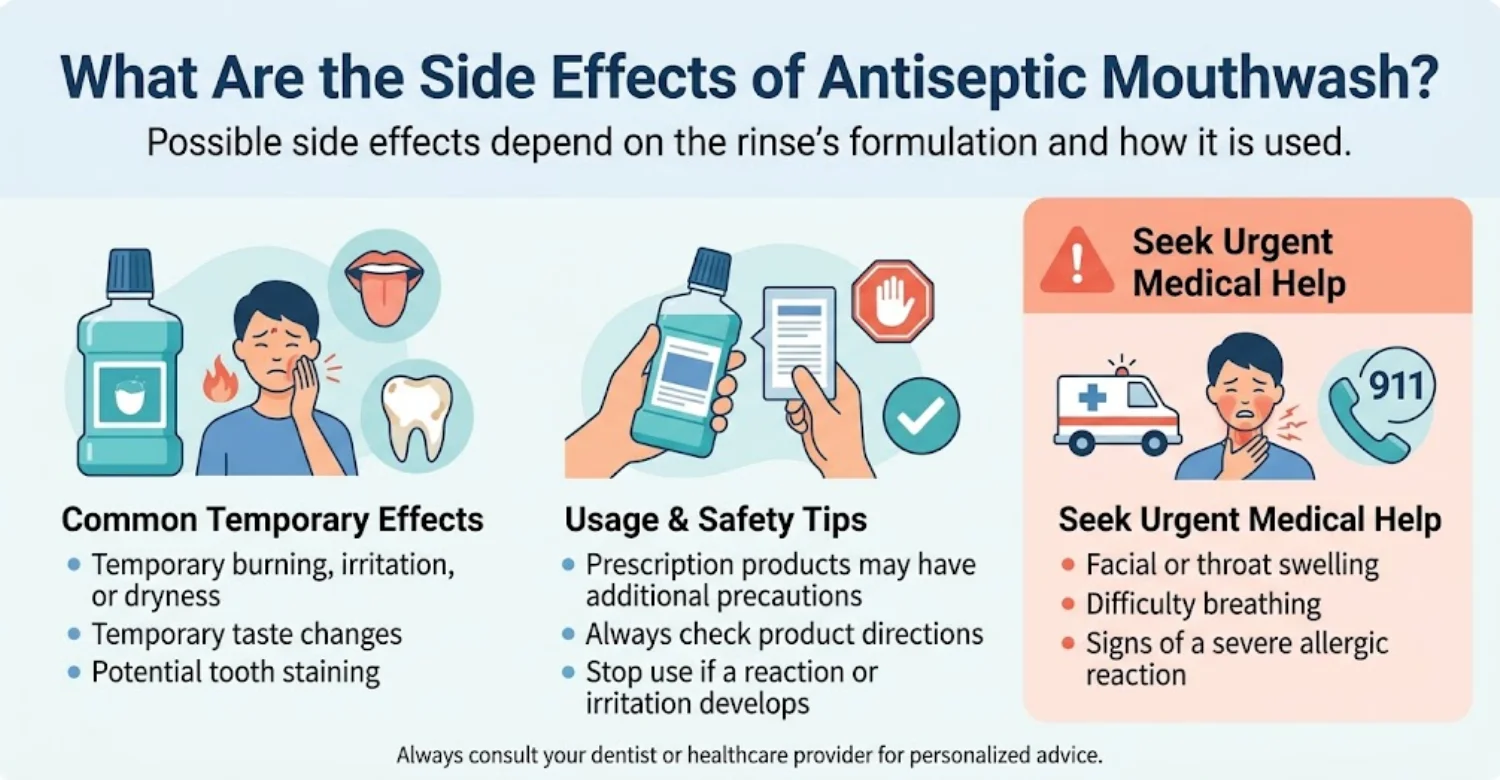
Can Antiseptic Mouthwash Cause Dry Mouth or Irritation?
Yes, some rinses can contribute to dryness, burning, or irritation. Strong flavors or alcohol may bother sensitive tissues. Choose a product suited to your mouth and follow its directions. If discomfort persists, stop using it and ask a dental professional for guidance. Persistent mouth dryness deserves assessment because it can increase oral health risks.
Can Frequent Use Affect Taste or Stain Teeth?
Some medicated rinses can temporarily alter taste or stain teeth, the tongue, or dental restorations. Prolonged use may increase certain side effects. These effects depend on the formulation and treatment duration. Do not use a medicated rinse longer than directed. Arrange a dental review if staining, taste changes, or soreness continues.
Who Should Avoid Certain Antiseptic Oral Rinses?
People with allergies to product ingredients should avoid the relevant formulation. Young children may swallow rinses and should not use them unless a dental professional advises it. People with swallowing difficulties, significant oral irritation, or complex medical needs should seek tailored advice. During pregnancy or breastfeeding, check the specific product with a clinician or pharmacist.
How to Use Antiseptic Mouthwash Safely
Use antiseptic mouthwash according to the product label or your dentist’s instructions. Measure the stated amount, swish for the recommended time, and spit it out. Never swallow it or mix products unless a professional says it is appropriate. Store it safely away from children. Do not exceed the recommended frequency.
How Much Antiseptic Mouthwash Should You Use?
Use the measured amount stated on the label or prescription. Recommended volumes and contact times differ by product, so one dose does not suit every rinse. Do not estimate a stronger dose or repeat a rinse to improve results. Ask a dentist or pharmacist if the directions are unclear.
Should You Use Antiseptic Mouthwash Before or After Brushing?
Timing depends on the rinse’s ingredients and the toothpaste used. Some products should be used at a different time from brushing to avoid affecting toothpaste benefits. Follow the instructions on both products. If directions are unclear, ask your dentist or pharmacist for a practical schedule.
Can You Use Antiseptic Mouthwash Every Day?
Some rinses are intended for daily use, while medicated products may be recommended only for a limited period. Check the label and follow professional advice. Daily use is not necessary for everyone. Stop and seek guidance if dryness, soreness, taste changes, or staining develops.
What Should You Avoid After Rinsing?
Do not swallow the rinse or immediately dilute it with water unless the label instructs otherwise. Some products advise avoiding food or drinks for a short period afterward. Follow product-specific instructions because recommendations differ. Keep rinses away from young children and never leave an open bottle within reach.
How to Choose the Best Antiseptic Mouthwash
The best choice depends on your goal, symptoms, oral health, age, and product tolerability. Antiseptic mouthwash intended for plaque control may differ from a cosmetic rinse for breath freshness. Check the label, usage limits, warnings, and evidence for the stated benefit. A dentist can help when symptoms or medical factors complicate the choice.
Choosing Antiseptic Mouthwash for Bacteria Control
Choose a product whose labeled purpose matches your needs and whose instructions you can follow reliably. In the United States, an ADA Seal can indicate independent review of evidence for specific claims. The seal does not mean every rinse suits every person. Ask a dental professional about persistent plaque, bleeding gums, or recurring oral infections.
What to Consider for Sensitive Gums and Dry Mouth
If your mouth feels dry or your gums are sensitive, avoid products that consistently cause burning or discomfort. Alcohol-free formulas may be worth considering, but the full formulation matters. Look for clear directions and relevant warnings. If dryness continues, seek assessment instead of relying only on a rinse.
When to Ask a Dentist for a Medicated Mouthwash
Ask a dentist if gum bleeding, swelling, mouth sores, or bad breath continues despite routine care. A clinician can identify whether a medicated rinse is appropriate and how long to use it. Do not borrow someone else’s prescription rinse. Seek prompt care if symptoms worsen or you notice pus, loose teeth, or facial swelling.
Is Antiseptic Mouthwash Better Than Regular Mouthwash?
Neither type is automatically better for every person. Therapeutic rinses target specific oral health goals, while cosmetic products mainly freshen breath temporarily. Choose according to the need rather than flavor or intensity. Any rinse should complement toothbrushing, interdental cleaning, and professional care.
Antiseptic Mouthwash vs. Cosmetic Mouthwash
Antiseptic Mouthwash is intended to help control selected microorganisms when used correctly. Cosmetic mouthwash mainly masks odor or leaves a pleasant taste. Their purposes therefore differ. Compare the labeled claims and evidence, and do not assume a cosmetic product treats gum disease. Persistent symptoms need a dental assessment.
Antiseptic Mouthwash vs. Brushing and Flossing
Brushing and interdental cleaning physically disrupt plaque and remain the foundation of daily oral hygiene. Antiseptic Mouthwash may offer additional support but cannot remove tartar or replace cleaning between teeth. Use a rinse as an addition, not a substitute. reviews evidence for daily oral hygiene.
Note : All images used are for editorial and illustrative purposes only and may not originate from the original news provider or associated company.
What Are the Alternatives to Antiseptic Mouthwash?
Alternatives depend on the oral health problem being addressed. Daily cleaning may be enough for routine plaque control, while gum disease or infection can need professional treatment. A rinse is not required for everyone. Choose care based on clinical findings rather than using multiple products without advice.
Daily Brushing and Interdental Cleaning
Brush gently twice a day and clean between teeth daily with a suitable interdental tool. These steps remove plaque mechanically from tooth surfaces and spaces. Clean the tongue if coating contributes to odor. Ask a dental professional to demonstrate technique if bleeding or plaque continues.
Professional Dental Cleaning and Gum Treatment
Professional cleaning removes deposits that home brushing cannot remove. For gum disease, treatment may include deeper cleaning and a planned review. The dentist tailors care for gum measurements, tooth condition, and risk factors. Mouth rinses may be an adjunct, not the main treatment for advanced disease.
When Oral Health Problems Need Dental Evaluation
Arrange an examination for tooth pain, repeated bleeding, swelling, pus, loose teeth, mouth sores that persist, or ongoing bad breath. A rinse cannot diagnose decay, abscesses, or periodontal disease. Seek emergency care for trouble breathing or swallowing, or rapidly spreading facial or neck swelling.
When Should You See a Dentist?
See a dentist when oral symptoms persist, recur, worsen, or interfere with eating or sleeping. Early assessment may help identify the cause and prevent complications. An antiseptic mouthwash may ease selected symptoms, but it should not delay care. Seek urgent assessment for swelling, fever with dental symptoms, or difficulty opening your mouth.
Warning Signs of Gum Disease or Oral Infection
Warning signs include bleeding or swollen gums, persistent tenderness, pus, loose teeth, or a bad taste that does not resolve. Facial swelling or fever alongside dental pain requires prompt evaluation. Breathing or swallowing difficulty is an emergency. Do not try to manage suspected infection with rinsing alone.
When Persistent Bad Breath Needs Professional Assessment
Persistent bad breath deserves a dental assessment when brushing, tongue cleaning, and hydration do not help. Common causes include gum inflammation, decay, trapped food, and dry mouth. Some causes may be outside the mouth. A clinician can assess oral health and recommend further review when appropriate.
What Might Dental Assessment and Treatment Cost?
Prices vary by complexity. US figures are published estimates, England figures are NHS bands, and Turkey figures reflect one clinic’s 2026 tariff. These are not guaranteed quotes.
Service | United States | England NHS | Turkey private tariff |
Exam and X-ray | $203 incl. cleaning | $27.90 Band 1 | $53 consult + X-ray |
Filling | 139–976 | $76.60 Band 2 | $60–$90 |
Root canal | 984–1,337 | $76.60 Band 2 | $60–$135 |
Extraction | 177–2,685 | $76.60 Band 2 | $26–$180 |
Abscess treatment | Varies | $27.90 urgent care; confirm | $26 listed per tooth |
NHS fees bundle eligible care by band. Complex treatment, extra imaging, private care, and follow-up may cost more.
How Vitrin Clinic Supports Your Oral Health
Vitrin Clinic approaches oral discomfort by identifying its likely cause before selecting treatment. Examination and digital dental X-rays may be appropriate, depending on symptoms and clinical findings. A rinse may suit some gum-care plans, while decay, a damaged tooth, or infection may need different care. Plans are individualized, and outcomes cannot be guaranteed. International patients should confirm itemized estimates, appointment timing, follow-up arrangements, and travel needs before treatment.
Identifying the Cause of Gum Inflammation and Oral Discomfort
Gum redness, bleeding, bad breath, and soreness can have different causes. A clinical examination helps assess teeth, gums, oral tissues, and possible sources of irritation. Digital X-rays may be recommended when they can clarify findings. Antiseptic Mouthwash should not replace this assessment or delay necessary treatment.
Personalized Oral Hygiene Guidance and Dental Treatment Planning
Vitrin Clinic can discuss suitable oral hygiene steps and explain options after assessing individual needs. Treatment planning depends on whether findings suggest plaque-related inflammation, decay, a damaged restoration, or another condition. Ask what the estimate includes, whether more visits are needed, and how follow-up works after returning home.
Ready to transform your smile?
Talk to our team and get a personal FREE treatment plan.
Key Takeaways About Antiseptic Mouthwash
Antiseptic Mouthwash may add support for selected oral health goals, but it is not essential for everyone. Choose a product based on its purpose and follow its label. Continue brushing and interdental cleaning every day. Stop using a rinse that causes persistent irritation. Seek dental care for ongoing symptoms, and emergency help for breathing or swallowing problems.
Reference
FAQs
Dr. Rifat Alsaman has more than 5 years of clinical experience in dentistry and currently serves as the Head of the Medical Team at Vitrin Clinic. He is dedicated to providing exceptional patient care, overseeing treatment planning, and ensuring the highest clinical standards across the team. His expertise, attention to detail, and commitment to continuous professional development have helped countless patients achieve healthier, more confident smiles.


