General Dentistry
October 12, 2026
Awake Bruxism and Permanent Tooth Damage: What Are the Risks?
 Dr. Rifat Alsaman
Many people clench their teeth while working, driving, or under stress without realizing it. Over time, this habit can wear enamel, cause sensitivity, and weaken dental restorations. Understanding the link between awake bruxism and permanent tooth damage helps you spot warning signs early, protect your smile, and seek professional dental guidance before minor wear becomes a lasting problem.
What Is Awake Bruxism?
Awake bruxism is a daytime jaw-muscle habit that many people overlook. Learning what it is, why it happens, and how it shows up is the first step in understanding awake bruxism and permanent tooth damage. It also helps you decide when your symptoms need attention from a dental professional.
What Is Awake Bruxism and How Is It Different From Sleep Bruxism?
Awake bruxism is the unconscious clenching, bracing, or grinding of the teeth while you are awake. Sleep bruxism happens during sleep and often involves rhythmic grinding. Daytime episodes usually involve sustained clenching rather than noisy grinding. Both forms matter, because either one can gradually harm the teeth when the habit continues untreated.
What Causes Teeth Clenching During the Day?
Teeth clenching during the day is commonly linked to stress, anxiety, intense concentration, and frustration. Habits such as chewing pens or biting nails, high caffeine intake, and certain medications may also contribute. In many cases several factors combine, which is why identifying your personal triggers is an important part of managing the habit effectively.
What Are the Most Common Bruxism Symptoms?
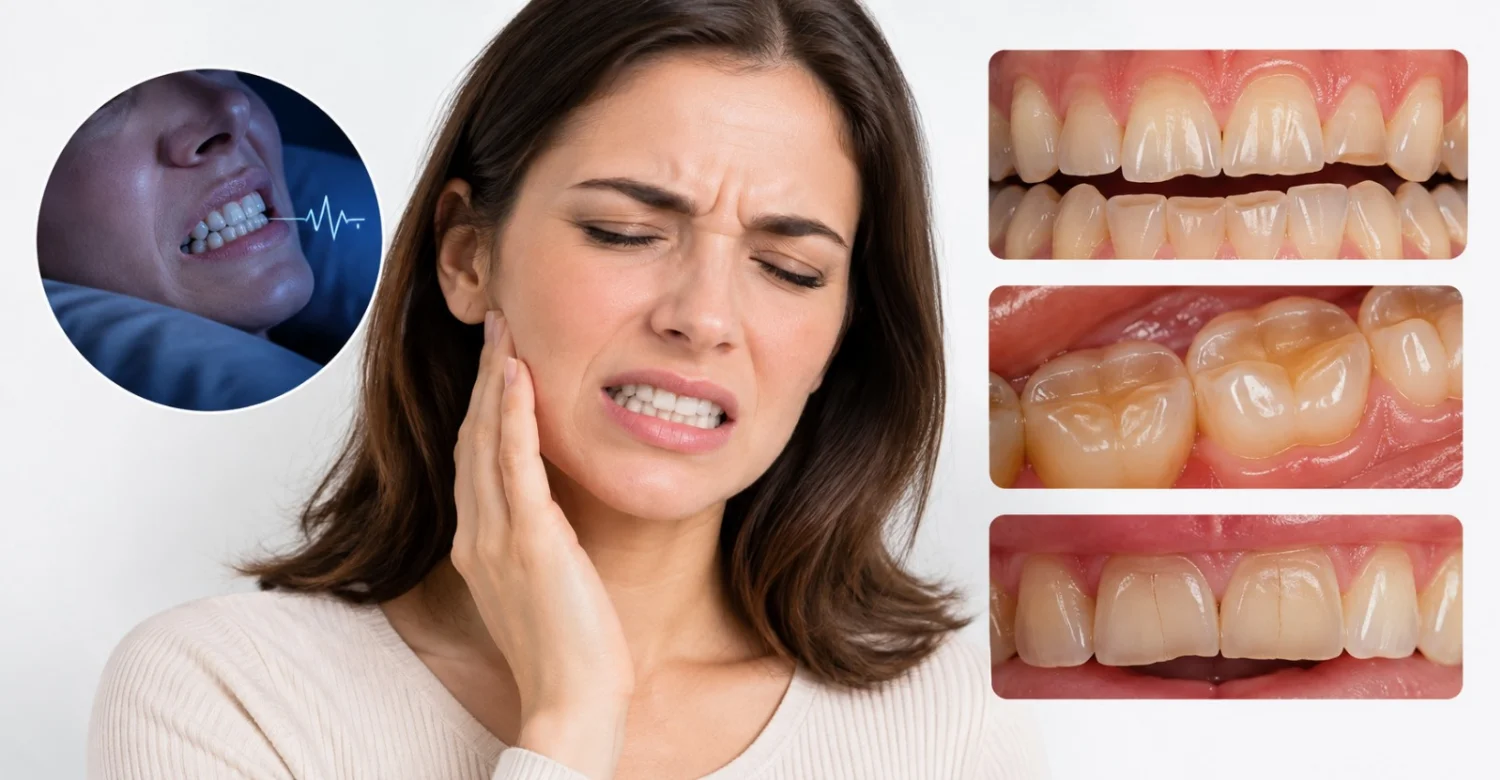
Common bruxism symptoms include jaw tightness, sore facial muscles, tension headaches, tooth sensitivity, flattened biting edges, and small chips. Some people notice indentations on the tongue or cheeks. Because these signs develop gradually, many patients only connect their daytime clenching to tooth wear once the wear becomes visible or the discomfort becomes persistent.
How Does Awake Bruxism Cause Permanent Tooth Damage?
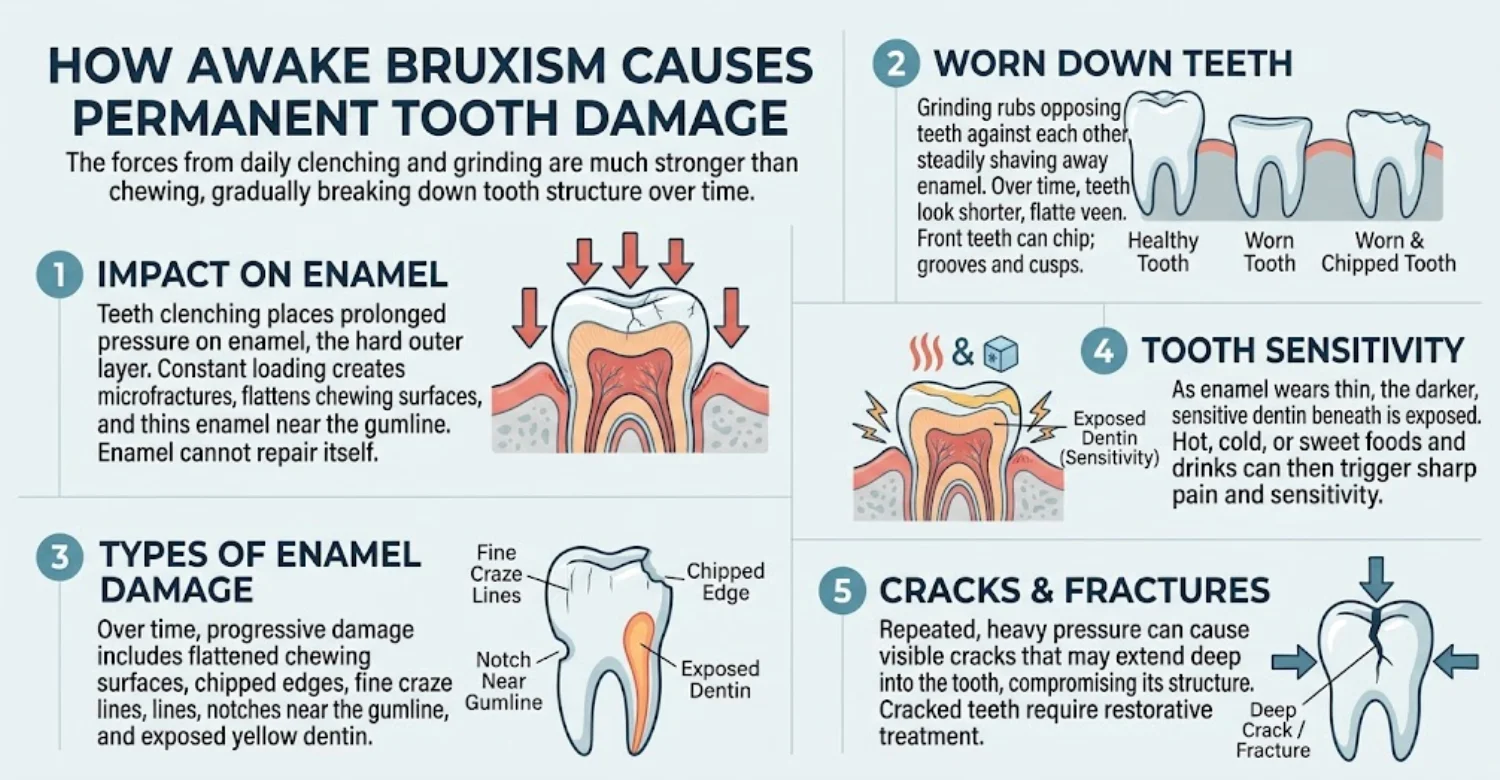
The forces produced during clenching are much stronger than those used in normal chewing. When these forces repeat daily for months or years, they gradually break down tooth structure. This section explains how daytime clenching harms the teeth and describes the types of damage that may follow if the habit continues.
How Does Teeth Clenching Affect Tooth Enamel?
Teeth clenching places prolonged pressure on enamel, the hard outer layer that protects each tooth. Constant loading can create microfractures, flatten chewing surfaces, and thin the enamel near the gumline. Since enamel has no living cells to repair itself, this is where awake bruxism and permanent tooth damage begins for many people.
Can Teeth Grinding Cause Worn Down Teeth?
Yes. Teeth grinding rubs opposing teeth against each other, steadily shaving away enamel. Over time this leads to worn down teeth that look shorter, flatter, or uneven. Front teeth may appear chipped or translucent at the edges, while back teeth can lose their natural grooves and cusps, affecting both appearance and bite.
What Types of Tooth Enamel Damage Can Develop Over Time?
Tooth enamel damage from bruxism can include flattened surfaces, chipped edges, fine craze lines, notches near the gumline, and exposed dentin. As enamel thins, teeth may look more yellow because the darker layer underneath shows through. Each of these changes reflects how bruxism-related wear progresses over time.
Can Awake Bruxism Cause Tooth Sensitivity and Cracks?
Yes. When enamel wears thin, the dentin beneath becomes exposed, allowing hot, cold, or sweet foods to trigger sensitivity. Repeated pressure can also cause cracks that may extend deeper into the tooth. Cracked teeth are a serious example of awake bruxism and permanent tooth damage and may require restorative treatment.
Clinical Note
Enamel does not regenerate naturally once it is lost. However, depending on the severity, dentists may be able to restore or protect damaged teeth using bonding, crowns, or other approaches. Early detection matters, because limiting further wear is often simpler than repairing advanced damage later.
What Are the Main Causes of Awake Bruxism?
Awake bruxism rarely has a single cause. Emotional, behavioral, and environmental factors often work together. Recognizing which triggers apply to you makes it easier to interrupt the habit and reduce the risk of lasting dental wear developing over time. Below are the most common contributing factors.
Can Stress and Anxiety Cause Teeth Clenching?
Yes. Stress and anxiety are among the most frequently reported triggers for teeth clenching. During tense moments, the jaw muscles often tighten automatically as part of the body's stress response. When stress is ongoing, clenching can become a daily habit, increasing the likelihood of awake bruxism and permanent tooth damage.
How Do Daily Habits Contribute to Awake Bruxism?
Habits such as chewing pens, biting nails, chewing gum constantly, or holding objects between the teeth keep the jaw muscles active. High caffeine intake, smoking, and alcohol may also increase muscle activity. Poor posture, especially when looking down at screens, can encourage jaw tension and make teeth clenching more frequent.
Can Concentration and Work-Related Stress Trigger Teeth Clenching During the Day?
Yes. Many people clench while focusing on demanding tasks such as computer work, driving, studying, or exercising. Deadlines and workplace pressure can intensify this response. Because it happens during concentration, the person rarely notices it, which allows tooth wear to progress quietly over many months.
What Problems Can Awake Bruxism Cause Besides Tooth Damage?
Tooth wear is only part of the picture. The same forces that affect the teeth also strain muscles, joints, and existing dental work. Understanding these wider effects shows why daytime clenching should be addressed early rather than treated as a minor cosmetic concern.
Can Teeth Clenching Cause Jaw Pain and Muscle Tension?
Yes. Prolonged teeth clenching overworks the chewing muscles, causing soreness, stiffness, and fatigue, especially by the end of the day. Some people also experience clicking or discomfort in the jaw joint. These symptoms often appear alongside tooth wear, signaling that the jaw is under excessive strain.
Can Awake Bruxism Lead to Headaches?
Yes. Tension in the jaw muscles can spread to the temples, forehead, and neck, triggering tension-type headaches. These headaches often worsen later in the day after hours of unnoticed clenching. Relaxing the jaw and managing stress may help, but recurring headaches should be discussed with a healthcare professional for proper evaluation.
How Can Repeated Teeth Grinding Affect Dental Restorations?
Repeated teeth grinding places heavy stress on fillings, crowns, veneers, and bridges. This can lead to chipping, fractures, loosening, or premature wear of dental work. Protecting restorations is an important part of managing awake bruxism and permanent tooth damage, since replacing failed dental work can be time-consuming and costly.
When Can Bruxism Symptoms Require Professional Dental Evaluation?
Professional evaluation is recommended when bruxism symptoms persist or worsen, such as ongoing jaw pain, frequent headaches, tooth sensitivity, visible wear, chips, or cracks. A dentist can assess the extent of wear, identify contributing factors, and suggest options to limit the damage before it advances further.
Tips for the Patients
Notice when your teeth touch during the day. At rest, your lips should be closed, your teeth slightly apart, and your jaw relaxed. Relax your jaw whenever you are not eating or speaking. If tooth sensitivity, persistent jaw discomfort, or visible tooth wear develops, arrange a professional dental evaluation promptly.
 Note : All images used are for editorial and illustrative purposes only and may not originate from the original news provider or associated company.
How Can You Recognize Early Signs of Permanent Tooth Damage From Awake Bruxism?
Spotting early warning signs gives you the best chance to protect your teeth. Many changes are subtle at first, but they become easier to identify once you know what to look for. Early recognition can significantly limit the progression of awake bruxism and permanent tooth damage.
What Are the Early Signs of Worn Down Teeth?
Early signs of worn down teeth include flattened biting edges, small chips, front teeth that look shorter, and edges that appear slightly see-through. You may also notice a change in how your teeth fit together. These subtle changes often mark the beginning of lasting enamel loss.
How Can You Tell If Teeth Clenching Is Damaging Your Enamel?
Signs that teeth clenching is damaging your enamel include increasing sensitivity to temperature, a yellowish tint as dentin shows through, shiny flat spots on chewing surfaces, and fine cracks. Jaw soreness after work or study is another clue. A dental examination can confirm the extent of any tooth enamel damage.
When Should You See a Dentist for Bruxism Symptoms?
See a dentist if you notice persistent jaw pain, frequent headaches, tooth sensitivity, chips, cracks, or visible changes in tooth shape. Even without pain, regular checkups help detect wear early. Prompt assessment allows a dentist to recommend measures that reduce further wear before costly treatment becomes necessary.
Ready to transform your smile?
Talk to our team and get a personal FREE treatment plan.
How to Stop Clenching Teeth During the Day?
Learning how to stop clenching teeth during the day starts with awareness and grows through consistent habits. The following strategies can help reduce muscle tension and protect your teeth, lowering the long-term risk of irreversible tooth wear.
How Can You Become More Aware of Daytime Teeth Clenching?
Set regular reminders on your phone or place small stickers on your screen, steering wheel, or desk. Each time you see one, check whether your teeth are touching. Over time, these check-ins build awareness of teeth clenching during the day and help you catch the habit before it causes discomfort.
Can Relaxation Techniques Help Reduce Awake Bruxism?
Yes. Deep breathing, progressive muscle relaxation, gentle jaw stretches, mindfulness, and short breaks during work can reduce overall tension. Lower stress often means less clenching. While these techniques do not repair existing wear, they can slow further damage by reducing the forces placed on the teeth.
How Can You Train Yourself to Keep Your Jaw Relaxed?
Practice the resting position: lips together, teeth apart, and tongue resting gently on the roof of the mouth just behind the front teeth. Return to this position throughout the day. With consistent practice, the jaw learns to stay relaxed naturally, making it easier to break the cycle of daytime teeth clenching.
Can Lifestyle Changes Help Reduce Teeth Grinding?
Yes. Reducing caffeine and alcohol, avoiding constant gum chewing, quitting nail or pen biting, improving posture, exercising regularly, and getting enough sleep may all help reduce teeth grinding. These changes support muscle relaxation and stress management, both of which play a role in preventing awake bruxism and permanent tooth damage.
Tips for the Patients
Set reminders to check your jaw tension, keep your teeth apart when resting, and practice relaxation techniques daily. If clenching persists despite these efforts, a professional assessment can help identify contributing factors and appropriate treatment. Knowing how to stop clenching teeth is helpful, but expert guidance may be needed for lasting improvement.
What Are the Available Treatment Options for Awake Bruxism?
Bruxism treatment focuses on two goals: reducing the habit and protecting or restoring affected teeth. The right approach depends on the severity of wear and the factors involved. Here is an overview of the options commonly used to manage awake bruxism and permanent tooth damage.
What Does Professional Bruxism Treatment Involve?
Professional bruxism treatment usually begins with a thorough examination of the teeth, jaw muscles, and bite. A dentist may document wear patterns, discuss triggers, and recommend a combination of habit awareness, stress management, protective appliances, and restorative care. Treatment plans are tailored to each patient's clinical findings and needs.
Can a Night Guard Help With Damage From Teeth Grinding?
A night guard or custom splint may help protect against damage from teeth grinding in appropriate cases by absorbing forces and preventing direct tooth contact. However, it does not necessarily eliminate daytime clenching habits. It is usually one part of a broader plan for managing daytime clenching and its effects.
How Can Dentists Repair Worn Down Teeth?
Dentists can repair worn down teeth using several approaches, depending on severity. Options may include composite bonding to rebuild edges, crowns to protect weakened teeth, veneers for front teeth, or onlays for back teeth. The aim is to restore function, appearance, and protection while also addressing the habit causing the wear.
Can Tooth Enamel Damage From Bruxism Be Reversed?
Lost enamel cannot naturally grow back, so tooth enamel damage is not reversible in the biological sense. However, restorative treatments may help protect or rebuild damaged teeth. Preventing further wear is essential, which is why managing the habit is central to protecting the teeth effectively.
Clinical Note
A night guard may protect teeth in appropriate cases, but it does not necessarily stop daytime clenching habits. Lost enamel cannot naturally grow back, although restorative treatments may help protect or rebuild damaged teeth. Combining habit control with professional dental care generally offers better long-term protection than relying on a single approach.
How Can Vitrin Clinic Help Patients With Awake Bruxism and Permanent Tooth Damage?
At Vitrin Clinic, our dental team evaluates each patient individually and discusses suitable options based on the clinical findings. Our goal is to provide clear, professional guidance on awake bruxism and permanent tooth damage, helping patients understand their condition and make informed decisions, without promising guaranteed results.
.jpg)
.jpg)
.jpg)
.jpg)
How Does Vitrin Clinic Assess Tooth Wear and Enamel Damage?
Vitrin Clinic assesses tooth wear through a detailed clinical examination of the enamel, biting surfaces, existing restorations, jaw muscles, and bite alignment. Our team reviews symptoms, daily habits, and possible triggers, and dental imaging may be used when needed. This helps determine the extent of tooth enamel damage and guides appropriate next steps.
What Treatment Options May Be Recommended at Vitrin Clinic?
Depending on the findings, Vitrin Clinic may recommend habit-awareness guidance, relaxation strategies, a custom protective guard, or restorative treatments such as bonding or crowns. Every recommendation is based on the patient's individual condition. The aim is to manage both the habit and its effects on the teeth in a practical, personalized way.
How Does Vitrin Clinic Help Protect Damaged Teeth?
At Vitrin Clinic, protecting damaged teeth may involve reinforcing weakened areas, restoring worn edges, and recommending protective appliances where appropriate. Our team also explains how to reduce daytime clenching to help prevent further wear. Regular follow-up visits allow us to monitor changes and adjust care as needed over time.
Why Is Early Diagnosis Important for Patients at Vitrin Clinic?
Early diagnosis allows Vitrin Clinic to identify wear before it becomes severe. Detecting changes at an early stage often means simpler, more conservative treatment options and better preservation of natural tooth structure. Timely evaluation is one of the most effective ways to limit awake bruxism and permanent tooth damage.
What We Notice Clinically
At Vitrin Clinic, Dr. Rifat Alsaman, Head of the Medical Team and a cosmetic dentist, often sees patients who don’t realize they clench during the day until sensitivity or chipped edges appear. Many describe stressful work routines or long screen hours, showing how quietly daytime clenching can wear down the teeth.
Tips for the Patients
Check your jaw position several times a day, keep your teeth apart at rest, and take short relaxation breaks during work. Avoid chewing on hard objects such as pens or ice. Book a dental visit if you notice sensitivity, jaw discomfort, or visible wear. Early action supports better outcomes and helps protect your natural teeth.
Resource:
https://pubmed.ncbi.nlm.nih.gov/36597658/
https://pmc.ncbi.nlm.nih.gov/articles/PMC11278015/
https://pubmed.ncbi.nlm.nih.gov/35207380/
FAQs
Dr. Rifat Alsaman has more than 5 years of clinical experience in dentistry and currently serves as the Head of the Medical Team at Vitrin Clinic. He is dedicated to providing exceptional patient care, overseeing treatment planning, and ensuring the highest clinical standards across the team. His expertise, attention to detail, and commitment to continuous professional development have helped countless patients achieve healthier, more confident smiles.


