General Dentistry
August 11, 2026
Celiac Disease and Teeth: How Can Celiac Disease Affect Your Oral Health?
 Dr. Rifat Alsaman
Celiac Disease and Teeth are more connected than most people realize. Celiac disease is an autoimmune condition triggered by gluten. It can quietly affect the mouth long before digestive symptoms appear. Research shows dental enamel defects occur in 50% to 94.1% of celiac patients across 18 studies. These defects often appear as symmetrical, chronologically distributed marks on the teeth. Celiac disease is estimated to affect around 1% of the population, and nearly half of patients show no gastrointestinal symptoms at all. Because of this, oral changes can sometimes be the first visible clue. This guide explains celiac disease teeth symptoms, celiac disease and oral health, and what patients and dental professionals should watch for.
What Is Celiac Disease and How Can It Affect Your Teeth?
Celiac Disease and Teeth are linked through the body's immune response to gluten. This response damages the small intestine and limits nutrient absorption. Teeth form using nutrients drawn from the bloodstream, so this disruption can leave a lasting imprint on enamel. This is especially true when celiac disease develops during childhood, while permanent teeth are still forming.
How Celiac Disease Affects Oral Health
Celiac disease and oral health are connected mainly through malabsorption. When the small intestine cannot properly absorb calcium, vitamin D, and other minerals, the body has fewer building blocks for healthy enamel. This can make teeth more fragile, discolored, or prone to sensitivity over time.
The Connection Between Celiac Disease and Teeth
The relationship between celiac disease and teeth becomes clearest when enamel forms during childhood. If celiac disease is active but undiagnosed during those developmental years, the enamel layer may form unevenly. This leaves defects that remain visible in adult teeth, long after digestive symptoms are addressed.
Nutritional Deficiencies and Dental Health
Calcium and vitamin D deficiencies are common in untreated celiac disease. Both are essential for strong enamel and healthy bone supporting the teeth. Low levels of these nutrients during tooth development can result in weaker, thinner, or discolored enamel. This enamel is more vulnerable to wear.
How Malabsorption Can Affect Teeth
Malabsorption reduces the nutrients reaching developing teeth, which can alter how enamel mineralizes. This is one reason celiac disease dental problems often appear as a pattern rather than a single spot. The deficiency affects several teeth developing around the same time.
Clinical Note
Celiac disease can have oral manifestations. The intestine and the developing tooth share a dependence on the same absorbed nutrients. Dental professionals may notice symmetrical enamel changes, recurrent mouth sores, or unexplained sensitivity. These signs can prompt a closer look at a patient's broader health history.
What Are the Common Celiac Disease Teeth Symptoms?
When people search for Celiac Disease and Teeth information, this is usually the section they need most. Celiac disease teeth symptoms vary from person to person. Still, several patterns appear often enough to be recognizable. Discoloration, enamel defects, sensitivity, canker sores, and delayed dental development are the most frequently reported signs. Together, these Celiac Disease and Teeth findings can guide further investigation.
White, Yellow, or Brown Tooth Discoloration
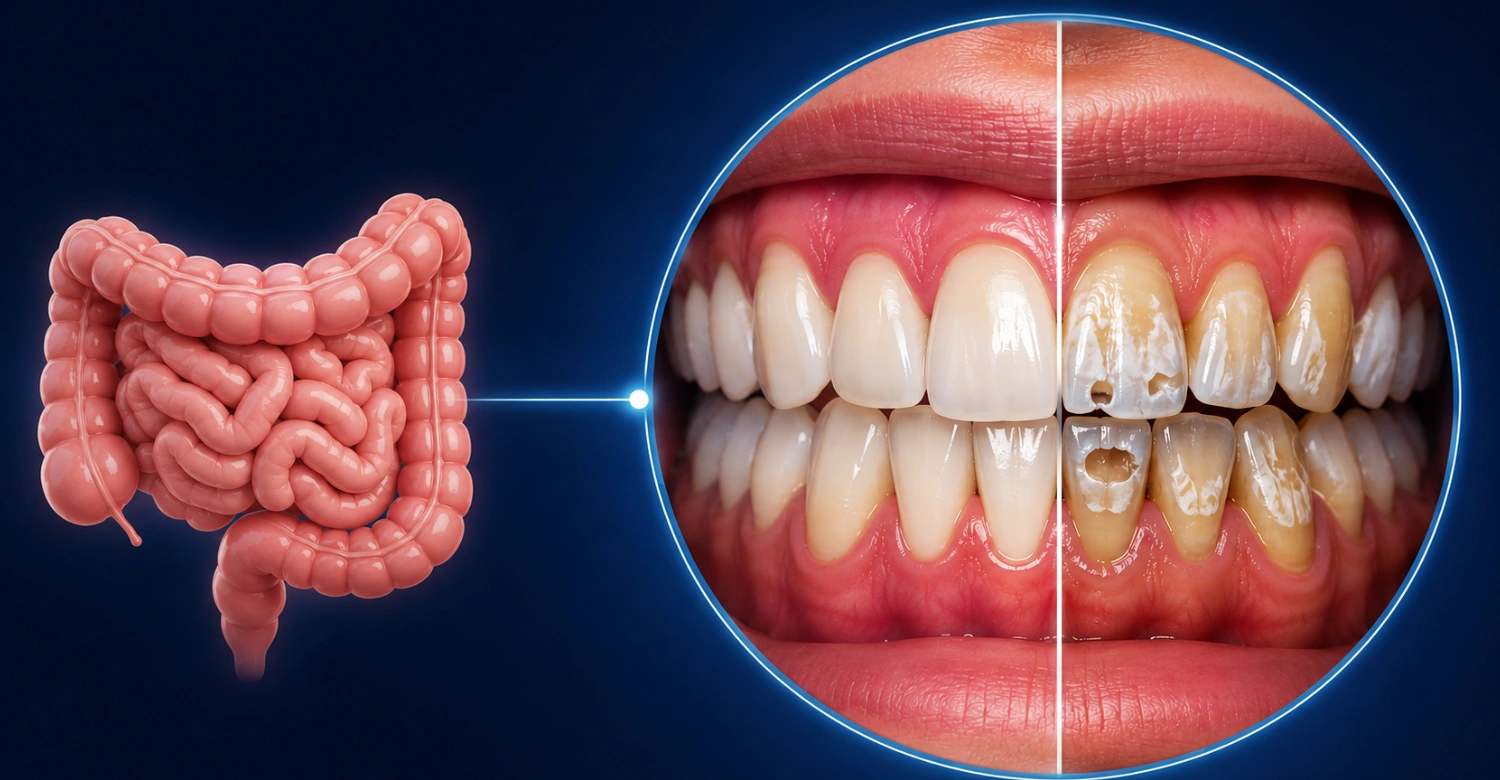
Teeth affected by celiac disease may show white, yellow, or brown discoloration. This usually appears as patches or bands rather than an even shade change. The coloring reflects irregular enamel mineralization rather than surface staining. It is often symmetrical across matching teeth on both sides of the mouth. Get the full picture on this specific type of staining in intrinsic tooth discoloration.
Enamel Defects and Weak Tooth Enamel
Celiac disease enamel defects are among the most studied oral signs of the condition. Enamel may appear pitted, grooved, or thinner than normal. Because the defect forms during development, it does not improve with brushing or whitening. It requires dental evaluation to manage properly.
Tooth Sensitivity
Weakened enamel exposes the underlying dentin layer more easily. This can cause noticeable sensitivity to hot, cold, or sweet foods. Patients with celiac disease dental problems sometimes report this sensitivity long before they connect it to their digestive condition.
Recurrent Canker Sores
Celiac disease canker sores, also called recurrent aphthous stomatitis, appear more frequently in people with untreated celiac disease than in the general population. These sores may develop from nutritional deficiencies or from an ongoing immune reaction. They can be a recurring source of discomfort. Not sure if it's an ulcer or something more serious? Find out in mouth ulcer vs. abscess.
Delayed Dental Development in Children
Children with celiac disease may experience delayed eruption of both baby and permanent teeth. In one pilot study, enamel defects were found in 83.3% of celiac children, compared with 53.3% of controls. Symmetric defects were nearly three times more common in the celiac group.
Are Tooth Discoloration and Enamel Changes Always Caused by Celiac Disease?
Not every case of discoloration or enamel weakness points to celiac disease. Fluorosis, medication use, and other conditions can produce similar appearances. Celiac Disease and Teeth findings are usually considered alongside a patient's digestive history, rather than as a stand-alone diagnosis. Not sure if it's fluorosis or something else? See a full comparison in why are my teeth stained.
Tips for the Patients
Patients who notice unusual tooth discoloration, unexplained sensitivity, or frequent mouth sores should mention these changes to both their dentist and their physician. Sharing a full health picture helps professionals decide whether further testing for celiac disease is worth pursuing.
What Are Celiac Disease Enamel Defects?
Celiac disease enamel defects describe structural changes that occur while teeth are still forming. This differs from damage that happens afterward. Understanding how Celiac Disease and Teeth interact at the developmental stage helps explain why these defects often follow a distinct, recognizable pattern.
What Happens to Tooth Enamel?
Understanding Celiac Disease and Teeth at the enamel level starts here. Enamel forms in layers as a tooth develops. Any disruption to nutrient supply during that window can leave a permanent mark. Once enamel has finished forming, it cannot regenerate. This is why enamel defects linked to celiac disease remain visible into adulthood, unless treated cosmetically.
How Celiac Disease May Affect Tooth Development
Active, untreated celiac disease during childhood coincides with the years when permanent teeth are mineralizing. Reduced calcium and vitamin absorption during this period can affect multiple teeth at once. This is why celiac disease tooth enamel changes often appear in a matching, symmetrical pattern rather than isolated spots.
Symmetrical Enamel Defects
A systematic review of 18 studies found that dental enamel defects in celiac disease patients typically follow a symmetrical and chronological distribution. This aligns with recognized dental classification systems. This symmetry is considered one of the more distinctive features linking enamel changes to celiac disease.
White, Yellow, or Brown Spots on Teeth
Spots associated with celiac disease enamel defects can range from chalky white patches to yellow or brown discoloration. The severity depends on the underlying mineralization disruption. A Portuguese case-control study found enamel defects in 55% of celiac patients, compared with 27.5% of controls.
Increased Tooth Sensitivity
Affected enamel is often thinner or irregularly formed, so sensitivity is a common companion symptom. A Spanish study of permanent teeth found enamel defects in 52.5% of celiac patients versus 42.3% of controls. Incisors were the most frequently and significantly affected teeth.
What Dental Problems Can Celiac Disease Cause?
Celiac disease dental problems extend beyond enamel appearance. They can include cavities, sensitivity, mouth sores, and dry mouth. Recognizing the full range of Celiac Disease and Teeth complications helps patients understand why ongoing dental monitoring matters, even after a celiac diagnosis is confirmed.
Celiac Disease and Cavities
Celiac disease and cavities can be connected indirectly, since weakened enamel is more vulnerable to acid and bacteria than healthy enamel. One study found a significantly higher caries index in celiac patients compared with controls. This suggests enamel defects may contribute to increased decay risk over time. Learn exactly how this process unfolds in the causes of tooth decay.
Tooth Enamel Weakness
Weak tooth enamel resulting from celiac disease can make teeth more prone to chipping, wear, and staining. This weakness is structural rather than cosmetic. It typically needs a dental evaluation rather than home remedies to manage effectively.
Tooth Sensitivity
Sensitivity linked to celiac disease dental problems often results from thinner enamel exposing dentin underneath. Everyday triggers such as cold drinks, sweets, or brushing can become uncomfortable. This prompts many patients to seek dental care before recognizing the underlying cause.
Canker Sores and Mouth Ulcers
Recurrent canker sores and mouth ulcers appear more often in people with celiac disease. They are sometimes linked to deficiencies in iron, folate, or vitamin B12 caused by malabsorption. These sores can be persistent and may improve once celiac disease is properly managed.
Dry Mouth and Oral Discomfort
Dry mouth can develop in people with celiac disease, sometimes related to nutritional deficiencies or associated autoimmune conditions. Reduced saliva flow can make the mouth feel uncomfortable. It may also raise the risk of cavities and gum irritation. See how dryness ties into a bigger risk too in dry mouth and periodontal disease.
Tooth Discoloration
Discoloration remains one of the more visible ways Celiac Disease and Teeth problems show up. It typically appears as symmetrical white, yellow, or brown patches tied to enamel formation, rather than external staining from food or drink.
Does Celiac Disease Increase the Risk of Tooth Decay?
Enamel weakened by celiac disease can be more susceptible to decay. It offers less natural protection against bacteria and acid. While celiac disease and cavities are not always directly linked, the structural vulnerability created by enamel defects can raise overall decay risk.
Can Celiac Disease Cause Permanent Tooth Damage?
Enamel defects that form during childhood tooth development are permanent, since enamel does not regenerate once it has fully formed. However, permanent changes in appearance can still be improved later. Appropriate cosmetic or restorative dental treatment can help.
Clinical Note
Oral symptoms such as discoloration, sensitivity, or mouth sores can have several causes beyond celiac disease. Fluorosis, vitamin deficiencies unrelated to celiac disease, and other medical conditions are among them. These symptoms should be evaluated individually, rather than automatically attributed to celiac disease.
What Are the Celiac Disease Mouth Symptoms?
Celiac disease mouth symptoms are not limited to the teeth themselves. They can involve the soft tissue, tongue, and saliva. Looking at Celiac Disease and Teeth alongside broader mouth symptoms gives a more complete picture of how this condition can present.
Canker Sores
Canker sores are among the most reported celiac disease mouth symptoms. They appear as small, painful ulcers on the inner cheeks, lips, or tongue. One study found these sores in 44% of celiac patients, compared with none of the control group.
Dry Mouth
A persistent dry sensation in the mouth can accompany celiac disease. It is sometimes linked to nutritional deficiencies or coexisting conditions. Dry mouth can make chewing and speaking uncomfortable, and it may also increase the likelihood of dental decay if left unaddressed.
Burning or Irritated Mouth
Some celiac disease patients report a burning sensation in the mouth or on the tongue. This may relate to vitamin B12, iron, or folate deficiencies caused by malabsorption. This discomfort often improves once nutritional levels are restored through proper management.
Tongue Changes
The tongue may appear smoother, redder, or swollen in some celiac disease patients. This change is sometimes called glossitis. These tongue changes are usually linked to the same nutrient deficiencies responsible for other celiac disease mouth symptoms.
Recurrent Oral Ulcers
Beyond typical canker sores, some patients living with Celiac Disease and Teeth changes experience more frequent or longer-lasting oral ulcers. Because these ulcers can also stem from unrelated causes, dental and medical professionals often look at frequency and pattern first. Only then do they connect them to celiac disease.
When Should Mouth Symptoms Be Checked by a Dentist?
Mouth symptoms that recur frequently or last longer than typical canker sores are worth discussing with a dentist. The same applies if they appear alongside dental changes such as enamel defects. Persistent or unusual symptoms deserve professional evaluation, not just over-the-counter remedies.
Can Celiac Disease Cause Tooth Discoloration?
Celiac disease tooth discoloration is one of the more visually noticeable ways Celiac Disease and Teeth intersect. Unlike staining from food, drink, or aging, discoloration linked to celiac disease usually traces back to how enamel formed during childhood development.
Why Can Teeth Develop White, Yellow, or Brown Spots?
Spots develop when enamel mineralizes unevenly during tooth formation, often due to reduced calcium and vitamin absorption. Celiac disease can affect several teeth developing at the same time. Because of this, the resulting discoloration frequently shows up in a matching pattern across the mouth.
Celiac Disease Tooth Discoloration vs. Normal Staining
Celiac disease tooth discoloration tends to be symmetrical, chronologically distributed, and present from an early age. Normal staining from coffee, tea, or smoking builds gradually instead. It is usually more evenly spread across the tooth surface rather than patterned.
Enamel Defects
Enamel defects tied to celiac disease create discoloration from within the tooth structure itself. This means the color change cannot be brushed or polished away. It typically requires cosmetic dental treatment to address.
Fluorosis
Fluorosis results from excess fluoride exposure during childhood. It can produce white or brown mottling that looks similar to celiac-related enamel defects. This is why a dentist's evaluation is important before assuming a cause.
Food and Drink Staining
Staining from coffee, tea, red wine, or tobacco sits on the outer enamel surface. It usually responds well to professional cleaning or whitening, unlike discoloration caused by developmental enamel defects.
Dental Decay
Decay can also darken teeth. It typically appears as localized dark spots with texture changes, rather than the symmetrical patches Celiac Disease and Teeth research associates with developmental discoloration.
Tips for the Patients
Patients noticing discoloration should avoid jumping straight to whitening treatments or veneers before a dentist identifies the underlying cause. Some causes, like enamel defects, respond better to different treatment approaches than others.
How Is Celiac Disease Diagnosed Through Dental Symptoms?
Dental clues alone cannot confirm celiac disease, but they can prompt further investigation. Understanding how Celiac Disease and Teeth findings fit into a broader diagnostic picture helps explain why dentists sometimes recommend medical follow-up after an oral exam.
Can a Dentist Recognize Signs of Celiac Disease?
A dentist can recognize patterns commonly associated with celiac disease. These include symmetrical enamel defects, recurrent canker sores, or delayed dental development, particularly in children. These observations are considered supportive clues, not a standalone diagnostic tool.
What Dental Signs May Raise a Concern?
Signs that may raise concern include enamel defects distributed symmetrically across the mouth, unexplained tooth sensitivity, and frequent mouth ulcers. Delayed eruption of teeth in children is another. These signs matter most when they appear together rather than individually.
Why Dental Examination Is Important
Nearly half of celiac disease patients present without gastrointestinal symptoms. Because of this, a dental examination can sometimes be one of the earlier opportunities to notice a pattern worth investigating. It supports timely referral to a physician.
Dental History
Reviewing a patient's dental history helps distinguish developmental enamel defects from other causes, such as fluorosis or acquired staining. This includes noting when discoloration or sensitivity first appeared.
Oral Examination
A thorough oral examination checks for symmetry, distribution, and severity of enamel changes. It also looks for signs of recurrent ulcers, dry mouth, or tongue changes that might support further evaluation.
Referral for Medical Evaluation
When dental findings around Celiac Disease and Teeth suggest a possible connection to celiac disease, a referral to a physician is the appropriate next step. Blood testing or further evaluation can confirm the condition, since only medical testing can do so.
Clinical Note
Dentists do not diagnose celiac disease solely from dental symptoms. Still, oral findings such as symmetrical enamel defects or recurrent canker sores may be a reasonable basis for recommending further medical evaluation, alongside a patient's overall health history.
How Can You Protect Your Teeth If You Have Celiac Disease?
Protecting Celiac Disease and Teeth together involves both dietary management and consistent dental care. Enamel defects that already exist cannot be reversed. Because of this, prevention and early management become the primary goals for anyone living with celiac disease.
Maintain Good Oral Hygiene
Brushing twice daily with fluoride toothpaste and flossing regularly helps protect enamel that may already be weakened by celiac disease. This reduces the added risk of decay on top of existing structural vulnerabilities.
Follow a Strict Gluten-Free Diet as Medically Recommended
Following a gluten-free diet as recommended by a physician allows the intestine to heal and improves nutrient absorption over time. This can help protect teeth that are still developing in children with celiac disease.
Manage Tooth Sensitivity
Desensitizing toothpaste, gentler brushing techniques, and avoiding extremely hot or cold foods can help manage sensitivity linked to weakened enamel. These steps make daily eating and drinking more comfortable.
Schedule Regular Dental Checkups
Regular dental checkups matter for anyone managing Celiac Disease and Teeth concerns. They allow enamel defects, cavities, or early decay to be caught and managed before they progress. This is especially important for patients whose enamel is already more vulnerable.
Treat Cavities and Enamel Problems Early
Addressing cavities and enamel defects as soon as they are identified helps prevent further damage. It also reduces the likelihood of more extensive restorative treatment being needed later on.
Choosing Fluoride Toothpaste
Fluoride toothpaste helps strengthen remaining enamel and offers extra protection against decay. This makes it a practical daily addition for anyone managing celiac disease dental problems.
Professional Dental Cleaning
Professional cleanings remove plaque and tartar buildup that weakened enamel is less equipped to resist on its own. This supports better long-term oral health for celiac disease patients. Still choosing between fluoride and fluoride-free? Compare your options in fluoridated vs. fluoride-free toothpaste.
Protecting Weak Enamel
Avoiding excessive acidic foods and using a soft-bristled toothbrush can help protect enamel that is already thinner or more fragile due to developmental defects. See what a proactive dental routine actually involves in preventive dentistry at Vitrin Clinic.
Tips for the Patients
Pairing daily oral care with consistent dental visits and ongoing medical follow-up gives the best chance of protecting long-term oral health while managing celiac disease effectively.
What Dental Treatments Can Help With Celiac Disease-Related Tooth Problems?
Several dental treatments can address the visible effects of Celiac Disease and Teeth complications, from minor discoloration to more significant enamel loss. These options allow patients to restore both function and appearance.
Professional Teeth Cleaning
Routine professional cleaning removes surface buildup and allows early identification of decay or enamel changes. It forms the foundation for any further treatment plan.
Fluoride Treatments
In-office fluoride treatments can help strengthen enamel that has been weakened by developmental defects. They offer an added layer of protection against sensitivity and decay.
Dental Fillings
Fillings restore teeth affected by decay, which may be more likely in patients whose enamel defects have made teeth more vulnerable to cavities over time. See how fillings compare to other restorative options in composite filling cost in Turkey.
Teeth Whitening
Whitening can improve the appearance of some surface discoloration. It is generally less effective, though, for deeper, developmental enamel defects tied to celiac disease. Curious if whitening is right for your case? Read our guide on cosmetic options for discolored teeth.
Composite Bonding
Composite bonding reshapes and recolors affected areas of enamel. It offers a conservative option for correcting mild to moderate discoloration or minor structural defects. Get the full breakdown of this conservative option in cosmetic bonding.
Porcelain Veneers
Veneers provide thin, custom-made covers for the front of teeth. They are often considered for more visible or extensive discoloration, once the underlying cause has been identified. Explore your veneer options in detail with our full guide to porcelain veneers.
Dental Crowns
Crowns may be recommended when Celiac Disease and Teeth defects have led to significant structural weakness. They offer full coverage and protection for teeth that need more substantial support. See a full breakdown of materials and options in the types of dental crowns.
Which Treatment Is Best for Enamel Defects?
The best treatment depends on the severity of the defect. Options range from fluoride treatments for mild cases to bonding, veneers, or crowns for more extensive enamel loss. A full dental assessment guides the final decision.
Can Cosmetic Dentistry Improve Celiac Disease Tooth Discoloration?
Cosmetic dentistry can significantly improve the appearance of celiac disease tooth discoloration. The right option depends on whether the discoloration is developmental or related to external staining.
What Are the Signs of Celiac Disease in Teeth?
Recognizing the signs of celiac disease in teeth can help patients and professionals connect oral changes to a broader health picture. Celiac Disease and Teeth signs are most meaningful when several of them appear together rather than alone.
Enamel Defects
Symmetrical, chronologically distributed enamel defects remain one of the most studied and recognizable signs of celiac disease in teeth. They are often present from early childhood onward.
Tooth Discoloration
White, yellow, or brown discoloration patterns are a commonly reported visible sign linked to celiac disease. This is particularly true when the pattern is symmetrical across matching teeth.
Tooth Sensitivity
Ongoing sensitivity without an obvious cause, such as recent dental work, can be another Celiac Disease and Teeth sign worth mentioning to a dentist. This is especially true alongside other oral symptoms.
Recurrent Canker Sores
Frequent, recurring canker sores that do not have another clear explanation are a notable sign among the broader set of celiac disease mouth symptoms.
Increased Risk of Dental Problems
A higher caries index and greater vulnerability to decay have been observed in celiac disease patients in several studies. This adds to the overall pattern of increased dental risk.
Are These Signs Enough to Diagnose Celiac Disease?
These signs alone are not enough to diagnose celiac disease, since each can occur independently of it. They are best understood as reasons to consider further medical evaluation, rather than confirmation of the condition itself.
How Can Vitrin Clinic Help With Celiac Disease and Teeth?
Vitrin Clinic supports patients dealing with Celiac Disease and Teeth concerns. The focus is on both the dental and cosmetic aspects of enamel defects, discoloration, and sensitivity. Recommendations are tailored to each patient's individual oral health needs.
Personalized Dental Assessment
Every patient at Vitrin Clinic receives an individual assessment of enamel condition, discoloration patterns, and sensitivity before any treatment is recommended. This ensures the plan reflects their specific dental history.
Treatment Planning for Enamel Defects
Vitrin Clinic develops treatment plans suited to the severity of enamel defects. Options range from conservative choices like fluoride treatment to more comprehensive restorative approaches when needed.
Cosmetic Solutions for Tooth Discoloration
For patients concerned about the appearance of their teeth, Vitrin Clinic offers cosmetic solutions such as bonding or veneers. These are selected based on the underlying cause of discoloration.
Restorative Treatment for Damaged Teeth
When Celiac Disease and Teeth complications, such as enamel defects or decay, have caused more significant damage, Vitrin Clinic provides restorative treatment options. These are designed to protect the remaining tooth structure while improving function.
Personalized Smile Improvement
Vitrin Clinic works with each patient to design a smile improvement plan that balances dental health needs with cosmetic goals. The plan is adjusted to individual preferences and oral conditions.
What We Notice Clinically
At Vitrin Clinic, the clinical team emphasizes evaluating the condition of the teeth and enamel carefully before recommending any cosmetic or restorative treatment. This ensures decisions are based on what each patient's mouth actually needs. Curious how your full smile transformation gets planned? Explore smile design.
Clinical Note
Vitrin Clinic can address the dental and cosmetic concerns associated with enamel defects, discoloration, sensitivity, and other oral findings. Treatment decisions are always based on each patient's individual dental needs, rather than a one-size-fits-all approach.
Resource:
Understanding the link between celiac disease and teeth can help identify important oral signs early. A PubMed study found that enamel defects were common among people with celiac disease, often appearing bilaterally and affecting incisors and molars. These findings highlight why unusual or symmetrical enamel changes should not be overlooked and may warrant further evaluation for celiac disease.
https://pubmed.ncbi.nlm.nih.gov/9431534/
https://pubmed.ncbi.nlm.nih.gov/22073722/
FAQs
Dr. Rifat Alsaman has more than 5 years of clinical experience in dentistry and currently serves as the Head of the Medical Team at Vitrin Clinic. He is dedicated to providing exceptional patient care, overseeing treatment planning, and ensuring the highest clinical standards across the team. His expertise, attention to detail, and commitment to continuous professional development have helped countless patients achieve healthier, more confident smiles.


.webp&w=3840&q=75)

