Dental Crowns
October 12, 2026
What Is Crown Lengthening Surgery and When Is It Needed?
 Dr. Rifat Alsaman
Crown lengthening surgery is a common dental procedure that exposes more of a tooth. It reshapes gum tissue and, in some cases, bone. It can make a damaged tooth easier to restore and give a dental crown a secure foundation. It can also improve the balance of a smile that shows too much gum.
Functional crown lengthening supports restorative treatment. Crown lengthening for cosmetic reasons aims to improve tooth proportions and gum contours. Treatment planning, recovery, and cost depend on how many teeth are involved and whether bone needs reshaping. Gum health also matters. This guide explains when the procedure is needed.
What Is Crown Lengthening Surgery?
Before deciding on treatment, it helps to understand how crown lengthening surgery works. It also helps to know why it is performed and who benefits most.
How Does the Crown Lengthening Procedure Work?
During the crown lengthening procedure, the dentist first numbs the area. Gum tissue is then removed or repositioned to expose more of the tooth. If needed, a small amount of bone is reshaped so healthy gums can reattach at a new level. Crown lengthening surgery usually takes about an hour, depending on the number of teeth.
What Is the Difference Between Functional and Cosmetic Crown Lengthening?
Functional crown lengthening is used when decay or a fracture lies at or below the gumline. It exposes enough healthy tooth for a filling or crown. Crown lengthening for cosmetic reasons reshapes the gums so short-looking teeth appear longer and more even. Some cases serve both functional and aesthetic goals at the same time.
Who Is a Suitable Candidate for Crown Lengthening Surgery?
Suitable candidates have healthy gums, adequate bone support, and a clear restorative or cosmetic need. Patients with active gum disease usually need periodontal treatment first. Uncontrolled diabetes, smoking, and certain medications may affect healing. For this reason, a full medical and dental history is reviewed first.
Causes of the Condition
Several dental conditions can leave too little visible tooth structure. These causes explain why crown lengthening surgery suits some patients, while others need a different treatment.
Excess Gum Tissue Covering the Teeth
Some people have gum tissue that covers more of the tooth than usual. This often happens because the gums did not move back to their normal position during development. This condition is known as altered passive eruption. It can make teeth appear short and hide healthy tooth structure a dentist needs to reach.
Short-Looking Teeth and a Gummy Smile
When excess gum covers the teeth, they can look short or square. The smile may also show more gum than usual. A gummy smile has several possible causes, including tooth eruption patterns, lip movement, and jaw growth. Crown lengthening surgery helps only when excess gum or bone is the main cause.
Tooth Decay or Fractures Below the Gumline
Cavities or fractures that extend at or below the gumline are difficult to clean, seal, and restore. Without enough exposed tooth, a filling or crown may not fit properly, and the gums may stay irritated. Lengthening the crown can expose the healthy tooth edge needed for a reliable restoration.
Insufficient Tooth Structure for a Dental Crown
A crown needs enough healthy tooth above the gum to grip securely, often called a ferrule. Teeth that are heavily broken, worn, or previously restored may lack this height. Crown lengthening for dental crown placement increases the visible tooth surface. This helps hold the restoration in place more predictably.
Uneven Gum Contours and Smile Asymmetry
Gums that sit at different heights across the front teeth can make a smile look uneven. This can happen even when the teeth are healthy. Differences of just a millimeter or two are often noticeable. Crown lengthening for cosmetic reasons can level these gum contours to create a more balanced, symmetrical appearance.
Problems Caused by the Condition
When too little tooth structure is exposed, both function and appearance can suffer. These are the main problems that may lead a dentist to discuss crown lengthening surgery.
Difficulty Placing a Dental Crown Securely
Sometimes the edge of a crown must sit too far beneath the gums. It can then invade the tissue zone that keeps the gums healthy. The crown may also have too little tooth to hold onto, raising the risk of loosening. Crown lengthening creates space for a stable, well-sealed crown.
Aesthetic Concerns and Reduced Confidence
Short teeth, uneven gums, or a gummy smile can make some people self-conscious when smiling, speaking, or being photographed. Although these concerns are not medically harmful, they can affect confidence. For suitable patients, gummy smile treatment that reshapes the gum line may improve tooth proportions and overall smile harmony.
Challenges in Restoring Damaged Teeth
Teeth broken or decayed close to the bone can be hard to isolate, clean, and bond during restorative work. Moisture and bleeding from nearby gums can weaken dental materials. In these cases, exposing more tooth may make it possible to save a tooth that might otherwise need extraction.
Potential Gum Irritation Around Restorations
When a restoration's edge sits too deep, the gums may stay red, swollen, or prone to bleeding. This happens because plaque collects in an area that is hard to clean. Over time, this chronic irritation may contribute to bone loss. Correcting gum and bone levels creates a healthier, easier-to-maintain environment.
Note : All images are for editorial and illustrative purposes only. They may not originate from the original news provider or associated company.
When Is Crown Lengthening Surgery Needed?
Crown lengthening surgery is not right for every tooth or smile. The decision depends on the restorative need, cosmetic goals, and gum and bone health. Another treatment may sometimes achieve a better result.
Crown Lengthening for Dental Crown Placement
Crown lengthening for dental crown placement is needed when too little healthy tooth sits above the gumline. Exposing more tooth structure helps the crown fit snugly and seal properly. It also keeps the crown away from the delicate gum attachment area.
Crown Lengthening for Cosmetic Reasons
Crown lengthening for cosmetic reasons is considered when teeth look short or gums are uneven despite healthy teeth. Reshaping the gum line can improve the length-to-width ratio of the teeth. Because front teeth are highly visible, cosmetic crown lengthening requires careful planning of the final gum position.
Crown Lengthening as a Gummy Smile Treatment
As a gummy smile treatment, crown lengthening can be effective when extra gum tissue or bone covers the teeth. It may be combined with veneers or crowns for a more complete result. If the gummy smile comes from lip movement or jaw growth, crown lengthening surgery alone may not solve the problem.
When Alternative Treatments May Be More Appropriate
Alternatives may be better when exposing the tooth would remove too much supporting bone or create an unbalanced appearance. Options include orthodontic extrusion to bring the tooth down and treatments for an overactive upper lip. Jaw surgery may suit skeletal causes. Extraction and an implant may be best when the tooth cannot be saved predictably.
What Happens During the Crown Lengthening Procedure?
Knowing what happens during crown lengthening surgery can make the appointment feel less stressful. The crown lengthening procedure follows a clear sequence, from planning to placing the final stitches.
Initial Dental Examination and Treatment Planning
Treatment starts with a clinical examination, gum measurements, and dental X-rays to evaluate bone levels and tooth roots. The dentist reviews medical history, medications, and goals. For cosmetic cases, photographs or a digital smile design may guide the new gum line before treatment is scheduled.
Local Anesthesia and Gum Tissue Adjustment
Local anesthesia numbs the area, so the patient feels pressure but not sharp pain. The dentist then trims or lifts the gum tissue to expose more of the tooth. In simple cases with enough distance to the bone, only soft tissue may be treated. A laser is sometimes used.
When Is Bone Reshaping Necessary?
Bone reshaping is needed when removing gum alone leaves too little space between the new tooth edge and bone. Healthy gums need roughly 2 to 3 millimeters of attachment above the bone. If this space is lacking, the dentist gently recontours the bone to prevent the gums from growing back.
Sutures, Protective Dressings, and Postoperative Instructions
After reshaping, the gums are repositioned and closed with stitches. These may dissolve or be removed after about one to two weeks. A protective periodontal dressing may cover the area. Patients receive instructions on pain control, rinsing, diet, and cleaning, and a temporary crown may be placed if needed.
Crown Lengthening Before and After: What Results Can Patients Expect?
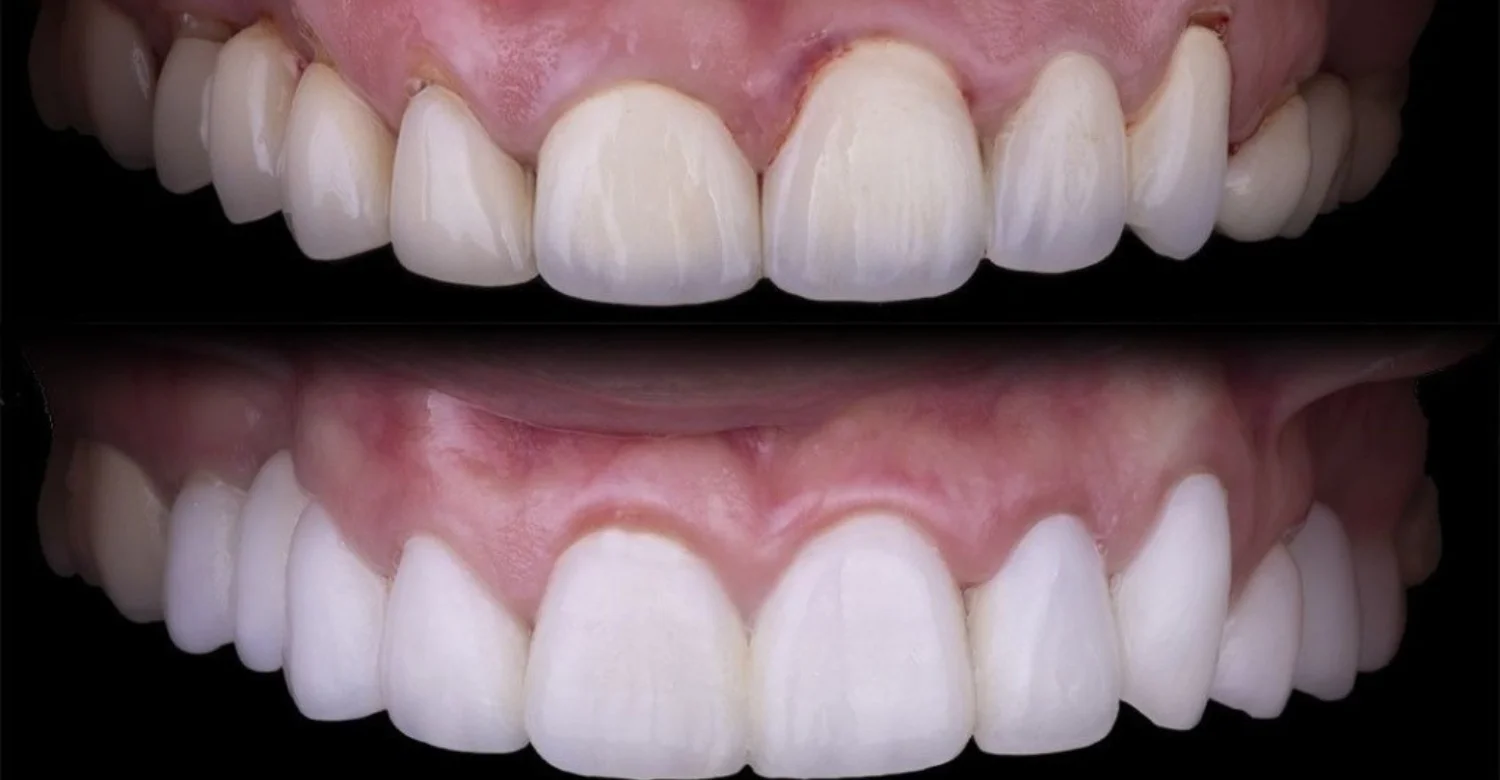
Crown lengthening before and after comparisons usually show longer-looking teeth and more even gums. However, results vary from case to case. The final outcome of crown lengthening surgery becomes clear only after healing.
Changes in Tooth Appearance and Gum Contours
After treatment, teeth typically look longer and gum contours appear more symmetrical. Gums may look red or slightly swollen at first, then settle into a firmer, pinker shape. The treatment can make the smile show less gum, but the exact change depends on the planned gum position.
Functional Improvements Before Dental Crown Placement
Functionally, the tooth gains more exposed structure for the dentist to work with. This lets the edge of a crown or filling sit on healthy tooth rather than deep under the gums. It improves fit, retention, and ease of cleaning. These improvements can extend the life of the final restoration.
Factors That Influence the Final Results
Results depend on gum thickness, bone levels, tooth shape, root length, smile line, healing response, and oral hygiene. Smoking and uncontrolled medical conditions may slow healing. The quality of the final restoration also matters. The surgery creates the foundation, while the crown or veneer completes the appearance.
Why Gum Healing Can Change the Final Appearance
Gums continue to remodel for weeks to months after treatment. The gum line may shift slightly as the tissue matures. This is why dentists often wait before taking final crown impressions, especially for front teeth. Judging the results too soon after treatment can be misleading.
Crown Lengthening Recovery: What Is the Healing Process?
Crown lengthening recovery is usually manageable when patients follow aftercare instructions. Understanding each stage of healing after crown lengthening surgery helps patients plan time off and know what is normal.
The First 24–48 Hours After Surgery
Mild bleeding, swelling, and discomfort are common in the first 24 to 48 hours. A cold compress on the cheek, rest, soft cool foods, and gentle rinsing help protect the blood clot. Pain medication should be taken exactly as directed by the dentist.
Crown Lengthening Healing Time: How Long Does It Take?
Crown lengthening healing time varies. Initial gum healing usually takes one to two weeks, when stitches are removed and soreness eases. Complete tissue maturation often takes about three months. Cases involving bone reshaping or front teeth may need a longer wait before final restorations are placed.
Swelling, Bleeding, and Gum Sensitivity During Recovery
Swelling often peaks within two to three days and then gradually decreases. Light oozing may tint saliva pink for a day or so. Gums and exposed root surfaces may feel sensitive to cold for several weeks. Gentle cleaning, desensitizing toothpaste when advised, and avoiding very hot foods can help.
When Can Patients Return to Normal Activities?
Many patients return to desk work within one to two days. Strenuous exercise, heavy lifting, and bending are usually avoided for a few days. This reduces the risk of bleeding and swelling. Recovery differs between patients, so it is important to follow the dentist's specific guidance.
When Can a Permanent Dental Crown Be Placed?
A temporary crown may be worn while the gums heal. The permanent crown is usually placed once the gum line has stabilized. This is often six weeks to three months after treatment. Front teeth in the smile zone may need a longer wait to ensure a natural, stable result.
Crown Lengthening Surgery Pain: What Should Patients Expect?
Crown lengthening surgery pain is one of the most common concerns patients raise. Knowing what to expect and how to manage discomfort can make recovery smoother.
Does Crown Lengthening Surgery Hurt?
Crown lengthening surgery is performed under local anesthesia. Patients generally feel pressure and movement rather than sharp pain during the procedure. Once the numbness wears off, mild to moderate soreness is common for a few days. Most patients find the discomfort manageable with medication recommended by the dentist.
Common Sources of Discomfort After Surgery
Discomfort usually comes from the healing gum tissue, the stitches, and, when bone is reshaped, the treated bone. The jaw may feel tired from staying open during treatment. Exposed root surfaces can be sensitive to temperature. Discomfort is usually greater when several teeth are treated or bone is recontoured.
Safe Ways to Manage Postoperative Pain
Take pain relievers exactly as prescribed or recommended, and never exceed the stated dose. Cold compresses during the first day can limit swelling. Eat soft foods, chew on the opposite side, and avoid smoking. These steps can make postoperative pain much easier to control at home.
When Persistent Pain May Indicate a Complication
Some soreness is expected. However, pain that worsens after the first few days or does not respond to medication needs attention. Pain with swelling, fever, or a bad taste may signal infection or delayed healing. Contact the dentist promptly rather than waiting for the next scheduled follow-up appointment.
Ready to transform your smile?
Talk to our team and get a personal FREE treatment plan.
Crown Lengthening Risks and Possible Complications
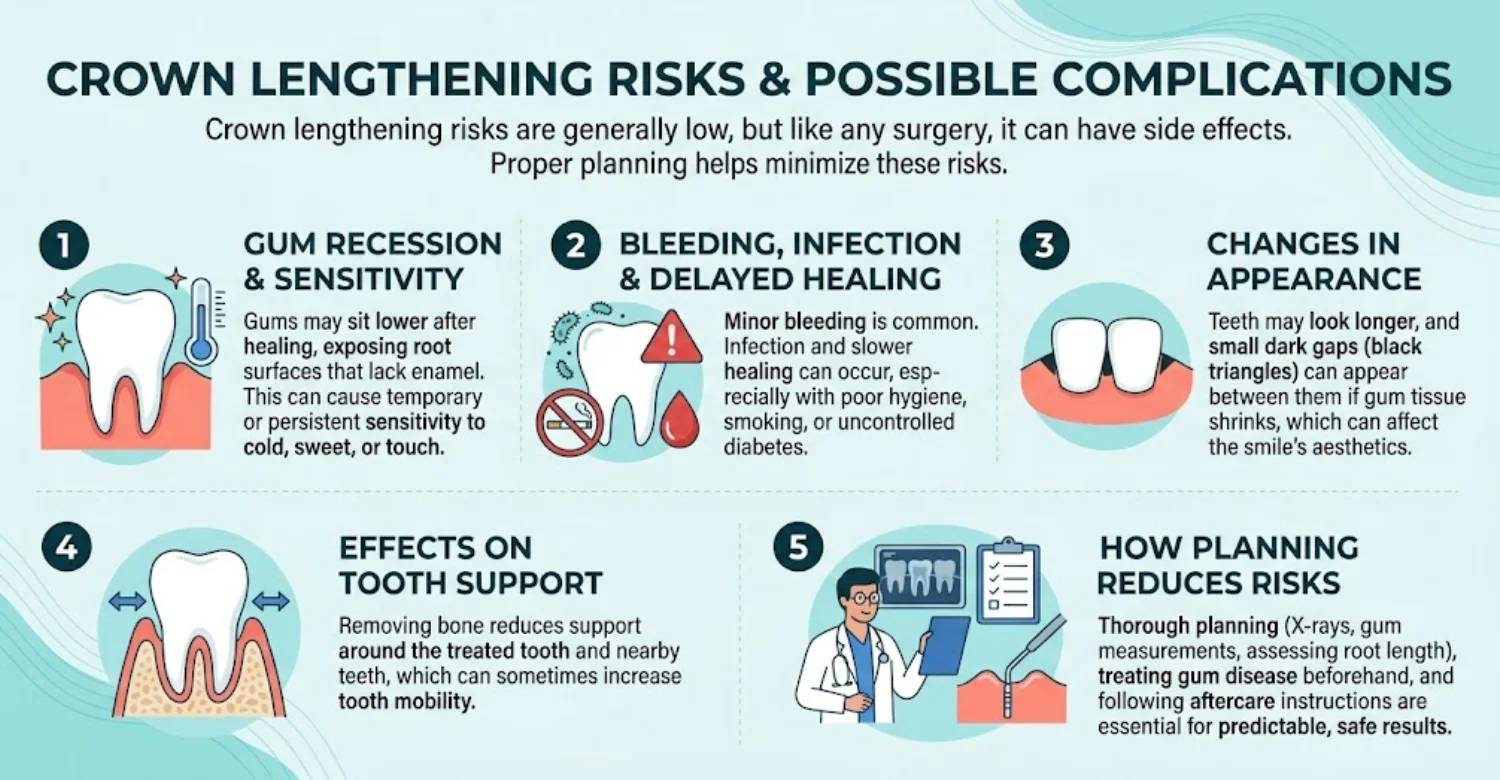
Crown lengthening risks are generally low when treatment is properly planned. Still, like any surgery, crown lengthening surgery can have side effects. Understanding them helps patients make an informed decision.
Gum Recession and Increased Tooth Sensitivity
Gums may sit lower after healing, exposing part of the root. Root surfaces lack enamel, so they can be sensitive to cold, sweet foods, or touch. Sensitivity usually improves over several weeks. In some patients it persists and may need desensitizing treatment from the dentist.
Bleeding, Infection, and Delayed Healing
Bleeding is usually minor and controlled with gentle pressure. Infection is uncommon but possible, especially with poor oral hygiene or smoking. Healing may be slower in smokers and people with uncontrolled diabetes. Following cleaning instructions, using any prescribed rinse, and attending follow-up visits reduce these risks.
Changes in Tooth Appearance and Root Exposure
Teeth can look longer than expected. Small dark gaps, sometimes called black triangles, may appear if the gum tissue between teeth shrinks. In the smile zone, these changes can be noticeable. Careful planning is essential whenever aesthetics are a priority for the patient.
Potential Effects on Tooth Support
Removing bone reduces the support around the tooth. It can also change the balance between the visible crown and the root. Neighboring teeth may also be affected because bone is reshaped gradually across the area. In some cases, this may increase tooth mobility, so root length is assessed beforehand.
How Proper Treatment Planning Can Reduce Risks
Thorough planning includes X-rays, gum measurements, and evaluation of root length. This helps determine whether crown lengthening surgery is the safest option. Treating gum disease first, controlling medical conditions, stopping smoking, and following aftercare instructions all reduce complications. These steps also support predictable, long-lasting results.
Crown Lengthening Cost: What Affects the Price?
Crown lengthening cost varies widely from one patient to another. Several factors influence the final price of crown lengthening surgery. An individual estimate after examination is the most reliable guide.
Number of Teeth Requiring Treatment
Treating a single tooth generally costs less than treating several teeth or an entire smile line. Cosmetic cases often involve multiple front teeth to achieve symmetry. Each additional tooth adds time and complexity. As a result, the number of teeth treated is one of the biggest price factors.
Soft Tissue Surgery Versus Bone Reshaping
Procedures involving only gum tissue are usually simpler and quicker than those requiring bone reshaping. Bone recontouring requires lifting a gum flap, more surgical time, and more careful closure. As a result, crown lengthening cost is typically higher when bone must be adjusted to protect long-term gum health.
Geographic Location and Treatment Complexity
Fees vary between cities and countries because of local operating costs and available resources. Complexity also matters, including tooth position, bone anatomy, and whether the case is functional or cosmetic. Advanced planning tools such as digital smile design may also add to the overall treatment cost.
Additional Costs for Examinations and Restorations
The total cost may include the initial consultation, X-rays, scans, medications, temporary crowns, and follow-up visits. Most importantly, the final crown, veneer, or filling is usually a separate cost. Patients should ask for a complete treatment estimate rather than focusing on the surgical fee alone.
Questions to Ask Before Agreeing to Treatment
Before agreeing to treatment, ask whether the procedure is functional, cosmetic, or both. Ask whether bone reshaping is needed and how many teeth are involved. Also ask how long healing will take, which risks apply, and what the total cost includes. Clear answers help you feel confident about your treatment.
Patient's Perspective
Patients often have practical and emotional questions before crown lengthening surgery. Addressing these concerns early helps reduce anxiety and supports a smoother experience from consultation to final restoration.
Common Concerns About Appearance and Recovery
Many patients worry how their teeth will look during healing and whether their gums will appear red or uneven. They may also wonder how long they will need a temporary crown. Others are concerned about time off work. Discussing the expected crown lengthening recovery timeline in advance helps patients plan with fewer surprises.
Managing Dental Anxiety Before Surgery
Dental anxiety is common before any surgery. Asking the dentist to explain each step, practicing slow breathing, and listening to calming music may help. Sedation options may be discussed when appropriate. Knowing that crown lengthening surgery is performed under local anesthesia often reassures patients who fear pain.
Eating, Speaking, and Brushing During Healing
Choose soft, lukewarm foods and chew on the opposite side for several days. Speaking is usually normal, though stitches may feel unusual. Brush the other teeth normally, and clean the surgical area gently only as instructed. A soft brush or prescribed rinse is often used. Avoid hard, spicy, or crunchy foods.
Setting Realistic Expectations for the Final Results
Crown lengthening surgery can improve tooth exposure and gum balance. However, it does not change the lips, jaw position, or tooth color. The final appearance also depends on the restoration placed afterward. Reviewing photos, mock-ups, and a realistic timeline helps patients set achievable expectations from the start.
Doctor's Perspective
From a clinical standpoint, recommending crown lengthening surgery depends on detailed measurements of the gums, bone, and tooth structure. The patient's restorative and cosmetic goals also matter.
How Dentists Evaluate Gum Tissue and Tooth Structure
Dentists measure gum thickness, pocket depths, and the position of the gum line relative to the tooth. They also check how much healthy tooth remains above the bone and whether decay or fractures extend below the gums. These findings show whether enough structure can be exposed for a reliable restoration.
Assessing Bone Levels and Periodontal Health
X-rays and gum probing help dentists assess bone height, root length, and signs of gum disease. Healthy bone support is essential, because removing bone from an already weakened tooth may compromise its stability. Periodontal disease must be controlled before treatment begins to ensure predictable healing.
Determining Whether Crown Lengthening Is Necessary
Dentists consider whether a restoration's edge would otherwise invade the gum attachment. They also judge the tooth's long-term outlook and whether orthodontic extrusion or extraction might be better. For cosmetic cases, they assess the smile line and tooth proportions before recommending crown lengthening for cosmetic reasons.
Balancing Cosmetic Results With Long-Term Tooth Support
Good results balance appearance with lasting tooth support. Removing too much bone can weaken teeth, while removing too little may lead to gum regrowth or inflammation. Dentists aim for crown lengthening surgery that achieves the desired look without sacrificing periodontal health or long-term tooth function.
When Is It Serious and Requires a Checkup?
Most patients heal without problems, but some symptoms after crown lengthening surgery need prompt attention. Knowing the warning signs helps patients act quickly and avoid complications.
Bleeding That Does Not Stop With Gentle Pressure
Light oozing is normal. However, bleeding that soaks gauze or continues after 20 to 30 minutes of pressure needs attention. Use firm, gentle pressure with damp gauze or a moist tea bag. Sit upright, avoid rinsing or spitting, and contact the dentist promptly. Seek emergency care if bleeding is heavy.
Severe or Worsening Pain After Surgery
Pain should gradually improve after the first two to three days. Pain that becomes more intense, throbs, spreads, or does not respond to recommended medication may indicate infection or another complication. Patients should contact their dentist rather than increasing their medication doses without professional guidance.
Increasing Swelling, Fever, or Pus
Swelling normally peaks within two to three days and then improves. Swelling that increases after this point may indicate infection. This is especially true with fever, pus, a foul taste, or redness spreading across the face. Contact the dentist the same day, as antibiotics or additional care may be needed.
Difficulty Swallowing or Breathing Requires Emergency Care
Difficulty swallowing or breathing is an emergency. So is rapidly spreading swelling in the face or neck, or a severe allergic reaction to medication. Seek immediate emergency medical care rather than waiting for a dental appointment. These symptoms are rare, but they require urgent assessment to keep the patient safe.
Persistent Sensitivity or Delayed Gum Healing
Some sensitivity is expected. However, intense sensitivity lasting many weeks should be checked. The same applies to gums that remain open or raw, or tissue that looks white or gray. These signs may indicate delayed healing or exposed bone. A follow-up visit allows the dentist to assess healing and recommend appropriate care.
When the Patient Should Rest
Rest supports healing and reduces bleeding and swelling. The rest needed after crown lengthening surgery depends on how many teeth were treated and whether bone was reshaped.
Rest During the First 24 Hours After Surgery
Plan to rest for the remainder of the day after surgery. Avoid driving if sedation was used, limit talking and physical activity, and keep your head raised. This allows a stable blood clot to form. It also reduces bleeding, swelling, and discomfort during the first critical hours.
When to Avoid Strenuous Exercise and Heavy Lifting
Avoid strenuous exercise, heavy lifting, and bending for at least two to three days, or longer if advised. Raised blood pressure from exertion can restart bleeding and increase swelling. Light walking is usually fine sooner. Return to workouts gradually once bleeding has stopped and the dentist confirms healing is progressing.
When Swelling or Discomfort Requires Additional Rest
If swelling, bruising, or soreness is still significant on the third day, extra rest may help. Continue cold or warm compresses as instructed, keep your head elevated, and reduce physical activity. If symptoms worsen instead of improving, contact the dentist to rule out infection or other problems.
When Patients Can Resume Their Normal Routine
Most patients resume light daily activities within one to two days. Their full routine usually returns within about a week, depending on treatment extent. Normal eating and brushing near the area return gradually after the stitches are removed. Always follow the dentist's timeline, as recovery varies between individuals.
Rest Tips
Simple habits at home can make crown lengthening recovery more comfortable. These rest tips help protect the surgical area and support healthy healing after crown lengthening surgery.
Keep the Head Elevated While Resting
Use an extra pillow or two when resting or sleeping for the first few nights. Keeping your head above your heart helps reduce swelling and throbbing. Avoid lying flat right after surgery. Sleep on the side opposite the treated area to minimize pressure on the healing gums.
Choose Soft Foods and Stay Hydrated
Choose soft foods such as yogurt, eggs, mashed potatoes, lukewarm soups, and smoothies eaten with a spoon. Drink plenty of water to support healing. Avoid crunchy, sticky, spicy, or very hot foods. Skip straws early on, as suction may disturb the healing area.
Avoid Smoking and Alcohol During Early Healing
Smoking reduces blood flow to the gums and is linked with slower healing and a higher risk of complications. Alcohol can interact with pain medications and irritate healing tissue. Avoid both for as long as the dentist recommends, ideally until the gums have closed and the stitches are out.
Follow Prescribed Medication and Oral Hygiene Instructions
Take antibiotics, pain relievers, or rinses exactly as prescribed, and finish any course you were given. Brush and floss the rest of your mouth normally. Clean near the surgical site only as instructed, often with a soft brush or rinse. This keeps plaque away without disturbing the healing tissue.
Avoid Touching the Surgical Site or Disturbing Sutures
Avoid poking the area with your tongue, fingers, or toothpicks, and do not pull at stitches or dressings. Chewing on the treated side too early can loosen sutures. If a dressing falls off or a stitch feels loose, contact the dentist. Do not try to fix it yourself.
How Can Vitrin Clinic Help Patients Considering Crown Lengthening Surgery?
Vitrin Clinic provides professional dental guidance for patients considering crown lengthening surgery. The clinic focuses on careful evaluation, clear communication, and treatment that supports both function and appearance. It does not promise guaranteed results.
.jpg)
.jpg)
.jpg)
.webp)
Individualized Dental Evaluation and Treatment Planning
At Vitrin Clinic, each patient receives a thorough examination that may include gum measurements, X-rays, and photographs. Our team reviews medical history and dental goals to decide whether the crown lengthening procedure is appropriate. We also plan how it should be done. Every recommendation is based on individual clinical findings.
Assessing Functional and Cosmetic Treatment Goals
Vitrin Clinic discusses whether treatment is needed to support a restoration, to improve the smile, or both. For cosmetic concerns, we assess tooth proportions, gum symmetry, and the smile line. For restorative needs, we evaluate whether crown lengthening for dental crown placement will provide a reliable foundation.
Understanding Recovery Expectations and Follow-Up Care
Our team at Vitrin Clinic explains what to expect during crown lengthening recovery. This includes typical crown lengthening healing time, sensitivity, and when the final restoration can be placed. Patients receive clear aftercare instructions and scheduled follow-up visits to monitor gum healing and address any concerns promptly.
Discussing Treatment Options and Estimated Costs
Vitrin Clinic discusses all suitable options, including alternatives when crown lengthening may not be the best choice. Patients receive an individualized estimate covering the crown lengthening cost and the expected cost of any final restorations. This gives a clear view of the full treatment plan for an informed decision.
What We Notice Clinically
At Vitrin Clinic, Dr. Rifat Alsaman is Head of the Medical Team and a cosmetic dentist. Dr. Alsaman notes that many patients ask about crown lengthening surgery mainly for appearance. However, careful evaluation of gum levels, tooth structure, and bone support comes first. Dr. Rifat Alsaman emphasizes that periodontal health and long-term tooth function should guide every aesthetic decision.
Tips for the Patients
Complete a dental examination before choosing treatment, and ask whether the procedure is functional, cosmetic, or both. Discuss the expected healing time, sensitivity, risks, and total treatment costs. After surgery, follow postoperative instructions carefully and attend every recommended follow-up appointment to support healthy, predictable results.
Resource:
https://onlinelibrary.wiley.com/doi/10.1111/j.1600-051X.1992.tb01150.x
https://www.sciencedirect.com/science/article/pii/S277255962300007X?via%3Dihub
https://pubmed.ncbi.nlm.nih.gov/11495130/
FAQs
Dr. Rifat Alsaman has more than 5 years of clinical experience in dentistry and currently serves as the Head of the Medical Team at Vitrin Clinic. He is dedicated to providing exceptional patient care, overseeing treatment planning, and ensuring the highest clinical standards across the team. His expertise, attention to detail, and commitment to continuous professional development have helped countless patients achieve healthier, more confident smiles.


