General Dentistry
October 11, 2026
What Is Hard Food Consumption and Symptomatic Cracked Teeth?
 Dr. Rifat Alsaman
Hard food consumption and symptomatic cracked teeth describes the link between biting very firm foods and painful cracks in teeth. Repeated force from ice, nuts, or hard candy can fracture tooth structure. These cracks cause sharp pain while chewing, sensitivity, and discomfort when releasing a bite.
What Is the Relationship Between Hard Food Consumption and Symptomatic Cracked Teeth?
The relationship between hard food consumption and symptomatic cracked teeth is mechanical. Teeth withstand strong forces, but a small, hard object concentrates stress on one point of enamel. Over time, this stress can create or widen cracks. Teeth weakened by fillings, grinding, or wear are most at risk.
What Is Cracked Tooth Syndrome?
Cracked tooth syndrome is an incomplete crack that causes pain, usually during chewing. The crack is often not clearly visible. It may extend into the dentine or toward the pulp. Symptoms are often inconsistent, so the problem can be hard to locate.
How Does Biting Hard Foods Put Pressure on Teeth?
When you bite hard foods, your chewing muscles generate strong force on small contact areas. This focused load flexes the tooth and can separate weakened enamel and dentine. Unexpected hardness, like biting an olive pit, is especially risky. The muscles cannot adjust quickly enough.
What Is the Difference Between a Hairline Tooth Fracture and a Severe Crack?
A hairline tooth fracture is a fine crack, often limited to enamel or early dentine. It may cause occasional discomfort. A severe crack extends deeper, sometimes toward the root or pulp. It may cause constant pain or even split the tooth. Symptoms of a hairline tooth fracture are usually milder and intermittent.
What Are the Most Common Cracked Tooth Symptoms After Eating Hard Foods?
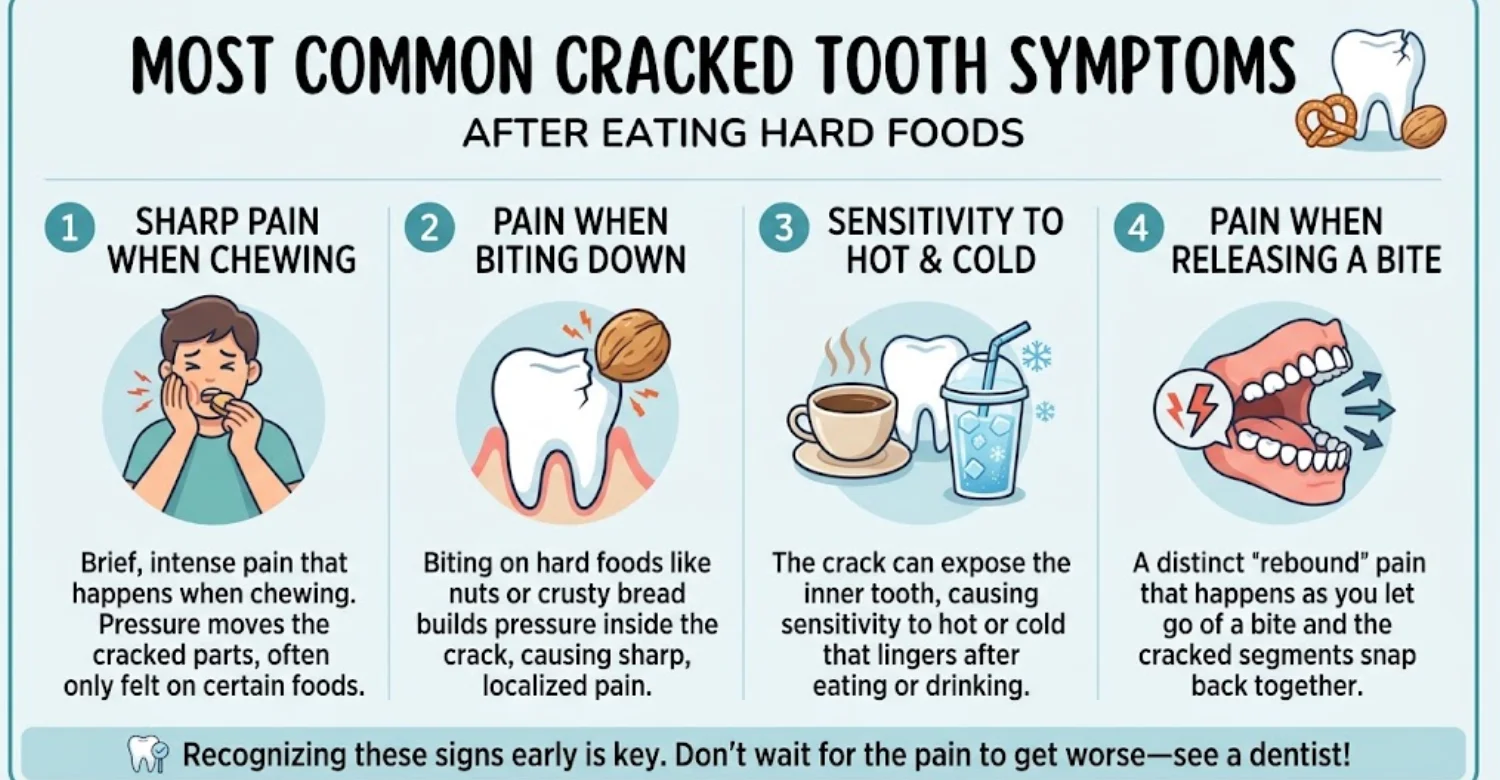
The most common cracked tooth symptoms after eating hard foods include sharp chewing pain and discomfort when biting or releasing. Sensitivity to temperature is also common. Recognizing these signs early matters, because symptoms often come and go. Many patients delay care as a result.
Sharp Tooth Pain When Chewing
Sharp tooth pain when chewing is one of the most typical signs of a crack. The pain is usually brief and intense. It appears when pressure moves the cracked segments slightly apart. Patients may notice it only with certain foods or when chewing in one direction.
Pain When Biting Down on Hard Foods
Pain when chewing hard foods often signals a cracked tooth. When biting down, pressure builds inside the crack. Firm items like nuts or crusty bread make this discomfort worse. The pain is usually limited to one tooth. However, patients sometimes struggle to tell which one.
Tooth Sensitivity to Hot and Cold
A crack can expose dentine or let irritation reach the pulp. This causes sensitivity to hot and cold. The sensitivity may linger briefly after coffee or ice cream. Persistent or increasing sensitivity can mean the crack is deepening. In that case, the nerve inside the tooth may be affected.
Intermittent Pain When Releasing a Bite
A distinctive feature of cracked teeth is pain when releasing a bite. As pressure lifts, the cracked segments snap back together and irritate the inner tooth. This rebound pain is often sharper than the initial bite. It is a strong clue that a crack exists.
What Are the Main Causes of Cracked Teeth?
The causes of cracked teeth usually combine force and weakness. In hard food consumption and symptomatic cracked teeth, hard foods, grinding, large fillings, and aging all contribute. A tooth rarely cracks from one factor alone. Repeated stress gradually weakens its structure over time.
Chewing Hard Foods Such as Nuts, Ice, and Hard Candy
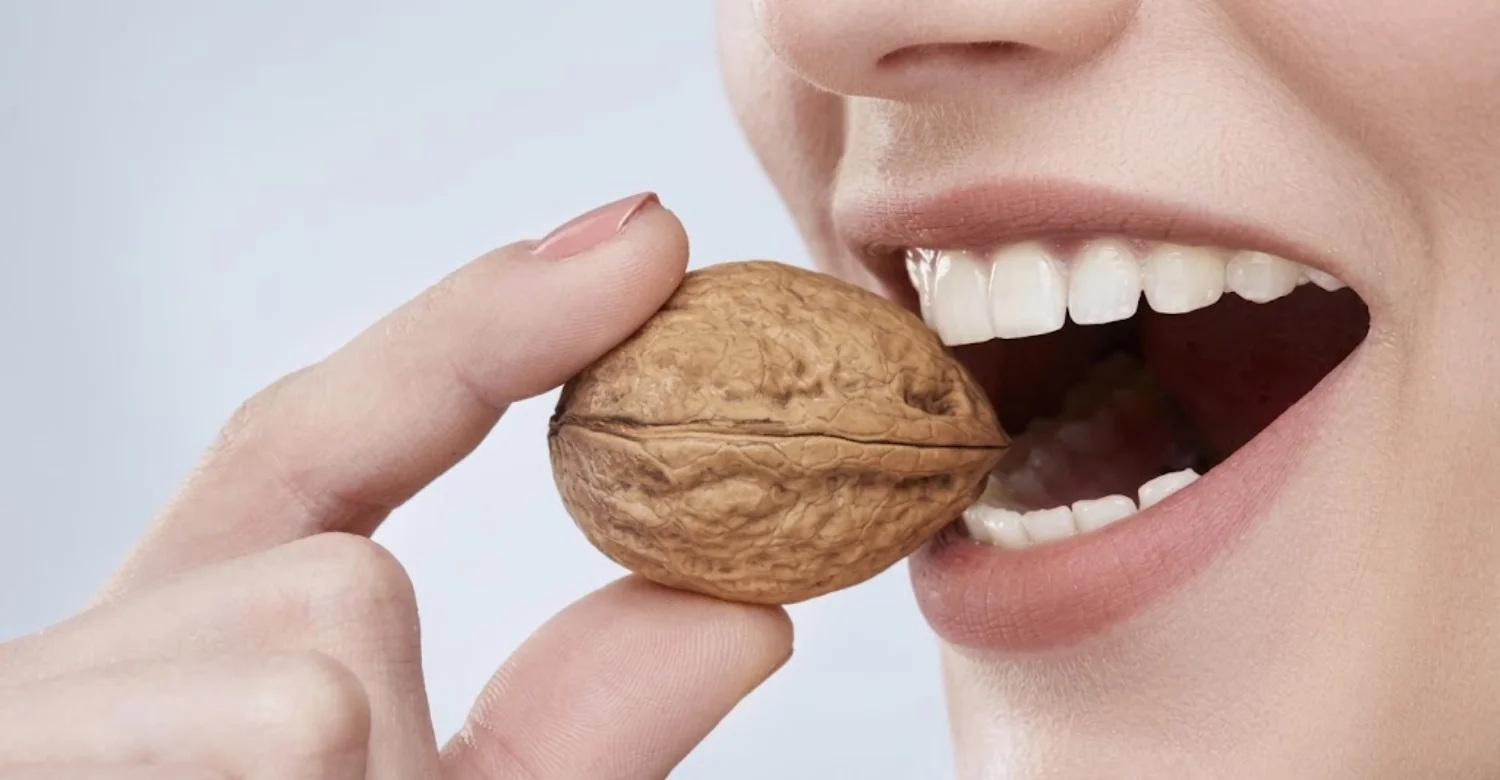
Chewing nuts, ice, and hard candy puts intense, concentrated pressure on teeth. These foods resist breaking under normal chewing, so the tooth absorbs the force. Biting ice is particularly harmful. It combines force with sudden cold, which stresses enamel further.
Teeth Grinding and Excessive Bite Pressure
Teeth grinding, or bruxism, loads teeth with forces far greater than normal chewing, often during sleep. Over time, this creates microscopic cracks that hard foods can later expand. Bite problems that concentrate pressure on specific teeth also increase risk. Both are common causes of cracked teeth in adults.
Large Fillings and Previously Weakened Teeth
Large fillings replace natural tooth structure and leave thinner walls that flex under pressure. Teeth treated with root canal therapy can also become brittle. These weakened teeth are often the first to fracture when biting something unexpectedly firm.
Age-Related Changes in Tooth Structure
With age, teeth build up wear, small cracks, and stress from decades of chewing. Enamel may become less resilient, and older restorations can weaken nearby structure. This is why cracked teeth are common in older adults. The molars, which do most of the chewing, are affected most often.
Clinical Note
Not every cracked tooth causes immediate pain. The medical team at Vitrin Clinic stresses evaluating persistent chewing discomfort. This is especially important for patients who bite hard objects or grind their teeth. Early evaluation may help prevent further damage.
Which Foods Can Crack Teeth and What Foods Should You Avoid?
Foods that can crack teeth are usually hard, dense, or contain unexpectedly hard parts. Managing hard food consumption and symptomatic cracked teeth starts with knowing which foods these are. You don't need to give up every firm food. Cutting back on high-risk foods and chewing carefully can lower the risk of fractures.
Hard Candy, Ice Cubes, and Unpopped Popcorn Kernels
Hard candy, ice cubes, and unpopped popcorn kernels are among the riskiest foods for teeth. They are extremely hard and often bitten suddenly. Avoiding them is one of the simplest ways to protect your teeth. This matters most for people with large fillings.
Nuts, Hard Crusts, and Tough Foods
Nuts, hard bread crusts, and tough foods like dried meat require strong, sustained biting force. Nut shells, fruit pits, and bone fragments add unexpected hardness. These foods can cause tooth pain when biting hard food, especially if a crack already exists. Cutting them into smaller pieces reduces the strain on your teeth.
How to Modify Your Diet When You Suspect a Cracked Tooth
If you suspect a crack, switch to softer foods such as yogurt, cooked vegetables, eggs, and soups. Avoid very hot or cold items if you notice sensitivity. Adjusting your diet is a practical first step. However, it does not replace a professional dental evaluation.
Tips for the Patients
These practical steps can reduce strain on your teeth while a suspected crack is being addressed:
Avoid chewing ice, hard candy, and other foods that require excessive biting force.
Choose softer foods and chew on the side that does not cause discomfort.
Do not test a suspected crack by repeatedly biting down on hard objects.
Arrange a dental evaluation if pain persists or returns.
How Is a Cracked Tooth Diagnosed?
Diagnosing hard food consumption and symptomatic cracked teeth requires a careful, step-by-step approach. Cracks are often invisible. A dentist reviews your symptoms, eating habits, and dental history. Next come an examination, bite tests, and imaging. Combining several methods helps locate the crack and show how deep it goes.
Dental Examination and Bite Testing
During the examination, the dentist looks for visible cracks, wear, and large restorations. In bite testing, the patient bites on a special instrument, one part of the tooth at a time. If this reproduces the pain, especially on release, it helps confirm a crack. It also identifies which tooth is affected.
Transillumination and Other Diagnostic Techniques
Transillumination shines a bright light through the tooth. A crack blocks the light, which makes it visible. Dentists may also use magnification, special dyes, or remove old fillings to look underneath. These techniques matter because a standard visual exam often misses fine fractures.
When Dental X-Rays May Help
Dental X-rays rarely show cracks directly, especially fine ones. However, they can detect related problems such as bone loss, root infection, or decay. X-rays therefore help rule out other causes of pain. They can also reveal complications of a long-standing crack.
Why Hairline Tooth Fractures Can Be Difficult to Detect
Hairline fractures are tiny, may not appear on X-rays, and often cause pain that comes and goes. Symptoms of a hairline tooth fracture can also seem to come from neighboring teeth. This makes cracks hard to diagnose. Repeat visits and several testing methods are sometimes needed.
Note : All images used are for editorial and illustrative purposes only. They may not originate from the original news provider or associated company.
How Can You Treat a Cracked Tooth?
How to treat a cracked tooth depends on the crack's depth, location, and extent. In hard food consumption and symptomatic cracked teeth, options range from bonding to crowns, root canal treatment, or extraction. Early treatment usually allows simpler, more conservative care. It also keeps more of the natural tooth.
Treatment Options for Minor Cracks
Cracks limited to the enamel may need only monitoring, polishing, or dental bonding. Bonding uses tooth-colored resin to seal and protect the surface. An onlay can also reinforce a weakened part of the tooth. These conservative options relieve symptoms and stop surface cracks from spreading deeper.
Dental Crowns for Teeth With Structural Damage
A dental crown covers the whole tooth, holding cracked segments together and spreading biting force evenly. Crowns are the most common treatment when a cracked tooth has significant structural damage. They help stop the crack from spreading and restore comfortable chewing.
Root Canal Treatment When the Pulp Is Affected
If the crack reaches the pulp, bacteria and irritation can inflame or infect the nerve. Root canal treatment removes the damaged pulp, cleans the canals, and seals the tooth. A crown usually follows to protect the treated tooth. This is because the tooth becomes more fragile after the procedure.
When Tooth Extraction May Be Necessary
Extraction may be necessary when a crack extends below the gumline into the root. It is also needed when the tooth splits completely. In these advanced cases, the tooth cannot be saved. Implants or bridges can then restore function and appearance.
Clinical Note
Treatment depends on the crack's depth, location, and extent. The medical team at Vitrin Clinic recommends prompt assessment rather than relying on pain relief alone. Early evaluation may help prevent further damage and support better long-term results.
Tips for the Patients
Follow these precautions until your tooth has been professionally evaluated and treated:
Avoid chewing hard or sticky foods until the tooth has been assessed.
Do not apply aspirin directly to the tooth or gum.
Do not assume that pain disappearing means the crack has healed.
Seek urgent dental care for swelling, severe pain, or signs of infection.
How Can You Prevent Cracked Teeth When Eating Hard Foods?
Preventing hard food consumption and symptomatic cracked teeth involves mindful eating, protection from excessive force, and regular dental care. Small daily habits, such as avoiding ice and treating grinding, can significantly reduce your risk. Prevention is always easier, cheaper, and more comfortable than treating an established crack.
Choose Tooth-Friendly Eating Habits
Cut hard foods into smaller pieces, chew slowly, and use both sides of your mouth. Be careful with foods that may contain pits, shells, or bones. Softer alternatives reduce pain when chewing hard foods. They also protect teeth with large fillings or wear.
Avoid Chewing Ice and Using Teeth as Tools
Chewing ice and using your teeth to open packages, crack nuts, or bite pens damages enamel. Breaking these habits is one of the most effective ways to prevent cracks. Keep scissors and openers within reach so you are not tempted.
Address Teeth Grinding and Bite Problems
If you grind or clench your teeth, a custom night guard can absorb the force during sleep. Managing stress may also help reduce clenching. Bite problems that overload certain teeth can be corrected with adjustments or orthodontic treatment. This lowers pressure and the risk of future cracks.
Maintain Regular Dental Checkups
Regular dental checkups allow early detection of wear, weakened fillings, and small cracks before they cause pain. Your dentist can reinforce vulnerable teeth before fractures get worse. Routine visits are essential if you grind your teeth or have large restorations.
Ready to transform your smile?
Talk to our team and get a personal FREE treatment plan.
How Can Vitrin Clinic Help Patients With Symptomatic Cracked Teeth?
Vitrin Clinic supports patients with hard food consumption and symptomatic cracked teeth through careful assessment and personalized treatment. The clinic focuses on finding how far the crack extends, relieving pain, and preserving natural tooth structure. It also guides patients on habits that protect their teeth from future damage.
.jpg)
.jpg)
.jpg)
.webp)
Professional Assessment of Tooth Pain When Biting Hard Foods
At Vitrin Clinic, patients with tooth pain when biting hard food receive a thorough evaluation. This includes reviewing symptoms, examining the teeth, and performing bite tests. The goal is to identify the exact tooth involved and how far the crack extends. Treatment is recommended only after this assessment.
Personalized Treatment Planning for Cracked Teeth
Every crack is different, so Vitrin Clinic creates an individual treatment plan for each patient. The plan is based on symptoms and clinical findings. It considers crack depth, the tooth's condition, and the patient's preferences. The aim is the most conservative solution that will work.
Restorative Options to Protect Damaged Teeth
Vitrin Clinic offers bonding, onlays, and crowns to protect damaged teeth. Root canal treatment is added when the pulp is affected. These treatments aim to stabilize the tooth, relieve pain, and restore comfortable chewing. Patients can then return to normal eating with confidence.
Patient Guidance for Preventing Further Tooth Damage
Beyond treatment, Vitrin Clinic gives practical guidance on diet, habits, and protective measures such as night guards. Understanding hard food consumption and symptomatic cracked teeth helps patients avoid repeated damage. It also helps their restorations last longer.
Vitrin Clinic provides dental assessment and individualized treatment planning based on each patient's symptoms and clinical findings. The medical team highlights the importance of identifying the extent of a crack before choosing treatment. Patients can contact Vitrin Clinic for a consultation and guidance on suitable restorative options.
What We Notice Clinically
Dr. Rifat Alsaman is Head of the Medical Team at Vitrin Clinic and a cosmetic dentist. According to Dr. Alsaman, many patients feel pain only with certain foods or when releasing a bite. They often delay care because symptoms come and go. Cracks frequently appear in molars with large fillings and in patients who grind their teeth.
Tips for the Patients
Book a dental assessment if chewing pain persists or keeps returning.
Tell your dentist about any history of grinding or biting hard objects.
Follow your treatment plan and attend all follow-up visits.
Wear a night guard if it is recommended for grinding or clenching.
Avoid hard foods on restored teeth.
Resource:
https://pmc.ncbi.nlm.nih.gov/articles/PMC5376224/
FAQs
Dr. Rifat Alsaman has more than 5 years of clinical experience in dentistry and currently serves as the Head of the Medical Team at Vitrin Clinic. He is dedicated to providing exceptional patient care, overseeing treatment planning, and ensuring the highest clinical standards across the team. His expertise, attention to detail, and commitment to continuous professional development have helped countless patients achieve healthier, more confident smiles.


.webp&w=3840&q=75)