General Dentistry
October 12, 2026
Dental Caries During Pregnancy: What are the Prevention and Treatment?
 Dr. Rifat Alsaman
Dental caries during pregnancy is a common concern for expectant mothers. Pregnancy can change your eating habits, oral hygiene routine, saliva, and gum health. It can also increase how often your teeth are exposed to acids. Still, pregnancy does not automatically mean you will develop cavities. Many women ask: "I am pregnant, so should I wait until after delivery to treat a cavity?" This article explains why decay can occur, how it may feel, when treatment may be needed, and how to protect your teeth. Dental care can often be planned safely around your pregnancy stage, symptoms, and clinical needs. Dr. Rifat Alsaman, Head of the Medical Team and cosmetic dentist at Vitrin Clinic, provides the clinical perspective that guides this article.
What Does Dental Caries During Pregnancy Actually Mean?
Dental caries during pregnancy means tooth decay that develops or progresses while you are expecting. Caries forms when mouth bacteria break down sugars and carbohydrates and produce acids. These acids gradually dissolve minerals from the enamel and, later, the dentine beneath it. Pregnancy itself does not directly cause decay. However, it may make existing risk factors harder to control. You might notice food getting stuck, sensitivity, a rough spot, a dark area, or pain when eating. Early decay often causes no symptoms at all.
How Pregnancy Can Change Your Risk of Cavities
The link between pregnancy and cavities is usually indirect. Pregnancy changes daily habits, and those habits affect your teeth. Common factors include:
More frequent snacking or cravings.
More exposure to sugary or acidic foods and drinks.
Morning sickness and repeated vomiting.
Brushing difficulties caused by nausea or fatigue.
Dry mouth or changes in saliva.
Untreated decay from before pregnancy becoming noticeable.
Each factor can raise the risk of dental caries during pregnancy without pregnancy itself being the direct cause.

Note: All images used are for editorial and illustrative purposes only and may not originate from the original news provider or associated company.
What Can Cavities During Pregnancy Feel Like?
Cavities during pregnancy can feel different from person to person. Some women notice nothing until the decay grows deeper. Others feel small changes early, such as brief sensitivity or a rough edge. Because pregnancy can also make gums more tender, it is not always easy to tell where discomfort comes from. Paying attention to what you feel, and when you feel it, helps your dentist find the cause. The sections below describe early and later signs of dental caries during pregnancy.
Early Signs You Might Notice
Early tooth decay while pregnant is often subtle. You may notice:
A new sensitivity to cold or sweet foods.
A rough or sticky feeling on one tooth.
Food repeatedly catching between the same teeth.
A small visible spot or change in tooth color.
Occasional discomfort that disappears quickly.
These signs do not always mean decay, but they are worth mentioning to your dentist. Very early lesions can sometimes be managed with preventive care rather than drilling.
Signs That the Tooth Decay May Be Getting Deeper
As decay moves toward the inner layers of the tooth, symptoms often become stronger. Watch for:
Pain that lasts after eating or drinking.
Increasing sensitivity.
Toothache that appears without eating.
Pain when biting.
Difficulty sleeping because of dental pain.
Swelling around the tooth or gum.
Symptoms vary between people. Importantly, the absence of pain does not mean there is no decay. Dental caries during pregnancy can progress quietly before it ever hurts.
Why Might Pregnancy and Cavities Become More Difficult to Manage?
Several factors can make dental caries during pregnancy harder to control. Most are linked to daily habits rather than to pregnancy hormones alone. Some factors are common and mild, such as frequent snacking. Others carry more clinical weight, such as untreated decay or gum disease. Often, more than one factor acts at the same time. Understanding each one helps you and your dentist focus on what matters most. The following sections explain these factors, from the most common to the more significant.
More Frequent Snacking and Pregnancy Cravings
Cravings and frequent small meals are common in pregnancy. Each time you eat sugars or refined starches, mouth bacteria ferment them and produce acids. These acids lower the pH of dental plaque and draw minerals out of the enamel. Saliva then needs time to neutralize the acid and repair early damage. When snacks come often, teeth get fewer recovery periods. Clinically, how often you eat sugar matters, not just how much. This is one reason pregnancy tooth decay can appear even in careful brushers.
Morning Sickness and Repeated Vomiting
Vomiting brings stomach acid into the mouth. This acid temporarily lowers oral pH and can soften the enamel surface. Over time, repeated exposure may cause enamel erosion, often on the inner surfaces of the upper front teeth. Erosion is different from caries. Erosion is chemical wear from acids that bacteria did not produce. Caries is decay caused by bacterial acids in plaque. Both weaken tooth structure, and both can occur together, so a dentist should assess them separately.
Changes to Your Oral Hygiene Routine
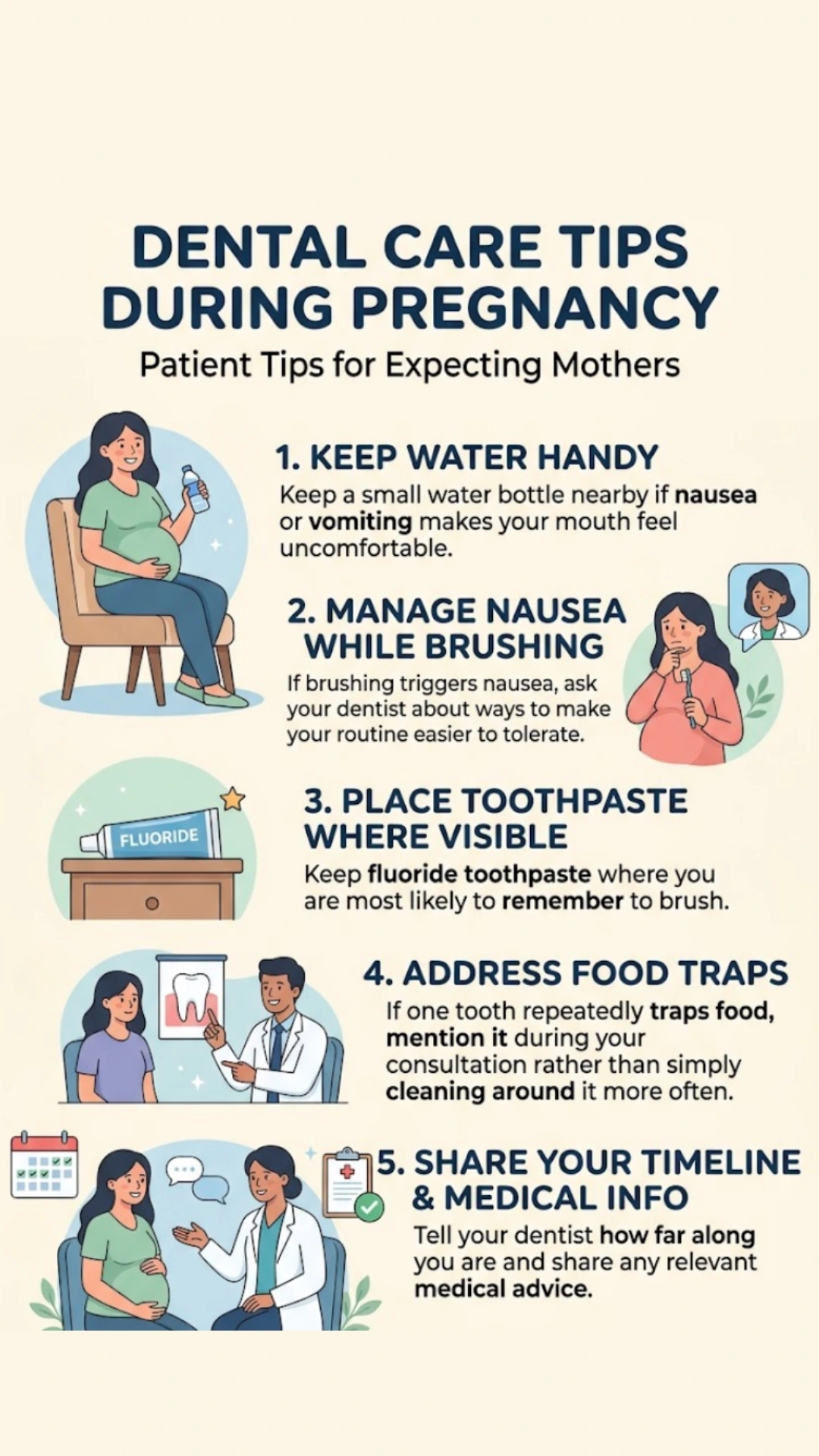
Nausea, tiredness, and a sensitive gag reflex can make brushing feel difficult. Some women brush less often, rush the process, or skip the back teeth because the toothbrush triggers gagging. Flossing may also slip. When plaque stays on the teeth longer, bacteria have more time to produce acids. This can increase the risk of dental caries during pregnancy. Small adjustments, such as a smaller brush head or a milder-flavored toothpaste, can help you stay consistent.
Existing Tooth Decay Before Pregnancy
Sometimes a cavity was already developing before pregnancy began. Decay can grow slowly and silently for months. Pregnancy may simply bring it to your attention, because routines change or sensitivity increases. In these cases, pregnancy did not cause the decay. It revealed a problem that was already present. This is why a dental check-up before or early in pregnancy is useful. Finding existing dental caries during pregnancy at an early stage can allow simpler treatment.
Gum Problems That Can Occur Alongside Pregnancy Tooth Decay
Hormonal changes in pregnancy can make the gums react more strongly to plaque. Many women develop pregnancy gingivitis, with red, swollen gums that bleed easily. Plaque buildup links both problems. The same plaque that inflames the gums can also feed decay-causing bacteria. As a result, you may face more than one oral-health concern at once. Gum inflammation and pregnancy tooth decay need separate assessment, even though good plaque control helps both conditions.
What Other Symptoms Can Occur Alongside Pregnancy Tooth Decay?
Decay rarely appears in isolation. You may notice it together with gum changes, bad breath, or swelling. These symptoms can share a cause, such as plaque buildup, or point to separate problems. Looking at symptoms as a group gives a clearer picture. It also helps your dentist judge how urgent the situation is. The sections below describe common symptom clusters linked to dental caries during pregnancy and what each one may mean for your teeth.
Tooth Sensitivity and Gum Bleeding
You might feel sharp sensitivity to cold drinks while also seeing blood when you brush. Sensitivity may come from decay, erosion, or exposed dentine near the gumline. Bleeding usually reflects gum inflammation caused by plaque, which pregnancy hormones can intensify. These two symptoms often appear together because plaque affects both teeth and gums. Do not stop brushing because of bleeding. Gentle, thorough cleaning usually helps. If both symptoms persist, a dental examination can identify each cause.
Bad Taste or Persistent Bad Breath
A bad taste or ongoing bad breath can have several causes. Plaque and food trapped in a cavity can release unpleasant odors. Gum inflammation can also contribute. Morning sickness, acid reflux, and dry mouth may change how your mouth tastes and smells. Occasionally, a persistent bad taste signals an infection draining near a tooth. If the taste continues despite good hygiene, ask your dentist to check for an untreated cavity, gum disease, or infection.
Toothache, Swelling, or Pain When Biting
These symptoms deserve more attention than mild sensitivity. Throbbing pain, pain on biting, or swelling can suggest that decay has reached the pulp or that infection has spread around the root. A dental abscess does not heal on its own. Without treatment, infection can spread into nearby tissues. When dental caries during pregnancy produces these symptoms, prompt assessment matters. Your dentist can then decide on the safest and most effective way to manage it.
What Can You Do at Home to Protect Your Teeth During Pregnancy?
Home care is the foundation of pregnancy dental health. Simple daily habits can lower the risk of new decay and slow early damage. However, home care supports professional treatment; it does not replace it. Once a true cavity has formed, it cannot repair itself. The steps below are low-risk and suitable for most expectant mothers. They focus on fluoride, cleaning between teeth, eating patterns, managing vomiting, and keeping regular dental visits.
Maintain Fluoride Toothbrushing
Brush twice a day with fluoride toothpaste. Fluoride helps strengthen enamel and makes it more resistant to acid. Use a gentle technique, with small circular movements along the gumline. Brush for about two minutes each time. After brushing, spit out the excess toothpaste rather than rinsing heavily with water. This leaves fluoride on the teeth for longer. Consistent brushing is one of the most effective defenses against dental caries during pregnancy.
Clean Between Your Teeth
A toothbrush cannot fully reach the spaces between your teeth. Plaque that stays there can cause decay and gum inflammation. Clean between your teeth once a day using floss, interdental brushes, or another suitable tool. If your gums bleed, keep cleaning gently; bleeding often improves as inflammation settles. If flossing makes you gag, try a floss holder or small interdental brushes. Your dentist or hygienist can help you choose the right size.
Manage Snacking Frequency
You do not need a strict diet to protect your teeth. Instead, focus on how often you snack. Try grouping snacks into planned times rather than grazing all day. Choose tooth-friendly options such as cheese, unsweetened yogurt, vegetables, or nuts when possible. Drink water between meals. If you enjoy sweet foods, have them with meals rather than on their own. These practical changes reduce repeated acid attacks without ignoring your cravings.
Rinse After Vomiting
After vomiting, rinse your mouth with plain water. Some dentists also suggest a rinse of water mixed with a small amount of baking soda to help neutralize the acid. Avoid brushing immediately. Acid softens the enamel surface, and brushing straight away may wear it further. Wait a while, often around 30 minutes to an hour, before brushing. A fluoride mouthwash, if your dentist recommends one, can also help protect the enamel.
Keep Regular Dental Reviews
Pregnancy is not a reason to skip dental check-ups. Routine examinations and cleanings are generally considered appropriate during pregnancy. Regular reviews let your dentist spot early decay, check your gums, and advise on your routine. Delaying assessment simply because you are pregnant may allow a small, manageable problem to progress. Tell your dental team about your pregnancy at every visit. This helps them plan care that suits your stage and needs.
.jpg)
What Assistive Tools Can Help You Maintain Pregnancy Dental Health?
Between daily self-care and professional treatment, a few simple tools can make a real difference. They help you remove plaque more effectively and strengthen enamel against acid. They can also make oral care easier when nausea or tender gums get in the way. The right tools depend on your teeth, gums, and comfort level. The following options support pregnancy dental health and help lower the risk of dental caries during pregnancy.
Fluoride Toothpaste
Fluoride toothpaste is the most important tool for preventing decay. Fluoride helps remineralize weakened enamel and makes the tooth surface more resistant to acid attacks. For most adults, a standard fluoride toothpaste is suitable. If your risk of decay is higher, your dentist may recommend a higher-strength product. If the taste of mint triggers nausea, try a milder flavor. The fluoride content matters more than the flavor you choose.
Interdental Brushes or Floss
Interdental brushes and floss clean the surfaces your toothbrush misses. The areas between teeth are common sites for decay and gum inflammation. Interdental brushes come in different sizes, so a dentist or hygienist can help you choose the correct fit. Floss works well where teeth sit tightly together. Floss picks or holders may be easier if reaching the back teeth triggers your gag reflex. Daily use reduces plaque buildup.
Fluoride Mouthwash When Appropriate
A fluoride mouthwash can add extra protection for some people. It may help if you have frequent vomiting, early signs of decay, or a higher caries risk. However, it is not necessary for everyone. Your dentist may recommend a suitable product based on your individual needs. Alcohol-free options are often more comfortable for sensitive mouths. Use mouthwash at a different time from brushing, so it does not rinse away the fluoride from your toothpaste.
A Comfortable Soft-Bristled Toothbrush
A soft-bristled toothbrush cleans effectively while staying gentle on tender gums. During pregnancy, gums may bleed or feel sore more easily. A softer brush can make brushing less uncomfortable. A smaller brush head may also help if you gag when reaching the back teeth. Some women find an electric toothbrush easier to use. In the end, the best toothbrush is the one you can use comfortably twice a day.
When Should You See a Dentist for Tooth Decay While Pregnant?
Home care helps prevent problems, but some signs need professional assessment. If you suspect tooth decay while pregnant, do not wait for it to become painful. Early visits often allow simpler treatment. A dentist can check whether symptoms come from decay, erosion, or gum problems. They can also judge how urgent treatment is. Knowing when to seek care is a key part of managing dental caries during pregnancy safely and effectively.
Dental Symptoms You Should Not Ignore
Contact a dentist if you notice:
Persistent or worsening toothache.
Facial or gum swelling.
Pain when biting.
Severe sensitivity.
A broken or visibly damaged tooth.
Pus, drainage, or a persistent bad taste.
Fever associated with dental symptoms.
Difficulty swallowing or opening your mouth.
Swelling, fever, or difficulty swallowing can signal a spreading infection. These symptoms require urgent professional assessment. Seek emergency care straight away if swelling affects your breathing or swallowing.
Clinical Note
Pregnancy does not automatically cause cavities. Increased risk usually comes from changes in diet, oral hygiene, vomiting, saliva, or decay that already existed. Enamel erosion from vomiting differs from dental caries, although both can affect tooth structure. Dental pain should not simply be tolerated until delivery. Treatment planning must weigh the urgency of the dental problem alongside the pregnancy. Preventive care remains important throughout. Dr. Rifat Alsaman, Head of the Medical Team and cosmetic dentist at Vitrin Clinic, reinforces individualized assessment for dental caries during pregnancy.
How Is Dental Caries Pregnancy Treatment Planned?
Dental caries pregnancy treatment depends on several factors. These include which tooth is affected, how deep the decay is, your symptoms, your pregnancy stage, and your overall health. Some cases need only monitoring and prevention. Others need a filling, root canal treatment, or, less often, extraction. Non-urgent treatment is often scheduled in the second trimester, when many women feel most comfortable. Urgent problems, however, should be treated whenever they arise.
Dental Examination and Diagnosis
Treatment starts with a careful examination. This usually includes:
A visual examination of the teeth.
Assessment of the tooth and surrounding gum.
Evaluation of your symptoms.
Dental X-rays when clinically necessary and appropriately protected.
Discussion of your pregnancy stage and relevant medical information.
Dental X-rays use very low radiation doses and are directed at the mouth, not the abdomen. They are taken only when the result will affect diagnosis or treatment.
Treating Early Tooth Decay
Not every early lesion needs drilling. When decay is limited to the outer enamel and the surface is still intact, it may be possible to stop or even reverse it. Your dentist may apply fluoride varnish, recommend a suitable fluoride toothpaste, and review your diet and cleaning habits. The tooth is then monitored at later visits. This conservative approach can manage early dental caries during pregnancy without unnecessary intervention.
Dental Fillings During Pregnancy
A filling may be recommended when decay has formed a cavity or reached the dentine. Treating active decay removes the damaged tooth structure and seals the tooth. This helps prevent the decay from spreading toward the nerve. Fillings are usually done with local anesthesia, chosen and dosed with your pregnancy in mind. In many cases, treating a cavity early is simpler and more comfortable than waiting until it causes pain.
Root Canal Treatment When the Tooth Is Deeply Infected
When decay reaches the dental pulp, the nerve and blood vessels inside can become inflamed or infected. This may cause severe or lingering pain, or an abscess. Root canal treatment removes the infected pulp, cleans and shapes the canals, and seals the tooth. It aims to relieve pain and save the natural tooth. When infection is present, delaying treatment may allow it to spread, which is why timely care matters.
Tooth Extraction When a Tooth Cannot Be Predictably Saved
Extraction is considered only when a tooth cannot reasonably be restored. This may happen with very extensive decay, a severely broken tooth, or infection that cannot be controlled in other ways. Removing the tooth eliminates the source of infection. Because extraction is more invasive, dentists prefer to preserve natural teeth whenever possible. If an extraction is needed during pregnancy, options for replacing the tooth can be discussed after delivery.
Is Dental Treatment During Pregnancy Safe?
Questions about dental treatment pregnancy safety are very common. Necessary care should be assessed individually, not postponed automatically. Tell your dental team that you are pregnant and how far along you are. Medications, local anesthetics, X-rays, and timing should all match your clinical need and circumstances. Not every procedure or medicine is automatically suitable for everyone. In late pregnancy, shorter appointments and a slightly tilted position can improve comfort. Your dentist may also coordinate with your obstetric team when needed.
What Dr. Rifat Alsaman, Head of the Medical Team and cosmetic dentist at Vitrin Clinic, Wants You to Know
Dr. Rifat Alsaman, Head of the Medical Team and cosmetic dentist at Vitrin Clinic, stresses that pregnancy is not a reason to ignore a painful or worsening tooth. In this clinical view, treatment decisions should always be individualized. The priority is to control active dental disease while respecting the pregnancy and the patient's overall health. A careful assessment helps decide whether monitoring, preventive care, a restoration, or more extensive treatment is appropriate for dental caries during pregnancy.
What We Notice Clinically
Dr. Rifat Alsaman, Head of the Medical Team and cosmetic dentist at Vitrin Clinic, emphasizes assessing the tooth itself. Not every pregnancy-related dental symptom has the same cause. Treatment should reflect the severity of the decay, the symptoms, the pregnancy circumstances, and the patient's overall dental condition. The goal is to treat disease appropriately while avoiding unnecessary intervention. This balance guides how dental caries during pregnancy is managed at Vitrin Clinic.
Decay Is Not Always the Main Problem You Notice First
Many patients seek care because of sensitivity or a sore area. They often expect a quick explanation for one symptom. However, the cause may be more complex. Sensitivity can come from decay, erosion, gum recession, or a cracked tooth. Sometimes we find decay in a tooth that causes no symptoms at all. A broad examination helps ensure the real problem is identified, not just the most noticeable one.
Pregnancy Can Change Daily Oral-Hygiene Habits
We often meet patients who had excellent routines before pregnancy. Then nausea, fatigue, cravings, and vomiting made those routines hard to maintain. This is very common and nothing to feel guilty about. Our approach is practical. We help patients adapt their routine to what they can tolerate, such as changing brushing times or toothpaste flavor. Small, realistic changes are often more effective than strict rules that are hard to follow.
Delaying Assessment Can Change the Treatment Needed
Timing has a direct effect on treatment. A small cavity can often be managed with a simple filling in one visit. If the same decay progresses toward the pulp, it may need root canal treatment or, in some cases, extraction. We regularly see how waiting until after delivery can turn a minor problem into a more complex one. Early assessment keeps more treatment options open and usually means a simpler experience for the patient.
How Can You Prevent Pregnancy Tooth Decay From Getting Worse?
Preventing further damage is often possible with consistent habits and timely care. Prevention works on two levels. First, it reduces the factors that feed decay, such as frequent sugar intake and plaque. Second, it ensures that existing problems are found and treated early. Both are important for long-term pregnancy dental health. The steps below combine daily routines with professional support to keep dental caries during pregnancy from progressing.
Keep Fluoride at the Center of Your Daily Routine
Fluoride remains your strongest daily protection. Brush twice a day with fluoride toothpaste, especially before bed, when saliva flow naturally drops. Spit out the excess rather than rinsing. On days when nausea makes brushing harder, try brushing at a different time rather than skipping it. Consistency matters more than perfection. Regular fluoride exposure helps enamel recover from acid attacks and slows early dental caries during pregnancy.
Reduce Repeated Sugar Exposure
Focus on how often you eat sugar, not on labeling foods as good or bad. Each sugary snack or sweet drink starts a new acid attack. Fewer exposures give saliva time to repair the enamel. Keep sweet foods to mealtimes when you can. Choose water instead of juice or soft drinks between meals. If cravings are strong, plan for them rather than snacking continuously. This approach is realistic and protects your teeth.
Respond to Morning Sickness With an Oral-Care Strategy
Morning sickness needs its own oral-care plan. After vomiting, rinse with water or a mild baking soda solution. Wait a while before brushing, so you do not brush softened enamel. Keep brushing as regularly as you can tolerate, using a small brush head and a mild toothpaste if needed. If vomiting is frequent or severe, tell both your dentist and your doctor. Severe vomiting can affect your general health as well as your teeth.
Address Dental Problems Early
Early decay is easier to treat than advanced decay. A small lesion may respond to fluoride and monitoring, while a small cavity may need only a simple filling. Waiting can allow decay to reach the pulp, which requires more complex care. Early assessment also shortens treatment time and reduces discomfort. If you notice sensitivity, a rough spot, or food trapping, book an appointment. Acting early is the simplest way to stop dental caries during pregnancy from progressing.
Continue Professional Dental Care During Pregnancy
Professional care should continue throughout pregnancy. Check-ups and cleanings help control plaque and detect decay early. Always tell your dental team that you are pregnant, how far along you are, and which medications you take. This allows them to plan safe, suitable care. Pregnancy is a reason to communicate clearly with your dentist, not a reason to avoid dental care altogether. Open communication leads to better decisions for you and your teeth.
Protecting Your Teeth During Pregnancy
Pregnancy can change your eating habits, oral hygiene routine, and saliva, which may increase certain risk factors for decay. Still, dental caries during pregnancy is both preventable and treatable. Fluoride, regular cleaning, sensible snacking, and good care after vomiting all help protect your teeth.
If you notice pain, swelling, or symptoms that keep getting worse, do not try to manage them at home. Arrange a dental assessment so the cause can be found and treated safely and early.
About Vitrin Clinic
Vitrin Clinic is a dental clinic in Istanbul, Turkey, providing personalized dental care with a focus on functional health and natural-looking results. Its multidisciplinary team offers treatments including dental implants, veneers, zirconia crowns, periodontal care, and full-mouth rehabilitation. Each treatment plan is developed according to the patient's oral health, clinical needs, and aesthetic goals. The clinic also supports international patients with treatment coordination and personalized consultations.
Ready to transform your smile?
Talk to our team and get a FREE treatment plan.
References:
FAQs
Dr. Rifat Alsaman has more than 5 years of clinical experience in dentistry and currently serves as the Head of the Medical Team at Vitrin Clinic. He is dedicated to providing exceptional patient care, overseeing treatment planning, and ensuring the highest clinical standards across the team. His expertise, attention to detail, and commitment to continuous professional development have helped countless patients achieve healthier, more confident smiles.


