
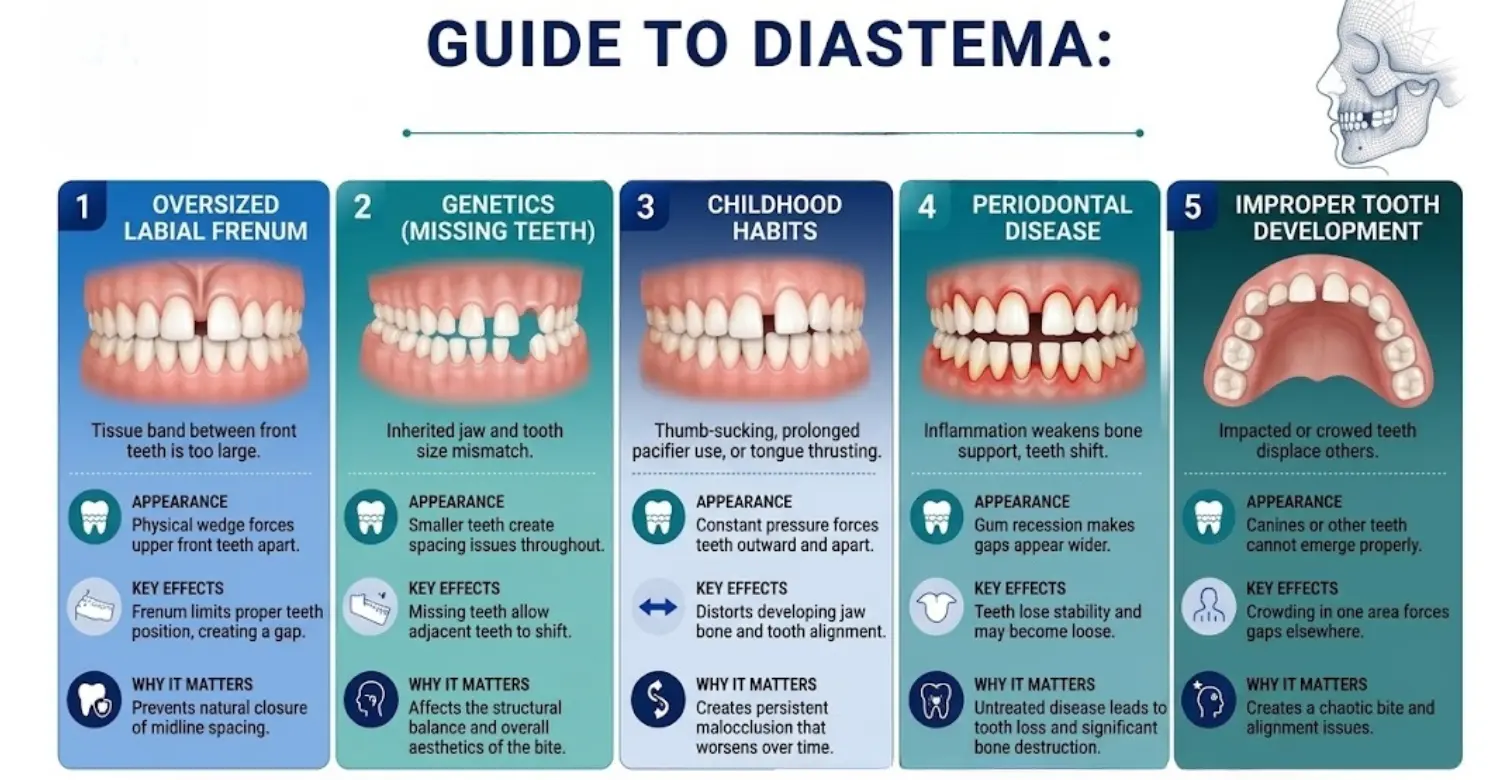
Diastema causes types costs refer to the main factors behind tooth gaps, the different forms these gaps can take, and the expected expenses for correcting them. A diastema is a space between two teeth, most commonly seen between the upper front teeth, and it can develop for several reasons. Common causes include genetics, differences between tooth size and jaw size, missing teeth, abnormal tooth eruption, tongue thrusting habits, or gum-related problems.
The type of diastema and its underlying cause often determine the most suitable treatment option. Some gaps may not require treatment, while others can be improved through dental bonding, veneers, orthodontic treatment, or a combination of procedures. The cost depends on factors such as the chosen treatment method, the number of teeth involved, case complexity, and materials used.
At Vitrin Clinic, dentists evaluate each patient individually to design a personalized plan that improves smile balance while maintaining natural tooth health.
What Causes Diastema?
Diastema causes types costs are important factors to understand when exploring why spaces appear between teeth and how they can be treated. A diastema refers to a visible gap between two teeth, most commonly between the upper front teeth. These spaces may develop due to natural tooth development, jaw structure, inherited characteristics, or specific oral habits. Some gaps are harmless and only affect appearance, while others may indicate underlying dental conditions that require professional evaluation.
Understanding the reason behind the gap is the first step toward choosing the correct solution. At Vitrin Clinic, dentists assess tooth position, gum health, bite alignment, and facial aesthetics before recommending any treatment. A detailed examination helps determine whether the gap needs correction or can remain without affecting oral health. Treatment options may include cosmetic bonding, veneers, orthodontics, or a combination approach depending on each patient’s needs.
Diastema Causes and Risk Factors
Diastema causes types of costs that can vary depending on the factors responsible for creating spaces between teeth. Common causes include differences between tooth size and jaw size, missing teeth, abnormal tooth eruption, gum problems, and certain oral habits. When the jaw is relatively larger than the teeth, natural spaces may develop because the teeth cannot fully fill the available area.
Risk factors may also include childhood habits such as prolonged thumb sucking or tongue thrusting, which can place pressure on front teeth and gradually move them apart. A large or low-positioned frenum, the tissue connecting the upper lip to the gums, may also contribute to a front tooth gap.
At Vitrin Clinic, evaluation focuses on identifying the exact cause rather than treating only the visible space. This approach helps create a stable and natural-looking smile result.
Genetic and Developmental Causes of Diastema
Diastema causes types costs are often connected to genetic and developmental factors that influence tooth arrangement from childhood. Some individuals naturally inherit a larger jaw, smaller teeth, or specific tooth proportions that create spaces between teeth. These characteristics can appear even when oral hygiene is excellent and there are no dental diseases present.
Developmental issues may also affect how teeth erupt and align. For example, delayed eruption of certain teeth, missing permanent teeth, or differences in tooth shape can leave noticeable gaps. In some cases, children naturally have spaces that reduce as permanent teeth develop, while other gaps remain into adulthood.
Dentists at Vitrin Clinic evaluate tooth development patterns and facial harmony before suggesting treatment. Understanding whether a gap is developmental or caused by another issue allows for a more accurate treatment plan and helps avoid unnecessary procedures.
Common Reasons for Gaps Between Teeth
Diastema causes types costs may differ because gaps between teeth can develop from several common dental and lifestyle-related reasons. One frequent reason is a mismatch between tooth size and jaw dimensions, where teeth naturally have extra space around them. Missing teeth can also cause nearby teeth to shift, creating new gaps over time.
Other causes include gum disease, which can weaken the supporting structures around teeth and lead to tooth movement. Certain habits, such as pushing the tongue against the front teeth while swallowing, may gradually influence tooth position. Childhood habits like thumb sucking can also contribute to spacing problems if they continue for many years.
At the Vitrin Clinic, identifying the cause of the gap is essential before treatment. Cosmetic improvements are more successful when the underlying dental factors are properly addressed.
What Causes a Gap Between Front Teeth?
Diastema causes types costs are closely related to the different reasons why a space develops between the front teeth. The most noticeable type of gap is usually a midline diastema, which appears between the two upper central incisors. This space can occur because of genetics, tooth size differences, excessive spacing in the jaw, or soft tissue factors.
A prominent labial frenum, which is the small fold of tissue connecting the upper lip to the gum, may prevent the front teeth from naturally coming together. In other cases, habits such as tongue thrusting can create repeated pressure that pushes the teeth forward and maintains the gap.
At Vitrin Clinic, specialists examine the position of the teeth, gums, bite relationship, and overall smile design. The goal is not only to close the space but also to maintain proper function and create a balanced appearance.
Natural Causes of Tooth Gaps
Diastema causes types costs include natural factors that may occur without any disease or damage. Some people naturally have spaces between teeth because of inherited tooth and jaw characteristics. A larger dental arch combined with smaller teeth can leave visible gaps, especially in the front smile area.
During childhood, gaps between baby teeth are often normal because they allow enough space for larger permanent teeth to develop. However, if spaces remain after permanent teeth appear, they may require assessment depending on the patient’s goals and dental condition.
Natural tooth spacing does not always require correction. Some individuals choose treatment for cosmetic reasons, while others prefer to maintain their natural smile. At Vitrin Clinic, dentists discuss all available options and help patients decide whether treatment is necessary based on their expectations, oral health, and smile appearance.
Oral Habits and Dental Conditions
Diastema causes types costs may also involve oral habits and dental conditions that influence tooth positioning. Habits such as tongue thrusting, where the tongue pushes against the front teeth during swallowing, can contribute to the development or persistence of gaps. Long-term thumb sucking during childhood may also affect jaw growth and tooth alignment.
Dental conditions such as gum disease can weaken the tissues supporting teeth, causing unwanted movement and spacing. Missing teeth may also lead to shifting of neighboring teeth, creating new gaps that affect both function and appearance.
At Vitrin Clinic, dentists consider both cosmetic and health-related factors when evaluating tooth gaps. Treating the cause is important because simply closing a gap without addressing the reason behind it may increase the chance of recurrence. For patients specifically dealing with jaw alignment from these habits, see our guide to correcting a crossbite or the causes of buck teeth.
Dr. Rifat Alsaman’s Opinion on Diastema Causes
Dr. Rifat Alsaman, Head of the Medical Team at Vitrin Clinic and a cosmetic dentist, explains that understanding the reason behind a gap is the foundation of successful diastema treatment. Diastema causes types costs should always be evaluated through a complete dental assessment because every patient has a different smile structure.
According to Dr. Rifat Alsaman, some gaps are purely aesthetic concerns, while others may be linked to bite problems, gum conditions, or tooth movement. He emphasizes that treatment should focus on maintaining natural proportions and protecting long-term oral health.
At Vitrin Clinic, Dr. Rifat Alsaman and the dental team analyze tooth shape, facial features, and smile balance before selecting the most suitable approach. A personalized plan helps achieve results that look natural rather than artificial.
Types of Diastema Explained
Diastema causes types costs depend greatly on the type, location, and reason behind the tooth gap. Not all spaces between teeth are the same, and each type may require a different evaluation and treatment approach. Some gaps develop naturally due to tooth and jaw proportions, while others appear because of dental conditions, missing teeth, or oral habits.
Understanding the type of diastema helps dentists determine whether the gap is only a cosmetic concern or if it affects oral function. At Vitrin Clinic, the dental team carefully examines tooth alignment, gum condition, bite relationship, and smile aesthetics before recommending treatment.
Different cases may be managed with orthodontic movement, cosmetic bonding, veneers, or other customized solutions. The goal is always to create a balanced smile while maintaining healthy tooth structure and proper function.
What Are the Main Diastema Types?
Diastema causes types costs can vary because different types of tooth gaps have different origins and treatment requirements. The most common type is a midline diastema, which appears between the two upper front teeth. However, gaps can also occur between multiple teeth or in different areas of the dental arch.
Some diastemas are caused by natural spacing, while others result from missing teeth, abnormal tooth size, gum problems, or pressure from oral habits. The size of the gap and the condition of surrounding teeth also influence the recommended treatment method.
At Vitrin Clinic, dentists classify each case carefully before beginning treatment. A complete smile assessment allows the team to choose a solution that improves appearance while preserving natural tooth health and achieving long-lasting results.
Midline Diastema Between Front Teeth
Diastema causes types costs commonly involving the midline diastema because it is the most recognizable form of tooth spacing. A midline diastema appears as a gap between the two upper front teeth and is often noticed when smiling or speaking.
This type of gap may develop due to genetic factors, differences between tooth size and jaw size, or an enlarged labial frenum that prevents the teeth from coming together naturally. In children, some front tooth gaps may close as permanent teeth continue developing, but persistent gaps in adults may require evaluation.
At Vitrin Clinic, treatment decisions are based on the cause, gap size, and patient expectations. Some patients may benefit from orthodontic treatment, while others may achieve their desired smile improvement through cosmetic procedures such as bonding or veneers.
Multiple Tooth Gaps and Other Diastema Types
Diastema causes type costs include cases where spaces appear between several teeth rather than only between the front teeth. Multiple tooth gaps may develop due to naturally wide dental arches, smaller teeth, missing teeth, or changes caused by gum disease.
These types of gaps may affect the overall appearance of the smile and sometimes influence speech or chewing comfort. Treatment planning requires a detailed assessment because closing multiple spaces may involve adjusting several teeth while maintaining proper bite function.
At Vitrin Clinic, dentists evaluate the entire smile instead of focusing only on individual gaps. Factors such as tooth shape, gum position, facial proportions, and dental alignment are considered when designing a treatment plan. A customized approach helps achieve a natural-looking result that matches the patient’s facial appearance.
Different Types of Tooth Gaps Explained
Diastema causes types costs connected to the variety of tooth gaps that can appear in different areas of the mouth. Tooth gaps may occur between front teeth, side teeth, or multiple areas of the dental arch. Each type has different reasons and may require a different correction method.
Some spaces are caused by normal tooth development, while others result from missing teeth, excessive pressure from the tongue, or changes in gum support. Small gaps may only affect appearance, whereas larger spaces may influence bite alignment or tooth stability.
Understanding the exact type of gap helps dentists recommend the most suitable treatment. At Vitrin Clinic, specialists assess every patient individually to determine whether orthodontics, cosmetic dentistry, or restorative procedures are the best option. The focus is always on achieving harmony between function, health, and smile aesthetics.
Dr. Rifat Alsaman’s Opinion on Diastema Types
Dr. Rifat Alsaman, Head of the Medical Team at Vitrin Clinic and a cosmetic dentist, explains that every diastema case should be evaluated according to its specific characteristics. Diastema causes types costs are not the same for every patient because the location, size, and reason behind the gap can significantly affect treatment planning.
Dr. Rifat Alsaman emphasizes that closing a gap is not only about improving appearance. The dentist must also consider tooth proportions, gum health, bite balance, and the long-term stability of the result.
At Vitrin Clinic, Dr. Rifat Alsaman uses a personalized smile design approach to select the most suitable treatment option. Whether the patient needs orthodontic correction or cosmetic enhancement, the objective is to create a natural smile that complements the patient’s facial features.
Is Diastema Normal or a Dental Problem?
Diastema causes types costs should be understood before deciding whether a tooth gap requires treatment. In many cases, a diastema is simply a natural variation in tooth arrangement and does not indicate a dental problem. Some people have healthy teeth and gums despite having visible spaces between their teeth.
However, certain gaps may be related to underlying concerns such as gum disease, missing teeth, abnormal tooth movement, or bite issues. A professional dental examination helps determine whether the gap is harmless or requires correction.
At Vitrin Clinic, dentists focus on both dental health and patient goals. Some patients choose treatment for cosmetic reasons, while others may need correction to improve function or prevent future complications.
When Is Diastema Considered Normal?
Diastema causes types costs may differ depending on whether the gap represents a normal dental characteristic or an underlying issue. Natural spaces between teeth are common during childhood because developing permanent teeth need enough room to emerge properly.
In adults, a small gap may also be considered normal if the teeth, gums, and bite are healthy. Some individuals choose to keep their natural tooth spacing because it becomes part of their unique smile appearance.
A normal diastema usually does not cause pain, tooth movement, or oral health problems. However, regular dental checkups remain important to monitor any changes over time. At Vitrin Clinic, dentists evaluate the overall condition of the smile before recommending whether treatment is necessary or optional.
When Does Diastema Need Treatment?
Diastema causes types costs to become important when a tooth gap affects oral health, function, or personal confidence. Treatment may be recommended when gaps continue to increase, affect chewing, create bite problems, or develop because of gum disease or tooth loss.
A dentist may also suggest correction if the gap causes concerns with smile aesthetics. The decision depends on the patient’s dental condition, expectations, and long-term goals.
At Vitrin Clinic, treatment planning begins with a detailed examination to identify the cause of the gap. The team considers factors such as tooth position, gum health, and facial balance before choosing a solution. The purpose is not only to close the space but also to maintain a healthy and stable smile.
Can Diastema Be Fixed?
Diastema causes types costs are important considerations when exploring whether a tooth gap can be corrected and which treatment option is most suitable. In many cases, diastema can be successfully improved through modern dental treatments that focus on closing spaces while maintaining a natural-looking smile.
The best treatment depends on the cause, size of the gap, number of teeth involved, and the patient’s overall oral health. Some small gaps may be corrected with minimally invasive cosmetic procedures, while larger or more complex spaces may require orthodontic movement.
At Vitrin Clinic, dentists create personalized treatment plans based on each patient’s smile structure and expectations. The goal is not only to close the visible gap but also to ensure proper tooth function, balanced proportions, and long-lasting aesthetic results.
Diastema Treatment Options
Diastema causes types of costs that influence the choice of treatment because every tooth gap requires a different approach. Available treatments range from conservative cosmetic procedures to orthodontic solutions that gradually reposition teeth.
Dental bonding is often suitable for small gaps because it adds tooth-colored material to improve tooth shape and reduce visible spaces. Veneers may be recommended for patients who want a complete smile enhancement, especially when tooth shape, color, and spacing need improvement together.
Orthodontic treatment can gradually move teeth into better alignment and is often preferred for larger gaps or cases involving bite concerns. The right choice depends on the patient’s dental condition and aesthetic goals.
At Vitrin Clinic, specialists evaluate each case carefully to recommend a treatment plan that protects natural teeth while achieving a harmonious smile. For a full dedicated breakdown, see our guide to gap tooth treatment.
Dental Bonding for Tooth Gaps
Diastema causes types costs may affect whether dental bonding is the most suitable option for closing a tooth gap. Dental bonding is a cosmetic procedure where a tooth-colored composite material is applied and shaped directly onto the tooth surface to improve spacing and appearance.
This treatment is commonly used for small gaps because it is minimally invasive and usually requires little to no removal of natural tooth structure. The procedure can often be completed in a short appointment, making it a convenient option for many patients.
At Vitrin Clinic, dentists carefully match the bonding material to the natural shade and shape of the patient’s teeth. The aim is to create a smooth transition between the treated teeth and the surrounding smile.
Dental bonding can provide excellent aesthetic improvement, but its durability depends on factors such as oral habits, bite forces, and maintenance. This procedure is explained in more depth in our guide to cosmetic bonding.
Veneers for Diastema Correction
Diastema causes types costs are factors patients often consider when deciding whether veneers are the right solution for improving tooth gaps. Dental veneers are thin shells placed over the front surface of teeth to enhance their shape, size, color, and overall appearance.
Veneers may be recommended when a patient has gaps combined with other cosmetic concerns, such as uneven tooth shape, discoloration, or worn edges. They allow dentists to create a more balanced smile design while maintaining a natural appearance.
At Vitrin Clinic, cosmetic dentists carefully analyze facial proportions, tooth dimensions, and smile aesthetics before designing veneers. The treatment is customized to match each patient’s features rather than creating an identical smile for everyone.
Dr. Rifat Alsaman, Head of the Medical Team at Vitrin Clinic and a cosmetic dentist, emphasizes that veneers should improve harmony between teeth and facial appearance while preserving healthy tooth structure whenever possible. Patients considering this route can review our guides to porcelain veneers and composite veneers.
Orthodontic Treatment for Closing Gaps
Diastema causes types costs should be evaluated when considering orthodontic treatment because closing gaps through tooth movement requires careful planning. Orthodontic procedures use controlled pressure to gradually move teeth into improved alignment and create a more stable bite.
Braces and clear aligners are common options for patients with larger gaps, multiple spaces, or alignment issues. Orthodontic treatment may take longer than cosmetic procedures, but it focuses on changing tooth position rather than only improving appearance.
At Vitrin Clinic, orthodontic evaluations consider tooth movement, jaw relationship, and smile balance. A personalized plan helps ensure that the teeth are positioned correctly while maintaining healthy gums and supporting structures.
For some patients, orthodontics may also be combined with cosmetic dentistry to achieve the most complete smile transformation. A full breakdown of appliance options is covered in our guide to orthodontic braces and clear braces.
How to Close Teeth Gaps Without Braces?
Diastema causes types costs can determine which non-braces solutions are appropriate for patients who want faster cosmetic improvements. Although orthodontics is often effective for moving teeth, some gaps can be improved without traditional braces depending on the size and cause of the space.
Dental bonding is one option for small gaps because it reshapes teeth using a tooth-colored material. Veneers may also close visible spaces while improving other aesthetic concerns such as tooth color and proportion.
However, not every gap should be treated only with cosmetic procedures. If the space is caused by tooth movement, bite problems, or gum issues, addressing the underlying cause is essential.
At Vitrin Clinic, dentists perform a complete smile assessment before recommending treatment without braces. This ensures that cosmetic improvements also support long-term dental health and stability. This exact question is covered in more detail in our dedicated guide to straightening teeth without braces.
Vitrin Clinic Approach to Diastema Treatment
Diastema causes types costs are carefully assessed at Vitrin Clinic to create treatment plans that match each patient’s dental needs and aesthetic expectations. The clinic follows a personalized approach that combines cosmetic dentistry expertise with detailed dental evaluation.
Before treatment begins, dentists examine tooth alignment, gum health, bite function, and facial proportions. This allows the team to determine whether bonding, veneers, orthodontics, or another solution will provide the best outcome.
At Vitrin Clinic, the focus is on creating natural-looking smiles rather than simply closing spaces. Each treatment plan is designed to maintain tooth health while improving confidence and appearance.
Dr. Rifat Alsaman, Head of the Medical Team at Vitrin Clinic and a cosmetic dentist, highlights the importance of individualized smile design. He explains that successful diastema correction requires understanding the patient’s unique facial features and dental structure.
How Much Does Diastema Treatment Cost?
Diastema causes types costs vary because the final price depends on several factors, including the chosen procedure, number of teeth involved, and complexity of the case. Tooth gap correction does not have one fixed price because every patient requires a different treatment plan.
Simple cosmetic treatments such as bonding may require fewer appointments and less investment compared with more comprehensive procedures like veneers or orthodontic treatment. Cases involving multiple gaps or additional dental concerns may require more advanced planning.
At Vitrin Clinic, patients receive a personalized evaluation before treatment begins. The dental team explains available options, expected results, and factors affecting the overall cost. This approach helps patients understand their choices and select a treatment that fits their goals and dental condition.
Diastema Treatment Cost Factors
Diastema causes types costs are influenced by several elements that determine the overall investment required for treatment. The cost is not only based on the visible gap but also on the complexity of achieving a healthy and natural-looking result.
Important factors include the number of teeth requiring correction, the selected treatment method, the condition of existing teeth, and whether additional procedures are needed before closing the gap.
For example, a small single gap may require a simpler cosmetic solution, while multiple spaces caused by alignment problems may need orthodontic treatment. Material quality and dentist expertise can also affect the final cost.
At Vitrin Clinic, treatment recommendations are based on achieving long-term results rather than choosing the cheapest option. A detailed consultation helps patients understand the value of each treatment choice.
Treatment Type and Number of Teeth
Diastema causes types costs can change depending on the treatment method selected and how many teeth are involved in correcting the gap. A patient with a small space between two front teeth may only need a simple cosmetic procedure, while someone with multiple gaps may require a more comprehensive approach.
Dental bonding is usually considered for smaller spaces because it involves adding tooth-colored material to improve tooth shape and appearance. Veneers may involve a higher cost because they are customized restorations designed to enhance multiple aesthetic aspects of the smile. Orthodontic treatment can also vary in price depending on the duration and complexity of tooth movement required.
At Vitrin Clinic, dentists evaluate the entire smile before recommending treatment. The number of teeth involved, tooth condition, and desired outcome are carefully considered to create a personalized plan that provides both aesthetic improvement and long-term stability.
Case Complexity and Materials Used
Diastema causes types costs are affected by the complexity of each case and the materials required to achieve the desired smile result. Not every tooth gap can be treated in the same way because the underlying cause, tooth position, and surrounding tissues differ from patient to patient.
Simple cases involving a small gap may require minimal treatment, while complex cases may involve orthodontic correction, gum evaluation, or a combination of cosmetic procedures. The materials used also influence the overall cost. High-quality dental materials, such as advanced ceramic options for veneers, are designed to provide durability, natural appearance, and better integration with the smile.
At Vitrin Clinic, treatment planning focuses on selecting materials and techniques that match the patient’s needs. The dental team considers appearance, function, and long-term performance when designing a personalized smile transformation.
How Much Does Diastema Closure Cost?
Diastema causes types costs vary because closing a tooth gap depends on the treatment technique, the size of the gap, and the number of teeth requiring correction. There is no universal price for diastema closure because each patient’s smile requires an individual assessment.
Small gaps may often be corrected through cosmetic procedures such as dental bonding, while larger or more complex cases may require veneers or orthodontic treatment. Additional dental concerns, such as gum problems or tooth alignment issues, can also influence the final cost.
At Vitrin Clinic, patients receive a detailed consultation to understand their treatment options and expected investment. The dental team explains the advantages of each approach and helps patients choose a solution that balances aesthetics, function, and long-term oral health.
Average Cost of Closing Teeth Gaps
Diastema causes types costs can differ significantly depending on whether the patient chooses bonding, veneers, or orthodontic treatment. Dental bonding is generally considered one of the more affordable options because it requires fewer materials and can often be completed quickly. Veneers usually involve a higher investment because they are custom-designed restorations created to improve tooth shape, color, and spacing.
Orthodontic treatment costs may vary based on the complexity of tooth movement and the length of treatment. Clear aligners and braces can provide effective results but typically require ongoing professional monitoring.
At Vitrin Clinic, the cost of closing teeth gaps is determined after evaluating the patient’s smile goals, dental condition, and recommended treatment plan. This ensures that patients receive an approach designed specifically for their needs rather than a general solution.
Diastema Closure Cost in Turkey
Diastema causes types costs are important factors for international patients considering dental treatment in Turkey. Turkey has become a popular destination for cosmetic dentistry because patients can access modern dental technology, experienced cosmetic dentists, and personalized treatment plans.
The cost of diastema closure in Turkey depends on the chosen procedure, materials used, clinic standards, and the complexity of the case. Treatments such as bonding, veneers, and orthodontic procedures may have different price ranges depending on the patient’s requirements.
At Vitrin Clinic, international and local patients receive detailed treatment planning before beginning their smile transformation. The clinic focuses on combining quality dental care with customized aesthetic solutions.
Dr. Rifat Alsaman, Head of the Medical Team at Vitrin Clinic and a cosmetic dentist, explains that cost should always be considered alongside treatment quality, expertise, and long-term results. A successful smile transformation requires careful planning, not only a focus on price.
Dental Bonding vs Veneers for Diastema Treatment
Diastema causes types costs often influence the decision between dental bonding and veneers because both treatments can improve tooth gaps but provide different benefits. Dental bonding is a conservative cosmetic procedure that adds composite material to the tooth surface, making it suitable for small gaps and minor shape adjustments.
Veneers are thin custom-made shells that cover the front surface of teeth. They may be preferred when patients want additional improvements such as changing tooth color, correcting uneven shapes, or creating a complete smile makeover.
The best choice depends on factors such as gap size, tooth condition, aesthetic goals, and expected durability. At Vitrin Clinic, dentists evaluate each smile individually to recommend the option that provides the most natural and lasting result. This exact comparison is explored further in our guide to composite vs. porcelain veneers.
Which Treatment Is Better for Closing Tooth Gaps?
Diastema causes types costs should be considered when comparing dental bonding and veneers because each treatment offers different advantages. Dental bonding is often suitable for patients who have small gaps and want a quick, minimally invasive improvement. It preserves more natural tooth structure and can provide excellent cosmetic results in appropriate cases.
Veneers may be a better choice for patients who want a more complete smile transformation. They can improve spacing, tooth proportions, color, and overall smile harmony at the same time.
Dr. Rifat Alsaman, Head of the Medical Team at Vitrin Clinic and a cosmetic dentist, explains that the best treatment is not determined only by the size of the gap but also by tooth structure, facial appearance, and the patient’s expectations.
At Vitrin Clinic, treatment selection is based on creating balanced, natural, and long-lasting smile results.
Diastema Before and After Treatment Results
Diastema causes types costs are closely connected to the expected results because the chosen treatment method affects how the final smile will look and function. Modern cosmetic dentistry can provide significant improvements by reducing visible spaces and creating better tooth harmony.
Before treatment, dentists evaluate photographs, tooth proportions, gum position, and facial features to design an appropriate plan. After treatment, patients may notice improved smile symmetry, better tooth balance, and increased confidence.
The final outcome depends on factors such as treatment choice, oral health, and patient maintenance habits. Bonding, veneers, and orthodontics can all produce successful results when properly planned.
At Vitrin Clinic, smile transformations are designed to look natural rather than artificial. The dental team focuses on creating results that complement each patient’s unique facial characteristics.
Expected Results After Diastema Correction
Diastema causes types costs influence treatment planning, but the main goal of correction is to create a healthier and more balanced smile. After successful treatment, patients often experience improved confidence because visible spaces between teeth are reduced or eliminated.
The expected results depend on the chosen procedure. Bonding can improve small gaps quickly, veneers can enhance overall smile aesthetics, and orthodontic treatment can provide alignment changes by moving teeth into better positions.
A successful result should maintain natural tooth appearance while supporting proper function. Dentists also consider gum health and bite balance to ensure the improvement remains stable.
At Vitrin Clinic, the team uses personalized smile design principles to create outcomes that match each patient’s expectations while preserving natural aesthetics and dental health.
Can Diastema Come Back After Treatment?
Diastema causes types costs are important to understand because maintaining the results after treatment depends on the original cause of the gap and the type of correction performed. In some cases, a treated diastema can return if the factors that created the space are not properly managed.
For example, continued tongue thrusting, untreated gum problems, or natural tooth movement may contribute to the reopening of gaps. Orthodontic patients may also need retainers after treatment to help maintain the new tooth position.
Cosmetic treatments such as bonding or veneers can provide long-lasting improvement, but regular dental care and good oral habits remain essential. At Vitrin Clinic, dentists focus on identifying the cause of the gap before treatment to reduce the possibility of recurrence.
Dr. Rifat Alsaman, Head of the Medical Team at Vitrin Clinic and a cosmetic dentist, emphasizes that stable results come from combining proper diagnosis, suitable treatment selection, and ongoing oral care. Retention after orthodontic correction is covered in our guide to retainer vs. braces.
Vitrin Clinic Smile Transformation Results
Diastema causes types costs play an important role in planning successful smile transformations because every patient requires a different approach based on their dental structure and aesthetic goals. At Vitrin Clinic, smile transformations are designed around the individual characteristics of each patient.
The dental team evaluates tooth proportions, facial harmony, gum appearance, and overall smile balance before creating a treatment plan. Whether the patient needs bonding, veneers, orthodontic correction, or a combination approach, the focus remains on achieving natural and attractive results.
Vitrin Clinic combines modern cosmetic dentistry techniques with personalized care to help patients improve both their smile appearance and confidence. Each transformation is planned carefully to ensure the final result looks balanced and complements the patient’s facial features.
The goal is not simply to close gaps but to create a healthy, functional, and aesthetically pleasing smile.
What We Notice Clinically
Diastema causes types costs are commonly discussed during dental consultations because patients want to understand why their gaps developed and what treatment options are available. Clinically, dentists notice that successful correction depends on accurate diagnosis rather than focusing only on the visible space.
At Vitrin Clinic, the dental team observes that patients with similar-looking gaps may require completely different treatments. One patient may benefit from bonding, while another may need orthodontic movement or veneers because the underlying causes are different.
A complete clinical assessment includes evaluating tooth size, alignment, gum health, bite relationship, and facial aesthetics. This allows dentists to create treatment plans that provide predictable and natural-looking results.
Understanding the biological and cosmetic factors behind each diastema helps ensure that treatment improves both appearance and long-term oral stability.
Dr. Rifat Alsaman’s Clinical Insights on Diastema Treatment
Dr. Rifat Alsaman, Head of the Medical Team at Vitrin Clinic and a cosmetic dentist, explains that every diastema case requires a detailed clinical evaluation before selecting treatment. Diastema causes types of costs that can vary widely because each patient presents with different dental conditions and aesthetic expectations.
According to Dr. Rifat Alsaman, closing a gap successfully requires more than moving teeth closer together. Dentists must consider tooth proportions, gum health, facial appearance, and the stability of the final result.
At Vitrin Clinic, Dr. Rifat Alsaman focuses on creating personalized treatment plans that respect natural tooth structure. He believes cosmetic dentistry should enhance the smile while maintaining healthy function and long-term durability.
Through careful planning and modern techniques, patients can achieve improvements that appear natural and fit their overall facial harmony.
How Cosmetic Dentistry Creates Balanced Smiles
Diastema causes types costs are considered when planning cosmetic dentistry because the treatment choice directly influences the final appearance of the smile. Cosmetic dentistry focuses on improving tooth proportions, alignment, and harmony between the teeth and facial features.
For patients with gaps, procedures such as bonding and veneers can enhance tooth shape and create a more balanced smile. However, successful cosmetic treatment requires careful planning to avoid results that appear unnatural.
At Vitrin Clinic, cosmetic dentists analyze each patient’s smile characteristics before recommending any procedure. Factors such as tooth width, gum visibility, facial structure, and personal preferences are included in the smile design process.
The objective is to create a smile that looks natural and complements the patient rather than simply closing spaces without considering overall aesthetics. This planning process is explained fully in our guide to smile design.
The Importance of Personalized Smile Design
Diastema causes types costs should be evaluated through a personalized smile design approach because every patient has unique facial and dental characteristics. A treatment that works well for one person may not provide the same result for another.
Smile design considers multiple factors, including tooth shape, tooth color, gum position, facial proportions, and the way teeth appear during smiling and speaking. This comprehensive approach helps dentists create results that feel natural and harmonious.
At Vitrin Clinic, personalized smile design is an important part of cosmetic dentistry planning. The team combines digital evaluation and clinical experience to develop treatment strategies that match each patient’s goals.
A customized plan helps ensure that diastema correction improves not only the gap but also the overall appearance and confidence of the patient.
Choosing the Right Treatment Based on Tooth Structure
Diastema causes types costs are influenced by tooth structure because the condition of the teeth determines which treatment option will provide the best outcome. Healthy teeth with sufficient structure may be suitable for cosmetic bonding or veneers, while other cases may require orthodontic correction.
Dentists must evaluate enamel condition, tooth size, alignment, and bite forces before selecting a procedure. Choosing the wrong treatment may affect durability or create an unnatural appearance.
At Vitrin Clinic, treatment recommendations are based on protecting natural teeth while achieving aesthetic improvement. The dental team carefully considers whether a conservative or comprehensive approach is most appropriate.
Dr. Rifat Alsaman, Head of the Medical Team at Vitrin Clinic and a cosmetic dentist, emphasizes that preserving tooth health while achieving smile improvement is a key principle in successful cosmetic dentistry.
Final Thoughts About Diastema Causes, Types, and Costs
Diastema causes types costs that help patients understand why tooth gaps appear, what treatment options are available, and what factors influence the overall investment. A gap between teeth may be a natural feature, a cosmetic concern, or a sign of an underlying dental issue depending on the individual case.
Modern dentistry provides several solutions, including bonding, veneers, and orthodontic treatment, allowing dentists to customize care according to each patient’s needs. The most effective treatment is based on identifying the cause of the gap and creating a plan that supports both aesthetics and oral health.
At Vitrin Clinic, patients receive personalized evaluations designed to achieve natural-looking and long-lasting smile improvements. With expert guidance from Dr. Rifat Alsaman, Head of the Medical Team at Vitrin Clinic and a cosmetic dentist, patients can explore suitable options for creating a confident and balanced smile.
Reference
Diastema Causes Types Costs is an important topic in cosmetic and restorative dentistry, as gaps between teeth can result from different factors such as genetics, tooth size differences, gum conditions, or oral habits. Understanding the causes, types, available treatment options, and associated costs helps patients make informed decisions about improving their smile. The following references provide more information about diastema, its classifications, correction methods, and treatment pricing considerations:
FAQs

Dr. Rifat Alsaman has more than 5 years of clinical experience in dentistry and currently serves as the Head of the Medical Team at Vitrin Clinic. He is dedicated to providing exceptional patient care, overseeing treatment planning, and ensuring the highest clinical standards across the team. His expertise, attention to detail, and commitment to continuous professional development have helped countless patients achieve healthier, more confident smiles.


