Periodontics
August 24, 2026
Gum Symmetry and Smile Design: How Dentists Balance Gum Lines?
 Dr. Rifat Alsaman
A balanced smile depends on teeth, gums, lips, facial proportions, and healthy supporting tissues working together as one visual system. Gum Symmetry and Smile Design helps dentists evaluate these elements together rather than treating the gumline as an isolated cosmetic detail. Small differences in gum height can change how long, short, wide, or narrow a tooth appears, even when the tooth itself has not moved or changed shape at all.
What Is Gum Symmetry and Smile Design?
Gum symmetry describes how consistently gum contours appear across neighboring teeth when viewed from the front, from an angle, and during an active smile. Smile design considers those contours alongside tooth shape, tooth position, tooth color, lip behavior, and the broader proportions of the face.
What Does Gum Symmetry Mean in Cosmetic Dentistry?
In cosmetic dentistry, gum symmetry refers to a visual balance between gingival margins rather than a strict numerical equivalence. Dentists compare corresponding teeth to one another rather than expecting identical measurements across the entire arch. Natural anatomy creates subtle variations between individual teeth, and a mouth with zero variation at all can actually look artificial once restored. This is a core consideration in Gum Symmetry and Smile Design.
Why Is Gum Symmetry Important for an Attractive Smile?
Gum symmetry influences how people perceive tooth proportions and overall smile balance, often without consciously realizing why a smile looks slightly off. Uneven margins may make otherwise healthy teeth appear different in length even though the enamel itself is perfectly normal. Patients who are also considering a perfect Hollywood smile may find that gum proportions influence the final appearance considerably.
How Do Gums, Teeth, Lips, and Facial Features Work Together?
Smile appearance results from several anatomical systems working simultaneously rather than any single structure acting alone. Teeth provide the primary visible framework of the smile. Gums frame those teeth and strongly influence perceived proportions, almost like a picture frame changes how a painting is read.
What Is the Ideal Relationship Between the Gumline and Teeth?
There is no universal gumline measurement suitable for every patient, despite how often such numbers are quoted online. Dentists generally evaluate tooth proportions, gingival architecture, and facial characteristics together rather than applying a single formula. This principle sits at the heart of Gum Symmetry and Smile Design.
How Does Gum Symmetry Influence Smile Aesthetics?
Gingival contours create the visual frame around visible teeth, and that frame shapes how the eye reads everything inside it. Their position can alter perceived tooth length and overall smile balance in ways patients often sense without being able to name. Gum Symmetry and Smile Design helps clinicians identify these relationships before any cosmetic treatment begins, rather than discovering them mid-procedure.
Gum Symmetry in Smile Design
Smile design involves analyzing multiple visible structures together rather than treating any one element in isolation. Gingival margins represent one important component among several. Understanding the Hollywood Smile concept can also help patients see how teeth and gums are evaluated together.
Gingival Symmetry and Smile Proportions
Gingival symmetry affects how patients perceive tooth length across the entire arch. If one margin sits lower, that tooth may look longer than it actually is. Conversely, a higher margin may make the tooth appear shorter than its true dimensions. Such judgment calls define good Gum Symmetry and Smile Design.
Esthetic Gumline and Smile Harmony
An esthetic gumline generally supports balanced tooth proportions without appearing overly uniform or mechanically drawn. The gum contour should transition naturally between neighboring teeth, following the underlying bone and root anatomy rather than an artificial straight line. When inflammation is present, understanding common gum diseases is important before cosmetic reshaping is considered.
How Does an Uneven Gumline Affect Smile Balance?
An uneven gumline can create differences in apparent tooth length that are immediately visible to an observer, even if the patient themselves struggles to explain exactly what looks off. These differences may become more visible during a broad, natural smile than during a controlled, closed-lip expression. However, not every uneven margin requires treatment, and dentists should resist the urge to intervene simply because a difference exists.
High or Low Gum Margins
High or low gingival margins can change perceived tooth proportions dramatically, sometimes making a perfectly healthy tooth look like the outlier in an otherwise even smile. One tooth may appear unusually short or long compared with its neighbors. This is exactly the kind of nuance Gum Symmetry and Smile Design accounts for. In suitable cases, laser gum reshaping may be considered as part of the treatment discussion.
Uneven Gingival Contours
Uneven contours can occur naturally as part of a person's inherited anatomy, or they can develop after periodontal inflammation has altered the tissue over time. Previous restorations may also influence tissue architecture, particularly if old crown margins were poorly contoured. Dentists examine tissue health carefully before considering any cosmetic reshaping. When active gum problems are present, gum disease treatment may need to come first.
Excessive Gum Display
Excessive gum display is commonly referred to as a gummy smile, and it is one of the most frequent reasons patients seek this kind of evaluation. Several factors can contribute to it, including altered passive eruption, vertical maxillary excess, tooth position, and simply an unusually mobile upper lip.
Asymmetrical Gum Tissue Around the Teeth
Asymmetrical tissue may result from eruption differences between individual teeth, active inflammation, recession, or simple anatomical variation that has always been present. Dentists compare both sides of the smile carefully during examination, looking for patterns rather than isolated spots. They also consider the relationship between gingival margins and tooth contours rather than judging the gum in isolation. This is a central theme in Gum Symmetry and Smile Design.
Clinical Note: Why Small Gumline Differences Can Affect Smile Proportions
Small gingival differences can alter the apparent height of adjacent teeth more than most patients expect. The effect becomes stronger when front teeth share similar shapes and colors, since the eye has fewer other differences to focus on.
What Makes a Gumline Look Balanced?
A balanced gumline generally complements tooth dimensions and facial characteristics rather than following an abstract ideal. Dentists evaluate the relationship between gingival margins, tooth widths, and the curvature of the smile as a connected whole. Gum Symmetry and Smile Design uses these relationships to guide aesthetic planning from the very first consultation.
Balanced Gumline and Tooth Proportions
Tooth proportions strongly influence how the gumline appears to an observer. Long, narrow teeth create a different visual relationship with the surrounding gum than short, wide teeth do. This distinction matters greatly in Gum Symmetry and Smile Design.
How Tooth Length and Gum Exposure Affect Smile Design
Visible tooth length depends partly on how much gingival coverage is present. More exposed enamel can make teeth look longer than their neighbors. Less exposure can make teeth appear shorter, even when the underlying tooth structure is perfectly normal in size.
What Role Does the Gingival Zenith Play in Smile Symmetry?
The gingival zenith is the most apical point of a tooth's gingival margin, and its precise position contributes meaningfully to the contour of the anterior teeth. Central incisors and canines often show different zenith relationships compared with the lateral incisors between them.
How Do Central Incisors, Lateral Incisors, and Canines Differ in Gumline Position?
Anterior teeth do not always have identical gingival margin positions, and expecting them to match perfectly misunderstands normal dental anatomy. Central incisors often establish the primary visual reference point for the entire smile. Lateral incisors may have slightly different contours, frequently sitting a little higher than their larger neighbors. This is one of the practical realities of Gum Symmetry and Smile Design.
Central Incisor Gingival Contour
Central incisors dominate the anterior smile more than any other tooth, sitting directly at the visual center of attention. Their gingival contours therefore receive considerable attention during aesthetic planning.
Lateral Incisor Gumline Position
Lateral incisors can have slightly different gingival positions than the central incisors beside them, and this is often a normal, attractive feature rather than a flaw. Their smaller dimensions influence how the gumline is perceived relative to the rest of the smile. Excessive correction in this area may make the smile look artificial and overly engineered.
Canine Gingival Symmetry
Canines influence the transition from the anterior teeth toward the posterior segments of the arch. Their gingival contours can affect the overall arc of the smile as it curves back on both sides. This is a core consideration in Gum Symmetry and Smile Design.
What Is the Role of Gum Proportion in a Smile Makeover?
Gum proportion influences the apparent relationship between teeth and lips throughout the entire smile. Too much visible tissue may dominate the smile and draw attention away from the teeth themselves. Too little tissue may expose elongated-looking teeth or areas of recession that were previously hidden.
What Causes an Asymmetrical Gumline?
Several factors can create an uneven gingival appearance, and identifying the correct one is the single most important step in treatment planning. Natural eruption differences may produce unequal margins that have been present since the teeth first came in.
Uneven Gum Growth and Gingival Contours
Gingival contours can vary because of developmental differences present from the time the teeth erupted. Some teeth may erupt with different amounts of visible crown than their neighbors. Soft tissue thickness can also vary naturally between different sites in the same mouth. This principle sits at the heart of Gum Symmetry and Smile Design.
Gum Recession and Loss of Gum Symmetry
Recession exposes more of the tooth root and can make one tooth appear noticeably longer than its neighbors. It may also create uneven gum levels across several teeth at once. Patients experiencing recession can learn more about gum recession treatment before considering cosmetic contouring.
Tooth Position and Its Effect on Gumline Symmetry
Tooth inclination can make gingival margins look uneven even when the tissue itself is completely healthy. Rotated teeth can also distort the apparent contour of the gum around them. Orthodontic movement may improve the position without removing any gum tissue at all, which is often the more conservative solution.
Differences in Tooth Size and Shape
Naturally short or narrow teeth can make the surrounding gum tissue appear excessive by comparison, even when the gum itself is entirely normal. Tooth wear can produce a similar visual effect over time. Such judgment calls define good Gum Symmetry and Smile Design.
Previous Dental Treatment and Irregular Gum Contours
Previous crowns, veneers, fillings, or periodontal procedures can influence gum contours long after the original treatment was completed. Restoration margins may irritate tissues if they were poorly positioned during placement. Inadequate contours can also affect plaque accumulation, which in turn affects gum health and appearance.
How Can Lip Movement Affect the Appearance of Gum Symmetry?
Lip movement determines how much gingiva actually becomes visible during smiling, and this varies enormously from person to person. Some people expose substantial gum tissue despite having perfectly balanced gingival margins underneath.
What We Notice Clinically
Clinically, apparent asymmetry often has more than one contributing factor working together at once. Tooth position and lip movement may exaggerate a gingival difference that is, on its own, quite small. A complete smile assessment is therefore required rather than a quick glance at the gumline alone. This is exactly the kind of nuance Gum Symmetry and Smile Design accounts for.
Dr. Rifat Alsaman's Clinical Opinion
Dr. Rifat Alsaman emphasizes that cosmetic gum treatment should begin with diagnosis rather than an immediate procedure.
How Is Gum Symmetry Evaluated During Smile Design?
Evaluation begins with a detailed dental and periodontal examination covering far more than just the gumline itself. Dentists assess tooth dimensions, gingival margins, tissue thickness, and visible gum display as an interconnected set of findings. Lips and facial proportions are considered as well, since they shape how everything else is perceived.
What Happens During a Smile Analysis?
A smile analysis evaluates teeth, gums, lips, and facial relationships together as one coordinated system. Dentists commonly review the smile at rest and during full expression to capture the full range of how it appears. This is a central theme in Gum Symmetry and Smile Design.
How Are the Gumline and Tooth Proportions Measured?
Dentists can measure clinical crown dimensions and gingival margin positions using calibrated instruments and photographic references. They may compare right and left teeth directly and assess tooth width-to-length relationships across the arch. Periodontal probing helps evaluate tissue health at each site individually.
What Role Do Clinical Photographs Play in Smile Design?
Clinical photographs document smile position, tooth display, and gingival contours with far more precision than memory or a quick glance in the mirror allows. They can reveal asymmetries that are difficult to assess during ordinary conversation with a patient.
How Are Digital Smile Design Tools Used to Evaluate Gum Symmetry?
Digital planning tools can overlay proposed tooth and gingival changes onto existing photographs, giving patients a preview of possible outcomes. These simulations help patients understand potential treatment results before committing to any procedure. They can also facilitate communication between clinicians and dental laboratories working on the same case. This distinction matters greatly in Gum Symmetry and Smile Design. Patients can also explore the article on Digital Smile Design for more information about digital planning.
Why Is a Periodontal Examination Important Before Gum Contouring?
Periodontal examination determines whether tissues are healthy enough for cosmetic treatment in the first place. Inflammation can change gingival size and contour in ways that mislead planning if left untreated. A professional periodontal cleaning may be relevant when plaque and inflammation need to be controlled first.
How Are Gum Thickness and Bone Levels Assessed?
Tissue thickness can influence how gingiva responds to reshaping, with thinner tissue generally requiring greater caution and a more conservative approach. Bone levels also affect the relationship between gingiva and the underlying tooth structure. Radiographs can provide important information when clinically indicated.
Clinical Note: Why Diagnosis Should Come Before Gum Contouring
Gum contouring changes biological tissue permanently, which is a fact that should never be underestimated by a patient or clinician. Therefore, diagnosis should precede any irreversible procedure without exception. This is one of the practical realities of Gum Symmetry and Smile Design.
What Is Gum Contouring for Smile Design?
Gum contouring reshapes gingival tissue to improve its visible architecture around one or more teeth. The procedure can address selected cases involving excess or uneven tissue, provided the underlying anatomy is suitable. Gum Symmetry and Smile Design may be incorporated into a broader plan when periodontal anatomy permits it safely.
Gum Contouring and Smile Aesthetics
Gum contouring can improve the visible relationship between teeth and gingiva when performed on the right case. It may make short-looking teeth appear longer when excess tissue was covering healthy crown structure all along.
Gingival Contouring for Smile Symmetry
Gingival contouring can adjust uneven margins when excess tissue is genuinely causing the discrepancy between teeth. Dentists compare neighboring teeth and both sides of the smile before finalizing any plan. The focus remains on creating coordinated contours rather than forcing identical measurements everywhere. This is a core consideration in Gum Symmetry and Smile Design.
How Does Gum Contouring Correct an Uneven Gumline?
Contouring selectively removes excess gingival tissue from carefully chosen areas. Dentists shape the remaining margin according to tooth anatomy and periodontal requirements rather than an arbitrary line.
When Can Gum Contouring Improve Tooth Proportions?
Contouring may help when teeth appear short because excess gingiva is covering otherwise healthy crown structure. It can expose more clinical crowns and meaningfully improve apparent tooth length. Whether sufficient tooth structure exists beneath the tissue is an essential consideration before proceeding.
Reshaping Excess Gum Tissue
Excess tissue can sometimes obscure otherwise well-proportioned teeth that would look perfectly balanced if fully exposed. Conservative reshaping may expose additional crown structure without overcorrecting. This principle sits at the heart of Gum Symmetry and Smile Design.
Improving Tooth Length Appearance
Removing excess gingiva can increase visible clinical crown length in a way that changes perceived tooth proportions without altering the enamel itself. However, the underlying tooth anatomy must be appropriate for this approach to work well. Whether the change would create a genuinely balanced result is worth careful consideration before treatment.
Refining the Smile Arc
The smile arc describes the relationship between the curvature of the upper teeth and the curve of the lower lip during a smile. Gingival contours contribute to this overall appearance, but gum reshaping alone cannot create every desired smile arc.
When Is Gumline Correction Needed for Smile Design?
Gumline correction may be considered when gingival position significantly affects overall smile balance rather than representing a trivial, unnoticeable difference. The indication for treatment depends on anatomy, tissue health, and the patient's own goals and priorities. Gum Symmetry and Smile Design can help determine whether correction is genuinely justified in a given case.
Gumline Correction for Smile Design
Correction may involve gum contouring, crown lengthening, orthodontics, or restorative treatment, depending on what the diagnosis reveals. Gum Symmetry and Smile Design provides a useful framework for comparing these different options against one another.
When Is Gum Contouring Enough?
Soft tissue contouring may be sufficient when excess gingiva is clearly the primary cause of the visible concern. The underlying bone position must support stable tissue margins for this approach to succeed long term. Simple reshaping may be appropriate in selected cases where the anatomy is favorable. Such judgment calls define good Gum Symmetry and Smile Design.
When Might Crown Lengthening Be Recommended?
Crown lengthening may be recommended when the relationship between bone and gum tissue limits adequate crown exposure for aesthetic or restorative purposes. The procedure can involve both soft tissue and supporting bone, unlike simple contouring. Patients comparing options can also review information about dental crowns for front teeth when restorative treatment is part of the plan.
Can Gum Recession Require a Different Treatment Approach?
Yes. Recession involves loss or apical displacement of gingival tissue, which is fundamentally different from having too much tissue present. Removing more tissue would usually be entirely inappropriate in this situation.
When Is Orthodontic Treatment Needed Instead of Gum Contouring?
Orthodontics may be preferable when tooth position is what creates the apparent gumline discrepancy in the first place. Rotations, tipping, or uneven eruption can alter gingival contours without any real tissue problem being present. This is exactly the kind of nuance Gum Symmetry and Smile Design accounts for.
Can Veneers Be Combined With Gumline Correction?
Veneers can be combined with gum correction in selected cosmetic cases where both structures need attention. However, gingival position should usually be evaluated and, if needed, treated before final restoration design begins. Coordinating these two procedures produces far more predictable results than treating them separately. Patients considering this combination may also review porcelain veneers vs crowns when discussing restorative options.
How Is the Treatment Selected for Each Patient?
Treatment selection depends on diagnosis, periodontal health, tooth position, facial proportions, and patient expectations, all weighed together. Dentists may recommend one treatment alone or several coordinated procedures working in sequence.
How Does Gum Contouring Improve Smile Proportions?
Gum contouring can change the visible relationship between teeth and gingiva in cases where the anatomy supports it. When excess tissue covers healthy crown structure, reshaping can expose more of the tooth. Gum Symmetry and Smile Design may therefore improve apparent tooth length considerably.
Can Gum Reshaping Make Teeth Look More Proportional?
Yes, selected cases can show meaningfully improved tooth proportions after gingival reshaping. The effect comes from increasing visible crown length where excess tissue was previously hiding it. This is a central theme in Gum Symmetry and Smile Design.
How Does Gingival Contouring Create a More Symmetrical Smile?
Gingival contouring can reduce differences between selected gingival margins that were genuinely caused by excess tissue. Dentists carefully compare both sides of the smile before removing any tissue at all. The focus stays on creating a coordinated visual pattern rather than an artificially identical one.
Can Gum Contouring Improve a Gummy Smile?
Gum contouring can improve some gummy smiles when excess gingival coverage is genuinely the primary cause of the appearance. It cannot correct every cause of excessive gingival display, however, since lip mobility and skeletal relationships are common contributors as well.
How Does Gumline Position Affect Veneer and Crown Design?
Gingival position establishes the visible border around any restoration placed on a tooth. An unstable or uneven margin can compromise cosmetic planning considerably if it is not addressed first. Evaluating and treating the gumline should therefore precede definitive veneer or crown design in most cases. For patients exploring veneer treatment, Lumineers vs veneers provides another useful comparison.
What Are the Limitations of Gum Contouring?
Gum contouring cannot correct every type of smile asymmetry that a patient might present with. It cannot reposition teeth or change facial skeletal relationships in any meaningful way.
Dr. Rifat Alsaman's Opinion on Gum Proportion and Smile Harmony
Dr. Rifat Alsaman emphasizes that gum proportions should support natural tooth anatomy rather than override it. He considers periodontal health essential before any cosmetic modification is even discussed.
Gum Symmetry With Veneers and Other Cosmetic Treatments
Gingival contours influence how veneers and crowns appear within the finished smile. Restorations can improve tooth shape, while gum treatment can improve the framing around those restorations. Patients researching veneer costs can compare the cost of veneers in Turkey as part of their treatment research.
How Do Veneers and Gum Symmetry Work Together?
Veneers change tooth shape and visible dimensions in ways that can be planned quite precisely. Gum contours frame those new dimensions once the restorations are placed. Coordinating both elements helps dentists achieve a cohesive final look.
Why Should the Gumline Be Evaluated Before Veneers?
Veneers are designed according to planned tooth dimensions established during the treatment planning phase. Gingival position directly influences those dimensions in ways that are easy to overlook.
Can Veneers Correct the Appearance of an Uneven Gumline?
Veneers can sometimes alter perceived tooth proportions in ways that soften a minor gumline discrepancy. They cannot physically reposition gingival tissue, however, no matter how the restoration is shaped. Veneers may be used to mask minor visual discrepancies in carefully selected cases.
How Can Tooth Shape Influence Perceived Gum Symmetry?
Tooth width and contour influence how gingival margins are perceived by an observer. A narrow tooth may make a perfectly normal gumline look more prominent than it really is. Different veneer materials may also be considered, including zirconia veneers in Turkey.
Gum Aesthetics in Cosmetic Smile Design
Gum aesthetics involve more than just the amount of visible tissue present around each tooth. They include contour, color, thickness, health, and the overall relationship with the teeth themselves. All of these factors come together in a single cosmetic assessment.
Clinical Note: Coordinating Gingival and Restorative Treatment
Gingival and restorative procedures should be planned together whenever both are required for a given case. The intended final tooth shape can influence gum contours in ways that are worth anticipating early. Patients can also compare current veneers cost in Turkey information when planning cosmetic restorative care.
Can Gum Symmetry Be Improved Without Surgery?
Some mild discrepancies can genuinely improve without any periodontal surgery at all. Orthodontics may correct tooth positioning that was the true source of the visual concern. Restorative treatment may alter perceived tooth proportions enough to resolve the issue on its own.
Can Orthodontics Improve Gumline Appearance?
Orthodontic treatment can improve appearance when tooth position is genuinely causing the asymmetry observed. Moving teeth into better alignment may change the gingival contour naturally as a result, without any direct gum treatment at all.
Can Veneers Mask Minor Gumline Irregularities?
Veneers may visually reduce minor differences by changing tooth shape and length in a coordinated way. They cannot correct actual gingival anatomy, however, no matter how cleverly they are designed. Restorative camouflage may be appropriate in carefully selected cases where the underlying gum difference is small. Patients comparing costs can also review veneers cost information before choosing a restorative approach.
Can Digital Smile Design Help Plan Non-Surgical Options?
Digital planning can compare potential tooth shapes and proportions before any physical treatment begins. It may show whether restorative treatment alone could address a visual concern without surgery.
When Is Surgical Gum Reshaping the More Predictable Choice?
Surgical reshaping may be more predictable when excess gingiva is clearly and unambiguously causing the discrepancy. The tissue must be healthy and anatomically suitable for the procedure to succeed. Periodontal measurements should be taken before surgery is ever scheduled. Long-term periodontal care may also involve periodontal maintenance.
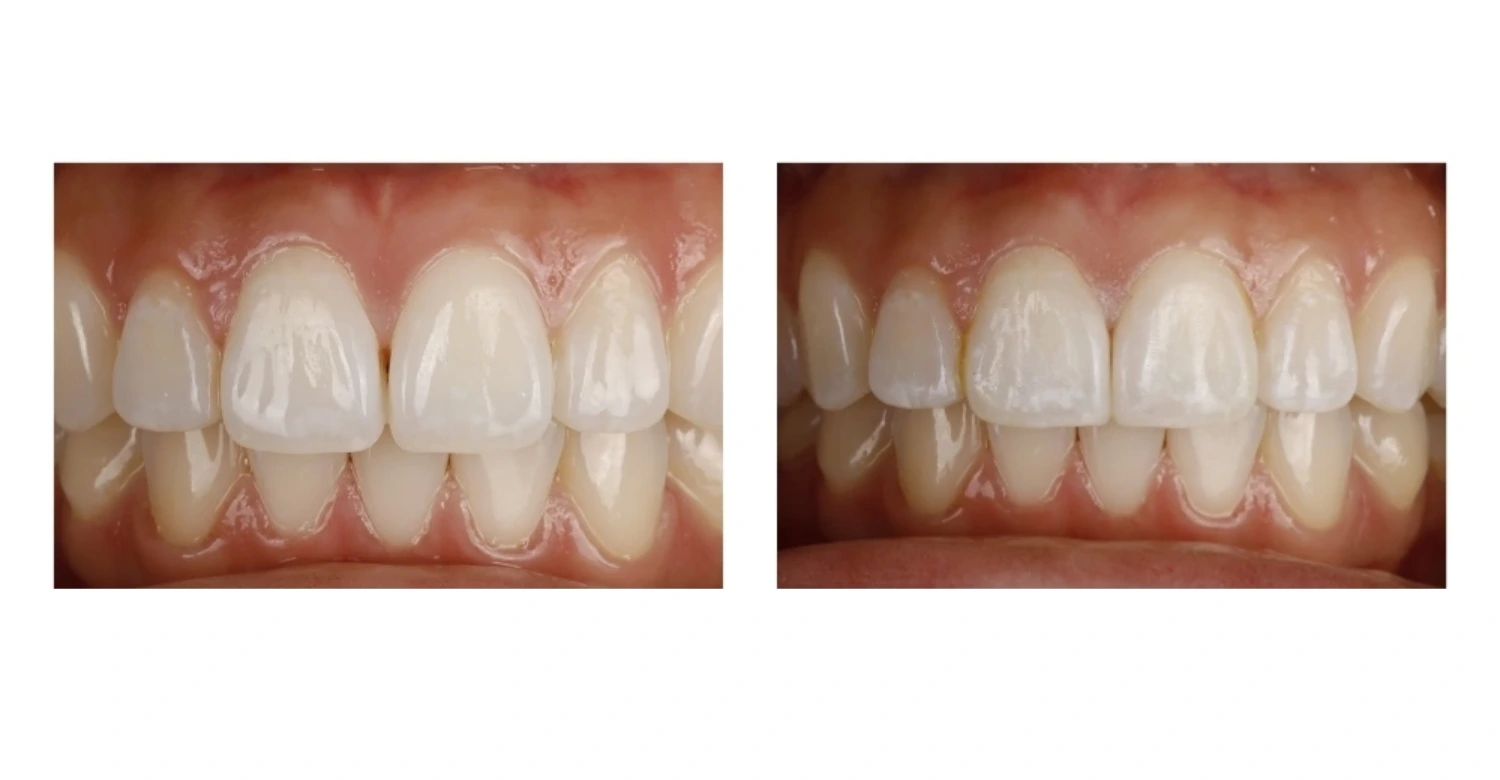
What Should Patients Expect From Gum Symmetry Treatment?
Treatment expectations depend on the selected procedure and each patient's individual healing response. Simple contouring may involve a relatively brief appointment and recovery period.
How Long Does Gum Contouring Take?
Treatment time varies according to the number of teeth involved and the complexity of the procedure. A small, localized area may require limited clinical time in a single visit. More extensive treatment naturally takes longer to complete.
Is Gum Contouring Painful?
Patients commonly experience some tenderness after gingival procedures, though the intensity varies from person to person. Local anesthesia is used during treatment to keep the patient comfortable.
How Long Does Gum Tissue Take to Heal?
Initial healing occurs during the first several weeks following treatment. Complete tissue maturation can take considerably longer than the initial healing phase. The exact timeline depends on procedure type, tissue thickness, oral hygiene, and individual healing capacity.
When Will the Final Gumline Become Visible?
The gumline may look noticeably different during early healing than it eventually will once settled. Swelling and tissue remodeling can temporarily affect symmetry in the first weeks after treatment.
What Factors Affect the Final Aesthetic Result?
Healing response, tissue thickness, bone position, oral hygiene, smoking habits, and treatment design can all influence outcomes meaningfully. Tooth position and lip movement also affect how the final result is perceived. Several interacting factors ultimately determine the outcome, not just the procedure itself.
Tips for Patients
Good aftercare supports healing and helps protect the planned gum contours achieved through treatment. Patients should follow individualized instructions rather than relying on generic advice found online.
Maintain Excellent Oral Hygiene
Oral hygiene helps control plaque around healing gingival tissues during the recovery period. Patients should follow the dentist's recommended cleaning method rather than their usual routine immediately after treatment. Aggressive brushing may irritate surgical sites and slow healing considerably.
Follow Your Dentist's Aftercare Instructions
Postoperative instructions vary considerably according to the specific procedure performed. Patients should follow medication, cleaning, diet, and activity recommendations closely rather than improvising.
Avoid Smoking During Healing
Smoking can negatively affect periodontal healing and tissue recovery in well-documented ways. Avoiding tobacco during the healing period is therefore genuinely important. Dentists may provide individualized recommendations based on the specific procedure performed.
Attend Follow-Up Appointments
Follow-up visits allow dentists to evaluate healing and tissue stability over time rather than relying on a single postoperative check. They can identify inflammation or contour concerns early, while they are still easy to address.
Do Not Judge the Final Gumline Too Early
Early swelling can make the gumline look uneven in ways that resolve completely with time. Tissue remodeling continues well after the initial healing stage has passed. Patients should therefore avoid judging results immediately after the procedure.
What Are the Risks and Limitations of Gum Contouring?
Gum contouring is generally planned carefully, but every dental procedure carries some limitations and risks. Possible concerns include sensitivity, recession, asymmetry, delayed healing, or correction that falls short of the goal.
Can Gum Contouring Cause Gum Recession?
Improper or excessive tissue removal can contribute to unwanted gingival changes, including recession, over time. Patient anatomy also influences this risk considerably from one case to another. Careful assessment of tissue thickness and supporting structures is essential before any procedure.
Can Too Much Gum Tissue Be Removed?
Yes. Excessive removal can make teeth appear unnaturally long once the tissue has healed.
Can the Gumline Become Asymmetrical After Treatment?
Healing can sometimes produce temporary or occasionally persistent differences between treated sites. Tissue remodeling may occur unevenly even when the procedure itself was performed symmetrically. Individual anatomy can also affect the final contour in ways that are hard to predict.
How Can Gum Sensitivity Occur After Gum Reshaping?
Gingival reshaping can expose previously covered tooth surfaces that were not designed to be exposed to air and temperature. Those areas may initially respond more strongly to hot and cold stimuli.
Why Is Conservative Treatment Important for Smile Design?
Conservative treatment protects healthy tissues while still addressing the genuine aesthetic concern at hand. Removing additional tissue does not necessarily improve the result, and can sometimes make it worse. Visual improvement should always be balanced against biological preservation rather than pursued at any cost.
Clinical Note: Preserving Healthy Gingival Tissue
Healthy gingival tissue provides important periodontal protection that goes far beyond appearance alone. Cosmetic procedures should therefore respect tissue attachment and supporting structures at every step.
What We Notice Clinically About Gum Symmetry and Smile Design
Clinical evaluation shows that perceived gum symmetry depends on far more than gingival height alone. Tooth angulation, facial midline, lip movement, and tooth shape can all influence perception simultaneously. Dynamic assessment is therefore essential rather than a single static photograph.
Why Gum Symmetry Is Not Always Perfectly Identical
Natural anatomy is rarely perfectly identical from one side of the mouth to the other. Small differences can exist in tooth position, gingival contour, and facial structure without indicating any problem.
How Tooth Position Can Change the Perception of Gum Symmetry
Rotated or tilted teeth can make gingival margins appear uneven even when the tissue itself is completely healthy. Orthodontic alignment may correct the appearance entirely without any surgery being necessary. Tooth axes should be considered carefully as part of this evaluation.
Why Facial Symmetry Should Be Considered in Smile Design
Facial symmetry provides the broader reference point for evaluating dental symmetry in context. The facial midline may not perfectly align with the dental midline, and this is entirely normal.
The Importance of Biological Width and Gingival Health
The relationship between periodontal tissues and the tooth is essential for long-term dental health. Restorative margins and surgical changes must respect this biological attachment at every site. Periodontal assessment should therefore be included in every treatment plan involving the gumline. Patients who need periodontal care can also learn about non-surgical periodontal therapy.
Dr. Rifat Alsaman's Clinical Perspective
Dr. Rifat Alsaman considers healthy periodontal architecture essential to any successful cosmetic treatment.
How Does Vitrin Clinic Approach Gum Symmetry and Smile Design?
Vitrin Clinic approaches cosmetic smile planning by evaluating teeth, gums, facial proportions, and patient expectations together as one coordinated process. The objective is to create a personalized treatment strategy rather than apply a generic template. Gum Symmetry and Smile Design can involve periodontal, restorative, orthodontic, or combined treatment depending on the diagnosis.
Personalized Smile and Gumline Assessment at Vitrin Clinic
A personalized assessment considers each patient's gingival contours and tooth proportions individually. Clinical photographs can document the current smile for reference throughout treatment.
Combining Gingival, Dental, and Facial Aesthetics
Vitrin Clinic can coordinate gingival and dental considerations during cosmetic planning rather than treating them separately. Teeth, gums, lips, and facial proportions all influence the final appearance together. An integrated approach therefore benefits treatment considerably compared with addressing structures one at a time.
Digital Smile Planning for More Predictable Treatment
Digital planning can help patients visualize potential changes before any treatment begins. It can also support communication between clinicians and dental laboratories working on the same case.
Why Treatment Should Be Based on Individual Gum and Tooth Proportions
Every patient has different tooth dimensions, gum thickness, facial features, and smile dynamics that make their case unique. A single aesthetic formula cannot accommodate all of these differences at once. Individualized planning is therefore essential rather than optional.
Why Choose Vitrin Clinic for Cosmetic Gum and Smile Design?
Choosing a cosmetic dental provider requires attention to diagnosis, communication, clinical expertise, and treatment planning quality. Vitrin Clinic emphasizes personalized cosmetic dentistry and coordinated smile planning across every case it takes on.
Comprehensive Smile Aesthetic Planning
Comprehensive planning considers gingiva, teeth, lips, and facial proportions together as a single connected picture. This broad assessment benefits treatment planning considerably compared with a narrower focus. Patients can understand why one procedure may be recommended over another once the full picture is explained.
Experienced Cosmetic and Dental Team
Cosmetic treatment often involves multiple dental disciplines working together on the same case. Periodontal, restorative, and orthodontic factors may overlap considerably in a single treatment plan.
Personalized Treatment Planning and Patient Communication
Patients should understand clearly why a specific procedure is being recommended to them. Clear communication supports realistic expectations from the very beginning of the process. Discussion of alternatives, risks, healing, and limitations should be part of every consultation.
Focus on Natural-Looking Gum and Tooth Proportions
Natural aesthetics depend on balanced proportions rather than perfect symmetry pursued for its own sake. Vitrin Clinic can incorporate this principle into cosmetic planning at every stage of the process.
Final Thoughts on Gum Symmetry and Smile Design
A balanced gumline can strongly influence perceived tooth proportions and overall smile harmony. However, gingival symmetry should never be considered separately from tooth position, lips, and facial features, since all of these elements shape one another. Gum Symmetry and Smile Design provides a useful way of evaluating these relationships together rather than in isolation.
Why Healthy and Balanced Gums Matter for Smile Aesthetics
Healthy gums provide the foundation for an attractive and stable smile that will hold up over years, not just months. Inflammation can alter color, contour, and tissue volume in ways that undermine any cosmetic work performed on top of it. Patients interested in long-term gum health can also review periodontal surgery cost information when appropriate.
The Importance of Personalized Gumline Correction
Personalized treatment matters because gum anatomy varies considerably between individual patients, sometimes even between one side of the same mouth and the other. Tooth shape, tissue thickness, bone position, and facial proportions all influence the appropriate treatment approach. No single universal measurement should ever dictate a plan on its own.
Reference
FAQs
Dr. Rifat Alsaman has more than 5 years of clinical experience in dentistry and currently serves as the Head of the Medical Team at Vitrin Clinic. He is dedicated to providing exceptional patient care, overseeing treatment planning, and ensuring the highest clinical standards across the team. His expertise, attention to detail, and commitment to continuous professional development have helped countless patients achieve healthier, more confident smiles.


