

Scleroderma is a chronic autoimmune condition. It can affect the skin, joints, and internal organs, and it often leaves a clear mark inside the mouth as well. For anyone facing tooth loss, a natural question comes up: can scleroderma and dental implants go together? The short answer is yes, in many cases. Success depends on overall health, oral condition, and careful planning. Case reports and small case series show implant survival rates similar to the general population. Research is still limited to case-level studies rather than large controlled trials. This guide covers the oral effects of scleroderma and what to check before treatment. It also looks at the possible risks and how implant treatment is planned safely for each patient.
What Is Scleroderma and How Can It Affect Oral Health?
Scleroderma, also called systemic sclerosis, is an autoimmune disease. It causes the body to produce excess collagen, which leads to hardening and tightening of the skin and connective tissue. When it affects the face and jaw, oral health and scleroderma become closely connected. The same fibrotic process that stiffens the skin can also stiffen the tissues around the mouth, gums, and jaw joint. Patients may notice a smaller mouth opening and tighter facial skin. These changes can affect how easily they brush, floss, or open wide enough for a dental exam. Because oral hygiene becomes harder to maintain, understanding these mouth problems early is an important step before considering options like dental implants.
What Oral Problems Are Common With Scleroderma?
Common oral issues include limited mouth opening, dry mouth from reduced saliva flow, gum inflammation, and difficulty keeping teeth and gums clean. Some patients also experience tooth wear, a widened space around the tooth roots, and stiffness in the jaw and surrounding facial tissue. These changes vary from person to person. Together, they explain why scleroderma mouth problems deserve regular dental attention. Later decisions around implant treatment often start with how well these early symptoms were managed.
How Does Scleroderma Contribute to Tooth Loss?
When oral hygiene becomes difficult due to limited mouth opening or hand involvement, plaque and bacteria can build up more easily. This raises the risk of decay and gum breakdown over time. Scleroderma and tooth loss are sometimes linked indirectly for this reason. It is usually not the disease itself removing teeth, but the oral complications it creates. Consistent dental care can reduce this risk significantly and help preserve natural teeth for longer.
What Is the Link Between Scleroderma and Gum Disease?
Reduced saliva, tighter oral tissues, and harder-to-reach areas during brushing can all raise the chances of plaque accumulation. Plaque buildup is a leading cause of gum disease. Some studies also note a widening of the periodontal ligament space and gum fibrosis in scleroderma patients. Together, these factors mean scleroderma and gum disease should be monitored closely. Professional cleanings are often scheduled more frequently than for the general population.
Clinical Note
Oral findings vary significantly between people living with scleroderma, and no two cases look exactly alike. Because of this, implant suitability should always be based on an individual clinical assessment rather than the diagnosis alone.
Can You Get Dental Implants With Scleroderma?
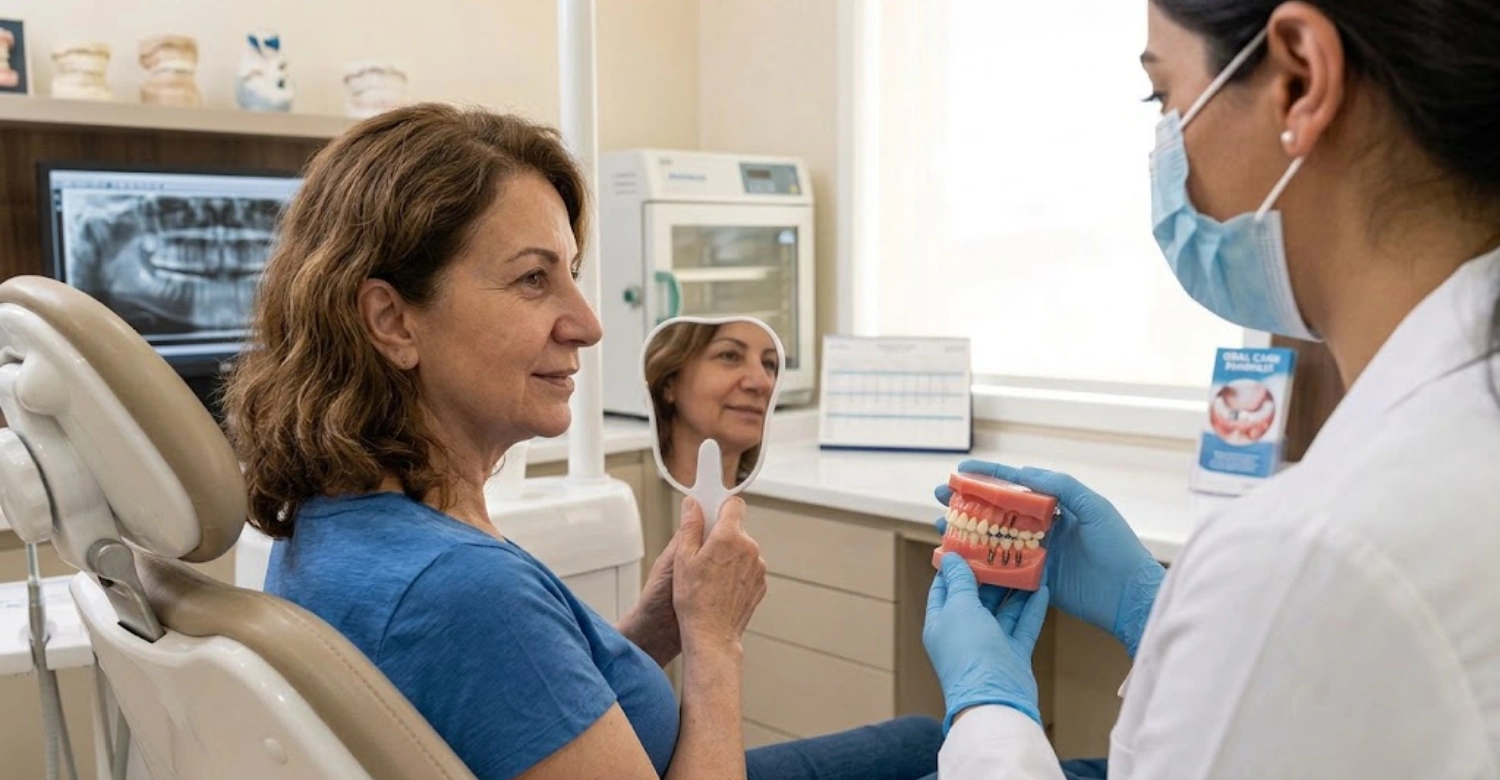
Yes, in many cases dental implants with scleroderma are achievable. Having the condition does not automatically rule out treatment. A systematic review pooling 37 patients and 153 implants reported a survival rate of 100% in case reports and 89.2% in case series. This suggests that scleroderma status did not have a clear negative impact on overall implant outcomes. That said, several factors matter: overall health, oral tissue condition, bone quality, current medications, and disease severity. Together, these determine whether implants are the right path for a particular patient. Success is realistic, but it depends on thorough preparation rather than assumption.
Is Scleroderma a Contraindication to Dental Implants?
Scleroderma alone is not considered an automatic contraindication to implant treatment. Candidacy is instead based on an individualized assessment. It looks at gum health, bone volume, mouth opening, and how well the immune condition is currently managed. This is why the question cannot be answered with a simple yes or no. Implant treatment is always discussed only after a proper evaluation.
What Should Be Checked Before Dental Implant Treatment?
Before moving forward, the dental team typically reviews medical history, current medications, and gum and periodontal health. They also check bone volume and quality, mouth opening, oral hygiene habits, and any existing infections or dental disease. Imaging is used to plan implant position accurately. This step-by-step review is central to responsible dental treatment for scleroderma patients. It helps avoid complications later and forms the groundwork that any safe plan for Scleroderma and dental implants relies on.
Tips for the Patients
Patients are encouraged to keep regular dental appointments and maintain careful daily oral hygiene. They should also clearly inform the dental team about their scleroderma diagnosis and current medications. Reporting any new dry mouth, gum bleeding, pain, or reduced mouth opening promptly matters. It allows small issues to be addressed before they affect long-term outcomes.
What Are the Risks of Scleroderma and Dental Implants Treatment?
Complications are not inevitable, but certain factors linked to scleroderma may require extra attention during and after implant placement. Understanding potential complications in advance allows the dental team to plan more carefully rather than reacting to problems after they appear. Awareness, not fear, is the goal when discussing implant treatment with patients.
Can Scleroderma Affect Dental Implant Healing?
Healing may be influenced by tissue elasticity, blood flow to oral tissues, and medications such as immunosuppressants that some scleroderma patients take. A 24-patient retrospective case series with 72 implants reported a 10-year Kaplan-Meier survival rate of 87.6%. This indicates that implant-supported rehabilitation can be maintained successfully over the long term. Still, a medical and dental evaluation beforehand helps identify anything that could affect healing for Scleroderma and dental implants.
Can Limited Mouth Opening Make Implant Treatment More Difficult?
A restricted mouth opening, sometimes linked to esophageal involvement in systemic sclerosis, can make examination, implant surgery, and everyday hygiene more challenging. It may also affect how easily a patient can attend follow-up visits comfortably. Dentists often adjust their technique and instruments to work within a smaller opening. This is a routine part of managing implant treatment safely from start to finish.
Can Dry Mouth Affect Dental Implant Patients With Scleroderma?
Reduced saliva flow, or xerostomia, is one of the most common orofacial effects of scleroderma. It can leave oral tissues more vulnerable to irritation, decay, and discomfort around implants. Preventive dental care, saliva-support strategies, and closer monitoring can help protect both natural teeth and implants over time. This supports more comfortable long-term results.
Clinical Note
The specific risks tied to implant treatment depend on each patient's disease severity, medication history, and oral condition. No outcome can be guaranteed. Still, a thorough clinical evaluation allows the dental team to manage risk factors proactively rather than leaving them unaddressed.
Scleroderma and Dental Implants: How Is Treatment Planned?
Comprehensive planning is the foundation of safe, predictable results. Systemic sclerosis cases involve more variables than a routine implant case. Because of this, the dental team typically works through a structured process before recommending treatment.
Step 1: Medical and Dental History
The process begins with a full review of scleroderma history, disease duration, current medications, and any previous dental problems. This background helps the dental team understand how the condition may influence treatment, laying the first foundation for any conversation about implants.
Step 2: Comprehensive Oral Examination
Teeth, gums, soft tissues, jaw function, and mouth opening are all assessed closely. This exam helps identify existing oral problems, such as gum inflammation or limited opening, before any implant planning begins.
Step 3: Dental Imaging and Bone Assessment
Appropriate imaging helps evaluate bone volume and quality at the implant site. Research tracked marginal bone levels around 61 implants in scleroderma patients over a five-year period. It found peri-implant bone loss broadly comparable to reported benchmarks in the general implant literature, supporting cautious optimism when bone quality is adequate.
Step 4: Personalized Implant Treatment Plan
Implant position, restoration type, oral hygiene needs, and follow-up frequency are considered together to create a plan suited to the individual. This personalized approach is what makes dental treatment for scleroderma patients different from a standard implant case. It is central to how Scleroderma and dental implants are handled responsibly.
Scleroderma and Dental Implants: What Are the Alternatives?
Implants are not the only way to replace missing teeth. Some patients may be better suited to other restorative options depending on their oral health and disease severity.
Dental Bridges
Bridges can replace one or more missing teeth by anchoring to neighboring teeth. They avoid surgery but require healthy supporting teeth. They may also place additional stress on those teeth over time. This is worth weighing against implants for patients seeking a longer-term fixed solution.
Removable Dentures
Removable dentures may be considered when bone volume is limited or when surgery is not advisable. However, they can be more difficult to manage for patients with reduced mouth opening or sensitive oral tissues linked to scleroderma. This is why some patients prefer the added stability that dental implants can offer.
How Does the Dental Team Choose the Right Option?
The dental team weighs oral health, jaw function, comfort, hygiene ability, and long-term maintenance needs before recommending a path forward. For some patients, Scleroderma and dental implants remain the strongest long-term option. Others may benefit more from a bridge or denture, depending on their individual circumstances.
How Can You Maintain Good Oral Health With Scleroderma?
Prevention plays a major role in protecting both natural teeth and any future dental work. Consistent daily care supports better long-term outcomes for oral health overall.
Oral Hygiene Tips
Gentle but thorough brushing and careful cleaning between teeth both help. So do regular professional examinations and guidance for managing dry mouth symptoms, all of which reduce the risk of decay and gum problems. Together, these habits protect both natural teeth and any future implants.
How Often Should Scleroderma Patients Visit the Dentist?
More frequent monitoring is often needed, typically every three to six months depending on individual needs. This allows the dental team to catch early signs of gum disease, decay, or tissue changes before they progress. Regular visits are one of the simplest ways to protect long-term outcomes.
Tips for the Patients
Patients should follow the personalized oral-care routine recommended by their dental team. They should avoid ignoring gum bleeding, sensitivity, tooth pain, or changes in mouth opening. Maintaining regular dental follow-ups remains one of the most effective ways to support long-term oral health.
Scleroderma and Dental Implants at Vitrin Clinic
At Vitrin Clinic, every patient with a systemic condition like scleroderma is guided through an individualized assessment before any implant treatment is recommended. The clinical team focuses on a full consultation, oral examination, imaging, and detailed treatment planning. Implant placement follows when appropriate, with structured follow-up care afterward. This careful, personalized approach reflects the clinic's broader focus on cosmetic and restorative dental treatment. It applies to every patient's needs, including cases involving scleroderma.
What We Notice Clinically
Dr. Rifat Alsaman, Head of the Medical team at Vitrin Clinic, emphasizes that no two scleroderma cases present the same way. Evaluating each patient's individual oral condition, disease severity, and medical history is essential before recommending implant treatment as a path forward.
Clinical Note
Implant candidacy at Vitrin Clinic is always determined after a proper clinical and medical assessment, never from the diagnosis of scleroderma alone. This approach supports safer, more predictable outcomes for every patient considered for treatment.
Resource:
In conclusion, scleroderma and dental implants can be compatible when treatment is carefully planned around the patient's condition. The case reported in the linked study demonstrated successful long-term rehabilitation, with all 12 implants surviving after 10 years and bone loss comparable to healthy patients. This highlights that dental implants may be a viable option for selected patients with systemic sclerosis, provided thorough assessment, appropriate timing, and long-term follow-up are ensured.
https://pmc.ncbi.nlm.nih.gov/articles/PMC8922661/
https://pmc.ncbi.nlm.nih.gov/articles/PMC8298149/ https://pmc.ncbi.nlm.nih.gov/articles/PMC10022424/


.webp&w=3840&q=75)

