Dental Veneers in Turkey
October 25, 2026
Veneers for discoloured Teeth: Do They Work, and Which Type Is Best?
 Dr. Rifat Alsaman

If whitening hasn't fixed your stains, veneers for discoloured teeth can give you an even, natural-looking shade. They work by covering the colour rather than trying to bleach it away. The right choice depends on how deep and how dark the discoloration is. Porcelain and E-max veneers are usually the most predictable option, especially for deep Grey or tetracycline staining. This guide explains how each option works and what causes discoloration. It also covers the warning signs to check first and what veneers cost in the US, UK and Türkiye.
Key Takeaways:
Veneers can cover most stains, including those that teeth whitening cannot fix.
Choosing the right veneer material for the type and severity of discoloration helps achieve a natural-looking result.
Mild stains may only require whitening or minimal-prep veneers.
Porcelain and E-max veneers can mask deep or grey stains and resist new stains.
The darkness of the underlying tooth is a key factor in choosing the right veneer.
A single tooth that turns grey or dark should be evaluated by a dentist before cosmetic treatment.
Discoloration accompanied by pain, swelling, or soft or chalky spots requires professional assessment.
A dental assessment is recommended when whitening does not work or produces uneven results.
Teeth that appear darker than others should be evaluated to identify the cause and determine the most suitable treatment.
Ready to transform your smile?
Talk to our team and get your Free treatment plan.
Quick Answer: Can Veneers Fix discoloured Teeth?
Yes. Veneers for discoloured teeth can cover most types of tooth discoloration. This includes stains that do not respond to whitening. Porcelain and E-max veneers can mask even deep Gray or tetracycline staining. They also resist new stains well. A single tooth that has darkened should be checked by a dentist before any cosmetic treatment.
When Veneers Are the Right Choice
Veneers make the most sense when discoloration sits inside the tooth rather than on its surface. Typical examples are medication-related stains, fluorosis, yellowing from thinning enamel, and uneven whitening. Veneers are also useful when old fillings on front teeth no longer match. Whitening gels cannot change the colour of restorations.
Veneers are also a good fit when you want to change more than colour. Your discoloured teeth may also be slightly chipped, worn at the edges or uneven in shape. A veneer can address all of these in one treatment. This is why many people who ask about whitening end up discussing veneers instead.
When Another Treatment Should Come First
Surface stains from coffee, tea or smoking often respond well to professional cleaning and whitening. This keeps your natural enamel untouched. A tooth that turned Grey after an injury may need a pulp test first. It may also need a root canal or internal bleaching. Active decay and gum disease also need treatment before veneers are placed.
Starting with the least invasive option protects your natural teeth. If whitening or treating the cause solves most of the problem, you may need fewer veneers. You may not need any at all. If it does not, the earlier treatment still helps. It gives your dentist a brighter, healthier base to match the veneers to.
What Are Veneers?
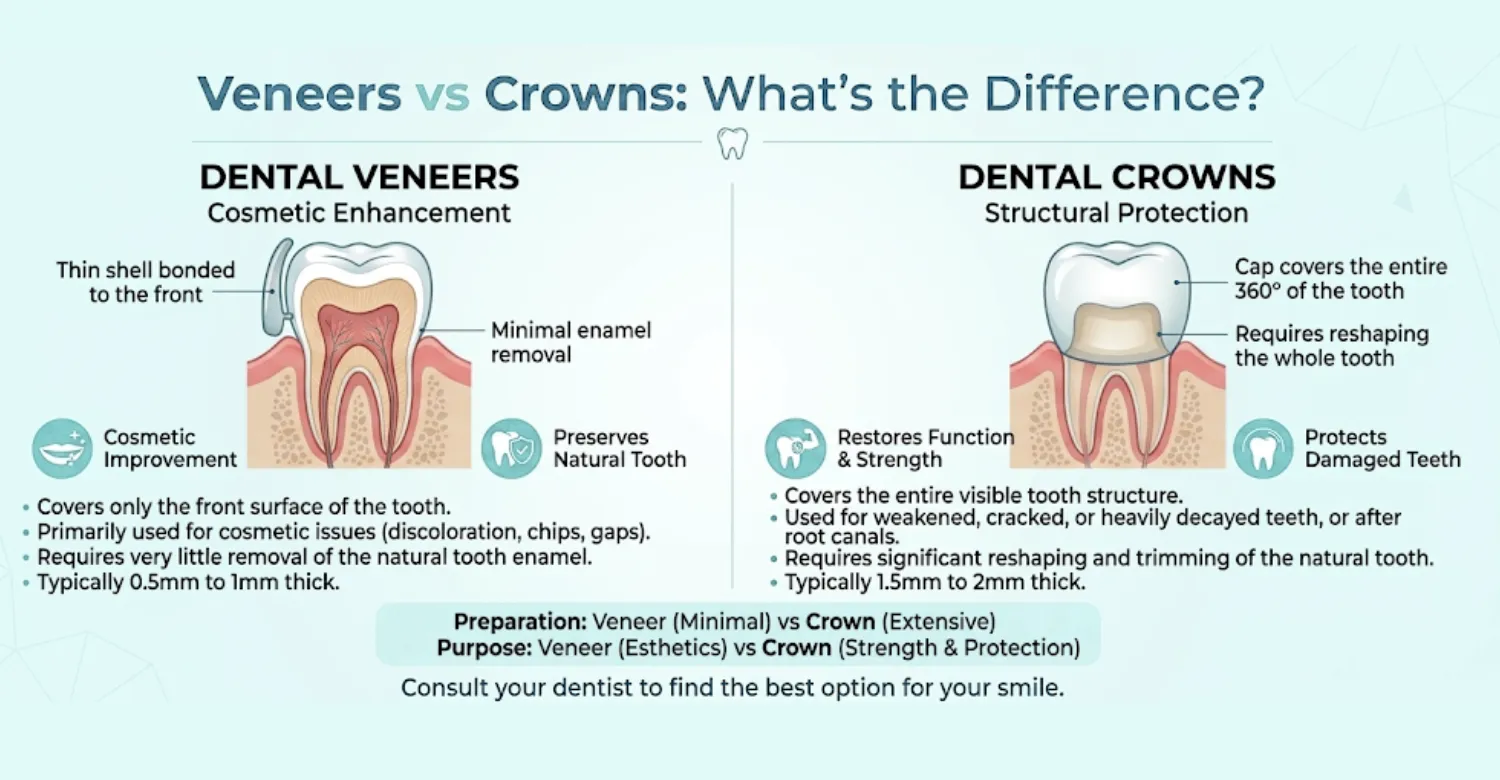
Veneers are thin, tooth-coloured layers bonded to the front surface of a tooth. They change its colour, shape or size. They are custom-made in a dental lab from porcelain or other dental ceramics, such as E-max. Because they cover only the visible surface, they are a conservative way to change your smile.
A veneer is usually less than one millimetre thick. The exact thickness depends on the material and how much colour it needs to hide. Once bonded, it becomes part of the tooth's visible surface. You brush and floss it like a natural tooth. It does not come out like a denture or a Snap-On appliance.
How Do Veneers Cover Tooth Discoloration?
Whitening tries to lighten the tooth chemically. A veneer works differently: it places a new visible surface over the stain. The dentist controls the veneer's thickness, opacity and shade. This hides a darker tooth underneath while the edges keep a natural translucency. The deeper and darker the stain, the more opacity the veneer needs. This usually decides the type and thickness of ceramic.
This is also why shade selection is so important. The dentist does not simply pick the whitest shade available. They choose a colour that suits your skin tone, your other teeth and your age. The goal is a smile that looks bright but believable. A trial mock-up can help you see the shade before the final veneers are made.
Who Is a Good Candidate for Veneers?
A good candidate for veneers for discoloured teeth is an adult with healthy teeth and gums. The best results are usually seen when stains have not improved with whitening. You should be free of active decay and gum disease. You also need enough healthy enamel for the veneers to bond well. Realistic expectations matter too. People who grind their teeth can still qualify, but they usually need a night guard.
Healthy Gums and No Active Decay
Veneers need a healthy foundation. Gum inflammation, untreated cavities or a failing old filling should be managed first. Otherwise, the veneer margins can become a trap for plaque.
Healthy gums also matter for the look of the result. Inflamed or receding gums can expose the edge of a veneer. They can also change how the tooth frames the smile. Your dentist may recommend a professional cleaning or gum treatment first. A short healing period may be needed before starting veneers.
Stains That Haven't Responded to Whitening
The best candidates have stains that whitening could not improve, or teeth that whitened unevenly. People who grind their teeth heavily can still have veneers. They usually need a night guard to protect them.
Realistic expectations are part of being a good candidate. Veneers can make teeth look brighter and more even. However, they still need care and will eventually need maintenance or replacement. Discuss how long you want the result to last. Also discuss how much maintenance you are comfortable with. This helps your dentist recommend the right material.
Types of Veneers
The main types of veneers for discoloured teeth are traditional porcelain, E-max and no-prep or minimal-prep veneers. E-max is a strong ceramic made from lithium disilicate. Removable Snap-On veneers also exist. However, they are not a long-term clinical treatment.
Traditional porcelain (feldspathic): Often chosen for highly natural-looking front teeth. It reflects light much like natural enamel and holds its colour very well. It usually needs a thin layer of enamel to be prepared and two or more visits.
E-max (lithium disilicate): A strong ceramic with good translucency. It can be made more opaque to block dark underlying stains. For very dark teeth, the lab may use a more opaque ceramic or a slightly thicker veneer.
No-prep and minimal-prep veneers: Ultra-thin veneers placed with little or no enamel reduction. They suit mild discoloration and small or slightly worn teeth. They are less effective at hiding dark stains and may look bulky on prominent teeth.
Which Type of Veneer Is Best for discoloured Teeth?
Stain type | Usually best option | Why |
Mild yellowing or uneven whitening | Whitening first, then minimal-prep veneers if needed | Thin veneers are often enough to even out the colour |
Fluorosis spots or small localized stains | Micro abrasion or resin infiltration first, veneers if needed | Shallow stains may not need veneers at all |
Moderate intrinsic staining | Traditional porcelain or E-max veneers | Good balance of masking and natural translucency |
Severe Grey or tetracycline staining | More opaque porcelain or E-max veneers | Better masking and long-term colour stability |
Single dark tooth after trauma or root canal | Diagnosis first, then internal bleaching plus a veneer | The cause must be treated before covering it |
Benefits of Veneers for discoloured Teeth
The main benefit of veneers for discoloured teeth is an even, predictable colour. This works even on teeth that whitening cannot change. Veneers also let you correct small cosmetic issues at the same time.
Uniform Colour That Whitening Can't Always Achieve
Whitening lightens each tooth according to its own structure. Results can be patchy, especially with intrinsic stains. A veneer gives every treated tooth the shade you and your dentist choose. This creates a consistent smile line.
This consistency is especially valuable when stains are banded, patchy or limited to a few teeth. The eye is no longer drawn to one darker tooth or a streak of colour. Instead, the smile reads as a single, even shade. Many patients find this matters more than how white the teeth are.
Covering discoloured Fillings and Old Restorations
Whitening gels do not change the colour of fillings, bonding or crowns. Veneers can cover stained or mismatched front-tooth fillings. This helps them blend in with the rest of the smile.
This is common for people who whiten after having front fillings placed. The natural teeth become lighter, but the fillings stay the same. Suddenly, the fillings look darker. A veneer covers both the filling and the tooth around it. There is no visible line between old and new material.
Correcting Shape and Small Chips in the Same Treatment
Many patients with discoloration also have worn edges, small chips or minor gaps. Veneers can improve length, shape and symmetry in the same treatment. You do not need separate procedures.
Combining these changes usually gives a more balanced result. Your dentist can design the new colour, length and outline together. A digital smile design or mock-up is often used. You can see how the changes work before anything is permanent.
Long-Lasting, Stain-Resistant Colour
Porcelain and E-max are glazed ceramics that resist staining far better than natural enamel. Once bonded, the shade you approve stays largely stable for years. This holds even if you drink coffee or tea. With good care, ceramic veneers commonly last about 10 to 15 years. This makes them a long-term solution, not a temporary fix.


What Causes Teeth to Become discoloured ?
.webp)
Why Is One Tooth Darker Than the Others?
Trauma and Changes in the Tooth Nerve
A knock to a front tooth, sometimes years earlier, can damage the pulp. As the pulp tissue breaks down, the tooth can turn Grey , brown or dark yellow.
The colour change can happen months or even years after the injury. The tooth may not hurt at all. Some teeth recover their colour after minor trauma. Others continue to darken. A dentist can monitor the tooth with vitality tests and X-rays. This shows whether treatment is needed.
Root Canal-Treated Teeth
Teeth that have had root canal treatment can darken over time. This comes from residual tissue or materials inside the tooth.
These teeth often respond well to internal bleaching. A whitening material is placed inside the tooth for a short period. Once the tooth is lighter, a veneer or crown can be used if needed. This completes the colour match and protects the tooth.
Risk Factors for Tooth Discoloration
Common risk factors include frequent coffee, tea, cola or red wine. Smoking and chewing tobacco also play a role. Other factors include childhood exposure to tetracyclines or excess fluoride and previous dental trauma. Poor plaque control and natural aging matter too. Some people also have more translucent or yellow enamel by genetics.
Some of these factors, such as childhood medication or genetics, cannot be changed. Others can. Reducing smoking and staining drinks lowers the chance of new discoloration. Regular dental cleanings help too. Wearing a mouthguard for contact sports protects against trauma. These habits protect both natural teeth and veneers.
Warning Signs: When to See a Dentist First
Discoloration on its own is rarely an emergency. However, a change in colour can be the first sign of a problem inside the tooth or gums. Some teeth should be assessed before any cosmetic treatment. These include a tooth that changes colour suddenly or looks different from its neighbours. Pain or swelling is another reason to check first. A veneer over an untreated problem can hide it for a while. It does not fix it, and the issue may later affect both the tooth and the veneer. A quick exam, and an X-ray when needed, usually shows whether treatment comes first.
A Single Tooth Turning Grey, Brown, or Black
One tooth darkening while its neighbours stay the same may point to a change in the nerve. This can happen even without pain. A dentist can test the pulp and take an X-ray to see whether treatment is needed.
A dark tooth with a healthy nerve may only need a cosmetic solution. A dark tooth with a damaged nerve may need a root canal before any veneer. Finding out which one you have avoids covering a problem. That problem could cause pain or infection later.
Discoloration With Pain, Swelling, or Tenderness
Pain on biting, a gum swelling or a small pimple-like bump near the tooth can signal infection. These need prompt dental care, not cosmetic coverage.
Seek urgent dental or medical care if you have a fever or spreading facial swelling. Difficulty swallowing is another urgent sign. These signs are uncommon. However, veneers or home remedies cannot fix them.
Chalky or Brown Spots That Feel Soft or Rough
Chalky white spots along the gumline can be a sign of early decay. Brown areas that feel rough can be too. Decay should be treated first, because a veneer placed over it can fail.
Early decay can sometimes be stopped with fluoride and better cleaning. More advanced cavities need a filling. Your dentist will handle this first. Veneers are then planned once the teeth are healthy.
Veneers vs Teeth Whitening: Which Do discoloured Teeth Need?
Whitening is usually the first choice for surface stains and general yellowing. Veneers are better for deep stains, uneven results or teeth with visible fillings. Many smiles benefit from both.
Why Whitening Doesn't Work on Every Stain
Whitening gels break down stain molecules within the enamel and dentin. Deep intrinsic stains, such as tetracycline banding, may lighten only slightly or unevenly. Whitening also cannot change fillings, crowns or bonding. Sensitive teeth may limit how strong the treatment can be.
A simple way to think about it: whitening changes the tooth you have. A veneer replaces the surface you see. If the stain is shallow and the tooth is healthy, whitening is usually enough. If the stain is deep, patchy or involves restorations, covering it gives a more reliable result.
Should You Whiten Before Getting Veneers?
Often, yes. If you are only veneering some teeth, whitening the rest first helps. The dentist can then match the veneers to your final, brighter shade. Bonding is usually delayed for a short period after whitening. This lets the colour settle and the enamel bond reliably. Your dentist will advise on timing.
Whitening first is not always necessary. If every visible tooth will receive a veneer, the dentist can choose the final shade directly. Your bottom teeth or side teeth may stay natural. In that case, lightening them first avoids veneered teeth that look much brighter than the rest.
How Dentists Diagnose Discoloration Before Veneers
A proper assessment identifies the cause, depth and severity of the stain. This happens before a material is chosen.
Clinical Exam and Shade Assessment
The dentist examines the teeth, gums and bite. They record the current shade with a shade guide or digital shade tool. Photos help compare options and plan the final colour.
The dentist also looks at how translucent your teeth are and where the colour is darkest. They check whether the stain is evenly spread or banded. These details affect how thick and how opaque the ceramic needs to be. Photos are often taken in natural light. Indoor lighting can make teeth look warmer or cooler than they are.
X-Rays and Pulp Vitality Testing
For a single dark tooth, X-rays and pulp tests check whether the nerve is healthy. They also show whether any infection is present. This avoids covering a problem that needs treatment.
Vitality tests may use cold, gentle electrical stimulation or other methods. They show whether the nerve responds normally. Results are compared with neighbouring teeth. An X-ray can show changes around the root tip or previous root canal treatment. It can also reveal decay under old fillings that is not visible from outside.
Matching the Stain Type to the Right Material
The dentist combines these findings with your goals and budget. They then recommend whitening, porcelain or E-max veneers, or a combination.
Good planning also considers your bite and habits. A patient who grinds may need a more durable ceramic or a night guard. Someone who wants to keep as much enamel as possible may suit a minimal-prep design. The goal is a plan that fits both the tooth and the person.
What We Notice Clinically
Many patients arrive asking for veneers when their staining is mostly on the surface. In these cases, a cleaning and professional whitening often achieve most of what they want. No enamel needs to be touched.
The opposite also happens. Some patients spend years on repeated whitening for stains that are too deep to bleach. Sometimes a professional whitening course makes no meaningful difference. This usually means the stain is intrinsic, and a restorative option is worth discussing.
Grey Staining Is Harder to Mask Than Yellowing
Yellow teeth are relatively easy to brighten with a thin layer of material. Grey or blue-Grey tones need more opacity. These are often seen with tetracycline staining or non-vital teeth. Thin veneers placed over these shades can look flat. They may also let the darkness show through.
In these cases, the plan often includes extra steps. These may include internal bleaching, a more opaque ceramic or a slightly thicker veneer. Patients are sometimes surprised that the darkest teeth need more material. However, this is what makes the final veneers look natural rather than chalky or Grey.
A Single Dark Tooth Needs a Diagnosis Before a Cosmetic Fix
One darkened front tooth is one of the most common reasons patients seek veneers. It is also where skipping diagnosis carries the most risk. The discoloration may be a sign of nerve damage.
A single veneer is also the hardest to match. It sits next to natural teeth with their own colour and translucency. It may need more than one shade try-in. Patients who understand this from the start are usually more comfortable with the extra step. They also tend to be more satisfied with the result.
Clinical Note
The colour you see is only half of the story. What matters is how dark the tooth is underneath and why it changed. A yellow tooth and a Grey tooth may look like the same problem to a patient. However, they often need different materials and a different plan. When one tooth darkens on its own, we always check its nerve first. The most beautiful veneer will not last on a tooth with an untreated problem. Dr. Rifat Alsaman, Head of the Medical Team at Vitrin Clinic and cosmetic dentist
Porcelain Veneers for discoloured Teeth
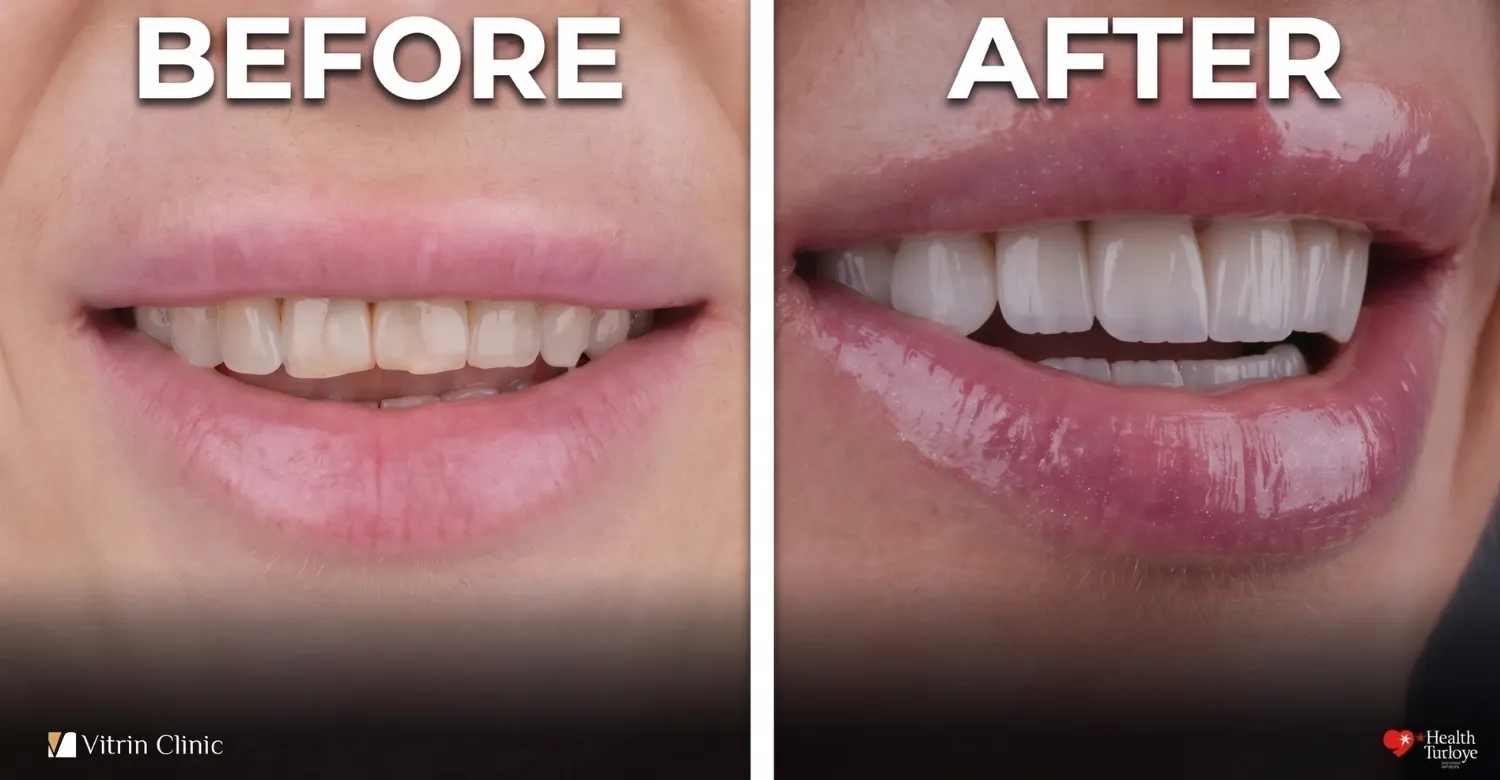
Porcelain is usually the most predictable choice of veneers for discoloured teeth with deep stains. Whitening tries to lighten the stain itself. A porcelain veneer works differently: it covers the visible surface with a custom-made ceramic shell. The lab adjusts its thickness, opacity and shade to hide darker tones underneath. The edges still keep a natural translucency. This makes porcelain especially useful for tetracycline staining and Grey or non-vital teeth. It also helps when teeth stay uneven after professional whitening. Ceramic resists stains well. With good care, the colour you approve tends to stay stable for many years.
Why Ceramic Masks Deep Stains More Predictably
The lab can control the ceramic's thickness, opacity and translucency very precisely. This lets a porcelain veneer hide a dark tooth while still looking natural at the edges. Ceramic is also highly stain-resistant, so the colour you approve is the colour you keep. Porcelain veneers are commonly cited to last about 10 to 15 years with good care.
The lab can also add subtle details, such as more translucent edges or soft colour variation. These make veneers look like natural teeth rather than a flat white surface. For deep discoloration, this mix of masking and natural detail is why dentists often prefer ceramic.
Can Porcelain Veneers Hide Tetracycline Stains?
Yes, in most cases. Tetracycline staining is one of the most common reasons patients choose porcelain. The lab can use a more opaque ceramic or a slightly thicker veneer. This blocks Grey or banded discoloration. Opaque bonding cements can add extra masking. Very dark cases need careful planning. Your dentist may preview the shade with a mock-up or try-in before final bonding.
In some cases, extended whitening before treatment lightens the teeth enough for thinner veneers. This helps preserve more enamel while still achieving an even, natural shade.
Internal Bleaching Before a Veneer on a Root Canal-Treated Tooth
For a darkened, root canal-treated tooth, dentists may first bleach the tooth from the inside. Lightening the tooth first means the veneer needs less opacity. This helps it look more natural. A 2024 clinical case report in Clinics and Practice described this approach for a discoloured front tooth.
Internal bleaching usually takes one or more short visits. The material is sealed inside the tooth between appointments. Once the colour has improved and stabilized, the veneer is planned. In some cases, internal bleaching alone is enough, and no veneer is needed.
Tooth Preparation: What to Know
Most porcelain veneers need a thin layer of enamel to be removed so the veneer sits flush. This is not reversible, so the tooth will always need a covering afterward. Ask your dentist how much enamel will be removed in your case.
Preparation is usually done under local aesthetic. For most veneers, it stays within the enamel. Temporary veneers may protect the teeth while the lab makes the final ones. Darker teeth sometimes need slightly more preparation. This leaves room for an opaque layer without making the tooth look bulky.
Choosing the Right Veneer for Stained Teeth
No-prep / Minimal-prep
Best for mild stains and small or worn teeth.
Little or no enamel removal
Minimally invasive option
High stain resistance
E-max (Lithium Disilicate)
Best for moderate to severe stains with everyday strength.
Very good masking of dark teeth
High strength
High stain resistance
Traditional Porcelain (Feldspathic)
Best for highly natural, characterized front teeth.
Most natural-looking finish
Good masking with opaque layers
High stain resistance
Choosing by Stain Severity
The darker and Greyer the tooth, the more the balance tips toward porcelain. For yellowing or uneven whitening, thinner or minimal-prep veneers often work well. They are sometimes combined with whitening and need less enamel removal.
Moderate cases fall in between. Either traditional porcelain or E-max can work well. Here, the decision often depends on your bite and whether you grind your teeth. It also depends on how much enamel you want to preserve and how you feel about maintenance. A mock-up can help you compare the expected look before choosing.
Choosing by Budget and Longevity
Veneers are a long-term investment. Traditional porcelain and E-max are often priced in a similar range. Highly customized work from a specialist lab may cost more. Well-maintained ceramic veneers commonly last 10 to 15 years. Looking at the cost over their lifespan gives a fairer picture than the upfront price alone.
It also helps to think about timing. If you want a quick improvement before an event, a professional whitening course may be a better first step. Veneers can be planned afterward, once you are ready for a long-term result.
Clinical Note
I usually ask patients two questions. How dark is the tooth underneath, and how natural do you want the final result to look? For mild staining, we can often keep preparation minimal. When staining is deep or Grey , a more opaque ceramic gives us better control of the final shade. The right veneer is the one designed for your specific tooth, not the whitest one available.Dr. Rifat Alsaman, Head of the Medical Team at Vitrin Clinic
How Many Veneers Do You Need for discoloured Teeth?
The number of veneers depends on how many stained teeth show when you smile and talk. It also depends on whether the discoloration affects one tooth, a few teeth or the whole smile. A single dark tooth may need only one veneer. Widespread staining, such as tetracycline discoloration, usually needs more teeth treated. This makes the smile look even from every angle. Your dentist will check your smile line and how wide your smile is. They will also check whether your lower teeth show when you speak. Treating only the visible teeth keeps treatment more conservative and more affordable.
One Veneer for a Single discoloured Tooth
A single dark tooth can be treated alone. However, matching one veneer to natural neighbours is one of the most demanding cases in cosmetic dentistry. It may need more than one try-in to get the shade right.
Sometimes the best plan is to whiten the surrounding teeth first. One veneer is then matched to the new shade. Treating the matching tooth on the other side can make symmetry easier. However, it is not always necessary and should be discussed openly.
Four to Six Veneers for the Front Smile Zone
If discoloration affects the upper front teeth, four to six veneers usually cover the teeth that show most.
Your dentist will look at your smile while you talk and laugh. This shows exactly which teeth are visible. Veneering only those teeth keeps treatment conservative and affordable. It still makes the biggest visual difference.
Eight to Ten Veneers for a Full Smile Makeover
People with a wide smile or widespread staining may need eight to ten veneers per arch. Tetracycline discoloration is a common example. This prevents darker teeth from showing at the sides.
Lower teeth may also be considered if they show when you speak. With widespread staining, whitening the teeth without veneers is often part of the plan. This helps the whole smile match.
Ready to transform your smile?
Talk to our team and get your Free treatment plan.
Alternatives to Veneers for discoloured Teeth
Veneers are not the only option, and for some stains they are not the first one. The best alternative depends on what is causing the discoloration and how deep it goes. Shallow spots and surface stains can often be improved with conservative treatments. These keep almost all of your natural enamel. A tooth that is weak or heavily restored may need more protection than a veneer can give. Your dentist may also combine options. For example, a dark tooth may be lightened from the inside first. Starting with the least invasive treatment protects your teeth and keeps future options open.
Micro abrasion and Resin Infiltration for White Spots
Mild fluorosis and white spot lesions can sometimes be improved by micro abrasion. This gently polishes away a very thin surface layer. Another option is resin infiltration, which fills the spots with a low-viscosity resin. Both preserve almost all of the enamel.
These treatments work best on shallow, light-coloured spots. They are often combined with whitening for a more even result. They are less effective on deep brown staining or widespread intrinsic discoloration. In those cases, veneers may still be needed afterward.
Dental Crowns for Structurally Weak Teeth
A discoloured tooth may also be heavily filled, cracked or weakened. In that case, a crown may protect it better than a veneer.
Crowns remove more tooth structure than veneers. They are usually reserved for teeth that genuinely need the extra strength. For a discoloured tooth after root canal treatment, your dentist will check how much healthy tooth remains. This helps decide between a veneer and a crown.
The Veneer Treatment Process
Most treatment follows three stages: planning, placement and adjustment. For porcelain veneers, the process usually takes two or more visits over a few weeks. This is because the veneers are custom-made in a dental lab. discoloured teeth sometimes need extra steps first. These may include professional whitening, internal bleaching, or treating decay or gum problems. These steps add time but help the final veneers look natural and last longer. Your dentist will explain each stage in advance. You will know how many appointments to expect and what happens at each one.
Smile Design and Trial Mock-Up
The dentist takes photos and a scan and discusses the shade and shape you want. They may create a trial mock-up so you can preview the result. This happens before anything permanent is done.
This is the stage to share photos of smiles you like. Be clear about what you do not want, such as teeth that look too white, long or uniform. Agreeing on the shade and shape now makes the final result far more predictable.
Placement Day: What to Expect
The teeth are prepared and scanned, and temporaries may be fitted. The final veneers are bonded at a later visit, once the lab has made them.
Before bonding, the dentist usually tries the veneers in with a temporary paste. This lets you check the colour and shape. Small changes in the cement shade can still fine-tune the final colour. This is especially useful for discoloured teeth.
Recovery and Adjustment
There is usually no downtime. Your bite may feel different for a few days. Your dentist can adjust any high spots at a follow-up visit.
Your lips and tongue may take a few days to get used to the new surfaces. Speech can also feel slightly different at first. These changes usually settle quickly. A review visit lets your dentist polish any rough edges. It also confirms that the gums are healthy around the veneers.
Side Effects and Disadvantages of Veneers
Veneers are generally safe, but you should know the possible downsides before deciding. Most side effects are mild and temporary. Examples include short-term sensitivity or a bite that feels slightly different at first. Other downsides are long-term considerations rather than problems. Most porcelain veneers require removing a thin layer of enamel. A veneer may also need replacing after many years. Knowing these points helps you weigh the benefits against the commitment. It also helps you ask your dentist the right questions.
Temporary Tooth Sensitivity
Some people notice sensitivity to hot or cold for a few days to a couple of weeks. This happens because preparing and bonding the tooth can briefly irritate the nerve. It is more likely when extra enamel was removed to hide dark staining. The sensitivity is usually mild and comes and goes with hot or cold foods. It fades gradually as the tooth settles. Most patients notice a clear improvement within the first week.
Chipping, Debonding, and Edge Staining
Veneers can chip if you bite hard objects or grind your teeth. Rarely, a veneer can come loose.
Small chips in porcelain can sometimes be polished. Larger chips usually mean the veneer needs to be replaced. Most problems happen at the edges. Keep the margins clean, and avoid biting hard foods or opening packages with your front teeth.
Colour Mismatch With Neighbouring Teeth
Natural teeth may darken slightly with age while veneers stay the same. This can create a visible difference years later. It matters most when only one or two teeth are veneered.
Whitening the natural teeth before veneers can help keep the shades close. Occasional touch-up whitening afterward helps too. Remember that whitening gels do not change the colour of the veneers themselves.
Irreversible Enamel Removal (Mainly Porcelain)
Once enamel is removed for a porcelain veneer, the tooth will always need a covering.
This is why it is worth asking how much enamel will be removed. Also ask whether a minimal-prep option is realistic in your case. Many mildly discoloured teeth need little reduction. Very dark teeth may need a bit more to hide the colour naturally.
Relief: Managing Sensitivity and Discomfort After Veneers
Mild discomfort after veneers is common and usually settles on its own. Most patients manage it easily with a few simple changes in the first days. Everyday dental products are usually enough. The goal is to keep the teeth comfortable while they adjust. It also protects the new veneers and helps you notice early problems. Knowing what is normal helps you recover with confidence. It also tells you when to call your dentist.
How Long Does Sensitivity Usually Last?
For most patients, any sensitivity fades within a few days to about two weeks.
Sensitivity is usually stronger when more enamel was prepared. It is milder with minimal-prep veneers. It usually improves a little each day. If it stays the same or gets worse, contact your dentist rather than wait.
Desensitizing Toothpaste and Gentle Habits
• Use a desensitizing toothpaste and a soft-bristled brush.
• Avoid very hot or very cold food and drinks for the first few days.
• Chew on the other side if a tooth feels tender.
• Over-the-counter pain relief can help if needed. Follow the package directions.
When Discomfort Means You Should Call Your Dentist
Contact your dentist if pain lasts more than two weeks or gets worse. Also call if your bite feels high or a veneer feels loose or rough. Gum swelling is another reason to call.
A high bite can cause soreness when chewing. It is usually a quick adjustment. If a veneer comes off, keep it. The dentist can check whether it can be rebounded.
Ready to transform your smile?
Talk to our team and get your Free treatment plan.
Medical Tips for Long-Lasting, Stain-Free Veneers
Good daily habits protect both the veneers and the natural teeth underneath.
Daily Hygiene That Protects Veneer Margins
Brush twice a day with a non-abrasive fluoride toothpaste. Clean between your teeth daily. The tooth beneath a veneer can still decay at the edges.
Floss, interdental brushes or a water flosser all help clean where the veneer meets the gum. Avoid harsh, abrasive toothpastes and charcoal products. They can wear the veneer's glaze and the bonding edges over time.
Limiting Staining Foods and Drinks
Porcelain resists stains well. However, the bonding edges and your natural teeth can still discolour. Rinse with water after coffee, tea or red wine, and avoid smoking.
Drinking staining drinks through a straw can reduce staining. Rinsing afterward helps too. Avoid sipping them slowly over many hours. These habits also keep your natural teeth matching your veneers.
Night Guards for Teeth Grinding
If you clench or grind, a custom night guard reduces the risk of chipping and debonding.
Many people do not realize they grind at night. Signs include morning jaw tiredness, headaches or worn teeth. If your dentist notices these signs, a night guard is a simple way to protect your investment.
Polishing and Regular Check-Ups
Regular dental visits allow early repair of small chips. Professional polishing also restores shine.
Let your hygienist know you have veneers so they use suitable polishing materials. Check-ups are also the best time to catch small issues early. Examples include early edge staining or a tiny chip.
How Much Do Veneers for discoloured Teeth Cost?
Veneers for discoloured teeth are priced per tooth. In the US, porcelain veneers typically cost about $900 to $2,500 per tooth. UK prices are somewhat lower. Türkiye is usually the most affordable of the three.
United States
$900–$2,500
Porcelain or E-max veneers, per tooth.
Per tooth: $900–$2,500
8 front teeth: $7,200–$20,000
Insurance rarely covers cosmetic veneers
Türkiye
$200–$500
The most affordable option for porcelain or E-max veneers.
Per tooth: $200–$500
8 front teeth: $1,600–$4,000
Travel and accommodation are extra
United Kingdom
$650–$1,950
Private porcelain or E-max veneers, per tooth.
Per tooth: $650–$1,950
8 front teeth: $5,200–$15,600
NHS does not cover cosmetic veneers
What Affects the Final Price?
Number of teeth: more veneers increase the total. Some clinics offer per-smile pricing
Severity of staining: darker teeth may need more opaque ceramics or extra lab work.
Material: feldspathic porcelain, E-max and other ceramics differ in cost.•
Number of teeth: more veneers increase the total. Some clinics offer per-smile pricing.
Dentist's experience: advanced cosmetic skills usually cost more. They also affect how natural the result looks.
.webp)
What to Avoid Before and After Treatment
• Avoid over-the-counter whitening without telling your dentist. It can change the shade match.
• Avoid biting hard objects such as ice, pens or nutshells.
• Limit staining drinks to protect the bonding edges and your natural teeth.
• Avoid using Snap-On veneers to hide a dark tooth with an unknown cause.
How to Prepare for Your Consultation
Bring a list of medications, any previous dental X-rays, and photos of smiles you like. Tell the dentist about any dental trauma, root canal treatment or teeth grinding.
It also helps to think about your priorities in advance. Decide how natural or how bright you want your teeth to look. Think about how much time you can give to treatment and your budget. Being clear helps your dentist suggest a plan you will be happy with.
At Vitrin Clinic
At Vitrin Clinic, treatment for discoloured teeth starts with understanding why the tooth changed colour. It is not just about how to cover it. Every discoloured smile is different. Some patients have mild yellowing that only needs whitening. Others have deep tetracycline staining or a tooth that darkened after an injury. Our dental team, led by Dr. Rifat Alsaman, assesses the type and depth of your discoloration first. When veneers are the right choice, we design porcelain or E-max veneers for your specific stain. We choose the ceramic, thickness and opacity needed to hide darker tones naturally. This careful shade planning matters most for discoloured teeth. The goal is a smile that looks bright but still believable.
Ready to transform your smile?
Talk to our team and get your Free treatment plan.
Identifying the Cause of Discoloration Before Treatment
Our team assesses the shade, depth and cause of the discoloration. We use a clinical exam, photos and, when needed, X-rays and pulp testing. This helps us decide what should come first: whitening, internal bleaching, root canal care or veneers.
We explain what we find in plain language. This includes whether your stain is likely to respond to whitening. We also explain what each option can realistically achieve. This helps you make an informed decision, not one based on price or trends.
Veneer Options Matched to Your Stain Type
We offer porcelain, E-max and minimal-prep veneers. The design is chosen to suit your stain, bite and goals, not a single default option.
For mild staining, we often discuss whitening or minimal-prep veneers first. They preserve more enamel. For deep or Grey discoloration, porcelain or E-max veneers can give a more stable long-term colour. We also explain the trade-offs in preparation and cost.
Clinical Note
For discoloured teeth, we would rather lose a week finding the cause than place veneers over a problem. If a tooth has darkened because of the nerve, we treat that first. We often lighten the tooth from the inside. The veneer then needs less opacity and looks more natural. That order of treatment is what protects the result long term. Dr. Rifat Alsaman, Head of the Medical Team at Vitrin Clinic
How Vitrin Clinic Supports Your Treatment Journey
From the first visit to long-term follow-up, your treatment is planned and coordinated by one team. Treating discoloured teeth often involves more than one step. For example, you may need whitening, treatment for a darkened tooth, then veneers. At Vitrin Clinic, these steps are planned together. Each one prepares the way for the next, and nothing is rushed. You will know what to expect at every stage. This runs from your first consultation and smile preview to your follow-up visits. If you notice any changes after treatment, the same team is there to review them.
Consultation and Digital Smile Design
Your consultation includes a discussion of your goals and a digital smile design. You can preview the planned shape and shade before treatment begins.
Seeing the planned result in advance lets you ask for changes. You might want a slightly warmer shade or a softer edge shape. These changes are made before anything permanent is done.
Coordinated Care: Whitening, Root Canal, and Veneers in One Plan
You may need more than one treatment. For example, you may need whitening, treatment for a non-vital tooth, then veneers. We sequence them in one clear plan with a written timeline and cost.
Coordinating these steps helps avoid common problems. One example is placing veneers before whitening is finished. Another is placing them before a darkened tooth has been fully assessed.
Follow-Up and Long-Term Maintenance
After placement, we review your bite and check how your gums respond. We also schedule polishing and maintenance visits to keep your veneers looking their best.
You may notice sensitivity, a rough edge or a change in colour after treatment. If so, our team can review it with you. We can then recommend polishing, repair or adjustment as needed.
Medical Disclaimer
This article is for general information and does not replace a personal assessment by a qualified dentist. Prices are approximate 2026 averages. UK and Türkiye figures are converted to US dollars and may vary by clinic and case.
Book your free consultation with Vitrin Clinic and get a personalized assessment and treatment plan from our dental team.






References
https://www.mdpi.com/2039-7283/14/5/164
https://www.newmouth.com/blog/are-veneers-worth-the-cost/
https://www.dentaly.org/en/complete-guide-to-veneers/
FAQs
Dr. Rifat Alsaman has more than 5 years of clinical experience in dentistry and currently serves as the Head of the Medical Team at Vitrin Clinic. He is dedicated to providing exceptional patient care, overseeing treatment planning, and ensuring the highest clinical standards across the team. His expertise, attention to detail, and commitment to continuous professional development have helped countless patients achieve healthier, more confident smiles.


